
Reviewed · TONLE SAP LAKE TOURS
3-Day ‘Temples & Tonle Sap’ Tour
Angkor Wat is only the beginning here. This private three-day tour links the famous temples with Kampong Phluk’s stilt villages, the early Roluos temples, local markets, and the finely carved Banteay Srei. It is a useful way to see a lot of Siem Reap without arranging each ride and ticket yourself.
I like the air-conditioned vehicle and hotel transfers, especially after long walks in the heat. I also like the plan’s range: Bayon and Ta Prohm bring the famous sights, while Roluos, Banteay Samre, and Banteay Kdei give you a broader view of Khmer architecture. The guide adds historical context in English, and the boat fee, bottled water, and cold towels are included.
The trade-off is pace. This is an action-packed schedule, with early starts, long temple walks, and several hours in the vehicle on the farther-out days. The $250 price also excludes the three-day Angkor pass, meals, drinks, and alcohol, so your true cost will be higher.
Key points to know before booking
- Angkor Wat appears on both first mornings: You see the temple after lunch on Day 1, then return for the famous sunrise on Day 2.
- The tour is private: Only your own group takes part, with hotel pickup and drop-off included.
- Tonle Sap is part of the plan: A motorized boat takes you to Kampong Phluk, a community of villages built largely on stilts.
- The temple mix is unusually broad: You visit major monuments, delicate carvings at Banteay Srei, and early Khmer sites at Roluos.
- The $250 rate is not all-inclusive: Budget another $62 per person for a three-day Angkor pass, plus meals and drinks.
- The schedule suits fit walkers: The tour is not recommended for anyone who cannot walk normally or has less than average fitness.
Why this three-day route works
Siem Reap can feel scattered on a map. Angkor Wat, the temples around Angkor Thom, Banteay Srei, Tonle Sap, and the Roluos group are not all in one compact area. This tour earns its keep by putting the transport, timing, and order of visits together for you.
You get an English-speaking guide, an air-conditioned vehicle, hotel transfers, bottled water, and cold towels. Those details may sound small, but they matter in Cambodia’s heat. You can focus on the temples instead of negotiating each tuk-tuk ride or checking the next turn.
The private format is another real advantage. You are not tied to the pace of a large bus group. If your group needs a little more time at Bayon or wants to move on from a crowded stop, the arrangement should be easier to manage, although the published schedule remains full.
The tour has also earned a perfect 5 rating from 17 published reviews, with 100 percent recommending it. The strongest praise focuses on professional organization, punctuality, and careful planning. That matches what this itinerary promises: three tightly arranged days with very little wasted time.
More time out on the Tonle Sap:
- Sunset tour of Kampong Phluk stilts home village on the Tonle Sap
★ 5.0 · 4,865 reviews - Siem Reap: Kulen Mountain, Beng Mealea and Tonle Sap Tour
★ 5.0 · 1,483 reviews - Tonle Sap Lake & Kampong Phluk Village Half-Day Tour
★ 5.0 · 1,045 reviews
Day 1: Bayon, Ta Prohm, and Angkor Wat
The first morning begins at 8:30 am with hotel pickup. You first stop at the Angkor Enterprise ticket office to buy an Angkor pass. A three-day pass costs $62 per person, and you need one pass for each person in your group. The tour price does not include it.
From there, the route moves into Angkor Archaeological Park and Angkor Thom. Bayon is the first major temple, and it is a smart early stop. Its smiling stone faces and crowded relief carvings give you an immediate sense of the scale and ambition of the Khmer court under King Jayavarman VII.
Allow about an hour here. Bayon is not a single grand viewpoint. You walk through galleries, towers, and narrow passages, so sturdy shoes and a bit of patience help. Your guide can explain what you are looking at instead of leaving you to sort out every face and battle scene on your own.
Baphuon follows, also with about an hour planned. This three-tiered temple mountain was built in the mid-11th century as a Hindu temple dedicated to Shiva. Its design feels different from Bayon, and seeing both on the same morning helps you notice changes in religious purpose and building style.
Next comes Ta Prohm, one of the most recognizable places in the Angkor complex. The temple was built in the late 12th and early 13th centuries and is known for its relationship with the surrounding forest. Stone galleries, courtyards, and tree-covered ruins make this a memorable stop, but it can also be busy and slow to walk through.
The Terrace of the Elephants is a shorter visit, about 30 minutes. It formed part of the eastern boundary of the royal palace grounds and faced the parade area. This stop is less about entering a temple and more about understanding how Angkor’s ceremonial center was arranged.
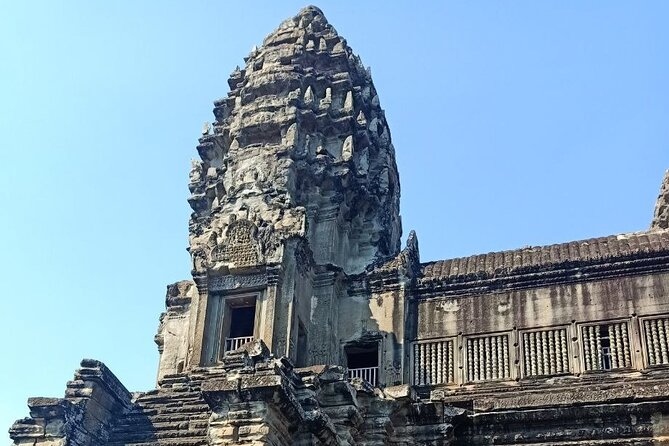
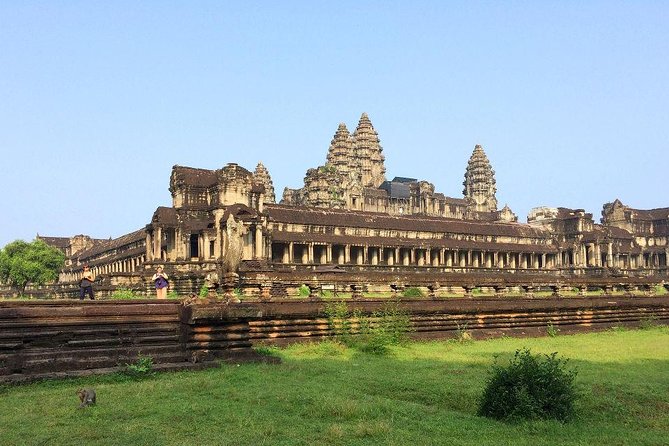
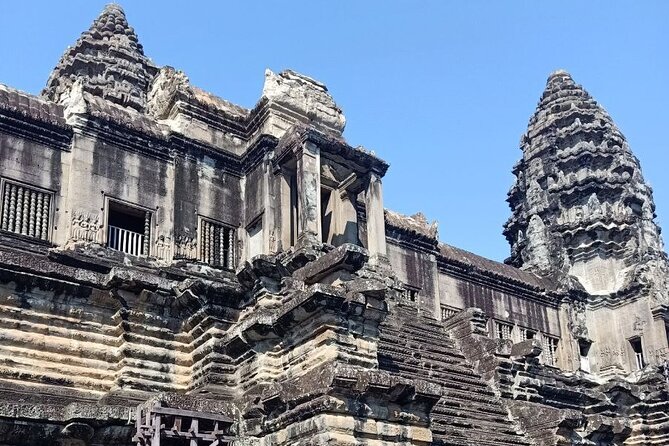
After lunch, you spend about three hours at Angkor Wat. That length is welcome. The complex is vast, with long approaches, galleries, courtyards, and detailed bas-reliefs. You will have time to appreciate the building rather than treating it as a quick photo stop.
Angkor Wat began as a Hindu temple dedicated to Vishnu and was later used as a Buddhist site. Your guide’s historical explanation is especially useful here, since the monument’s scale can make it hard to know where to focus. Look for the carved scenes, the long galleries, and the way the temple is organized around its central towers.
The day ends at Phnom Bakheng, a temple mountain dedicated to Shiva and built near the end of the ninth century. The itinerary allows up to three hours here. That can be a long wait depending on the day’s timing, so ask your guide how the visit will be handled. The temple sits on a hill, and the climb adds effort after an already full day.
Day 1 is the hardest day for sheer volume. You see the icons, but you also spend much of the day walking and moving between stops. The reward is a strong first look at the main Angkor area.
Day 2: Sunrise and the temples beyond the main circuit
Day 2 begins before breakfast with a return to Angkor Wat for sunrise. The schedule then takes you back to your hotel for breakfast. This arrangement is practical: you do not need to carry a meal through the early visit, and you get a proper break before heading out again.
Sunrise is one of the tour’s most appealing features, but it is also the least predictable part of the schedule. Light and cloud conditions change, and the early start may not suit everyone. Still, seeing Angkor Wat in the quiet morning hours gives the famous monument a different mood from the previous afternoon.
After breakfast, the route reaches Preah Khan, Neak Pean, Ta Som, and East Mebon. These sites are clustered together, which makes this section more efficient than a day of isolated drives.
Preah Khan is a substantial temple complex with corridors, courtyards, and carved details. It rewards slow walking, but its size can be tiring after the sunrise start. Neak Pean is more compact and unusual, built around a central island and water feature. Ta Som is smaller and easier to absorb, while East Mebon gives you another look at the temple-mountain form.
After lunch, you travel to Banteay Srei, often called the ladies temple. This 10th-century temple is dedicated to Shiva and is known for its fine stone carvings. It lies about 25 kilometers northeast of the main Angkor area, so reaching it takes time, but the trip broadens your sense of how far the Angkor world extended.
Banteay Srei is smaller than Angkor Wat, yet its scale makes the carvings feel especially precise. You can spend about two hours here, which gives you time to look closely rather than simply walk around the outside.
Banteay Samre follows, with about an hour planned. Built in the early 12th century during the reigns of Suryavarman II and Yasovarman II, it is a Hindu temple in the Angkor Wat style. It is a useful comparison with the morning temples because the design links to a later period and a different setting.
The final stop is Banteay Kdei, a Buddhist temple whose name means Citadel of Chambers. It was built in the mid-12th to early 13th centuries and lies southeast of Ta Prohm. Its galleries and chambers make it a fitting end to a day centered on smaller, more detailed temple visits.
Day 2 balances a famous experience with less obvious sites. I like that you do not spend the whole day repeating the main circuit. The drawback is the early start followed by another long afternoon. If you want relaxed temple wandering with plenty of time for lunch and rest, this schedule may feel too ambitious.
Day 3: Stilt villages and the first Khmer temples
The final day changes the subject. You leave the temple zone for Kampong Phluk, a group of villages on the Tonle Sap. Many homes are built on stilts, and the community depends largely on fishing. During Cambodia’s wet season, from May through October, water levels change the appearance and daily rhythm of the area.
A motorized boat ride is included, and about three hours are planned for the visit. This is more than a quick ride past the shoreline. You get a look at a community shaped by the lake and its seasonal water conditions.
The Tonle Sap outing is valuable because it adds present-day life to a trip otherwise centered on monuments. You see how people live and work in an environment that is closely tied to fishing. Conditions can vary with the season, so do not expect the same view of the village in every month.
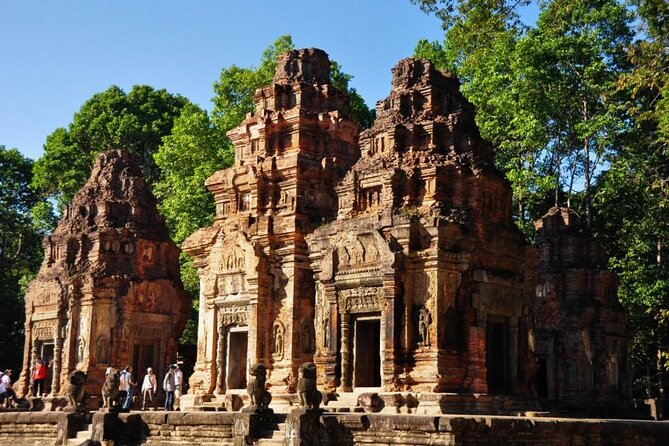
After lunch, the route turns to the Roluos group of temples. These are among the earliest permanent Khmer structures and date from the late ninth century. They mark the beginning of the classical period of Khmer civilization.
Roluos is an excellent choice for the final temple visit. The monuments are older and often less overwhelming than Angkor Wat, so you can think about how Khmer building traditions developed over time. The itinerary allows about three hours, enough for a measured visit rather than a rushed glance.
On the way back, you stop at Phsar Leu Thom Thmey, Phsar Chas, and Artisans d’Angkor. The markets give you a chance to see local goods and daily commerce, while Artisans d’Angkor provides a look at traditional crafts and their presentation for visitors.
The market section is listed at about two hours, but the exact feel will depend on your group and what interests you. Treat it as a flexible final stop rather than another major monument. After two days of temples and a morning on the lake, a change of pace is welcome.
More Temple Tours in Siem Reap:
- Angkor Wat Sunrise & 3 Main Temples with Breakfast – Small Group
★ 5.0 · 2,857 reviews - Siem Reap: Full Day Angkor Wat Temple Experience with Sunset
★ 4.9 · 1,490 reviews - 2 Days Exclusive Temple Highlights with Sunset and Sunrise Tour
★ 5.0 · 1,157 reviews - Full-Day Banteay Srei & 4 Temples – Grand Tours Join-in Tour
★ 5.0 · 1,155 reviews
What the $250 price really covers
At $250, this is not a budget entry-only tour. Its value comes from the amount of transport and planning packed into three private days.
The rate includes:
- Hotel pickup and drop-off
- Air-conditioned transport
- A professional English-speaking guide
- The motorized boat fee
- Bottled water
- Cold towels
The Angkor pass is extra. A three-day pass costs $62 per person, so one person should budget at least $312 for the tour and pass before meals or drinks. The published price does not include lunch, soft drinks, alcohol, or other food costs.
That may still be fair if you value private transport and a guide who keeps the days organized. Independent planning can cost less, but you would need to arrange rides to the distant temples and Tonle Sap, manage ticket needs, and build your own schedule around sunrise and opening times.
The strongest value is for a short Siem Reap stay. If you have only three full days and want both Angkor and Tonle Sap, the tour removes much of the logistical work. If you are staying a week and prefer slow mornings, long café breaks, and choosing one temple at a time, you may find the pace too tight.
Walking, weather, and the daily pace
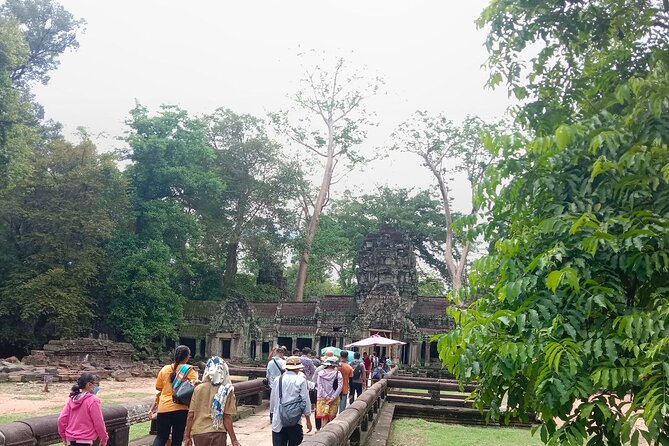
You need to be comfortable walking normally. The temples involve uneven ground, steps, courtyards, and long distances between parts of a complex. The tour is not suitable for anyone with less than average fitness, according to the stated requirements.
Wear shoes that can handle rough paths, and carry the bottled water provided. The air-conditioned vehicle gives you a break between stops, but it does not reduce the walking inside Angkor.
The 8:30 am start on Day 1 is straightforward. Day 2 is much earlier because of sunrise, even though the exact pickup time is not stated. Confirm that timing with the provider before the first morning. Day 3 includes a boat trip, so expect a different kind of exposure to sun and heat.
Children under three cannot join. Most other participants can take part, and the tour is near public transportation, though hotel pickup remains the main arrangement.
Cancellation is free if you cancel at least 24 hours before the local start time. Changes or cancellations inside that window are not refunded.
Who should book this tour
I would choose this tour if you want a private, tightly planned first visit to Siem Reap. It suits couples, families with older children, and small groups who want a guide and vehicle without joining a large coach tour.
It is especially useful if you want more than the standard Angkor Wat photo stop. Bayon, Ta Prohm, Banteay Srei, Roluos, Kampong Phluk, and the markets create a broad three-day picture of the area.
I would hesitate if you dislike early mornings, long walking days, or fixed schedules. The Phnom Bakheng timing may also feel long, and the price rises once you add the Angkor pass and meals.
The organization, punctuality, and precision praised in the available feedback are the tour’s main strengths. One Italian-language review also gives strong approval to the three-day organization and guide service. No guide names are supplied, so you should not book expecting a particular person.
Should you book the Temples & Tonle Sap Tour?
Book it if you have three days, want the major Angkor sights plus lesser-known temples, and would rather have one private arrangement handle the vehicle, guide, boat, and hotel transfers. The route is busy, but it covers a great deal and includes experiences that are awkward to organize separately.
Skip it if you want a slow temple holiday or need a fully inclusive price. In that case, a shorter private temple plan with fewer stops may suit you better.
For most first-time visitors with limited time, the $250 cost is reasonable once you value the air-conditioned transport, English-speaking guide, and careful three-day schedule. Just add the $62 temple pass per person, plan for meals, and be ready to walk.
FAQ
Is hotel pickup included?
Yes. Complimentary hotel pickup and drop-off are included, and the vehicle departs from your hotel at the tour start time.
What time does the tour start?
The stated start time is 8:30 am. Day 2 includes an Angkor Wat sunrise visit, so that morning begins earlier, though the exact pickup time is not provided.
Is the Angkor pass included?
No. You buy the pass separately at the Angkor Enterprise ticket office. A three-day pass costs $62 per person.
Is this a private tour?
Yes. Only your own group takes part in the activity.
Is food included?
No. Meals, soft drinks, and alcohol are not included in the tour price.
Is the boat ride included?
Yes. The fee for the motorized boat at Kampong Phluk is included.
Can children under three join?
No. The tour is not available to children under three years old.
What is the cancellation policy?
You can cancel for a full refund up to 24 hours before the experience start time. Cancellations or changes made less than 24 hours in advance are not refunded or accepted.
Just added around Siem Reap
- Twilight Tastes of Siem Reap Include Dinner★ 5.0 · 13 reviews
- Ultimate Sunrise to Angkor Wat, Angkor Thom and Bayon Temple★ 5.0 · 3 reviews
- Trekking Tour at Phnom Kulen National Park from Siem Reap★ 5.0 · 3 reviews
- Professional Photo Shoot in Angkor Archaeological Park, Siem Reap★ 5.0 · 42 reviews
- Full-Day Private Tour of Angkor Wat with Pick Up★ 5.0 · 12 reviews
- Unveiling 2 Days Private Angkor Wat/Beyond In Sunrise/Sunset Tour★ 5.0 · 48 reviews
- Siem Reap City Tour with War Museum and Killing Field★ 5.0 · 27 reviews
- Private Day Trip to Angkor Temples with Expert Guide★ 5.0 · 4 reviews
Tonle Sap Lake Tours, compared.
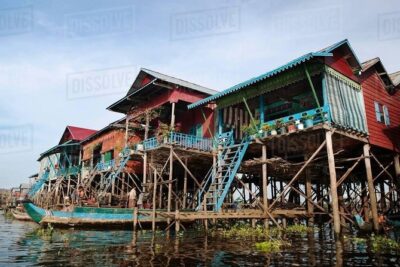
Sunset tour of Kampong Phluk stilts home village on the Tonle Sap
Read our review →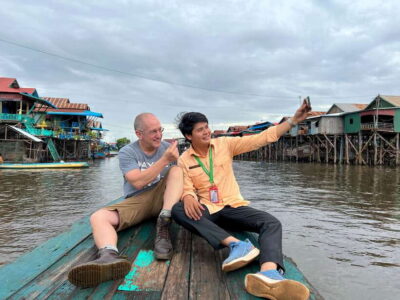
Kulen Mountain, Beng Mealea and Tonle Sap Tour
Read our review →
Tonle Sap Lake & Kampong Phluk Village Half-Day Tour
Read our review →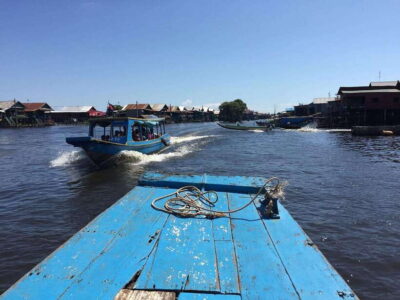
Tonle Sap, Kampong Phluk & Floating Village Tour
Read our review →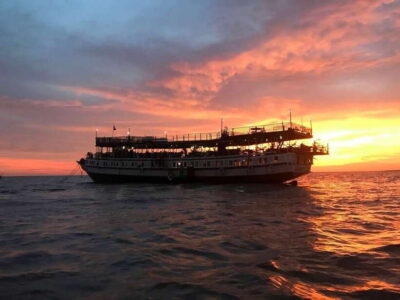
Sunset Dinner Tour: Tonle Sap Lake Floating Village
Read our review →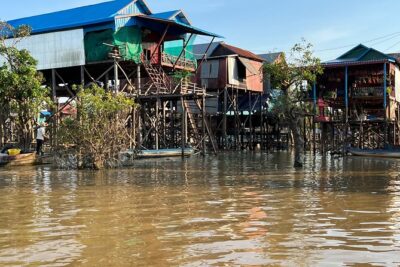
Half Day Kompong Pluck stilt home Village on Tonle Sap & Sunset
Read our review →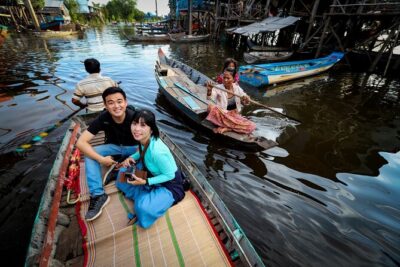
4-Day Excursion of Angkor, Koh Ker, Beng Mealea, Tonle Sap and Waterfalls
Read our review →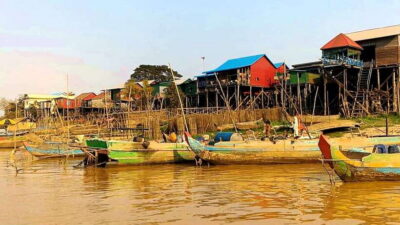
Browse the lists this tour appears in