
Reviewed · BENG MEALEA TOURS
5-Day All Major Temples & Kulen Mount Waterfall & Koh Ker & Beng Mealea
The real appeal here is the range. In five days, you move from the famous towers of Angkor Wat to quiet Ta Nei, jungle-covered Beng Mealea, the distant pyramid of Koh Ker, and the water and stone carvings of Phnom Kulen. It is a serious temple schedule, not a gentle sampler.
I like the private vehicle and guide, since your group can travel at its own pace, and I like the practical touches: air-conditioning, bottled water, and cool towels matter in Cambodia’s heat. The strongest praise has gone to guide Thean and driver SAN for detailed Khmer Empire explanations and careful driving.
The main drawback is stamina. This plan packs in many sites, often with early starts, long drives, stairs, heat, and a five-hour Kulen day. You also need to add admission fees, lunches, and your own accommodation to the $455 price.
Key points to know before booking
- Angkor Wat sunrise is included, followed by a full day of temples and a second Angkor circuit later in the trip.
- Koh Ker and Beng Mealea make this more than a standard Angkor tour, but Koh Ker requires a long drive from Siem Reap.
- Phnom Kulen includes the 1,000 Lingas and a waterfall, with a separate $20 park ticket.
- Your hotel is not included, giving you freedom to choose your own base in Siem Reap.
- The $455 price is not the final cost, since Angkor admission, Koh Ker, Kulen, food, and lodging are extra.
- This is a private tour, so only your own group joins the activity.
Five days, three very different kinds of Cambodia
This tour works because it does not treat the Angkor area as one large archaeological park. You see royal city gates, temple mountains, small brick sanctuaries, remote ruins, craft workshops, a mountain park, and a local market.
That variety also creates the trip’s main challenge. You are not simply strolling through two or three famous monuments each day. The schedule includes many short stops, several longer visits, and drives that can make the days feel full.
Your transport is a private air-conditioned vehicle with a driver, road tolls and parking covered. Water and wet towels are supplied. Those details sound modest on paper, but after several hours outside, they make a real difference.
The arrangement also leaves accommodation in your hands. You can choose a hotel or guest house in Siem Reap without being tied to a tour package. The tradeoff is that you must budget for it separately and make sure your accommodation can handle early morning pickup.
More jungle-temple days at Beng Mealea:
- Siem Reap: Kulen Mountain, Beng Mealea and Tonle Sap Tour
★ 5.0 · 1,483 reviews - Kulen Mountain with Beng Mealea and Tonle Sap Small Group Tour
★ 5.0 · 780 reviews - Koh Ker Temple Group & Beng Mealea Full-Day Join-in Tour
★ 5.0 · 710 reviews
Day one: Angkor Thom and the main towers of Angkor Wat
Pickup begins around 8:00 a.m. at your hotel or guest house. The first practical stop is the temple pass office, so admission is handled before you enter the main temple zone.
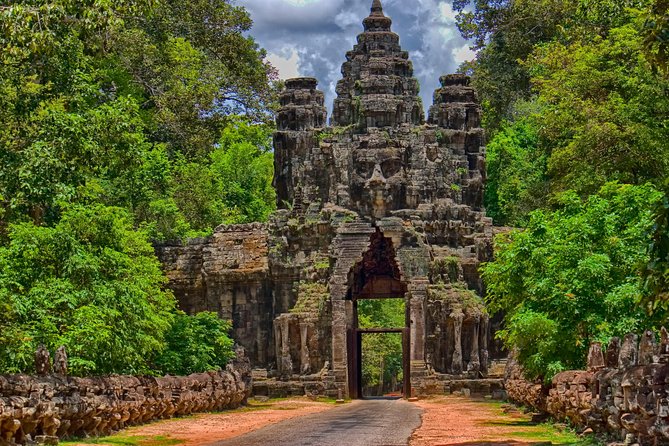
You begin at Angkor Thom’s South Gate, a broad entrance lined with monumental figures. It is a short stop, but it sets up the scale of the old capital. From there, Bayon takes the morning spotlight.
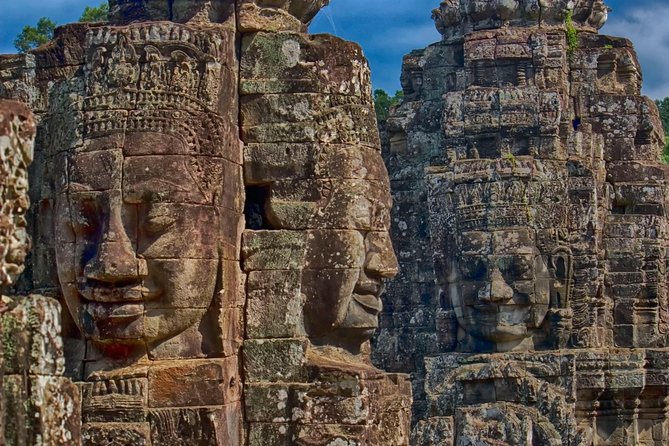
Bayon is one of the most memorable temples in Cambodia because of its towers carved with calm faces. The plan allows about an hour here, enough to walk among the galleries and look up at the faces from different angles. Your guide can help connect the monument to the Buddhist King Jayavarman VII and the city around it.
Nearby Baphuon brings a different mood. It is an 11th-century Hindu temple, older than Angkor Wat, with a large reclining Buddha added much later. The nearby Royal Enclosure Wall, Phimeanakas, Terrace of the Elephants, and Terrace of the Leper King show how Angkor functioned as a royal center, not just a collection of shrines.
These stops are short, often 10 to 40 minutes. That keeps the day moving, but you should not expect a slow archaeological study at every monument. The value is in seeing how the pieces fit together.
The Victory Gate and the smaller temples Chau Say Tevoda and Thommanon follow. Chau Say Tevoda was restored with help from China and shares design features with Angkor Wat. Thommanon sits across the road, making this an efficient pair of visits.
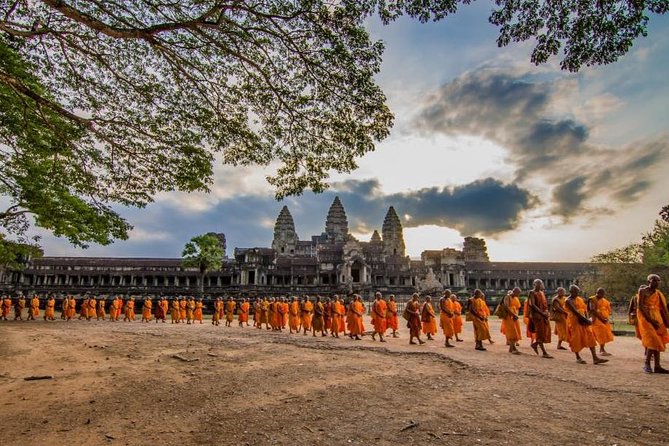
After lunch, you get a long visit at Angkor Wat, scheduled for about three and a half hours. That is the right amount of time for the outer galleries, the bas-reliefs, the central structure, and the broad causeway approach. The temple began as a Hindu monument dedicated to Vishnu and later became a Buddhist site, a change your guide can explain as you move through the complex.
Bring modest clothing that covers shoulders and knees, and expect heat even when the vehicle is cool. Angkor Wat is the best-known stop on the trip, but it is only the first major day.
Day two: sunrise, Roluos, and the pink sandstone of Banteay Srei
The second day starts around 5:00 a.m. for sunrise at Angkor Wat. That means arranging your sleep and breakfast carefully. The sunrise visit lasts about an hour and 45 minutes, though the actual colors and visibility depend on the morning.
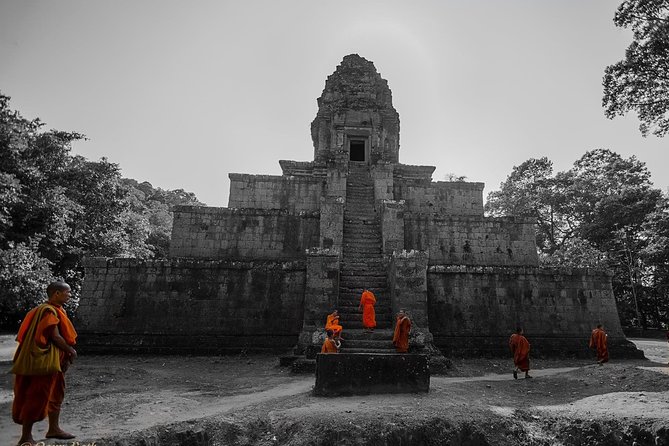
After sunrise, the route moves to the Roluos Group, an earlier set of Khmer monuments outside the main Angkor core. Preah Ko is a small early temple, while Bakong is the largest and most commanding site in the group. Bakong is an early sandstone temple mountain, and its stepped form helps you see how later Khmer builders developed the idea.
Lolei is smaller and receives only about 15 minutes. Together, these three temples provide useful context. You see an earlier stage of Khmer temple design before the grand scale of Angkor Wat.
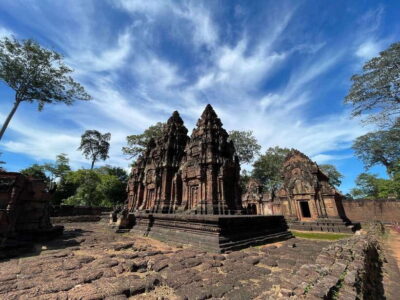
The afternoon reaches Banteay Srei, often called the Ladies Temple. Its pink sandstone and fine carvings are the reason it earns a full hour. The temple was built in the 10th century for Shiva, and the smaller scale makes its carvings easier to study than the huge walls at Angkor Wat.
Banteay Samre follows, with about 40 minutes. It is a substantial Hindu temple whose layout is often compared with Angkor Wat. The stop adds another architectural style without requiring another long drive.
Pre Rup is a temple mountain associated with the belief that funerals took place there. Its raised levels offer a different view of the area, though the stairs and exposed stone can be hard in midday heat.
The schedule then includes Banteay Kdei after lunch. This creates some repetition in the supplied timing, so the exact order may be adjusted on the day. The important point is that Banteay Kdei is part of the second day’s temple circuit and gives you another look at the Buddhist building program linked to Jayavarman VII.
By the end of this day, you will have seen an early Khmer center, a finely carved small temple, a major temple mountain, and several Angkor monuments. It is productive, but the 5:00 a.m. start makes this one of the more tiring days.
Day three: the long road to Koh Ker and Beng Mealea
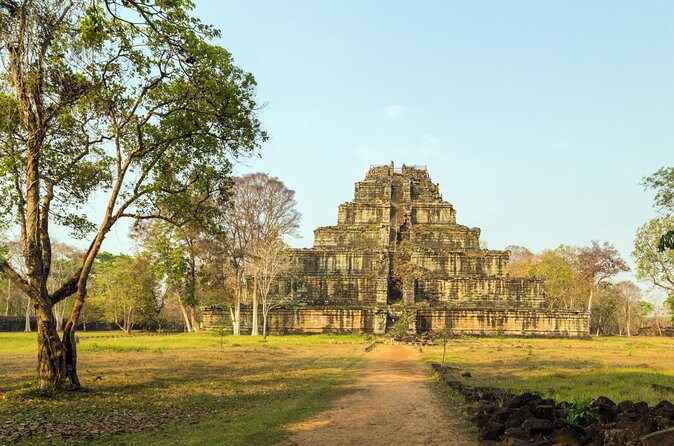
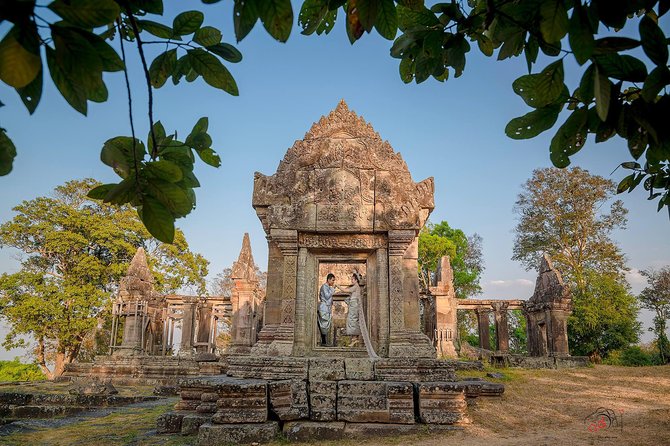
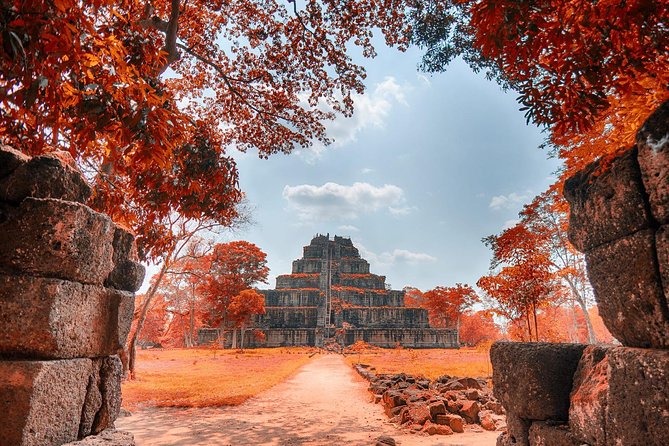
Day three changes the rhythm completely. Koh Ker lies more than 150 kilometers northeast of Siem Reap and served briefly as the Khmer capital from 928 to 944. The drive is the point: you leave the familiar Angkor route and reach a much more remote group of ruins.
The schedule allows about four hours at Koh Ker. That is not a single temple visit. It covers the Koh Ker group, including its large pyramid temple and other remains. The site feels different from Angkor because its short period as a capital left a more compact but distinctive group of structures.
You need to budget a separate $15 Koh Ker admission fee. The long drive and extra ticket make this day less attractive if you only want the classic Angkor highlights. If you want a broader view of Khmer building outside the main tourist route, it is one of the most useful additions.
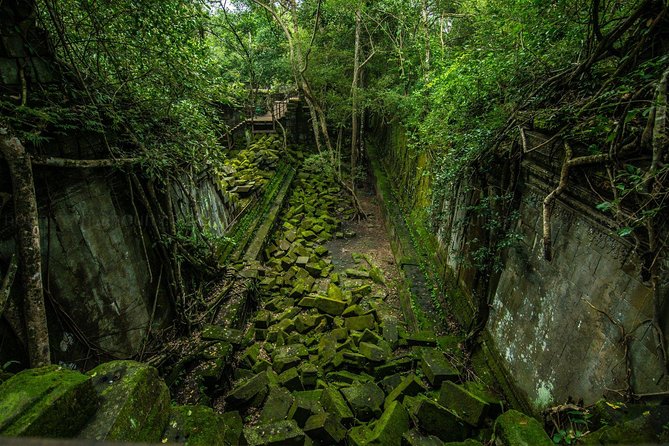
Beng Mealea comes next, with about 90 minutes. This ruined temple is known for collapsed stone, trees, and a rougher setting than the restored monuments near Angkor. Its plan is similar to Angkor Wat, but the broken galleries and vegetation give you a much less formal visit.
The word mysterious is often used for Beng Mealea, but the practical truth is simpler: expect uneven ground, rubble, and a site that feels less controlled than the major temples. Wear shoes with a firm sole and watch your footing.
Day three is the least efficient in terms of driving, yet it may be the most rewarding for anyone who wants more than polished monuments. It is also the day most likely to test your patience if you dislike long road journeys.
More long days out to Koh Ker:
- From Siem Reap: Koh Ker and Beng Mealea Temples Tour
★ 4.9 · 293 reviews - Preah Vihear: Full-Day Preah Vihear and Koh Ker Temple Tour
★ 4.9 · 263 reviews - Full-Day Preah Vihear, Koh Ker and Beng Mealea Private Tour
★ 4.4 · 101 reviews - Preah Vihear temple – Koh Ker & Other temple with Small Group
★ 5.0 · 96 reviews
Day four: quiet corners, Ta Prohm, and a possible sunset
The fourth day begins with Preah Khan, a large Buddhist temple built by Jayavarman VII and dedicated to his father. Give yourself time here. Its corridors, courtyards, and carved details reward slower walking more than a quick photograph.
Neak Pean is very different. It is a small island temple in the middle of a former baray, or reservoir. The approach and water setting make it feel separate from the large temple compounds, though the visit itself is shorter.
Krol Ko and Ta Som are small stops. Ta Som is especially appealing if you prefer a quieter ruin to a monumental complex. It is a compact Buddhist temple with trees and less restoration, giving you a better sense of age and wear.
Eastern Mebon is a large temple mountain with three levels, five towers, and elephant statues at the corners. Its design is more formal and geometric than Ta Som, so the contrast works well.
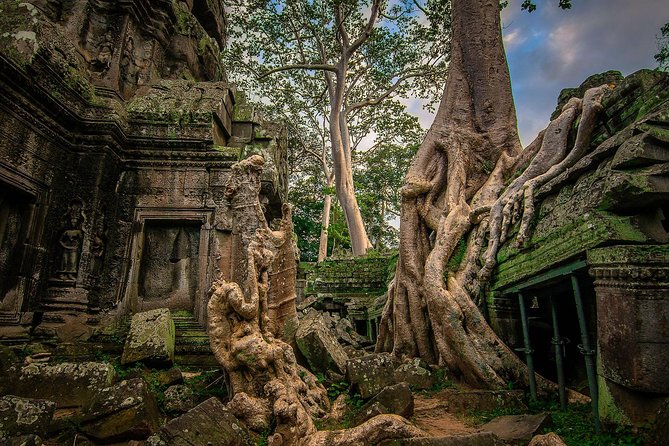
The route then includes Ta Keo, a tall Shiva temple, and Ta Nei, a small, quiet ruin surrounded by large trees. Ta Nei is one of the best choices for escaping the busiest Angkor stops. It does not have the fame of Ta Prohm, but that is exactly why the visit can feel calmer.
Ta Prohm receives about 90 minutes. The tree roots and fallen stones are striking, and the temple is linked to the film Tomb Raider. You should expect more attention here than at Ta Nei, but the large site gives you room to move beyond the first famous root-covered walls.
Prasat Kravan is a small brick temple and a good reminder that not every Angkor monument is made from sandstone. The final stop is Phnom Bakheng, where the plan allows up to two hours for sunset.
Access to the sunset viewpoint is limited by the number of people allowed up. You may spend time waiting, and sunset is not guaranteed to be spectacular. You can skip this portion if you prefer an earlier dinner or less climbing. If you stay, expect a popular end to an already full day.
Day five: Phnom Kulen, crafts, and Siem Reap’s Old Market
Phnom Kulen National Park is more than 60 kilometers from Angkor Park, so allow a full day. The scheduled visit lasts about five hours and includes the riverbed carved with the 1,000 Lingas, symbols connected with Shiva, plus a waterfall.
This day breaks up the temple-heavy schedule with water and open space. It is still not a rest day, since the road takes time and the park visit has several parts. The separate Kulen ticket costs $20 per person.
After Phnom Kulen, the tour returns toward Siem Reap for a 30-minute visit to Artisans Angkor. You can see traditional craft work such as stone carving, wood carving, lacquering, gilding, and silk processing. This stop is more structured than the ruins, but it gives you a look at Cambodian craft traditions and provides a chance to buy finished work if you wish.
The final stop is Psar Chaa, or the Old Market, in central Siem Reap. The visit is listed as optional, so you can skip it if you are tired or have already explored the town. If you want a simple way to end the trip with local shopping and food stalls, it fits naturally.
What the $455 price really covers
The listed cost is $455 per person, before several important extras. Included are the private air-conditioned vehicle, driver, licensed English-speaking guide, drinking water, wet towels, parking, road tolls, and hotel pickup and drop-off.
You must add:
- Angkor and other temple admission: $72 per person
- Phnom Kulen ticket: $20 per person
- Koh Ker ticket: $15 per person
- Lunches, estimated at about $5 per person per meal depending on the menu
- Your accommodation in Siem Reap
That makes the known admission total $107 per person before food and lodging. With five lunches, the stated meal estimate adds about $25, bringing the tour and listed admissions and meals to roughly $587 per person, not counting accommodation.
That price can be fair for a private five-day route with a vehicle, driver, guide, fuel-related road costs, and remote excursions. It is less appealing if you only want Angkor Wat, Angkor Thom, and Ta Prohm, because you are paying for the wider circuit and extra driving. The freedom to choose your own hotel is useful, but it also means comparing your complete trip cost rather than treating $455 as the final figure.
Guide quality and the small practical touches
The most specific praise is directed at guide Thean and driver SAN. Thean is described as giving detailed explanations of Khmer Empire history and pointing out small features that are easy to miss. SAN is praised for careful, polite driving.
Those qualities matter here because the itinerary contains many temples that look similar at first glance. A guide who can explain why Bayon differs from Baphuon, or why a brick temple such as Prasat Kravan matters, helps turn a long list of stops into a connected story.
The vehicle support is equally practical. Air-conditioning, water, and cool towels help you recover between outdoor visits. Since several days run from morning into late afternoon, these are not decorative extras.
The tour is private, and only your own group participates. That gives you more control than a large coach tour, though the number of stops still limits how long you can linger at each place.
Who should book this five-day route?
You should consider it if you want breadth rather than a short Angkor introduction. It suits people who are happy to wake early, walk on uneven surfaces, handle heat, and spend part of a day on the road to reach less visited sites.
It also works well for couples, families, or friends who want a private vehicle and do not want to arrange separate day trips for Koh Ker, Beng Mealea, and Kulen.
I would hesitate if you dislike packed schedules, long drives, or repeated temple visits. A shorter Angkor tour would be more comfortable for you. Also think carefully about the extra costs, since admissions and accommodation are not minor additions.
Should you book it?
Book this tour if your goal is to see the major Angkor monuments while also reaching Koh Ker, Beng Mealea, Phnom Kulen, and the Roluos temples. The route offers a strong mix of famous sites and quieter places, and the private setup gives you useful comfort in Cambodia’s heat.
Before paying, confirm the final daily timing, especially the order of Banteay Kdei and the sunset plan at Phnom Bakheng. Also budget the $107 in listed temple and park fees, meals, and your hotel. With those costs understood, this is a strong choice for an active visitor who wants five full days of Khmer temples rather than a quick postcard tour.
FAQ
Is accommodation included?
No. You choose and pay for your own hotel or guest house in Siem Reap.
Are temple entrance fees included?
No. Angkor and all temple admission is listed at $72 per person. Koh Ker costs $15 per person, and Phnom Kulen costs $20 per person.
Is this a private tour?
Yes. Only your own group participates in the activity.
What transport is provided?
You receive a private air-conditioned vehicle with a driver. Parking fees and road tolls are included, along with hotel pickup and drop-off.
Are meals included?
No. Lunch is not included. The stated estimate is about $5 per person, depending on the food chosen from the menu.
Can the Phnom Bakheng sunset visit be skipped?
Yes. The sunset portion can be skipped if you do not want to wait or climb the hill. Access to the viewpoint is limited by the number of people allowed up.
More Temple Tours in Siem Reap
- Angkor Wat Sunrise & 3 Main Temples with Breakfast – Small Group
★ 5.0 · 2,857 reviews - Siem Reap: Full Day Angkor Wat Temple Experience with Sunset
★ 4.9 · 1,490 reviews - 2 Days Exclusive Temple Highlights with Sunset and Sunrise Tour
★ 5.0 · 1,157 reviews - Full-Day Banteay Srei & 4 Temples – Grand Tours Join-in Tour
★ 5.0 · 1,155 reviews
More Kulen Mountain Days
- Kulen Waterfall Join-in Tour (local Picnic lunch)
★ 5.0 · 2,434 reviews - Kulen Mountain: Small-Group Tour and Picnic lunch
★ 4.9 · 1,802 reviews - Phnom Kulen Waterfall & the Sacred 1000 Lingas (with Lunch)
★ 4.8 · 974 reviews - Guided Small-Group Tour in Kulen Mountain Park Waterfall
★ 5.0 · 480 reviews
Just added around Siem Reap
- Twilight Tastes of Siem Reap Include Dinner★ 5.0 · 13 reviews
- Ultimate Sunrise to Angkor Wat, Angkor Thom and Bayon Temple★ 5.0 · 3 reviews
- Trekking Tour at Phnom Kulen National Park from Siem Reap★ 5.0 · 3 reviews
- Professional Photo Shoot in Angkor Archaeological Park, Siem Reap★ 5.0 · 42 reviews
- Full-Day Private Tour of Angkor Wat with Pick Up★ 5.0 · 12 reviews
- Unveiling 2 Days Private Angkor Wat/Beyond In Sunrise/Sunset Tour★ 5.0 · 48 reviews
- Siem Reap City Tour with War Museum and Killing Field★ 5.0 · 27 reviews
- Private Day Trip to Angkor Temples with Expert Guide★ 5.0 · 4 reviews
Beng Mealea Tours, compared.
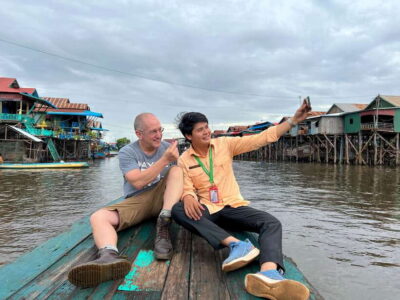
Kulen Mountain, Beng Mealea and Tonle Sap Tour
Read our review →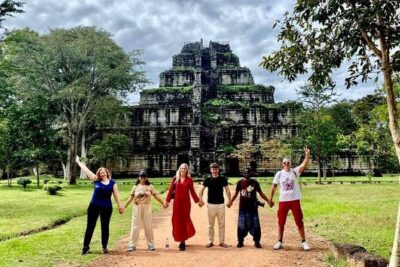
Koh Ker Temple Group & Beng Mealea Full-Day Join-in Tour
Read our review →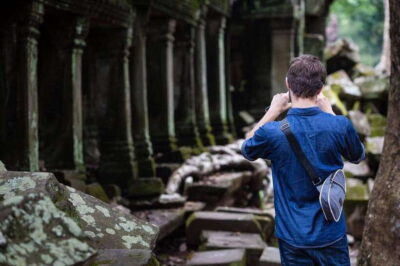
Banteay Srei, Kulen Waterfall & Beng Mealea Exploration
Read our review →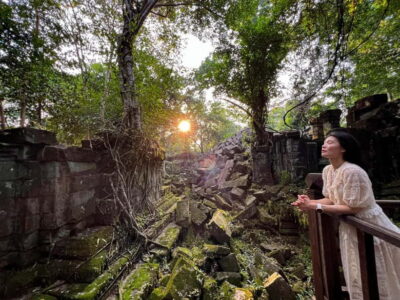
Banteay Srei, Beng Mealea and Kulen Mountain with Picnic
Read our review →
Private Beng Mealea and Floating Village Tour with Sunset
Read our review →
Full-Day Preah Vihear, Koh Ker and Beng Mealea Private Tour
Read our review →
4-Day Excursion of Angkor, Koh Ker, Beng Mealea, Tonle Sap and Waterfalls
Read our review →Browse the lists this tour appears in