
Reviewed · OUDONG TOURS
Oudong Mountain & Phnom Baset Private Tours from Phnom Penh
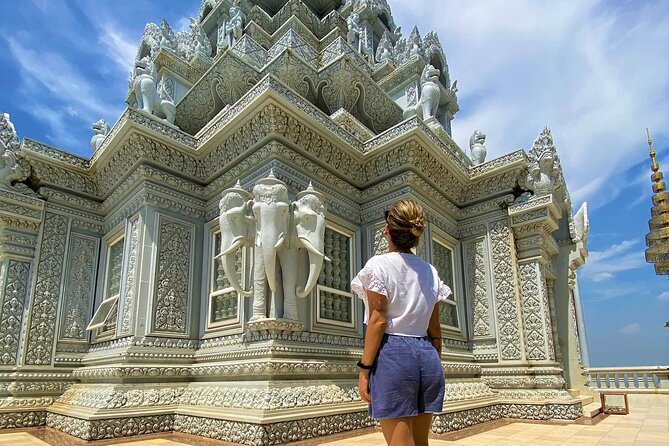
Oudong and Phnom Baset give you a useful change of pace from Phnom Penh: royal stupas on wooded hills, an eighth-century temple, meditation centers, and quiet roads through Cambodia’s countryside. Oudong was Cambodia’s royal capital from 1618 to 1866, so this is more than a collection of pagodas.
I like the private air-conditioned vehicle, especially during Cambodia’s heat, and the freedom to ask questions or adjust the pace within a full day. I also like the guide-led context. Guides named Makara, Ching, and Tok have been praised for clear explanations, patience, and a strong grasp of Cambodian history and Buddhism.
The main drawback is value. At $135 per person, this costs more than a basic shared outing, and the long list of stops can feel hurried if you want quiet time at every temple. Lunch is also extra, though local dishes generally cost $3 to $10.
Key points to know before you book
- Oudong was Cambodia’s capital for nearly 250 years, with royal stupas spread across three hills.
- Phnom Baset adds an eighth-century pre-Angkorian temple, a reclining Buddha, and broad views over rice fields.
- This is a genuinely private experience, so only your group travels with the guide and driver.
- The day includes many Buddhist sites, including Vipassana Dhurak and Sontte Wan, not only major historical monuments.
- Cold drinks and towels may be provided, a practical comfort noted by people who took the tour in hot weather.
- The route lasts about 7 to 9 hours, with hotel pickup, admission fees, and an air-conditioned vehicle included.
Why Oudong makes a worthwhile day outside Phnom Penh
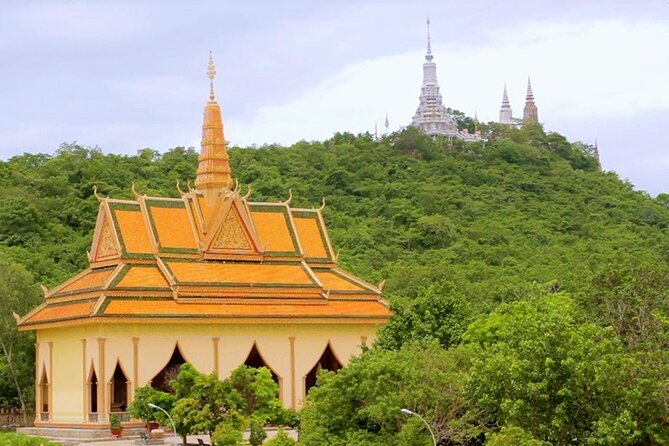
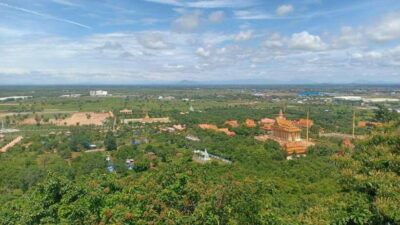
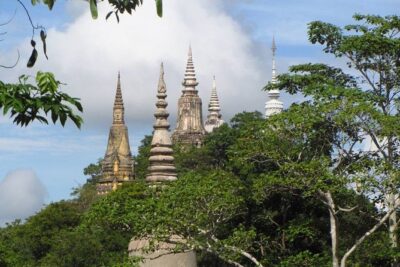
Oudong is the heart of this excursion. Before Phnom Penh became the capital in 1866, Oudong served as Cambodia’s royal seat from 1618. Its remains are spread across several hills, where large stupas can be seen from a distance.
The setting gives you a clearer sense of Cambodia’s past than a single city monument can. You move between royal burial sites, sacred mountains, old temple structures, and newer Buddhist centers. The guide’s explanations help connect these places rather than leaving you with a series of names and dates.
I would not choose this trip if your main goal is a slow, silent morning at one temple. The program covers a lot of ground. I would choose it if you want a broad look at the area and prefer having transport and historical explanation arranged for you.
More Private Tours in Phnom Penh
- Phnom Penh Full Day Private Tour Included All Admission Tickets
★ 5.0 · 585 reviews - Phnom Penh to Siem Reap by Private Car or Minivan
★ 5.0 · 211 reviews - Oudong Mountain – Phnom Penh Former Capital Private Day Tour
★ 4.8 · 146 reviews
From royal capital to sacred hills
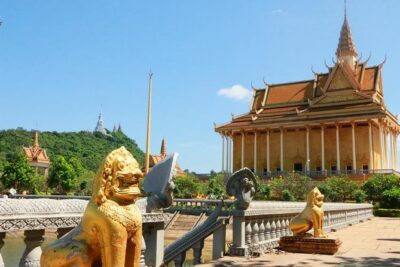
The first group of stops focuses on Oudong itself. At Oudong Temple, you have about an hour to see the temple area and the large stupas that mark the old capital. These structures are the visual anchor of the day and help explain why Oudong remains important even after the royal court moved to Phnom Penh.
Next comes Phnom Preah Reach Troap, also called Phnom Oudong or Preah Reach Troap Mountain. This sacred hill contains relics connected with ancient settlements. Allow about 45 minutes here. The climb and uneven ground may require a little care, although the tour information says most people can take part.
The Royal Tombs of Oudong offer a more personal link to the country’s rulers. The tombs hold more than 200 years of royal remains and are spread along Phnom Oudong, with several stupas placed along the ridge. You have around 30 minutes, enough for a guided explanation and photographs, but not a long, unhurried visit.
The Preah Sakyamoni Chedi is another half-hour stop. It is described as one of the best-preserved chedi structures in Oudong and is especially pleasing for photography. If you care about pictures, listen to your guide before rushing off. The proportions and setting reward a few patient minutes.
These first stops are the strongest historical portion of the day. They also make the private format useful. You can ask why a stupa was built, how royal remains were commemorated, or how Cambodia’s capital changed over time without trying to keep up with a large group.
Buddhist centers, from meditation gardens to ornate decoration
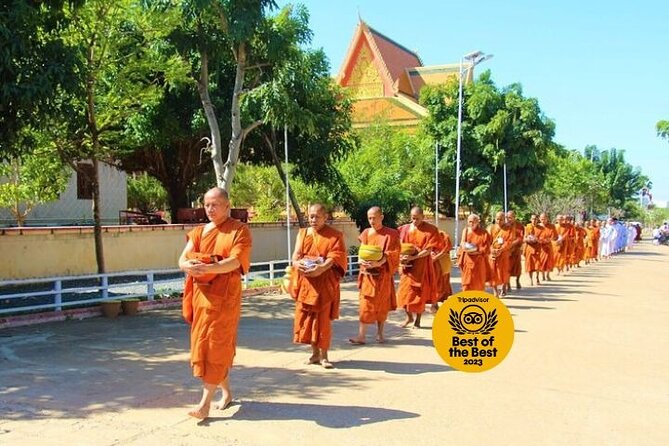
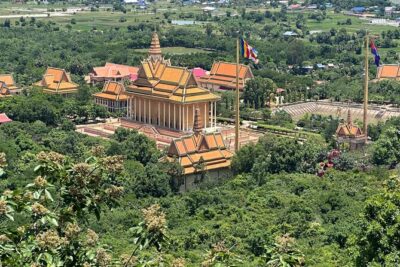
The itinerary then shifts from old royal monuments to active Buddhist institutions. At the Vipassana Dhurak Buddhist Centre of the Kingdom of Cambodia, the main purpose is teaching Vipassana meditation. The complex is open to the public, and you can walk through its gardens for roughly 30 minutes.
This stop calls for respectful behavior and a quieter pace. It is less about checking off an ancient monument and more about seeing a living religious center. The guide can help you understand the difference between a historical shrine and a place still used for meditation and religious practice.
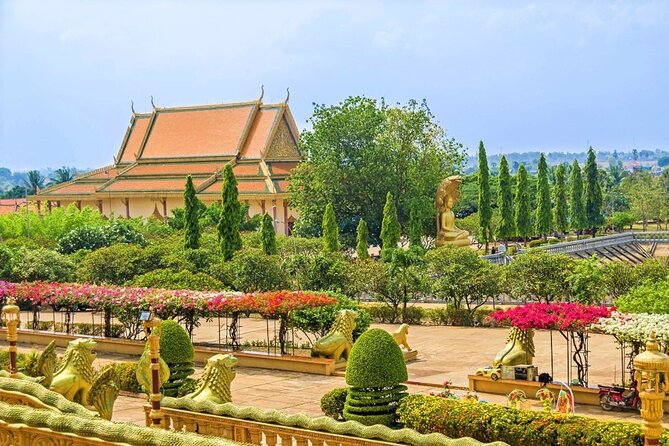
You also visit the Sontte Wan Buddhist Meditation Center, described as Cambodia’s largest Buddhist center. Its decoration is a major reason to include it. Depending on how long your group spends at earlier stops, this can be a visually impressive change from the older, more weathered structures at Oudong.
The route includes another hour connected with Sontte Wan, listed at QQW7+WQH. Since the supplied schedule repeats the center under two stops, you should confirm the exact plan with your guide at the beginning of the day. The important point is that the tour gives substantial time to Buddhist architecture, not just a quick roadside photograph.
This portion may appeal most if you want to see how Buddhism shapes present-day Cambodia. If your interest is limited to pre-Angkorian and royal remains, the newer centers may feel less essential. I see them as useful balance: Oudong explains the old kingdom, while the meditation centers show religious life today.
The rural route and Koh Chen connection
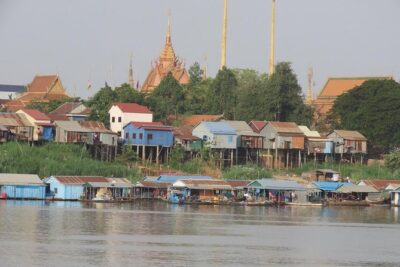
Several shorter stops follow, including Moni Sakor Pagoda and locations along National Highway 5. The schedule connects this part of the route with Koh Chen, an island in Tonle Sap Lake known for silver crafts and reachable from Phnom Penh and Oudong.
The time at Moni Sakor Pagoda is about 30 minutes. The information provided does not promise a full Koh Chen island visit, so do not book this tour expecting a dedicated craft workshop or long island exploration. Think of this section as part of the countryside route, with pagodas and local religious sites added to the day.
Another half-hour stop refers to Kampong Luong Pagoda, a place of worship with a museum connection. The description is brief, so the guide’s explanation will matter here. This is one reason to choose a private outing rather than simply hiring a car: the physical site may be modest, but the story can give it meaning.
The extra stops also explain why the tour may run toward the longer end of its seven to nine hour range. You are not only driving directly to Oudong, taking a few photographs, and returning. You are making a broad circuit through pagodas, Buddhist centers, and rural communities.
More Oudong and old-capital day trips:
- From Phnom Penh: Oudongk Mountain and Koh Chen Island Tour
★ 4.8 · 68 reviews - Oudong Mountain History and Pagoda Tour
★ 5.0 · 39 reviews - Oudong Mountain And Floating Village Cycle Tour
★ 5.0 · 25 reviews - Oudong and Koh Chen Island – Full Day Cruise & Tour with English speaking guide
★ 5.0 · 20 reviews
Phnom Baset brings the day back to early Cambodia
The most important stop after Oudong is Phnom Baset, where you have about two hours. This hill contains a pre-Angkorian temple from the eighth century and a reclining Buddha. It also gives you broad views over the surrounding plains and rice fields.
That two-hour allocation is welcome. Phnom Baset is the sort of place that needs time for the guide’s explanation, a look at the temple remains, and a pause to take in the view. It is also a useful contrast with Oudong. Oudong is closely tied to royal Cambodia, while Phnom Baset reaches farther back into the pre-Angkorian period.
The site is not presented as a polished, museum-like attraction. That is part of its appeal, but it also means you should expect a more straightforward historical visit. Wear practical shoes and be ready for sun, steps, and uneven surfaces. The tour details do not promise shade or facilities at every stop, so carry water even if the vehicle provides drinks.
Phnom Baset may be the highlight for visitors who want older temples without spending the day in Cambodia’s most famous temple complexes. The surrounding view adds another layer. You see how religious sites relate to farms and villages rather than existing as isolated monuments.
Wat Sowann Thamareach and the final architectural change
The final listed stop is Wat Sowann Thamareach, a less frequently visited Buddhist complex. You have about 30 minutes to see its unusual architecture.
This is not presented as a traditional old-style temple. Its newer Buddhist design gives the day one more visual shift, after the royal stupas, early temple, and meditation centers. I would keep an open mind here. The value is not necessarily age or fame, but the chance to see a different expression of Buddhist building in Cambodia.
By this point, you may be ready for the ride back to Phnom Penh. That is why the private vehicle matters. You are not managing transfers or negotiating with drivers between distant sites. You can rest in the air conditioning and ask for a slower or quicker finish, subject to the day’s timing.
What the private format changes
Hotel pickup and drop-off are included, and the tour uses a private luxury air-conditioned vehicle. Only your group takes part, so you are not sharing the day with a bus full of strangers.
The private arrangement is valuable for three reasons. First, heat is a real factor on temple days, and air conditioning gives you a proper break between outdoor visits. Second, a personal guide can explain details at the level you want. Third, the schedule has enough flexibility for the guide and driver to add a stop or adjust the order.
Past pairings have included guides such as Makara, Ching, and Tok, with drivers including Tuk. Makara is noted for patience and wide-ranging explanations, while Ching and Tuk are associated with attentive service and practical touches such as cold drinks and cold towels. Tok is described as easy to understand, with strong explanations of Buddhism and the pagodas along the route.
Those names are useful when you communicate with the operator, but they do not guarantee who will lead your departure. The key feature is the licensed English-speaking guide, not a promise of one particular person.
Food, heat, and the real cost of the day
Lunch is not included. You can eat at a local restaurant, with vegetarian and non-vegetarian choices generally priced at $3 to $10 per dish. That is a reasonable meal budget, but bring extra cash for drinks or small purchases if needed.
The $135 per person price needs to be judged against the full package. You receive private transport, hotel pickup and return, an English-speaking licensed guide, entrance fees, service charges, and government VAT. For one or two people, the cost is substantial. For a small private group, the per-person price may make more sense, especially if you value comfort and a tailored pace.
One past assessment called the tour overpriced compared with other Cambodian tours. That criticism is fair if you are comparing it with a shared tuk-tuk ride or a simple transfer to Oudong. You are paying for a full route, not just transport to one hill. Still, the price will feel high to budget travelers, particularly once lunch and tips are added.
Group discounts are offered, but the exact saving is not given. Ask about the final per-person price before booking if you are traveling with several people.
Who should book this Oudong day trip
I would recommend it to you if you want to leave Phnom Penh for a full day, prefer private transport, and enjoy a mixture of history, religion, and countryside. It suits people who want more than one famous monument and who like asking questions as they go.
It is also a good match for visitors who have already seen Phnom Penh’s main sights and want a wider view of Cambodia’s past. The combination of a former capital, royal tombs, an eighth-century temple, and active Buddhist centers gives the day real variety.
You may want another option if your budget is tight, you dislike long road days, or you want to spend several hours at one major site. The schedule is full. Eleven listed stops can mean short visits, especially when driving time and lunch are included.
Bring sun protection, water, comfortable footwear, and clothing suitable for Buddhist sites. The exact dress guidance is not specified, so modest clothing is the sensible choice at temples and meditation centers.
Should you book it?
Book this tour if context, comfort, and variety matter more to you than the lowest possible price. The strongest parts are Oudong’s royal hills, Phnom Baset’s pre-Angkorian temple and views, and the chance to see Buddhist centers that most short Phnom Penh excursions skip.
I would be more cautious if you want a slow cultural walk or a cheap half-day outing. At $135 per person, the tour earns its price through private transport, admission fees, and a full itinerary, but it is not a bargain tour. Free cancellation is available when you cancel at least 24 hours before the start time. Within 24 hours, the payment is not refunded.
FAQ
How long does the Oudong and Phnom Baset tour last?
The tour lasts approximately 7 to 9 hours, depending on the day’s timing and the number of stops included.
Is hotel pickup and drop-off included?
Yes. Pickup and drop-off at your hotel are included. You need to provide the hotel name for pickup.
Is this a private tour?
Yes. Only your group participates, and the tour uses private transportation.
What type of vehicle is provided?
The tour provides private transportation in a luxury air-conditioned vehicle.
Is an English-speaking guide included?
Yes. A professional, licensed English-speaking guide is included. Guides who have led this route include Makara, Ching, and Tok, depending on the booking.
Are entrance fees included?
Yes. Entrance fees for the tour sites are included in the price.
Is lunch included?
No. Lunch is paid separately. Local restaurants offer vegetarian and non-vegetarian choices, with dishes generally priced from $3 to $10.
Can most people participate?
Yes. The tour information says most travelers can participate. Some temple and hill areas may involve walking on uneven ground.
What is the cancellation policy?
You can cancel at least 24 hours before the experience starts for a full refund. Cancellations or changes made within 24 hours are not accepted and are not refunded.
Just added around Phnom Penh
- Exploring the Best of Phnom Penh: A Full Day Tour★ 4.5 · 9 reviews
- Private Transfer : Phnom Penh ↔ Sihanouk Ville★ 5.0 · 15 reviews
- War Museum, Killing Field, and APOPO Hero RATs Tour★ 5.0 · 7 reviews
- Phnom Penh Intercity★ 4.5 · 11 reviews
- Phnom Penh Nightlife Street Food Tours★ 4.5 · 14 reviews
- War Museum, Killing Field and Floating Village ( Kampong Phluk)★ 4.5 · 6 reviews
- War Museum, Killing Field and Floating village ( Chong Kneas) Tour★ 5.0 · 14 reviews
- The killing field and Toul Sleng Genocide museum (S21) Tour★ 4.5 · 19 reviews
Oudong Tours, compared.
Oudong Mountain – Phnom Penh Former Capital Private Day Tour
Read our review →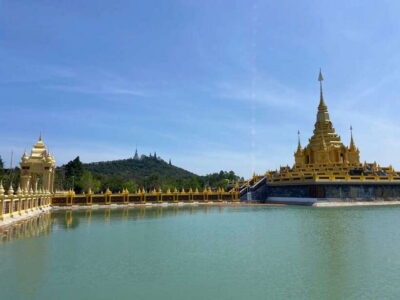
Oudong and Koh Chen Island – Full Day Cruise & Tour with English speaking guide
Read our review →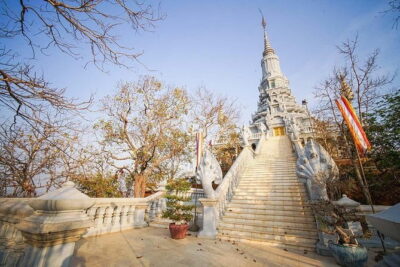
Oudong Temples & Phnom Prasith Private Tour from Phnom Penh
Read our review →
Full-Day Discover Oudong Mountain-Former Capital City & Phnom Penh City Tours
Read our review →Browse the lists this tour appears in