
Reviewed · KILLING FIELDS TOURS
Tuol Sleng Genocide Museum (S-21) and Choeung Ek Killing Fields Tour
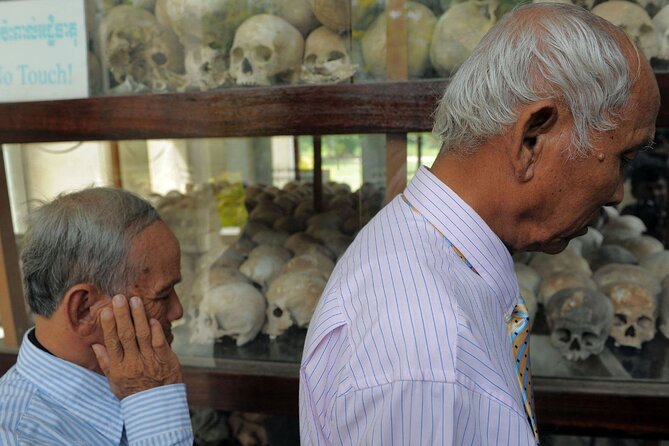
The most important thing about this Phnom Penh tour is its pairing of two very different places: Choeung Ek, where prisoners were killed and buried, and Tuol Sleng, the former high school turned prison where many were interrogated and tortured. Together, they show the Khmer Rouge system from its final killing ground back to the prison cells.
I like the small-group format, capped at 20 people, and the practical hotel pickup with air-conditioned transport. I also like the guides’ personal connection to Cambodia’s past. Mr. Baboon, Mr. Tea, Visal, and Sum Cheath are named by the company as guides, and the strongest accounts describe clear English, compassion, and personal family stories.
The main drawback is emotional, not logistical. This is a painful half-day, with disturbing sights and difficult facts. Admission costs another $8 per person, and the exact pickup arrangement should be confirmed because the tour lists both hotel pickup and a meeting point at River Crown Restaurant.
Key points to know before you go
- Two sites explain one tragedy: Choeung Ek shows the killing fields, while Tuol Sleng explains the prison system behind them.
- About four hours: You receive roughly two hours at each stop, plus the drive between Phnom Penh and Choeung Ek.
- English-speaking guidance: Guides including Mr. Baboon, Mr. Tea, Visal, and Sum Cheath are praised for clear explanations and respectful storytelling.
- Transport is included: Hotel pickup, an air-conditioned vehicle, a driver, and cool water are part of the package.
- Budget carefully: The advertised price is $19.20, but the two entrance fees add $8, bringing the basic cost to $27.20 before any tip or personal spending.
- Prepare for a serious morning: The tour is best for you if you want historical context and can handle confronting memorial sites.
Why these two Phnom Penh sites belong together
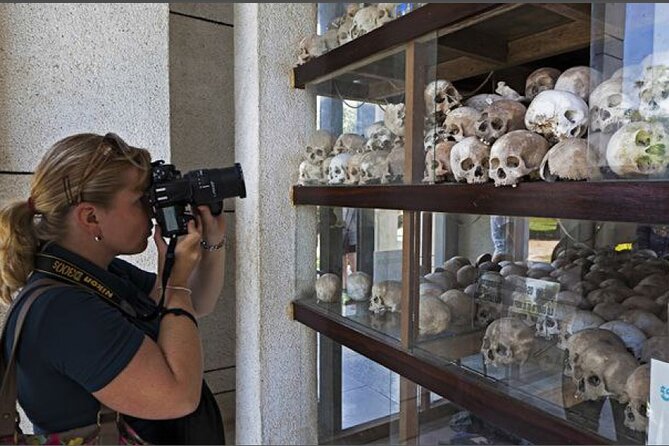
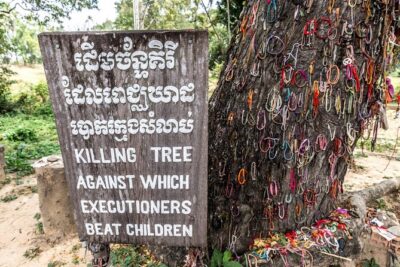
A visit to only one of these places gives you an incomplete picture. Choeung Ek is outside central Phnom Penh, about nine miles to the south, and was once an orchard and Chinese cemetery. Under Pol Pot’s Khmer Rouge regime, it became one of the killing fields.
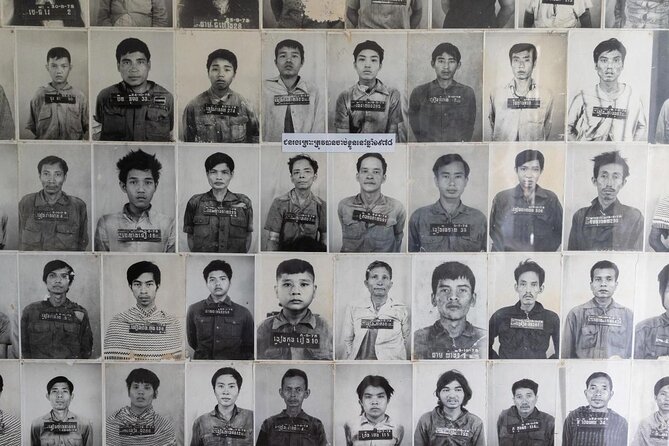
Tuol Sleng, known as S-21, was a former high school in the city. The Khmer Rouge converted it into a high-security prison. The name Tuol Sleng is often translated as hill of the poisonous trees, a grim name for a place where prisoners were held, questioned, and tortured.
The two-hour allocation at each stop is useful because neither site should be rushed. At Choeung Ek, your guide can explain how the site functioned and how it fits into Cambodia’s history from 1975 to 1979. At Tuol Sleng, the focus shifts to imprisonment, forced confessions, and the machinery of fear.
The tour’s stated history describes around 2,000 prisoners being executed at Choeung Ek and about 20,000 people being imprisoned at S-21. It also places these events within the wider Khmer Rouge period, when millions of Cambodians were killed, died from forced labor, starvation, disease, or violence. Your guide’s job is especially important here because the numbers can otherwise become cold and abstract.
More Museums in Phnom Penh
- The Killing Field and Toul Sleng Genocide Museum (S21) Tour
★ 5.0 · 1,977 reviews - Killing field and Toul Sleng genocide museum Tour
★ 5.0 · 610 reviews - Private Half Day To Killing Field & S21 Genocidal Museum in Phnom Penh
★ 5.0 · 137 reviews
Choeung Ek: the killing fields outside Phnom Penh
The drive to Choeung Ek takes you away from Phnom Penh’s central streets to a site with a quieter, more rural setting. That contrast is part of the shock. The place began as an orchard and cemetery, not as a prison or military camp.
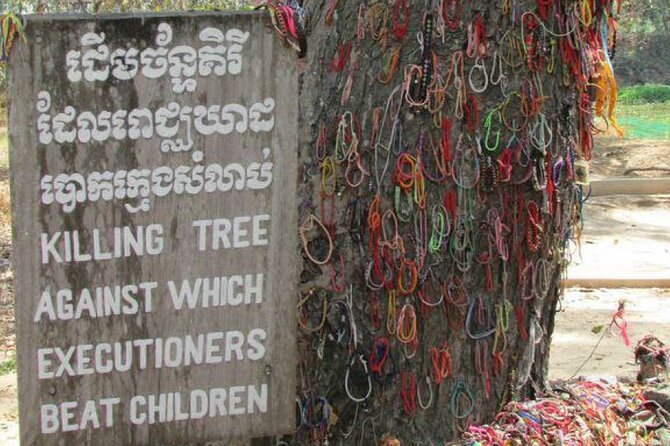
At the center of the visit is the fact that prisoners were brought here from S-21 and other locations. The site is now a memorial and educational center. You should expect the subject matter to be explained plainly, without softening the cruelty of what happened.
The guide makes a real difference here. A good explanation connects the grounds to the people held at S-21 and shows that Choeung Ek was not an isolated event. It was part of an organized process in which prisoners were transported, killed, and buried.
You receive about two hours at this stop, and that gives you time to listen, walk, and pause. This is not a place to hurry through with a quick photograph. You may find that the quiet setting makes the visit even harder to absorb.
One important point: the $3 admission fee for Choeung Ek is not included in the tour price. Bring this extra amount in your budget. The tour description also warns that good weather is required, so poor conditions can lead to a changed date or full refund.
Tuol Sleng: from schoolyard to prison
Returning to Phnom Penh, the group visits Tuol Sleng Genocide Museum, also called S-21. The site had once been a popular high school. The Khmer Rouge turned it into a high-security prison, a transformation that gives the museum much of its force.
The museum explains the experiences of people imprisoned there and the methods used to obtain information. Around 20,000 people were held at S-21, and many were tortured before being killed or sent elsewhere. The buildings and displays make the history feel immediate in a way that a textbook cannot.
You have about two hours here. That is enough time for the guide to provide context and for you to move through the museum without treating it like a quick stop between attractions. The material is confronting, so give yourself permission to be quiet and take breaks if needed.
The guide’s role is again central. Several named guides, including Mr. Baboon and Visal, are described as speaking excellent English and explaining the history in a way that is easy to follow. Mr. Baboon is also described as using humor carefully, while remaining serious when the subject requires it. That balance can help you stay focused during an emotionally heavy visit, though you should not expect the tone to become light.
The entrance fee is $5 per person and is paid separately. Combined with Choeung Ek’s $3 fee, the two admissions add $8 to the advertised price.
The guides bring Cambodia’s past into the present
The strongest reason to choose a guided visit is not simply convenience. It is context. The sites contain powerful evidence, but a guide can explain how they connect and answer questions as they arise.
Guides named in the tour material include Mr. Baboon, Mr. Tea, Visal, and Sum Cheath. Your assigned guide may be different, but the information gives you a useful idea of the experience to expect. The most praised qualities are clear English, factual explanations, a respectful manner, and the ability to tell personal family stories without turning the visit into a performance.
Mr. Baboon is described as having a personal connection to the sites and preparing people for the difficult day ahead. Sum Cheath is described as explaining the history and tragic stories behind the Khmer Rouge period. Visal is noted for thorough historical explanations and very good English.
Some tours of historic sites feel like a list of dates. This one can be more personal. A guide who explains how a family was affected helps you understand that 1975 to 1979 is not distant history for Cambodia. It remains part of living family memory.
You should also feel free to ask questions. The tour specifically invites questions, and this is useful because the Khmer Rouge period can raise difficult issues about politics, survival, responsibility, and memory. Ask respectfully, and give the guide room to answer carefully.
More ways to understand the Khmer Rouge years:
- Visit 11 Places in One Day including S21 & Killing Field
★ 5.0 · 361 reviews - Killing Fields and Prison S21 Bus Tour
★ 4.0 · 206 reviews - Phnom Penh City Tour, Silver Pagoda, Genocide Museum, Killing Fields
★ 5.0 · 123 reviews - A Full Day Tour for Royal Palace, S21, Killing Fields & More
★ 5.0 · 115 reviews
Four hours is a sensible length for this subject
The advertised duration is approximately four hours, with two hours at each site. That is a good fit if you have limited time in Phnom Penh but want more than a rushed photo stop.
A longer tour could give you more time to process the sites, but it might also become emotionally exhausting. Four hours keeps the experience focused. You see both major locations, hear the essential history, and return to Phnom Penh in time for the rest of your day.
The vehicle has air-conditioning, and cool water is included. In Phnom Penh’s heat, these details matter. The trip to Choeung Ek is about nine miles from the city, so a clean, air-conditioned vehicle is more comfortable than arranging separate transport and finding your way between locations.
The maximum group size is 20 people. That is not a private tour, but it is still small enough for the guide to speak to the group and respond to questions. If you need a completely personal pace, you should ask about private options before booking. This experience is designed for a shared group.
Pickup, meeting points, and the real cost
Hotel pickup is included, which makes the morning easier. The tour also lists River Crown Restaurant at 357 Street 178, Preah Sisowath Quay, Phnom Penh, as a start and end point. Since both hotel pickup and a meeting point are given, confirm the exact arrangement when you book.
The tour ends back at the meeting point according to the meeting information, while the main description says the guide returns you to your hotel or guesthouse. That difference is worth clarifying in advance, especially if your accommodation is outside the usual pickup area.
At $19.20 per person, the base price is modest for a four-hour guided visit with a driver, air-conditioned transport, hotel pickup, and water. Add $5 for Tuol Sleng and $3 for Choeung Ek, and the basic total becomes $27.20 per person.
That is fair value if you want the two sites covered in one morning. You are paying for transport and interpretation, not just entry. Going independently could cost less or more depending on your transport, but you would need to arrange the route and provide your own historical context.
Tipping and personal expenses are not included. The tour also offers mobile tickets, and booking confirmation is received at the time of booking.
How to prepare for an upsetting but important visit
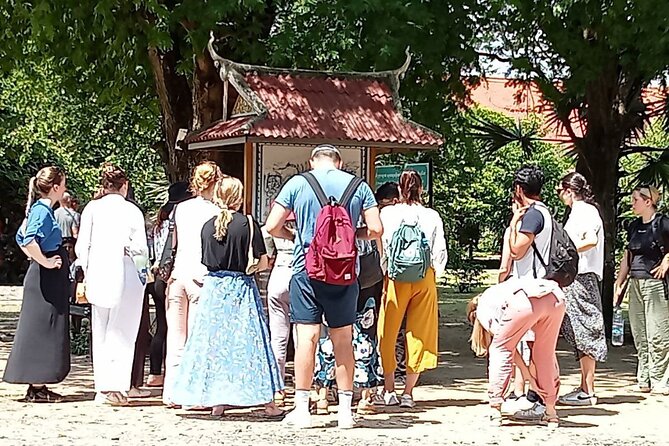
Do not schedule this as a carefree sightseeing morning. The tour covers torture, executions, imprisonment, and mass death. You may find parts of it upsetting, and that reaction is normal.
Wear practical clothing and comfortable shoes because both stops involve moving around the sites. The supplied information does not specify a dress code, so follow ordinary respectful clothing choices for memorial and museum visits.
Bring water if you prefer more than the included supply. The vehicle provides cool water, but you may want your own bottle during the time outside the vehicle.
Most people can participate, and the tour is near public transportation. Still, the emotional demands matter as much as the physical ones. If you are traveling with children or anyone who may find the subject especially distressing, consider discussing the content before booking.
A guide can explain the history, but no guide can remove its weight. Plan something quiet afterward rather than a packed schedule. You may want time to sit, talk, or simply let the experience settle.
Who will get the most from this tour
I would choose this tour if you have one morning in Phnom Penh and want to understand the Khmer Rouge period through both a prison and a killing field. The pairing is efficient and gives you a fuller picture than visiting either location alone.
It suits you if you value clear English explanation, personal stories, and door-to-door transport. It also works well if you do not want to negotiate a tuk-tuk or taxi between central Phnom Penh and Choeung Ek.
You may prefer another arrangement if you want a private guide, a slower pace, or more time at each site. A group capped at 20 is manageable, but it cannot offer the same flexibility as a private visit.
The experience is also not suited to anyone looking for a light cultural outing. Its purpose is remembrance and education. The best approach is to arrive ready to listen and to treat both sites with respect.
Should you book the Choeung Ek and S-21 tour?
Yes, if you want an organized, affordable way to visit Phnom Penh’s two essential Khmer Rouge memorial sites in one morning. The strongest reasons are the sensible four-hour schedule, included transport, hotel pickup, cool water, and guides who explain the history with care and personal connection.
Book it with clear expectations. The price does not include the $8 in entrance fees, the subject matter is harrowing, and you should confirm whether you will be picked up at your hotel or meet at River Crown Restaurant.
For a first visit to Phnom Penh, this is a serious but necessary experience. It asks a lot from you emotionally, yet it gives you the historical grounding needed to understand Cambodia beyond its temples, food, and scenery.
FAQ
How long does the tour last?
The tour lasts approximately four hours, with about two hours at Choeung Ek and two hours at Tuol Sleng Genocide Museum.
What sites does the tour visit?
It visits Choeung Ek Genocidal Center, also known as the Killing Fields, and Tuol Sleng Genocide Museum, also known as S-21.
Is hotel pickup included?
Yes. Hotel pickup is included, although the meeting information also lists River Crown Restaurant as a start and end point. Confirm your exact pickup arrangement when booking.
What is the meeting point?
The listed meeting point is River Crown Restaurant at 357, Street 178, Preah Sisovath Quay, Phnom Penh 12206, Cambodia.
Does the tour include transport?
Yes. A driver and clean, air-conditioned transportation are included. Cool water is also provided.
Are entrance fees included?
No. Tuol Sleng costs $5 per person, and Choeung Ek costs $3 per person. These fees are paid separately.
What is the advertised tour price?
The advertised price is $19.20 per person. With both entrance fees added, the basic total is $27.20 per person, before tips or personal expenses.
Is the tour conducted in English?
Yes. A professional English-speaking guide leads the experience.
How many people can join the tour?
The activity has a maximum group size of 20 people.
Can I cancel for a full refund?
Yes, if you cancel at least 24 hours before the experience start time. Cancellations made less than 24 hours in advance are not refunded. If poor weather causes the tour to be canceled, you are offered another date or a full refund.
Just added around Phnom Penh
- Exploring the Best of Phnom Penh: A Full Day Tour★ 4.5 · 9 reviews
- Private Transfer : Phnom Penh ↔ Sihanouk Ville★ 5.0 · 15 reviews
- War Museum, Killing Field, and APOPO Hero RATs Tour★ 5.0 · 7 reviews
- Phnom Penh Intercity★ 4.5 · 11 reviews
- Phnom Penh Nightlife Street Food Tours★ 4.5 · 14 reviews
- War Museum, Killing Field and Floating Village ( Kampong Phluk)★ 4.5 · 6 reviews
- War Museum, Killing Field and Floating village ( Chong Kneas) Tour★ 5.0 · 14 reviews
- Warm Stone Massage★ 5.0 · 23 reviews
Killing Fields Tours, compared.
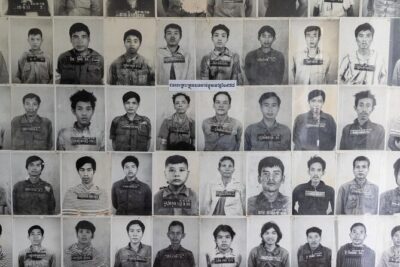
The Killing Field and Toul Sleng Genocide Museum (S21) Tour
Read our review →
Visit 11 Places in One Day including S21 & Killing Field
Read our review →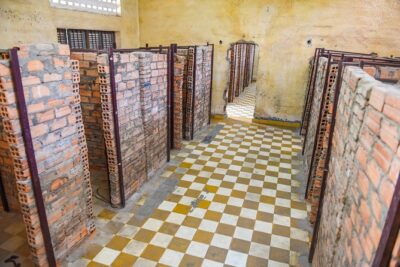
Private Half Day To Killing Field & S21 Genocidal Museum in Phnom Penh
Read our review →
Phnom Penh City Tour, Silver Pagoda, Genocide Museum, Killing Fields
Read our review →City Highlights and the Killing Fields Day Tour
Read our review →
Full-Day Phnom Penh Sightseeing Tour & Killing Field
Read our review →
10 Stop Phnom Penh Tour by Tuk-Tuk, includes S21 & Killing Fields
Read our review →Browse the lists this tour appears in