
Reviewed · CITY TOURS
Half-Day Phnom Penh City Tours
Phnom Penh is easiest to understand when you see both its royal traditions and its painful modern past. This private half-day tour lets you choose between a cultural route through the Royal Palace, Silver Pagoda, Wat Phnom, and markets, or a history-focused visit to S21 and the Killing Fields. I like that the choice matches your interests, and I like that hotel pickup, private transport, a guide, water, and entrance fees are included. The main catch is time: four to five hours goes quickly, so you will need to choose your stops carefully.
I also like the private format. Your group travels alone, so you can ask questions, adjust the pace, and request a small extra stop when time allows. Guides named in guest feedback include Kakada, Channy, Sam, Tom, Jani, and Sina, with particular praise for their friendly manner and ability to explain Cambodian culture alongside the sights. Just keep in mind that the historical route can be emotionally heavy, while the cultural route may feel rushed if you want long museum visits.
Key points to know before booking
- Two very different routes: Choose royal Phnom Penh and city culture, or focus on the Khmer Rouge period at S21 and Choeung Ek.
- Private means only your group: You are not joining a large bus tour, and the guide can adapt the pace to your interests.
- Hotel pickup and transport are included: This saves you from arranging separate rides between central Phnom Penh and the outlying Killing Fields.
- The historical route is intense: S21 and Choeung Ek are important memorial sites, but they are not light sightseeing stops.
- The cultural route packs in major landmarks: The Royal Palace, Silver Pagoda, Wat Phnom, Central Market, and nearby city sights offer a fast introduction to Phnom Penh.
- The $75 price covers key extras: Entrance fees, private transport, a licensed local guide, pickup, drop-off, and bottled water are included.
Choosing between Phnom Penh’s two half-day routes
The central decision is not simply which sights you prefer. It is what kind of introduction to Phnom Penh you want.
The cultural itinerary gives you a broad first look at the capital. You may visit the Royal Palace, the Silver Pagoda, Wat Phnom, the National Museum, Independence Monument, and Central Market, depending on the final route and available time. This is the better choice if you want architecture, religion, royal customs, Khmer art, and ordinary city life in one compact outing.
The historical itinerary concentrates on Cambodia’s Khmer Rouge era. It visits Tuol Sleng Genocide Museum, also called S21, and the Choeung Ek Genocidal Center, commonly known as the Killing Fields. This route asks more of you emotionally, but it also gives essential context for understanding Cambodia today.
You should not assume you will see every location listed across both routes. A four to five-hour tour cannot properly cover the cultural sights and the two genocide sites in one go. Choose one route when you book, then confirm the exact stops with the operator.
More City Tours in Phnom Penh
- Phnom Penh City Tour, Silver Pagoda, Genocide Museum, Killing Fields
★ 5.0 · 123 reviews - City Highlights and the Killing Fields Day Tour
★ 5.0 · 94 reviews - Phnom Penh City Tour & Cambodia Fire Range, Video Services
★ 5.0 · 21 reviews
Royal Palace and Silver Pagoda: Phnom Penh’s ceremonial heart
The Royal Palace is still the king’s residence, which gives the visit a different feel from a standard historic monument. You are seeing an active royal complex, not simply a preserved set of old rooms.
The grounds are known for carefully maintained gardens and ornate Khmer architecture. The visit usually gives you about an hour, enough to appreciate the main buildings and hear how the monarchy fits into Cambodia’s past and present.
The Silver Pagoda, located within the Royal Palace compound, adds a religious focus. Its formal name is Wat Ubaosoth Ratanaram, though most people know it as the Silver Pagoda or Wat Preah Keo Morakot. A separate 30-minute visit is listed for this stop.
Dress modestly for the palace and pagoda. Shoulders and knees should be covered, and comfortable shoes help because you will be walking across the grounds. Your guide can add meaning to details that are easy to miss, including the difference between a royal residence, a worship space, and a ceremonial building.
The palace is one of the strongest reasons to choose the cultural route. It gives you a visual introduction to Cambodia before you move into museums, markets, or city streets.
Wat Phnom and Independence Monument: symbols of the capital
Wat Phnom is a Buddhist temple on a 27-metre-high hill in the middle of the city. It dates to 1372 and is described as Phnom Penh’s tallest religious structure.
The 30-minute stop is brief, but the temple offers a useful change of pace after the palace. You will encounter a working religious site rather than a silent museum. The raised setting also helps you understand the name Phnom Penh, which refers to the city’s hill.
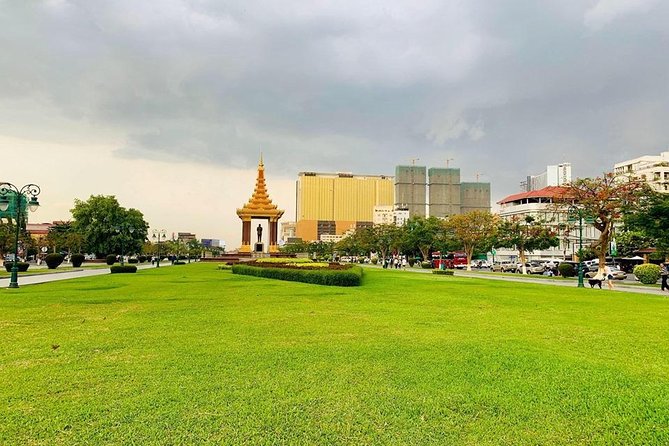
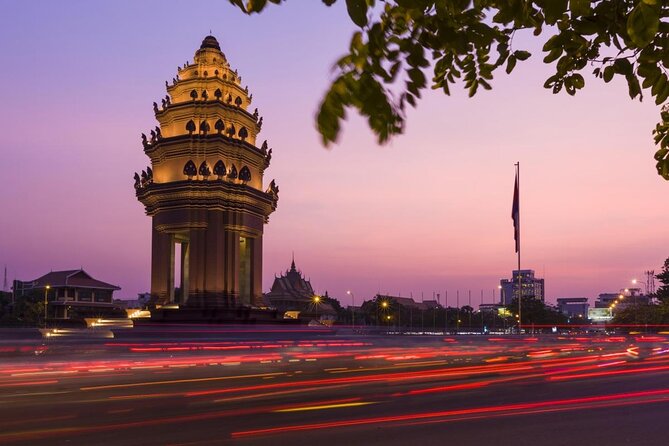
Independence Monument is another important city marker. Built in 1958, it commemorates Cambodia’s independence from France in 1953. It sits at the meeting of Norodom Boulevard and Sihanouk Boulevard, in a part of Phnom Penh that is useful for getting your bearings.
This stop may be shorter than the palace or genocide museums, but it adds political context. The monument connects Cambodia’s royal and colonial past to the modern capital around you.
Central Market: a quick look at daily Phnom Penh
Central Market is one of the city’s most recognizable buildings. Constructed in 1937, it has a large dome with four arms stretching into long halls lined with stalls.
A 30-minute visit is enough for a walk through the market, though not enough for a slow shopping expedition. You may find clothing, souvenirs, household goods, food, and local products. The value here is not just buying something. It is seeing how Phnom Penh shops, eats, and moves through the day.
A guide can help you make sense of the market without wasting time. If you want lunch or a particular purchase, say so early. Meals and drinks are not included, and special food requests may cost extra.
The market is also a practical finish to the cultural route because it shifts the experience from formal sights to everyday life. After palace courtyards and museum displays, this is the place where the city feels most immediate.
Same base, a completely different kind of day:
- The Killing Field and Toul Sleng Genocide Museum (S21) Tour
★ 5.0 · 1,977 reviews - Phnom Penh: Sunset Cruise with Unlimited Beers & BBQ Buffet
★ 4.5 · 727 reviews - Aroma Therapy Massage, Relaxation therapeutic aromatherapy oil massages.
★ 5.0 · 645 reviews - Killing field and Toul Sleng genocide museum Tour
★ 5.0 · 610 reviews
National Museum: useful context, but keep expectations realistic
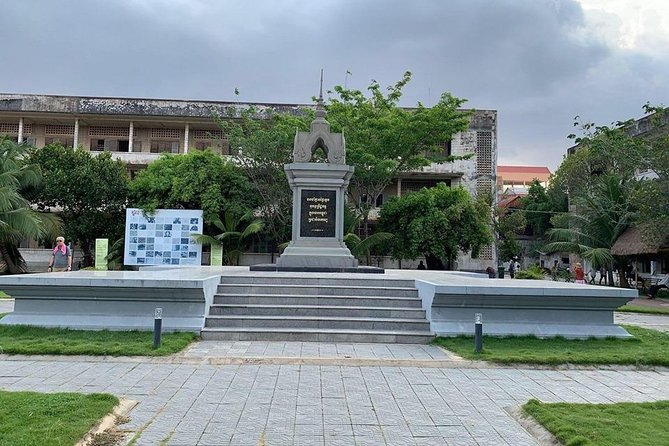
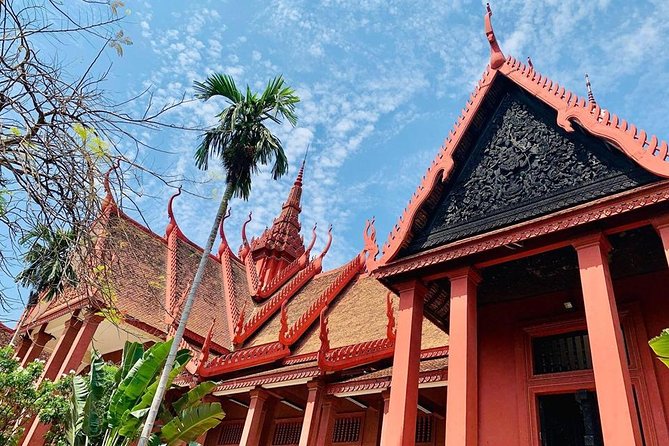
The National Museum is part of the cultural option described for the tour, though the detailed stop schedule also emphasizes the Royal Palace, Silver Pagoda, Wat Phnom, and Central Market. Confirm whether the museum is included in your chosen version before booking.
The museum can help you understand Khmer sculpture, religious imagery, and the artistic background that makes later visits to Angkor Wat more rewarding. One guide may hand you over to a museum guide for a more focused explanation of archaeology and artifact care.
You should also know that the museum may not be the highlight for everyone. One guest found the Buddha displays repetitive and felt the building needed better maintenance. That is fair warning if you prefer interactive museums or polished modern galleries.
I would choose the cultural itinerary for the whole mix rather than for the museum alone. The palace, pagoda, temple, market, and street scenes give the visit more variety.
S21: entering a former school turned prison
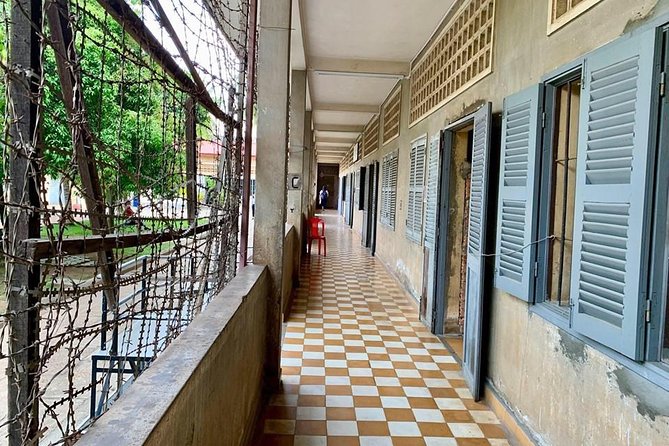
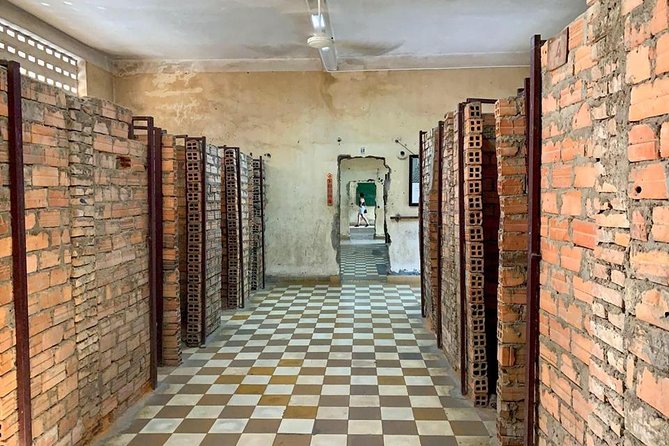
Tuol Sleng Genocide Museum, known as S21, occupies a former secondary school used as Security Prison 21 during the Khmer Rouge regime from 1975 to 1979.
The school setting is part of what makes the visit so difficult. Classrooms were converted into prison cells and interrogation rooms. The place is not presented as a distant battlefield. It is a former urban school, close to ordinary life, and that contrast can be hard to absorb.
Plan to move slowly and listen carefully to your guide. The site requires quiet attention, not rapid sightseeing. Several guides have been praised for handling this material with care, including Sam, who was described as speaking from personal experience, and Channy, who is noted for her clear and attentive style.
Personal testimony can make the history more immediate, but it also means the tone may be very serious. If you are traveling with children, consider their age and temperament before choosing this route. The tour can be educational for older children, but the subject matter is disturbing.
Choeung Ek and the Killing Fields: a solemn second stop
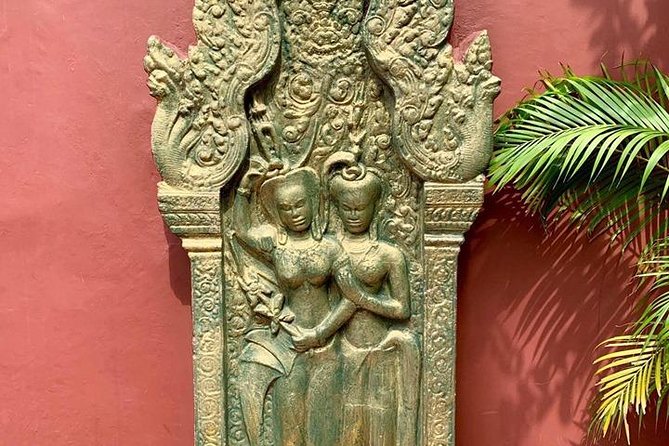
Choeung Ek Genocidal Center is about 15 kilometres from central Phnom Penh. It is one of the sites associated with the mass killings and burials carried out under the Khmer Rouge.
The visit is usually given around 90 minutes, matching the time listed for S21. That is sensible because rushing through either place would undercut its purpose. You need time to listen, reflect, and understand how the prison system connected to the killing sites.
This is not a stop for casual photographs or a quick checklist. The memorial setting is quiet and the subject is painful. One guest described the visit as unforgettable and worthwhile, while also saying it was a relief when the two sites were finished. That is a useful way to plan your day: allow some quiet time afterward rather than scheduling a demanding activity immediately.
The historical route is the right choice if you want to confront Cambodia’s recent past directly. It is not the right choice if you are looking for a light introduction to temples, markets, and royal buildings.
What private transport changes in a half-day
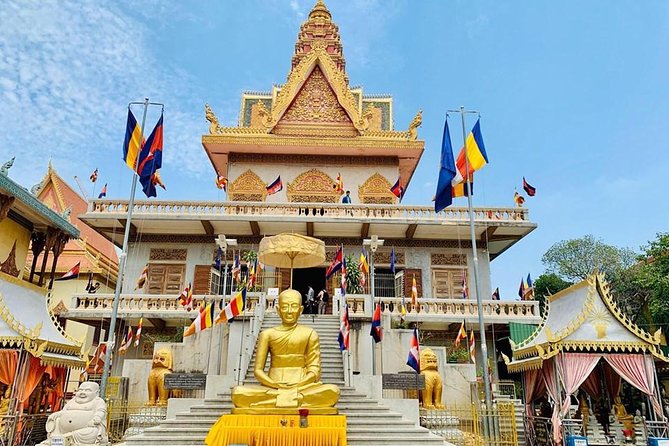
The private vehicle matters most on the historical itinerary. Choeung Ek is outside the central sightseeing area, while S21 is in the city. Having hotel pickup and transport arranged removes the need to negotiate separate rides and keeps the visit within a half-day frame.
Pickup and drop-off are included, as is a cold bottle of water. Entrance fees are also covered, along with a locally licensed guide. You still pay for drinks, meals, insurance, gratuities, personal expenses, and any service not listed.
The private format means only your group participates. This is more useful than a small saving if you want to ask about politics, culture, religion, or family life in Cambodia. Several guides have been praised for speaking openly about present-day Cambodia as well as the past.
The tour is advertised at four to five hours, but one past outing was described as lasting about six hours. Treat the schedule as approximate. Traffic, time spent asking questions, and the number of stops can all affect the finish time.
The guides and the value of personal storytelling
The strongest part of this experience is likely to be the guide rather than the vehicle or the sightseeing list. Names connected with especially strong feedback include Kakada, Channy, Sam, Tom, Jani, and Sina.
Kakada was praised for excellent English, humor, and an easy conversational style. Channy was described as friendly, professional, attentive, and well prepared. Sam received particular praise for explaining both city life and the difficult history of S21.
Tom was appreciated for explaining the background of each sight, while Jani was remembered for an enthusiastic approach to the Royal Palace and museum. Sina reportedly helped with a market visit and even escorted a guest to a later cooking class. These details suggest the operator allows some flexibility, but they do not guarantee a particular guide or extra service.
Tell your guide what you want at the start. You may prefer more historical context, more time at the palace, fewer market stops, or a slower pace at S21. The private setup gives you a better chance of shaping the day than a fixed group excursion.
Is $75 per person good value?
At $75 per person, this is not the cheapest way to move around Phnom Penh. Its value comes from what is bundled into the price: hotel pickup and drop-off, private transportation, a licensed guide, entrance fees, and bottled water.
For a solo visitor, the price may feel high compared with arranging individual tuk-tuk rides. For two or more people, the cost becomes easier to justify because the vehicle and guide serve your group. Group discounts are available, though the exact saving is not specified.
I would especially consider the price fair if you want the historical route. S21 and Choeung Ek are not next door to each other, and arranging transport, tickets, and a guide separately takes time. On the cultural route, the value depends more on how much you care about personal explanations and convenience.
The 4.9 rating from 22 reviews and a 100 percent recommendation mark suggest a strong record, but you should still match the route to your expectations. One cultural outing found the palace excellent but the museum less rewarding. That kind of variation is normal, and it is why your route choice matters more than the headline rating.
Who should book this Phnom Penh tour?
I would recommend it to first-time visitors with limited time, couples or families wanting their own vehicle, and anyone who prefers to learn through conversation rather than walk around sights alone.
Families can benefit from the private format because the guide can adjust to a child’s short attention span. One family specifically valued a guide who adapted the day and made the history accessible. Still, I would choose the cultural route for younger children and reserve S21 and Choeung Ek for children mature enough to handle genocide history.
It is also a good fit if you have only one day in Phnom Penh and want an organized introduction without spending the entire day on a bus. If you have several days in the city, you may prefer to visit fewer places at a slower pace.
Wear respectful clothing for the Royal Palace and Silver Pagoda, bring sun protection, and carry some money for food, drinks, shopping, or gratuities. Free cancellation is available up to 24 hours before the start time. Changes made less than 24 hours ahead are not accepted, and poor weather may lead to a new date or full refund.
Should you book it?
Book this tour if you want a private, efficient introduction to Phnom Penh and value a guide who can explain both national history and daily life. Choose the cultural route for palaces, temples, art, and markets. Choose the historical route if understanding the Khmer Rouge period is your main reason for visiting the capital.
Skip it if you want a slow museum day, a food-focused outing, or a tour with no difficult subject matter. The four to five-hour schedule is useful, but it forces choices. For most first visits, that focus is a strength, provided you choose the itinerary that fits your interests and emotional comfort.
FAQ
How long does the Phnom Penh city tour last?
The tour lasts approximately four to five hours. Actual timing can vary with traffic, questions, and the pace of your private group.
Is hotel pickup and drop-off included?
Yes. Hotel pickup and drop-off are included in the tour.
Is this a private tour?
Yes. Only your group participates, with private transportation and a local licensed guide.
Which routes can I choose?
You can choose between a cultural itinerary focused on sights such as the Royal Palace, Silver Pagoda, Wat Phnom, museums, and markets, or a historical itinerary focused on S21 and the Killing Fields.
Are entrance fees included?
Yes. The listed entrance fees are included. Meals, drinks beyond the provided bottle of water, insurance, gratuities, personal expenses, and unlisted services are not included.
Can I cancel for a full refund?
You can cancel at least 24 hours before the experience start time for a full refund. Cancellations or changes made less than 24 hours before the start time are not accepted.
Just added around Phnom Penh
- Exploring the Best of Phnom Penh: A Full Day Tour★ 4.5 · 9 reviews
- Private Transfer : Phnom Penh ↔ Sihanouk Ville★ 5.0 · 15 reviews
- War Museum, Killing Field, and APOPO Hero RATs Tour★ 5.0 · 7 reviews
- Phnom Penh Intercity★ 4.5 · 11 reviews
- Phnom Penh Nightlife Street Food Tours★ 4.5 · 14 reviews
- War Museum, Killing Field and Floating Village ( Kampong Phluk)★ 4.5 · 6 reviews
- War Museum, Killing Field and Floating village ( Chong Kneas) Tour★ 5.0 · 14 reviews
- The killing field and Toul Sleng Genocide museum (S21) Tour★ 4.5 · 19 reviews
City Tours, compared.

Full Day tour .City tour.Countryside.Bamboo Train.Secret Bat Cave
Read our review →
Phnom Penh City Tour, Silver Pagoda, Genocide Museum, Killing Fields
Read our review →City Highlights and the Killing Fields Day Tour
Read our review →
Siem Reap City Tour with War Museum and Killing Field
Read our review →
Phnom Penh City Tour & Cambodia Fire Range, Video Services
Read our review →
Sihanoukville Full Day City Tour with Transportation & Guide
Read our review →
Browse the lists this tour appears in