
Reviewed · HISTORICAL TOURS
2 Days Guided Historical Tour in Angkor
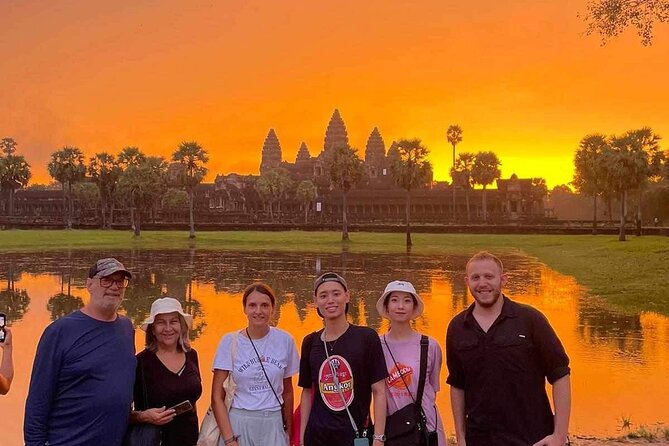
Angkor Wat at sunrise is the hook, but the real value comes from seeing the wider temple complex over two days. You begin before dawn, then move from the famous faces of Bayon and tree-covered Ta Prohm to quieter sites such as Ta Som and Preah Khan. Guides including Sam, Vone, Heang, and Sary are praised for clear stories, patience, humor, and help with photos.
I like the small group limit of 15, which gives you a better chance to ask questions than on a large bus tour. I also like the practical care: air-conditioning, regular cold water, wet towels, and clean restroom stops matter when the temperature rises.
The main drawback is cost clarity. The tour is advertised at $35, but the Angkor temple pass costs another $62, and meals are not included. The 4:30 a.m. start and two full days of walking also demand real energy.
Key points to know before booking
- Sunrise begins at 4:30 a.m.: You leave early for Angkor Wat, with time to watch the sky brighten before exploring inside.
- The $35 price excludes the temple pass: Budget an additional $62 per person for admission.
- Guides make a major difference: Sam, Vone, Heang, Sary, and others are noted for temple history, personal stories, humor, and patience.
- Day one covers the famous core: Angkor Wat, Angkor Thom, Bayon, Ta Keo, and Ta Prohm form a strong first introduction.
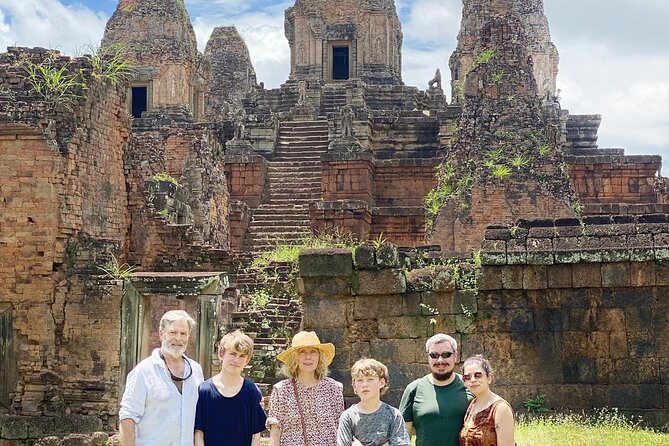
- Day two is quieter and more varied: Pre Rup, Ta Som, Neak Pean, Preah Khan, and Phnom Bakheng offer different settings and fewer crowds at some times.
- Heat management is built in: Cold water, wet towels, air-conditioning, and breaks help, but you still need to pace yourself.
Why two days works better than one
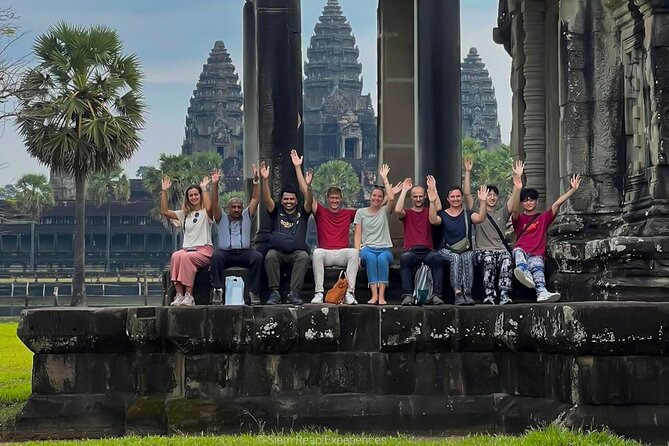
Angkor is not one building. It is a large collection of temples spread around the former Khmer capital, and each site has a different feel. A one-day visit can cover the headline monuments, but it leaves little room for smaller temples or a slower explanation of how the complex developed.
This two-day plan gives you the classic sights first, then a second day for places that are often skipped. That order makes sense. You see Angkor Wat while your energy is fresh, then use the next day to look at brick towers, reservoirs, galleries, and smaller temple layouts.
The pace is still active. The scheduled stops add up to long hours, and several temples require walking over uneven stone. A past participant who managed only the first day still found that day worthwhile, but also described the heat as difficult, with temperatures reaching around 40 degrees. Take that seriously. The tour provides water and lets you rest in the vehicle, but no temple tour can remove the heat.
More Historical Tours in Siem Reap
- Siem Reap: Banteay Srei and Grand Circuit Heritage Tour
★ 4.9 · 163 reviews - Banteay Srei and Grand Circuit Heritage Tour from Siem Reap
★ 5.0 · 142 reviews - Angkor World Heritage with Sunrise – Small Group
★ 5.0 · 32 reviews
Day one starts with Angkor Wat before dawn
Pickup begins around 4:30 a.m. from your hotel or an agreed point in Siem Reap. The listed meeting point is near Siem Reap Pub Hostel, behind Angkor Night Market, with drop-off available at your hotel or somewhere around Pub Street.
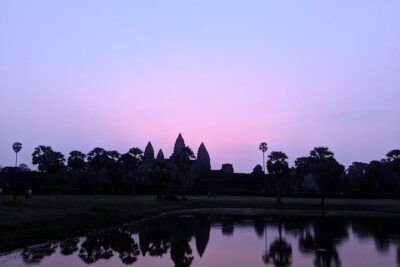
The early start is not a small detail. You need to be ready in the dark, and one person specifically noted that a flashlight was provided for the walk before sunrise. The benefit is the chance to see Angkor Wat’s towers against the changing morning sky, then enter the temple with a guide while the day is still cool.
You have about two hours at Angkor Wat. Your guide explains the temple’s layout, carvings, religious purpose, and construction, then allows time to look around and take pictures. That balance matters. A guide who talks without pause can make a huge temple feel like a classroom, while too little explanation leaves you staring at stone without context.
Expect a busy first stop. Angkor Wat is the best-known site in the complex, so sunrise does not mean you will have the place to yourself. Still, the early light and the chance to explore before the worst heat make the start worthwhile.
Angkor Thom and Bayon reveal a different Cambodia
The South Gate of Angkor Thom is a short stop, about 30 minutes, but it sets up the next part of the day. A causeway lined with stone figures leads toward the city gate, whose carved faces date from the 12th century.
Look closely at the figures on both sides of the causeway. The gate is not just a photo stop. It introduces the scale of Angkor Thom and the religious ideas expressed through its carvings. Your guide can help you notice details that are easy to miss from the vehicle.
Bayon receives about two hours, and it deserves that time. This late 12th or early 13th-century Buddhist temple is known for its enormous smiling faces, carved into towers that seem to watch from every direction. The arrangement can feel confusing at first, with galleries, stairways, and faces appearing as you turn corners.
This is one place where a strong guide adds real value. Sam is praised for explaining Cambodian and Khmer Empire history in a way that holds attention, while Vone is known for adding jokes and pointing out details people might otherwise pass. You get a useful introduction, time to explore on your own, and help with questions.
Ta Keo brings a change of scale
Before Ta Keo, the group stops for breakfast. Food is not included, so you pay for your own meal. This is a useful pause after the early start, but it also means you should not assume breakfast is part of the $35 price.
Ta Keo is a temple mountain built largely from sandstone, with steep lines and a more stripped-back appearance than Angkor Wat or Bayon. You spend about an hour here. The temple’s height and stairs can make it feel demanding, especially after a morning of walking.
The stop helps break up the day. Angkor is not only about ornate carvings. Ta Keo gives you a chance to see a more severe architectural style and consider how Khmer builders used height, terraces, and central towers to represent sacred mountains.
Same base, a completely different kind of day:
- Angkor Wat Sunrise or Sunset Tour with Guide from Siem Reap
★ 5.0 · 12,109 reviews - Siem Reap: Angkor Wat: Small-Group Sunrise or Sunset Tour
★ 5.0 · 9,444 reviews - From Siem Reap: Kampong Phluk Floating Village Tour by Boat
★ 4.9 · 6,979 reviews - Sunset tour of Kampong Phluk stilts home village on the Tonle Sap
★ 5.0 · 4,865 reviews
Ta Prohm supplies the famous tree-covered ruins
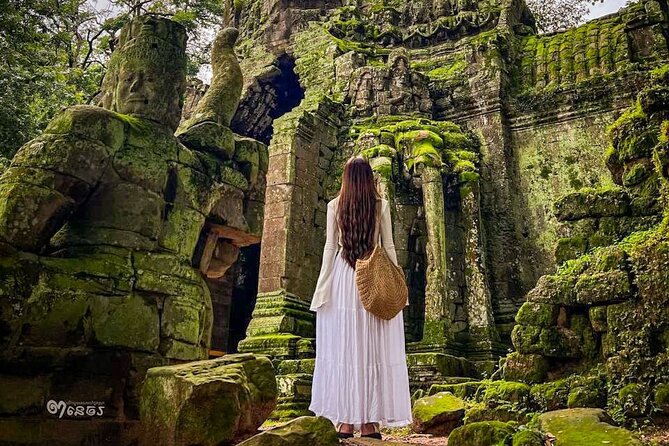
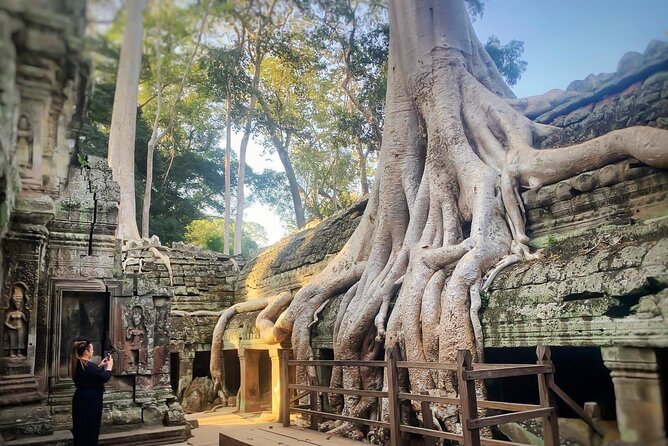
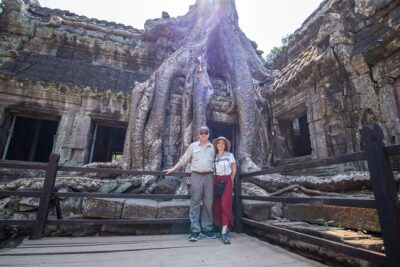
Ta Prohm is usually the most atmospheric stop on day one. Built in the Bayon style, it is known for stone galleries tangled with large tree roots. The trees are not a stage prop. They are part of the long, complicated story of how the site was preserved and presented.
You get about an hour here. That is enough to walk through key sections, take photos, and hear how the temple was built and used. It is not enough to examine every passage, so stay near the guide when the explanation begins and then use your free time carefully.
Ta Prohm can be crowded, even outside the busiest periods. The group format helps you move through the site without worrying about transport or directions, but you will still share popular photo spots with other people. This is one of the reasons day two is useful: it gives you less famous temples where the visit can feel calmer.
Day two moves toward brick temples and quieter corners
The second day begins with Pre Rup, a Hindu temple built as a state temple for King Rajendravarman in 961 or 962. Its temple-mountain form combines brick, laterite, and sandstone.
Pre Rup offers a strong contrast with the first day’s monuments. The warm brick and stepped structure give it a different character, and the higher levels provide broad views across the surrounding area. You spend about two hours here, so there is time to hear the background and walk at a slower pace.
Ta Som is smaller and takes about an hour. Built at the end of the 12th century for King Jayavarman VII, it has a more intimate scale than Angkor Wat or Bayon. Smaller does not mean less interesting. In fact, a compact temple can make it easier to understand the relationship between entrance towers, galleries, and the central sanctuary.
Neak Pean is another one-hour stop, set on an artificial island in a reservoir associated with the temple complex. The walk toward it gives the visit a change of rhythm. Instead of climbing through a large stone structure, you follow a route across the water and approach a temple with a distinctive island setting.
The itinerary describes these sites as part of the less-visited second day. That can make a major difference for photography, especially in lower season, when you may find more open views and fewer people behind you.
Preah Khan is the day two highlight
Allow about two hours for Preah Khan, a 12th-century temple built by King Jayavarman VII in honor of his father. It lies northeast of Angkor Thom, near the Jayatataka reservoir.
Preah Khan has the kind of scale that rewards time. You can pass through long galleries, look for carved details, and get a clearer feel for how a major temple complex was organized. The site also carries the layered appearance common at Angkor, where stone, vegetation, damage, restoration, and later religious use all meet.
This is a good place to ask questions. Guides such as Heang and Sam are praised for explaining the temples rather than simply naming them. Heang is noted for useful information at each site, while Sam is repeatedly described as patient and strong on stories about the Khmer Empire and Cambodian history.
Phnom Bakheng finishes with a sunset plan
The final stop is Phnom Bakheng, a Hindu temple mountain dedicated to Shiva and built near the end of the 9th century during the reign of King Yasovarman.
The scheduled time is listed as only two minutes, but the tour description and firsthand account make clear that the plan is to stay for sunset. Treat the sunset as a goal rather than a guarantee. Timing, crowd control, weather, and the day’s pace can all affect how long you remain.
Phnom Bakheng is a fitting last stop because it changes your view from temple interiors to the wider setting around Angkor. After two days of examining carvings and towers, looking outward helps connect the monuments to the old city around them.
Guides, transport, and the small practical touches
The tour uses an air-conditioned vehicle and includes hotel pickup and drop-off around Siem Reap. That saves you from arranging separate transport between scattered temples, and it gives you a cool place to recover between stops.
Cold water and wet towels are supplied. These sound like minor extras until you have spent several hours walking in Cambodian heat. Clean restroom breaks are also built into the day, according to the experience details shared by participants.
The maximum group size is 15. That is not a private tour, but it is small enough for a guide to hear questions and keep track of the group. Guide quality can vary by assignment, yet the named guides receive particularly strong praise. Sam is often singled out for detailed explanations, Vone for humor and photography help, Heang for useful temple information, and Sary for clear guiding and good pacing.
One point deserves attention: communication at pickup. A negative experience involved a guide calling only when already leaving, after which the group tried to meet at different temple stops without success. Confirm your pickup details before the morning begins, and do not assume the guide will wait if you are not at the agreed location.
What the $35 price really means
At $35 per person, the tour is inexpensive for two days of transport and guiding. But the headline price does not cover the temple admission pass, listed as $62 per person. Meals are also extra, including the breakfast stop on day one.
Your real minimum cost is therefore $97 per person before food. That is still reasonable if you want a guide and transport for the full two-day route, but it is not a $35 all-in visit.
The value is strongest for people who would otherwise hire separate tuk-tuk transport, arrange a guide, and work out the route themselves. You are paying for structure, explanations, hotel pickup, cool water, and a plan that includes both major and lesser-known temples.
Who should book this Angkor tour?
I would choose this tour if you want the major Angkor sites explained properly, but also want more than the standard one-day circuit. It suits first-time visitors, couples, families, and small groups of friends who prefer shared transport to planning every temple themselves.
It is also a good fit if you care about history and want time for questions. The guide is not just there to point at buildings. The best guides on this route explain rulers, religious changes, architectural styles, and small details in the carvings.
I would think twice if you dislike early mornings, long walks, heat, or fixed group schedules. The tour is not a leisurely hotel outing. It starts before sunrise and keeps moving across two days.
Book only after checking the language you need. One French-speaking participant found communication difficult and suggested requesting a Francophone guide. The available guide language is not specified here, so ask before paying if that matters to you.
Free cancellation is available up to 24 hours before the start time. Changes or cancellations inside that window are not accepted for a refund.
Should you book it?
Book this tour if you want a well-planned two-day introduction to Angkor, with sunrise at Angkor Wat, sunset at Phnom Bakheng, and enough time for Ta Prohm, Bayon, Preah Khan, and smaller sites. The $35 base price is attractive, but budget for the separate $62 temple pass and meals.
Skip it if you want complete independence or a slow, private schedule. For most people who want the history explained and the transport handled, this is a strong-value way to see far more than Angkor Wat alone.
FAQ
How long is the tour?
The experience lasts approximately two days.
What time does the tour start?
Pickup begins at approximately 4:30 a.m.
Is hotel pickup included?
Yes. Hotel pickup and drop-off in Siem Reap are included. Drop-off can be at your hotel or somewhere around Pub Street.
How large is the group?
The tour has a maximum of 15 participants.
Is the Angkor temple pass included?
No. The temple ticket is separate and costs $62 per person.
Are meals included?
No. Meals are not included. The itinerary includes a breakfast break near Ta Keo, but you pay for your own food.
Which temples are visited?
The named stops include Angkor Wat, Angkor Thom South Gate, Bayon, Ta Keo, Ta Prohm, Pre Rup, Ta Som, Neak Pean, Preah Khan, and Phnom Bakheng. The tour is advertised as covering 11 temples.
Is water provided?
Yes. Cold water and wet towels are included.
Is transportation air-conditioned?
Yes. The tour includes an air-conditioned vehicle.
Can I cancel for a full refund?
Yes, if you cancel at least 24 hours before the experience start time. Cancellations or changes made less than 24 hours before the start time are not accepted for a refund.
Just added around Siem Reap
- Twilight Tastes of Siem Reap Include Dinner★ 5.0 · 13 reviews
- Ultimate Sunrise to Angkor Wat, Angkor Thom and Bayon Temple★ 5.0 · 3 reviews
- Trekking Tour at Phnom Kulen National Park from Siem Reap★ 5.0 · 3 reviews
- Professional Photo Shoot in Angkor Archaeological Park, Siem Reap★ 5.0 · 42 reviews
- Full-Day Private Tour of Angkor Wat with Pick Up★ 5.0 · 12 reviews
- Unveiling 2 Days Private Angkor Wat/Beyond In Sunrise/Sunset Tour★ 5.0 · 48 reviews
- Siem Reap City Tour with War Museum and Killing Field★ 5.0 · 27 reviews
- Waterfall & River of 1000 Siva Linga- Kulen Mountain Private Tour★ 5.0 · 3 reviews
Historical Tours, compared.
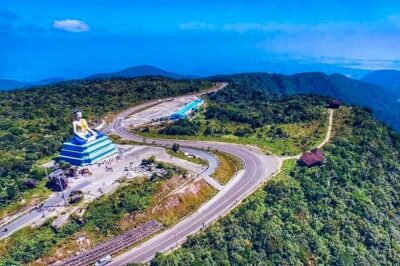
Bokor Mountain Adventure – History, Sights and Waterfalls
Read our review →
Angkor World Heritage with Sunrise – Small Group
Read our review →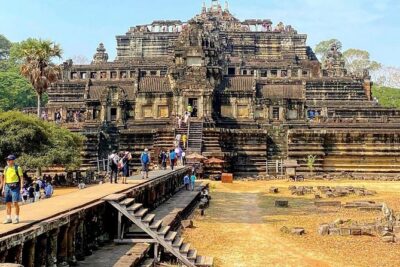
Private Angkor Wat Tour & Angkor Park/Heritage With Local Guide
Read our review →
Kulen Mountain Waterfall and Historical Wonders Private Tour
Read our review →Browse the lists this tour appears in