
Reviewed · TEMPLE TOURS
1-Day private Angkor Temple Tour by Tuk Tuk from Siem Reap
Angkor is best tackled with a plan, and this private tuk tuk tour gives you one without locking you into a rigid group schedule. You move from Angkor Wat to Ta Prohm with an English-speaking guide, while the open-sided tuk tuk keeps the rides easy and lets you feel the heat, scents, and sounds of Cambodia along the way.
I like the private format, since you can adjust the pace and spend more time at the temples that catch your eye. I also like the well-planned route through Angkor Thom, with its giant stone faces, royal terraces, and less obvious corners before the afternoon visit to Ta Prohm.
The main point to weigh is the admission fee. The $30 price covers the tuk tuk, guide, pickup, drop-off, and water, but your Angkor temple pass is extra, and you should be ready for several hours of walking in the heat.
Key points to know before you book
- Private tuk tuk for about eight hours: Your group has its own vehicle and can request a flexible pace.
- A full classic Angkor route: The day covers Angkor Wat, Angkor Thom, Bayon, Baphuon, Phimeanakas, both royal terraces, and Ta Prohm.
- Guide-led temple visits: An English-speaking guide explains the carvings, myths, royal buildings, and religious purpose of each site.
- Useful comforts included: Hotel pickup and drop-off, bottled water, and a local restaurant stop are part of the day.
- A good way to limit midday strain: The route places the major temple visits around short tuk tuk rides and includes a shaded lunch break.
- Budget carefully: The advertised $30 per person does not include the Angkor entrance ticket.
Why a private tuk tuk works well at Angkor
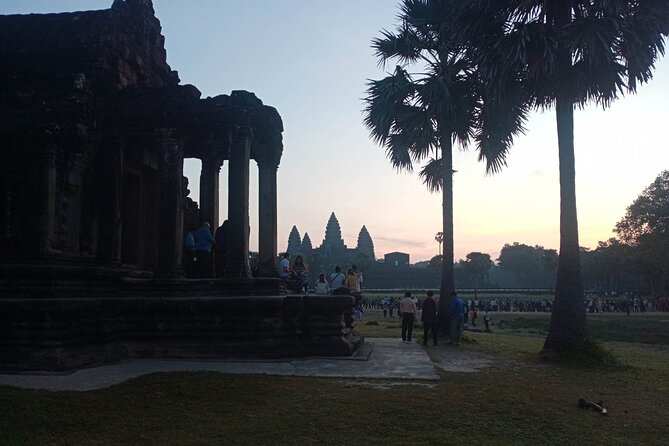
Angkor is not one temple. It is a huge archaeological zone spread around the former Khmer capital, and the distances between sites matter. A private tuk tuk saves you from arranging separate rides and gives you a local guide to connect the stonework with the people and rulers who built it.
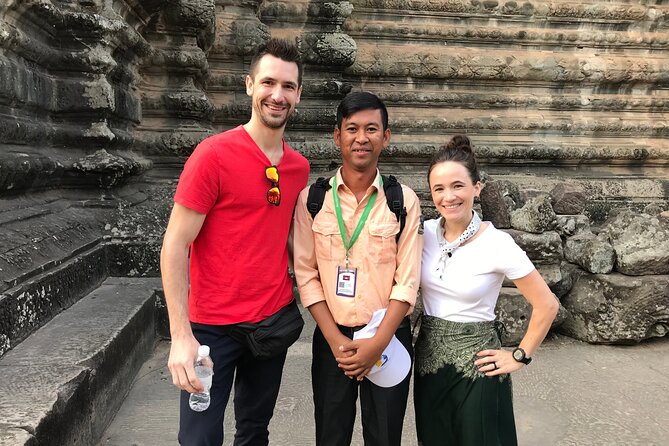
The open vehicle is part of the appeal. You are not sealed away from the road, and short transfers give your legs a break between walks. The tour also includes bottled water, while one highly praised departure with guide Sim added cold towels and a very clean, comfortable tuk tuk. Those extras are especially welcome after climbing steps and walking across exposed courtyards.
The day lasts about eight hours, so this is not a quick photo run. You will see the famous monuments, but you also get time to listen, look closely at carvings, and visit smaller corners of Angkor Thom. Since the tour is private, you can ask for more explanation at one temple or keep moving if the heat is wearing you down.
The tradeoff is that a private tour depends on your guide and your communication with that guide. The advertised experience is flexible, but the exact timing can change. If you want a fixed timetable or a large social group, this may not be your ideal choice. For most people who want a first full day at Angkor, the private setup is a strong fit.
More Private Tours in Siem Reap
- Full-Day Angkor Wat Sunrise Private Tour with Guide from Siem Reap
★ 5.0 · 2,920 reviews - Siem Reap: Angkor Wat Private Tuk-Tuk Tour
★ 4.9 · 2,222 reviews - Angkor Wat Private Day Tour from Siem Reap
★ 5.0 · 834 reviews
Starting at Angkor Wat from the quieter eastern side
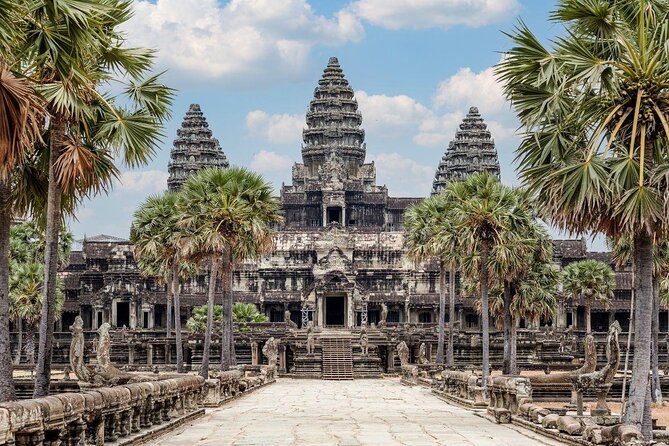
Angkor Wat receives the biggest share of attention, and rightly so. Built in the early 12th century, it is the largest religious monument in the world and the best-preserved major temple in the Angkor area. It has continued as a significant religious center since its foundation, which gives the site a living quality beyond its fame.
This tour enters from the eastern side, described as the less-visited approach. That changes the first impression. Instead of rushing straight toward the most familiar front view, you move through a quieter route and a jungle path toward the north ancient library pool.
Allow about two hours here. Your guide explains the central chambers, the temple’s religious purpose, and the myths and stories carved into the walls. The bas-reliefs are a major reason to spend real time inside. They run for a great distance and show scenes from Hindu mythology, royal life, battles, and ceremonial events.
Look closely rather than trying to photograph every surface. The scale can make Angkor Wat feel like a grand backdrop, but details in the stone tell the better story. Your guide can help you read those scenes instead of seeing them as a blur of carved figures.
There is a practical side to this stop. Angkor Wat is a large complex, and the walking can be tiring before the day has properly begun. Wear flat shoes with good grip, bring a hat if you use one, and take the bottled water offered by the tour.
The Angkor entrance ticket is not included. Your guide sends a link so you can purchase the temple e-ticket in advance, and you should arrange this before the tour day. Without the required pass, you cannot enter the main temple sites.
Entering Angkor Thom through the South Gate
After Angkor Wat, the tuk tuk takes you to Angkor Thom, the former capital city of the Khmer Empire. The South Gate is one of five entrances through the fortified city walls, and its approach gives you an immediate sense of Khmer power and planning.
A row of 54 stone figures lines each side of the causeway. One side shows gods and the other demons, according to the traditional interpretation, all linked to the famous Hindu story of the Churning of the Ocean of Milk. The figures lead your eye toward the gate, whose towers and faces make a strong first photograph.
The stop lasts about 20 minutes. That is enough for a look, photographs, and a short explanation, but not enough for a long study of every figure. Traffic and other groups can make this a busy point, so your guide’s timing matters.
Angkor Thom was much more than a temple compound. It was a planned royal capital, and its large scale helps explain why the later stops feel spread out. The South Gate is a quick introduction to that city before you move toward its religious and royal center.
Bayon and the famous stone faces
Bayon is one of the most memorable stops of the day. Built in the 13th century as the state temple of King Jayavarman VII, it sits near the center of Angkor Thom. Its upper towers carry more than 200 enormous stone faces, many with calm, almost smiling expressions.
Give yourself about 50 minutes here. The temple is a maze of galleries, towers, stairways, and close-set stonework. From different angles, faces appear beside you, above you, and beyond narrow passageways. It is a place where walking slowly pays off.
Bayon has two sets of bas-reliefs. The outer galleries show historical and everyday scenes alongside religious imagery. You might see military processions, market life, animals, boats, and details of ordinary Khmer society. These carvings help you picture the people behind the royal monuments.
The inner areas are compact and uneven. Comfortable shoes matter, and you should expect some climbing and careful steps. If you prefer a quiet look at the faces, tell your guide. The private format makes it easier to pause away from the most crowded points.
More Tuk-Tuk Tours in Siem Reap
- Siem Reap Countryside Bike Tour / E-Bike or Tuk Tuk
★ 5.0 · 935 reviews - Angkor Sunrise Bike Tour / E-Bike or Tuk Tuk
★ 5.0 · 615 reviews - Angkor Wat Private Tuk-Tuk Tour (sunrise Option) & more
★ 5.0 · 439 reviews - Old Siem Reap Sunset Food Tour by Tuk-tuk
★ 5.0 · 311 reviews
Baphuon and the royal enclosure
Baphuon sits northwest of Bayon and was built in the mid-11th century as a state temple. It is a three-tiered temple mountain, and its long raised walkway leads you toward the main structure.
The temple measures about 120 meters from east to west and 100 meters from north to south at its base. It once rose higher than it does now, with a tower that would have brought its total height to roughly 50 meters. Even without that original tower, the scale is impressive.
Plan for about 40 minutes. The approach gives you a clear sense of the temple’s symmetry, while the upper levels offer views across the surrounding enclosure. Some steps are steep, so this stop may feel more demanding than the flat courtyards at other sites.
Baphuon is also useful as a contrast with Bayon. Bayon feels crowded with faces and galleries. Baphuon feels more like a mountain built in stone, with a strong central axis and long lines leading upward.
Phimeanakas and the former Royal Palace area
Phimeanakas, also called Vimeanakas, is inside the walled enclosure of the former Royal Palace. The temple was begun in the late 10th century during the reign of Rajendravarman and completed under Suryavarman I.
Its name means celestial temple. The structure takes the form of a three-tier pyramid, with galleries around the upper platform and a tower that once rose from the top. About 35 minutes are planned here.
Do not expect the same level of intact decoration found at Angkor Wat. The value of Phimeanakas is its place within the old royal compound and its pyramid form. Your guide can help you understand how temples, palace grounds, and ceremonial spaces worked together.
The site can feel calmer than Bayon and Angkor Wat. That makes it a useful pause in the middle of a busy day, especially if you want to think about Angkor as a capital rather than a collection of separate monuments.
The Leper King and Elephant terraces
The Terrace of the Leper King is a U-shaped structure associated by some scholars with royal cremation rites. It was built in the 13th century under Jayavarman VII, while the modern name comes from a later sculpture found at the site. That figure depicts Yama, the Hindu god of death.
Allow about 30 minutes. The outer wall can look fairly plain at first, but the inner carvings are the reason to look closer. Figures appear in several rows, and the narrow passage creates a different mood from the open terraces nearby.
The Terrace of the Elephants is much longer, stretching about 350 meters along the former royal center. It served as a reviewing stand for public ceremonies and as a base for the king’s grand audience. Some Khmer residents call it the Ancient Khmer Stadium, a useful nickname for a long ceremonial platform built for public display.
Another 30 minutes is planned here. You can study the elephant carvings, see the scale of the terrace, and imagine royal processions moving along the front. This is not a temple interior, so the stop works best when your guide explains how the space functioned.
The two terraces are close enough in theme to make a satisfying pair. One points toward death and ritual. The other points toward ceremony, state power, and the public face of the kingdom.
The quieter corners of Angkor Thom
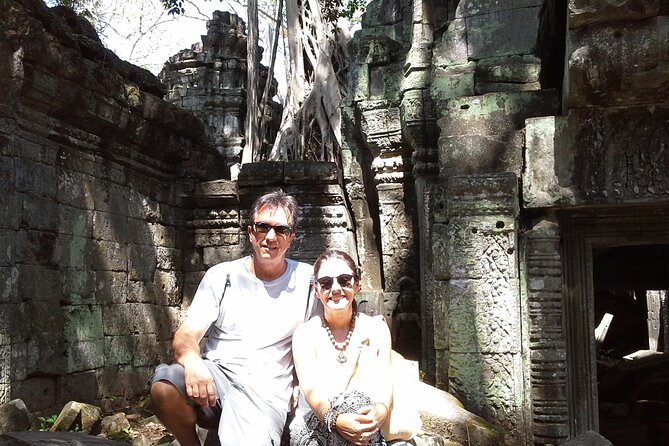
The route includes two short, flexible stops described as less-seen or secret places within Angkor Thom. Each is listed at about ten minutes. The exact location is not specified, which is part of the point: your guide can take you to a corner that many people pass without noticing.
Treat these as bonus stops rather than major monuments. They may be best for a quick photograph, a quiet look, or a chance to step away from the main flow of the day. Since the tour is private, you can ask your guide to explain why the place matters instead of simply making a brief stop.
These small additions help prevent the day from feeling like a checklist. Angkor rewards curiosity, and a short stop between major temples can be a welcome change of pace.
Lunch, cold drinks, and a break from the heat
Lunch takes place at a local restaurant near the 12th-century temple complex, with cold drinks included in the day’s plan. The meal is not described as included, so confirm what you will pay for food before ordering.
This pause matters. Angkor’s heat can make even a moderate walking schedule feel hard, and a restaurant stop gives you time to cool down before Ta Prohm. Keep the break practical: drink water, rest your feet, and do not rush back into the ruins simply to stay on schedule.
The tour does not promise a particular menu. You can expect the stop to be a convenient local meal rather than a separate food tour. If you have dietary needs, tell the provider when booking so you can clarify what is possible.
Ta Prohm, where trees take over the ruins
Ta Prohm is the afternoon finale, and it has a mood unlike the more ordered temples earlier in the day. Built in the 13th century under Jayavarman VII, it was a religious temple at the center of the Ancient Khmer University.
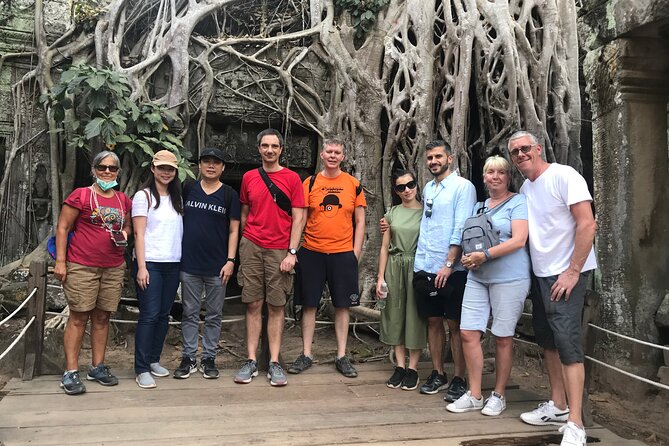
The temple is famous for its trees growing through and over the stone ruins. UNESCO added Ta Prohm to the World Heritage List in 1992, and its combination of jungle growth, broken galleries, and carved doorways has made it one of Angkor’s most photographed sites.
You get about one hour here. That is enough for a solid visit, though you will not see every passage in detail. The best approach is to move beyond the first famous tree and look at the surrounding galleries, courtyards, and carved lintels.
Ta Prohm is often linked with the film Tomb Raider, but its appeal does not depend on cinema. The trees and ruins create a strong sense of age, while the temple’s layout lets you see how nature and conservation have shaped the site. Some paths can be uneven or narrow, so flat shoes are important.
Because Ta Prohm is a major draw, crowds can build up. The tour description promises help with avoiding crowds and escaping the heat, but no exact departure time is given. Ask your guide about the best sequence on your day, and be ready to adjust the pace.
What the $30 price really covers
At $30 per person, this is a low-cost way to arrange a full day at Angkor, especially if you value having transport and an English-speaking guide in one package. You receive a private tuk tuk, hotel pickup and drop-off, bottled water, and roughly eight hours of touring.
The value is strongest for a small group that wants a dedicated vehicle. A larger group can also benefit from the private setup, but you should check how the per-person price compares with the group discount offered at booking.
The important extra cost is the Angkor entrance pass. It is not included, and the guide sends a link for buying the temple e-ticket ahead of time. Add that fee to your budget before deciding if the tour fits your plans.
Lunch is also not listed among the inclusions. You should plan for the cost of your meal and any drinks beyond the bottled water provided. The price is attractive, but it is not an all-inclusive day.
Clothing, walking, and practical comfort
Some temples require clothing that covers your knees and shoulders. Pack light, breathable clothing that meets those rules, and wear flat shoes that remain comfortable after several hours on uneven ground.
Most people can take part, but the day includes extended walking, steps, and exposure to heat. The tour includes water, and one departure with guide Sim was especially praised for a clean tuk tuk, cold towels, and bottled water. Those touches are useful, but you should still carry sun protection and pace yourself.
Hotel pickup and drop-off are included. Confirmation is sent at booking, and the tour is a private activity for your group only. Mobile ticketing makes the entrance arrangement easier, but you need to complete the temple pass purchase before arrival.
Free cancellation is available if you cancel at least 24 hours before the start time. Changes or cancellations inside that window are not refunded, so keep the local cut-off time in mind.
Who should book this Angkor day?
I would choose this tour if you want the classic Angkor sights in one organized day, but you do not want to share a large vehicle or follow a fixed group pace. It suits first-time visitors who want explanations, transport, and a clear route through the major temples.
It also works well for couples, families, and small groups who like the idea of stopping for photographs or asking questions without holding up strangers. The tuk tuk is part of the experience, not just a way to get from one gate to the next.
You may want something else if you prefer sunrise photography, a slow specialist visit to one temple, or a tour built around food and village life. Those features are not promised here. This is a broad, full-day introduction to Angkor’s main religious and royal sites.
Should you book this private Angkor tour?
Book it if you want a practical first day at Angkor, especially if the $30 price works for your group after adding the entrance pass and lunch. The route covers the essential temples, the guide adds context, and the private tuk tuk gives you more control than a standard shared excursion.
The strongest reasons are the range of sites, the dedicated vehicle, and the chance to see both famous monuments and quieter corners of Angkor Thom. Just arrive prepared for heat, walking, temple dress rules, and an eight-hour day. If you do, this is a sensible way to get your bearings at one of Southeast Asia’s great archaeological sites.
FAQ
Is the Angkor entrance ticket included?
No. The temple entrance fee is separate. Your guide sends a link so you can purchase the Angkor e-ticket in advance.
How long does the tour last?
The tour lasts about eight hours.
Is the tour private?
Yes. Only your group takes part in the activity.
Does the tour include hotel pickup and drop-off?
Yes. Pickup and drop-off at your hotel are included.
What type of vehicle is used?
Transportation is provided in a private tuk tuk.
Is an English-speaking guide included?
Yes. An English-speaking tour guide is included. Guide Sim is named in the supplied tour information as one guide associated with a highly praised departure.
Is lunch included?
The tour includes a stop at a local restaurant with cold drinks, but lunch is not listed among the inclusions. Plan to pay for your meal unless you confirm otherwise.
What clothing should you wear?
Some temples require clothing that covers your knees and shoulders. Comfortable, flat shoes are recommended because the day includes substantial walking.
Can I cancel for a full refund?
Yes, if you cancel at least 24 hours before the experience start time. Cancellations or changes made less than 24 hours before the start time are not refunded.
More Temple Tours in Siem Reap
- Angkor Wat Sunrise & 3 Main Temples with Breakfast – Small Group
★ 5.0 · 2,857 reviews - Siem Reap: Full Day Angkor Wat Temple Experience with Sunset
★ 4.9 · 1,490 reviews - 2 Days Exclusive Temple Highlights with Sunset and Sunrise Tour
★ 5.0 · 1,157 reviews - Full-Day Banteay Srei & 4 Temples – Grand Tours Join-in Tour
★ 5.0 · 1,155 reviews
Just added around Siem Reap
- Twilight Tastes of Siem Reap Include Dinner★ 5.0 · 13 reviews
- Ultimate Sunrise to Angkor Wat, Angkor Thom and Bayon Temple★ 5.0 · 3 reviews
- Trekking Tour at Phnom Kulen National Park from Siem Reap★ 5.0 · 3 reviews
- Professional Photo Shoot in Angkor Archaeological Park, Siem Reap★ 5.0 · 42 reviews
- Full-Day Private Tour of Angkor Wat with Pick Up★ 5.0 · 12 reviews
- Unveiling 2 Days Private Angkor Wat/Beyond In Sunrise/Sunset Tour★ 5.0 · 48 reviews
- Siem Reap City Tour with War Museum and Killing Field★ 5.0 · 27 reviews
- Private Day Trip to Angkor Temples with Expert Guide★ 5.0 · 4 reviews
Temple Tours, compared.
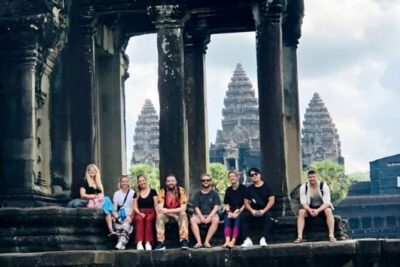
Angkor Wat Sunrise & 3 Main Temples with Breakfast – Small Group
Read our review →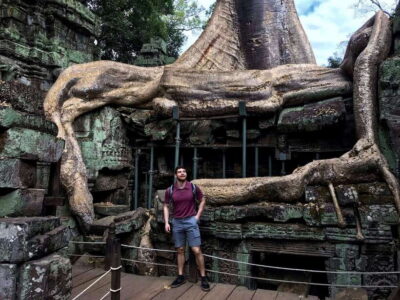
Full Day Angkor Wat Temple Experience with Sunset
Read our review →
2 Days Exclusive Temple Highlights with Sunset and Sunrise Tour
Read our review →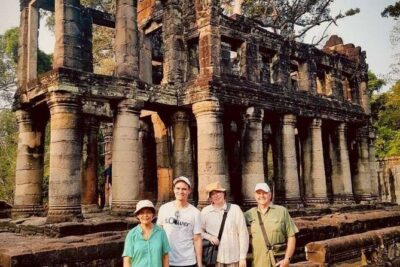
Full-Day Banteay Srei & 4 Temples – Grand Tours Join-in Tour
Read our review →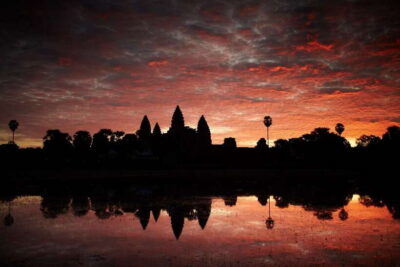
Angkor Sunrise 1- or 2-Day Guided Temples Tour
Read our review →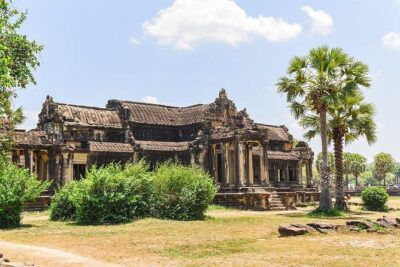
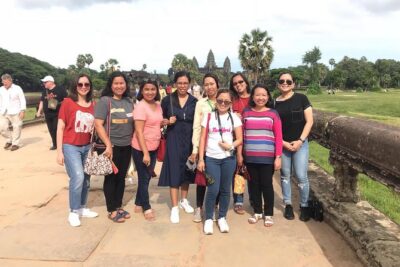
Angkor Wat Sunrise Explore The Most Iconic Temples
Read our review →
Koh Ker Temple Group & Beng Mealea Full-Day Join-in Tour
Read our review →Browse the lists this tour appears in