
Reviewed · SILK FARM TOURS
Banteay Chhmar Temple & Silk Farm Private Day Trip from Siem Reap
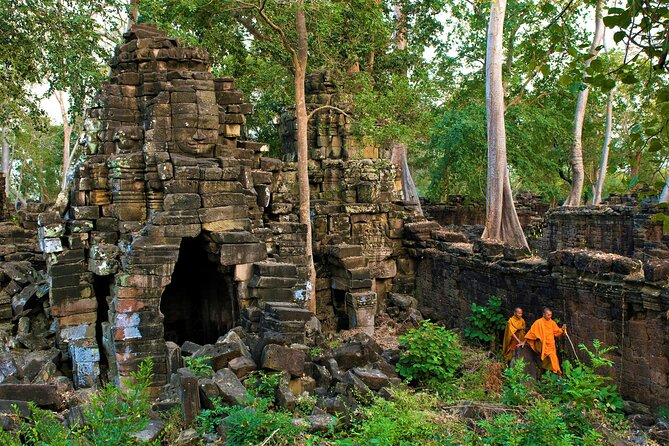
Banteay Chhmar is the reason to take this trip. About three hours from Siem Reap, this sprawling Angkorian temple offers collapsed galleries, jungle growth, and Bayon-style stone faces without the steady flow of visitors found around Angkor Wat. You get a long day, but the reward is a quieter, more atmospheric side of Cambodia.
I like the private transport, since your group can travel in an air-conditioned SUV or van and set the pace with your guide. I also like the mix of ruins and working culture: after the temples, the Angkor Silk Farm shows how mulberry trees, silkworms, dye, and weaving become finished cloth.
The drawback is simple: this is a full day with a long road journey. If you have only one day in Siem Reap, the main Angkor circuit may be the better choice. For anyone with extra time and a taste for remote places, this is a strong outing.
Key Points at a Glance
- Three-hour countryside drive: The road to Banteay Chhmar takes you through villages and rural Cambodia, adding travel time but giving the day a wider sense of place.
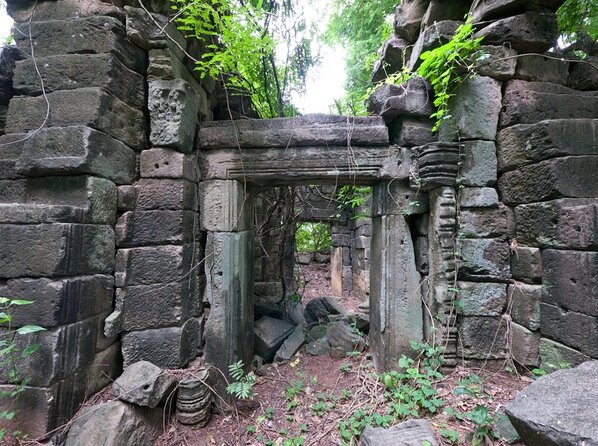
- Five hours at Banteay Chhmar: You have time to examine carvings, collapsed galleries, and forest-shaded ruins rather than rushing through a short photo stop.
- Banteay Toap’s military connection: The name is thought to mean Fortress of the Army, and the temple sits beside a broad water reservoir.
- A working silk farm: Angkor Silk Farm covers the full process, from mulberry cultivation and silkworm care to dyeing and weaving.
- Private guiding: Guides including Leap and Danut have led this route, with drivers such as Art and La associated with past departures.
- Straightforward pricing: The $137.75 rate includes transport, guide, entrance fees, service charges, and VAT, but not lunch or tips.
Why Banteay Chhmar Is Worth the Long Road
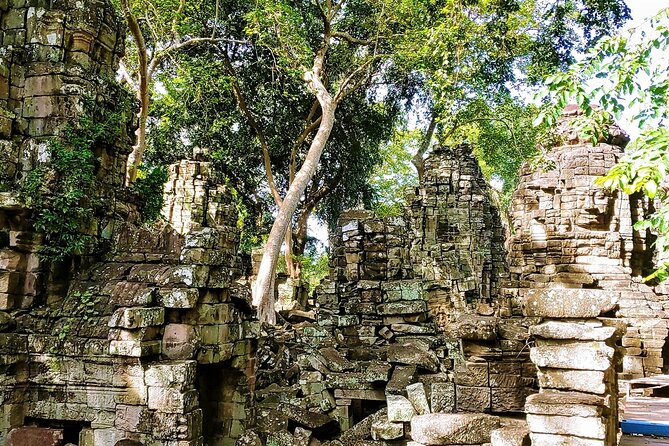
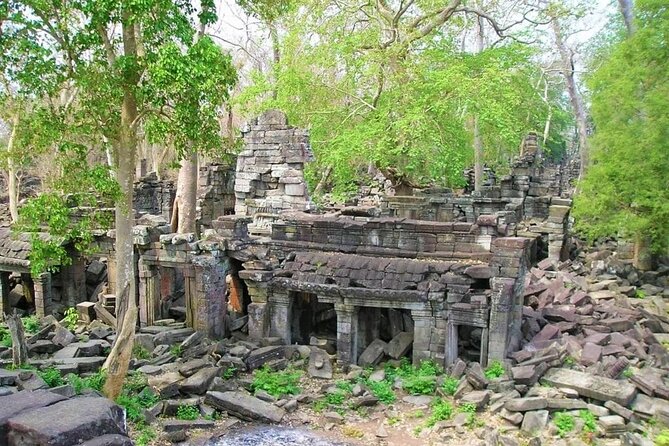
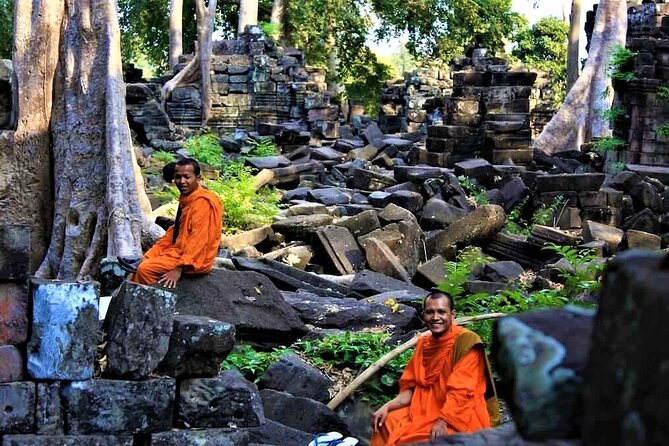
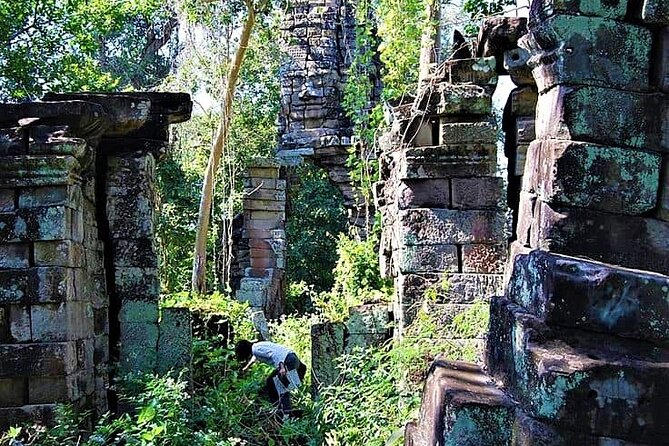
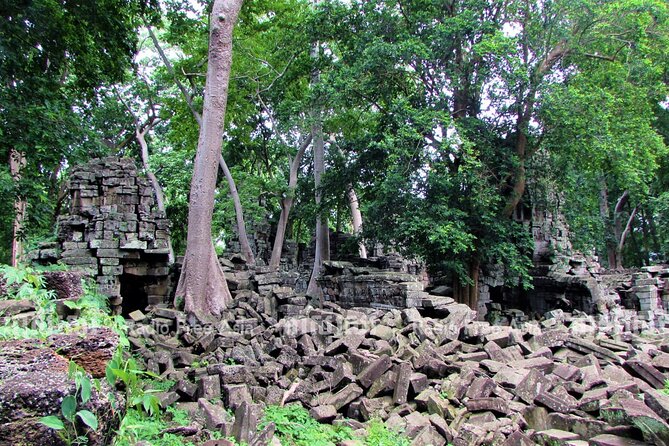
The best part of this trip is the change in scale. Around Siem Reap, temple visits often mean moving from one famous monument to the next. At Banteay Chhmar, the ruins feel more spread out and less polished, with broken stonework and trees sharing the same space.
Banteay Chhmar was among the largest building projects of King Jayavarman VII. It was constructed in a politically sensitive part of the Khmer world during the final years of his reign, and the hurried quality of some construction helps explain its rough, unfinished feel.
I find that roughness appealing. You can see carved stone, collapsed galleries, and forest surroundings in one long visit. The temple is not simply a smaller version of Angkor Wat. Its character is closer to a grand, partly fallen monument that still asks you to picture how impressive it must once have been.
The carvings are a major reason to go. The temple shares features with the Bayon style, including carved faces and wall scenes that reward patient looking. A guide can point out details you would probably miss on your own, especially when stone reliefs are weathered or partly hidden among the ruins.
Allowing about five hours here is useful. You can walk without treating every stop as a quick photograph, pause to study the walls, and give the guide time to explain the temple’s role and decoration. Five hours is still a substantial visit, so wear practical shoes and be ready for a lot of walking.
The site is remote, and that remoteness is both the attraction and the cost. You spend roughly three hours reaching Banteay Chhmar from Siem Reap, according to the timing described for the trip. The drive is not dead time, though. It passes villages and open countryside, giving you a look at Cambodia beyond the major temple zone.
More Private Tours in Siem Reap
- Full-Day Angkor Wat Sunrise Private Tour with Guide from Siem Reap
★ 5.0 · 2,920 reviews - Siem Reap: Angkor Wat Private Tuk-Tuk Tour
★ 4.9 · 2,222 reviews - Angkor Wat Private Day Tour from Siem Reap
★ 5.0 · 834 reviews
Reading the Carvings with Your Guide
This tour makes most sense with a good guide. The English-speaking guide is included, and names connected with past departures include Leap and Danut. Leap is also noted for taking photographs, a useful extra if you want a few well-composed pictures of your group rather than only phone snapshots of stones.
The guide’s value is not limited to dates and royal names. At Banteay Chhmar, the important question is often what you are looking at. A face carved into a wall, a fragment of a gallery, or a damaged scene can seem abstract until someone explains its place within the temple.
I would ask your guide to slow down at the carvings and explain the differences between Banteay Chhmar and the temples you have already seen near Siem Reap. The contrast is part of the fun. Banteay Chhmar belongs to the same broad Angkorian world, but its remote setting and damaged remains create a quieter experience.
The service is private, so only your group takes part. That gives you more room to ask questions than a large group departure and makes the five-hour temple visit easier to manage. You can tell the guide when you need a pause, though the overall day still follows a packed schedule.
Banteay Toap, the Fortress Beside the Water
The second major temple stop is Banteay Toap, visited for about two hours. Its name is thought to mean Fortress of the Army, and it was built during the same period as Banteay Chhmar.
That name gives the site a clear identity. The temple is linked with the Khmer military world and is believed to honor soldiers. You are not simply adding another ruin to a checklist. You are seeing a related monument with its own place in the story of Jayavarman VII’s building program.
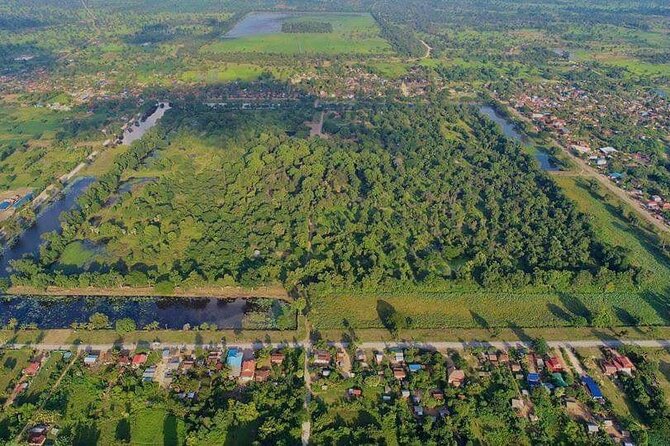
Banteay Toap sits beside a scenic water reservoir, with greenery around the site. The setting changes the mood after Banteay Chhmar’s more enclosed ruins. Here, the open water and surrounding countryside give you a chance to step back and see how the temple relates to its setting.
Two hours is enough for a proper look without turning the stop into another half-day visit. Ask about the temple’s name, its connection to Banteay Chhmar, and the role of the reservoir. Those questions can make the stop feel much more meaningful than a quick walk around the stones.
The site may appeal most to people who like context. If you want only the biggest and most perfectly preserved monuments, Banteay Toap may feel modest. If you enjoy seeing how several related places fit together, it adds real value.
Angkor Silk Farm, from Mulberry Trees to Woven Cloth
The Angkor Silk Farm provides a welcome change from temple archaeology. The visit lasts about one hour and follows the production process from beginning to end.
You can see the cultivation of mulberry trees, the care of silkworms, the dyeing of silk, and the weaving of finished textiles. That sequence matters because it turns a familiar souvenir into a practical craft with many stages and skilled work behind it.
I like this stop because it connects the trip with present-day Cambodian culture. The temples show what Khmer rulers commissioned centuries ago. The silk farm shows how traditional techniques remain part of working life and local production.
Do not expect the silk farm to replace the temples as the main event. It is a shorter visit, and its appeal depends on your interest in textiles and craft. For many people, though, it is a useful break after hours among stone ruins.
The farm also gives you something tangible to remember beyond photographs. You can watch the materials change from plant and insect care to color and cloth, which makes the process easy to follow even if you know little about silk.
More silk-weaving visits near Siem Reap:
- Siem Reap Lotus Silk Farm Discovery tour & Lake experience
★ 4.7 · 291 reviews - Siem Reap: Lotus Silk Farm- Tour, Lake & Masterclass
★ 4.9 · 77 reviews - Angkor Silk Farm & Lotus Silk Farm: Siem Reap Discovery Tour
★ 4.8 · 68 reviews - Siem Reap: Silk Farm & Countryside Offbeat Jeep Tour
★ 4.5 · 11 reviews
West Baray and Svay Romiet Pagoda
The trip adds two short stops near West Baray, each lasting about 30 minutes. West Baray is a huge reservoir from the Khmer Empire, measuring about 8 kilometers long and 2.1 kilometers wide.
Its original purpose remains uncertain. Irrigation was once the leading explanation, but the reservoir’s function is not settled. That makes the stop less about a single answer and more about seeing the scale of Khmer engineering.
You will not spend hours at West Baray, and that is appropriate. Thirty minutes gives you a chance to take in the water and size of the reservoir without making the day even longer. Since the tour already includes a long drive and two substantial temple visits, this brief pause helps break up the return route.
Svay Romiet Pagoda sits directly on the banks of West Baray. It is a place where families go on an ancestor’s anniversary or someone’s birthday to show respect. This adds a living religious setting to a day otherwise focused on ancient monuments.
The pagoda stop is also short, so treat it as an introduction rather than a full cultural visit. You can observe the connection between family remembrance, Buddhist practice, and place, while remembering that this is an active site and should be approached respectfully.
What the $137.75 Price Covers
At $137.75 per person, the tour is not a budget outing, but the price includes several costs that can add up quickly. You receive hotel pickup and drop-off, private air-conditioned transport, an English-speaking licensed guide, entrance fees, service charges, and current government VAT.
The private vehicle matters here. Banteay Chhmar is far from Siem Reap, and the journey would be tiring without air conditioning and a dedicated driver. Drivers associated with past departures include Art and La, with La specifically noted for smooth, polite driving.
The price becomes more reasonable when you compare it with arranging the same day independently. You would need to organize transport for a long round trip, pay entrance fees, find your way between several sites, and arrange explanations at Banteay Chhmar and Banteay Toap.
Lunch is not included. Local restaurants offer vegetarian and non-vegetarian choices, with dishes generally priced from $3 to $10. Bring extra money for the meal, drinks, and any silk products you may want to buy, though the provided price information does not specify shopping arrangements or prices.
Tips for the guide and driver are also separate. You are not required to treat tipping as part of the booking price, but you should budget for it if the service meets your expectations.
Timing, Comfort, and Who Should Book
The advertised duration is about eight to nine hours. The listed visits add up to a long day: roughly five hours at Banteay Chhmar, two at Banteay Toap, one at the silk farm, and 30 minutes each at West Baray and Svay Romiet Pagoda.
Because the route includes a long drive, the timing may feel full rather than relaxed. You will want an early start and comfortable clothing, though the exact pickup time is not provided here. Ask for the planned departure time when booking so you can coordinate breakfast and your evening plans.
This tour suits you if you:
- Have already seen the main Angkor temples and want a less visited site
- Enjoy long road journeys through rural Cambodia
- Prefer a private guide and vehicle
- Like temple carvings, royal architecture, and historical context
- Want to pair ancient sites with a working craft visit
- Have enough time in Siem Reap for a full-day outing
I would think twice if your schedule is tight or if you dislike long drives. The route is not a quick add-on. You spend much of the day away from Siem Reap, and Banteay Chhmar requires enough time on site to justify the journey.
Most people can take part, and the activity is private to your group. The information provided does not give specific accessibility details, so ask the operator about walking surfaces and site conditions if those issues affect your plans.
Booking Ahead and Cancellation
This experience is booked an average of 136 days in advance, which suggests that planning ahead is sensible, especially if your dates are fixed. Confirmation is provided at booking.
You can cancel for a full refund up to 24 hours before the local start time. Changes or cancellations made less than 24 hours before the start are not accepted for a refund. The tour also requires a minimum number of participants, and if that minimum is not reached, you are offered another date or experience, or a full refund.
Should You Book This Banteay Chhmar Day Trip?
I would book it if Banteay Chhmar is high on your list and you want the convenience of a private vehicle, guide, and entrance fees bundled together. The temple is the star, while Banteay Toap, the silk farm, and West Baray give the day more range than a single-site excursion.
I would not choose it as a first and only temple day in Siem Reap. Start with the major Angkor sites if you have not yet seen them, then use this trip when you want something quieter and more remote.
For the right schedule, this is a rewarding trade: several hours on the road in exchange for a large, atmospheric temple complex, a smaller military-linked monument, and a clear look at silk production. The distance is the price of admission to a very different Cambodia.
FAQ
How long does the Banteay Chhmar tour last?
The tour lasts approximately 8 to 9 hours.
What is included in the tour price?
The price includes hotel pickup and drop-off, a professional English-speaking licensed guide, entrance fees, private air-conditioned SUV or van transport, service charges, and current government VAT.
Is lunch included?
No. Lunch is purchased separately at a local restaurant. Vegetarian and non-vegetarian dishes are available, with menu prices ranging from $3 to $10 per dish.
Is this a private tour?
Yes. Only your group participates in the activity.
How far is Banteay Chhmar from Siem Reap?
The drive to the temple takes about three hours, according to the stated trip details.
How much time is spent at Banteay Chhmar?
The planned visit to Banteay Chhmar lasts about five hours.
What other temples are visited?
The tour also includes Banteay Toap, a temple whose name is thought to mean Fortress of the Army. The visit lasts about two hours.
What happens at Angkor Silk Farm?
You can see the stages of silk production, including mulberry cultivation, silkworm care, dyeing, and weaving. The visit lasts about one hour.
Are West Baray and Svay Romiet Pagoda included?
Yes. The tour includes about 30 minutes at West Baray and 30 minutes at Svay Romiet Pagoda.
Can I cancel for a full refund?
Yes, if you cancel at least 24 hours before the experience start time. Cancellations made less than 24 hours before the start are not refunded.
More Temple Tours in Siem Reap
- Angkor Wat Sunrise & 3 Main Temples with Breakfast – Small Group
★ 5.0 · 2,857 reviews - Siem Reap: Full Day Angkor Wat Temple Experience with Sunset
★ 4.9 · 1,490 reviews - 2 Days Exclusive Temple Highlights with Sunset and Sunrise Tour
★ 5.0 · 1,157 reviews - Full-Day Banteay Srei & 4 Temples – Grand Tours Join-in Tour
★ 5.0 · 1,155 reviews
Just added around Siem Reap
- Twilight Tastes of Siem Reap Include Dinner★ 5.0 · 13 reviews
- Ultimate Sunrise to Angkor Wat, Angkor Thom and Bayon Temple★ 5.0 · 3 reviews
- Trekking Tour at Phnom Kulen National Park from Siem Reap★ 5.0 · 3 reviews
- Professional Photo Shoot in Angkor Archaeological Park, Siem Reap★ 5.0 · 42 reviews
- Full-Day Private Tour of Angkor Wat with Pick Up★ 5.0 · 12 reviews
- Unveiling 2 Days Private Angkor Wat/Beyond In Sunrise/Sunset Tour★ 5.0 · 48 reviews
- Siem Reap City Tour with War Museum and Killing Field★ 5.0 · 27 reviews
- Private Day Trip to Angkor Temples with Expert Guide★ 5.0 · 4 reviews
Silk Farm Tours, compared.
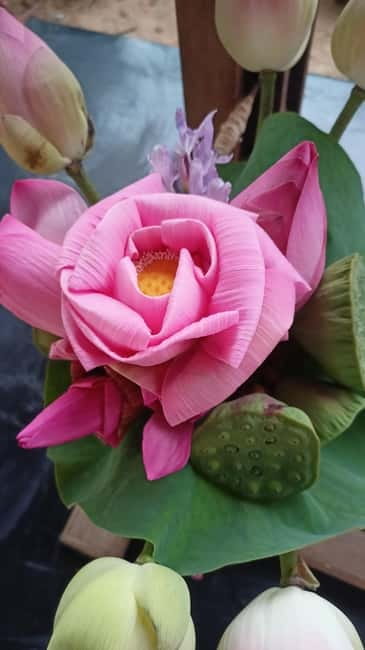
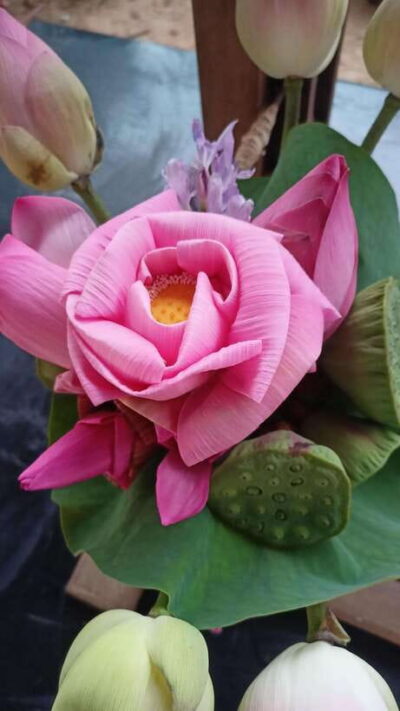
Angkor Silk Farm & Lotus Silk Farm: Siem Reap Discovery Tour
Read our review →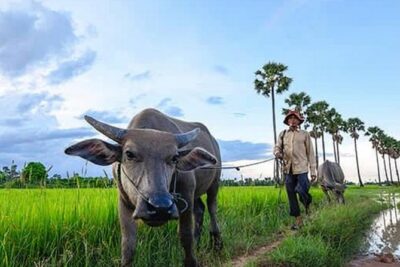
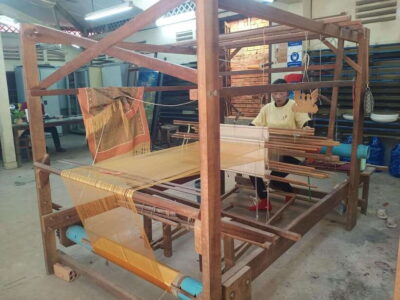
Half Day Trip: Silk Farm, Satcha, and Senteur d’Angkor Tour
Read our review →
Tuk Tuk Journey: Exploring Rural Life and Silk Farm Craftsmanship
Read our review →Browse the lists this tour appears in