
Reviewed · BANTEAY SREI TOURS
Kbal Spean, Banteay Srei & Banteay Samre temple
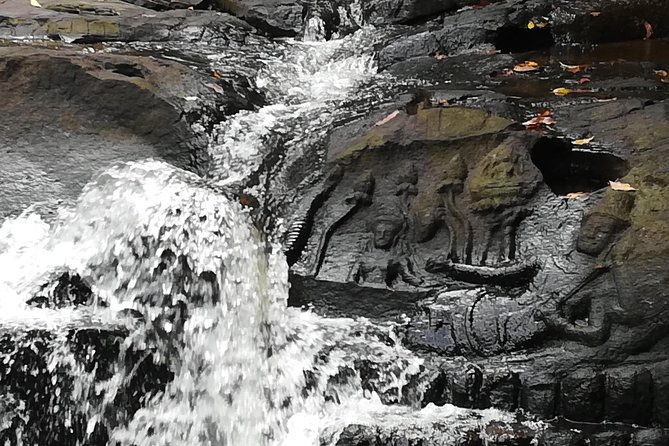
Kbal Spean gives this day its unusual hook: you hike uphill through the Cambodian countryside to see sacred carvings cut into the riverbed, including the River of 1000 Lingas. I like that this is not simply another round of temple courtyards. You get a walk, a change of scenery, and a glimpse of how religion shaped the water itself.
I also like the private format and the pairing of Banteay Srei’s fine carvings with quieter Banteay Samre. The main drawback is the long day and the Kbal Spean hike, which calls for decent fitness and proper walking shoes. You also pay the $37 Angkor Pass separately, so the true cost is higher than the advertised tour price.
Key points before you book
- Kbal Spean requires a hike: Allow about two hours for the visit, with uphill walking to the carved riverbed.
- Banteay Srei is the artistic star: Its detailed carvings are the reason this small temple earns so much attention.
- Banteay Samre is a calmer final temple: You get a 12th-century Hindu temple built in a style similar to Angkor Wat, often with fewer people around.
- The tour is private: Only your own group takes part, giving you a more personal day with an English-speaking guide.
- The price needs a little arithmetic: The $64.11 tour fee does not include the required $37 one-day Angkor Pass, food, drinks, or the optional $6 Landmine Museum entrance.
- The timing is straightforward: Pickup begins at 8 am, and the full outing lasts about seven to eight hours.
Kbal Spean: a riverbed reached on foot
The day begins with pickup after breakfast at 8 am. Kbal Spean lies about 45 kilometers from Siem Reap City, so the drive takes you well beyond the main temple zone and into the countryside of Siem Reap province.
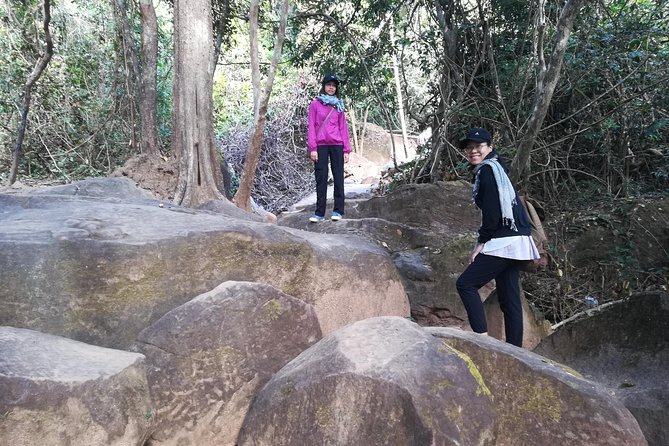
This first stop is the most physically demanding. The visit lasts about two hours and includes a hike up to the river. The supplied details do not give the exact trail length or elevation, so you should not treat this as a casual stroll. The tour specifically recommends it for people who are fit, and good walking shoes are a sensible choice.
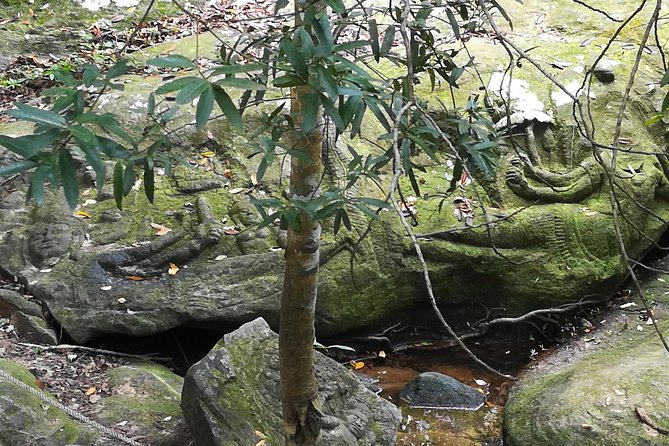
The reward is quite different from the usual freestanding temple. Kbal Spean is known for the River of 1000 Lingas, sacred carvings placed in and around the riverbed. The lingas are linked with Shiva, a Hindu god, and their position in the water gives the site a special character. You are not just looking at blocks of stone arranged into towers. You are seeing religious art tied to a natural watercourse.
That makes Kbal Spean valuable for anyone who wants more context about Khmer belief and engineering. It also gives the day a physical rhythm: walk, pause, look closely, and continue. I would not choose this outing if you want an entirely easy temple day or if uphill hiking is a concern.
Bring suitable clothing from the start. The temples require covered thighs and shoulders, and you may be refused entry if your clothing does not meet the rules. This is a practical point, not a minor detail. A cool, comfortable outfit that covers your knees and shoulders will work better than trying to improvise later.
More runs out to Banteay Srei:
- Full-Day Banteay Srei & 4 Temples – Grand Tours Join-in Tour
★ 5.0 · 1,155 reviews - Siem Reap Tour: Angkor Wat Sunrise, Bayon, Ta Prohm, Banteay Srei
★ 5.0 · 931 reviews - 2-Day Angkor Wat With Small, Big Circuit and Banteay Srei Tour
★ 5.0 · 545 reviews
Banteay Srei and the finest carved stone
After Kbal Spean, the tour continues to Banteay Srei, often translated as Citadel of the Women. The planned visit lasts about three hours, making it the longest temple stop of the day.
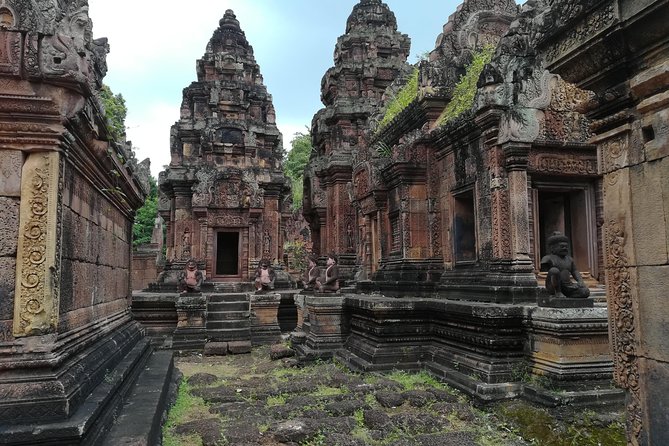
Banteay Srei is known for unusually intricate carvings. The traditional nickname suggests that the work was so delicate it could only have been made by women, but the useful point for you is simpler: this temple rewards close looking. Instead of rushing through a huge complex, you can pay attention to the carved surfaces, figures, and small details.
I like the way this stop follows Kbal Spean. At the river, the focus is on sacred symbols set into nature. At Banteay Srei, the focus shifts to crafted stone and the skill of the builders. Together, the two places show different sides of Khmer religious art.
Three hours is generous compared with a quick photo stop. That gives your guide time to explain the Kingdom of Cambodia and the meaning behind what you are seeing. It also gives you room to move at a comfortable pace, take photographs, and return to details you missed at first.
The tradeoff is that Banteay Srei can become the busiest and most concentrated part of the day. Its reputation draws attention, and the small scale of the temple means the experience can feel less open than at Banteay Samre. You are paying for detail here, not grand size.
The guide matters most at this stop. An English-speaking guide is included, and one piece of tour feedback specifically names Chen as making the day special. Guide assignments can change, so do not assume Chen will lead your group, but the private arrangement gives you a better chance to ask questions and slow down when a carving catches your eye.
Banteay Samre, a quieter Angkor-style finish
The final main temple is Banteay Samre, with about two hours set aside for the visit. This 12th-century Hindu temple was built in a style similar to Angkor Wat, so it provides a useful comparison without sending you back into the largest temple crowds.
Banteay Samre is a good choice for the end of the day because it is described as being well off the main tourist trail. After the physical walk at Kbal Spean and the detailed carvings at Banteay Srei, the quieter setting can feel like a welcome change.
Do not expect another Angkor Wat in scale. The appeal here is the chance to see an Angkor-era temple with a different pace and atmosphere. You can focus on the layout, stonework, and Hindu features without treating the stop as a rushed add-on.
The two-hour allocation also makes this more than a quick photograph from the entrance. Your guide can place the temple in the wider story of Cambodian architecture and the Kingdom of Cambodia. If you enjoy comparing temples, this is where the day ties together: Kbal Spean shows sacred symbols in a river, Banteay Srei shows fine decorative carving, and Banteay Samre shows a larger temple form in an easiergoing setting.
The optional Landmine Museum stop
The tour can include an optional stop at the Cambodia Landmine Museum. The visit is listed at about 30 minutes, and admission is not included. The stated entrance fee is $6 per person.
This stop adds recent Cambodian history to a day otherwise centered on ancient temples. It covers the country’s war period from 1970 to 1998, giving you a chance to think about the much newer events that shaped modern Cambodia.
Because the stop is optional, you can decide if it fits your day. If you want only temples, skipping it keeps the outing focused. If you want a broader understanding of Cambodia, the museum offers a serious counterpoint to the ancient sites.
There is no food stop included in the tour details, so plan your expectations around the listed temple visits and optional museum. Food and drinks are your own expense. Cold bottled water is provided, which matters in Cambodia’s heat, but it does not replace a meal.
More river-carving walks at Kbal Spean:
- Wildlife Expedition: Elephant Sanctuary, Kbal Spean Banteay Srei
★ 5.0 · 32 reviews - Bantey Srei, Kbal Spean and Landmine museum Private Tuk-Tuk
★ 4.7 · 30 reviews - Kbal Spean Trekking Tour with Banteay Srei and Landmine Museum
★ 5.0 · 14 reviews - Bantreay Srei , Kbal Spean and Landmine Museum with Tuk Tuk
★ 4.4 · 9 reviews
What the private format changes
This is a private tour, so only your group participates. That is the clearest reason to choose it over a large shared outing. You are not tied to another group’s pace, and you can ask your guide to explain a carving again or allow more time at a favorite stop.
The included transport is an air-conditioned car, minivan, or minibus. The exact vehicle depends on the group and arrangement, but the important point is that transportation is supplied for a full countryside day. With Kbal Spean about 45 kilometers from Siem Reap City, arranging transport independently could be inconvenient.
An English-speaking guide is included. That guide is more than a driver in the way this tour is presented. The purpose is to explain the history of the Kingdom of Cambodia and help you understand why these places matter.
The private format does not remove every compromise. You still have a set start time of 8 am, and the day remains a seven to eight-hour commitment. The itinerary also allocates specific blocks of time, so this is not a completely open-ended custom tour.
Still, I think the structure works well. You cover three different sites without trying to squeeze in every major temple around Siem Reap. The day has a clear beginning, middle, and finish, with enough time at each stop to make the visit feel worthwhile.
Price, temple pass, and what your budget really covers
The advertised price is $64.11 per person. That includes the English-speaking guide, air-conditioned transportation, cold drinking water, and the private tour format.
The required one-day Angkor Pass costs another $37 per person. That brings the known total to $101.11 before food, drinks beyond the supplied water, and any Landmine Museum admission. Add $6 if you choose the museum.
At that total, the value depends on what you want from the day. I think it is reasonable for someone who wants private transportation, a guide, and three sites spread across the countryside. The price is less attractive if you already have transport and only want entry to one temple.
The private arrangement is especially useful for couples, families, or small groups who prefer not to spend the day with strangers. Group discounts are available, though the amount is not specified, so you should check the final price for your party.
The tour is booked on average 19 days ahead. That suggests planning early if your dates are fixed, especially if you want this to fit neatly around other Angkor visits. Confirmation is received at booking, and free cancellation is available until 24 hours before the start time. Changes or cancellations inside that window are not accepted for a refund.
Who will enjoy this temple day most
I would choose this tour if you have already seen, or plan to see, the major temples and want a different side of Siem Reap. Kbal Spean is the key reason to book. The hike and river carvings give you something that a standard temple circuit cannot.
It also suits you if you like learning while you look. Banteay Srei can be appreciated through photographs, but a guide adds context to the carvings and the wider Khmer story. Banteay Samre then gives you time to compare architectural styles in a less hurried setting.
Families with older children may enjoy the mix of walking, water, carvings, and temple exploration. The tour data says most people can participate, but the specific warning about fitness means you should judge your own ability honestly. Anyone who struggles with uphill walking should consider a gentler plan.
This is not the best match if you want a late start, a short outing, or a day built around food and shopping. It is also not ideal if you want only the largest and most famous monuments. The strength here is variety, not spectacle alone.
Should you book Kbal Spean, Banteay Srei, and Banteay Samre?
Book it if you want a private day that combines a real hike, detailed stone carving, and a quieter temple visit. The route goes beyond the standard Angkor Wat circuit and gives you three distinct ways to understand Cambodia’s ancient religious sites.
Before paying, budget for the $37 Angkor Pass, wear clothing that covers your shoulders and thighs, and bring good walking shoes. If those details suit you, this is a well-shaped day with a clear sense of place and a worthwhile mix of activity and history.
Skip it if the Kbal Spean hike sounds tiring or if you want a low-cost temple outing with no added entrance fees. For the right visitor, though, the private format and unusual first stop make this one of the more interesting full-day choices from Siem Reap.
FAQ
How long does the tour last?
The tour lasts approximately seven to eight hours. Pickup starts at 8 am.
Is transportation included?
Yes. Transportation in an air-conditioned car, minivan, or minibus is included.
Is the Angkor Pass included in the price?
No. Each visitor must purchase a one-day Angkor Pass for $37 per person.
Is the Kbal Spean hike difficult?
The tour information recommends Kbal Spean for visitors who are fit and advises wearing good walking shoes. The visit lasts about two hours and includes hill hiking.
Is the Landmine Museum included?
No. The museum is an optional stop lasting about 30 minutes. Admission is listed at $6 per person.
Is this a private tour?
Yes. Only your group participates, and an English-speaking guide is included.
More Temple Tours in Siem Reap
- Angkor Wat Sunrise & 3 Main Temples with Breakfast – Small Group
★ 5.0 · 2,857 reviews - Siem Reap: Full Day Angkor Wat Temple Experience with Sunset
★ 4.9 · 1,490 reviews - 2 Days Exclusive Temple Highlights with Sunset and Sunrise Tour
★ 5.0 · 1,157 reviews - Siem Reap: Angkor Sunrise 1- or 2-Day Guided Temples Tour
★ 4.9 · 1,132 reviews
Just added around Siem Reap
- Twilight Tastes of Siem Reap Include Dinner★ 5.0 · 13 reviews
- Ultimate Sunrise to Angkor Wat, Angkor Thom and Bayon Temple★ 5.0 · 3 reviews
- Trekking Tour at Phnom Kulen National Park from Siem Reap★ 5.0 · 3 reviews
- Professional Photo Shoot in Angkor Archaeological Park, Siem Reap★ 5.0 · 42 reviews
- Full-Day Private Tour of Angkor Wat with Pick Up★ 5.0 · 12 reviews
- Unveiling 2 Days Private Angkor Wat/Beyond In Sunrise/Sunset Tour★ 5.0 · 48 reviews
- Siem Reap City Tour with War Museum and Killing Field★ 5.0 · 27 reviews
- Private Day Trip to Angkor Temples with Expert Guide★ 5.0 · 4 reviews
Banteay Srei Tours, compared.
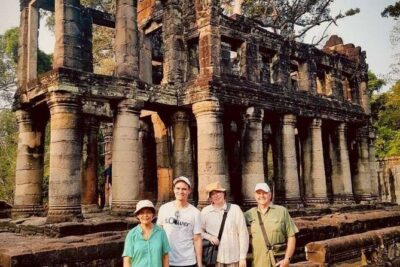
Full-Day Banteay Srei & 4 Temples – Grand Tours Join-in Tour
Read our review →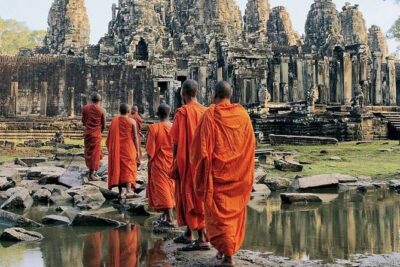
Siem Reap Tour: Angkor Wat Sunrise, Bayon, Ta Prohm, Banteay Srei
Read our review →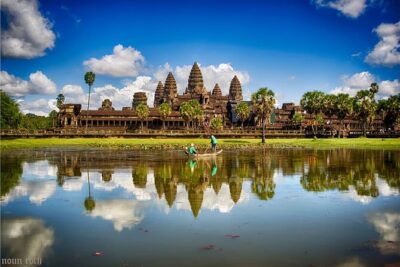
2-Day Angkor Wat With Small, Big Circuit and Banteay Srei Tour
Read our review →
3-Days Discovery Of Angkor: Waterfalls,Floating Village and Banteay Srei temple
Read our review →
Banteay Srei, Kulen Waterfall & Beng Mealea Exploration
Read our review →
2-Day Angkor Wat Tour with Banteay Srei and Floating Village
Read our review →Browse the lists this tour appears in