
Reviewed · FLOATING VILLAGE TOURS
Bakong Temples & Floating Village Tour
Bakong gives you an early chapter of Angkor before the grand scale of Angkor Wat. Its five-level sandstone pyramid, elephant and lion guardians, moat, and Naga causeway show how Khmer temple design was taking shape. I like that the tour pairs this important temple with Lolei and Preah Ko, two earlier Roluos temples, then shifts from stone monuments to life on the water. I also like the private format, which lets your own group set the pace with an English-speaking guide.
The main drawback is cost planning: the $45 tour price does not include the $37 Angkor Pass, and admission for the floating village is also extra. You should also allow a full day, since the itinerary takes about 6 to 8 hours and gives the village roughly three hours.
Key points at a glance
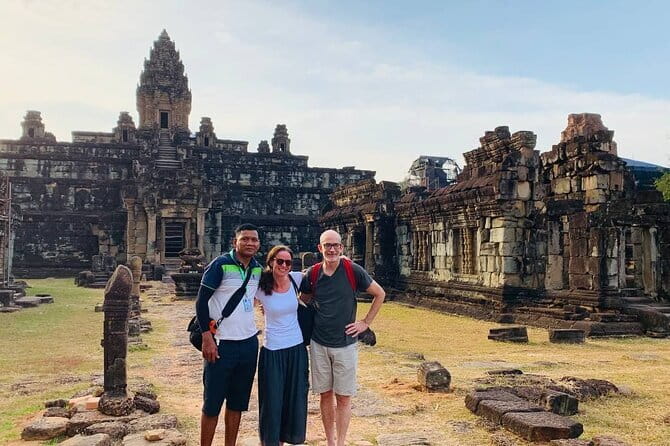
- Bakong is the historical centerpiece: Built in 881 AD, it was the first Khmer temple mountain made of sandstone and a model for later Angkor monuments.
- The Roluos group adds useful context: Lolei and Preah Ko help you see how Khmer temple architecture developed before Bakong.
- Kampong Phluk shows a water-based community: Homes, schools, shops, floating structures, and tall stilts all respond to seasonal changes in Tonle Sap.
- A private group keeps the day personal: Only your party takes part, with pickup and drop-off included.
- The guide matters here: Mr Oun Kosorl and Mr K are named in the supplied feedback as charming, clear temple interpreters.
- Budget beyond the advertised price: Add the Angkor Pass, plus the separate floating village admission.
Why Bakong deserves your time before Angkor Wat
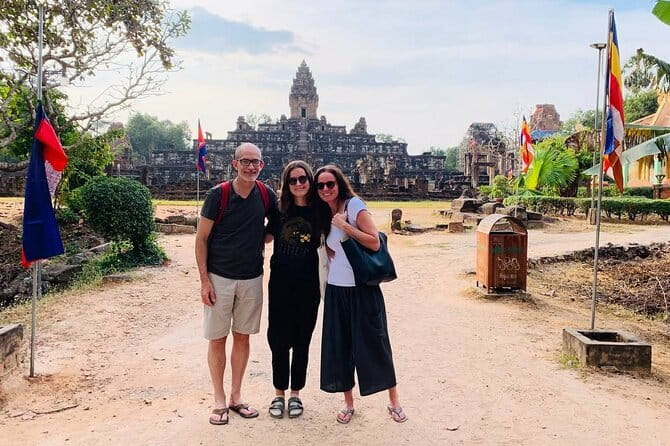
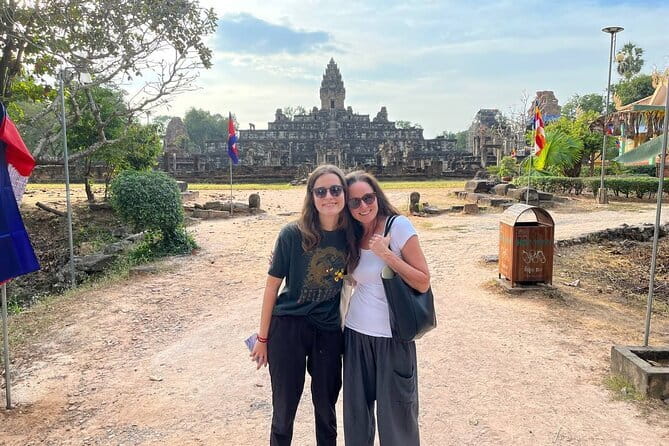
Many people arrive in Siem Reap with Angkor Wat fixed in mind. Bakong gives you a different starting point. Built by King Indravarman I in 881 AD, it was the first Khmer temple mountain constructed from sandstone and served as a model for later monuments.
The design is easy to read. A five-tiered pyramid rises toward the symbolic Mount Meru, the sacred mountain at the center of the Hindu universe. Moats and enclosing walls define the temple complex, while stone guardians watch over the lower levels.
Look for the early Naga causeway, one of the oldest known examples in Khmer architecture. The preserved elephant and lion statues are another strong feature. They are not minor decorations tucked away in a corner. They help show how Khmer builders used animals as protectors and how temple access was treated as a ceremonial route.
I like Bakong because it gives you the framework for understanding later Angkor temples. Angkor Wat is grander and more polished, but Bakong lets you see the basic temple-mountain idea in an earlier form. If you visit only the most famous monument, you may miss this important step in the story.
The two-hour stop is useful. You have enough time to look at the pyramid, walk around the lower levels, study the gateways, and listen to an explanation without rushing through in a quick photo stop. As with any outdoor temple visit, the experience depends on the heat and your walking pace, so comfortable clothing and sensible shoes will make the time easier.
More floating-village afternoons:
- From Siem Reap: Kampong Phluk Floating Village Tour by Boat
★ 4.9 · 6,979 reviews - Sunset tour of Kampong Phluk stilts home village on the Tonle Sap
★ 5.0 · 4,865 reviews - Siem Reap: Kampong Phluk Floating Village Tour with Boat
★ 4.9 · 3,843 reviews
Lolei and Preah Ko: two early stops with a purpose
The tour begins at Lolei, the northernmost of the three Roluos temples. The Roluos group also includes Preah Ko and Bakong, and all three belong to the late ninth-century period of Khmer temple building.
Lolei receives about an hour. Its value is less about one overwhelming structure and more about placing Bakong in a wider sequence. You are looking at an early Hindu temple complex, not a later monument shaped by centuries of expansion and refinement.
Admission to Lolei is not included, so remember that the advertised price is not the full entry cost for the day. The supplied details do not give a separate amount for this stop, so you should confirm the current entrance arrangements when booking.
Preah Ko follows, with about an hour allotted. It was the first temple built in Hariharalaya, an ancient city located roughly 15 kilometers southeast of the main Angkor group. The temple helps connect the monuments to the old political center where this early Khmer building program developed.
Preah Ko has no separate admission charge listed in the tour details. That makes it a useful stop for seeing another early site without adding another stated ticket cost. It also gives your guide a chance to explain how the Roluos temples relate to one another, rather than treating each one as an isolated ruin.
The order works well. Lolei and Preah Ko prepare you for Bakong, while Bakong supplies the largest and most architecturally important stop in the morning. I would pay close attention to the guide at these two smaller temples. Their value comes from context, and a short explanation can help you notice why an early site matters even if it lacks the fame of Angkor Wat.
Reading the five levels of Prasat Bakong
Prasat Bakong receives about two hours, making it the longest temple stop. Built in 881 AD, it is the architectural heart of the day.
The pyramid rises in five levels, representing Mount Meru. The surrounding moat and walls give the site a strong sense of order. Instead of simply wandering among stones, you can follow the progression from outer boundary to central height.
The lower levels are especially worthwhile for their large stone elephants and lions. These guardians add scale to the site and give you details to seek out beyond the main pyramid. Ask your guide to point out the Naga causeway as well. It is one of the details that makes Bakong more than just an early version of a familiar Angkor design.
The tour includes a guide, and the names Mr Oun Kosorl and Mr K appear in the supplied information as guides associated with especially positive temple explanations. The information does not promise that either man will lead every departure, so treat the names as useful reference points rather than a guarantee.
The private format is a real advantage at Bakong. You are not sharing the activity with a large public group, so your party can ask questions and spend more time on the features that interest you. If you care about architecture, the temple layout deserves a slower look. If your group is more focused on photographs, you can keep moving without waiting for a larger crowd.
The tour details do not state a separate Bakong entrance charge because the Angkor Pass is listed as an extra. The pass is $37 per person. Add it to the $45 tour price when working out the day’s actual cost.
Three hours at Kampong Phluk Floating Village
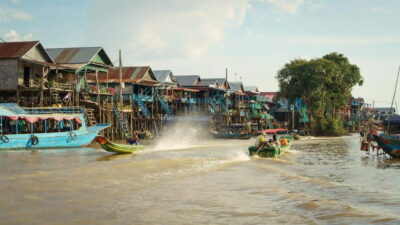
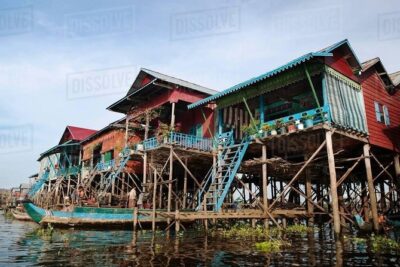
After the temples, the experience changes completely. Kampong Phluk Floating Village is built around water, with homes, schools, shops, and other community structures adapting to seasonal changes in Tonle Sap.
Some structures float directly on the water. Others sit on tall stilts, rising high above the ground during the dry season. This arrangement is the main reason to visit. You are not just looking at a scenic stretch of water. You are seeing how an entire community organizes daily life around changing water levels.
The village portion lasts about three hours, so the boat ride is not a rushed add-on. The supplied feedback describes a trip along the river to reach the village and a visit to a school where grade-school children were learning English. That detail gives the visit a human focus, but you should approach it with care and respect. This is a working community, not a theme park built for sightseeing.
The floating village can be sobering. The homes and facilities show the practical difficulties of living with limited land and seasonal change. At the same time, the community is presented as active and adaptable. Keep your expectations realistic: the appeal lies in seeing a different way of organizing life, not in finding polished facilities or a resort-style boat excursion.
Weather can affect the experience. One account describes poor weather making the village visit less comfortable. Since the tour spends several hours around the water, conditions matter more here than during a short temple stop. The trip still offers useful insight in less-than-perfect weather, but clear skies will make the boat ride and village views easier to enjoy.
The floating village admission is not included. The information provided does not state the separate price, so ask for the current total before you book. That is the main extra cost to check beyond the Angkor Pass.
More Temple Tours in Siem Reap:
- Angkor Wat Sunrise & 3 Main Temples with Breakfast – Small Group
★ 5.0 · 2,857 reviews - Siem Reap: Full Day Angkor Wat Temple Experience with Sunset
★ 4.9 · 1,490 reviews - 2 Days Exclusive Temple Highlights with Sunset and Sunrise Tour
★ 5.0 · 1,157 reviews - Full-Day Banteay Srei & 4 Temples – Grand Tours Join-in Tour
★ 5.0 · 1,155 reviews
What the $45 price really covers
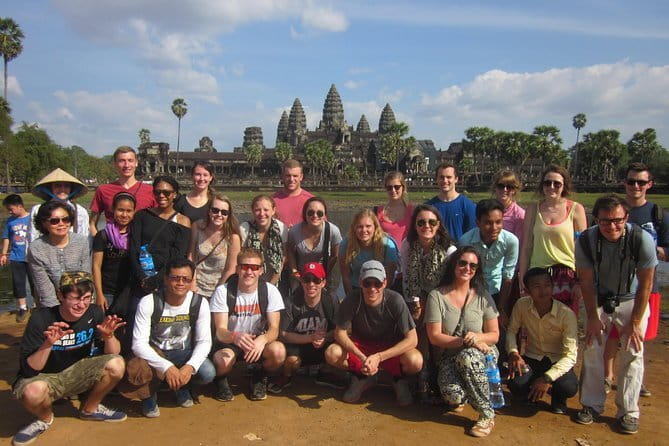
At $45 per person, the tour price covers several practical needs: an English-speaking guide, pickup and drop-off, cold drinking water, and an air-conditioned vehicle. For a six to eight-hour private day, that can be fair value, particularly if your group wants a guide rather than arranging several separate rides.
Air conditioning matters in Siem Reap. The day combines outdoor temple walking with a boat trip, and the vehicle gives you a cool break between stops. Cold water is another small but useful inclusion, especially during the two-hour Bakong visit.
The private arrangement changes the value calculation. A solo visitor pays more per person than someone splitting the cost among several people, but a couple, family, or small group can get more from the arrangement because only your party participates. You are not paying for a fixed public group experience with strangers.
Build the extra admissions into your budget. The Angkor Pass is $37 per person, and Lolei and Kampong Phluk have admission costs not included in the tour price. The supplied details list Preah Ko as free, but they do not provide a full combined admission total.
The experience is often booked about 12 days ahead. That does not prove every date sells out, but it suggests you should not leave a preferred day until the last minute, especially if you want a private departure.
Who will get the most from this day
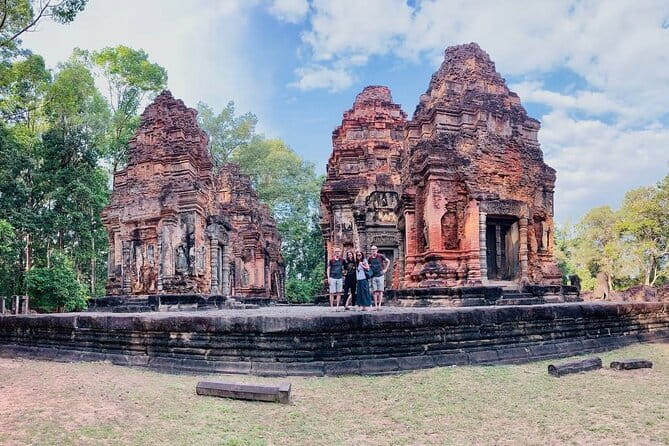
I would choose this tour if you want both ancient monuments and present-day Cambodian life in one outing. The mix is the main strength. Bakong gives you architecture and history, while Kampong Phluk shows how people live with Tonle Sap’s seasonal water.
It suits first-time visitors who want a broad introduction beyond Angkor Wat. The Roluos temples are less famous, but that is exactly why a guide helps. You can understand how temple design developed rather than simply ticking off the best-known names.
It also suits people who prefer a private pace. Families may appreciate the private vehicle and the ability to manage stops within their own group. Couples and small groups can ask questions directly and spend more time at Bakong if the temple matters most to them.
I would think twice if you want a short, simple temple outing. Six to eight hours is a serious portion of the day, and the village adds several hours after the temples. I would also reconsider if your budget is strict, since the $37 Angkor Pass and separate admissions add to the headline price.
The village visit requires an open mind. It may feel uncomfortable to observe difficult living conditions, even when the community appears active and content. Go to learn, not to treat the village as a backdrop for quick photographs.
Practical details before you reserve
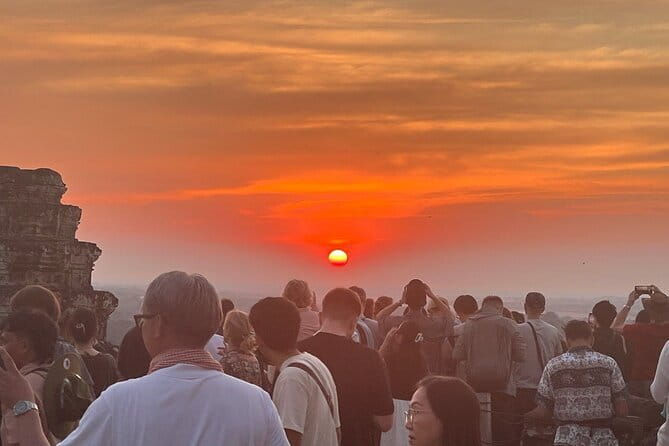
Pickup and drop-off are included, and the vehicle is air-conditioned. The tour is private, so only your group participates. Most people can take part according to the supplied information, but no more specific accessibility details are provided.
Confirmation is received at booking. Free cancellation is available if you cancel at least 24 hours before the experience begins. Within 24 hours, the payment is not refunded, and changes are not accepted.
The duration is listed as approximately 6 to 8 hours. That range gives the operator room to account for the four stops, road conditions, temple time, and the village visit. Plan your day around the full window rather than scheduling another fixed activity immediately afterward.
Because Lolei and Kampong Phluk admissions are extra, ask for the current total before departure. Also confirm which guide is assigned if the presence of Mr Oun Kosorl or Mr K is important to you. Their names are associated with strong praise for charm and clear explanations, but a specific guide is not guaranteed in the supplied details.
Should you book the Bakong and Floating Village Tour?
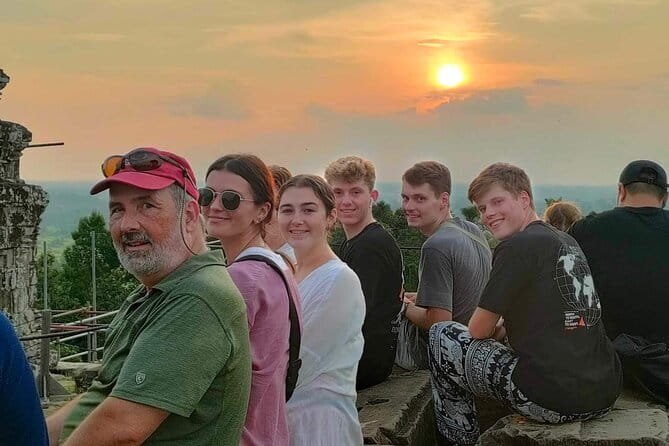
Book it if you want a private day that connects early Khmer architecture with modern life on Tonle Sap. Bakong is the strongest temple stop, and the five-level pyramid, Naga causeway, moat, and guardian statues give you plenty to study. The Roluos temples add useful background instead of simply filling time.
The tour is also a good match if you value a guide who can explain what you are seeing. Mr Oun Kosorl and Mr K are praised for their charm and temple insight, though you should confirm guide availability.
Skip it if you want only the biggest Angkor monuments, a low-cost outing, or a quick half-day program. The extra admissions and long duration matter. For the right visitor, though, this is a thoughtful pairing: one part early empire, one part living community, with practical transport and a private group setting.
FAQ
How long does the Bakong Temples and Floating Village Tour last?
The tour lasts approximately 6 to 8 hours.
What places are included in the route?
The route includes Lolei, Preah Ko, Prasat Bakong, and Kampong Phluk Floating Village.
Is hotel pickup included?
Yes. Pickup and drop-off are included.
Is the tour private?
Yes. Only your group participates in the activity.
Is an English-speaking guide included?
Yes. An English-speaking tour guide is included.
Is the Angkor Pass included in the price?
No. The Angkor Pass costs $37 per person and is not included.
Are all admission fees included?
No. Admission for Lolei and Kampong Phluk is not included. Preah Ko is listed as free.
What is included besides transport and guiding?
Cold drinking water and an air-conditioned vehicle are included.
Just added around Siem Reap
- Twilight Tastes of Siem Reap Include Dinner★ 5.0 · 13 reviews
- Ultimate Sunrise to Angkor Wat, Angkor Thom and Bayon Temple★ 5.0 · 3 reviews
- Trekking Tour at Phnom Kulen National Park from Siem Reap★ 5.0 · 3 reviews
- Professional Photo Shoot in Angkor Archaeological Park, Siem Reap★ 5.0 · 42 reviews
- Full-Day Private Tour of Angkor Wat with Pick Up★ 5.0 · 12 reviews
- Unveiling 2 Days Private Angkor Wat/Beyond In Sunrise/Sunset Tour★ 5.0 · 48 reviews
- Siem Reap City Tour with War Museum and Killing Field★ 5.0 · 27 reviews
- Private Day Trip to Angkor Temples with Expert Guide★ 5.0 · 4 reviews
Floating Village Tours, compared.
Sunset tour of Kampong Phluk stilts home village on the Tonle Sap
Read our review →
Siem Reap Floating Village Kampong Phluk Sunset with Boat
Read our review →
Kompong Phluk Floating Village Half-Day Tour ( Morning / Sunset )
Read our review →
Tonle Sap Lake & Kampong Phluk Village Half-Day Tour
Read our review →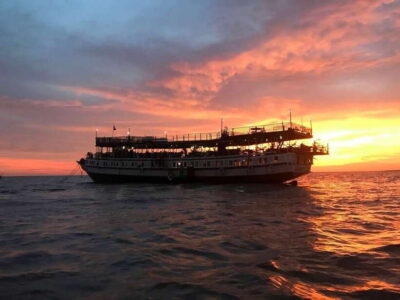
Sunset Dinner Tour: Tonle Sap Lake Floating Village
Read our review →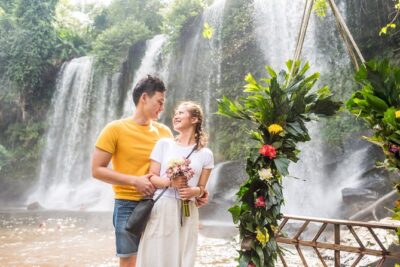
3-Days Discovery Of Angkor: Waterfalls,Floating Village and Banteay Srei temple
Read our review →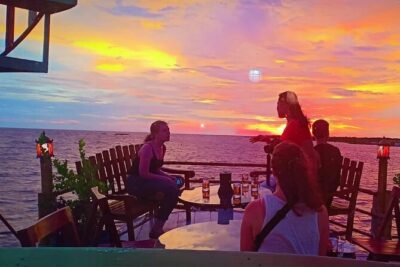
Sunset Dinner and drinks includes a Floating Village cruise tour.
Read our review →Browse the lists this tour appears in