
Reviewed · KILLING FIELDS TOURS
War Museum, Killing Field, and APOPO Hero RATs Tour
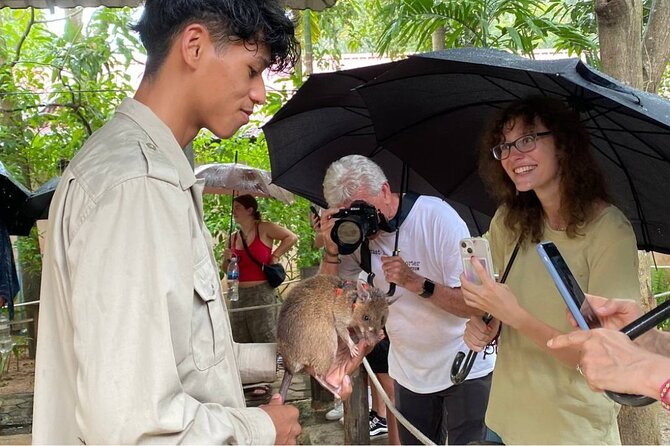
The most unusual part of this Siem Reap tour is the visit to APOPO’s HeroRATs, where specially trained African giant pouched rats detect landmines. It gives Cambodia’s painful wartime story a practical, hopeful ending. The day also visits the War Museum and Wat Thmey, so expect serious subject matter rather than a light sightseeing outing.
I like the sensible private format, with hotel pickup, an air-conditioned vehicle, and an English-speaking guide. I also like the range of stops: war history, a Buddhist memorial, local crafts, and the Royal Residence all fit into roughly five hours. The main thing to consider is that lunch is not included, and the advertised street-food element is not listed as a separate stop in the schedule.
Key points at a glance
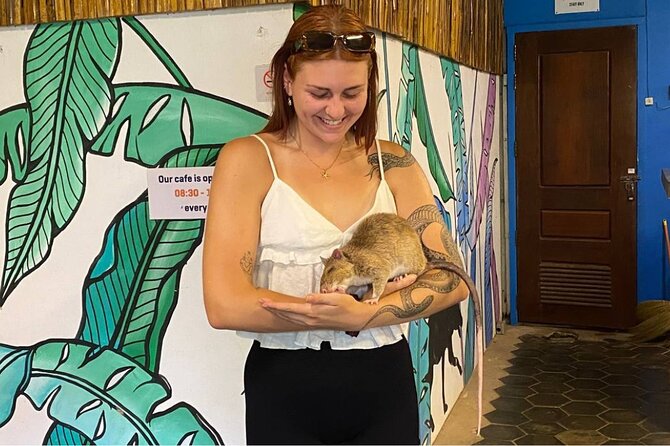
- APOPO’s HeroRAT demonstration offers a rare look at animals trained to help locate landmines.
- The War Museum includes admission and about 90 minutes for military exhibits and Cambodia’s modern wartime story.
- Wat Thmey is an active Buddhist pagoda with a memorial honoring victims of the Khmer Rouge period.
- Satcha handicraft center supports Cambodian artisans through long-term training and business development.
- Private transport and hotel pickup make the five-hour route easy to fit into a Siem Reap stay.
- Guides Somra and Londgy receive special praise for clear explanations and strong historical context.
Why this five-hour route works in Siem Reap
This is not a standard temple circuit. Instead, it deals with Cambodia’s recent past and the work still being done to address its effects. You move from weapons and wartime memory to a memorial, then to a working mine-detection program and a handicraft center.
That mix gives the day a clear shape. The first half is sobering. The later stops point toward recovery, education, and local livelihoods. I find that balance useful because Cambodia’s past is too important to skip, but a half-day focused only on tragedy can feel heavy.
The tour is private, so your group is the only group participating. That matters at the War Museum and Wat Thmey, where you may want to pause or ask a question without keeping pace with a large crowd. It also lets you spend more time on the parts that interest you most, within the planned schedule.
The experience lasts about five hours. Pickup and drop-off at your hotel are included, as is transport in an air-conditioned vehicle. You receive an English-speaking guide, and the entrance fees for the War Museum, Wat Thmey, and APOPO Visitor Center are covered.
The tour is priced at $75 per person. That is not a bargain-priced city outing, but the value is reasonable if you want a private vehicle, a guide, and three included admissions in one half-day. You are paying for a guided route rather than simply a set of entrance tickets.
More Museums in Phnom Penh
- The Killing Field and Toul Sleng Genocide Museum (S21) Tour
★ 5.0 · 1,977 reviews - Killing field and Toul Sleng genocide museum Tour
★ 5.0 · 610 reviews - Private Half Day To Killing Field & S21 Genocidal Museum in Phnom Penh
★ 5.0 · 137 reviews
War Museum Cambodia: 90 minutes with Cambodia’s wartime past
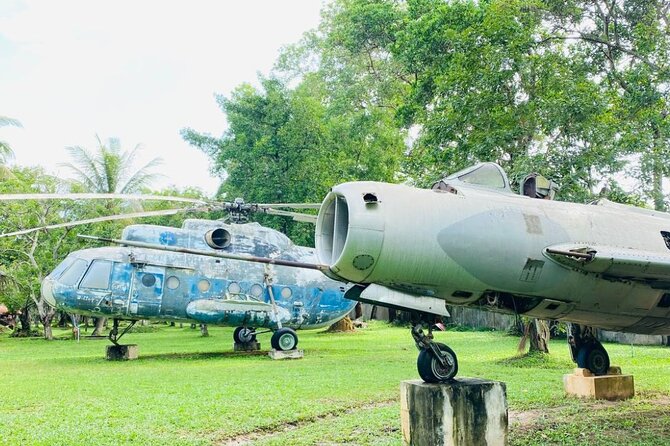
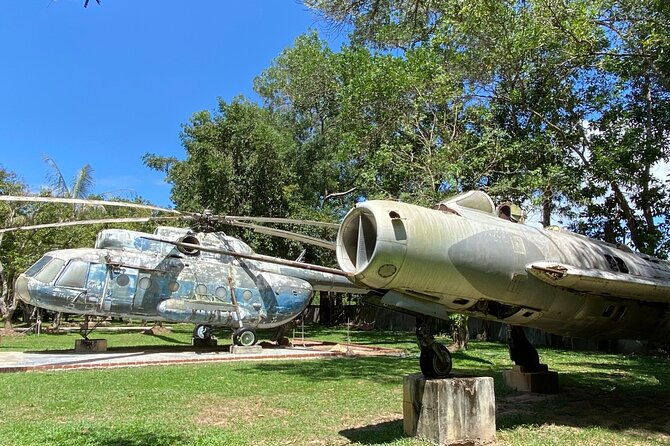
The War Museum sits along National Road 6 between central Siem Reap and the international airport. It covers more than two hectares and was founded in 2001. The visit lasts about 90 minutes, with admission included.
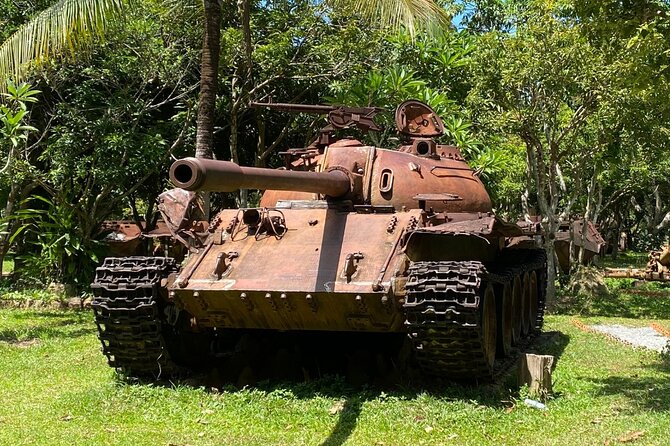
The museum’s setting and collection focus on military equipment and Cambodia’s long period of conflict. You can expect rusting military pieces and displays that help explain the weapons and forces connected to the country’s recent past. The outdoor setting gives the visit a direct, physical quality that a book or lecture cannot match.
This is the most emotionally demanding stop on the route. The equipment is not presented as entertainment. It is a reminder that war shaped ordinary Cambodian lives and that unexploded weapons remain part of the country’s story.
Your guide matters here. The strongest part of the visit may be the explanation around the objects, rather than the objects alone. Guides Somra and Londgy are praised for making the history clear and memorable. If you book this tour, ask your guide to explain the wider context of the equipment, not just identify each item.
The museum may not suit you if you prefer polished, highly ordered exhibitions. Its appeal comes from the directness of the displays and the stories attached to them. Give yourself room to take in the material at your own pace.
Wat Thmey: a quiet memorial inside a working pagoda
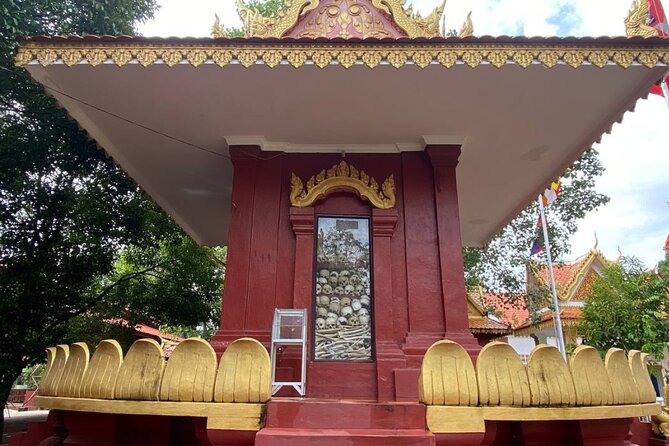
Wat Thmey is a small Buddhist site in Siem Reap with a memorial to people killed during the Khmer Rouge period. The stop lasts about 40 minutes and admission is included.
The setting matters. This is not an isolated museum built only for tourists. It is part of a functioning Buddhist pagoda, so the memorial exists alongside an active religious place. That combination can make the visit feel more personal and grounded.
You will encounter a serious reminder of Cambodia’s tragic past. The stop is shorter than the War Museum, but it adds a different layer. The museum presents military objects and wartime evidence. Wat Thmey asks you to think about the people who suffered.
I would treat this as a place for quiet attention. Your guide can provide historical context, but the site itself may call for less commentary than the museum. Forty minutes is enough for a focused visit without making the day feel emotionally overwhelming.
The War Museum and Wat Thmey work best as a pair. The first shows part of the machinery and setting of conflict. The second shifts attention toward remembrance. Together, they explain why Cambodia’s war history is not only a matter of dates and politics.
APOPO Visitor Center: HeroRATs with a practical purpose
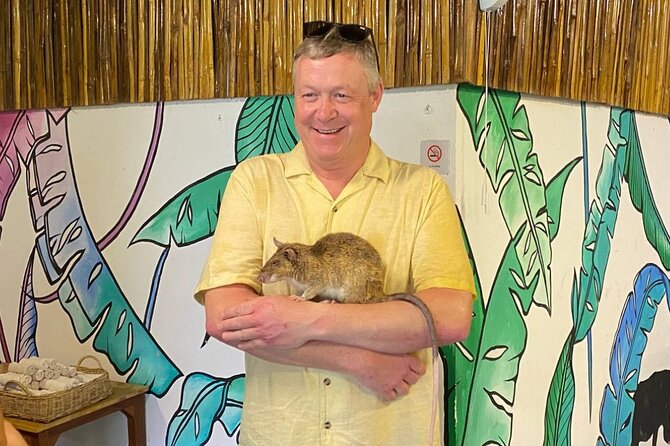
The APOPO Visitor Center is the tour’s most distinctive stop. You spend about an hour learning how African giant pouched rats, called HeroRATs, are trained to detect landmines and help save lives in Cambodia.
The idea sounds unusual at first, but the purpose is serious. The rats are part of a program responding to the danger left by conflict. Their work connects directly to the subjects introduced at the War Museum and Wat Thmey, turning historical understanding into a present-day issue.
A demonstration shows the animals at work. Petting the rats is optional, so you can take part at the level that feels comfortable. You do not need to be an animal lover to appreciate the visit. The important point is how training and careful detection can support mine-clearance efforts.
I especially like the change in mood here. After two difficult historical stops, APOPO offers a sense of action and possibility without pretending Cambodia’s problems are simple. You learn about an organization working on a real danger, using an approach most people have never seen.
Families may find this stop particularly effective. One family specifically described the experience as engaging for a 12-year-old child. The subject remains serious, but the HeroRATs give younger visitors something concrete to watch and remember.
Allow the full hour. This is not just a quick photo stop. The value comes from understanding the training and the reason the program exists. If you are uneasy around rats, remember that contact is optional.
More ways to understand the Khmer Rouge years:
- Visit 11 Places in One Day including S21 & Killing Field
★ 5.0 · 361 reviews - Killing Fields and Prison S21 Bus Tour
★ 4.0 · 206 reviews - Tuol Sleng Genocide Museum (S-21) and Choeung Ek Killing Fields Tour
★ 5.0 · 123 reviews - Phnom Penh City Tour, Silver Pagoda, Genocide Museum, Killing Fields
★ 5.0 · 123 reviews
Satcha: Cambodian handicrafts beyond souvenir shopping
Satcha, located at 256 BBU Road, opened in March 2023 as Cambodia’s first handicraft incubation center. The visit lasts about 40 minutes.
Satcha supports local artisans through intensive, multi-year programs. That makes it different from a simple shop where you browse finished goods and leave. The center focuses on training, craft development, and helping artists build sustainable work.
You may find this stop especially useful if you want to understand how Cambodian handicrafts are made and how local makers are supported. It adds an economic and cultural side to the day after the difficult wartime sites.
The time is fairly short, so do not expect a full workshop course or a long market visit. Think of Satcha as an introduction to modern Cambodian craft and the people trying to keep those skills in use.
This stop also gives the itinerary a more relaxed pace. After the memorial sites and APOPO’s serious mission, handicrafts provide a chance to look at creativity and work in present-day Siem Reap. If you buy something, you can view it as more than a souvenir, since the center’s purpose includes supporting artisan training.
Royal Residence: a brief look at Siem Reap’s royal connection
The Royal Residence is a royal villa built in 1904. It serves as the official residence of Cambodia’s King when he visits Siem Reap. The tour allows about 30 minutes here.
The building connects Siem Reap to the period of the French protectorate and to Cambodia’s modern monarchy. It is a short stop, so expect an exterior-oriented introduction and historical context rather than a long palace tour.
This may be the least substantial stop for visitors who want detailed interiors or an extended architectural visit. Still, it rounds out the day by showing another part of Siem Reap’s identity beyond temples, war, and craft.
Thirty minutes is a sensible amount of time. You get the historical connection without turning the tour into a palace-focused excursion. Your guide can help explain why the residence matters and how it fits into the city’s past.
The street-food promise and what you should expect
The experience is described as including local street food and Siem Reap’s culinary culture. Yet the scheduled stops provided for the tour are the War Museum, Wat Thmey, APOPO, Satcha, and the Royal Residence. Lunch is specifically not included.
That means you should not book this expecting a dedicated food tour with a set tasting menu. You might pass local food stalls during the drive or have a chance to ask your guide about Cambodian dishes, but no specific meal or tasting is confirmed in the tour details.
This is worth clarifying before you book. If food is your main reason for choosing the experience, contact Angkor Daily Trip and ask exactly what street-food tasting is included. If your priority is history, APOPO, and local culture, the listed schedule gives you a clear and useful half-day.
Transport, timing, and who will enjoy it most

Hotel pickup and drop-off are included, along with an air-conditioned vehicle. That is valuable in Siem Reap, where several stops are spread across the city and along National Road 6. You avoid arranging separate tuk-tuks or negotiating transport between sites.
The tour is private, not a shared group outing. Only your group participates, which is helpful for families, couples, or friends who want to ask questions freely. Most people can participate, and the tour is near public transportation, though the included pickup makes that less important for most bookings.
Plan for about five hours, with the listed visits taking approximately four hours in total. The remaining time allows for driving, pickup, drop-off, and the normal pace of a private outing. The exact flow may vary.
An English-speaking guide is included. Somra and Londgy are two named guides praised for clear explanations and enthusiasm for Cambodia’s history. You may not receive one of them, but their feedback suggests the guide can make a real difference, especially at the War Museum and Wat Thmey.
The subject matter makes this a better choice for people who want context rather than nonstop entertainment. Families can enjoy the HeroRAT demonstration, but adults should be ready to discuss war, death, and landmines in an honest way.
Price, practical value, and a few limits
At $75 per person, the price covers an air-conditioned private vehicle, hotel pickup and drop-off, an English-speaking guide, and three entrance fees. For a private half-day, that is a fair package if you value convenience and explanation.
The cost is less attractive if you only want to see the sites quickly or already have transport arranged. You might spend less by visiting some places independently, but you would lose the single route, guide commentary, and private scheduling.
The biggest limits are clear. Lunch is not included. The food portion of the description is not matched by a specific food stop in the scheduled route. The Royal Residence visit is brief, and the War Museum may feel basic if you expect a polished national museum.
Cancellation is free if you cancel at least 24 hours before the start time. Changes or cancellations made inside that period are not accepted for a refund.
Should you book the War Museum, Killing Field, and APOPO tour?
Book this tour if you want a serious, well-rounded half-day that explains Cambodia through war memory, remembrance, mine-clearance work, local craft, and royal history. The HeroRAT visit is the deciding feature: it is unusual, educational, and closely tied to the country’s wartime legacy.
I would also choose it for a family that wants more than temple sightseeing, especially with older children who can engage with difficult history. The private vehicle and hotel pickup make the day simple, while guides such as Somra and Londgy can add useful context.
Skip it if you want a relaxed food crawl, a full palace tour, or a day centered only on ancient monuments. Also confirm the food arrangements before paying if street food is central to your plans. For a thoughtful introduction to modern Cambodia and the work being done after war, this is a worthwhile use of five hours.
FAQ
How long does the tour last?
The tour lasts approximately five hours.
Is hotel pickup included?
Yes. Hotel pickup and drop-off are included.
Is the tour private?
Yes. This is a private activity, and only your group participates.
What is included in the price?
The price includes an air-conditioned vehicle, an English-speaking guide, hotel pickup and drop-off, and entrance fees for the War Museum, Wat Thmey, and APOPO Visitor Center.
Is lunch included?
No. Lunch is not included.
Can I pet the HeroRATs?
Petting the rats is optional. The APOPO visit includes learning about the animals and seeing their work, but you do not have to touch them.
What is the cancellation policy?
You can cancel up to 24 hours before the experience start time for a full refund. Cancellations or changes made less than 24 hours before the start time are not accepted.
Just added around Phnom Penh
- Exploring the Best of Phnom Penh: A Full Day Tour★ 4.5 · 9 reviews
- Private Transfer : Phnom Penh ↔ Sihanouk Ville★ 5.0 · 15 reviews
- Phnom Penh Intercity★ 4.5 · 11 reviews
- Phnom Penh Nightlife Street Food Tours★ 4.5 · 14 reviews
- War Museum, Killing Field and Floating Village ( Kampong Phluk)★ 4.5 · 6 reviews
- War Museum, Killing Field and Floating village ( Chong Kneas) Tour★ 5.0 · 14 reviews
- Warm Stone Massage★ 5.0 · 23 reviews
- The killing field and Toul Sleng Genocide museum (S21) Tour★ 4.5 · 19 reviews
Killing Fields Tours, compared.
The Killing Field and Toul Sleng Genocide Museum (S21) Tour
Read our review →
Visit 11 Places in One Day including S21 & Killing Field
Read our review →
Private Half Day To Killing Field & S21 Genocidal Museum in Phnom Penh
Read our review →
Tuol Sleng Genocide Museum (S-21) and Choeung Ek Killing Fields Tour
Read our review →
Phnom Penh City Tour, Silver Pagoda, Genocide Museum, Killing Fields
Read our review →City Highlights and the Killing Fields Day Tour
Read our review →
Full-Day Phnom Penh Sightseeing Tour & Killing Field
Read our review →Browse the lists this tour appears in