
Reviewed · BAMBOO TRAIN TOURS
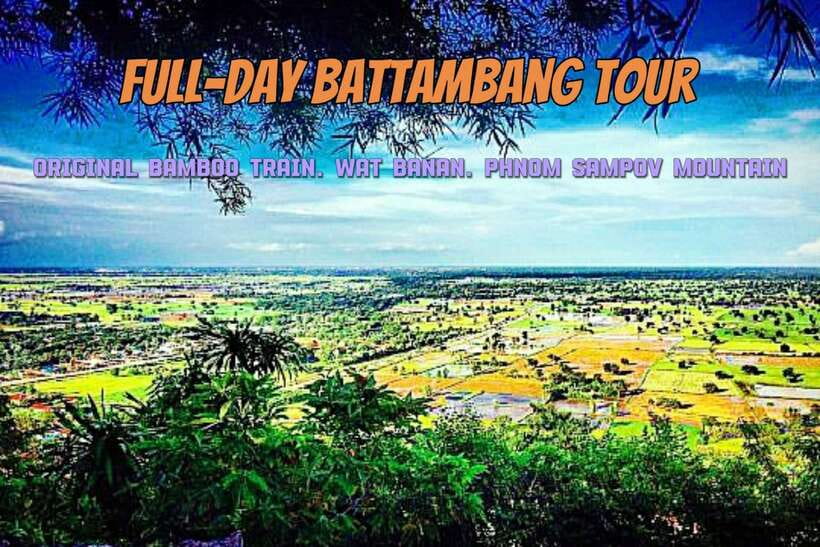
Full-day: Original bamboo train, Wat Banan, Phnom Sampov
Battambang’s bamboo train and sunset bat flight make this a full day with real variety. You move from colonial buildings and riverside villages to ancient temple stairs, Khmer Rouge history, and a stream of bats pouring from Phnom Sampov at dusk. I like the private tuk-tuk format, especially with guides such as David Panha and Kim, who can adjust the day to your pace.
I also like the small cultural stops, including a Cham village, local snacks, fruit bats, and bamboo sticky rice. The main drawback is the extra-cost confusion: the bamboo train costs $5 per person, and recent bookings have also involved small fees at Wat Banan and the cave area. Bring cash and confirm the current charges before setting out.
Key points at a glance
- The bamboo train runs through rural Battambang: Expect a simple, open-air ride across the countryside, with the possibility of sharing or clearing the track for another platform.
- Wat Banan requires a serious stair climb: The old temple sits above the plain, so comfortable shoes and steady legs matter.
- Phnom Sampov combines memory and spectacle: You visit the Killing Cave, then watch bats stream into the evening sky.
- A private tuk-tuk keeps the day flexible: The group is limited to four people, giving you more time to ask questions and request small changes.
- Local life gets more attention than on a standard highlights tour: Cham and Javanese communities, farms, snacks, fruit bats, and village food production are part of the day.
- The $15 price is good but not all-inclusive: Transport, hotel pickup, water, towels, guide service, snacks, and some cave entrance costs are included, but meals and the bamboo train are extra.
Why this Battambang day feels different
Many Battambang day trips focus on the bamboo train and the famous bat cave, then rush between them. This one takes a slower, broader route through the province. You see the city first, cross the Sangke River, pass through villages, ride the train, climb Wat Banan, and finish at Phnom Sampov.
That variety is the main reason I would choose it. You are not spending ten hours looking at temples alone. The day gives you Cambodian food, religion, agriculture, recent history, transport, and rural scenery in one package.
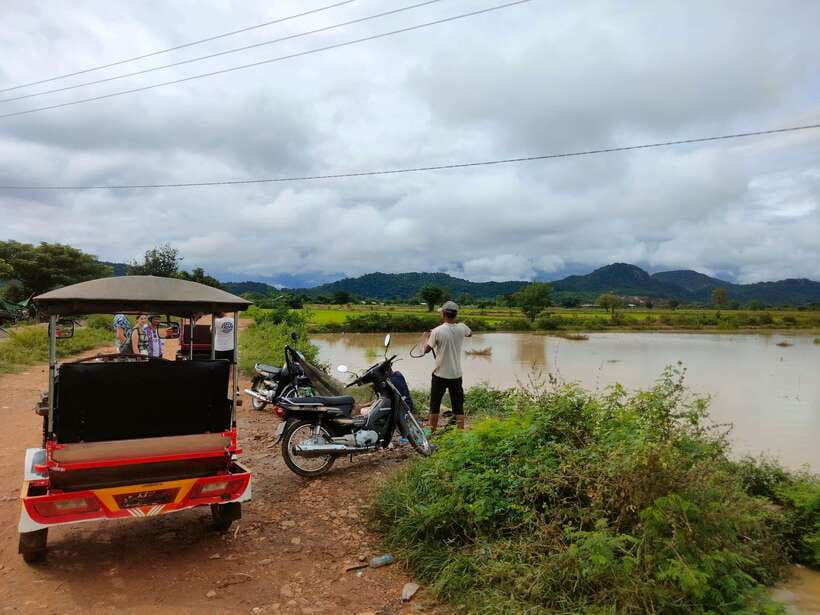
The tour runs for about 10 hours and uses a tuk-tuk throughout. That matters in Battambang. The roads between stops are part of the experience, with rice fields, farm work, village homes, and roadside activity passing by at a relaxed speed. You should expect heat, dust, and an open ride, but the operator supplies unlimited mineral water and cold towels.
The private group size is another strong point. The maximum group is four people, so you can ask David Panha, Kim, or another English-speaking guide to explain a shrine, stop for a photo, or spend longer at a village. This is much more useful than a large group when the day includes small cultural stops that need explanation.
More Bamboo Train Tours in Battambang
- Battambang: Tuk-Tuk, Bamboo Train, Killing/Bat Caves, Sunset
★ 4.9 · 1,436 reviews - Battambang Tuk Tuk tour: Bambootrain, Killing & Bat Caves,Sunset
★ 5.0 · 799 reviews - Afternoon tour by tuk tuk to bamboo train,bat cave,killing cave,countryside.
★ 5.0 · 344 reviews
Battambang’s colonial center and the story of Ta Dumbong Kro Nhong
The morning begins with pickup in Krong Battambang. Your first stop is usually a colonial-era building or Battambang Provincial Hall, about 20 minutes away after the initial tuk-tuk ride.
This is a short orientation stop rather than a long architectural tour. It gives you a first look at Battambang’s formal center and a chance to take photos before heading into the countryside. If you care about architecture, ask your guide to explain which parts reflect the city’s colonial period and which belong to later Cambodian administration.
Next comes the Lok Ta Dambong Kra Nhoung Shrine, also called the Tadam Bong Kro Aung statue in the tour description. You spend around 20 minutes here learning the local story behind the figure. The stop is brief, but it helps connect Battambang’s name and identity to local legend.
I appreciate this early sequence because it avoids throwing you straight onto a tourist attraction. You begin with the city and its symbols, then move outward. The tradeoff is that the stops are short, so you should not expect a detailed museum-style presentation.
Crossing the hanging bridge and meeting local communities
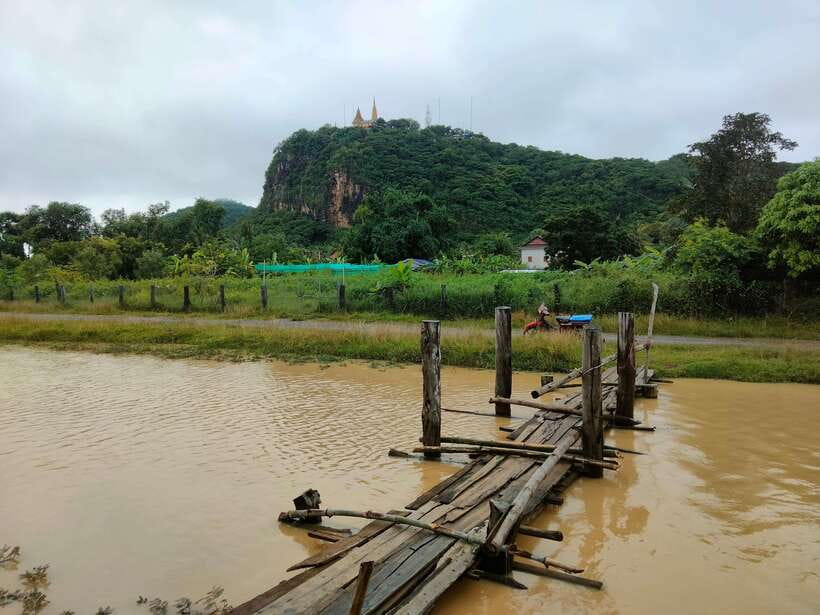
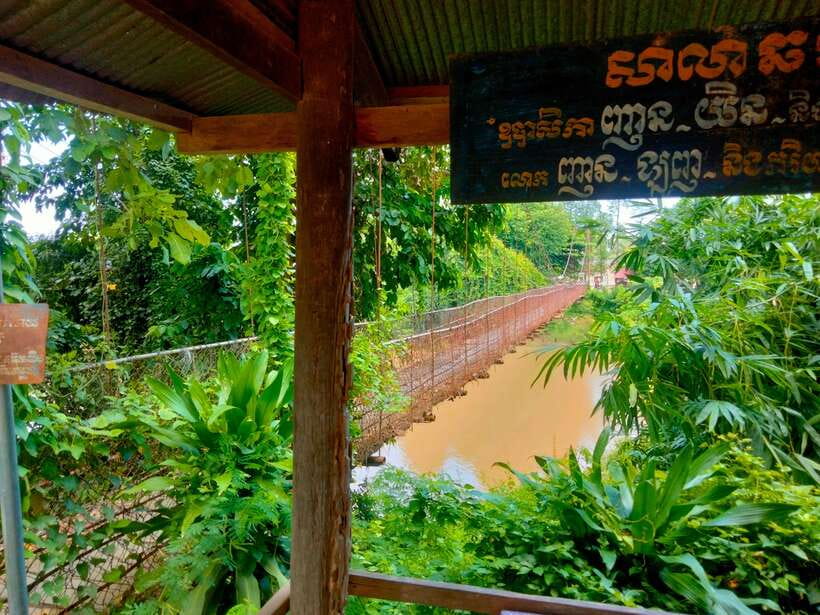
The tuk-tuk then heads toward a hanging bridge over the Sangke River. The bridge visit is scheduled for about 90 minutes, which gives you time to cross, take photographs, and look at the river and surrounding countryside without being hurried.
A suspended bridge is not a grand monument, but it is a good place to see how ordinary movement works in this part of Cambodia. The crossing also creates a change of pace after the city stops. You may find the bridge lively and a little wobbly, so keep your camera secure and watch your footing.
From there, you visit Kampong Pile Pagoda, identified in the schedule as Madrasah Tahfiz Al Bashir. The stop lasts around 40 minutes and introduces you to Buddhism and local religious life. The tour also passes through Cham and Javanese ethnicity villages, where you learn about culture and religion while seeing daily life away from the main road.
These village sections are among the most valuable parts of the day. You may taste local snacks, observe agricultural work, and see how food is prepared. The experience is not a staged cultural performance. It is a short, guided look at communities you might otherwise pass without noticing.
Keep your expectations sensible. This is not a full ethnographic visit, and the guide’s explanation will shape how much you learn. Still, the small group makes it easier to ask direct questions and avoid simply taking photographs from the tuk-tuk.
Riding the original bamboo train near Ou Srauo Laou
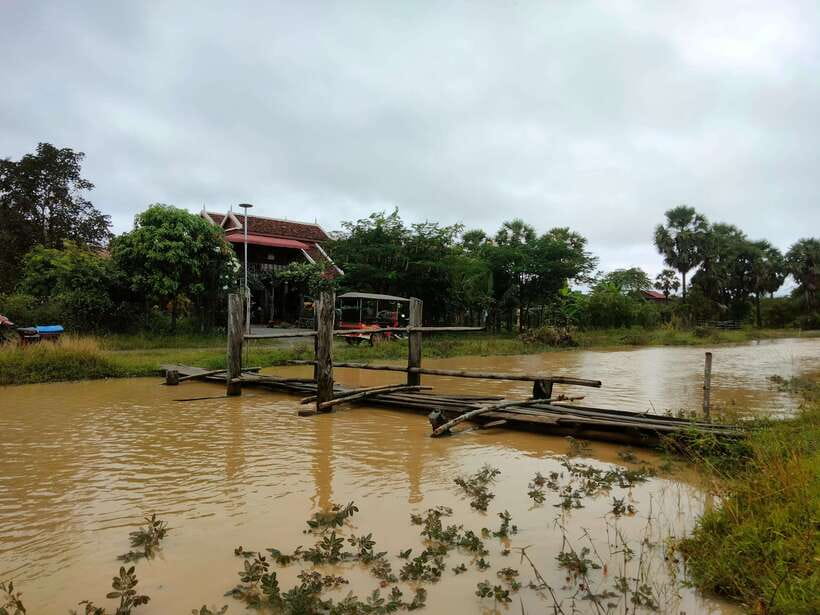
The bamboo train comes after roughly two hours of city, river, and village visits. At Ou Srauo Laou, you spend about 80 minutes at the train area, including the ride itself.
The basic vehicle is wonderfully simple: a bamboo platform fitted over a small rail chassis. It is open to the air, close to the ground, and far less polished than a modern railway. The ride takes you through Battambang’s countryside, where the pleasure comes from the breeze, the track, and the oddness of the machine itself.
The tour description says you ride for about one hour and that the driver takes you to a more rural village for a longer, more local experience. That is important. The quality of the ride depends on where you go and how much time you spend away from the busiest section.
You should also know what the train is not. It is not a major transport service or a profound cultural encounter by itself. One visitor found it enjoyable but not essential compared with the bat cave and village visits. I think that is a fair assessment. The bamboo train is fun and unusual, but its value comes from the setting and the story of the ride, not from comfort or historical interpretation.
The train fee is listed separately at $5 per person. There may also be a customary tip for the train operator. Carry small bills, and ask your guide to explain the current price before boarding.
Same base, a completely different kind of day:
- Local Livelihood Half Day Bike Tour in Battambang
★ 5.0 · 287 reviews - Explore Battambang full day tour by Tuk Tuk (start from 9am-6:30pm)
★ 5.0 · 240 reviews - Battambang: Bamboo Train, Bat Cave, Killing Cave by Tuk Tuk
★ 5.0 · 182 reviews - Full Day tour .City tour.Countryside.Bamboo Train.Secret Bat Cave
★ 5.0 · 178 reviews
Wat Banan and the climb above the rice fields
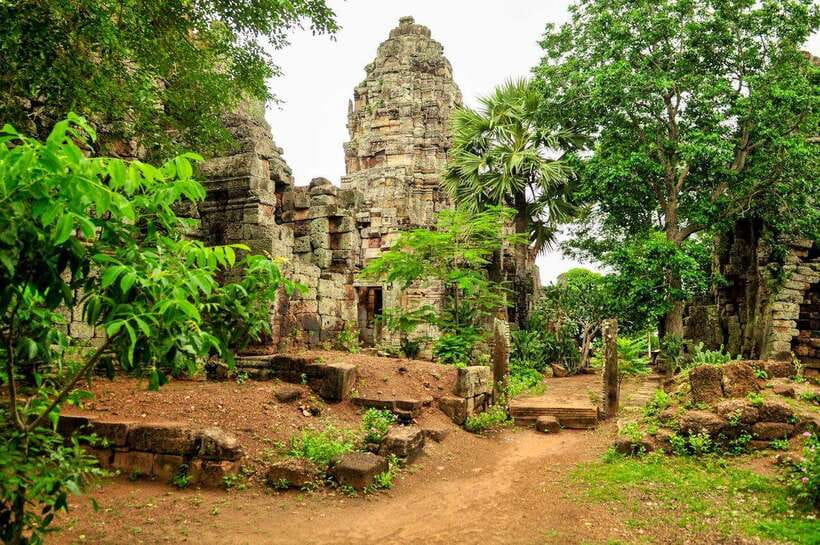
After the train, the tuk-tuk heads toward Wat Banan. You have about two hours here, including the climb up the old stairs.
This is the most physically demanding section of the day. The ancient staircase rises toward the temple, and the heat can make the climb feel longer than expected. Wear shoes with a firm sole, bring water, and do not treat the stairs as a quick photo stop.
At the top, the reward is the temple and the view over the surrounding rice fields. The setting gives Wat Banan a strong sense of place. You can look back toward the plain and see the rural area that you have been crossing by tuk-tuk.
Wat Banan is a better fit for you if you enjoy old stone temples but do not need every monument to be perfectly restored. The pleasure lies in the climb, the setting, and the chance to stand above the plain. If you have knee problems, limited mobility, or simply dislike steep stairs, this stop will be tiring.
The tour may also stop to see locals baking bamboo sticky rice. This is a particularly useful addition because it links food to travel. You get to see not just the finished snack but the traditional method and the reason Khmer people prepare it this way. The exact timing can depend on who is working along the route that day.
There can be a separate entrance charge at Wat Banan. One recent booking involved $2 per person, despite the main package information not making that cost fully clear. Treat that as a possible extra, not a guaranteed current price, and check before the visit.
Phnom Sampov, the Killing Cave, and Cambodia’s difficult past

The afternoon continues to Phnom Sampov Mountain. The road takes about 40 minutes from Wat Banan, and the journey gives you more views of fields and farmers at work.
Phnom Sampov has two very different sides. The first is scenic, with open views across the countryside. The second is painful: the Killing Cave, connected to the Khmer Rouge period.
At the cave, you see skulls belonging to victims and hear about the violence that took place here. This is not a light sightseeing stop. Give yourself time to listen, and do not expect the subject to be treated as entertainment. The visit adds necessary context to the country you are seeing beyond temples and food.
The schedule allows about two hours at the Phnom Sampov area, which gives room for the cave, the mountain, and the sunset timing. The tour information says that walking up to the Killing Cave is free, while a ride up may be available at an extra cost. If you want to avoid paying for the ride, be prepared to walk.
Some entrance costs around Phnom Sampov may also need to be paid separately. The package includes the Bat Cave and Killing Cave entrance fees, but a recent booking reported an additional $1 per person for the site, along with the Wat Banan charge. Since fees can change, bring at least a little extra cash and ask your guide to separate included charges from optional or local payments.
The bat flight at sunset
The day ends at the Bat Cave, where thousands of bats leave the cave around sunset. This is the tour’s most striking natural spectacle, and timing matters more than comfort. You need to arrive before the flight begins and wait for the stream to appear.
The bats pour out in a long moving line, turning the evening sky into a living ribbon. You can watch with a cold beer if you choose, but remember that the official rules say alcohol and drugs are not allowed on the activity. The safest reading is to follow the operator’s stated rules and not assume that a beer is included or permitted. Ask on the day if refreshments are available and allowed at the viewing point.
The tour may also take you to fruit bats hanging from trees earlier in the route. That gives you two different bat experiences: quiet daytime observation and the dramatic evening exit from the cave.
One especially useful point is that the guide may know a quieter cave or viewing spot. Kim has taken people to a less touristy bat cave with a better setting and more bats. This is not guaranteed, but it shows why a private local guide can improve the final hour. Ask what is available that day rather than assuming every group uses exactly the same viewpoint.
What the $15 price really covers
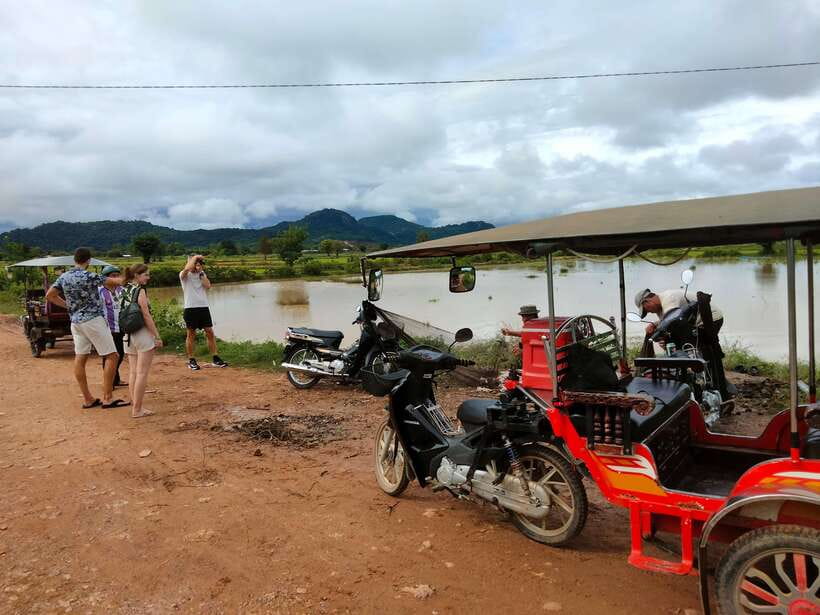
At $15 per person, this is inexpensive for a private 10-hour outing. The value is strongest if you want transport and a local guide without arranging separate tuk-tuks, temple visits, and cave transfers yourself.
Included services are hotel pickup and drop-off, tuk-tuk transport, an English-speaking guide who drives the tuk-tuk, unlimited mineral water, cold towels, local snacks, and entrance to the Bat Cave and Killing Cave as described. Meals are not included, so plan to buy lunch during the day. The tour description also excludes personal expenses.
The bamboo train costs $5 per person, and possible extra fees have been reported for Wat Banan and the Phnom Sampov site. The exact amount can change, so the advertised $15 should not be treated as your final door-to-door spending total.
For a private group of up to four, the price is particularly appealing. You are paying for a long day with transport and personal attention, not just admission to one attraction. If you want an all-inclusive package with lunch and every entrance ticket covered, this may frustrate you. If you are comfortable carrying cash and checking charges as you go, it is a strong low-cost way to cover the main sights around Battambang.
Who should book this day
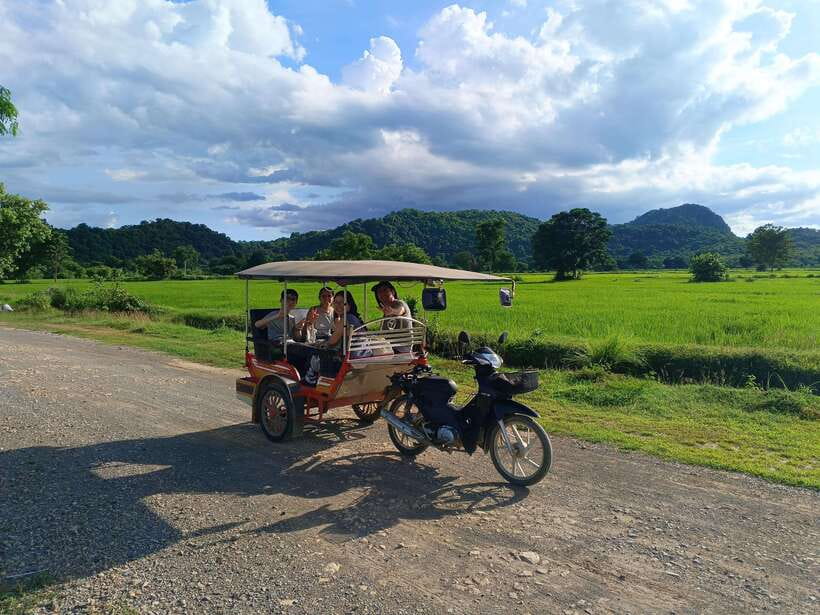
I would choose this tour if you want a full introduction to Battambang and prefer variety over a slow temple day. It suits couples, families with older children, and small groups who value a private guide and do not mind spending much of the day in a tuk-tuk.
It is also a good match for you if local food, village life, Cambodian religion, and recent history matter as much as the headline attractions. The Cham village, sticky rice, fruit bats, and farm views give the day more substance than a simple train-and-bat-cave transfer.
The day is not suitable for wheelchair users, people with mobility impairments, or pregnant women. The Wat Banan stairs, walking around Phnom Sampov, open tuk-tuk transport, and long duration make that clear. Bring comfortable shoes, a hat, sunscreen, a camera, and cash.
Free cancellation is available up to 24 hours before the start, and you can reserve now and pay later. Pickup is included, but you need to provide a hotel, guesthouse, or restaurant location in Krong Battambang.
Should you book this Battambang tour?
Book it if you want the bamboo train, Wat Banan, and Phnom Sampov in one private day, with enough village stops to make the route feel connected. The guides David Panha and Kim are strong choices if available, especially if you want history and culture explained rather than simply pointed out.
Think twice if you want a relaxed schedule, a guaranteed all-inclusive price, or a polished attraction with minimal walking. The train is entertaining but not essential, Wat Banan is a climb, and the Killing Cave is emotionally heavy.
For most active visitors staying in Battambang, the combination is hard to beat for $15 before extras. Just confirm the current entrance charges, budget for the train and lunch, and keep some energy for the bats at sunset.
FAQ
How long does the Battambang tour last?
The tour lasts about 10 hours, including pickup, tuk-tuk transfers, sightseeing, the bamboo train, Wat Banan, Phnom Sampov, and the return to Krong Battambang.
What is included in the $15 price?
The price includes hotel pickup and drop-off, tuk-tuk transportation, an English-speaking guide, unlimited mineral water, cold towels, local snacks, and the listed Bat Cave and Killing Cave entrance fees.
Is the bamboo train included?
No. The bamboo train fee is listed as $5 per person. A tip for the train operator may also be expected, so bring cash.
Are meals included?
No. Meals are not included. You should budget separately for lunch and any other personal purchases.
Does the tour include pickup?
Yes. Pickup and drop-off are included in Krong Battambang. You need to provide the name and location of your hotel, guesthouse, or restaurant.
Is the tour private?
Yes. It is offered as a private group, with the group size limited to four people.
Is this tour suitable for people with limited mobility?
No. The tour is not suitable for pregnant women, people with mobility impairments, or wheelchair users. Wat Banan involves climbing ancient stairs, and Phnom Sampov includes walking.
Just added around Battambang
- Bamboo Train, Banann Temple, Fruit Bat, Bat Cave, Sunset★ 4.2 · 3 reviews
- Private Battambang Full-Day Guided Tour★ 4.5 · 3 reviews
- Battambang Private Day Tour★ 5.0 · 5 reviews
- Private Taxi Transfer From Battambang – Siem Reap City★ 5.0 · 4 reviews
- Afternoon tour to Original Bamboo train. Bat cave. Killing cave★ 5.0 · 25 reviews
- Private Boat from Battambang to Siem Reap via Tonle Sap Lake★ 4.5 · 3 reviews
- Tuk Tuk Tour (Full-Day)★ 5.0 · 7 reviews
- Private Taxi Transfer Battambang from/to Phnom Penh★ 5.0 · 7 reviews
Bamboo Train Tours, compared.

Tuk-Tuk, Bamboo Train, Killing/Bat Caves, Sunset
Read our review →
Afternoon tour by tuk tuk to bamboo train,bat cave,killing cave,countryside.
Read our review →
Full Day tour .City tour.Countryside.Bamboo Train.Secret Bat Cave
Read our review →
Battambang Full Day Tour from Siem Reap – Bamboo Train, Killing Cave & Sunset
Read our review →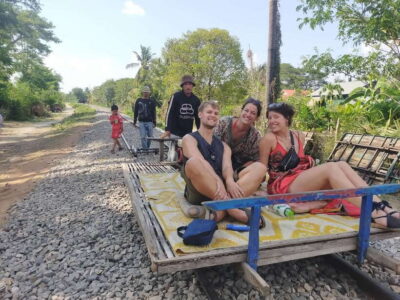
A Day TukTuk Handicrafts Bambootrain Killing&BatCaves,Sunset
Read our review →
A Day TukTuk Bambootrain, Banan, Killing & Bat Caves, Sunset
Read our review →
Battambang Day Trip from Siem Reap-Bamboo Train, Bats Cave
Read our review →Browse the lists this tour appears in