
Reviewed · SILK FARM TOURS
Half Day Trip: Silk Farm, Satcha, and Senteur d’Angkor Tour
The most rewarding part of this four-hour outing is watching a Cambodian craft move from raw material to finished object. At the Silk Farm, you follow mulberry trees and silkworms through the stages that lead to woven silk, then see how other local makers turn natural materials into useful and decorative goods.
I like the close look at traditional work, especially the Silk Farm visit, and I like the small private format, which keeps the tuk tuk ride and stop schedule simple. The English-speaking driver handles the transport, while each center provides its own guided look at the craft.
The main consideration is focus. This is not a major temple tour or a broad introduction to Siem Reap. It is a shopping and craft excursion, and one 50-minute stop may feel slow if you are not interested in handmade goods.
Key things to know before you book
- The Silk Farm shows the full silk process: You see mulberry trees, silkworms, silk production, and weaving in one visit.
- Satcha includes six workshops: The center combines Cambodian bamboo buildings with Khmer-inspired contemporary design.
- Four craft stops fit into half a day: Each visit lasts about 50 minutes, with short tuk tuk transfers between them.
- The tour is private for up to two people: The listed price is $25 per group, not per person.
- The pace mixes learning and shopping: You can take photos, walk through workshops, and browse finished products.
- The silk visit earns the strongest praise: It gives you a clear view of how local artisans make high-quality materials by traditional methods.
Why spend half a day on Cambodian crafts?
Siem Reap is famous for Angkor, but local craft work gives you a different way to understand Cambodia. This trip shows how people use silk, bamboo, spices, scents, and other materials to make objects tied to daily life and local design.
I find the format useful after a temple-heavy morning. You are still seeing and learning, but you are not climbing stairways or standing in the sun at ancient ruins. The tour also gives you a chance to buy something made in Cambodia rather than a generic souvenir.
The four stops are related, but not identical. The Silk Farm concentrates on production. Satcha focuses on workshops and design. Senteurs d’Angkor presents Cambodian products with a strong natural and sustainable theme. Artisan d’Angkor completes the picture with local handicrafts.
That variety helps keep the outing moving. Still, the tour asks you to spend roughly 50 minutes at each center, so your enjoyment will depend on how much you like demonstrations, craft displays, and shopping.
More silk-weaving visits near Siem Reap:
- Siem Reap Lotus Silk Farm Discovery tour & Lake experience
★ 4.7 · 291 reviews - Siem Reap: Lotus Silk Farm- Tour, Lake & Masterclass
★ 4.9 · 77 reviews - Angkor Silk Farm & Lotus Silk Farm: Siem Reap Discovery Tour
★ 4.8 · 68 reviews
Starting from Siem Reap by private tuk tuk
The tour begins with hotel pickup in Krong Siem Reap. Transport is by tuk tuk, with an English-speaking driver and a private group limited to your party. For one or two people, that is a pleasant setup: you do not wait for a large coach to fill, and you can keep the outing personal.
The first ride takes about 15 minutes. Later tuk tuk transfers are also short, listed at about 15 minutes, 15 minutes, and five minutes. Those rides are part of the experience, giving you a little open-air time between indoor or workshop-based visits.
A private tuk tuk is practical here because the tour is spread across several craft centers. You will not need to arrange separate rides or negotiate each transfer. The driver also received specific praise for being good and helpful, which matters on a short schedule where missed timing can cut into a workshop visit.
Wear comfortable walking shoes. Each stop includes walking and sightseeing, and the centers are places to explore rather than simply step inside for a quick purchase. Bring a camera if you want to record the stages of production and the workshop settings. Smoking is not allowed.
Angkor Silk Farm: from mulberry leaf to woven silk
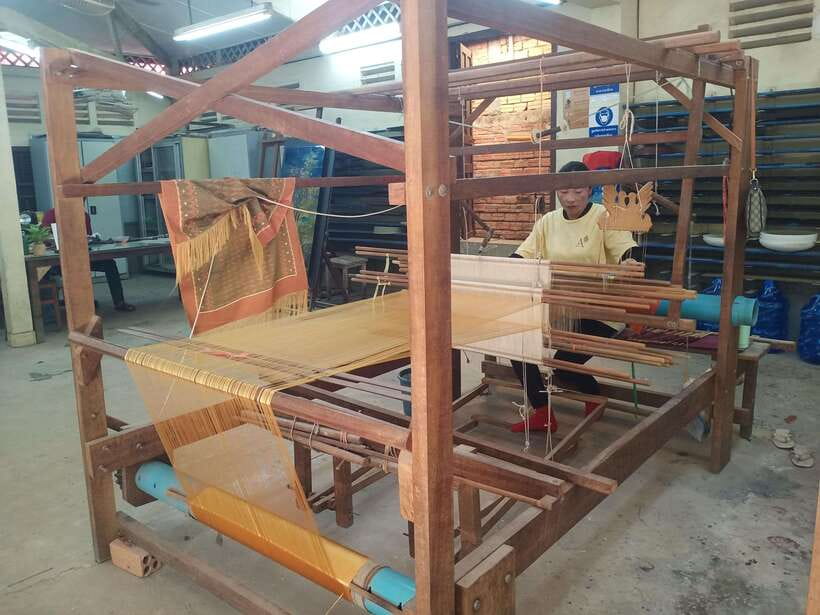
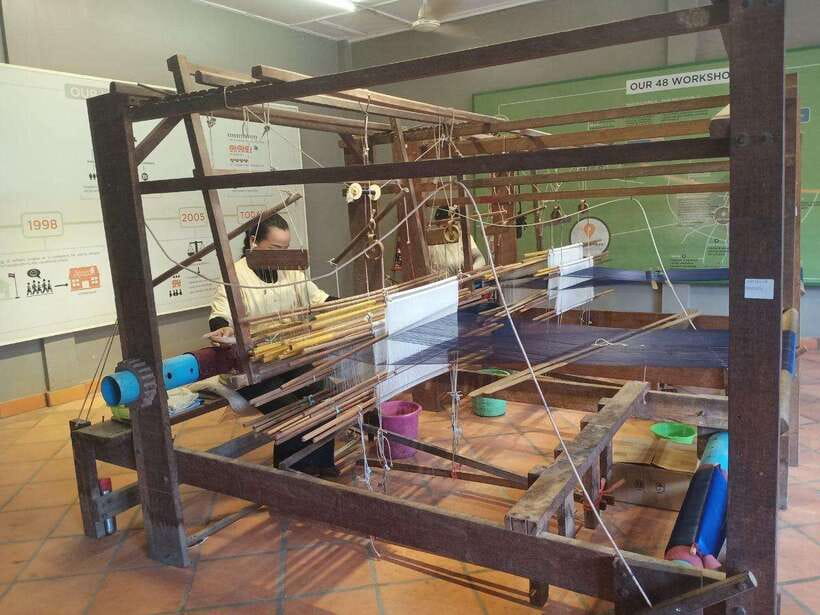
The Silk Farm is the strongest stop for anyone who wants to understand how a finished textile begins. The visit covers the full chain, starting with carefully cultivated mulberry trees and continuing through the life cycle of the silkworms.
That order is important. Instead of seeing only bolts of silk in a shop, you get a sense of the work behind them. The process connects agriculture, insect care, thread production, dyeing or preparation, and weaving. The supplied tour information specifically includes the weaving process, so you can expect the visit to move beyond a simple display of finished cloth.
You have about 50 minutes here, with a guided tour, walking, photos, a workshop element, and time to shop. That is enough to give the process shape without turning the stop into an all-day lesson.
The Silk Farm is also the place where the tour feels most rooted in traditional methods. One visitor described learning about the life cycle all the way through the beautiful finished silk materials, with kind staff and traditional work methods. That makes this stop especially useful if you are deciding whether the trip offers real cultural value or just a series of retail visits.
The drawback is that the experience may be less compelling if you already know textile production well or have no interest in buying silk. The visit is hands-on in the sense of seeing the stages and workshops, but the available information does not promise that you will produce a piece yourself.
If you buy something, take a moment to connect it with what you have just seen. The value is not only in the object. You have watched the long process behind it, from mulberry cultivation to woven material.
Satcha Handicraft Center and its six workshops
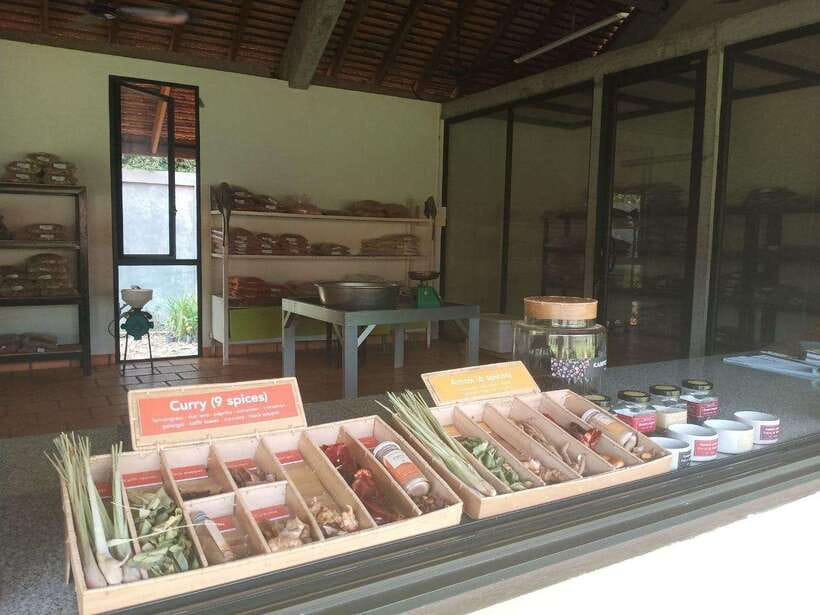
The next stop is Satcha Handicraft Center, built with Cambodian bamboo from Kampong Cham. Its six workshops are the main reason to visit. Rather than presenting one narrow product line, Satcha lets you see several forms of local making in one place.
The center combines traditional know-how with contemporary design inspired by Khmer ornaments. That combination gives the visit a useful balance. You see familiar Cambodian visual ideas, but in products and structures designed for present-day use.
Plan on about 50 minutes for the guided visit, walking, photos, shopping, and workshop viewing. Since the center includes six separate workshops, the time may pass quickly if you stop to examine each one. You will want to keep an eye on the schedule, though, because the tuk tuk continues to the next center.
Satcha is a good stop for visitors who want a more design-focused view of Cambodian craft. The bamboo construction also gives the place a clear local identity, rather than making it feel like a standard souvenir shop. At the same time, this is still a commercial visit. Shopping is part of the stop, so you should expect finished goods to be presented for purchase.
I would place Satcha near the middle of the trip in terms of historical depth. It is less about tracing one product from raw material to final form and more about seeing how Cambodian techniques can be used in modern objects and spaces.
A few more Siem Reap half-days worth weighing up
- Kompong Phluk Floating Village Half-Day Tour ( Morning / Sunset )
★ 5.0 · 1,494 reviews - Tonle Sap Lake & Kampong Phluk Village Half-Day Tour
★ 5.0 · 1,045 reviews - Siem Reap: Kompong Phluk Floating Village Half-Day Tour
★ 4.8 · 966 reviews - Angkor Sunrise Half-Day Tour with Private Vehicles & Tour Guide
★ 5.0 · 247 reviews
Senteurs d’Angkor and Cambodian natural products
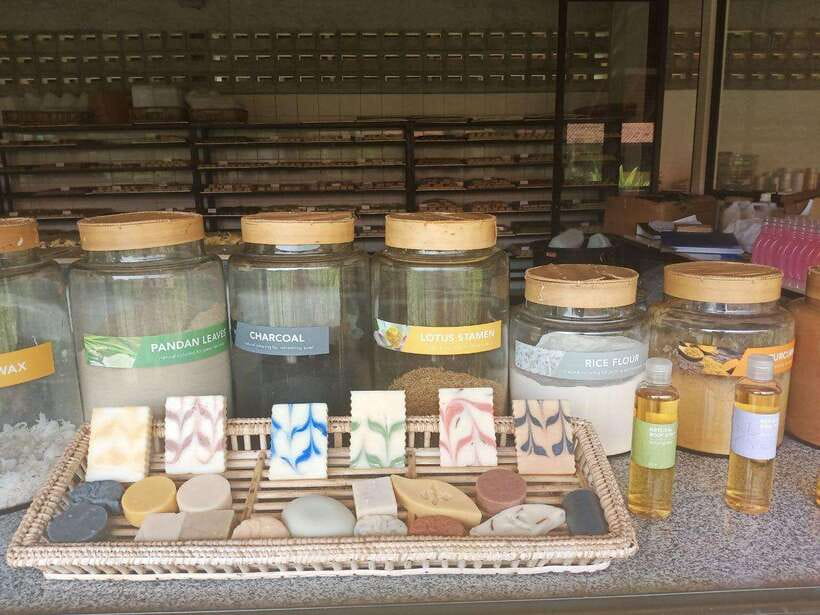
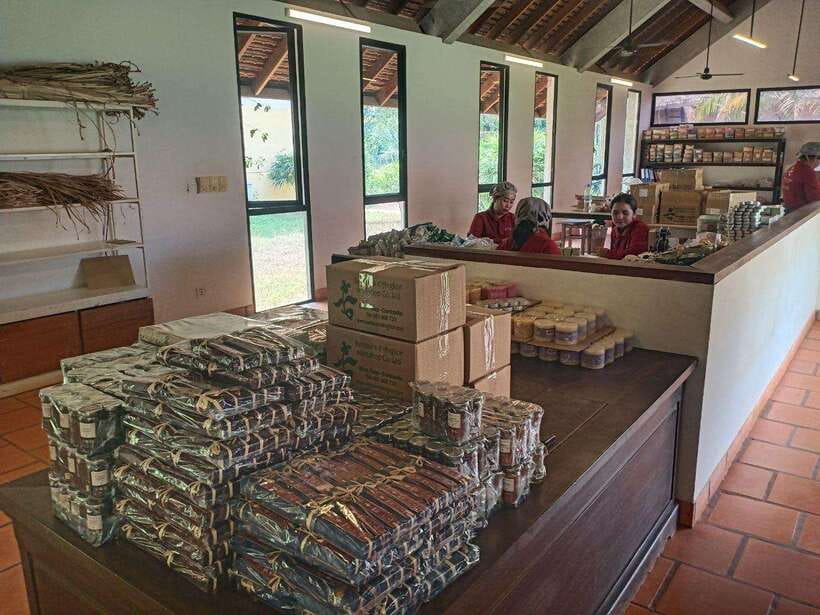
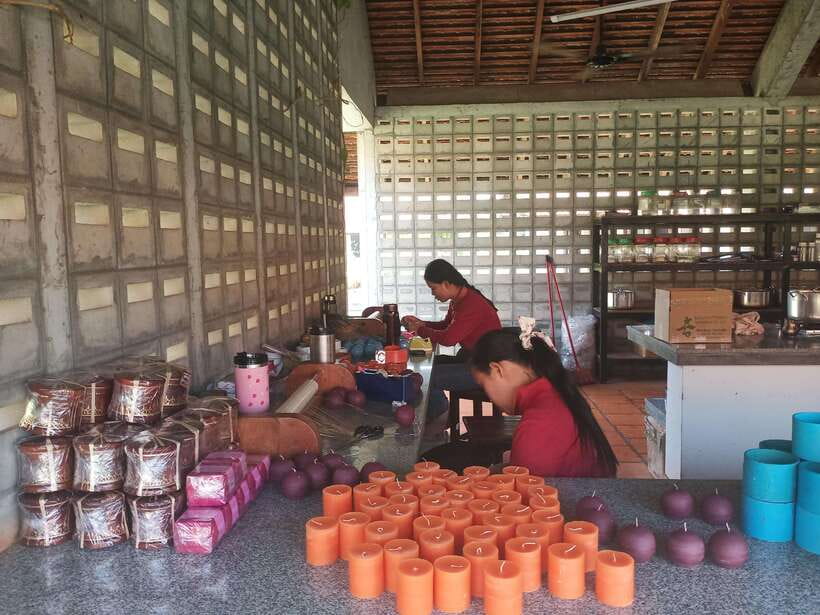
Senteurs d’Angkor is the third major stop. The focus here is on artisanal products and sustainable Cambodian treasures. The available details do not list every product or production method, so you should treat this as a guided introduction to local goods rather than expect a specific demonstration.
The 50-minute visit includes a photo stop, sightseeing, shopping, walking, and a workshop element. That combination gives you room to look at how products are made and then browse the finished items.
This stop works well as a change of pace after the detailed silk process and the six Satcha workshops. You move from a textile and design focus toward products connected with scent, natural materials, and everyday use. For you, the appeal may be less about one dramatic demonstration and more about seeing how local ingredients and craft skills become items you can take home.
The phrase sustainable is part of the experience description, but it should not be stretched beyond what is provided. You can expect the center to present Cambodian products with an emphasis on responsible local production. You should not assume that every item has the same sourcing or environmental story.
Shopping is likely to be central here. If you prefer to buy practical souvenirs, this may be more useful than a stop devoted only to display. If you are not shopping, the guided explanation and workshop view give the visit a reason to stay, but the 50-minute timing could feel long for a quick browser.
Artisan d’Angkor and the final craft stop
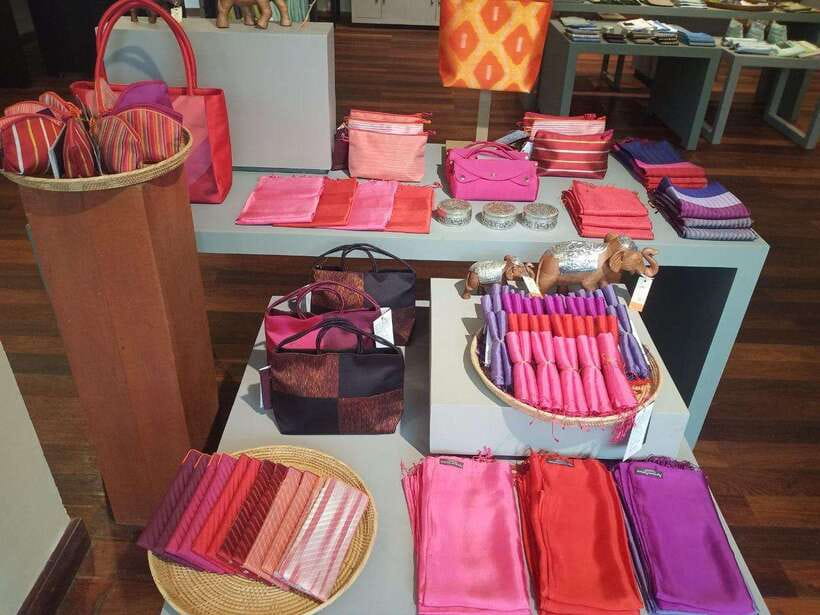
The last visit is Artisan d’Angkor, described as a place where local handicrafts are made. It gives the tour a final look at Cambodian artisan production after you have already seen silk, bamboo-based design, and other local products.
This stop lasts about 50 minutes and includes a photo stop, guided tour, shopping, walking, and a workshop. Because it comes last, it can help you compare the different approaches you have seen during the afternoon. You can think about the difference between a farm-based textile process, a multi-workshop design center, sustainable product making, and broader handicraft production.
Artisan d’Angkor is also useful if you want one final chance to choose a souvenir. You have already had time to see several types of products, so you can shop with a better sense of what feels distinctly Cambodian and what suits your budget.
The limitation is the same as at the other centers: the available description does not name each specific craft made at this stop. Go for the general view of local handicraft production rather than expecting a guaranteed list of demonstrations.
After this visit, the tuk tuk ride back to Krong Siem Reap takes about five minutes. The short final transfer helps keep the day close to the advertised four-hour duration.
What the $25 group price really offers
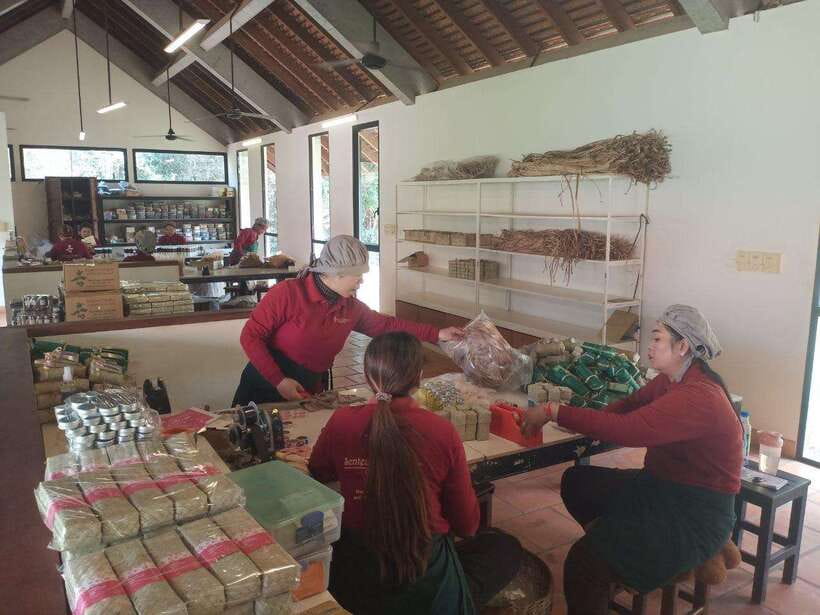
At $25 per group of up to two people, this is a low-cost private outing. The important detail is per group. Two people can share the price, which makes the value particularly good compared with paying separately for four individual admissions or arranging several private rides.
The price includes hotel pickup and drop-off, the tuk tuk transfers, and visits to all four craft centers. Meals and personal expenses are not included, so plan to pay for anything you buy during the shopping portions. The tour description does not list separate entrance fees, so you should confirm the final inclusions when booking if that detail matters to your budget.
I see the value in the transport and structure as much as in the visits themselves. Four hours can disappear quickly in Siem Reap, especially when you are arranging rides between outlying attractions. Here, the route and driver are organized for you.
The value is less clear if you already have a full shopping plan or prefer to spend your limited time at Angkor. This outing is best when you want the craft centers themselves, not merely a cheap way to fill an afternoon.
Timing, flexibility, and comfort
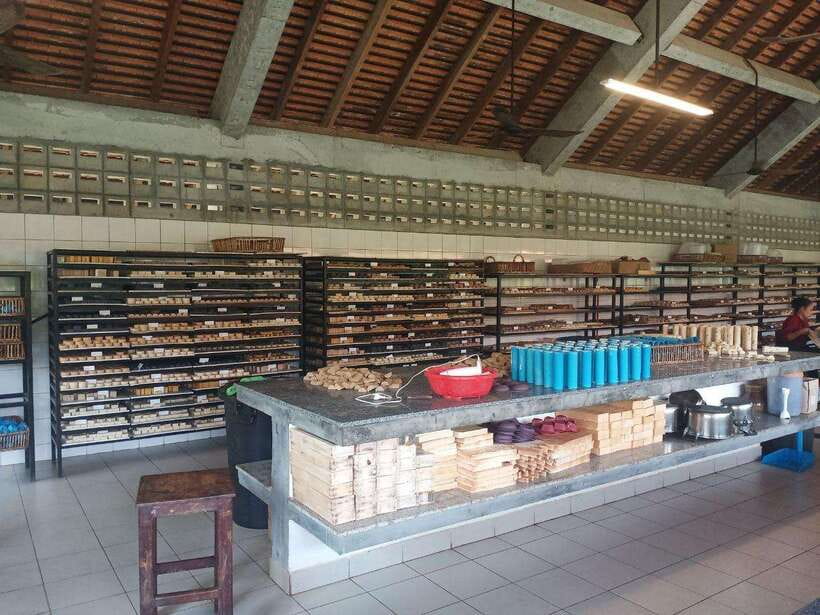
The total duration is four hours. Each of the four main visits is scheduled for about 50 minutes, with tuk tuk rides between them. That is a sensible rhythm for a half-day trip, but it is not a fully open schedule. You will need to keep moving from one center to the next.
Free cancellation is available up to 24 hours before the start for a full refund. You can also reserve and pay later, which helps if your Siem Reap plans are still changing. Starting times depend on availability, so check the departure options before you commit to a temple schedule or meal reservation.
There are no meals included. Four hours is short enough that this should not create a major problem, but it is worth eating beforehand if you prefer not to shop while hungry.
The private format suits couples, friends, or a parent and child who want to move at their own pace within the planned route. The driver speaks English, while the detailed guided content at each center may vary by location. The available information does not provide individual guide names, so you should not book expecting a named personal guide.
Who will enjoy this most?
I would recommend this trip to you if you:
- Want a break from Angkor temples
- Like handmade textiles, bamboo design, or local products
- Prefer seeing how goods are made before buying them
- Want private transport for two people
- Have a half day available in Siem Reap
- Enjoy short guided visits with time for photos and shopping
I would be more cautious if you have only one day in Siem Reap and have not yet seen Angkor. The tour is interesting, but the craft centers are not a substitute for the major temples.
I would also lower my expectations if you want a long, detailed cultural lecture or a single in-depth workshop. The schedule spreads four stops across four hours. You get a broad look at Cambodian craft production, not a full apprenticeship in any one skill.
Should you book this Siem Reap craft tour?
Book it if the Silk Farm appeals to you and you want to add three related but different craft centers without arranging transport yourself. The silk process is the clearest highlight, and the private $25 group price gives two people an efficient way to see the sites.
Skip it if shopping and artisan workshops are not your interests, or if this half day would replace your only chance to visit Angkor. For the right visitor, this is a practical, affordable look at Cambodian making, with the Silk Farm providing the strongest reason to go.
FAQ
How long does the tour last?
The tour lasts four hours, including hotel pickup, visits, tuk tuk transfers, and return to Krong Siem Reap.
How many people can join the private group?
The price covers a private group of up to two people.
What transportation is used?
The tour uses a tuk tuk for pickup, transfers between the craft centers, and drop-off at your hotel. The driver speaks English.
Which places are included?
The tour includes Angkor Silk Farm, Satcha Handicraft Center, Senteurs d’Angkor, and Artisan d’Angkor.
How much time is spent at each stop?
Each main visit is scheduled for about 50 minutes. The tuk tuk transfers take about 15 minutes between several stops, with a final transfer of about five minutes.
Are meals included?
No. Meals and personal expenses are not included.
Can I cancel the booking?
Yes. You can cancel up to 24 hours in advance for a full refund. You can also reserve now and pay later.
Just added around Siem Reap
- Twilight Tastes of Siem Reap Include Dinner★ 5.0 · 13 reviews
- Ultimate Sunrise to Angkor Wat, Angkor Thom and Bayon Temple★ 5.0 · 3 reviews
- Trekking Tour at Phnom Kulen National Park from Siem Reap★ 5.0 · 3 reviews
- Professional Photo Shoot in Angkor Archaeological Park, Siem Reap★ 5.0 · 42 reviews
- Full-Day Private Tour of Angkor Wat with Pick Up★ 5.0 · 12 reviews
- Unveiling 2 Days Private Angkor Wat/Beyond In Sunrise/Sunset Tour★ 5.0 · 48 reviews
- Siem Reap City Tour with War Museum and Killing Field★ 5.0 · 27 reviews
- Private Day Trip to Angkor Temples with Expert Guide★ 5.0 · 4 reviews
Silk Farm Tours, compared.
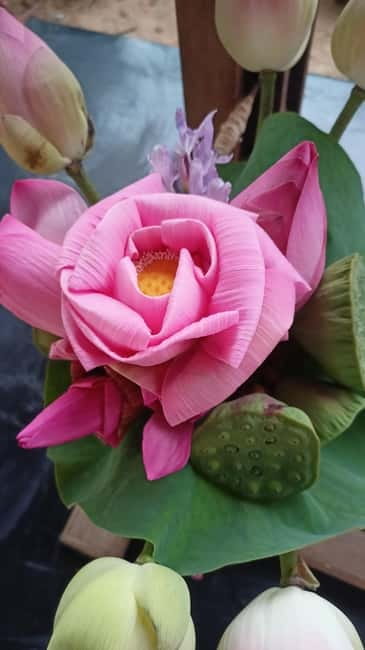
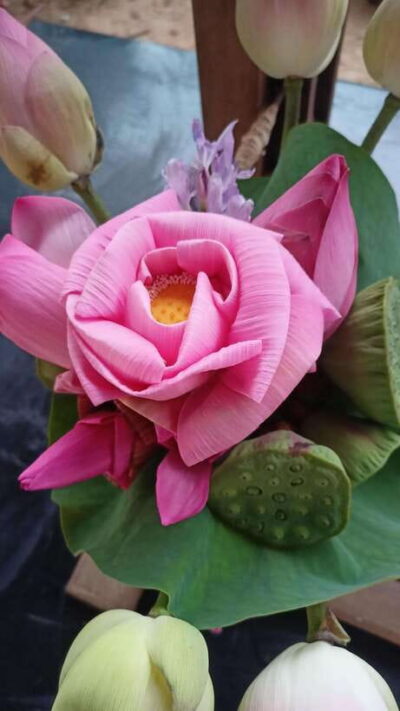
Angkor Silk Farm & Lotus Silk Farm: Siem Reap Discovery Tour
Read our review →
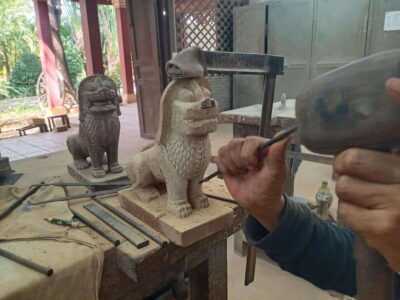

Banteay Chhmar Temple & Silk Farm Private Day Trip from Siem Reap
Read our review →
Tuk Tuk Journey: Exploring Rural Life and Silk Farm Craftsmanship
Read our review →Browse the lists this tour appears in