
Reviewed · SILK FARM TOURS
Siem Reap: Lotus Silk Farm- Tour, Lake & Masterclass
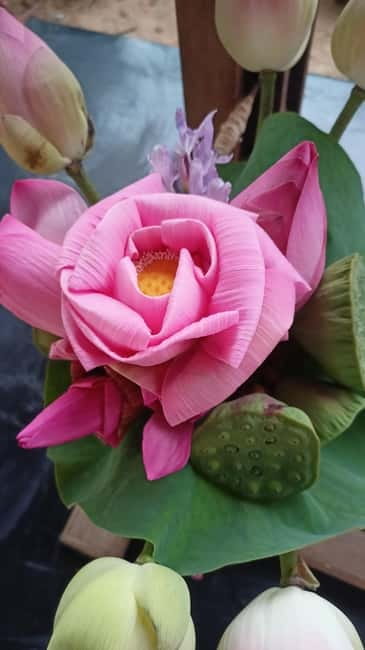
The most surprising part of this Siem Reap outing is how much can come from one lotus plant. At the farm, you’ll see lotus fiber pulled from stems, then turn other parts of the flower into paper, jewelry, incense, printed cloth, and carved designs. The final reward is a 30-minute boat ride through the lotus fields, where the boatman makes a flower bouquet as you glide past the blooms.
I like two things here. First, the six craft sessions give you something to do, not just something to watch. Second, the farm links Khmer tradition with practical work for rural women, so your $70 helps support an active local enterprise. The one thing to consider is the price and length: this is not a quick photo stop, and the downtown meeting point means you must arrange your own way to Biolab Cafe.
Key points to know before you book
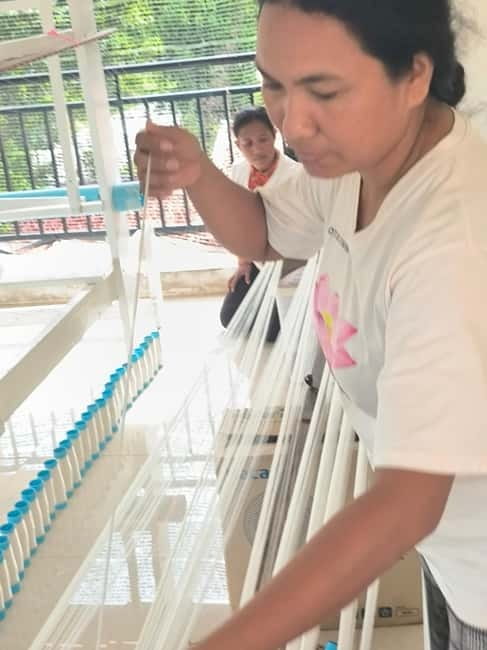
- Six crafts in one visit: Make lotus paper, spin yarn, create seed jewelry, prepare incense, print botanicals on silk, and engrave a lotus symbol into vegan leather.
- The boat ride is a real highlight: Spend 30 quiet minutes on the water, with lotus flowers around you and a boatman crafting a bouquet.
- You learn the full lotus silk process: The guided visit explains how delicate fibers are extracted and made into a luxury textile.
- You take home your own work: Your six handmade pieces, plus small gifts, give the outing a useful souvenir angle.
- Meet downtown, not at your hotel: Pickup runs from Biolab Cafe and Restaurant at 8:30 AM, 10 AM, and 12 PM.
- Plan for four and a half hours: This suits a relaxed half-day, not anyone trying to squeeze in a fast activity between temple visits.
Why the lotus farm makes a good break from Angkor
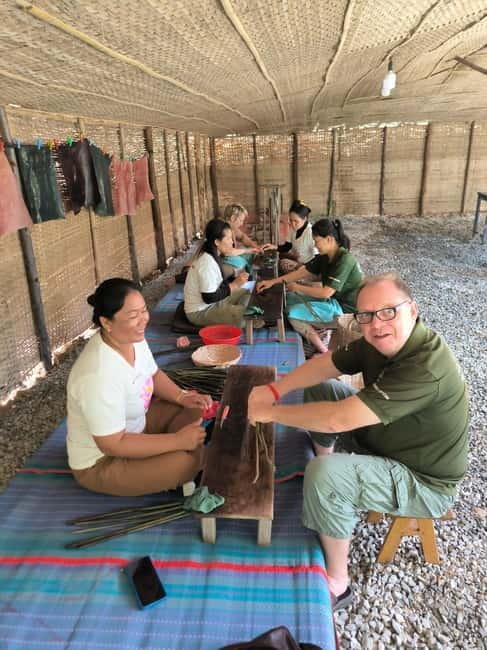
Siem Reap is rightly famous for its temples, but several days of carved stone and early alarms can leave you ready for something softer. This farm visit shifts the focus to plants, village craftsmanship, and patient handwork. You get a look at Cambodia that is less grand than Angkor Wat, but more connected to daily production and local livelihoods.
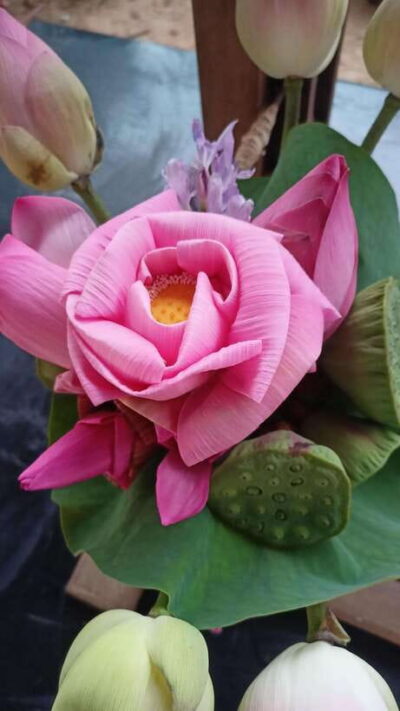
The lotus has religious meaning across Cambodia, yet the farm presents it as a useful working plant too. Its stems provide fiber, waste can become paper or vegan leather, seeds can become jewelry, and flowers can be used in craft and decoration. That full-use approach gives the tour a clear point: sustainability here is not just a slogan printed on a brochure. You see the material being handled and reused.
The experience is run by Savin Lotus Shop and supports a social enterprise that has worked on women’s empowerment since 2003. You can also browse finished lotus silk products and textiles in the boutique, though purchases are extra. I like that the visit lets you see the production first, then decide if you want to buy something.
More silk-weaving visits near Siem Reap:
- Siem Reap Lotus Silk Farm Discovery tour & Lake experience
★ 4.7 · 291 reviews - Angkor Silk Farm & Lotus Silk Farm: Siem Reap Discovery Tour
★ 4.8 · 68 reviews - Siem Reap: Silk Farm & Countryside Offbeat Jeep Tour
★ 4.5 · 11 reviews
Starting with lotus silk and the farm’s working methods
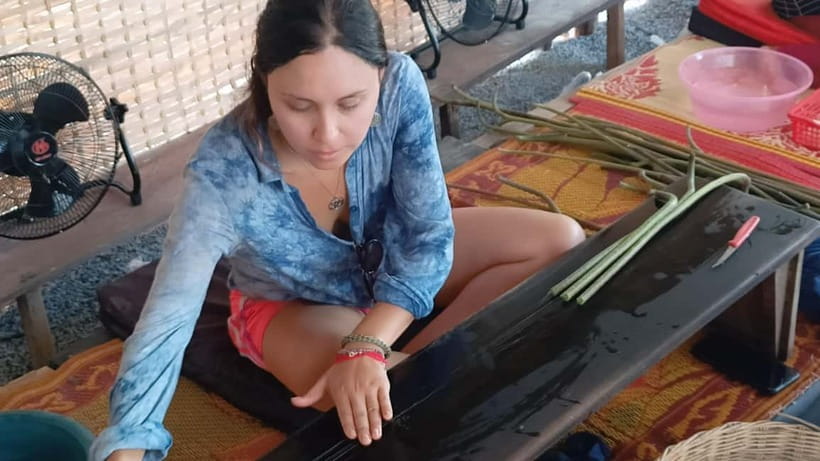
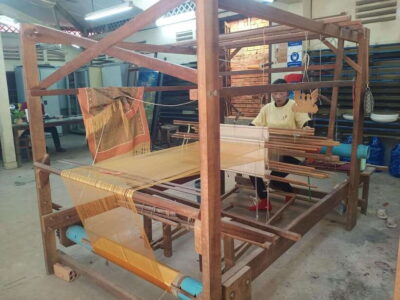
The visit begins with a guided explanation of lotus silk production. Master artisans show how fine fibers are drawn from lotus stems and combined to create yarn. This is slow handwork, and that matters when you later see the price of finished lotus silk products in the shop.
Do not expect a large industrial factory. The appeal is seeing skilled people work with simple materials and careful repetition. The guide also places the craft in a Khmer cultural and religious setting, something particularly useful if you have only seen the lotus as a temple offering or a pretty flower in a pond.
The guide may be an English or French speaker, and named hosts connected with this experience include Sokha, Sean, and Melany. Their roles can vary by departure, so you should not book expecting one specific person. Still, the operation clearly relies on personal instruction rather than a recorded presentation. One guide has been described as the founder, which can add useful background about how the project developed.
Allow about 30 minutes for the guided farm visit before the hands-on work. The pace is designed for questions and demonstrations, so you should have time to understand each stage rather than simply walk past a workbench.
Six workshops, six different ways to use a lotus
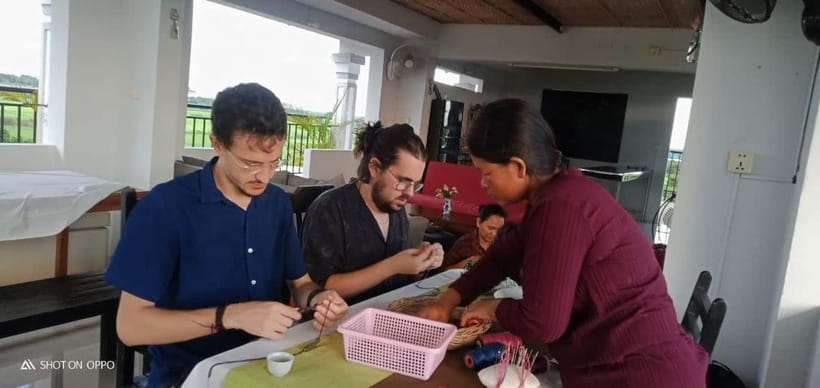
The craft sessions are the heart of the outing. They are short, practical lessons rather than advanced training, but the range is impressive. You move from plant fiber to paper, seeds, scent, natural color, and carving.
Lotus paper from stem waste
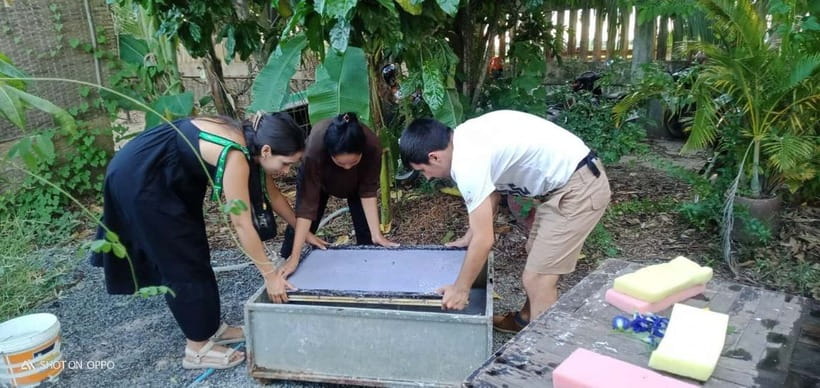
You learn how recycled lotus stem waste can become paper. This is one of the clearest lessons in the farm’s low-waste approach. Material that might otherwise be discarded gets a second use, and you leave with a paper item made by your own hands.
A few more Siem Reap half-days worth weighing up
- Angkor Wat Sunrise or Sunset Tour with Guide from Siem Reap
★ 5.0 · 12,109 reviews - Siem Reap: Angkor Wat: Small-Group Sunrise or Sunset Tour
★ 5.0 · 9,444 reviews - From Siem Reap: Kampong Phluk Floating Village Tour by Boat
★ 4.9 · 6,979 reviews - Sunset tour of Kampong Phluk stilts home village on the Tonle Sap
★ 5.0 · 4,865 reviews
Spinning lotus yarn
Lotus fiber is precious because it is delicate and takes time to extract. With guidance from the artisans, you get a chance to handle and spin the fiber into yarn. The activity helps you understand why lotus silk is considered a luxury textile rather than an everyday bargain fabric.
Jewelry from dried seeds
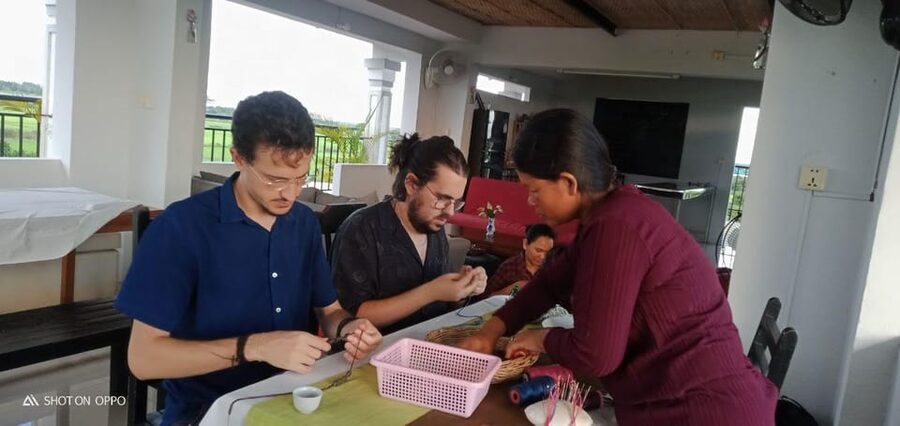
Dried lotus seeds become small decorative pieces. This session is approachable for children and adults, and it produces one of the easiest souvenirs to pack. The finished item also keeps the plant’s shape and texture visible, unlike a generic shop trinket.
Making incense sticks
The incense activity connects the lotus to Cambodia’s spiritual traditions. You prepare incense sticks under instruction, gaining a simple sense of the ingredients and manual work involved. It is a tactile session, though the scent may not suit everyone, especially if you are sensitive to incense.
Botanical eco-printing on silk
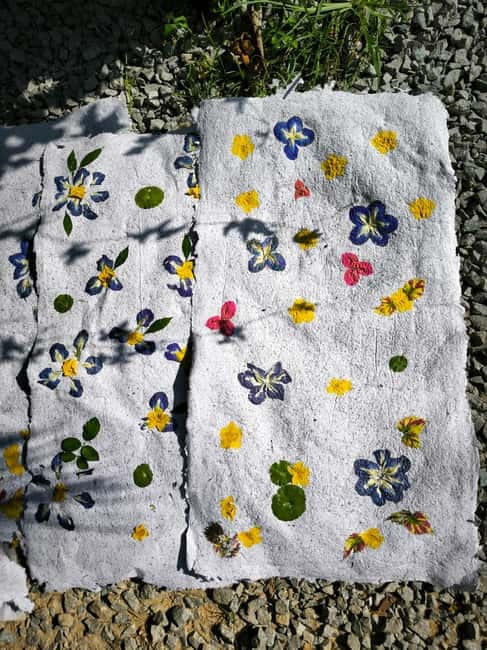
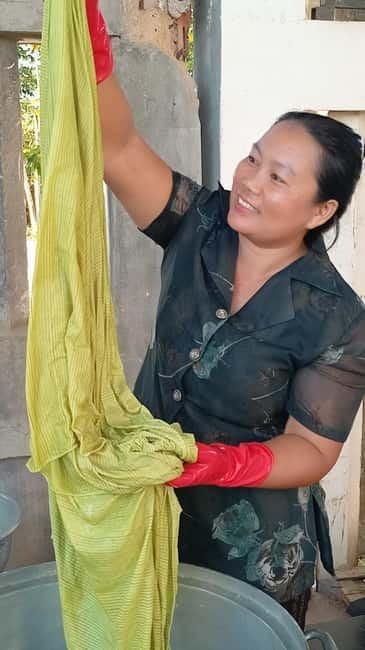
You gather fresh botanicals from the garden and arrange them on a silk scarf. The final composition is personal, since you choose the arrangement rather than receiving an identical factory-made pattern. This is probably the best activity for anyone who enjoys color, flowers, and visual design.
Engraving the lotus symbol
The final craft involves engraving a sacred lotus symbol into vegan leather made from lotus stem waste. It gives you a small keepsake with a clear connection to both Khmer symbolism and the farm’s effort to reduce waste.
The artisans guide each activity and demonstrate the steps before you begin. You should not expect museum-level perfection from your first attempt. That is part of the charm. These are handmade pieces, and small uneven edges are reminders that you made them yourself.
The boat ride through the lotus fields
The boat trip is the calmest part of the day and, for many people, the most memorable. You board a traditional wooden boat for about 30 minutes and glide through broad lotus fields. The ride offers a change of pace after the craft tables, with open water, pink flowers, and fewer demands on your hands and attention.
The boatman does more than steer. He makes an intricate lotus bouquet during the ride, and some departures include a lotus flower hat or similar handiwork. You can watch the bouquet take shape while taking photographs of the flowers around you.
Timing affects the mood. The morning departures offer cooler light and a quiet start, while a later trip can put you among the fields near sunset. One particularly useful tip from the activity feedback is to consider the 4 PM boat timing if that option is available with your chosen schedule. Sunset over the lotus flowers can be lovely, but do check the actual start time when booking because the listed pickup times are 8:30 AM, 10 AM, and 12 PM.
The boat is not a fast sightseeing cruise, and that is exactly why it works. You are there to slow down, watch the flowers, and enjoy the setting. If you need constant commentary or a packed schedule, the quiet stretch may feel long. I would treat it as a pause, not as another information-heavy tour.
Lotus tea, biscuits, gifts, and the boutique
Lotus tea and homemade lotus biscuits are included. They are light refreshments, not a meal, so eat beforehand or plan food separately. Water is provided, but bringing extra water is sensible, particularly on a warm day.
The food and drinks add a small but welcome local touch. You are not simply handed a standard bottle and a packaged snack. The tea gives you another way to experience the lotus, while the biscuits keep the break connected to the farm’s theme.
At the end, you take home the crafts you made, along with additional small gifts. Some people also receive a parting present beyond the project work and the lotus bouquet. The exact gifts can vary, so think of them as a bonus rather than part of the guaranteed six creations.
The boutique sells lotus silk products, fabrics, and other souvenirs. These purchases are not included in the $70 price. That is worth remembering if your budget is tight, since handmade textiles can tempt you after seeing how much labor goes into their production.
Is $70 good value for four and a half hours?
At $70 per person, this is not the cheapest half-day activity around Siem Reap. The value depends on what you want from your time.
If you compare it with a short farm visit, the price may seem high. If you count the guided production tour, six separate craft lessons, refreshments, gifts, and the boat ride, the package becomes easier to justify. You are paying for instruction, materials, artisan time, and transport from the downtown meeting point, not just admission to a field.
The strongest value is for anyone who would otherwise book several separate activities. Here, the cultural explanation, hands-on making, and nature outing are combined in one day. Families can split up around the craft tables, couples can make matching or contrasting pieces, and solo visitors get plenty of guided contact without needing to organize a private workshop.
I would be less certain about the value if you mainly want a boat ride. In that case, the craft sessions may feel like too much. Likewise, shoppers who prefer finished souvenirs could spend less time and money at a boutique. The $70 makes the most sense when you genuinely want to learn and make things.
Getting there from Biolab Cafe
Hotel pickup and drop-off are not included. You must reach Biolab Cafe and Restaurant in downtown Siem Reap, then meet the grey van outside. Pickup is offered at 8:30 AM, 10 AM, and 12 PM, and you should arrive about five minutes early.
Look for the lotus-colored flag marked PICKUP with the Lotus Silk Farm logo. The café has air conditioning, restrooms, WiFi, and drinks available for purchase, so it is a comfortable place to wait. This is much easier than standing beside an indistinct roadside meeting point.
One practical warning: transport can occasionally run late. A 30-minute delay was reported on one departure, though it was treated as unusual. Build a little breathing room into your day, especially if you have a temple tour or airport transfer afterward.
The return transfer takes you back to Biolab Cafe. From there, you arrange your own ride to your hotel. A tuk-tuk or taxi from downtown should be easy to arrange, but that final leg is your responsibility.
Who will enjoy this experience most?
I would recommend the farm to several kinds of visitors:
- Craft lovers: You get six activities and take your own work home.
- Families: The sessions are varied, practical, and suitable for different ages, though children need to follow instructions around tools and materials.
- Nature fans: The boat ride and lotus fields provide a peaceful contrast to temple touring.
- Cultural learners: The visit links religion, local employment, traditional skills, and sustainable production.
- Repeat visitors to Siem Reap: It offers a different side of the province after you have seen the major temples.
- Slow-day planners: The four-and-a-half-hour format gives you a relaxed block without rushing from stop to stop.
You should think twice if you dislike making things, have little patience for demonstrations, or need a tightly timed morning. The experience is hands-on by design. You will touch materials, follow steps, and accept that handmade work takes time.
The farm is wheelchair accessible, and instruction is offered in English and French. Wear comfortable shoes and clothing suitable for craft work. Bring a camera, since the boat ride and flower fields are highly photogenic, but keep your phone safe around the water.
Should you book the Lotus Silk Farm experience?
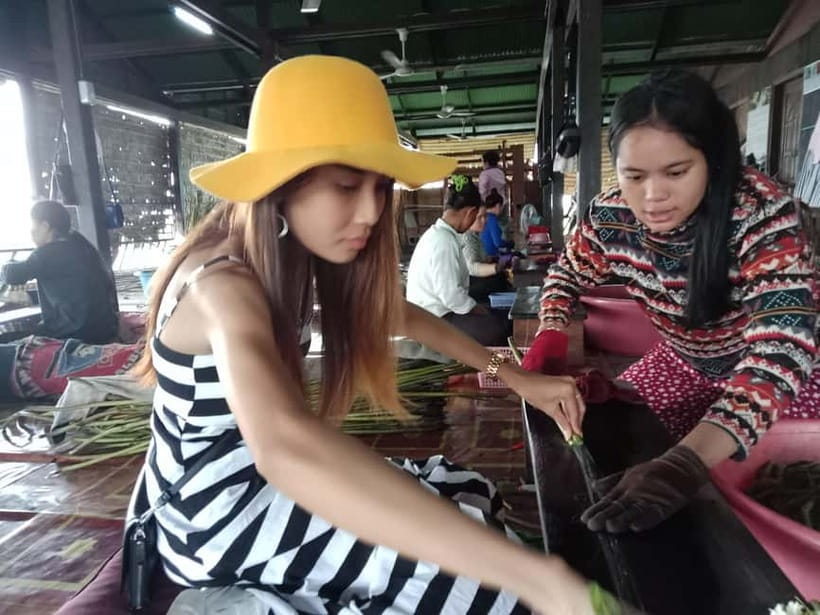
Book it if you want more than photographs. The best part is the combination: you see lotus silk being made, use the plant in six different crafts, then finish on the water among the flowers. Few Siem Reap activities give you such a clear link between local work, nature, and a souvenir you made yourself.
I would book an earlier departure for cooler conditions and a later boat time if sunset is your priority. Confirm the schedule, allow four and a half hours, and remember that you need to reach Biolab Cafe on your own.
Skip it if you only want a quick scenic stop or a basic boat tour. For everyone else, especially families, craft fans, and visitors ready for a quiet break from Angkor, the $70 price is fair for the amount of teaching, making, and time on the water.
FAQ
How long does the Lotus Silk Farm experience last?
The stated duration is 4.5 hours. It includes the guided farm visit, six craft activities, refreshments, and a 30-minute boat ride through the lotus fields.
What crafts will I make?
You can make lotus paper, spin lotus fiber into yarn, create jewelry from dried lotus seeds, prepare incense sticks, arrange botanicals for eco-printing on a silk scarf, and engrave a lotus symbol into vegan leather made from lotus stem waste.
Is hotel pickup included?
No. Transportation is provided only from and back to Biolab Cafe and Restaurant in downtown Siem Reap. Hotel pickup and drop-off are not included.
Where is the meeting point?
Meet at Biolab Cafe and Restaurant in downtown Siem Reap. Look for the lotus-colored PICKUP flag with the Lotus Silk Farm logo and the grey van outside.
What refreshments are included?
Homemade lotus tea, lotus biscuits, and water are included. Meals and additional food or drinks are not included.
Can I cancel or pay later?
You can cancel up to 24 hours before the activity for a full refund. The reservation option also allows you to book now and pay later.
Just added around Siem Reap
- Twilight Tastes of Siem Reap Include Dinner★ 5.0 · 13 reviews
- Ultimate Sunrise to Angkor Wat, Angkor Thom and Bayon Temple★ 5.0 · 3 reviews
- Trekking Tour at Phnom Kulen National Park from Siem Reap★ 5.0 · 3 reviews
- Professional Photo Shoot in Angkor Archaeological Park, Siem Reap★ 5.0 · 42 reviews
- Full-Day Private Tour of Angkor Wat with Pick Up★ 5.0 · 12 reviews
- Siem Reap City Tour with War Museum and Killing Field★ 5.0 · 27 reviews
- Unveiling 2 Days Private Angkor Wat/Beyond In Sunrise/Sunset Tour★ 5.0 · 48 reviews
- Private Day Trip to Angkor Temples with Expert Guide★ 5.0 · 4 reviews
Silk Farm Tours, compared.
Angkor Silk Farm & Lotus Silk Farm: Siem Reap Discovery Tour
Read our review →
Half Day Trip: Silk Farm, Satcha, and Senteur d’Angkor Tour
Read our review →
Banteay Chhmar Temple & Silk Farm Private Day Trip from Siem Reap
Read our review →
Tuk Tuk Journey: Exploring Rural Life and Silk Farm Craftsmanship
Read our review →Browse the lists this tour appears in