
Reviewed · COOKING CLASSES
Cooking Class in Phnom Penh
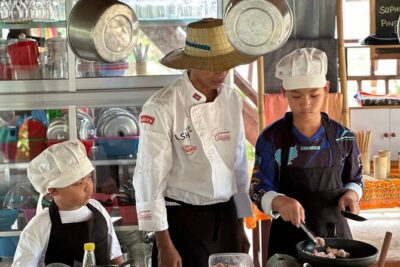
The most appealing part of this Phnom Penh class is that you do not simply watch someone cook Cambodian food. You cut the spices, pound them into paste, season the ingredients, prepare barbecue, and make dessert before sitting down to eat. The work is hands-on, and the food becomes your evening meal.
I like the small group limit of eight, which should give you room to follow the cooking steps and ask questions. I also like the food presentation, which explains the role of rice, fish, herbs, and spices, plus the influence of nearby countries. The one thing to consider is the late start: dinner does not arrive until about 8:00 PM.
Key points about this Phnom Penh cooking class
- Fresh Cambodian ingredients: Learn how local spices, herbs, vegetables, meat, rice, and fish shape Khmer food.
- You do the preparation: Cut spices, pound a paste, season ingredients, make barbecue, and prepare dessert.
- A compact evening schedule: The class runs from 5:00 to about 8:00 PM, making it easy to fit into a Phnom Penh stay.
- Small group setting: A maximum of eight people keeps the lesson more personal than a large demonstration.
- Food culture included: A slide presentation explains Cambodian cuisine and the outside influences that helped shape it.
- Dinner and drinks included: Eat what you prepare, with water, a soft drink, and one or two beers provided.
Why this class gives you more than a Cambodian dinner
Phnom Penh has plenty of places to eat Khmer food. A cooking class gives you a different kind of meal: you learn why the food tastes the way it does, then put that lesson on your plate.
This class focuses on the building blocks of Cambodian cooking. Rice, fish, herbs, and spices all get attention, and the food talk places Khmer cuisine beside the influences of neighboring countries. That context matters because many Cambodian dishes depend on balance rather than one loud flavor. A spice paste, a vegetable, meat, and seasoning all have to work together.
I also like that the evening is built around actual kitchen tasks. You are not expected to sit quietly while an instructor performs everything. The schedule has you cutting spices and pounding them into a paste at about 5:15 PM. That simple step gives you a feel for the labor behind the smooth sauces and seasoned dishes served in Cambodian kitchens.
The tone appears friendly and personal. The host, Sreng, signs the follow-up message to participants and thanks them for bringing energy to the cooking. The class has earned a 5.0 rating from seven published ratings, with particular praise for the host, the educational side, and the food. That is a small sample, so I would not treat it as a guarantee, but it does point to the experience’s strongest qualities.
More Cooking Classes in Phnom Penh:
- Khmer Cooking Class Half Day (AM or PM)
★ 5.0 · 316 reviews - Phnom Penh’s Hands-On Khmer Cooking Class in the Countryside
★ 5.0 · 54 reviews - Khmer Cooking Class Full Day
★ 5.0 · 13 reviews
Starting at 5:00 PM with coconut water and spices
You meet at Phnom Penh Spice Cooking Class, 111, St 1MC, Phnom Penh, at 5:00 PM. The activity begins and ends at this same meeting point, so you do not need to plan for a transfer between a market, a cooking school, and a restaurant.
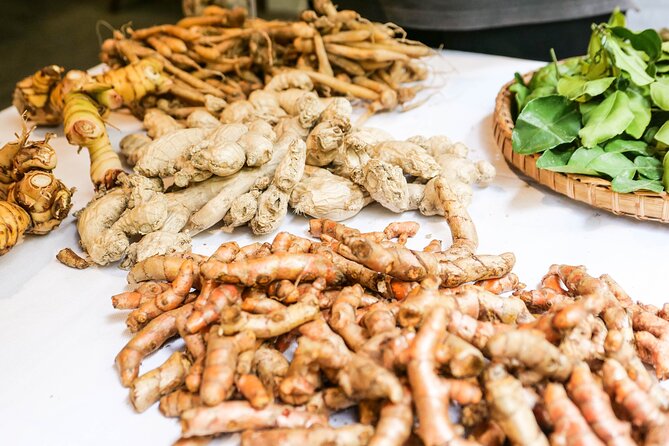
The opening is relaxed. You receive coconut water and seasonal fruit while learning about Cambodian spices. This is useful preparation rather than filler. Before you start chopping, you get a first look at the ingredients that will shape the meal.
The coconut water and fruit also make sense at this hour. Phnom Penh’s heat can make a late afternoon cooking session feel more demanding, and a light refreshment lets you settle in before handling the food. The precise fruit selection changes with the season, so do not book this expecting one particular item.
The meeting point detail is important. The supplied address includes the unusual notation 111, St 1MC, so save the full location before leaving your hotel and allow time to find it. The class itself does not include transportation, and the activity returns you to the starting point.
Cutting spices and pounding the paste
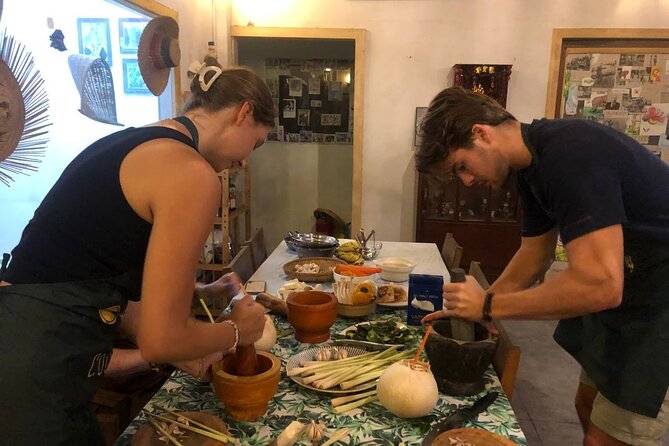
At about 5:15 PM, the practical work begins. You cut spices and pound them into a paste. This is one of the most worthwhile parts of the class because it shows how Cambodian food builds flavor from freshly prepared ingredients rather than relying only on a ready-made sauce.
Pounding takes more effort than stirring a jar. You can expect this stage to be active and a little messy, which is part of its value. The class is designed for participation, so you should arrive ready to handle ingredients instead of treating the event as a demonstration with dinner attached.
The spice lesson also helps you understand why the opening explanation matters. Herbs and spices are not just decorative additions in Khmer food. They form the base of a dish, and the texture of the paste affects how the seasoning spreads through vegetables and meat.
The class description does not list the exact dishes or the names of every spice. That limits your ability to choose the menu in advance, especially if you have a strong preference or dietary concern. You do, however, know the main types of work involved and that the food is based on traditional Cambodian cooking.
Seasoning vegetables and meat at 5:30 PM
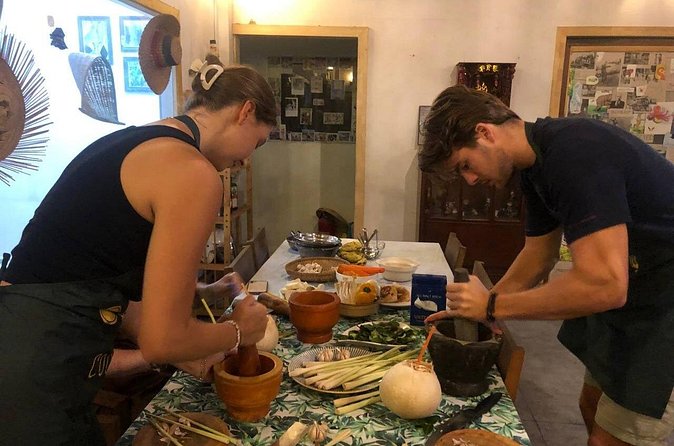
By about 5:30 PM, you mix the spice paste with vegetables and meat. This step connects the preparation work with the final meal. You can see how the paste changes from a separate mixture into a seasoning for the ingredients you will later eat.
I like this part for practical reasons. After the class, you may remember the process more easily than a dish name. Cut the spices, pound the paste, combine it with the food, then cook it. That sequence gives you something to repeat at home, even if you cannot find every Cambodian ingredient.
The menu may suit people who want variety. The evening includes seasoned vegetables and meat, Cambodian-style barbecue, and dessert. The information does not specify the exact cuts of meat, vegetables, or dessert, so you should ask the provider before booking if allergies, religious restrictions, or dietary needs affect your decision.
The group size helps here. With no more than eight participants, you have a better chance of seeing how the seasoning is mixed and of getting help with the preparation. A larger class might offer the same menu, but it would be harder to keep up with small cooking details.
A few more Phnom Penh half-days worth weighing up
- The Killing Field and Toul Sleng Genocide Museum (S21) Tour
★ 5.0 · 1,977 reviews - Phnom Penh: Sunset Cruise with Unlimited Beers & BBQ Buffet
★ 4.5 · 727 reviews - Aroma Therapy Massage, Relaxation therapeutic aromatherapy oil massages.
★ 5.0 · 645 reviews - Killing field and Toul Sleng genocide museum Tour
★ 5.0 · 610 reviews
Steaming the prepared food at 6:45 PM
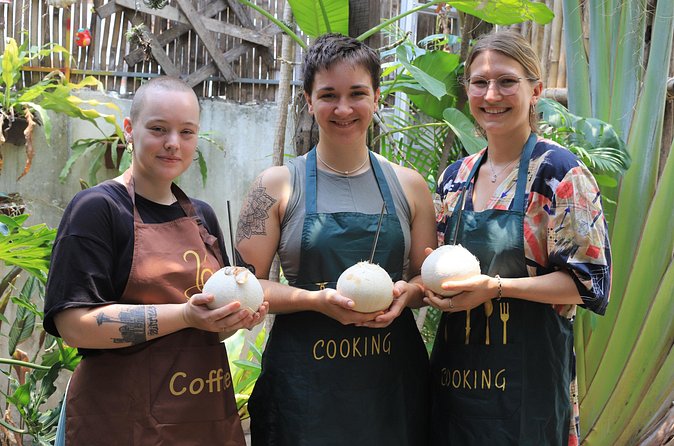
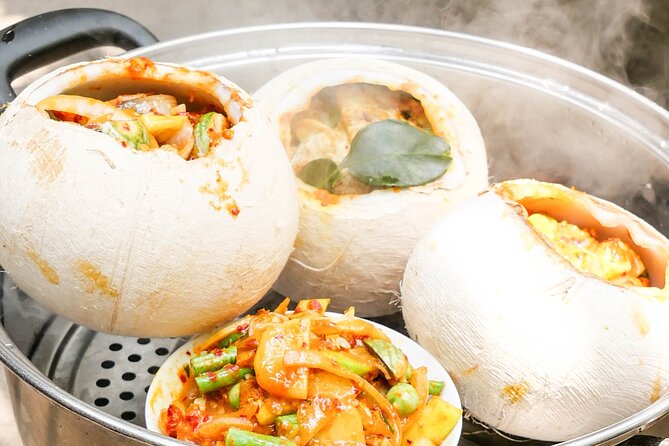
At about 6:45 PM, the prepared dish goes into steaming. The timing gives the ingredients a chance to cook while the class moves toward its next activity.
Steaming is also a useful contrast to the pounding and barbecue work. You are not spending the whole evening over high heat. The process shows another way Cambodian food can be cooked, and it lets you watch how the prepared mixture changes as it cooks.
The schedule is tightly arranged. The food goes into steaming at 6:45 PM, followed by Cambodian-style barbecue at 7:00 PM. That leaves little room for a slow, leisurely pace, especially if the group asks many questions or works at different speeds. You should expect a guided class with a clear timetable, not an open-ended cooking workshop.
Still, the compact schedule is convenient. The full activity lasts about three hours, and the main cooking work finishes in time for a final food presentation before dinner.
Cambodian-style barbecue at 7:00 PM
At 7:00 PM, you make barbecue in the Cambodian style. This adds a grilled element to the meal and gives the evening a change of pace after the steamed dish.
The description does not say which meat or seasoning is used for the barbecue, so I would not promise a particular recipe. What you can count on is another chance to take part in preparing the food rather than waiting for it to arrive.
For someone comparing cooking classes, this variety is a real advantage. You are not spending three hours making one soup or one curry. The schedule moves through a spice paste, seasoned vegetables and meat, a steamed preparation, barbecue, and dessert. That makes the class a good fit if you want a broad introduction to Cambodian cooking in one evening.
The trade-off is that each dish may receive less time than it would in a single-recipe lesson. If your goal is to master one elaborate Khmer dish from start to finish, this class may feel more like a guided tasting course with several techniques than an intensive culinary workshop.
Making dessert at 7:15 PM
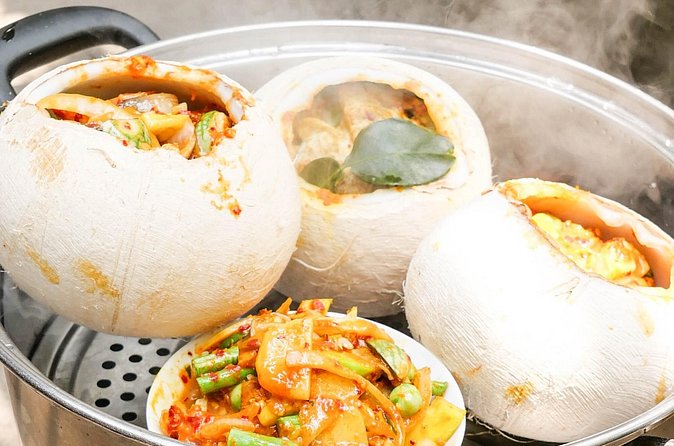
Dessert begins at about 7:15 PM. Including a sweet course makes the class feel like a full meal rather than a lesson centered only on savory food.
The exact dessert is not named, so you should keep your expectations general. You will make a dessert as part of the evening, but you should not book this based on a specific sweet dish unless the provider confirms it.
This final cooking task also helps keep the class balanced. You have worked with spices, meat, vegetables, steaming, and barbecue. Dessert gives you one more type of preparation before the teaching turns toward Cambodian food culture.
Because dessert starts only 15 minutes after the barbecue, the schedule remains brisk. That is fine for people who like an active class. If you prefer long pauses, extensive recipe notes, or time to photograph every stage, the three-hour format may feel quick.
The 7:30 PM food presentation
At 7:30 PM, you watch a slide presentation about Cambodian food in general. The talk covers the importance of rice and fish, the use of herbs and spices, and the influence of neighboring countries.
This is where the class moves beyond recipes. Food in Cambodia is tied to daily life, agriculture, local ingredients, and regional exchange. Knowing that gives more meaning to the dishes you have just prepared. You are not only learning that a spice paste belongs in a dish. You are learning why certain ingredients appear again and again in Khmer cooking.
I consider this presentation a strong feature for first-time visitors to Cambodia. A recipe alone can tell you what to add. A food talk can help you understand the place the recipe comes from.
The talk does add sitting time after a fairly active cooking session. If you are mainly looking for a quick dinner, the presentation may feel like an extra. If you want cultural context, it is one of the parts that makes the $31 price easier to justify.
Dinner at 8:00 PM, with drinks included
Dinner begins at about 8:00 PM. You eat the dishes you helped prepare, with water, a soft drink, and one or two beers included.
That timing is worth planning around. You should have a light afternoon snack if you tend to get hungry early, since the class starts at 5:00 PM but the main meal comes three hours later. The opening coconut water and fruit are welcome, but they are not a substitute for dinner.
The meal is the payoff for the work. Instead of being served an anonymous plate, you can connect the flavors to each step: the spices you cut, the paste you pounded, the seasoning mixed with vegetables and meat, and the dishes cooked by steaming or barbecue.
At $31 per person, the value is good if you want food, instruction, cultural background, and drinks in one evening. It is less compelling if you only want the cheapest Cambodian meal, since a restaurant meal could take less time and demand less effort. You are paying for participation and explanation, not simply for calories.
The included beer also suits the social side of the class, though the description says one or two beers rather than a fixed amount for every person. Soft drinks and water are included as well.
Group size, timing, and practical fit
The maximum group size is eight people. That is small enough to keep the class focused and makes this a sensible choice for solo visitors, couples, and small groups who want direct guidance.
The experience lasts about three hours and starts at 5:00 PM. It ends back at the meeting point after dinner, around 8:00 PM. Since no transport is included, you are responsible for getting to Phnom Penh Spice Cooking Class and arranging your onward plans.
Confirmation is sent within 48 hours of booking, subject to availability. The activity is often booked about seven days ahead, so I would reserve earlier if your Phnom Penh schedule is tight. The mobile ticket is convenient because you can keep the booking on your phone.
Cancellation is free up to 24 hours before the start time for a full refund. Inside that 24-hour window, the amount paid is not refunded, and changes are not accepted. Keep the local Phnom Penh time in mind when calculating the cut-off.
Who will enjoy this Khmer cooking evening
I would choose this class if you want to meet Cambodian food through your hands, not just through a restaurant menu. It suits curious eaters, couples, solo visitors, and anyone who likes a small group with a clear timetable.
It is also a good match if you want cultural background without committing to a full-day food tour. The evening gives you practical cooking, a food presentation, dinner, and drinks in one compact session.
I would think twice if you need a fully specified menu before booking. The exact dishes, ingredients, and dessert are not provided. People with allergies or strict dietary requirements should ask the provider directly before paying.
I would also think twice if you dislike late dinners or active kitchen work. You will be cutting, pounding, mixing, and preparing food before sitting down at 8:00 PM.
Should you book this Phnom Penh cooking class?
I would book it if your idea of a good evening includes learning by doing. The best features are the small group of eight, the hands-on spice preparation, the variety of cooking methods, and the food presentation that explains rice, fish, herbs, spices, and regional influence.
At $31, the class offers solid value for a three-hour experience with dinner and drinks included. Just plan for the late meal, confirm any dietary needs in advance, and remember that the menu is not fully specified. If you want a friendly introduction to Khmer cuisine with practical work and cultural context, this is a sensible Phnom Penh choice.
FAQ
Where does the cooking class begin?
The class begins at Phnom Penh Spice Cooking Class, 111, St 1MC, Phnom Penh, Cambodia.
What time does the activity start?
The activity starts at 5:00 PM.
How long does the cooking class last?
The experience lasts approximately three hours and ends around 8:00 PM after dinner.
Where does the activity end?
The activity ends back at the meeting point.
How many people can join the class?
The class has a maximum of eight participants.
What happens at the start of the evening?
You receive coconut water and seasonal fruit, then learn about Cambodian spices.
Will I prepare the food myself?
Yes. The schedule includes cutting spices, pounding them into a paste, seasoning vegetables and meat, preparing a steamed dish, making Cambodian-style barbecue, and preparing dessert.
Is dinner included?
Yes. You eat the food prepared during the class at about 8:00 PM.
Are drinks included?
Water, a soft drink, and one or two beers are included.
Can I cancel for a full refund?
Yes. You can cancel at least 24 hours before the start time for a full refund. Cancellations or changes made less than 24 hours before the start time are not refunded or accepted.
Just added around Phnom Penh
- Exploring the Best of Phnom Penh: A Full Day Tour★ 4.5 · 9 reviews
- Private Transfer : Phnom Penh ↔ Sihanouk Ville★ 5.0 · 15 reviews
- War Museum, Killing Field, and APOPO Hero RATs Tour★ 5.0 · 7 reviews
- Phnom Penh Intercity★ 4.5 · 11 reviews
- Phnom Penh Nightlife Street Food Tours★ 4.5 · 14 reviews
- War Museum, Killing Field and Floating Village ( Kampong Phluk)★ 4.5 · 6 reviews
- War Museum, Killing Field and Floating village ( Chong Kneas) Tour★ 5.0 · 14 reviews
- The killing field and Toul Sleng Genocide museum (S21) Tour★ 4.5 · 19 reviews
Cooking Classes, compared.
Khmer Cooking Class at a Local’s Home in Krong Siem Reap
Read our review →
Award-Winning Cooking Class Experience with Professional Teacher
Read our review →
Phnom Penh’s Hands-On Khmer Cooking Class in the Countryside
Read our review →Browse the lists this tour appears in