
Reviewed · PHOTOGRAPHY SESSIONS
Full Day Tour Photography in Siem Reap
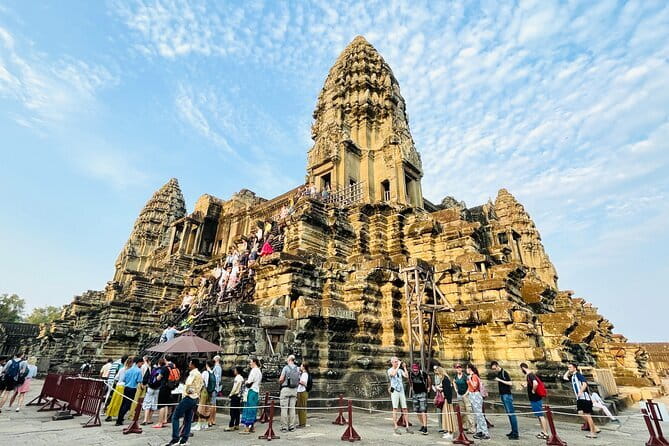
Angkor Wat at sunrise is the heart of this full-day photography outing. You leave before dawn, watch the temple take shape in changing light, then continue to Bayon and Ta Prohm with an English-speaking photographer guide. I like the practical focus on smartphone photography and the included air-conditioned vehicle, breakfast box, water, and cold towels. I also like that guide Samnang has been singled out for teaching simple camera-phone techniques and showing good places to frame a shot.
The main drawback is the very early start. The meeting time is listed as 1:00 a.m., while the sunrise portion runs from about 4:30 to 7:00 a.m., so confirm the pickup details before booking. The day is also long, and the $49 price does not include cameras, equipment, tips, or meals beyond the stated breakfast box and coffee.
Key points to know before booking
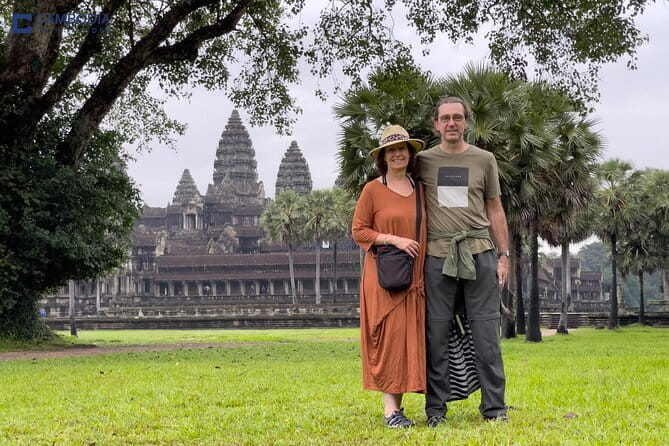
- Sunrise at Angkor Wat: The day begins in darkness, giving you a chance to photograph the temple silhouette and its reflection as daylight grows.
- Hands-on phone advice: Guide Samnang is noted for showing how to take better images with a smartphone, not just explaining temple history.
- Three very different subjects: You photograph Angkor Wat’s symmetry, Bayon’s stone faces, and Ta Prohm’s tree-covered ruins.
- Useful comforts: An air-conditioned vehicle, bottled water, cold towels, and a breakfast box with brewed coffee are included.
- Small group size: The maximum is 15 people, which is more personal than a large coach tour but not a private outing.
- A demanding schedule: Expect roughly 7 to 8 hours, with an especially early start and plenty of time on your feet.
Why the sunrise start changes the whole day
The first part of the experience is built around Angkor Wat before the heat and bright midday sun take over. You are scheduled to begin very early, with the sunrise segment running from approximately 4:30 to 7:00 a.m. The exact meeting information lists a 1:00 a.m. start, so you should ask the operator how much of that gap involves pickup and driving.
Sunrise gives Angkor Wat a different character from the one you see later in the day. The towers begin as a dark outline, then pick up color as the sky brightens. This is the moment to work with reflections, silhouettes, sky tones, and the strong central symmetry of the temple.
You do not need an expensive camera to make use of this setting. A phone can handle the broad shapes and changing light well if you pay attention to exposure and framing. That is where the guide’s role matters. Samnang is specifically praised for showing guests how to take better smartphone photos and how to find pleasing positions around the temples.
The timing does demand some discipline. A sunrise tour is not a relaxed late breakfast activity. You will need to prepare for the early departure, and the lack of sleep may be a real concern if you have arrived in Siem Reap after a long journey. Still, for anyone who wants a strong opening image of Angkor Wat, the early hour is the point of the tour.
A few more Siem Reap half-days worth weighing up
- Professional Photo Shoot in Angkor Archaeological Park, Siem Reap
★ 5.0 · 42 reviews - Golden Hours: Angkor wat sunrise photography tour with a pro!
★ 5.0 · 25 reviews - Unseen Angkor Tour & Photoshoot
★ 5.0 · 6 reviews
Angkor Wat gives you more than one photograph
After the sunrise session, the tour continues with time inside Angkor Wat itself. The temple is the largest religious monument in the world, and the appeal for photographers is its variety of scale. You can work with huge courtyards, long sight lines, carved stone details, and the familiar towers that make the temple instantly recognizable.
I would not treat this as a quick stop for one postcard image. The two-hour Angkor Wat portion gives you room to change your approach. Start with wider views that show the temple’s structure, then look at the smaller details in the bas-reliefs and stonework.
The temple’s architecture rewards careful composition. Repeated columns, doorways, galleries, and towers can help you create order in a photograph. Your guide can also help you choose a position rather than simply leading you from one famous view to the next.
The experience includes an admission ticket for the sunrise portion, while the second Angkor Wat entry is marked as having no separate admission charge. The wording is not entirely clear about how ticketing is handled across the day, so confirm what pass or entry arrangement is required when you book. The practical point is simple: ask before you arrive, especially if you are planning other temple visits during your stay.
The site is also where the tour’s cultural side comes into play. Your guide explains the history and meaning of the places you photograph, so the pictures are not detached from the buildings themselves. The available feedback gives Samnang particular credit for combining historical explanation with direct photography instruction.
Bayon and the stone faces of Angkor Thom
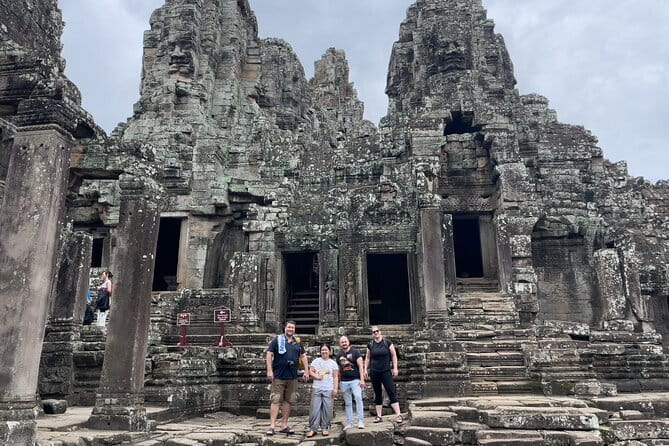
The next major subject is the South Gate of Angkor Thom, followed by Bayon Temple. The gate is described as showing gods and demons, while Bayon is known for its large carved faces set into the stone towers.
This is a sharp change from Angkor Wat. Instead of long, balanced views, Bayon gives you faces, shadows, close details, and overlapping towers. The subject is more intimate and sometimes harder to organize in a single frame. You may find that a portrait-style crop or a close view of one face works better than trying to photograph everything at once.
The South Gate also gives you a chance to photograph a formal entrance rather than only the main temple. The carved figures create repeated shapes and a strong sense of movement toward Angkor Thom. If you use a phone, try different angles and avoid relying on only the widest setting. The guide’s help with location and framing is especially useful here because the best image may not come from the first obvious viewpoint.
The listed time for this stop is only two minutes, which appears unusually brief for a photography visit. It may refer to a short scheduled pause or a time marker rather than the full time spent at Bayon. You should ask the operator how long you will actually have at the South Gate and Bayon, since photography benefits from patience and the itinerary elsewhere describes a full temple visit.
Ta Prohm trades symmetry for tangled roots
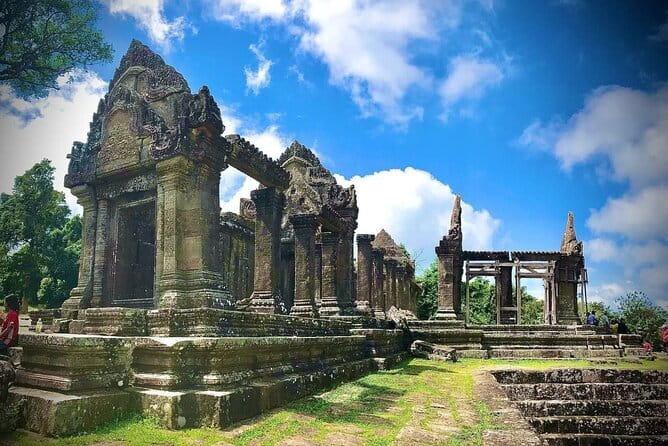
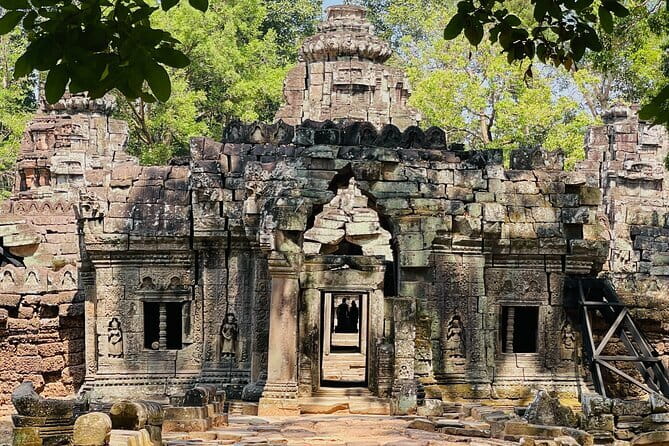
Ta Prohm closes the temple sequence with a completely different mood. Here, massive tree roots wind around and over the old stone buildings. The contrast between the ancient structure and the living trees gives you photographs with strong lines, texture, and a sense of age.
Angkor Wat is about balance and scale. Bayon is about faces and repetition. Ta Prohm is about irregular shapes and the meeting of nature and architecture. That variety is one of the best reasons to choose a multi-temple photography day rather than spending all day at one site.
Ta Prohm can also be harder to photograph well. The roots, walls, doorways, and shadows compete for attention. A guide who points out useful positions can save you time and help you avoid taking only the same wide image everyone recognizes. Samnang’s reported strength is not only explaining the temples, but also showing practical places to stand and frame the scene.
The stated duration for Ta Prohm is also two minutes, so this deserves clarification before booking. A two-minute stop would not allow much more than a quick look. Since the tour is promoted as a full-day photography experience, ask how the timing works at Ta Prohm and Bayon. You want to know whether the short times are simply itinerary placeholders.
Same base, a completely different kind of day:
- Angkor Wat Sunrise or Sunset Tour with Guide from Siem Reap
★ 5.0 · 12,109 reviews - Siem Reap: Angkor Wat: Small-Group Sunrise or Sunset Tour
★ 5.0 · 9,444 reviews - From Siem Reap: Kampong Phluk Floating Village Tour by Boat
★ 4.9 · 6,979 reviews - Sunset tour of Kampong Phluk stilts home village on the Tonle Sap
★ 5.0 · 4,865 reviews
What the photography coaching is really worth
The strongest feature here is not camera equipment. None is supplied. The value comes from having a person help you see the site in photographic terms.
The feedback about Samnang is specific: he teaches smartphone techniques, points out good locations, and explains the temples rather than offering only transportation. That makes this suitable for someone who normally takes casual phone pictures but wants better results without buying a separate camera.
You might learn to pay closer attention to:
- The direction and strength of the light
- Symmetry in temple entrances and courtyards
- Reflections and silhouettes at sunrise
- Close framing for Bayon’s faces
- Texture and scale at Ta Prohm
- The difference between a wide view and a detail image
The experience may be less useful for an advanced photographer who already knows exactly how to work a manual camera and wants specialist instruction on professional equipment. Cameras and other equipment are not included, and the description focuses on general photography help, especially with smartphones.
Still, that practical approach has real value. A good image often depends more on where you stand and when you press the shutter than on the price of the device in your hand. The guide’s help with locations can be useful even if you bring a dedicated camera.
Transport, food, and the long morning
An air-conditioned vehicle is included, along with bottled water and cold towels. Those details matter in Siem Reap, especially after several hours outside and an early start that stretches into the morning.
A breakfast box with brewed coffee is also included. This gives you something to eat during the day, but meals beyond that are not included. The information also says meals are not included, so do not expect a full restaurant meal as part of the $49 price.
The tour lasts about 7 to 8 hours. That is enough time for a proper look at several major temple areas, but it also means you should plan for a full morning and perhaps part of the afternoon depending on the exact pickup time. Wear practical clothing and shoes, and bring the camera or phone you actually plan to use. The tour does not provide cameras or photography equipment.
The maximum group size is 15 people. That is not private, and the group may still affect how long you can hold a position at a popular photo spot. It is, however, small enough that an English-speaking guide can offer some individual help, especially if everyone is working with different phones and cameras.
Is $49 a fair price?
At $49, this tour is priced as a guided temple day with photography help rather than as a simple ride between sites. You are paying for the vehicle, an English-speaking photographer guide, water, cold towels, and the breakfast box with coffee, as well as the planned visit to Angkor Wat, Bayon, and Ta Prohm.
The value is strongest if you want two things at once: cultural explanation and better photographs. If you only need transport and already know the temples well, a photography guide may be more than you need. If you are new to temple photography, the advice on smartphone technique and photo locations makes the price easier to justify.
Be clear about entry arrangements. Admission is shown as included for some stops, while Angkor Wat’s second segment is marked as free of an additional admission charge. Ask what temple pass is covered before you pay, and budget separately for anything not listed, including tips, extra food, cameras, and other equipment.
The high overall rating is based on only three ratings, so I would treat it as encouraging rather than decisive. The repeated praise is consistent, though: the guide’s service, smartphone instruction, historical explanations, and ability to identify good photo spots are the main strengths.
Who will get the most from this experience?
I would choose this tour if you want a guided first look at the major Angkor temples and care about returning with better images. It is a good fit for phone photographers, couples or small groups who want help composing pictures, and visitors who prefer an organized day rather than working out temple transport alone.
It may also suit you if cultural context matters. The guide does not simply point out famous structures. The experience combines temple history with advice on how to photograph what you are seeing.
I would think twice if you dislike pre-dawn starts, need a slow schedule, or want a private photography session with advanced instruction. The maximum group size is 15, the schedule is long, and the early meeting time needs clarification.
Free cancellation is available if you cancel at least 24 hours before the local start time. Cancellations or changes made inside that window are not refunded or accepted, so check the timing carefully.
Should you book the Siem Reap photography tour?
Book it if the idea of photographing Angkor Wat at sunrise appeals to you and you would like a guide to improve your phone images along the way. The combination of Angkor Wat, Bayon, and Ta Prohm gives you three very different subjects, while the vehicle, breakfast box, water, and cold towels make the long morning easier.
Before confirming, ask two practical questions: exactly when and where pickup takes place, and how much time you receive at Bayon and Ta Prohm. If the answers match your expectations, $49 is a sensible price for a guided temple day with hands-on photography advice. If you want a relaxed start or advanced camera coaching, choose another format.
FAQ
What is included in the $49 price?
The tour includes an air-conditioned vehicle, an English-speaking photographer guide, bottled water, cold towels, and a breakfast box with brewed coffee. Cameras and other equipment are not included.
How long does the experience last?
The full experience lasts approximately 7 to 8 hours.
What time does the tour start?
The meeting information lists a 1:00 a.m. start. The sunrise portion at Angkor Wat is scheduled from about 4:30 to 7:00 a.m. Confirm the pickup timing with the operator before booking.
Which temples and sites are visited?
The day includes Angkor Wat, the South Gate of Angkor Thom, Bayon Temple, and Ta Prohm Temple.
Is the tour suitable for smartphone photography?
Yes. The photography guide provides help with taking better pictures on a smartphone. Guide Samnang is specifically noted for teaching smartphone techniques and identifying useful photo locations.
How many people can join the tour?
The maximum group size is 15 people.
Can I cancel for a full refund?
Yes, if you cancel at least 24 hours before the experience start time. Cancellations or changes made less than 24 hours before the local start time are not accepted, and the amount paid is not refunded.
Just added around Siem Reap
- Twilight Tastes of Siem Reap Include Dinner★ 5.0 · 13 reviews
- Ultimate Sunrise to Angkor Wat, Angkor Thom and Bayon Temple★ 5.0 · 3 reviews
- Trekking Tour at Phnom Kulen National Park from Siem Reap★ 5.0 · 3 reviews
- Professional Photo Shoot in Angkor Archaeological Park, Siem Reap★ 5.0 · 42 reviews
- Full-Day Private Tour of Angkor Wat with Pick Up★ 5.0 · 12 reviews
- Unveiling 2 Days Private Angkor Wat/Beyond In Sunrise/Sunset Tour★ 5.0 · 48 reviews
- Siem Reap City Tour with War Museum and Killing Field★ 5.0 · 27 reviews
- Private Day Trip to Angkor Temples with Expert Guide★ 5.0 · 4 reviews
Photography Sessions, compared.
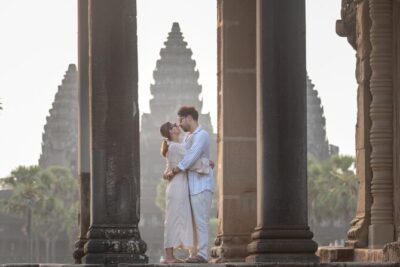
Professional Photo Shoot in Angkor Archaeological Park, Siem Reap
Read our review →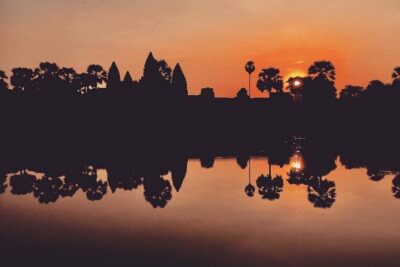
Golden Hours: Angkor wat sunrise photography tour with a pro!
Read our review →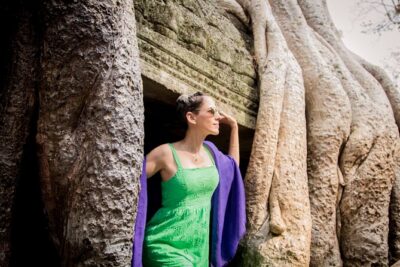
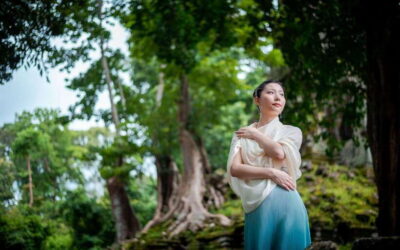
Professional Photoshoot in Angkor Archaeological Park
Read our review →Browse the lists this tour appears in