
Reviewed · FLOATING VILLAGE TOURS
Kompong Phluk Floating village & Mangrove forest cruise
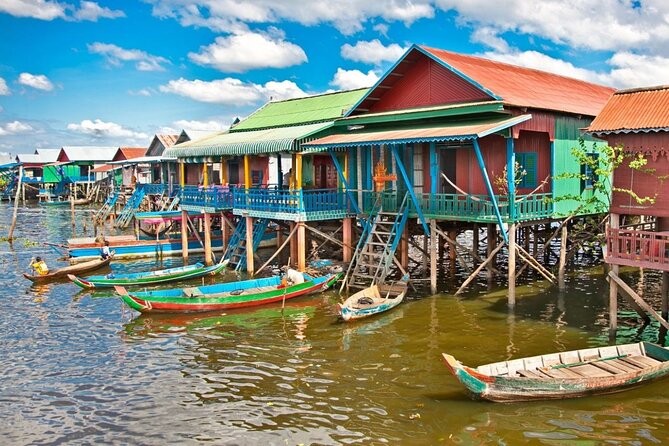
Kompong Phluk is a place where the water changes the shape of daily life. In the wet season, boats pass beneath tall stilt houses and through flooded trees. In the dry season, the village road and fishing homes are much easier to see. I like the seasonal contrast and the chance to look beyond Siem Reap’s temples.
I also like the air-conditioned pickup, bottled water, and boat fees included in the $105 price. Guides such as Phy, Nak Chum, Pen, and Tommy have been especially praised for keeping the outing clear and engaging. The main catch is timing: the mangrove canoe is unavailable from February 15 through July, and afternoon trips can return later than expected.
Key points to know before you book
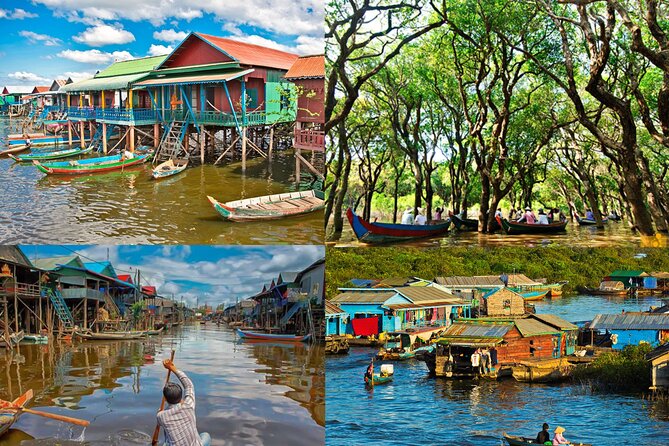
- The lake changes the village: Kompong Phluk looks and feels different in high and low water.
- The mangrove canoe is seasonal: The small-boat ride is not available from February 15 through July.
- Tonle Sap is the big setting: You get time on Southeast Asia’s largest natural freshwater lake.
- The guide matters: Phy, Nak Chum, Pen, and Tommy are names worth requesting when available.
- The price covers the basics: Transport, entrance fees, boat fees, a guide, and cool water are included.
- Plan for a half-day: The advertised duration is about three to four hours, but afternoon returns may run late.
Why Kompong Phluk feels so different from Siem Reap
The short trip from Siem Reap takes you into a very different Cambodia. Instead of stone temples and busy town streets, you reach the edge of Tonle Sap, a huge lake linked to the Mekong River by the 120-kilometer Tonle Sap River.
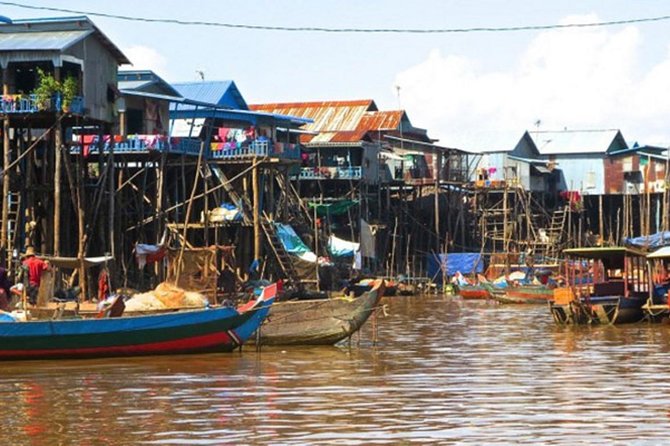
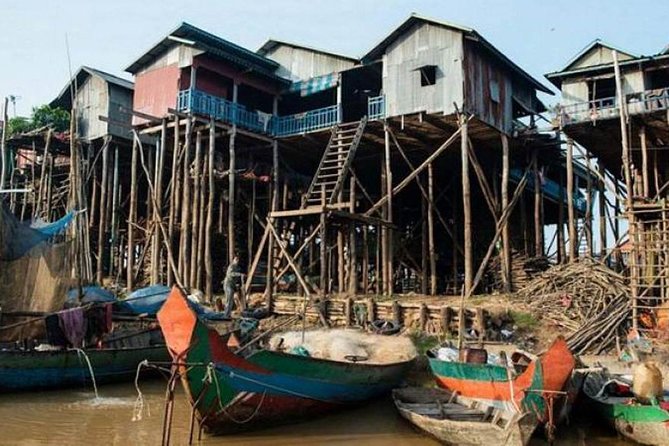
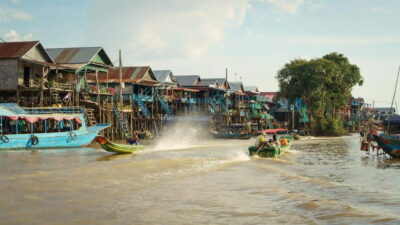
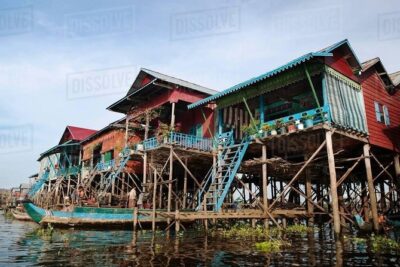
The lake is the reason Kompong Phluk exists in its present form. Water levels rise and fall with the seasons, so families have adapted their homes, boats, work, and routes around that yearly change. Tall houses on stilts are the clearest sign of this adaptation.
In the high-water months, boat routes pass through areas that may look like open water or flooded woodland. In the dry season, the same village can appear more like a land settlement, with roads and houses standing above exposed ground. This contrast is one of the strongest reasons to visit at all.
I would not book this as a simple scenic boat ride. The view is worthwhile, but the guide gives it meaning. Without an explanation of how the lake shapes work and home life, you may see unusual houses and a broad stretch of water without fully understanding why they are there.
More Boat Tours in Siem Reap
- From Siem Reap: Kampong Phluk Floating Village Tour by Boat
★ 4.9 · 6,979 reviews - Siem Reap: Kampong Phluk Floating Village Tour with Boat
★ 4.9 · 3,843 reviews - Siem Reap Floating Village Kampong Phluk Sunset with Boat
★ 5.0 · 1,962 reviews
Hotel pickup makes the half-day practical
The tour begins with pickup from your Siem Reap accommodation in an air-conditioned vehicle. That matters in Cambodia, especially after a morning around the temples or during the warmer part of the day. Bottled water is included, so you do not need to sort out drinks before leaving.
The group limit is 15 people. That is small enough for a guide to keep the outing organized, though it is not the same as having a private car and boat. Some bookings have been private, but you should not assume that private service is included unless your reservation says so.
The advertised length is three to four hours. A morning departure can fit neatly into a larger Siem Reap plan, and one outing has been described as leaving around 8:30 and returning near noon. Afternoon departures may finish later in the day, so avoid scheduling a tight dinner reservation or an airport transfer afterward.
The ride itself is part of the transition. You leave the polished hotel zone and head toward a working lake community. I like that the transport is handled for you, since arranging separate rides, entrance tickets, and boat connections would make this short excursion less convenient.
Tonle Sap gives the tour its scale
The first main stop is Tonle Sap Lake, the largest natural freshwater lake in Southeast Asia. Its size is hard to grasp from a single photograph. Once the boat reaches more open water, the village feels smaller and the lake becomes the main subject.
This is a good place to let the guide explain the link between the lake and the river system. Tonle Sap is connected to the Mekong by the Tonle Sap River, and the changing water level affects homes, fishing, boat travel, and the position of the village itself.
Do not expect a long educational presentation with charts or formal exhibits. The learning happens as you move through the area. A strong guide points out what you are seeing and explains how residents adjust through the wet and dry seasons.
Guide quality can shape the experience. Phy has been singled out for looking after a group and adding a local market visit. Nak Chum has been praised for an enthusiastic explanation of the village and lake, while Pen and Tommy are also names worth asking for if the company can accommodate a request. Guide assignments are not guaranteed.
Kompong Phluk by boat and on foot
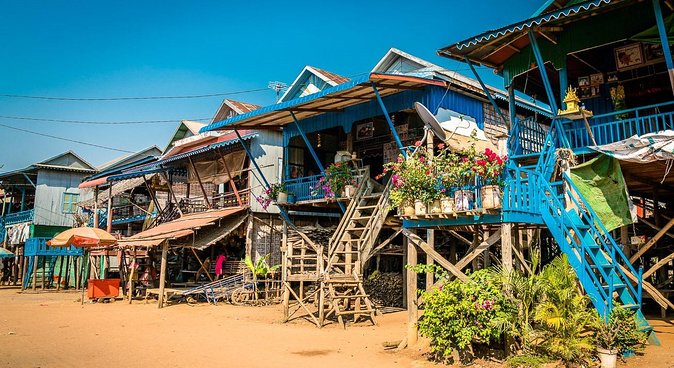
Kompong Phluk is the central stop. The boat takes you through a settlement built around the rise and fall of the lake, with houses on tall supports and routes that change with the water.
In the wet season, the elevated houses can appear to hover above the flooded village. In the dry season, the water recedes and the same homes sit beside dry roads. One dry-season visit included a look at a local house, and another included a stop near a mosque. These details give the outing a more human scale than simply photographing the skyline.
You may also see a pagoda and restaurants connected with the village area. The tour is not designed as a long walking program, but it can include short stretches on land depending on water conditions and the route used that day.
The phrase floating village can create the wrong expectation. Kompong Phluk is strongly associated with water, but the exact scene depends on the season. Some houses are fixed on tall stilts, while other parts of the community are reached by boat when the water is high. In lower water, you can see more of the roads and ground.
The guide is important here because direct contact with residents is not guaranteed. You may see ordinary homes and local activity, but this is not a staged village demonstration with a set list of personal visits. Treat the area as a lived-in community, not as an outdoor show.
More floating-village afternoons:
- Sunset tour of Kampong Phluk stilts home village on the Tonle Sap
★ 5.0 · 4,865 reviews - Kompong Phluk Floating Village Half-Day Tour ( Morning / Sunset )
★ 5.0 · 1,494 reviews - Tonle Sap Lake & Kampong Phluk Village Half-Day Tour
★ 5.0 · 1,045 reviews - Kampong Phluk Floating Village Tour by Boat
★ 5.0 · 1,020 reviews
The mangrove canoe depends on the calendar
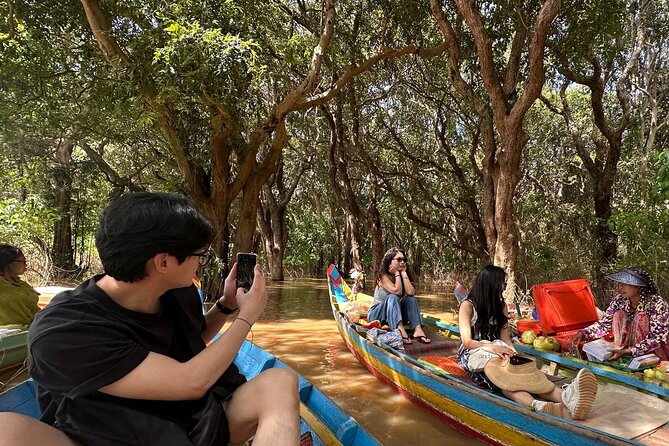
The small canoe ride through the mangrove forest is one of the tour’s most appealing features, but it comes with a firm seasonal limit. It is listed as unavailable from February 15 through July.
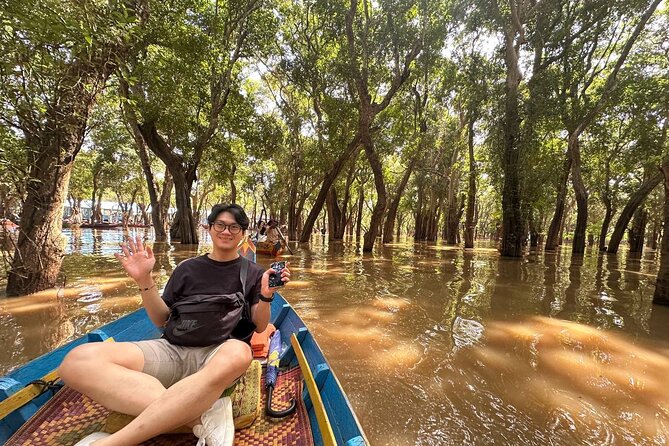
When conditions allow, you transfer to a smaller boat and move through flooded trees. The narrow route feels very different from the larger boat ride across the lake and along the village. It is quieter and closer to the waterline, with branches and trunks shaping the view around you.
Some outings have included singing from the women operating the canoes. You may also be able to watch the mangrove area from the larger boat if you prefer not to take the small canoe. The company says you can wait at the larger boat or shop instead.
That choice is useful, but you should confirm the seasonal situation before booking if the mangrove is your main reason for going. From February 15 through July, the small-boat section is not available, so the experience focuses more on the lake, village, stilt houses, and guide commentary.
The mangrove ride also depends on water levels and local operating conditions. I would treat it as a valuable extra rather than the sole reason to pay for the tour. The village and Tonle Sap remain the core experience.
The local market adds a useful stop
The return route includes a 30-minute visit to Psar Chaa, Siem Reap’s Old Market. The stop is listed as free, and it gives you a quick look at local shopping and food activity before returning to your hotel.
A few itineraries have also included a local market beyond the standard plan. Phy, in particular, has been credited with adding this kind of stop. Do not count on an extra market visit, but it is worth asking your guide if time permits.
This is not a substitute for a full market tour. Thirty minutes is enough to look around and get your bearings, not enough to study every stall or shop at length. Still, the contrast works well: you see a lake community first, then return to a more familiar town setting.
What the $105 price really covers
At $105, this is not the cheapest way to reach Tonle Sap. The value comes from having the main practical pieces bundled together: hotel pickup, air-conditioned transport, a licensed English or Japanese-speaking guide, entrance fees, the larger boat, the mangrove boat when available, and bottled water.
If you are booking for a group, the cost makes more sense because group discounts are offered and the vehicle and guide costs are spread across several people. For a solo visitor or couple, the price is harder to judge. You are paying for ease, explanation, and arranged transport rather than simply buying a boat ticket.
Lunch and dinner are not included. If you want a meal, the company can escort you to a restaurant, but that cost is extra. Personal purchases and tips are also separate.
I see the tour as a reasonable value for someone with limited time in Siem Reap. You avoid negotiating separate transport and boat arrangements, and you get context along the way. If you are comfortable arranging transport yourself and only want a short lake trip, the price may feel high.
The guide can make or break the outing
The strongest guide feedback centers on enthusiasm, care, and clear explanations. That is exactly what you need here, because the visual details can be confusing. A stilt house, a dry road, a flooded tree line, and a fishing boat all tell part of the story, but the guide connects them.
If you can request a guide, ask about Phy, Nak Chum, Pen, or Tommy. Do this as a preference, not a guarantee. The company lists English and Japanese guide service, so specify your language when booking.
There is one caution. Guide quality can vary, and one account describes limited explanation and little direct contact with residents. That does not make the outing worthless, but it means you should arrive with realistic expectations. You are going to a place with a distinctive way of life, not receiving an intimate invitation into every part of it.
I would read a short introduction to Tonle Sap before leaving. Even a basic understanding of the seasonal water cycle will help you notice more. Then use the guide to fill in what you cannot see from the boat.
Who will get the most from this tour
This trip suits you if you want to see a side of Cambodia beyond Angkor Wat. It is especially useful for a first visit to Siem Reap, when a half-day on Tonle Sap can balance several temple visits.
Families and mixed-age groups may appreciate the air-conditioned vehicle and the limited walking. The boat gives you a different way to see the area, though you should still expect heat, glare, and changing conditions near the water.
It also suits photographers who want stilt houses, broad lake views, boats, and seasonal scenery. The dry season offers clearer views of village roads and raised homes. The wet season provides the more dramatic boat access and the best chance of a flooded mangrove ride, based on the operating dates supplied.
You may want to skip it if you dislike organized excursions, have no interest in how people adapt to seasonal flooding, or expect constant personal interaction with local residents. The tour is informative and scenic, but it is not a private community visit.
Practical details that affect your choice
Wear clothing suited to heat and sun, and bring extra water if you need more than the included bottle. The vehicle is air-conditioned, but the boat sections are exposed and may feel much warmer.
Keep your schedule flexible after the tour, especially with an afternoon departure. One outing returned later than planned, while another finished in about three and a half hours. The stated duration is approximate rather than a fixed timetable.
The tour is listed as suitable for most people, and the company allows you to remain on the larger boat if you do not want the small mangrove canoe. Ask ahead about any personal mobility concerns, since the exact boarding points and land sections are not described in detail.
Free cancellation is available if you cancel at least 24 hours before the local start time. Changes or cancellations inside that window are not refunded, so check the pickup time before the deadline.
Should you book Kompong Phluk?
Book it if you want an easy, guided introduction to Tonle Sap and a village shaped by seasonal water. The included transport, boats, entrance fees, and guide make it a practical choice for a half-day, especially when you are traveling with a small group.
The best version includes a strong guide and, when the season allows, the canoe through the flooded mangroves. Request Phy, Nak Chum, Pen, or Tommy if possible, and confirm the mangrove dates before paying.
Skip it if the $105 price feels high for a short outing, or if you want a fully private and deeply personal encounter with village life. For most first-time visitors who have already seen the temples and want a different view of Cambodia, Kompong Phluk is a worthwhile addition.
FAQ
Where does this tour take place?
The tour leaves from Siem Reap and visits Tonle Sap Lake, Kompong Phluk Floating Village, and Psar Chaa, also called the Old Market.
How long does the experience last?
The advertised duration is approximately three to four hours. Actual return time can vary, especially for afternoon departures.
Is hotel pickup included?
Yes. Pickup is offered, and transport is provided in an air-conditioned vehicle.
What is included in the $105 price?
The price includes an English or Japanese-speaking licensed guide, air-conditioned transport, cool water, entrance fees, the main boat, and the mangrove forest boat when that ride is operating.
Is the mangrove canoe available all year?
No. The small mangrove boat is listed as unavailable from February 15 through July.
Can I skip the small mangrove boat?
Yes. If you do not want to take the small boat, you can wait at the larger boat or shop.
Is food included?
No. Lunch and dinner are not included. The company can escort you to a restaurant if you request a meal, but you pay separately.
How many people can join the tour?
The maximum group size is 15 people. Group discounts are offered.
Just added around Siem Reap
- Twilight Tastes of Siem Reap Include Dinner★ 5.0 · 13 reviews
- Ultimate Sunrise to Angkor Wat, Angkor Thom and Bayon Temple★ 5.0 · 3 reviews
- Trekking Tour at Phnom Kulen National Park from Siem Reap★ 5.0 · 3 reviews
- Professional Photo Shoot in Angkor Archaeological Park, Siem Reap★ 5.0 · 42 reviews
- Full-Day Private Tour of Angkor Wat with Pick Up★ 5.0 · 12 reviews
- Unveiling 2 Days Private Angkor Wat/Beyond In Sunrise/Sunset Tour★ 5.0 · 48 reviews
- Siem Reap City Tour with War Museum and Killing Field★ 5.0 · 27 reviews
- Private Day Trip to Angkor Temples with Expert Guide★ 5.0 · 4 reviews
Floating Village Tours, compared.
Sunset tour of Kampong Phluk stilts home village on the Tonle Sap
Read our review →
Siem Reap Floating Village Kampong Phluk Sunset with Boat
Read our review →
Kompong Phluk Floating Village Half-Day Tour ( Morning / Sunset )
Read our review →
Tonle Sap Lake & Kampong Phluk Village Half-Day Tour
Read our review →
Sunset Dinner Tour: Tonle Sap Lake Floating Village
Read our review →
3-Days Discovery Of Angkor: Waterfalls,Floating Village and Banteay Srei temple
Read our review →
Sunset Dinner and drinks includes a Floating Village cruise tour.
Read our review →Browse the lists this tour appears in