
Reviewed · HISTORICAL TOURS
Learn about a dark period of Cambodian history by expert guide
Phnom Penh’s royal splendor and darkest memories share one long morning on this tour. You begin at the Royal Palace and Silver Pagoda, then move through Tuol Sleng and Choeung Ek, where the Khmer Rouge killed and buried thousands. The contrast is stark, and that is the point: Cambodia’s past is not tidy or easy, but it is important.
I like the small group limit of 15, which gives you a better chance to ask questions. I also like the mix of transport, especially the chance to ride a tuk-tuk, an everyday part of Phnom Penh life. Guide An is described as a clear English speaker who adjusts the day to your interests and can even help with market bargaining.
The main drawback is emotional rather than practical. Tuol Sleng and Choeung Ek are painful places, and the day moves quickly from royal ceremony to genocide history. You also need to budget another $18 per person for the listed entrance fees, in addition to the $29 tour price.
Key points before you book
- Four major sights in one morning: You visit the Royal Palace, Silver Pagoda, Tuol Sleng, and Choeung Ek.
- A direct look at Khmer Rouge history: The guide explains the human cost behind the dates and numbers.
- Tuk-tuk transport included: You get a classic Phnom Penh ride, along with an air-conditioned minivan where used for the tour.
- Guide An may lead the day: His English, local knowledge, and willingness to follow your interests are useful strengths.
- Group size capped at 15: This is more personal than a large coach excursion, though not a private tour.
- Hotel pickup and drop-off included: The advertised start time is 8:15 am, with cold water provided.
Why this Phnom Penh tour makes sense
This is not simply a sightseeing loop. It places two very different sides of Phnom Penh next to each other.
The Royal Palace and Silver Pagoda introduce Cambodia through its monarchy, religion, architecture, and ceremonial traditions. Tuol Sleng and Choeung Ek then show what happened when the Khmer Rouge tried to destroy much of the country’s social order between 1975 and 1978.
I like that structure. You do not see the genocide sites as isolated points on a map. You first get some sense of Cambodia’s older identity, then learn how violently that identity was attacked. A good guide matters here, because the facts can become overwhelming without a clear human frame.
The tour is led in English and is limited to 15 people. That is small enough for questions without promising the quiet, fully flexible pace of a private guide. The day is also designed for convenience, with hotel pickup and drop-off, transport, and cold water included.
The experience costs $29 per person before admissions. Add the listed $10 Royal Palace ticket, $5 Tuol Sleng ticket, and $3 Killing Fields ticket, and your direct cost comes to about $47 per person. That is fair value if you want transport and interpretation arranged for you, rather than finding each site independently.
More Historical Tours in Phnom Penh
- Oudong Mountain History and Pagoda Tour
★ 5.0 · 39 reviews - Guided Phnom Penh Heritage Tour
★ 5.0 · 37 reviews - Phnom Penh Historical Tour
★ 5.0 · 13 reviews
The Royal Palace, Phnom Penh’s ceremonial center

Your first substantial stop is the Royal Palace, built between 1866 and 1870 after King Norodom moved the royal capital from Oudong to Phnom Penh. It was built on the site of an older citadel called Banteay Keo and faces the meeting point of the Tonle Sap and Mekong rivers.
The palace is still associated with Cambodia’s monarchy, so this is not just an old building open for casual wandering. You are visiting a working royal compound, and access can be shaped by official use. The tour allows about an hour here, enough to see the main areas available to visitors without turning the visit into a long architectural study.
I would pay attention to the setting as much as the buildings. The palace’s position near Chaktomuk helps explain Phnom Penh’s growth as a royal and river city. The guide can also give the site a place in the wider story of Cambodia, rather than leaving you with only decorative details.
The listed Royal Palace admission is $10 per person. The tour price does not cover it, so keep that extra amount in mind when comparing options.
The Silver Pagoda and the royal religious compound
The Silver Pagoda sits on the south side of the Royal Palace. Its formal name is Wat Ubaosoth Ratanaram, and it is also known as Wat Preah Keo Morakot, or the Temple of the Emerald-Crystal Buddha.
The pagoda is part of the same royal complex, but it deserves separate attention. Its religious role and connection to the monarchy give the first half of the tour more depth. You are not only looking at a palace residence. You are seeing how royal authority and Buddhism have long been linked in Cambodia.
The planned visit lasts about an hour. That is generous enough for a guide to explain the pagoda’s purpose and for you to look around without racing straight to the next vehicle.
Since the palace and pagoda are part of one compound, the practical details may feel less clear than the headline price. The supplied cost lists a $10 Royal Palace admission, while the Silver Pagoda is presented as a separate stop. Ask your guide how the current ticket is handled when you arrive, and carry enough cash for the stated entrance costs.
From royal Phnom Penh to S-21 prison
The next major stop is Tuol Sleng Genocide Museum, also known as S-21. The site occupies a former school and was the most notorious of Cambodia’s 189 known interrogation centers under the Khmer Rouge.
Between 14,000 and 17,000 prisoners were detained and tortured there. Former classrooms were turned into prison spaces, including small brick cells. The ordinary school setting makes the place particularly hard to process. It shows how an everyday building can be transformed into an instrument of fear.
The tour allows about 90 minutes. That is a useful amount of time for the site, but you should not expect to examine every display at length. The visit is likely to be intense even at that pace.
This is where the guide’s role becomes most important. Dates and totals tell only part of the story. A good explanation connects S-21 to the wider Khmer Rouge system and helps you understand how ordinary people were caught in it. The experience is not presented as entertainment, and you should approach it with quiet attention.
If you are traveling with children or anyone who finds accounts of imprisonment especially difficult, think carefully about the order of your day. The tour moves on to Choeung Ek, so the hardest material comes in two connected stages.
Same base, a completely different kind of day:
- The Killing Field and Toul Sleng Genocide Museum (S21) Tour
★ 5.0 · 1,977 reviews - Phnom Penh: Sunset Cruise with Unlimited Beers & BBQ Buffet
★ 4.5 · 727 reviews - Aroma Therapy Massage, Relaxation therapeutic aromatherapy oil massages.
★ 5.0 · 645 reviews - Killing field and Toul Sleng genocide museum Tour
★ 5.0 · 610 reviews
Choeung Ek, where the numbers become personal
Choeung Ek is about nine miles south of Phnom Penh. It was once an orchard and Chinese cemetery before the Khmer Rouge turned it into one of the country’s best-known killing fields.
An estimated 20,000 men, women, and children were killed there between 1975 and 1978. Across Cambodia, an estimated three million people died during the Khmer Rouge period, with victims buried at sites like this around the country.
The information supplied for this tour uses differing figures for the nationwide death toll and for burials at Choeung Ek. That is one reason I prefer a guide-led visit. The guide can explain what is known, what is estimated, and how the site fits into the larger pattern without reducing the history to one disputed number.
The scheduled visit lasts about 90 minutes. That gives you time to take in the grounds and hear the human stories behind the statistics. The site is not merely a memorial stop. It shows the final stage of a system that began with arrests, interrogation, forced labor, and terror.
The $3 admission is extra. You should also expect the visit to be quiet and serious. This is not a place for casual photography or hurried conversation. The tour can help you understand the history, but it cannot make the subject less painful.
Why the guide can make or break this day
The most useful personal detail about the guiding comes from An, who is described as having good English and a strong grasp of Cambodian history. His approach is not limited to reciting a fixed script. He is said to make the tour dynamic, respond to interests, and help with market bargaining.
That flexibility matters in Phnom Penh. You may want more context about the palace, more time with the genocide sites, or a clearer explanation of how the Khmer Rouge came to power. A guide who listens can make the same five-hour route feel far more useful.
You should still keep your expectations realistic. A maximum group of 15 is intimate compared with a large bus, but it does not guarantee a private conversation at every stop. The quality of the day will also depend on the guide assigned, since An may not be the person leading every departure.
The English-speaking guide is included in the price. That is important value here because the two genocide sites contain difficult material that can be hard to understand without historical context.
Tuk-tuk transport adds a local touch
A tuk-tuk ride is one of the most recognizable ways to move through Phnom Penh. It is open to the city’s sights, sounds, and heat in a way an enclosed vehicle is not.
The tour includes a tuk-tuk, an air-conditioned minivan, or both as needed for the route. The transport description does not spell out exactly which part of the journey uses each vehicle, so ask at pickup if that matters to you.
I like the tuk-tuk element because it keeps the day connected to ordinary Phnom Penh life. You are not sealed inside a coach for every transfer. At the same time, the air-conditioned minivan is useful in Cambodia’s heat, especially after walking through the palace grounds or spending time at the memorial sites.
Hotel pickup and drop-off are included. Pickup begins around 8:15 am. The stated duration is approximately five hours and 15 minutes, though the listed stop times add up to a longer day if every full allocation is used. Traffic, pickup time, and the pace of the group can affect the final return time, so avoid booking a tight afternoon connection.
What the $29 price really covers
At first glance, $29 is a modest price for a half-day with four major sights. The real comparison is not with a free walk. It is with the cost and effort of arranging transport, finding each location, and making sense of the history on your own.
Included in the tour are:
- Hotel pickup and drop-off
- Tuk-tuk and air-conditioned minivan transport
- An English-speaking licensed guide
- Cold water
The listed entrance fees are not included:
- Royal Palace: $10 per person
- Tuol Sleng Genocide Museum: $5 per person
- Choeung Ek: $3 per person
That makes the likely total around $47 per person before any other personal spending. For someone who wants a guide and organized transport, I consider that reasonable. For a visitor who prefers to spend several hours at one museum or move at a private pace, a shorter or private arrangement may offer better value.
The tour is also booked far in advance on average, about 153 days. That suggests you should reserve early if your Phnom Penh dates are fixed, particularly if you want a specific morning.
Who should choose this experience
I would recommend this tour to a first-time Phnom Penh visitor who wants the city’s key royal and genocide sites explained in one organized outing. It suits solo visitors, couples, and small groups who want included transport without paying for a private vehicle.
It is also a practical choice if you want a direct introduction to Cambodian history. The palace gives you cultural and political context, while S-21 and Choeung Ek show the human damage caused by the Khmer Rouge.
I would hesitate if you dislike tightly scheduled sightseeing or need a gentle, light morning. The genocide sites are emotionally heavy, and the tour asks you to move through four major stops in a limited time. You may also prefer another option if you want a private guide or a slower visit inside each museum.
Free cancellation is available if you cancel at least 24 hours before the 8:15 am start. Changes made within 24 hours are not accepted, and cancellations inside that period are not refunded. If poor weather cancels the experience, you can receive a different date or a full refund.
Should you book this Phnom Penh history tour?
Book it if you want a well-priced introduction to Phnom Penh’s most important sights, with a guide to connect royal Cambodia to the Khmer Rouge period. The small group, tuk-tuk transport, hotel pickup, and guide-led explanations give it solid practical value.
Before paying, add the $18 in listed admission fees and prepare for a serious day. If you are comfortable with difficult history and prefer context over a rushed checklist, this tour is a sensible choice. If you want complete privacy, extra time at each site, or a lighter introduction to the city, choose a private or more focused tour instead.
FAQ
What time does the tour start?
The advertised start time is 8:15 am.
How long does the experience last?
The tour duration is approximately five hours and 15 minutes.
Which places are included in the route?
You visit the Royal Palace, Silver Pagoda, Tuol Sleng Genocide Museum, and Choeung Ek Genocidal Center.
Are entrance fees included?
No. The listed fees are $10 per person for the Royal Palace, $5 for Tuol Sleng Genocide Museum, and $3 for Choeung Ek.
Is hotel pickup available?
Yes. Hotel pickup and drop-off are included.
How many people can join the tour?
The group can have a maximum of 15 travelers.
Just added around Phnom Penh
- Exploring the Best of Phnom Penh: A Full Day Tour★ 4.5 · 9 reviews
- Private Transfer : Phnom Penh ↔ Sihanouk Ville★ 5.0 · 15 reviews
- War Museum, Killing Field, and APOPO Hero RATs Tour★ 5.0 · 7 reviews
- Phnom Penh Intercity★ 4.5 · 11 reviews
- Phnom Penh Nightlife Street Food Tours★ 4.5 · 14 reviews
- War Museum, Killing Field and Floating Village ( Kampong Phluk)★ 4.5 · 6 reviews
- War Museum, Killing Field and Floating village ( Chong Kneas) Tour★ 5.0 · 14 reviews
- Warm Stone Massage★ 5.0 · 23 reviews
Historical Tours, compared.
Bokor Mountain Adventure – History, Sights and Waterfalls
Read our review →
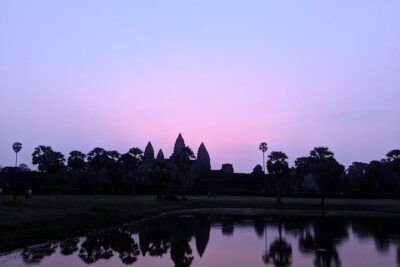
Angkor World Heritage with Sunrise – Small Group
Read our review →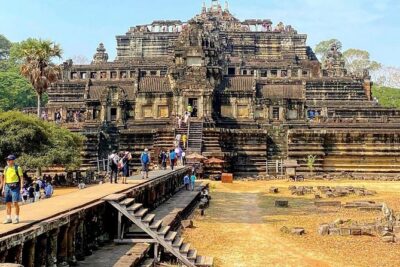
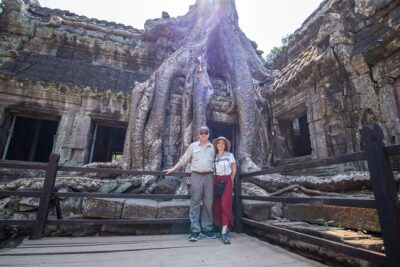
Private Angkor Wat Tour & Angkor Park/Heritage With Local Guide
Read our review →Browse the lists this tour appears in