
Reviewed · KILLING FIELDS TOURS
Morning Tour,Ak Phnom temple,Rice wine,Rice Paper, killing Field
Battambang’s countryside comes into focus on this tuk-tuk tour, where an 11th-century temple shares the day with rice wine, rice paper, dried bananas, a fish market, and the sobering Wat Samrong Khong killing field. It is a useful mix of Cambodian culture, village work, religion, and recent history rather than a simple temple run.
I like the personal feel of the small group, capped at 10, and the chance to meet guides such as Pao, Pov, or Yi Yong, all praised for clear English and an easy sense of humor. I also like the $20 price, which covers the tuk-tuk, guide, shared tour, and water. The main caution is that tickets and other fees are extra, and the advertised duration is not perfectly clear: it is described as a morning or half-day tour, while the booking information also says two days.
Key points at a glance
- Ek Phnom temple: See an 11th-century Angkor-period ruin about 15 kilometers northwest of Battambang.
- Hands-on village stops: Watch local production of rice wine, rice paper, dried bananas, and banana chips.
- A serious historical stop: Wat Samrong Khong killing field adds important context about Cambodia’s recent past.
- Good guide support: Pao, Pov, and Yi Yong are named guides associated with strong English and lively explanations.
- Tuk-tuk transport included: Hotel pickup is offered, along with shared transport and water.
- Plan for extra costs: Admission tickets and fees are not included, and breakfast is also excluded.
Why this Battambang outing is worth your morning

Battambang is surrounded by rice fields and small communities, and this tour gives you a practical way to reach places that are awkward to connect on foot. The tuk-tuk ride is part of the experience. You move through the rural outskirts, stopping for temples, food production, and local businesses rather than spending the whole morning inside town.
I like the balance. Ek Phnom gives you an old religious site, while the village workshops show how ordinary products are made today. Rice wine and dried banana production may sound modest, but these stops connect the countryside to the food you see in Cambodian markets.
The tone depends heavily on your guide. Pao is repeatedly praised for humor, energy, and strong English. Pov and Yi Yong are also named as guides who explain clearly and take care of guests from hotel pickup onward. That matters here because several stops are most interesting when someone explains what you are seeing.
This is not a polished museum tour. Expect a local outing with practical stops, informal explanations, and some variation in pacing. If you want a tightly scripted sightseeing program, the loose structure may bother you. If you want to see how rural Battambang works, it is a good fit.
More Temple Tours in Phnom Penh
- Phnom Penh City Tour, Silver Pagoda, Genocide Museum, Killing Fields
★ 5.0 · 123 reviews - Oudong Mountain History and Pagoda Tour
★ 5.0 · 39 reviews - 2-Day Phnom Penh to Siem Reap and Angkor Wat Temples
★ 5.0 · 22 reviews
Ek Phnom and the first look at old Battambang
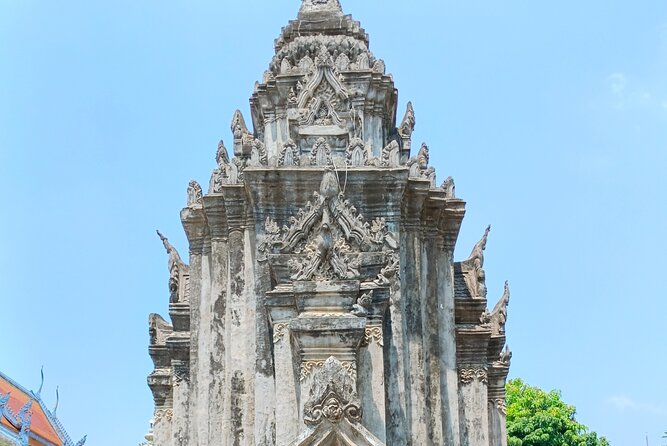
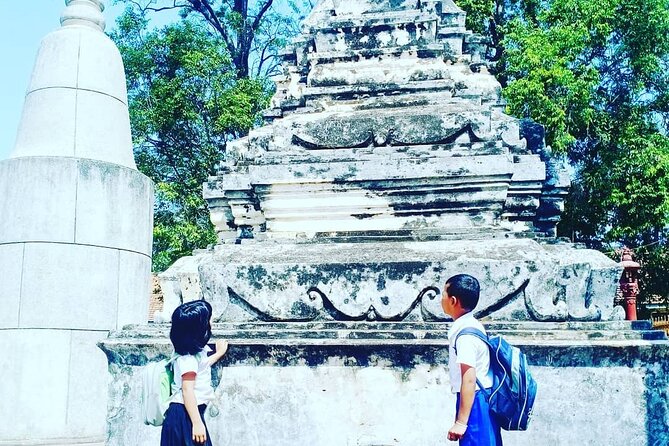
The tour’s main cultural stop is Ek Phnom, also written as Ak Phnom in some descriptions. It is an 11th-century Buddhist temple ruin about 15 kilometers northwest of Battambang, one of the area’s Angkor-type sites.
The temple is valuable because it offers a quieter alternative to Cambodia’s biggest temple complexes. You can focus on the stonework, religious setting, and the relationship between older Hindu and Buddhist traditions without the scale of a major archaeological park.
A guide can help you make sense of that overlap. Yi Yong, for example, is described as explaining Buddhism, Hinduism, and how the two traditions relate in Cambodia. That sort of explanation gives the stones a setting instead of leaving you to guess what each ruin once meant.
A large Buddha statue is also included in the route. The available details do not specify the exact setting or size, so treat it as another religious sight near the temple rather than a separate major attraction. It adds a contemporary devotional element beside the older structure.
Bring patience and modest expectations. This is an ancient ruin in a rural area, not a fully presented museum site. Entrance charges are not included in the $20 price, so ask your guide what you will pay before entering.
Rice fields, rice wine, and the working countryside
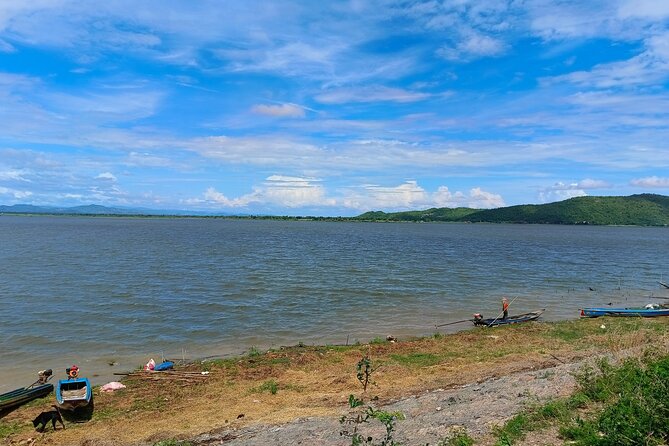
The ride between stops is one of the reasons to book this by tuk-tuk. North Battambang is framed by rice fields, and the route takes you away from the central streets into a more rural setting.
The rice wine visit is not simply a tasting stop. It gives you a look at a local product and the small-scale work behind it. The tour includes a chance to try a shot of rice wine, so anyone who does not drink should say so clearly. There is no need to force the tasting, and water is included.
The production sites may feel basic compared with commercial visitor centers. That is also their appeal. You see local enterprise as part of daily life, not as a staged cultural show built only for visitors.
The rice paper stop adds another food-related skill to the morning. Here you can learn how rice becomes the thin sheets used in Cambodian cooking. The description does not promise a formal hands-on class, so expect an explanation and demonstration rather than a guaranteed workshop where you make a full batch yourself.
These small stops help explain why this tour costs more than a simple tuk-tuk transfer but less than a private, full-day excursion. You are paying for transport and a guide who connects several unrelated-looking places into one route.
Dried bananas and the fish market
The itinerary also includes a dried banana and banana chip business. This is a useful stop for anyone interested in how rural produce becomes a saleable snack.
Bananas are familiar, but the process can be surprisingly instructive. You get to see a local product in its working setting, from fresh fruit to something packaged or ready to eat. The exact demonstration can vary, and the tour does not specify a fixed tasting arrangement, so do not assume every stop includes free samples.
A fish market appears on the route as well. It adds another ordinary but useful view of local food supply. Markets are often where a place feels most immediate, but this stop may be less comfortable for visitors sensitive to strong smells, wet floors, or busy working conditions.
That is part of the tradeoff. This is not a collection of carefully polished photo stops. Some places are practical businesses, and you should behave as a respectful observer. Ask before taking close-up photographs of workers or products.
The combination of banana production and the fish market gives the morning a wider focus. You are not only looking at monuments. You are seeing some of the trade and food activity that supports communities around Battambang.
More ways to understand the Khmer Rouge years:
- The Killing Field and Toul Sleng Genocide Museum (S21) Tour
★ 5.0 · 1,977 reviews - Killing field and Toul Sleng genocide museum Tour
★ 5.0 · 610 reviews - Visit 11 Places in One Day including S21 & Killing Field
★ 5.0 · 361 reviews - Killing Fields and Prison S21 Bus Tour
★ 4.0 · 206 reviews
Wat Samrong Khong and Cambodia’s painful past
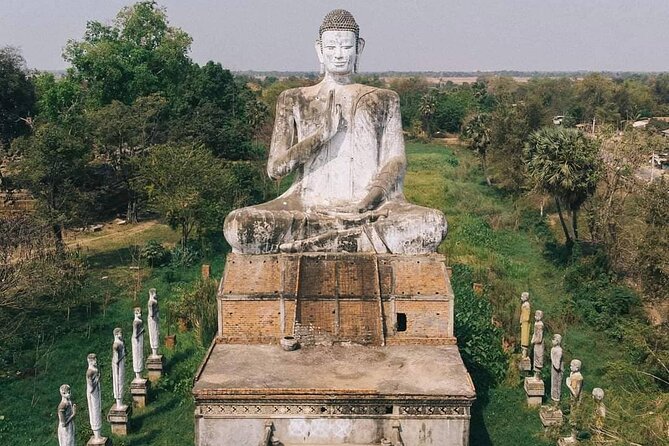
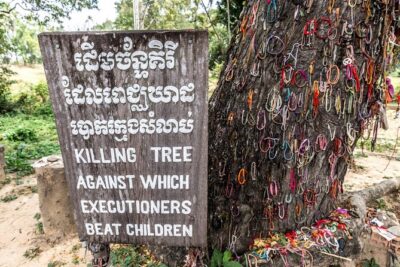
Wat Samrong Khong killing field is the most serious stop on the route. It introduces Cambodia’s period of mass violence and loss, and it changes the mood of the outing.
You should not treat this as a quick checklist stop. Allow yourself time to listen and think. The tour description gives no exact detail about the memorial displays or how long you stay, so the quality of the visit will depend partly on how your guide presents the site.
This is where an English-speaking guide can make a real difference. A clear explanation helps place the site within Cambodia’s recent past, while a respectful tone keeps the visit from becoming sensational. Pao and Pov are described as guides who explain Cambodian history with enthusiasm, but this particular stop needs care and restraint.
I appreciate that the route includes difficult history alongside food and village visits. Cambodia is not only temples and tropical scenery. A responsible tour should leave room for both the country’s religious traditions and the damage caused by political violence.
If you prefer a light sightseeing morning with no heavy subject matter, this stop may be emotionally demanding. If you want a more honest understanding of Battambang, it is an important reason to choose this route.
What the guides add to the day
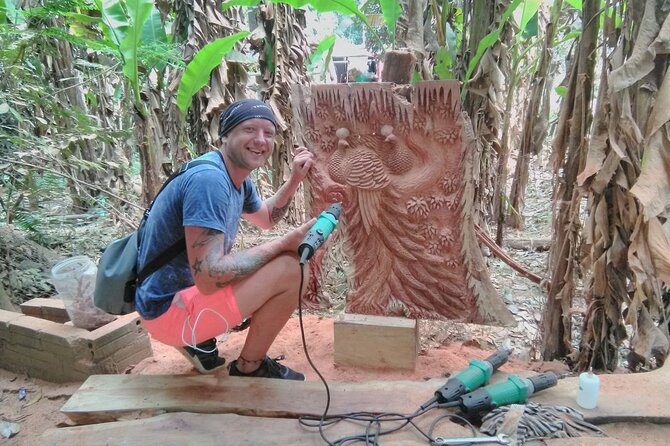
Guide quality appears to be one of the strongest parts of this experience. Pao is singled out for humor, engaging conversation, and excellent English. Pov is described as enthusiastic and helpful, while Yi Yong is associated with detailed explanations of Buddhism and Hinduism.
The names matter because the guide is not just driving. You need someone to interpret temple architecture, explain rural production, and handle the shift from casual food stops to a somber memorial site.
English ability is especially useful at Ek Phnom and Wat Samrong Khong. Without explanations, the temple can become a quick walk around old stones, and the killing field can be difficult to understand beyond its name.
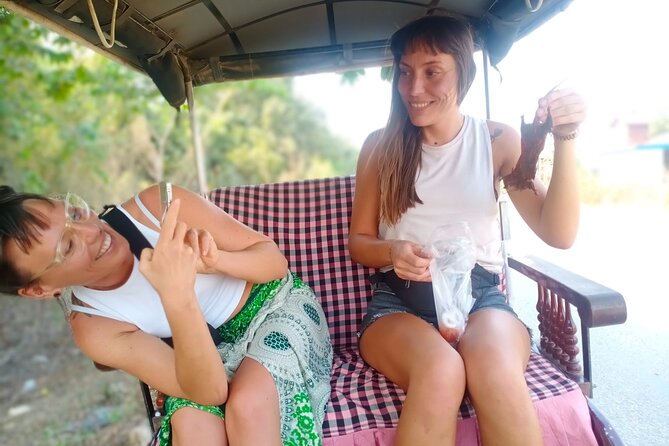
The group size is limited to 10, which should make questions easier than on a large coach. It is still a shared tour, so you will not control every pause or decide the exact amount of time at each site. The tradeoff is a lower price and a more social outing.
Pickup is offered, and the guide collects you by tuk-tuk. Yi Yong is specifically described as picking up guests at their hotel and looking after them from that point. Confirm your pickup details when booking, since the published information does not give a universal pickup time or list every eligible hotel.
$20 value, extra fees, and the confusing duration

At $20, this is strong value if you want several rural stops and a guide rather than a basic ride to Ek Phnom. The price includes the sharing tour, guide, tuk-tuk, and water.
It does not include tickets or other entrance fees. Breakfast is also excluded. The practical lesson is simple: carry some extra cash and ask which stops require payment before the tour begins. One guide is specifically praised for good English, while also drawing attention to the need for clearer information about extra costs.
The duration needs clarification. The experience is presented as a morning or half-day tour, and one itinerary entry describes a short stop in Battambang. Yet the overall information says two days, with a second day showing only Battambang and no scheduled activities.
The reviews connected with the experience also describe both half-day and full-day versions. That suggests the provider may offer more than one route or may adjust the length depending on what you book. Do not assume a full 10-hour day from the morning tour title. Ask the provider to confirm the start time, finish time, stops, and fees.
This uncertainty is the biggest practical weakness. The attractions themselves are clear, but the schedule is not. Get the exact plan in writing if your Battambang stay is short.
Who should book this tour?
I would choose this experience if you want an introduction to Battambang beyond the city center and prefer local production sites to a list of monuments. It suits first-time visitors, couples, small groups, and solo visitors who want a guide but do not want to pay for a fully private program.
It is also a good choice if you care about context. The route brings together temple traditions, village food production, market life, and the country’s difficult recent past. That range gives you a more grounded morning than a temple-only outing.
Families may appreciate the tuk-tuk ride and the variety of stops, but the killing field may need an age-appropriate explanation. People with limited time should also confirm the schedule, since the two-day wording and the half-day description do not match.
The tour is less suitable if you dislike informal businesses, do not want to pay extra admission fees, or need a rigid timetable. Hot weather is another reason to book the morning departure. One direct recommendation is to go early, since Cambodia’s heat can make an afternoon ride tiring.
Booking offers free cancellation up to 24 hours before the start time. Changes or cancellations inside that window are not accepted for a refund, and poor weather may lead to a new date or a full refund. Service animals are allowed, and the activity states that most people can participate.
My call: a worthwhile rural morning with one booking question
I would book this tour for the mix of Ek Phnom, village food production, and Wat Samrong Khong, especially if Pao, Pov, or Yi Yong is available to guide it. The $20 price makes sense for shared transport, water, and several stops, but you need to confirm what tickets cost and how long your version lasts.
Choose it for access, explanation, and variety, not luxury. If you want a carefully timed archaeological tour, look elsewhere. If you want to see a working side of Battambang and understand more than its temples, this is a sensible choice.
FAQ
Where does this tour take place?
The tour operates around Battambang, Cambodia, with stops in the surrounding rural area north and northwest of the city.
How much does the tour cost?
The listed price is $20.
How long does the experience last?
It is described as a morning or half-day tour, but the booking information also mentions two days and includes a second day without a detailed schedule. Confirm the exact duration before booking.
Is hotel pickup available?
Yes. Pickup is offered, and the tour uses a tuk-tuk for transport.
What is included in the price?
The price includes shared transport by tuk-tuk, a guide, and water.
Are entrance tickets included?
No. Tickets and other fees are not included.
Is breakfast included?
No. Breakfast is not included.
How many people can join?
The activity allows a maximum of 10 people.
Can I cancel for a full refund?
Yes, if you cancel at least 24 hours before the experience starts. Cancellations or changes made less than 24 hours before the start are not accepted for a refund. If poor weather causes cancellation, you will be offered another date or a full refund.
Just added around Phnom Penh
- Exploring the Best of Phnom Penh: A Full Day Tour★ 4.5 · 9 reviews
- Private Transfer : Phnom Penh ↔ Sihanouk Ville★ 5.0 · 15 reviews
- War Museum, Killing Field, and APOPO Hero RATs Tour★ 5.0 · 7 reviews
- Phnom Penh Intercity★ 4.5 · 11 reviews
- Phnom Penh Nightlife Street Food Tours★ 4.5 · 14 reviews
- War Museum, Killing Field and Floating Village ( Kampong Phluk)★ 4.5 · 6 reviews
- War Museum, Killing Field and Floating village ( Chong Kneas) Tour★ 5.0 · 14 reviews
- Warm Stone Massage★ 5.0 · 23 reviews
Killing Fields Tours, compared.
The Killing Field and Toul Sleng Genocide Museum (S21) Tour
Read our review →
Visit 11 Places in One Day including S21 & Killing Field
Read our review →
Private Half Day To Killing Field & S21 Genocidal Museum in Phnom Penh
Read our review →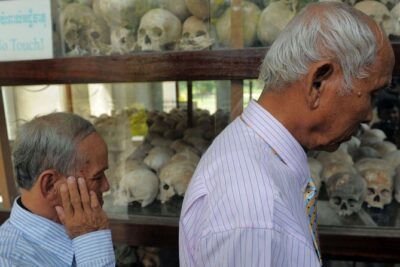
Tuol Sleng Genocide Museum (S-21) and Choeung Ek Killing Fields Tour
Read our review →
Phnom Penh City Tour, Silver Pagoda, Genocide Museum, Killing Fields
Read our review →City Highlights and the Killing Fields Day Tour
Read our review →
Full-Day Phnom Penh Sightseeing Tour & Killing Field
Read our review →Browse the lists this tour appears in