
Reviewed · BATTAMBANG TOURS
Morning village tour Livelihood tour with Local Product discover
Battambang’s countryside is at its most interesting when you see ordinary food being made by hand. This half-day outing takes you from local homes to small rural workplaces, where you can watch rice paper, bamboo-cooked sticky rice, dried bananas, banana chips, fermented fish paste, and rice wine being produced.
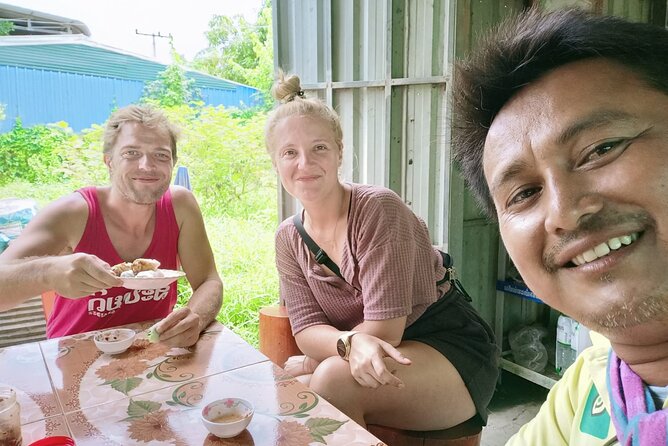
I like the small group limit of 10 people and the chance to taste products as you go. I also like that the tour includes a safe driver, drinking water, and pickup, which makes the morning easy to manage.
The main consideration is that this is a working village tour, not a polished museum visit. Conditions may be basic, some stops may smell strong, and the optional killing-fields visit at Wat Samrong Knong may feel difficult for some people.
Key points to know before booking
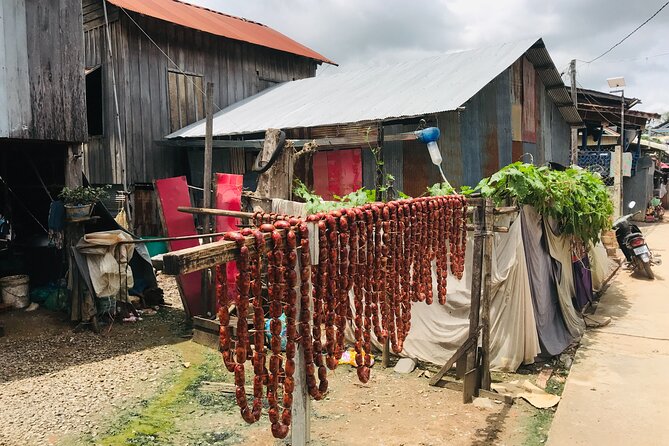
- Traditional food production: See rice paper, sticky rice, dried bananas, banana chips, fermented fish paste, and rice wine made in rural workshops.
- A real countryside setting: The tour takes you beyond central Battambang and into villages where people continue daily food-making traditions.
- Tasting is part of the visit: You can sample several local products rather than only watching demonstrations.
- Small groups matter: A maximum of 10 people allows for easier questions and a more personal visit.
- Optional historical stop: You may add Wat Samrong Knong and its killing fields to the morning.
- Useful transport included: Pickup is offered, and the driver provides water. One booking can also include group discounts.
Leaving Battambang for the village roads
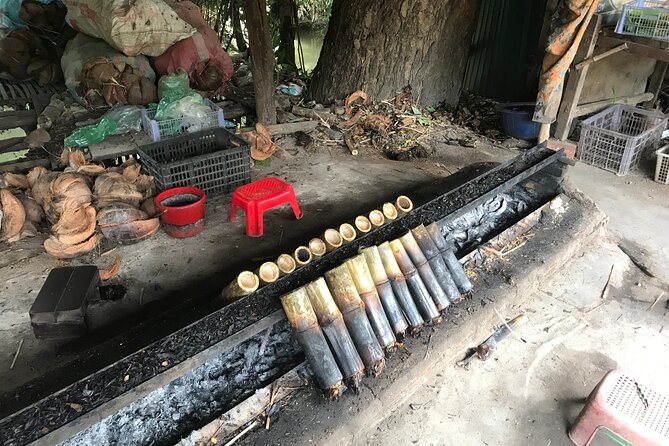
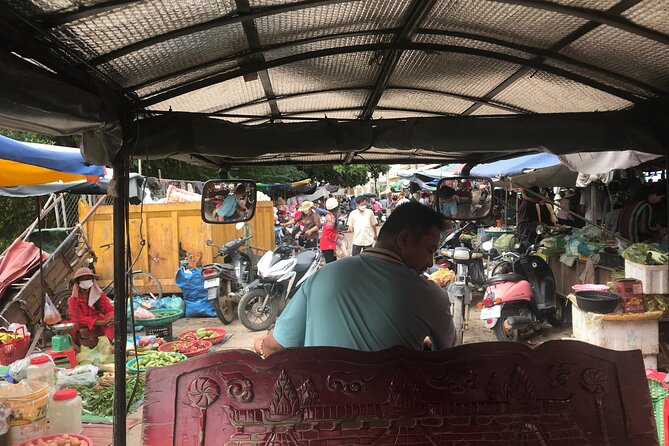
The morning begins with pickup between 8:00 and 8:30 a.m. That early start works well in Cambodia, since the countryside is usually more comfortable before the heat builds. You get a short introduction to Battambang and its past before heading out toward the rural communities.
I like this opening because it gives the food-making stops some context. You are not simply being driven from one workshop to another. You first get a sense of how Battambang connects to its surrounding farms and villages, then see how local ingredients become everyday products.
The exact road sequence can vary, but the central idea remains steady: you visit homes and small workplaces, watch people carry out familiar tasks, and taste what is being made. This is a better fit for you if you enjoy seeing how people live and work, rather than ticking off grand monuments.
Pickup is especially useful if your accommodation is outside the center. A previous booking used the same driver for an afternoon outing and rides to and from town, which suggests that the transport side can be practical for people staying farther out. The available information does not specify every pickup zone, so confirm your address when booking.
A few more Battambang half-days worth weighing up
- Battambang: Tuk-Tuk, Bamboo Train, Killing/Bat Caves, Sunset
★ 4.9 · 1,436 reviews - Battambang Tuk Tuk tour: Bambootrain, Killing & Bat Caves,Sunset
★ 5.0 · 799 reviews - Afternoon tour by tuk tuk to bamboo train,bat cave,killing cave,countryside.
★ 5.0 · 344 reviews
Rice paper made by hand
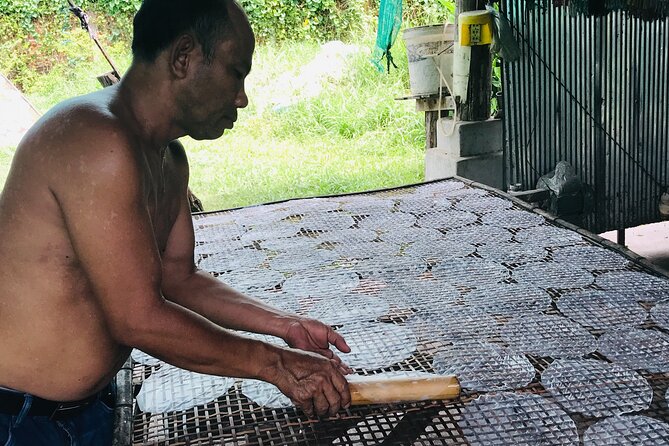
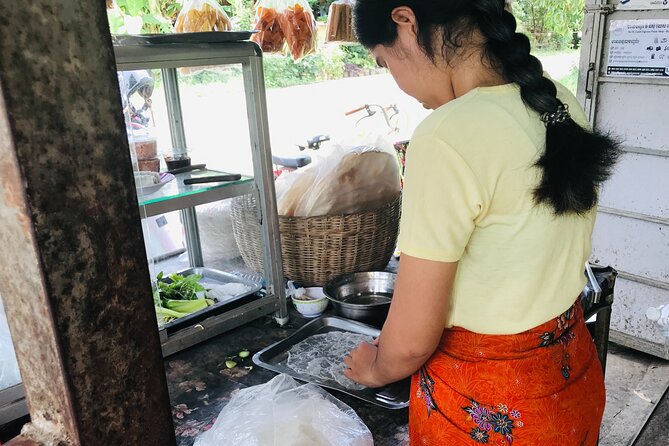
Rice paper is one of the clearest introductions to Cambodian food production because the finished sheet looks simple, while the work behind it is precise. At the village stop, you can watch the rice mixture being prepared and spread into thin sheets before drying.
I find this kind of visit valuable because it turns a familiar food item into a process you can understand. The paper is not an abstract local souvenir. It is part of the food culture you encounter across Cambodia, and seeing it made in a home or small workshop gives you a closer view than a packaged product on a shop shelf.
The stop is also a reminder that many Cambodian food traditions rely on patience and repeated handwork. You should expect a practical demonstration in a working environment, not a theatrical presentation designed only for photos.
Sticky rice cooking in bamboo tubes
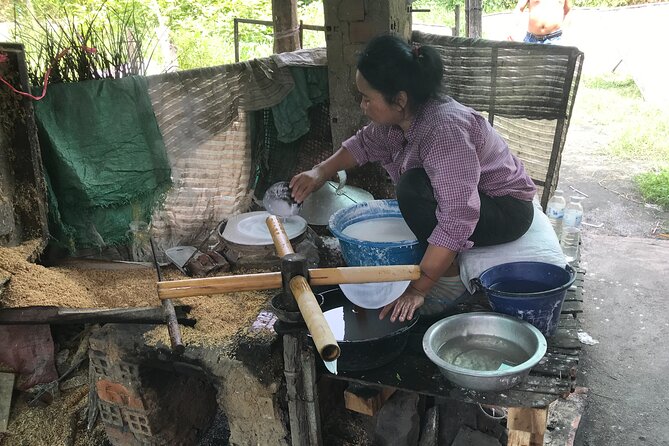
Another stop focuses on sticky rice cooked inside bamboo tubes over an open fire. The combination of bamboo, rice, heat, and time is a strong example of how rural cooking can use simple materials with very little waste.
You can watch the tubes being heated and learn how the rice is prepared inside them. Tasting the result helps explain why this dish remains popular. The appeal is not just its flavor, but the method itself, which connects food to the materials available in the countryside.
Open-fire cooking may also mean smoke, heat, and uneven ground around the work area. I would wear shoes that can handle a village path and avoid bringing anything you would not want exposed to cooking smoke. The tour lasts four to five hours, so these small practical choices make the morning more comfortable.
Bananas, chips, and everyday Cambodian snacks
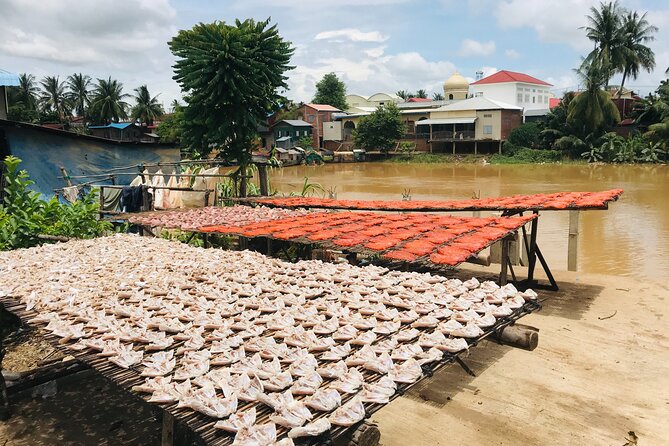
The tour also visits places where bananas are dried and banana chips are produced. These stops show a different side of village food-making. Instead of one meal prepared for immediate use, you see fruit being turned into products that can be stored, carried, or sold.
I like the contrast between the stops. Rice paper and bamboo sticky rice show cooking techniques, while dried bananas show how villagers preserve seasonal produce. Banana chips add another variation, with a different texture and preparation method.
These are also approachable tastings for people who prefer milder foods. The tour includes several products, so you can compare them rather than being asked to make a meal of one unfamiliar item. Exact samples can depend on what is being produced that morning, but the stated focus includes dried bananas and banana chips.
Same base, a completely different kind of day:
- Local Livelihood Half Day Bike Tour in Battambang
★ 5.0 · 287 reviews - Explore Battambang full day tour by Tuk Tuk (start from 9am-6:30pm)
★ 5.0 · 240 reviews - Battambang: Bamboo Train, Bat Cave, Killing Cave by Tuk Tuk
★ 5.0 · 182 reviews - Full Day tour .City tour.Countryside.Bamboo Train.Secret Bat Cave
★ 5.0 · 178 reviews
Fermented fish paste and the stronger side of local food
The old fermented fish-paste factory is likely to be one of the most memorable stops, though not necessarily the easiest. Fermented fish paste is an important Cambodian ingredient, and the production process has a powerful smell.
I would not skip this visit simply because it may be pungent. Food traditions make more sense when you see the ingredients in their working setting, including the parts that are less comfortable for a first-time visitor. Still, you should know what to expect. If you are sensitive to strong odors, this may be the stop that tests you most.
The factory is described as an old one, which gives the visit a more workaday character. You are seeing a production site rather than a display built for tourists. That can make the stop feel more direct, but it may also mean basic facilities and less control over the surroundings.
A traditional rice wine distillery
The rice wine stop adds a drink to the morning’s food story. You can visit a traditional old distillery and see how rice is turned into alcohol using a local method.
I appreciate the variety here. By this point, you have seen rice used for paper and sticky rice, then you see it used again in a drink. The tour helps you notice how one staple crop supports several parts of daily life.
Tastings are part of the overall outing, but the supplied details do not specify the amount served or whether every product is offered to every person. If you do not drink alcohol, ask about the tasting before you arrive. You can still watch the process and enjoy the other food stops.
Adding Wat Samrong Knong and the killing fields
You have the option to visit the Wat Samrong Knong temple complex and its killing fields. This changes the tone of the morning from food and village work to Cambodia’s more painful recent past.
I see this as a useful addition if you want some historical context alongside the rural visits. Wat Samrong Knong offers a place to consider the country’s history, while the killing fields require a respectful and serious approach.
It may not suit everyone, especially after a light morning of tastings. The information provided does not state how long the temple stop lasts or whether it changes the tour price, so confirm those points before booking if the site is important to you. Treat the visit as optional for a reason. You can choose the food-focused route if that better fits your mood and interests.
What the guide and driver add to the morning
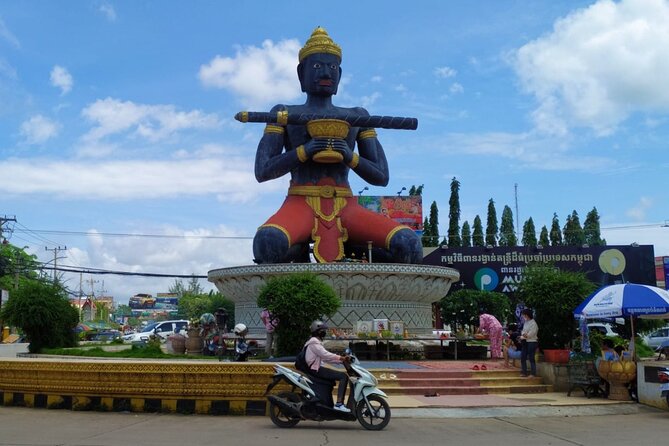
The guide’s role is important because the value of these stops depends on explanation. Without context, you might see a sheet of rice paper, a bamboo tube, or a jar of fermented fish and miss why each matters.
The experience is operated by Kim Tours Battambang. The available feedback gives particular credit to the driver and guide for showing many parts of the surrounding area, responding to requests, providing water, and driving safely. Those details matter more than fancy transport on a rural outing.
You should still keep your expectations practical. There is no stated promise of a specialist historian, chef, or professional food educator. This is a local village tour, and its strength lies in access to daily production and a guide who can help you understand what you are seeing.
A small group of no more than 10 people is another advantage. You can ask questions without trying to speak over a large crowd, and the guide has a better chance of keeping the stops personal. Group discounts are available, which may make the tour more appealing if you are booking with family or friends.
Is $15 good value?
At $15 per person, I consider this a strong-value half-day outing if your priority is local life and food production. You receive several stops, tastings, transport pickup, a guide, and roughly four to five hours outside the city.
The value comes from the range. A short visit to one food workshop might feel thin, but this tour links several products and methods into one morning. Rice paper, bamboo sticky rice, dried bananas, banana chips, fermented fish paste, and rice wine each show a different use of local ingredients.
The price is also easier to justify because transport is part of the experience. You do not need to arrange separate rides between scattered village stops, and the driver provides water. If you are staying far from central Battambang, pickup may save both time and negotiation.
The low price does mean you should not expect luxury. There is no mention of air-conditioned transport, private touring, entrance fees for every possible stop, or a full meal. Ask about any extra cost for Wat Samrong Knong and the killing fields if you choose to add them.
Comfort, timing, and who will enjoy it most
The tour is listed as suitable for most people, with service animals allowed and public transportation nearby. It is a morning activity, beginning around 8:00 to 8:30 a.m. and lasting four to five hours.
I would recommend light clothing, comfortable shoes, sun protection, and water-friendly expectations. The tour includes water, but village roads and production areas are not described in detail, so you should be ready for simple surroundings rather than city-level facilities.
This tour suits you best if you:
- Enjoy food culture and small-scale production
- Want to see Cambodian village life beyond temples
- Like tasting unfamiliar local products
- Prefer a small group over a large bus outing
- Have a half-day available in Battambang
- Want pickup included
- Are comfortable with strong food smells and basic working environments
It may be less suitable if you want a tightly scripted sightseeing route, luxury transport, or only major historic attractions. The morning is built around observation, conversation, and local products.
The activity is booked an average of 14 days ahead, so I would reserve before arriving if your Battambang schedule is fixed. Confirmation is provided at booking. Free cancellation is available if you cancel at least 24 hours before the start time. Changes or cancellations inside that period are not refunded, and poor weather can lead to a new date or a full refund.
My verdict on the Battambang village tour
I would book this tour if you want to understand Battambang through its food, working villages, and countryside roads. The best parts are the variety of production stops, the chance to taste what is made, the small group size, and the practical help of pickup and water.
I would think twice only if strong smells, open-fire cooking, or a basic rural setting will spoil the morning for you. Also confirm the details of the optional temple and killing-fields visit before booking.
For $15, this gives you more than a ride through the countryside. It gives you a look at how rice, fruit, fish, and local skill become everyday Cambodian food and drink. That is a worthwhile use of half a day in Battambang.
FAQ
How long does the Battambang village tour last?
The tour lasts approximately four to five hours.
What time does the tour begin?
The stated meeting time is between 8:00 and 8:30 a.m., Monday through Sunday.
What foods and drinks can I see being made?
You can see rice paper, sticky rice cooked in bamboo tubes, dried bananas, banana chips, fermented fish paste, and traditional rice wine being produced.
Can I taste the local products?
Yes. The tour includes opportunities to taste the traditional food and drink products made during the visits.
Is pickup available?
Yes. Pickup is offered as part of the experience.
How many people can join the tour?
The maximum group size is 10 people.
Can I visit Wat Samrong Knong and the killing fields?
Yes. You have the option to visit the Wat Samrong Knong temple complex and killing fields.
What happens if I need to cancel?
You can receive a full refund if you cancel at least 24 hours before the experience starts. Cancellations or changes made within 24 hours are not refunded. If poor weather causes the tour to be canceled, you will be offered another date or a full refund.
Just added around Battambang
- Bamboo Train, Banann Temple, Fruit Bat, Bat Cave, Sunset★ 4.2 · 3 reviews
- Private Battambang Full-Day Guided Tour★ 4.5 · 3 reviews
- Battambang Private Day Tour★ 5.0 · 5 reviews
- Afternoon tour to Original Bamboo train. Bat cave. Killing cave★ 5.0 · 25 reviews
- Private Taxi Transfer From Battambang – Siem Reap City★ 5.0 · 4 reviews
- Private Boat from Battambang to Siem Reap via Tonle Sap Lake★ 4.5 · 3 reviews
- Tuk Tuk Tour (Full-Day)★ 5.0 · 7 reviews
- Private Taxi Transfer Battambang from/to Phnom Penh★ 5.0 · 7 reviews
Battambang Tours, compared.

Tuk-Tuk, Bamboo Train, Killing/Bat Caves, Sunset
Read our review →
Afternoon tour by tuk tuk to bamboo train,bat cave,killing cave,countryside.
Read our review →
Local Livelihood Half Day Bike Tour in Battambang
Read our review →
Explore Battambang full day tour by Tuk Tuk (start from 9am-6:30pm)
Read our review →
Full Day tour .City tour.Countryside.Bamboo Train.Secret Bat Cave
Read our review →
A Day TukTuk Handicrafts Bambootrain Killing&BatCaves,Sunset
Read our review →
Browse the lists this tour appears in