
Reviewed · BAYON TEMPLE TOURS
Preah Khan, Ta Prohm, Bayon Off Beaten Track
The best part of this Siem Reap outing is its tight focus on three temples built under King Jayavarman VII. Preah Khan gives you long galleries and a quieter start, Ta Prohm supplies the famous tree-covered ruins, and Bayon closes with its extraordinary carved faces. I like the private format and the chance to set your own pace. I also like that the route skips a one-size-fits-all bus schedule.
The main catch is practical: the $159 price covers up to three people, but not temple admission or lunch. The 9 a.m. start is sensible for a full temple day, though it is not a sunrise tour. You should also be comfortable walking over uneven stone and standing in the heat.
What makes this temple day useful
- Three Jayavarman VII temples in one route: You see Preah Khan, Ta Prohm, and Bayon as parts of one royal building program.
- A private group of up to three: The guide can adjust the pace and explain details without a large crowd around you.
- Preah Khan gets two hours: That is enough time to look beyond the best-known gateways and notice the temple’s layered design.
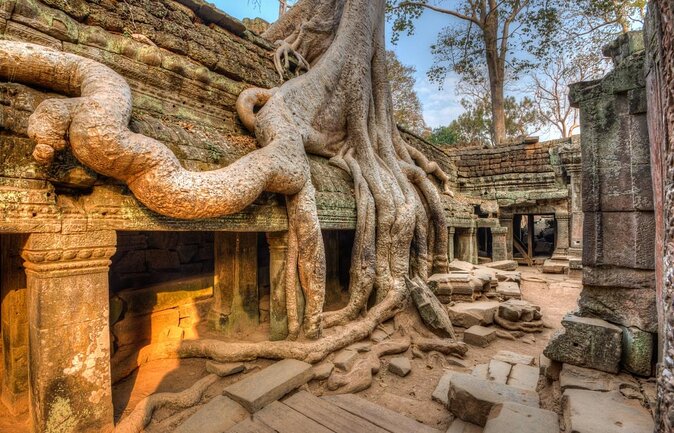
- Ta Prohm gets its own two-hour visit: You have time for the tree roots, galleries, courtyards, and photographs without rushing through.
- Panha is the named local guide and driver: His service is associated with flexible schedules, temple planning, airport pickups, and practical help around Siem Reap.
- Simple pricing structure: At $159 per group, the value improves sharply when two or three people share the cost, though tickets and lunch are separate.
Why these three temples belong together
This is not a random temple sampler. Each stop connects to King Jayavarman VII, one of the most important rulers of the Khmer Empire.
Preah Khan was built in the 12th century in honor of the king’s father. Ta Prohm followed in the late 12th and early 13th centuries, while Bayon served as Jayavarman VII’s state temple. Taken together, the three sites show different moods of Khmer architecture: long, orderly corridors at Preah Khan, nature pressing into stone at Ta Prohm, and the famous smiling faces at Bayon.
I like this approach because you get variety without spending the day bouncing between unrelated monuments. You are still visiting three major Angkor sites, but the route has a clear theme. That gives your guide something useful to explain as you move from one temple to the next.
The phrase off beaten track needs a little care. Ta Prohm and Bayon are among Angkor’s best-known temples, so neither is an undiscovered ruin. The advantage here is not total solitude. It is the private transport, the focused route, and the chance to avoid a large organized group.
More time among the roots at Ta Prohm:
- Siem Reap Tour: Angkor Wat Sunrise, Bayon, Ta Prohm, Banteay Srei
★ 5.0 · 931 reviews - Angkor Wat Private Driver Tours to Angkor Wat Sunrise, Angkor Thom & Ta Prohm
★ 5.0 · 98 reviews - One Full Day Private tour of Angkor Wat, Ta Prohm, Angkor Thom & Banteay Srie
★ 5.0 · 64 reviews
Starting at 9 a.m. in Siem Reap
The stated meeting point is Prince Angkor Hotel & Spa on Sivutha Boulevard, and the activity returns there at the end. Pickup is offered, so confirm the exact pickup arrangement when you book if you are staying elsewhere.
A 9 a.m. departure gives you a full day without the punishing start of a sunrise excursion. It also makes the schedule easier if you do not want to leave your hotel in the dark. The tradeoff is that you will not see sunrise at Angkor Wat, and the temples may feel warmer later in the day.
The tour lasts about eight hours, while the listed temple visits total five hours. The remaining time allows for driving between sites, entry arrangements, short pauses, and lunch planning. Lunch is not included, so ask your guide when and where you will stop. Do not assume a meal is built into the $159 price.
The operator includes bottled water, a licensed tour guide, and a driver. Those small details matter at Angkor. Water is useful, and a licensed guide gives the day more shape than simply being dropped at a gate with a map.
Preah Khan: two hours among long galleries
Preah Khan means Royal Sword. The temple sits northeast of Angkor Thom and west of the Jayatataka baray, or reservoir. It was built for Jayavarman VII to honor his father, giving the site a personal connection as well as a religious and royal purpose.
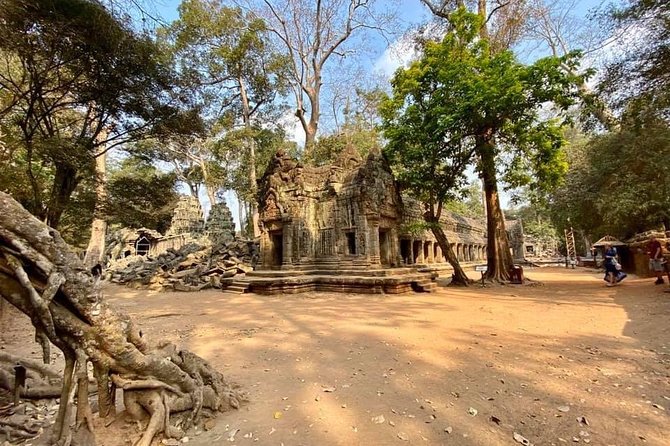
You have two hours here, the longest amount of time assigned to any single stop along with Ta Prohm. That is a good choice. Preah Khan is not a quick photo stop. Its appeal comes from moving through a sequence of entrances, courtyards, galleries, and stone details.
I would use the first part of the visit to get the overall layout. Then slow down. Look at how the temple seems to unfold in layers rather than presenting one single grand view. A guide can help you understand what you are seeing, especially when a partly ruined wall or carved doorway looks confusing at first glance.
Preah Khan can feel less immediately recognizable than Ta Prohm or Bayon. That is both its strength and its weakness. You may not get one iconic image that explains the whole site, but you do get more room to pay attention to the structure itself.
Expect walking and uneven ground. The information asks for a moderate level of physical fitness, and that is a fair warning for all three temples. You should be ready for stone surfaces, steps, extended periods on your feet, and outdoor heat.
Ta Prohm: roots, ruins, and the famous view
Ta Prohm, whose modern name is linked to the ancestor of Brahma, was originally called Rajavihara. It was built in the Bayon style, largely during the late 12th and early 13th centuries.
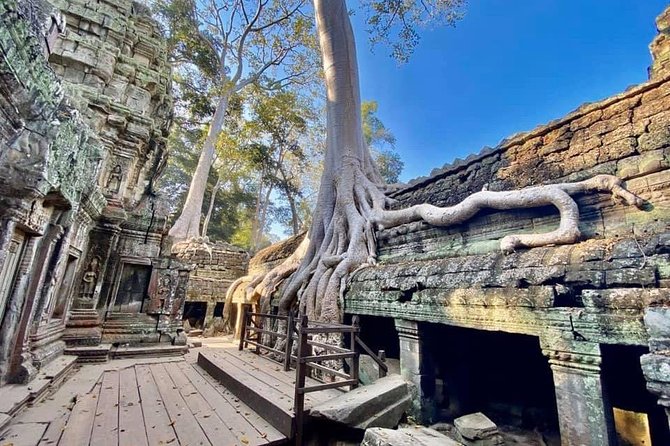
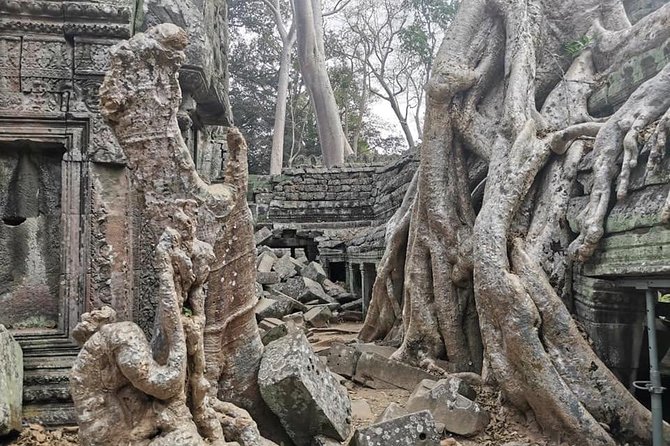
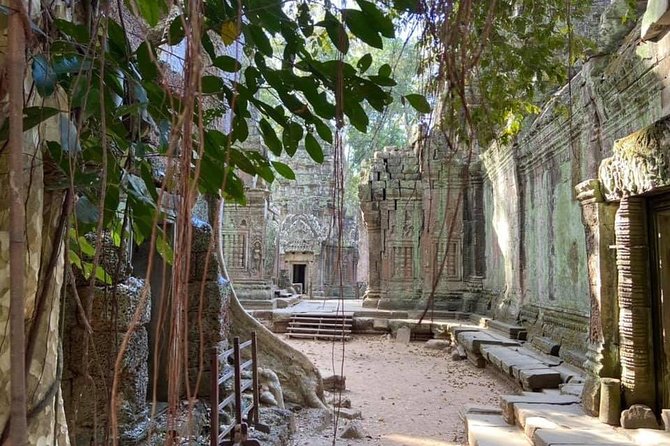
This is the temple most people picture when they think of Angkor ruins wrapped in trees. The roots and walls create striking views, but Ta Prohm is more than a backdrop for photographs. Its corridors, enclosed spaces, and damaged galleries show how a large temple complex has changed over time.
The two-hour allocation is welcome. A rushed visit would reduce Ta Prohm to one tree and a queue for a picture. With more time, you can look beyond the famous root-covered sections and notice how the temple’s narrow passages and courtyards connect.
Ta Prohm is also where the private format may help most. If you want to pause for photographs, ask about a detail, or move away from the busiest section, a guide can adjust the pace more easily than a large group. Still, do not expect an empty temple. Ta Prohm is a major Angkor attraction, and its most famous views draw people.
The site can feel crowded even when the rest of the route is calmer. That is the central tradeoff. You come here for the dramatic combination of trees and stone, but that same appeal makes it popular.
More Bayon and Angkor Thom mornings:
- Angkor Wat Sunrise and Angkor Thom Sunset Tour
★ 5.0 · 89 reviews - Private Temples Guided Tour (Angkor Wat, Ta Prom & Angkor Thom)
★ 5.0 · 75 reviews - Siem Reap Private Day Tour: Angkor Wat Sunrise, Bayon & Ta Prohm
★ 5.0 · 48 reviews - Angkor Wat & Bayon: the Smiling Temple
★ 5.0 · 47 reviews
Bayon: one hour with the stone faces
Bayon Temple, also called Prasad Bayon, served as the state temple of the Mahayana Buddhist King Jayavarman VII. It was built in the late 12th or early 13th century and is known for its richly decorated stonework and carved faces.
The visit lasts one hour. That is shorter than the time at Preah Khan and Ta Prohm, but it can work if your guide keeps the visit focused. Bayon is visually dense. You do not need a long walk to find something worth studying, especially around the towers and carved faces.
I would not treat Bayon as a simple final photo stop. Look carefully at the faces and the way the towers rise above the narrow galleries. The temple can feel confusing at first, so a guide’s explanation is useful here. The structure does not reveal itself in one clean view.
The shorter visit may disappoint you if you want a slow architectural study. On the other hand, after several hours at two large temple sites, an hour at Bayon gives the day a firm ending without adding another exhausting circuit.
How Panha’s service fits the day
Panha is the named local guide and driver connected with this Siem Reap service. His role covers more than steering between temples. The service is associated with help at the airport, advice on temple choices, flexible timing, and practical suggestions about restaurants and bars in town.
That flexibility is valuable if you have not visited Angkor before. You can ask for explanations about Cambodian culture and daily life, not just dates and building names. You can also discuss the day’s pace instead of being locked into a bus group’s schedule.
Past service connected with Panha has included early temple departures, air-conditioned vehicle use, and help choosing sites. Those details should not be treated as guaranteed features of this exact 9 a.m. outing, so confirm the vehicle and any special requests before departure.
The private format is the bigger advantage. Your group alone participates, with a maximum of three people. If one person wants more time at Preah Khan or another prefers to keep moving, that conversation is easier in a small group.
Is $159 good value for three people?
At $159 per group, the cost works out to $53 per person for three people, before entrance fees and lunch. For two people, it is $79.50 each, and a solo visitor pays the full group price.
That makes this much better value for a couple or a small family than for one person. You are paying for a private guide, driver, bottled water, and a full day of transport rather than simply buying entry to three temples. The personal service and flexible pace are the main reasons to choose it.
You still need to budget for Angkor admission separately. The supplied price does not include entrance tickets, and it does not include lunch. Since no ticket price is given here, check the current official admission cost before booking and allow extra money for food.
I would compare this with a larger shared tour only if your budget is tight or you enjoy meeting other people. If you value direct questions, a private schedule, and a calm day in a small group, the price is reasonable when shared by three.
What to wear and how much walking to expect
The tour information calls for moderate physical fitness. Treat that as a real requirement, not a formality. You will spend several hours walking around temple compounds, crossing uneven stone, and standing outdoors.
Wear practical clothing that lets you walk comfortably. Bring sun protection and use the included bottled water. You should also plan for heat, since the 9 a.m. start carries into the warmer part of the day.
The exact dress guidance is not provided, so confirm current temple rules before you go. A respectful approach is sensible at any active religious site.
You should also tell the provider about any timing concerns before the day begins. The tour ends back at the starting point, but the length of the temple visits and the driving time can make the day feel full.
Cancellation and booking details
Confirmation is provided at booking, and the tour uses a mobile ticket. Free cancellation is available if you cancel at least 24 hours before the local start time.
Cancellations or changes made less than 24 hours before the 9 a.m. start are not accepted for a refund. That policy is fairly straightforward, but check the local time carefully if you are booking from another country.
Who should book this Angkor route?
I would choose this tour if you want three major Jayavarman VII temples, a private guide, and a day that is easier to adjust than a large group outing. It suits couples, friends, or a family of up to three who want to share the cost.
It is also a good fit if you want more than photographs. Preah Khan gives you time for structure and setting, Ta Prohm offers the famous tree-and-stone views, and Bayon brings the carved faces and royal symbolism.
I would look elsewhere if your main goal is sunrise, a visit to Angkor Wat itself, or the lowest possible per-person price. This route starts at 9 a.m., does not list Angkor Wat, and becomes expensive for a solo visitor.
Should you book it?
Book this if you want a focused private day built around three of Angkor’s most important Jayavarman VII temples. The strongest reasons are the small group size, the two-hour visits at Preah Khan and Ta Prohm, and Panha’s practical, flexible approach to guiding around Siem Reap.
Before paying, confirm pickup, vehicle details, lunch timing, and the current temple admission cost. If those extras fit your budget and you are comfortable with a full day of walking, this is a useful, well-shaped introduction to the Angkor complex.
FAQ
How long does the tour last?
The experience lasts approximately eight hours and begins at 9 a.m.
Where does the tour start and finish?
The stated meeting point is Prince Angkor Hotel & Spa, Sivutha Boulevard, Siem Reap. The activity ends back at the meeting point.
Which temples are included?
The route includes Preah Khan, Ta Prohm, and Bayon Temple.
Are temple entrance fees included?
No. Entrance fees are not included in the tour price.
Is lunch included?
No. Lunch is not included.
How many people can join the private tour?
The price is for a private group of up to three people. Only your group participates.
Just added around Siem Reap
- Twilight Tastes of Siem Reap Include Dinner★ 5.0 · 13 reviews
- Ultimate Sunrise to Angkor Wat, Angkor Thom and Bayon Temple★ 5.0 · 3 reviews
- Trekking Tour at Phnom Kulen National Park from Siem Reap★ 5.0 · 3 reviews
- Professional Photo Shoot in Angkor Archaeological Park, Siem Reap★ 5.0 · 42 reviews
- Full-Day Private Tour of Angkor Wat with Pick Up★ 5.0 · 12 reviews
- Unveiling 2 Days Private Angkor Wat/Beyond In Sunrise/Sunset Tour★ 5.0 · 48 reviews
- Siem Reap City Tour with War Museum and Killing Field★ 5.0 · 27 reviews
- Private Day Trip to Angkor Temples with Expert Guide★ 5.0 · 4 reviews
Bayon Temple Tours, compared.
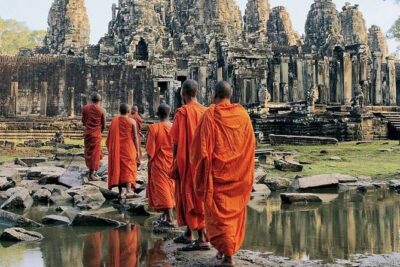
Siem Reap Tour: Angkor Wat Sunrise, Bayon, Ta Prohm, Banteay Srei
Read our review →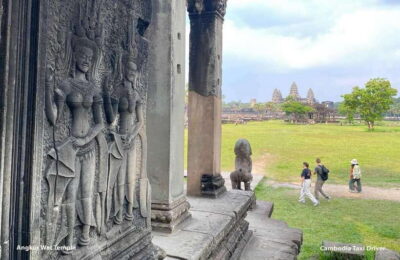
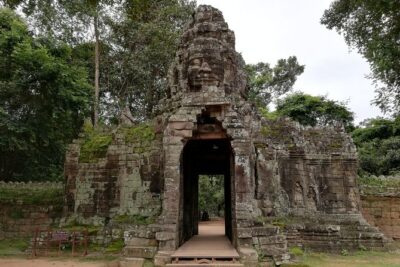
Angkor Wat Private Driver Tours to Angkor Wat Sunrise, Angkor Thom & Ta Prohm
Read our review →
Private Temples Guided Tour (Angkor Wat, Ta Prom & Angkor Thom)
Read our review →
One Full Day Private tour of Angkor Wat, Ta Prohm, Angkor Thom & Banteay Srie
Read our review →
Unveiling Angkor Wat Sunrise, Bayon, Ta Prohm In Small Group Tour
Read our review →Browse the lists this tour appears in