
Reviewed · TEMPLE TOURS
2-Day Eight Temple Tour with Optional Sunrise
The best thing about this two-day tour is its range. You move from the steep towers of Pre Rup to jungle-covered Ta Prohm, finely carved Banteay Srei, and the huge temple city of Angkor Wat without having to arrange separate rides. A private guide gives the ruins a human story, rather than leaving you with a pile of old stones and a map.
I like the private transport and hotel pickup, especially when you are visiting several temples spread across the Siem Reap area. I also like the pace: you get time at each site instead of being tied to a large group. The main drawback is the extra cost of the 3-day temple pass, which adds $62 per person to the $98 tour price.
Key points to know before booking
- Eight major temples over two days: The route covers Pre Rup, Banteay Samre, Banteay Srei, Ta Prohm, Banteay Kdei, Angkor Wat, Preah Khan, and Bayon.
- A genuinely private outing: Only your own group participates, with private transport and a private guide.
- Sam is a memorable guide option: One review specifically praises Sam’s storytelling and photography skills, though the assigned guide may vary.
- Banteay Srei is the detail specialist: Its pink sandstone and delicate carvings make it very different from the larger temple complexes.
- Angkor Wat and Bayon get proper time: Day two focuses on the two temples many people most want to see.
- Budget for the pass: The $98 tour fee does not include the $62 3-day temple pass, meals, drinks, or personal expenses.
Why this route works so well over two days
Siem Reap’s temples are not all clustered around one courtyard. They spread across the Angkor Archaeological Park and the surrounding countryside. That is why a private vehicle matters here. You can cover eight sites without spending your holiday negotiating rides or trying to work out the order yourself.
This tour also gives you two different kinds of days. Day one leans toward smaller and more atmospheric temples, including the jungle-wrapped Ta Prohm and finely worked Banteay Srei. Day two brings the headline monuments: Angkor Wat, Preah Khan, and Bayon.
That mix is smart. If you visited only Angkor Wat, you would see the park’s most famous monument but miss the variety of Khmer design. If you visited only smaller temples, you would miss the scale that makes Angkor so remarkable.
The tour costs $98, before the $62 temple pass. That means you should judge the price against what you are getting: two days of private transport, a guide, cold water, hotel pickup, and visits to eight temples. For a full private itinerary, the price is reasonable, but it is not an all-inclusive package. You still pay for food and drinks, and the temple pass is a major additional expense.
More early starts around Siem Reap:
- Angkor Wat Sunrise or Sunset Tour with Guide from Siem Reap
★ 5.0 · 12,109 reviews - Siem Reap: Angkor Wat: Small-Group Sunrise or Sunset Tour
★ 5.0 · 9,444 reviews - Siem Reap: Angkor Wat 2-Day Tour with Sunrise and Sunset
★ 4.9 · 4,429 reviews
Day one begins at steep Pre Rup
Pre Rup is a good opening stop because it gives you an immediate sense of Khmer temple design. It is known as a mountain temple, with steep steps leading toward the upper towers. You will need to take care on the climb, but the effort brings a broad view over the surrounding Cambodian countryside.
This is one of the earlier temples built by the Khmer kings. It feels more open and geometric than some of the later sites, with strong brick and stone forms that are easy to read from a distance. I would not rush the upper level. The view helps you understand why these temples were designed as sacred mountains, not simply as enclosed rooms.
The climb is also the first practical test of the day. Wear shoes with a firm grip, and do not treat the stairs as a casual stroll. The tour is suitable for most people, but the itinerary includes uneven ground, steps, and extended walking.
Banteay Samre brings Angkor Wat echoes
Next comes Banteay Samre, a temple built in a style similar to Angkor Wat. It is a useful comparison stop. After seeing its towers and carved details, you will have a better eye for the design choices at Angkor Wat on day two.
The temple is large enough to occupy about an hour, according to the planned visit. That gives you time to look at the towers, doorways, and carvings instead of simply taking a quick photograph and returning to the vehicle.
Banteay Samre is one of the more popular stops in the complex, but the private format means your group is not waiting for a large tour party to finish. You still visit a major site, but the experience has room for questions and pauses.
Banteay Srei is small, pink, and finely carved
Banteay Srei is one of the most distinctive temples on the route. Its pink sandstone came from the Kulen Mountain range, giving the temple a warmer color than the gray stone seen at many other Angkor sites.
The carving is the reason to come. Door frames, pediments, and towers carry unusually delicate detail, and the smaller scale lets you inspect the work more closely. A local legend says women made the carvings because they were too beautiful to have been made by men. Treat that as a charming story rather than established fact, but it adds a memorable touch to the visit.
The trip to Banteay Srei also shows you more of the area beyond the central temple circuit. That matters because the ancient Khmer world was not limited to one famous monument. You get a sense of how widely the religious and royal building program reached.
Because the stonework is so detailed, this is a place where a guide can earn their keep. A good explanation helps you notice figures and patterns you might otherwise walk past. Sam, one of the guides associated with the tour, was praised for being a master storyteller and for taking strong photographs. If Sam leads your group, you may find those skills especially useful here. Guide assignments can vary, so do not book on the assumption that he will definitely be your guide.
More Temple Tours in Siem Reap:
- Angkor Wat Sunrise & 3 Main Temples with Breakfast – Small Group
★ 5.0 · 2,857 reviews - Siem Reap: Full Day Angkor Wat Temple Experience with Sunset
★ 4.9 · 1,490 reviews - 2 Days Exclusive Temple Highlights with Sunset and Sunrise Tour
★ 5.0 · 1,157 reviews - Full-Day Banteay Srei & 4 Temples – Grand Tours Join-in Tour
★ 5.0 · 1,155 reviews
Ta Prohm shows nature taking back the temple
Ta Prohm is the day’s most dramatic stop for many people. It is often called the Tomb Raider temple because it appeared in the Angelina Jolie film. The movie connection brings attention, but the temple is worth seeing for more than its screen appearance.
Ta Prohm was left largely to the elements. Trees and roots push through the structures, and the forest has become part of the visual character of the place. Safety work has made it possible to visit, but much restoration remains limited compared with the work done at some other temples.
This creates both the magic and the inconvenience. The roots, broken galleries, and shaded passageways give Ta Prohm a powerful sense of age. They also mean uneven surfaces and tighter spaces. Follow your guide’s directions and take your time through the more confined areas.
Try not to treat Ta Prohm as a single photo stop. Look at the carved walls, the courtyards, and the way the jungle changes your sense of scale. The temple feels less like a finished monument and more like a place still being reclaimed.
Banteay Kdei adds a quieter Buddhist chapter
Banteay Kdei sits near Ta Prohm and is known as the Citadel of Chambers, or the Citadel of Monks’ Cells. It is a Buddhist temple with a more enclosed, maze-like feeling than the grander monuments.
This is a useful final stop for day one because it gives you another version of temple space. Instead of one giant central statement, you get chambers, corridors, and smaller rooms that reward slow looking. The name itself points to the layout and helps explain why the temple can feel more intimate.
After four substantial stops, you may be ready for a break. The itinerary covers a lot of ground, and the first day includes climbing, walking, and detailed viewing. The private setup helps because you can ask your guide about the pace, but it is still a full sightseeing day.
Angkor Wat deserves the start of day two
Day two begins with Angkor Wat, the monument most closely linked with Siem Reap. It is the largest temple built during the Khmer Empire and draws more than two million visitors each year.
The scale is the first thing you notice. Long galleries, towers, courtyards, and carved surfaces create a site that cannot be understood in one glance. Give yourself time to move through it gradually. The point is not just to reach the central towers, but to see how the outer galleries lead inward and upward.
Angkor Wat was built as a Hindu temple and later used as a Buddhist site. Its size reflects royal ambition, but the details keep the visit personal: carved scenes, repeated patterns, and the changing proportions from one enclosure to the next.
The tour title mentions an optional sunrise, but the supplied details do not specify whether sunrise transport or a particular departure time is included. Ask the operator before booking if that is important to you. You should also confirm the exact pickup time, since Angkor Wat is a very different experience at dawn from a standard daytime visit.
Modest clothing is required at the temples. Cover your shoulders and knees, and plan clothing that remains comfortable during a long day of walking in warm weather. The dress rule is not a minor detail here. Clothing that works for a casual Siem Reap afternoon may not meet temple entry requirements.
Preah Khan keeps the rougher edges
After Angkor Wat, the route continues to Preah Khan, a 12th-century temple built by King Jayavarman VII. It has been made safe for visitors, but relatively little restoration has taken place.
That makes Preah Khan a valuable contrast with Angkor Wat. Angkor Wat feels ordered and monumental. Preah Khan gives you more broken lines, weathered stone, and traces of a building gradually giving way to time and vegetation.
You should expect to walk through an uneven site and pay attention to where you place your feet. The lack of extensive restoration is part of the appeal, but it also means the temple is not polished into a neat museum display.
For me, Preah Khan is the kind of place where a guide’s storytelling matters most. The structure can be confusing at first. With context about the king, the temple’s Buddhist connection, and its layout, the scattered remains begin to make more sense.
Bayon finishes with famous stone faces
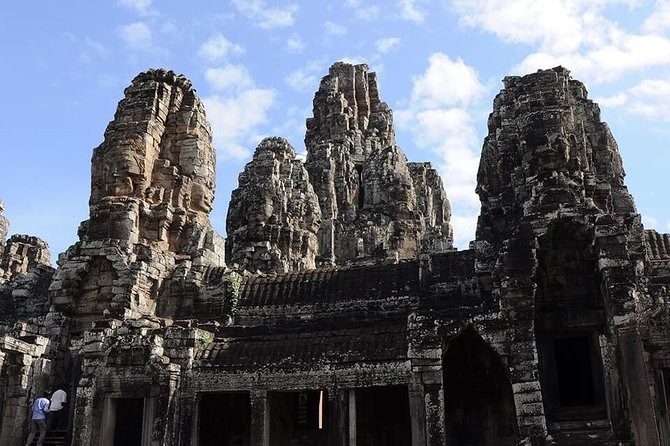
The final stop is Bayon, usually one of the most memorable temples in the Angkor complex. It contains traces of Hindu inscriptions along with Mahayana and Theravada Buddhist inscriptions, showing how religious life changed over time.
Bayon is famous for its carved faces, but do not stop at the first tower. The temple has many corners, galleries, and passages to explore. The plan allows a few hours here, which is appropriate. You need time to move through the tight interior, look up at the faces, and study the lower carvings.
Bayon can feel confusing because its towers and corridors crowd together. That is where a private guide makes a real difference. You can stop to ask what you are seeing instead of trying to decode the site from a brief printed description.
Ending here is a strong choice. After two days of temples with different designs and moods, Bayon brings you back to the power of royal construction, religious change, and close-up stone carving.
What your $98 includes, and what it does not
The tour includes a guide, cold water, transport suited to your group size, and pickup from your Siem Reap hotel. It is a private activity, so only your group participates. That is useful if you want to ask questions, pause for photographs, or avoid being held up by a large party.
The $98 price does not include:
- The 3-day temple pass, listed at $62 per person
- Food and drinks
- Accommodation
- Personal expenses
The pass is the biggest budget point. Add it before comparing this tour with other options. Once you include the pass, meals, and drinks, the total cost is notably higher than the advertised tour price.
Still, the value is solid if you want transport and guiding handled for two full days. Hiring separate rides and arranging the temples yourself may look cheaper at first, but you would need to manage the route, timing, and explanations. The tour also reduces the risk of missing a less central site such as Banteay Srei or Banteay Samre.
Who will get the most from this temple tour
I would recommend this experience to you if you have two days in Siem Reap and want to see both headline temples and smaller sites. It suits people who prefer a private setting, especially couples, families, or friends who want control over questions and pauses.
It is also a good fit if you care about the story behind the buildings. The strongest praise for the tour centers on the guide, with Sam singled out for storytelling and photography. Another assessment describes the guide as personable and well informed, making the long sightseeing days easier to enjoy.
You may want a different plan if you dislike walking, steep steps, or a packed schedule. The route is efficient, but eight temples in two days is still a lot. It is not a relaxed hotel-and-pool holiday.
Confirmation is provided at booking. Most people can participate, and the tour is private, but you should be realistic about uneven temple surfaces and the climb at Pre Rup. You can cancel for a full refund up to 24 hours before the start time. Changes or cancellations made inside that window are not accepted for a refund.
Should you book the Eight Temple Tour?
Book it if you want a broad, well-organized look at Angkor with private transport and a guide who can bring the stones to life. The route is especially strong because it combines Banteay Srei’s fine pink sandstone, Ta Prohm’s jungle setting, Angkor Wat’s scale, and Bayon’s carved faces.
Before paying, confirm the sunrise option, the pickup time, and who will guide your group. Also add the $62 temple pass to your budget. If you accept the early starts, long walks, and extra pass cost, this is a practical way to see eight important temples without spending your limited Siem Reap time sorting out transport.
FAQ
How many temples does the tour visit?
The itinerary includes eight temples: Pre Rup, Banteay Samre, Banteay Srei, Ta Prohm, Banteay Kdei, Angkor Wat, Preah Khan, and Bayon.
Is the tour private?
Yes. Only your group participates, and private transport is provided.
Is hotel pickup included?
Yes. Pickup from your Siem Reap hotel is included. The listed meeting location is Siem Reap in Siem Reap Province.
Is the temple pass included in the $98 price?
No. The 3-day temple pass costs $62 per person and is not included.
Are meals and drinks included?
No. Food and drinks are not included. Cold water is included.
Is sunrise included?
The experience is titled with an optional sunrise, but the supplied tour details do not confirm the exact sunrise arrangements. Ask Angkor Pura Tours about the option before booking.
What should I wear?
You must cover your shoulders and knees to enter the temples.
Can I cancel for a refund?
Yes. You can cancel at least 24 hours before the experience starts for a full refund. Cancellations or changes made less than 24 hours before the start time are not accepted for a refund.
Just added around Siem Reap
- Twilight Tastes of Siem Reap Include Dinner★ 5.0 · 13 reviews
- Ultimate Sunrise to Angkor Wat, Angkor Thom and Bayon Temple★ 5.0 · 3 reviews
- Trekking Tour at Phnom Kulen National Park from Siem Reap★ 5.0 · 3 reviews
- Professional Photo Shoot in Angkor Archaeological Park, Siem Reap★ 5.0 · 42 reviews
- Full-Day Private Tour of Angkor Wat with Pick Up★ 5.0 · 12 reviews
- Unveiling 2 Days Private Angkor Wat/Beyond In Sunrise/Sunset Tour★ 5.0 · 48 reviews
- Siem Reap City Tour with War Museum and Killing Field★ 5.0 · 27 reviews
- Private Day Trip to Angkor Temples with Expert Guide★ 5.0 · 4 reviews
Temple Tours, compared.
Angkor Wat Sunrise & 3 Main Temples with Breakfast – Small Group
Read our review →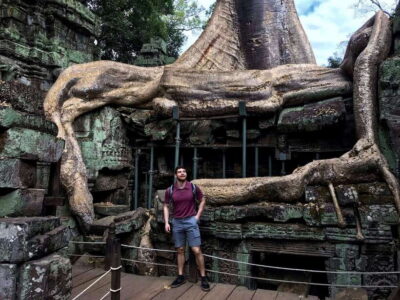
Full Day Angkor Wat Temple Experience with Sunset
Read our review →
2 Days Exclusive Temple Highlights with Sunset and Sunrise Tour
Read our review →
Full-Day Banteay Srei & 4 Temples – Grand Tours Join-in Tour
Read our review →
Angkor Sunrise 1- or 2-Day Guided Temples Tour
Read our review →
Angkor Wat Sunrise Explore The Most Iconic Temples
Read our review →
Koh Ker Temple Group & Beng Mealea Full-Day Join-in Tour
Read our review →Browse the lists this tour appears in