
Reviewed · ANGKOR WAT TOURS
Siem Reap: Angkor Wat 2-Day Tour with Sunrise and Sunset
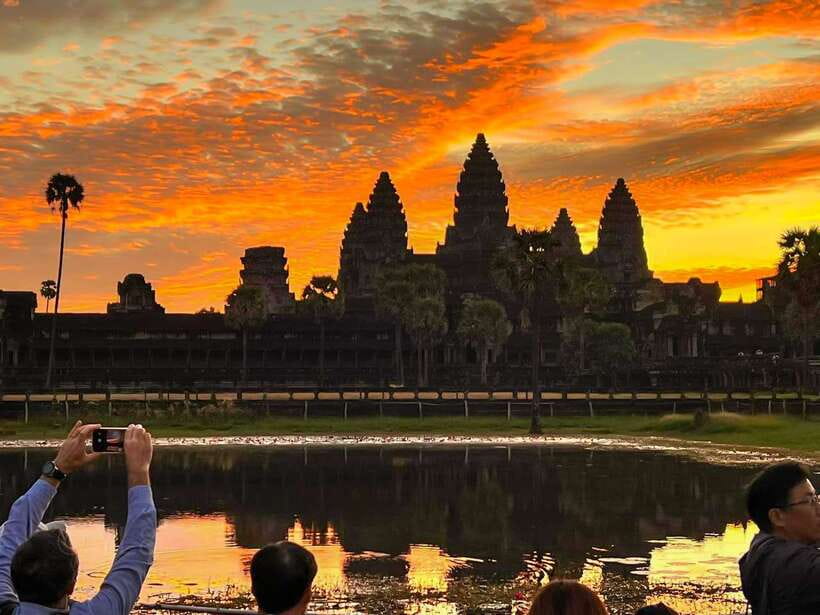
Angkor Wat at sunrise is the headline, but the real strength of this tour is the amount of ground it covers without leaving you to decode the stones alone. In two long days, you visit 11 temples, from the famous towers of Angkor Wat and the tree-covered corridors of Ta Prohm to quieter ruins that give the site room to breathe.
I like the clever split between the early small tour and the later big tour. I also like the practical care: air-conditioned vans, cold bottled water, and wet towels matter after hours on dusty paths. The catch is simple: these are long, hot days, with day one beginning around 4:30am and day two ending near 7:00pm.
Key points to know before booking
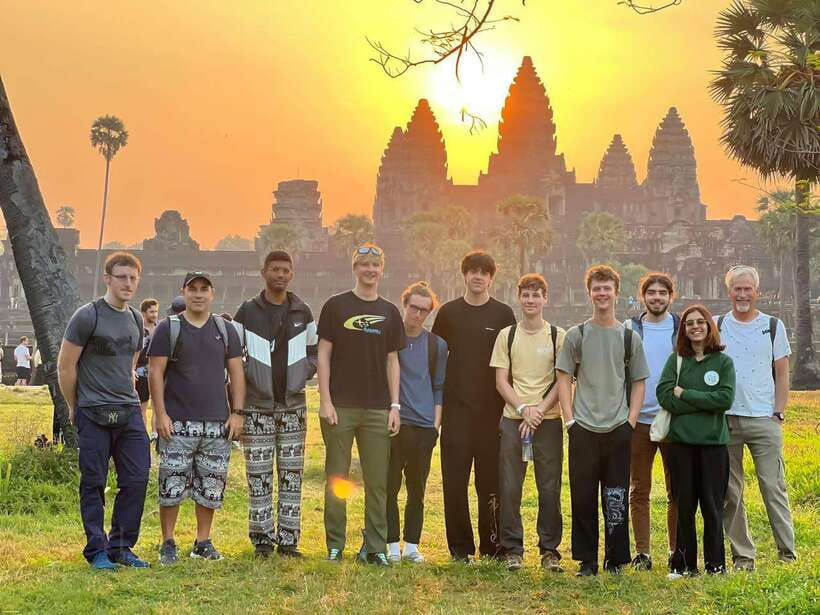
- Sunrise starts around 4:30am: You reach Angkor Wat before the heat builds, with time to find good viewpoints.
- Eleven temples in two days: The route covers the essential monuments and several quieter sites beyond the main circuit.
- Guides make the stones readable: Guides including Sary, Sok, Sam, Vone, Pheap, and Nick, also known as Kosal, explain history, religion, myths, and design.
- The second day is not an afterthought: Preah Khan, Neak Pean, Ta Som, East Mebon, and Pre Rup offer a calmer look at Angkor.
- Cooling breaks are built in: The air-conditioned minibus, chilled water, and refreshing towels are welcome after each stretch of walking.
- Budget price, extra costs: The $34 fee covers the tour service, but you still need an Angkor temple pass and money for meals.
Why this two-day Angkor plan works
Angkor is not one temple. It is a huge archaeological park with monuments spread across a wide area, and the difference between seeing it with a guide and seeing it alone can be enormous. Without context, you may notice towers, carvings, and tree roots but miss why each place was built and how the temples connect to Khmer kings and religious life.
This tour gives you a useful framework. Day one handles the famous names: Angkor Wat, Ta Prohm, Bayon, Ta Keo, and the South Gate of Angkor Thom. Day two moves toward the temples on the larger circuit, where the mood is often quieter and the structures feel less familiar.
The $34 price is good value if you want transport, a guide, and a full introduction to the park. It is not the total cost of the visit because the entry pass and meals are separate. You also need to accept the pace. Eleven temples is a serious dose of stone, steps, stories, and sun.
The experience is offered as a private or small-group tour. That gives you more flexibility than a large coach trip, though the exact group size can vary. The English-speaking guides are a major part of the value. Sary, Sok, Sam, Vone, Pheap, Nick, Sayon, John, Heang, and others are praised for clear explanations, good humor, timing, and help with photographs.
More ways to walk into Angkor Wat:
- Angkor Wat Sunrise or Sunset Tour with Guide from Siem Reap
★ 5.0 · 12,109 reviews - Siem Reap: Angkor Wat: Small-Group Sunrise or Sunset Tour
★ 5.0 · 9,444 reviews - Siem Reap: Full-Day Angkor Wat Guided Tour with Sunset
★ 4.9 · 3,803 reviews
Day one: Angkor Wat before the heat
Pickup begins very early, around 4:30am. Have your clothes ready the night before, charge your phone, and keep water and sunscreen within reach. The first few hours are cooler than the afternoon, which is one reason the early start is worth the lost sleep.
Angkor Wat at sunrise can be spectacular, but nature does not take reservations. Clouds may soften the colors or hide the sun altogether. Even on a disappointing morning, the temple itself remains an extraordinary sight, with its long causeway, massive moat, galleries, and tall central towers.
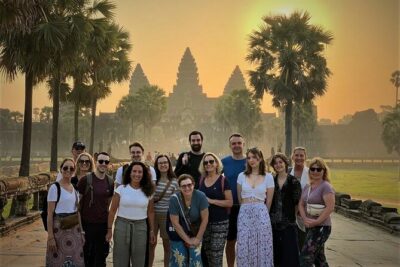
Your guide can also help with the practical side of the morning. The best photo position depends on the light, the crowds, and the view across the water. Guides such as Pheap and Nick are especially noted for finding good viewpoints and taking group photographs, which is useful when you are trying to appear in the picture rather than hold the phone at arm’s length.
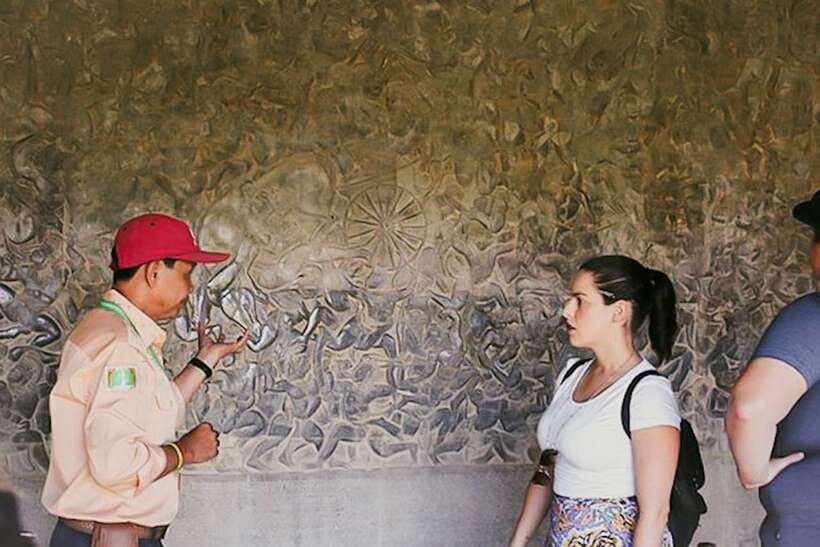
After sunrise, you explore Angkor Wat more fully. This is where a guide earns the fee. The walls carry scenes from Hindu stories, battles, processions, and court life, but the details are easy to pass without explanation. Expect a mix of walking, stopping for stories, and climbing steps where permitted.
The morning schedule is efficient rather than leisurely. You see a lot before returning around 1:00pm, or sometimes a little later depending on the group. That early finish gives you a chance to rest in Siem Reap, though do not assume the morning will feel easy. You will still be tired after the pre-dawn pickup and several hours on foot.
Ta Prohm and the power of trees
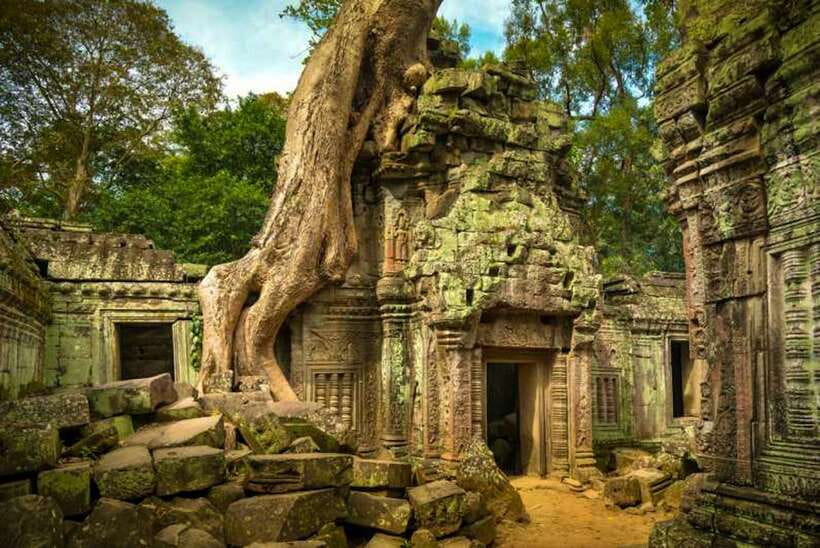
Ta Prohm is famous for its appearance in the Tomb Raider film, but its appeal does not depend on cinema. Trees push over walls, roots grip galleries, and stone corridors open into pockets of shadow. The effect is dramatic because nature and architecture are visibly negotiating with each other.
The temple can be crowded, especially around the best-known tree-covered sections. The tour aims to arrive early compared with some other group routes, which may help with photographs and movement through the site. Still, you should expect other people at the popular viewpoints.
Look closely at the carvings rather than racing from one photo stop to the next. A guide can point out dancers, religious figures, and changes in construction. The ruins make more sense when you understand that this was not simply a deserted building swallowed by forest, but part of a planned religious and political world.
Bayon, Ta Keo, and the South Gate
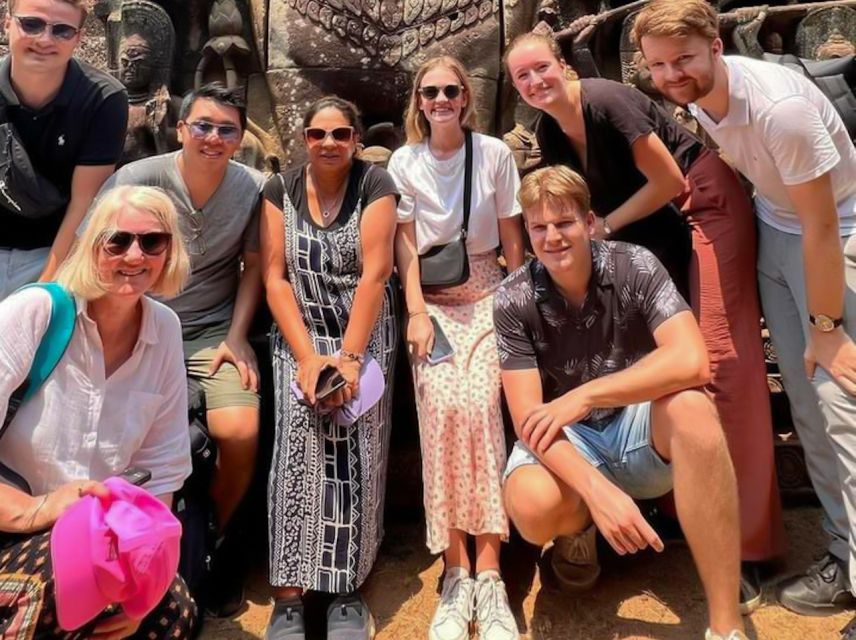
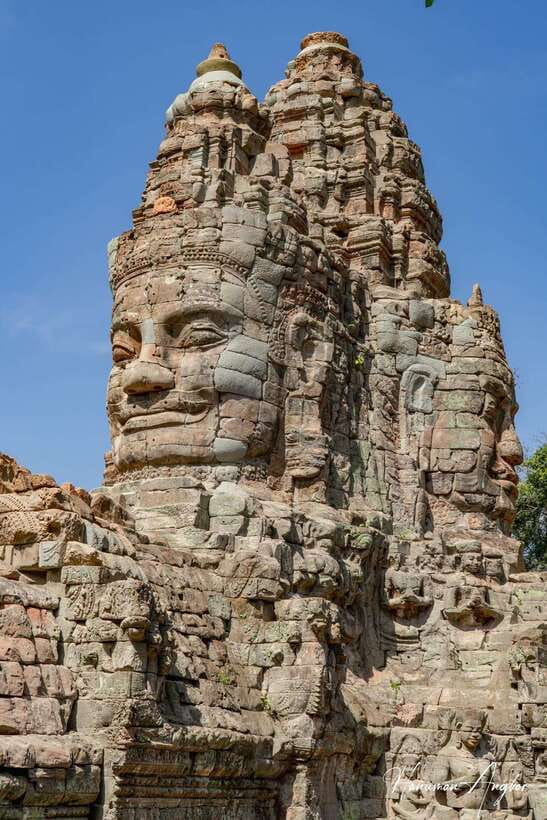
Bayon is one of the most memorable stops because of its giant smiling faces. The towers seem to watch from every direction, and the close-set galleries can feel almost maze-like. This temple was built during the reign of Jayavarman VII and is described on the tour as the only Buddhist state temple and the last major temple built in the Angkor empire.
The faces are the visual hook, but the surrounding carvings reward patience. Your guide may connect the architecture with the religious and political ideas of the period. Guides such as Sok, Sam, and Vone are praised for making those connections clear without turning every stop into a lecture.
Ta Keo gives the day a different physical character. This 10th-century mountain temple rises in steep levels, so you should wear sensible shoes and take your time on the steps. It is a good reminder that Angkor is not only about delicate carvings. Some monuments impress through height, weight, and the effort needed to reach them.
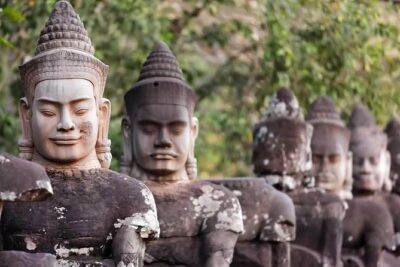
The South Gate of Angkor Thom is a fitting final stop for day one. A bridge lined with gods and demons leads toward the gate, with two rows of figures holding the body of a seven-headed naga. It is a strong visual introduction to Angkor Thom and a useful place to hear about the symbolism of the figures.
By the end of this day, you have seen the monuments most people associate with Angkor. You will also understand why the tour starts early. The same route in the midday heat would be harder, slower, and less pleasant.
More early starts around Siem Reap:
- Angkor Wat Sunrise tour with Small – Group and Guide tours
★ 5.0 · 3,655 reviews - Angkor Wat Highlights and Sunrise Guided Tour from Siem Reap
★ 5.0 · 3,213 reviews - Full-Day Angkor Wat Sunrise Private Tour with Guide from Siem Reap
★ 5.0 · 2,920 reviews - Angkor Wat Sunrise & 3 Main Temples with Breakfast – Small Group
★ 5.0 · 2,857 reviews
Day two: the quieter circuit
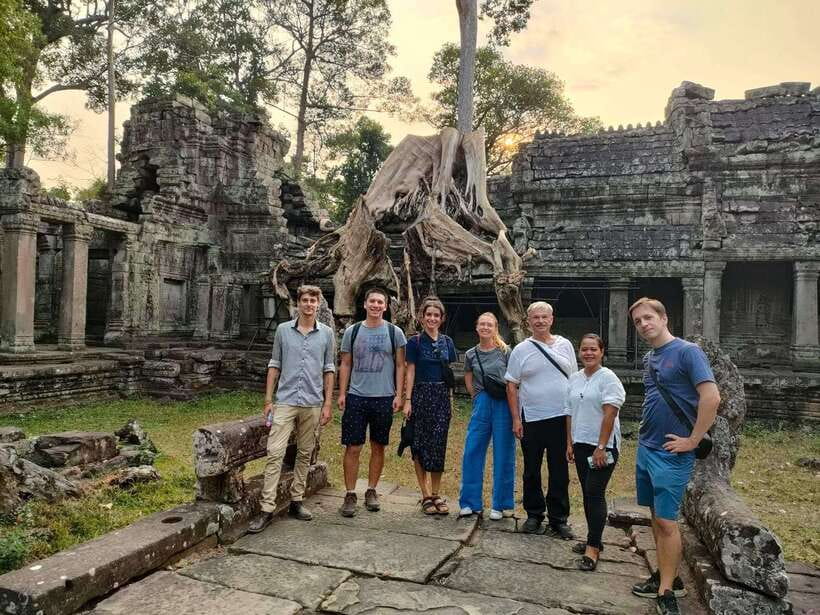
Day two begins around 10:30am and runs until roughly 7:00pm. That later start is welcome after sunrise, but do not mistake it for an easy day. The afternoon heat can be intense, and the final return is timed around sunset.
This day visits temples that are less famous than Angkor Wat and Bayon but essential for understanding the scale and variety of the Angkor complex. I often prefer this kind of route because you can spend time looking without feeling that every stop is a race toward the next famous photograph.
Preah Khan
Preah Khan is described as the largest temple on this circuit. Its long passages, courtyards, carvings, and partially restored sections give you a sense of a busy religious complex rather than a single tower in isolation.
This is a good place to ask your guide about how different areas were used. The temple was built by King Jayavarman VII for his father, so it carries both a religious purpose and a royal family connection. The size can be difficult to grasp at first, and a guide helps you read the plan as you move through it.
Neak Pean
Neak Pean sits on an island surrounded by water. During the Angkor period, the water around the temple was used for bathing and health, giving the site a different feel from the dry stone terraces elsewhere.
The approach itself is part of the experience. You see the temple from across the water before reaching the central structure, so it offers a pause from climbing and enclosed corridors. Depending on the season and conditions, the water may shape how much detail you can see, but the setting remains distinctive.
Ta Som
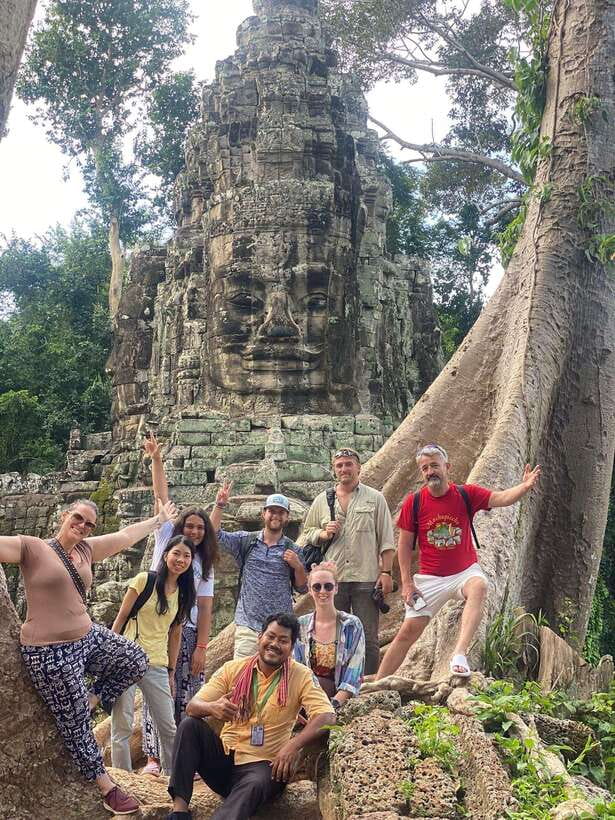
Ta Som is known for the large tree growing over its eastern gate. It is smaller than some of the major temples, but that is part of its charm. The tree and the gate create a memorable frame, while the carvings of dancers with long hair add detail to the stonework.
The temple was built for the king’s sister. That family connection gives the stop more meaning than a quick photograph alone. Take time to look at the sculpted figures before moving on.
East Mebon
East Mebon was built for the ancestors and once sat in the middle of a reservoir. Its early 10th-century date makes it useful for seeing how Angkorian temple design developed over time.
You may notice the different sense of scale here. The original water setting is no longer experienced in the same way, but the temple still helps you imagine how reservoirs shaped the ancient city. This is one of the stops where a guide’s explanation adds real value because the original setting is not obvious from the surviving stone.
Pre Rup
Pre Rup was built by a king for himself. Its high brick and stone levels create a strong viewpoint, and the structure is often mistaken for a crematorium because of a coffin-like stone feature.
The tour explains that this feature was used by Hindus for meditation during the full moon. That small detail is a good example of why you should not judge a temple’s purpose by appearance alone. Pre Rup is also a demanding stop in the heat, so bring the water provided and use the breaks rather than trying to push through.
Phnom Bakheng and sunset
Phnom Bakheng sits on a hill, and its 33 towers represent the heavens. The climb adds effort at the end of an already full day, but it also gives the final stop a clear sense of occasion.
The tour description presents sunset as the closing experience on day two. Exact viewing conditions depend on weather and timing, so do not treat a perfect orange sky as guaranteed. The value is in ending among the temples as the light changes, after you have spent the day seeing how many different forms Angkor can take.
Guides, transport, and the human side of the tour
The guide quality is one of the strongest reasons to choose this experience. Sary is praised for clear English and sharp observation. Sok is described as energetic, patient, and attentive to the group. Sam is noted for explaining history and religious context with a calm, distinctive delivery, while Vone combines storytelling, humor, and help with photographs.
Pheap, also called Pip in some bookings, is known for finding sunrise viewpoints, taking photos, and explaining daily life and religion. Nick, also known as Kosal, is praised for keeping the day organized and adding humor when the 4:00am start begins to hurt.
Those details matter because Angkor can become tiring and confusing. A good guide keeps the group moving while allowing time for questions, rest, and photographs. One family also received extra patience when a child struggled in the heat, and guides have helped people with sore knees and feet manage the steps.
Transport is by air-conditioned minibus, with hotel pickup and drop-off included. The cool van is more than a minor comfort. After walking across exposed temple grounds, the short rides become recovery periods. Chilled bottled water and refreshing wipe towels are provided, often at just the right moment.
The main transport caution is pickup timing. Be ready 30 minutes before the stated start time and provide your hotel address accurately. One booking had a pickup-time communication problem, so it is sensible to confirm the schedule rather than relying on a last-minute assumption.
Heat, clothing, meals, and the temple pass
Wear comfortable clothing that covers your shoulders and knees. Shorts, short skirts, and sleeveless shirts are not allowed, so pack a light, breathable outfit that still meets the temple rules. Sunglasses, sunscreen, and a charged smartphone are practical essentials.
Meals are not included. Breaks for food are part of the day, but you pay for your own meals. One guide was praised for stopping at two good restaurants with authentic Khmer food, though lunch can take longer than some people prefer. If you value maximum temple time, ask how long the meal break will be.
You must buy the Angkor Archaeological Park pass yourself. It can be purchased online through the Cambodian government website or at the ticket office after pickup, depending on the arrangement. Since the pass is separate from the $34 tour price, include it in your budget before booking.
The information supplied for this activity gives conflicting accessibility notes: it says wheelchair accessible in one place but also lists the tour as unsuitable for wheelchair users and people over 70. The temple grounds include uneven paths and steps, so anyone with mobility concerns should confirm suitability before paying.
Who should book this Angkor tour?
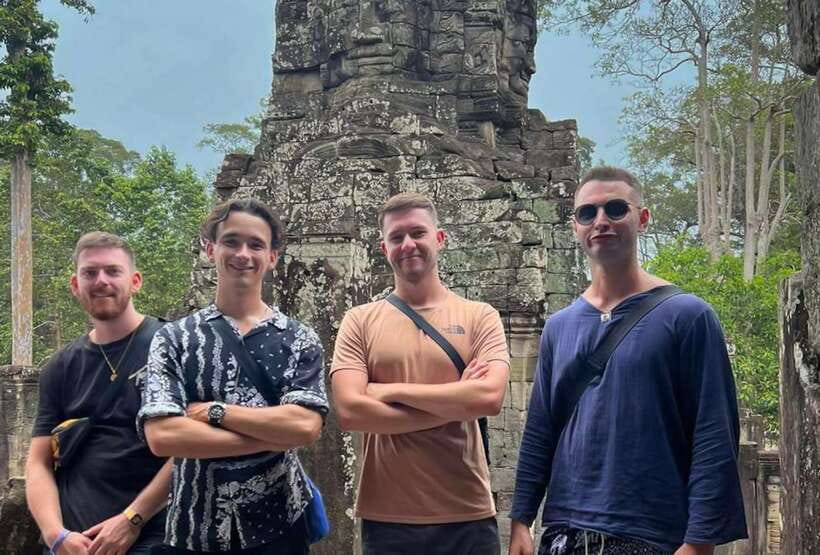
I would choose this tour if you have at least two full days for Angkor and want the major temples explained in plain English. It is particularly useful for solo visitors who want shared transport and company, and for first-time visitors who do not want to arrange routes between 11 separate monuments.
It suits people who value history, photography, and a packed schedule. The guide can point out small carvings, explain Hindu and Buddhist ideas, and help with photographs at the best-known viewpoints.
I would think twice if you dislike early mornings, hot walking, long days, or group timing. The tour covers a lot, but it cannot give every temple the leisurely attention you might have with a private guide and a slower plan. You also need to budget separately for the pass and meals.
Should you book it?
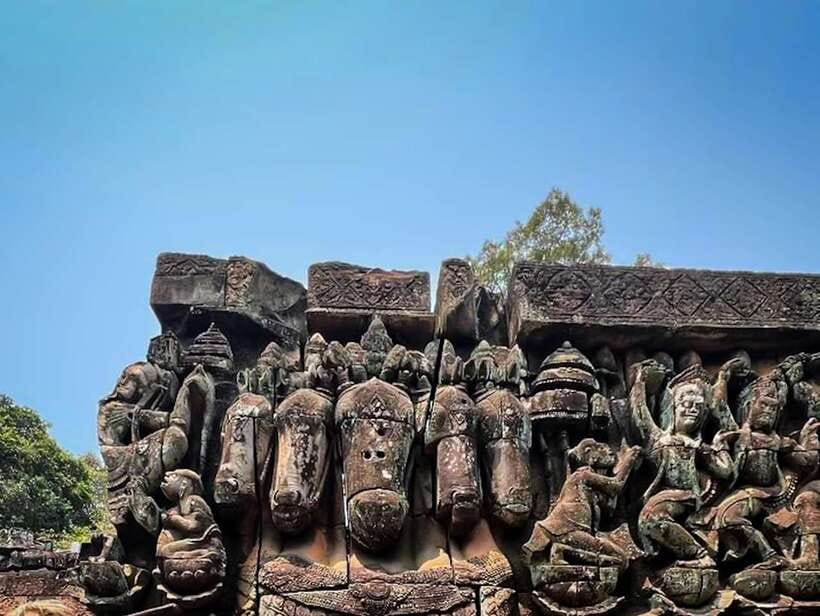
Book this two-day Angkor tour if you want strong coverage for a low tour price and appreciate having the ancient Khmer world explained as you go. The combination of Angkor Wat sunrise, Ta Prohm, Bayon, the quieter second-day circuit, and sunset gives you a well-rounded first look.
The best reason to book is not simply the number of temples. It is the pairing of patient, engaging guides with cool transport and a route that makes room for both famous monuments and less crowded ruins. Just prepare for the early alarm, dress correctly, bring sun protection, and keep your expectations realistic about weather and crowds.
FAQ
How much does the two-day Angkor tour cost?
The tour costs $34 per person. The Angkor Archaeological Park entry pass and meals are not included.
How long does the tour last?
The experience takes place over two days. Day one runs approximately from 4:30am to 1:00pm, while day two runs from about 10:30am to 7:00pm.
Does the tour include Angkor Wat sunrise?
Yes. Day one includes an early visit to Angkor Wat for sunrise.
Does the tour include sunset?
The itinerary includes sunset during the big tour on day two. Sunset conditions depend on the weather and timing.
How many temples do you visit?
The tour includes visits to 11 temples across the two days.
Which temples are included?
The route includes Angkor Wat, Ta Prohm, Bayon, Ta Keo, the South Gate of Angkor Thom, Preah Khan, Neak Pean, Ta Som, East Mebon, Pre Rup, and Phnom Bakheng.
Is the Angkor temple pass included?
No. You must purchase the temple pass separately, either online through the government website or at the ticket office after pickup.
Are meals included?
No. Meals are not included, though the schedule includes occasional food and rest breaks.
What transport is provided?
Hotel pickup and drop-off are included in an air-conditioned minibus. Chilled bottled water and refreshing wipe towels are also provided.
What should I wear?
Wear comfortable clothing that covers your knees and shoulders. Shorts, short skirts, and sleeveless shirts are not allowed. Bring sunglasses, sunscreen, and a charged smartphone.
More Sunset Tours in Siem Reap
- Sunset tour of Kampong Phluk stilts home village on the Tonle Sap
★ 5.0 · 4,865 reviews - Angkor Wat Sunset Small Group Tour with Lunch Included
★ 5.0 · 3,059 reviews - Angkor 2-Day Sunset & Sunrise Small-Group Tour
★ 5.0 · 2,567 reviews - Siem Reap: Angkor Wat Sunrise or Sunset Guided Tour
★ 4.9 · 2,123 reviews
Just added around Siem Reap
- Twilight Tastes of Siem Reap Include Dinner★ 5.0 · 13 reviews
- Ultimate Sunrise to Angkor Wat, Angkor Thom and Bayon Temple★ 5.0 · 3 reviews
- Trekking Tour at Phnom Kulen National Park from Siem Reap★ 5.0 · 3 reviews
- Professional Photo Shoot in Angkor Archaeological Park, Siem Reap★ 5.0 · 42 reviews
- Full-Day Private Tour of Angkor Wat with Pick Up★ 5.0 · 12 reviews
- Unveiling 2 Days Private Angkor Wat/Beyond In Sunrise/Sunset Tour★ 5.0 · 48 reviews
- Siem Reap City Tour with War Museum and Killing Field★ 5.0 · 27 reviews
- Private Day Trip to Angkor Temples with Expert Guide★ 5.0 · 4 reviews
Angkor Wat Tours, compared.
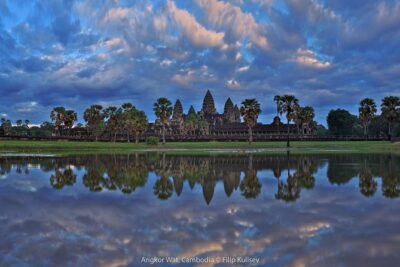
Angkor Wat Sunrise or Sunset Tour with Guide from Siem Reap
Read our review →
Angkor Wat: Small-Group Sunrise or Sunset Tour
Read our review →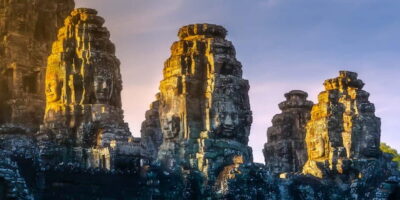
Angkor Wat Highlights and Sunrise Guided Tour from Siem Reap
Read our review →
Angkor Wat Sunrise & 3 Main Temples with Breakfast – Small Group
Read our review →
Angkor Wat Sunrise and Full-Day Sightseeing Tour
Read our review →
Angkor Wat Small-Group Exploration with Expert Guide
Read our review →Browse the lists this tour appears in