
Reviewed · TEMPLE TOURS
2 Days Angkor temples with Sunrise & Sunset
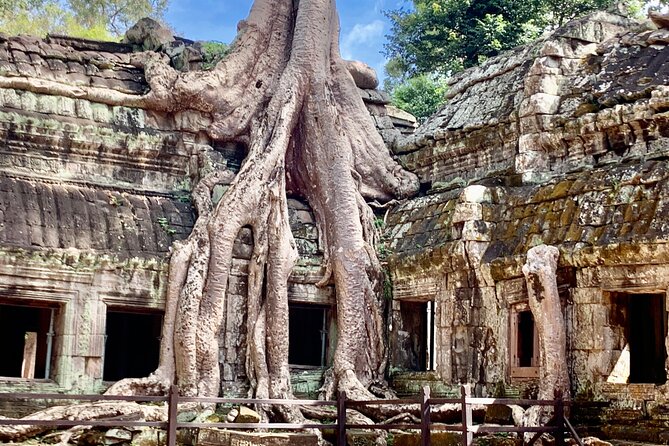
Angkor is not a one-temple attraction. This two-day private tour gives you a broad look at the ancient Khmer capital, from Ta Prohm’s tree-covered ruins to the fine pink carvings of Banteay Srei. You also get the two big light shows: sunrise at Angkor Wat and sunset at Phnom Bakheng or Angkor Thom.
I like the private format, which lets your guide adjust the pace and help shape the route. I also like the practical touches, including an air-conditioned car or minivan, cold drinking water, and guides such as Bunpheng, who is praised for punctuality, photography help, and adapting plans to short stays. The main drawback is the packed schedule, plus the separate $62 three-day Angkor Pass, food, and drinks.
Key points to know before booking
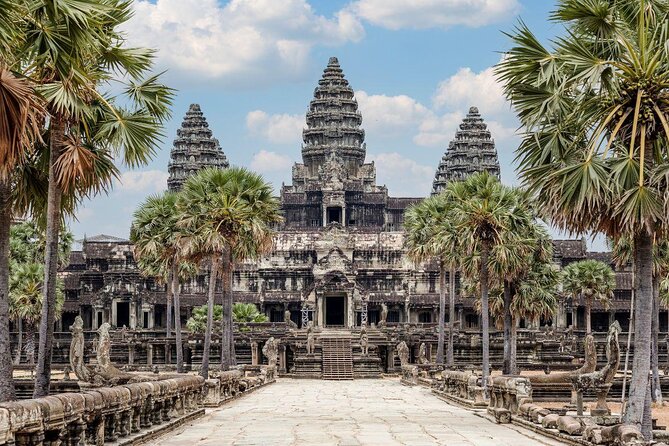
- Sunrise at Angkor Wat: Expect a 4:30 or 5:00 a.m. start, depending on the season, followed by about three hours at the main temple.
- Private transportation: Only your group participates, with an English-speaking guide and an air-conditioned car, minivan, or minibus.
- Strong two-day coverage: The route includes Ta Prohm, Angkor Thom, Bayon, Banteay Srei, Preah Khan, Neak Pean, and several smaller temples.
- Sunset choice: Sunset is planned at South Gate of Angkor Thom or Phnom Bakheng, though the exact choice should be confirmed with the operator.
- Extra cost to budget: The listed $115 price does not include the required three-day Angkor Pass, priced at $62 per person, or meals.
- Dress rules matter: Your thighs and shoulders must be covered inside the temple complex.
Two days that cover the best of Angkor
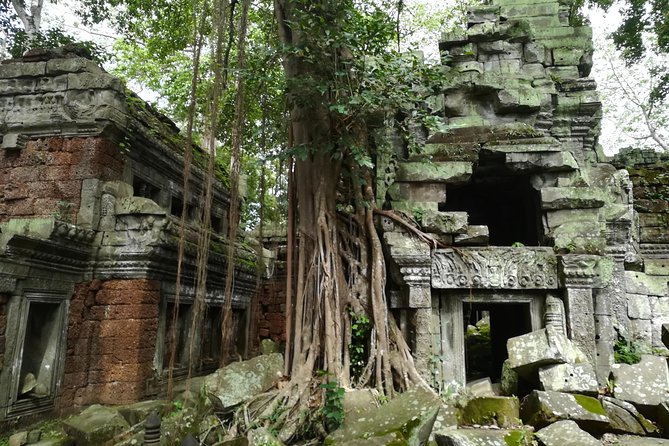
I like this tour because it treats Angkor as a large archaeological area rather than a single stop. You move from early brick temples to grand state monuments, Buddhist monasteries, royal roads, reservoirs, and small shrines.
The route is ambitious. On the first day, you visit Prasat Kravan, Banteay Kdei, Ta Prohm, Ta Keo, and Angkor Thom, with sunset near the end of the day. The second day begins before dawn at Angkor Wat and continues through the eastern and northern temple zones before reaching Banteay Srei and Banteay Samre.
The private setting makes the schedule more workable. You can ask your guide for extra time at a favorite site or keep moving when a smaller temple has given you enough. That matters here because the heat, walking, and repeated stone galleries can wear you down before the day is over.
More early starts around Siem Reap:
- Angkor Wat Sunrise or Sunset Tour with Guide from Siem Reap
★ 5.0 · 12,109 reviews - Siem Reap: Angkor Wat: Small-Group Sunrise or Sunset Tour
★ 5.0 · 9,444 reviews - Siem Reap: Angkor Wat 2-Day Tour with Sunrise and Sunset
★ 4.9 · 4,429 reviews
Day one: brick temples, tree roots, and Angkor Thom
Prasat Kravan, a small start with unusual brick carvings
Prasat Kravan is a compact 10th-century temple with five reddish brick towers on a raised terrace. Its small size makes it a useful first stop, especially before you reach the much larger monuments.
Allow about 20 minutes. The temple is best understood as a quick introduction to early Khmer design rather than a major headline attraction. The admission ticket is not included, so your Angkor Pass covers this stop along with the other temples.
Banteay Kdei and the feel of a former Buddhist complex
Banteay Kdei means Citadel of Chambers. Built in the late 12th and early 13th centuries under King Jayavarman VII, it is a Buddhist temple with a quieter, more enclosed character.
The planned visit lasts about 40 minutes. You will find chambers, passageways, and carved stonework rather than one dramatic central view. This is a good place to listen to your guide explain how temple plans worked, since the layout can be confusing when you first walk in.
More Sunset Tours in Siem Reap:
- Sunset tour of Kampong Phluk stilts home village on the Tonle Sap
★ 5.0 · 4,865 reviews - Siem Reap: Full-Day Angkor Wat Guided Tour with Sunset
★ 4.9 · 3,803 reviews - Angkor Wat Sunset Small Group Tour with Lunch Included
★ 5.0 · 3,059 reviews - Angkor 2-Day Sunset & Sunrise Small-Group Tour
★ 5.0 · 2,567 reviews
Ta Prohm, the day’s most atmospheric stop
Ta Prohm is likely to be one of your main reasons for choosing this tour. Built in the Bayon style as a Buddhist monastery and university, it is known for the trees that have grown through and around the stonework.
You have about an hour here, which is useful. Ta Prohm deserves more than a quick photograph. Look at the doorways, galleries, carved figures, and places where roots press against the walls. The temple’s appeal comes from the tension between architecture and forest growth.
It can also be a busy stop, and the uneven surfaces require attention. Your guide can help you focus on the important sections instead of wandering through every corridor. Guides such as Bunpheng have been praised for taking photographs, a helpful touch at a site where the best angle is not always obvious.
Ta Keo, an unfinished mountain temple
Ta Keo was begun in 975 under King Jayavarman V as a state temple. It was never completed, and that unfinished quality is the point. You can see the large scale of the design without the final layers of decoration found at some other Angkor temples.
The stop is scheduled for about 30 minutes. Ta Keo gives you a useful contrast with Ta Prohm. Instead of roots and intimate galleries, you get a strong, geometric temple mountain. The climb and stone surfaces may feel demanding, so take care and follow the guide’s advice about where to walk.
Angkor Thom, more than just the Bayon
You have about two hours in Angkor Thom, the former capital of the Khmer Empire. This is not one building but a broad historic area containing the South Gate, Bayon, the Royal Palace area, the Terrace of the Elephants, and the Terrace of the Leper King.
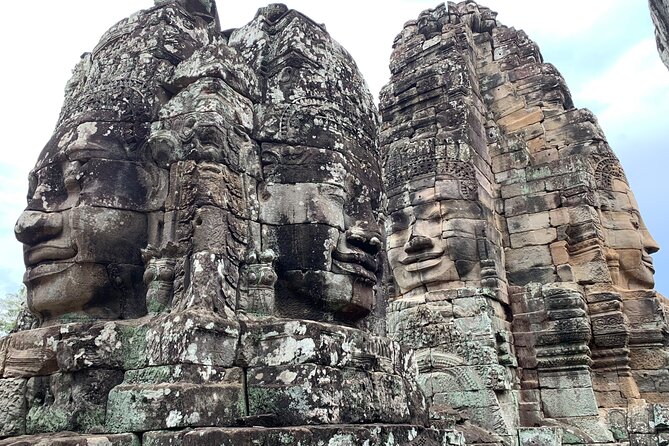
The South Gate makes a memorable entrance, with a bridge and monumental figures leading toward the old city. Inside, Bayon is the major attraction. Its towers carry the famous serene faces, and the close-packed galleries can feel like a stone maze.
Use the two-hour visit carefully. The itinerary includes several Angkor Thom sights, so you may not have time to study every carving. Ask your guide which sections best match your interests. If you care about architecture, focus on the temple layout and towers. If you prefer daily life and royal ceremony, spend more time at the terraces.
Sunset at Phnom Bakheng or the South Gate
The tour plans sunset at the South Gate of Angkor Thom or Phnom Bakheng. These are different experiences. The South Gate gives you a final look at the monumental entrance, while Phnom Bakheng is a temple mountain dedicated to Shiva, built by King Yasovarman near the end of the 9th century.
Phnom Bakheng sits on a hill, so the stop may feel more physical after a long day. The plan allows about 40 minutes. Confirm the sunset location and timing with your guide, since the description names both options.
The advertised meeting time is 9:00 a.m., but a sunrise day must begin much earlier. This is an important detail to settle before departure. Ask for the exact pickup time for day one and the early start for day two.
Day two: Angkor Wat at sunrise and the eastern temples
Angkor Wat, worth the early alarm
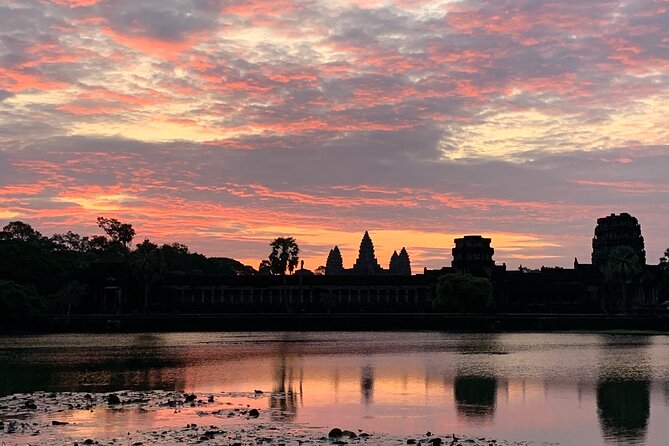
The second day begins around 4:30 or 5:00 a.m., depending on the season. You watch the sunrise first, then spend roughly three hours exploring Angkor Wat itself.
That early start is demanding, but it gives the day a clear purpose. Angkor Wat is the largest religious structure in the itinerary and needs time. After the first view across the water, you move into the main temple, where galleries, towers, courtyards, and carved scenes reward a slower pace.
Do not treat sunrise as the whole Angkor Wat visit. The colors over the towers may be brief or muted, but the temple remains the main event. Wear suitable clothing and shoes, carry only what you need, and save energy for the long interior visit. Your guide can explain the religious design and point out details that are easy to miss from the central approach.
Pre Rup and Eastern Mebon, a point to clarify
The itinerary lists Pre Rup as the second stop, but its description refers to Eastern Mebon. Later, Eastern Mebon appears again as a separate stop. That is a real planning inconsistency, so confirm the exact route before booking or before the second day begins.
Both temples offer useful examples of early Khmer architecture from the 10th century. Pre Rup is a temple mountain, while Eastern Mebon was built on an island in the former East Baray reservoir. The separate listing gives Eastern Mebon about 20 minutes, while the earlier stop is listed at 30 minutes.
This is a good example of why a private tour can help, but also why you should ask direct questions. The operator may intend to visit both sites, or the repeated wording may be a simple error. Clarify it so you know how much time is available.
Banteay Srei, the finest carving stop
Banteay Srei is known as the Citadel of the Women. It is smaller than Angkor Wat and Ta Prohm, but its pink sandstone carvings are among the most delicate in the Angkor area.
The visit lasts about an hour, and that is time well spent. Look closely at the lintels, pediments, figures, and decorative patterns. Fine carving is the reason to come here, so do not rush through the outer paths for a quick central photograph.
Banteay Srei is also the only stop specifically listed as free of an extra admission charge, but you still need the Angkor Pass for the temple complex. The tour description calls it a pink temple, which is a useful expectation: this is a different color and scale from the gray stone monuments around Angkor Thom.
Banteay Samre, a smaller temple with a grand design
Banteay Samre is a Hindu temple built in the early 12th century under Suryavarman II and Yasovarman II, dedicated to Vishnu. The design is often compared with a smaller Angkor Wat.
You have about 40 minutes here. That makes it a satisfying middle stop after Banteay Srei, especially if you want another temple with a strong enclosure and formal layout without the scale of Angkor Wat.
Ta Som, a short visit with a Buddhist focus
Ta Som was built by Jayavarman VII in the late 12th century and dedicated to Lokesvara Buddha. The visit lasts about 20 minutes.
This is a short stop, so listen closely to the explanation and look for the details your guide points out. It is not meant to replace Ta Prohm, but it adds another example of Jayavarman VII’s Buddhist building program.
Neak Pean, a temple on a man-made island
Neak Pean means Entwined Serpents. Built by Jayavarman VII, it sits on a man-made island in the middle of a man-made lake.
The 30-minute visit gives you a change of setting after the enclosed stone temples. The approach and water are part of the experience, and your guide can explain how the temple relates to the surrounding hydraulic system. This is a stop where the setting matters as much as the central structure.
Preah Khan, a fitting final temple
Preah Khan means Royal Sword. Built by Jayavarman VII and dedicated to his late father, it lies north of Angkor Thom and extends across a large complex.
The planned visit lasts about 50 minutes. Preah Khan combines long galleries, courtyards, carved stone, and the feeling of a place that was once much more than a shrine. I like it as a final stop because it brings together many themes from the two days: royal power, Buddhism, layered construction, and nature pressing into old buildings.
What the $115 price really covers
The listed price is $115 per person. It includes an English-speaking guide, transportation in an air-conditioned car, minivan, or minibus, and bottles of cold drinking water.
The required three-day Angkor Pass costs an additional $62 per person. That brings the known cost to $177 per person before food and drinks. Accommodation is also separate.
At that price, the tour is best value for people who want a private guide and broad coverage in only two days. You are paying for transport and planning as much as for the temple visits. A private vehicle is especially useful when your route begins before sunrise and includes distant sites such as Banteay Srei.
The price is less attractive if you only want Angkor Wat and one or two nearby temples. For that plan, a shorter tour may be enough. This package earns its value from the number of sites and the chance to adjust the pace for your own group.
Comfort, timing, and what to wear
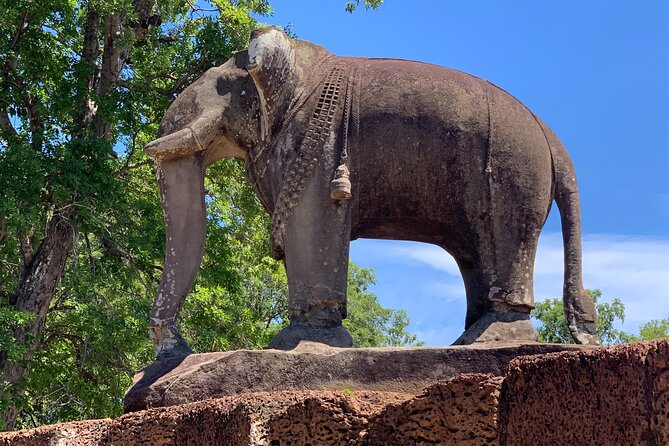
The air-conditioned vehicle matters in Siem Reap’s heat, particularly after long walks on stone surfaces. Cold water is included, but food and other drinks are not, so plan for meals during the two long days.
Dress conservatively. Your shoulders and thighs must be covered when entering the temple complex, and unsuitable clothing can lead to refused entry. Choose light clothing that still meets the rule, and wear shoes suited to uneven temple paths.
The tour is private, and most people can participate. It also offers pickup, though the supplied information gives a 9:00 a.m. meeting time that does not match the sunrise departure. Confirm both pickup times directly, especially for the second morning.
Free cancellation is available up to 24 hours before the start time. Changes or cancellations made within 24 hours are not accepted for a refund.
Who will get the most from this tour
I would choose this tour if you have only two days in Siem Reap and want to see far more than Angkor Wat. It suits couples, families, honeymoon trips, and small groups that prefer a guide focused only on them.
The tour also suits people who want help with photographs and local explanations. Bunpheng is specifically praised for punctuality, professionalism, adapting the plan, and taking photos. The feedback also describes airport pickup and hotel transfer arrangements being customized for a short stay, though you should confirm which services are included in your own booking.
You should think twice if you dislike early starts, long temple days, or frequent stops. The schedule is full, and the sunrise departure makes the second day especially demanding. Ask about trimming the route if your priority is a slower look at fewer temples.
FAQ
Is the Angkor Pass included in the $115 price?
No. A three-day Angkor Pass is listed separately at $62 per person. Food, drinks, and accommodation are also not included.
What time does the sunrise visit begin?
The sunrise departure begins around 4:30 or 5:00 a.m., depending on the season. Confirm your exact pickup time with the operator because the general meeting information also lists 9:00 a.m.
Is this a private tour?
Yes. Only your group participates, and transportation is provided by air-conditioned car, minivan, or minibus.
What does the tour include?
It includes an English-speaking guide, transportation, and bottles of cold drinking water. Temple entrance fees, food, drinks, and accommodation are separate.
What clothing is required?
You must cover your thighs and shoulders when entering the temple complex. If your clothing does not meet the rules, you may be refused entrance.
Can I cancel for a full refund?
Yes, if you cancel at least 24 hours before the experience start time. Cancellations or changes made less than 24 hours before the start time are not accepted for a refund.
Should you book it?
Book this tour if you want a private, efficient introduction to the Angkor area and you are willing to start early and keep moving. The route gives you the major sights, several quieter temples, sunrise at Angkor Wat, and a sunset option, while a guide such as Bunpheng can adjust the experience and help with photographs.
Before paying, confirm the early pickup time, sunset location, and the apparent Pre Rup and Eastern Mebon duplication. Then budget the extra $62 pass and meals. With those details clear, this is a strong choice for a short Siem Reap visit when seeing a wide range of Angkor matters more than taking a slow, leisurely pace.
More Temple Tours in Siem Reap
- Angkor Wat Sunrise & 3 Main Temples with Breakfast – Small Group
★ 5.0 · 2,857 reviews - Siem Reap: Full Day Angkor Wat Temple Experience with Sunset
★ 4.9 · 1,490 reviews - 2 Days Exclusive Temple Highlights with Sunset and Sunrise Tour
★ 5.0 · 1,157 reviews - Full-Day Banteay Srei & 4 Temples – Grand Tours Join-in Tour
★ 5.0 · 1,155 reviews
Just added around Siem Reap
- Twilight Tastes of Siem Reap Include Dinner★ 5.0 · 13 reviews
- Ultimate Sunrise to Angkor Wat, Angkor Thom and Bayon Temple★ 5.0 · 3 reviews
- Trekking Tour at Phnom Kulen National Park from Siem Reap★ 5.0 · 3 reviews
- Professional Photo Shoot in Angkor Archaeological Park, Siem Reap★ 5.0 · 42 reviews
- Full-Day Private Tour of Angkor Wat with Pick Up★ 5.0 · 12 reviews
- Unveiling 2 Days Private Angkor Wat/Beyond In Sunrise/Sunset Tour★ 5.0 · 48 reviews
- Siem Reap City Tour with War Museum and Killing Field★ 5.0 · 27 reviews
- Waterfall & River of 1000 Siva Linga- Kulen Mountain Private Tour★ 5.0 · 3 reviews
Temple Tours, compared.
Angkor Wat Sunrise & 3 Main Temples with Breakfast – Small Group
Read our review →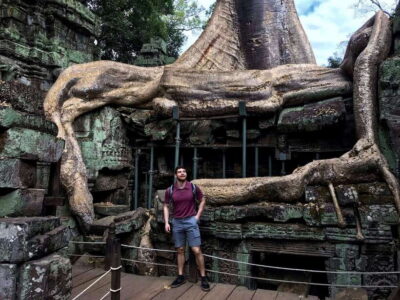
Full Day Angkor Wat Temple Experience with Sunset
Read our review →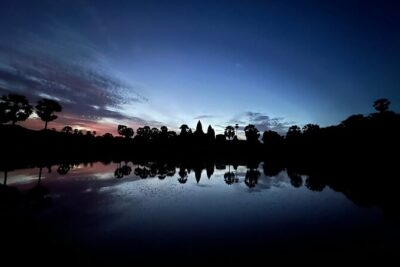
2 Days Exclusive Temple Highlights with Sunset and Sunrise Tour
Read our review →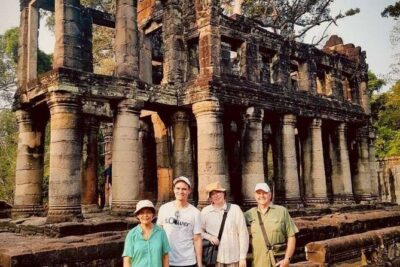
Full-Day Banteay Srei & 4 Temples – Grand Tours Join-in Tour
Read our review →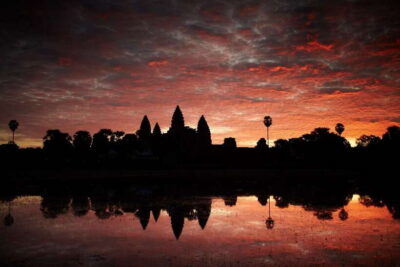
Angkor Sunrise 1- or 2-Day Guided Temples Tour
Read our review →
Angkor Wat Sunrise Explore The Most Iconic Temples
Read our review →
Koh Ker Temple Group & Beng Mealea Full-Day Join-in Tour
Read our review →Browse the lists this tour appears in