
Reviewed · TEMPLE TOURS
2 Days Temples with Sunrise-Small Group
Angkor Wat before sunrise is the hook here, but the real strength is the range. In two days, you see the grandest temple, delicate Banteay Srei, tree-bound Ta Prohm, and the many-faced Bayon. The route also reaches quieter corners such as Neak Pean and Preah Khan.
I like the small maximum group of 15, which gives a guide more room to explain carvings and answer questions. I also like the practical setup: hotel pickup, an air-conditioned vehicle, drinking water, and a licensed English-speaking guide. Sok is specifically praised for explaining the temples, plants, and animals, while Richard handled the driving and kept water and cool flannels ready between stops.
The main catch is cost and timing. The advertised price is $43, but you must add the $62 temple pass, bringing the basic total to $105 before meals. The sunrise morning also requires a very early pickup, even though the general meeting time is listed as 8:00 am, so confirm your exact pickup time.
Key points to know before booking
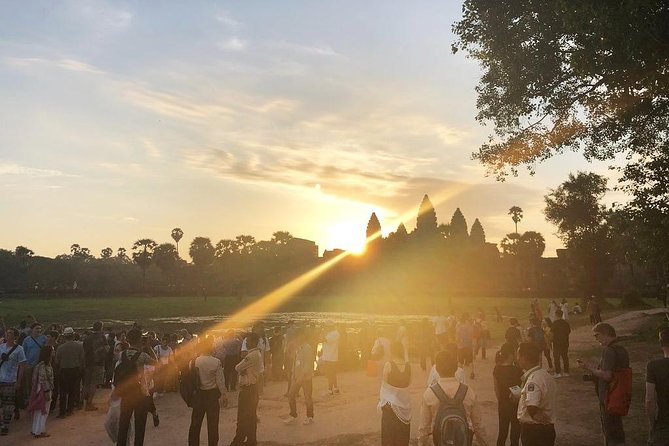
- Angkor Wat starts before dawn: You enter from the less-used eastern side with a torch, then watch the temple change as daylight arrives.
- Banteay Srei is the detail stop: This smaller sandstone temple is known for unusually fine carvings and sits outside Angkor Thom.
- The route covers Angkor’s essential names: Pre Rup, Preah Khan, Neak Pean, Angkor Wat, Ta Prohm, the terraces, and Bayon all fit into two days.
- Your $43 price is not the final price: Add the required $62 two or three-day temple pass, plus meals.
- Transport makes the long days easier: Hotel pickup and drop-off, an air-conditioned vehicle, and mineral water are included.
- The pace favors first-time visitors: You get a broad introduction, but several stops involve walking, uneven stone, stairs, heat, and an early start.
What two days in Angkor really gives you
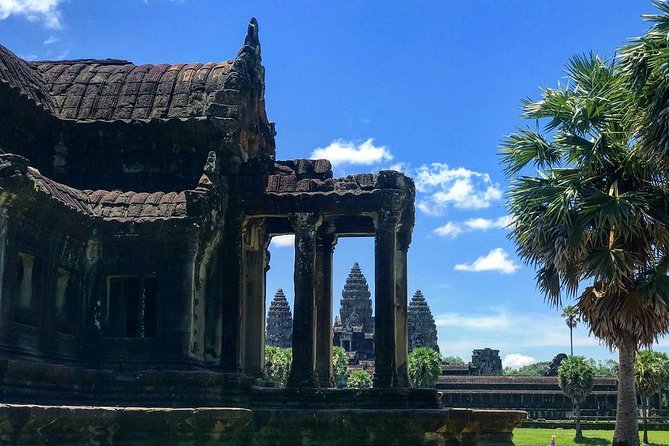
This is a compact introduction to the Angkor complex rather than a slow study tour of every temple. The plan mixes famous sites with less familiar ones, so you get both the grand postcard views and quieter architectural details.
You will spend much of the day walking, standing, and moving over old stone surfaces. Comfortable shoes matter. Shoulders and knees must be covered inside the temples, so light clothing that still meets the dress rule is the sensible choice.
The small-group format helps here. A maximum of 15 people is not a private tour, but it is easier to hear an English-speaking guide than in a large coach group. It also keeps hotel pickups and temple visits more manageable.
The included transport is important because the sites are spread across the Angkor area. You are not arranging separate rides between each temple, and the air conditioning gives you a useful break from Cambodia’s heat. Mineral water is included, and a previous booking specifically praised Richard, the driver, for providing water and cool flannels between stops.
More early starts around Siem Reap:
- Angkor Wat Sunrise or Sunset Tour with Guide from Siem Reap
★ 5.0 · 12,109 reviews - Siem Reap: Angkor Wat: Small-Group Sunrise or Sunset Tour
★ 5.0 · 9,444 reviews - Siem Reap: Angkor Wat 2-Day Tour with Sunrise and Sunset
★ 4.9 · 4,429 reviews
Day one: Pre Rup and the fine carvings of Banteay Srei
The first day begins with Pre Rup, a Hindu temple built as the state temple of King Rajendravarman. You have about 30 minutes here, enough to see the strong brick-and-stone form and get a first sense of Angkor’s temple design.
Pre Rup is a good opening stop because it is less overwhelming than Angkor Wat. Its stepped structure helps you see how Khmer temple builders used height and symmetry to create a sacred center. The short visit also keeps the day moving toward Banteay Srei, the main morning attraction.
Your next stop is Banteay Srei, with about an hour to look around. This is one of the most rewarding stops for anyone who enjoys close-up sculpture. The sandstone carvings are exceptionally detailed, and the smaller scale lets you focus on doorways, relief panels, and carefully worked decorative patterns.
Banteay Srei lies outside Angkor Thom, so the drive adds time to the day. That is a fair trade if you care about carving. You are not seeing another huge enclosure. You are seeing a more intimate temple where the workmanship is the point.
The stop is listed as having no separate admission charge, but the overall temple pass is still required for the tour. Keep your expectations realistic: one hour gives you a clear visit, not time to inspect every carved surface.
Preah Khan and Neak Pean after lunch
The afternoon moves to Preah Khan, where the visit lasts about two hours. This is a longer stop, and it deserves the time. The temple is ruined in places, with stone corridors, broken structures, and tree roots creating a moody setting.
Preah Khan gives you a different experience from Banteay Srei. Instead of concentrating on fine detail alone, you are tracing a large, layered complex whose damaged walls and passages show how time has changed Angkor. Your guide can help you make sense of the layout, since it is easy to lose the main route among the galleries.
Two hours is useful here, but it can also be tiring. You will be on your feet for much of the visit, and the combination of heat, stone, and long corridors calls for water and sturdy footwear. The air-conditioned vehicle is welcome after a stop of this length.
Neak Pean follows, with roughly 50 minutes. This temple sits on an artificial island in the Jayatataka Baray, with the central sanctuary reached across a causeway. The setting is different from Preah Khan’s enclosed corridors, giving the afternoon a change of pace.
Neak Pean is a shorter, more focused stop. You will not spend hours climbing or inspecting a vast complex. Instead, you walk out toward the island and take in the water-centered design. It is a useful inclusion because it keeps the first day from becoming a procession of similarly shaped temple compounds.
Day two begins with Angkor Wat at sunrise
The second day is the demanding one. You leave your hotel before dawn for Angkor Wat, and the exact pickup time should be confirmed because the general tour information also lists an 8:00 am start. For a sunrise visit, your actual hotel pickup must be earlier.
The plan is to enter in darkness from Angkor Wat’s eastern side, described as the less-visited approach. Bring a torch. This is not the moment to rely only on a phone light, especially when walking over uneven ground.
You have about two hours and five minutes at Angkor Wat. Entering before daylight gives you a gradual view rather than an instant full reveal. The galleries, towers, and courtyards take shape as the sky brightens, and the changing light helps you appreciate the scale of the complex.
The sunrise itself is not guaranteed to be dramatic. Weather can affect the experience, and the tour requires suitable weather. Still, the early start has value even on a cloudy morning because you are seeing Angkor Wat at its quietest part of the day.
Angkor Wat is also physically demanding. You will walk across broad approaches and through temple areas, so keep your hands free, wear shoes with a firm sole, and bring a light layer if you dislike the cool air before sunrise. The tour asks you to cover shoulders and knees inside the temples, including this visit.
More Temple Tours in Siem Reap:
- Angkor Wat Sunrise & 3 Main Temples with Breakfast – Small Group
★ 5.0 · 2,857 reviews - Siem Reap: Full Day Angkor Wat Temple Experience with Sunset
★ 4.9 · 1,490 reviews - 2 Days Exclusive Temple Highlights with Sunset and Sunrise Tour
★ 5.0 · 1,157 reviews - Full-Day Banteay Srei & 4 Temples – Grand Tours Join-in Tour
★ 5.0 · 1,155 reviews
Breakfast by Srah Srang, then Ta Prohm
After Angkor Wat, the group stops near Srah Srang for breakfast, with about 50 minutes set aside. Meals are not included, so you have two practical choices: request a breakfast pack from your hotel or order at the local Khmer restaurant.
The hotel breakfast pack is the easiest option if your departure is very early. Ask your hotel the night before, and take food you can eat without fuss after sunrise. If you prefer a hot local meal, ordering at the restaurant gives you that option, but the cost is yours.
Srah Srang is a fitting breakfast stop because it provides a pause after the pre-dawn start. Do not treat this as extra sightseeing time unless your guide says otherwise. The main value is rest, food, and a chance to reset before more walking.
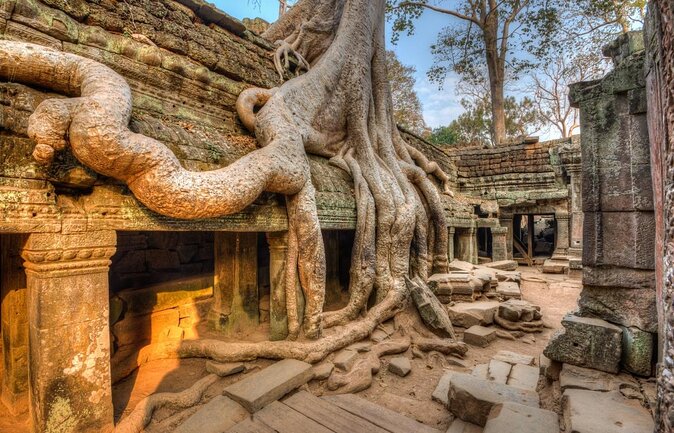
Ta Prohm comes next, with about an hour to explore. This is the temple many people picture when they think of Angkor’s jungle setting. Trees grow through and around the old stonework, and the surviving structures retain a powerful sense of age.
The site was once home to 2,740 monks and has been kept in a condition that preserves much of its early nineteenth-century appearance. That means Ta Prohm feels less tidied than some other major temples. You see fallen stones, narrow routes, and large roots pressing against walls.
The trade-off is crowd pressure. Ta Prohm is famous, so the most recognizable tree and doorway areas can be busy. A local guide can help you move through the site with better timing and point out details beyond the familiar photo spots. Sok is praised for explaining not only temple features but also local plants and animals, which suits a place where nature and stone share the scene.
The terraces and Bayon’s stone faces
The tour then passes the Terrace of the Leper King and the Terrace of the Elephants. The listed time is about 20 minutes, so think of this as a concentrated look rather than a full exploration.
The terraces are important for their carved surfaces and their place within Angkor Thom. You can see them as a visual bridge between Ta Prohm and Bayon, with a short stop that adds context without taking another full hour from the schedule.
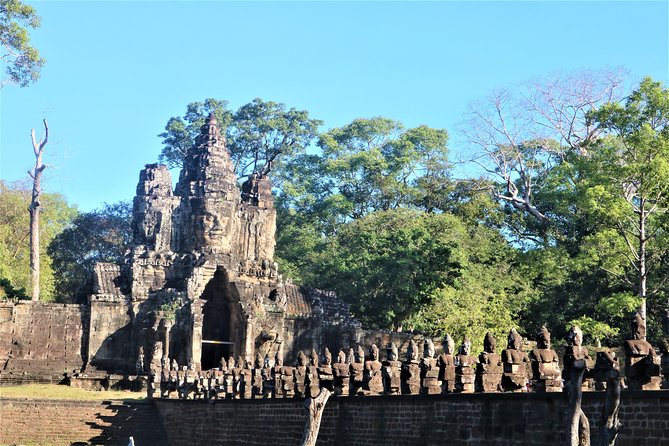
Bayon receives about an hour. Its central towers are covered with more than 200 enormous faces, making this one of the most distinctive temple visits in Angkor. The faces appear from different angles as you move through the structure, so take time to look up and around rather than rushing straight through.
Bayon can be confusing because the towers, galleries, and passageways crowd close together. This is where a guide adds real value. A clear explanation helps you understand what you are looking at instead of seeing only a mass of stone faces.
The day ends after Bayon, with hotel drop-off included. By then, you will have had a long morning, so the schedule is best for someone who wants the major sights in an efficient two-day plan rather than someone seeking a leisurely temple retreat.
Guide, driver, and group experience
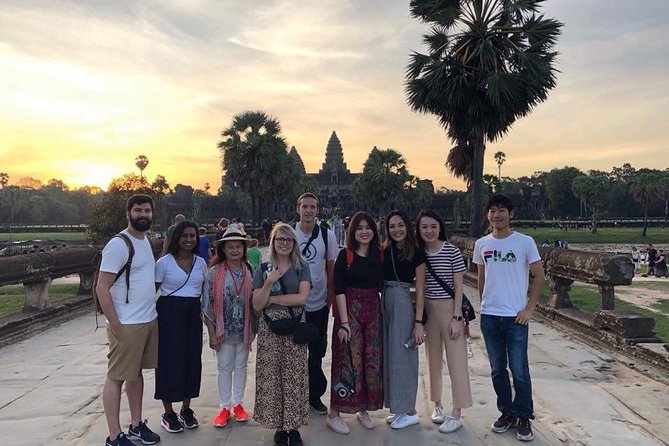
A licensed English-speaking guide is included, and the guide is central to the quality of this tour. Angkor is not difficult to admire, but it can be difficult to understand. A good explanation turns carvings, temple plans, and damaged walls into something more than impressive scenery.
Sok is named as a guide associated with the experience. Specific praise highlights his explanations of the temples, local plants, and animals. That wider focus is useful at Ta Prohm and around the water features at Neak Pean, where the setting matters as much as the structure.
Richard is named as the driver, with practical praise for water and cool flannels between stops. That may sound minor, but after hours in the heat, small comforts matter. The air-conditioned vehicle also gives you a genuine rest period between sites.
The group can include up to 15 people. That keeps the price lower than a private tour, but it means you should not expect the guide to tailor every stop to your personal interests. If you want to linger at one carved doorway for half an hour, a private arrangement would give you more control.
The real price and what is included
The advertised cost is $43 per person. You must add the two or three-day temple pass, listed at $62 per person, making the basic total $105 before meals.
At that combined price, the tour offers solid practical value if you want transport and a guide for both days. You are paying not only for entry into the sites, but also for hotel pickup and drop-off, an air-conditioned vehicle, mineral water, local tax, and two days of organized guiding.
Meals are not included. Breakfast on day two is the most important meal to plan, since the departure is before dawn. Arrange a hotel breakfast pack or budget for the local restaurant near Srah Srang.
The pass is payable directly at the site on the day of the activity. Bring this extra cost into your budget from the start. The low advertised price can look misleading if you overlook the required pass.
Who should book this two-day temple plan
I would choose this tour if you have limited time in Siem Reap and want the essential Angkor names covered without arranging transport yourself. It suits first-time visitors who value a guide’s explanation and prefer a small group to a large coach.
It is also a good fit if you want both famous and quieter sites. Angkor Wat, Ta Prohm, and Bayon provide the major highlights, while Pre Rup, Preah Khan, Neak Pean, and Banteay Srei add variety.
You should think twice if you dislike early mornings, long walking days, or fixed schedules. The sunrise departure is non-negotiable in spirit, and the two days include plenty of standing and walking. Children younger than five are not allowed, and children who do take part must be accompanied by an adult.
You can cancel for a full refund up to 24 hours before the start time. Changes or cancellations inside 24 hours are not refunded, and poor weather may lead to a different date or a full refund.
Should you book it?
Book this tour if you want a practical first look at Angkor, especially if sunrise at Angkor Wat matters to you. The combination of Banteay Srei’s delicate carving, Ta Prohm’s tree-covered ruins, Preah Khan’s worn corridors, and Bayon’s giant faces gives you a strong two-day selection.
Before paying, confirm the pre-dawn pickup time and budget for the separate $62 temple pass and meals. If you want a slower pace, more photography time, or complete control over stops, choose a private tour instead. For a compact small-group introduction with an English-speaking guide, this is a well-planned option.
FAQ
What is included in the $43 tour price?
The price includes two days of temple visits with a licensed English-speaking guide, hotel pickup and drop-off, an air-conditioned vehicle, mineral water, and local tax.
Is the Angkor temple pass included?
No. A two or three-day temple pass costs $62 per person and is paid directly at the site on the day of the activity.
Does the tour include meals?
No. Meals are not included. For breakfast after sunrise, you can request a breakfast pack from your hotel or order at the local Khmer restaurant near Srah Srang.
What time does the tour start?
The general meeting time is listed as 8:00 am, but the Angkor Wat sunrise visit requires a pre-dawn hotel departure. Confirm your exact pickup time before the tour.
How large is the group?
The group has a maximum of 15 people.
What should I wear and bring?
Wear comfortable walking shoes, and make sure your shoulders and knees are covered inside the temples. Bring a torch for entering Angkor Wat before sunrise.
Can I cancel the tour for a refund?
You can cancel at least 24 hours before the start time for a full refund. Cancellations or changes made less than 24 hours before the start time are not refunded.
Just added around Siem Reap
- Twilight Tastes of Siem Reap Include Dinner★ 5.0 · 13 reviews
- Ultimate Sunrise to Angkor Wat, Angkor Thom and Bayon Temple★ 5.0 · 3 reviews
- Trekking Tour at Phnom Kulen National Park from Siem Reap★ 5.0 · 3 reviews
- Professional Photo Shoot in Angkor Archaeological Park, Siem Reap★ 5.0 · 42 reviews
- Full-Day Private Tour of Angkor Wat with Pick Up★ 5.0 · 12 reviews
- Unveiling 2 Days Private Angkor Wat/Beyond In Sunrise/Sunset Tour★ 5.0 · 48 reviews
- Siem Reap City Tour with War Museum and Killing Field★ 5.0 · 27 reviews
- Private Day Trip to Angkor Temples with Expert Guide★ 5.0 · 4 reviews
Temple Tours, compared.
Angkor Wat Sunrise & 3 Main Temples with Breakfast – Small Group
Read our review →
Full Day Angkor Wat Temple Experience with Sunset
Read our review →
2 Days Exclusive Temple Highlights with Sunset and Sunrise Tour
Read our review →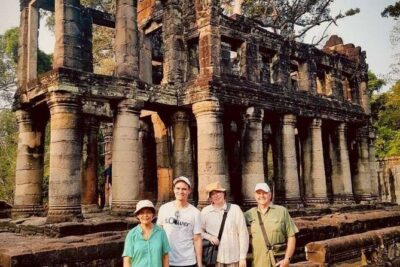
Full-Day Banteay Srei & 4 Temples – Grand Tours Join-in Tour
Read our review →
Angkor Sunrise 1- or 2-Day Guided Temples Tour
Read our review →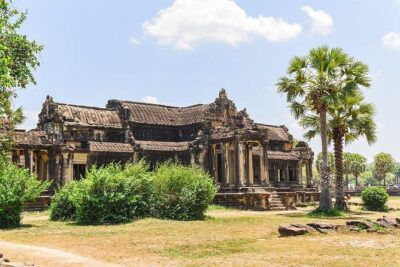
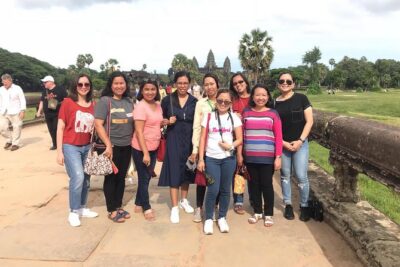
Angkor Wat Sunrise Explore The Most Iconic Temples
Read our review →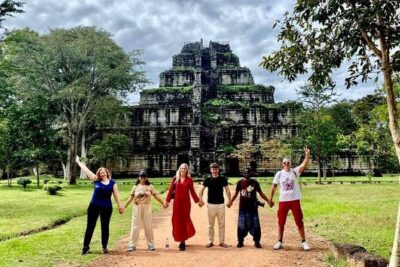
Koh Ker Temple Group & Beng Mealea Full-Day Join-in Tour
Read our review →Browse the lists this tour appears in