
Reviewed · TEMPLE TOURS
3-D Angkor Temples With One Sunrise
Angkor Wat at sunrise is the headline, but this tour gives you far more than one pretty morning. Over three days, you’ll visit the best-known temples, smaller ruins, a working lake community, a local market, a killing field museum, and an artisan workshop. I like the private format, which lets the guide adjust the pace, and I like the range of places covered without making you plan every transfer yourself.
I also like that guides such as Bunleat, Sonoth, Borey, Jimmy, and Vanny Chhoem have been praised for clear storytelling and for adapting to families, older visitors, and children. The main drawback is cost clarity: the advertised $150 covers the guide and transport, but your three-day temple pass and boat trip add $92, before meals and lodging.
Key points
- Sunrise at Angkor Wat: Leave around 5 a.m. for the temple’s famous morning reflection and cooler walking conditions.
- Strong temple variety: See Ta Prohm, Pre Rup, Banteay Samre, Banteay Srey, Angkor Wat, and the Roluos group.
- Tonle Sap beyond the postcard: Visit Kompong Kleang, a stilted and floating village where daily life follows the lake’s water level.
- Private, flexible touring: Only your own group joins, making it easier to slow down, ask questions, or adjust the day.
- Practical extra costs: Budget $62 for the three-day temple ticket and $30 for the boat ride, plus food and accommodation.
- Transport needs confirming: The description refers to a tuk tuk, car, and air-conditioned vehicle, so specify your choice when booking.
Three days that put Angkor in context
A first visit to Siem Reap can become a blur of sandstone towers. This tour helps prevent that by spreading the major sights across three days, then adding village life and modern Cambodian history.
The schedule is demanding, with each touring day lasting about eight hours. You’ll have early starts, plenty of walking, uneven temple paths, and heat to manage. In return, you get time for both the famous monuments and places that explain how people live beyond the archaeological park.
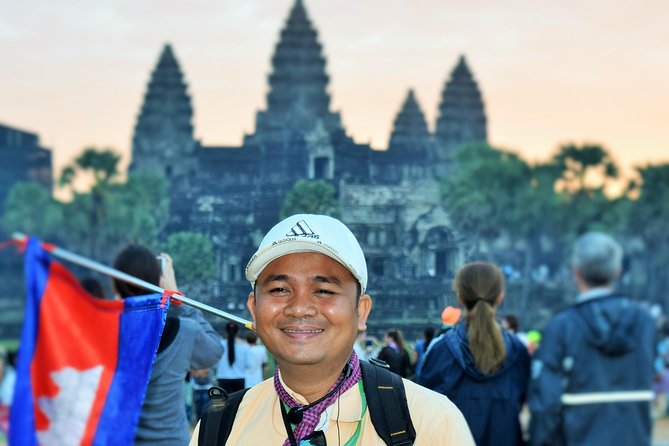
The private setup is a real advantage. You are not working around a large bus group, and the guide can tailor the pace. One guide, Jimmy, has handled groups ranging from young children to people in their seventies. Another guide, Sonoth, helped a family traveling with a one-and-a-half-year-old child. That does not make the ruins effortless, but it shows why a private guide can be useful when your group has mixed ages or different energy levels.
More early starts around Siem Reap:
- Angkor Wat Sunrise or Sunset Tour with Guide from Siem Reap
★ 5.0 · 12,109 reviews - Siem Reap: Angkor Wat: Small-Group Sunrise or Sunset Tour
★ 5.0 · 9,444 reviews - Siem Reap: Angkor Wat 2-Day Tour with Sunrise and Sunset
★ 4.9 · 4,429 reviews
Day one: Ta Prohm, Pre Rup, and the best carved details
The first day begins around 8 a.m. and focuses on several important temples. Ta Prohm is the natural opener. Its broken galleries and tree roots create the image many people carry in their heads before arriving in Cambodia. The roots curl across walls and towers, showing how the forest gradually reclaimed the site after it was abandoned.
Ta Prohm is also one of the most photographed stops, so your guide matters. You need someone who can help you look beyond the famous root-covered doorway and notice the layout, carvings, and changes in light across the ruins. Give yourself time here. A rushed visit reduces the temple to a few photos.
Pre Rup offers a different feel. Its brick-and-laterite structure rises in a more open setting, and the upper levels provide a useful sense of the temple’s form. The climb can be tiring in the heat, so sturdy shoes and water matter. The tour includes cold water, but you should still carry enough for the day.
Banteay Samre is smaller than Angkor Wat, but its design rewards close attention. It gives you a quieter change of pace after the larger temple sites. I like this kind of stop because it breaks up the famous highlights and gives your guide room to explain how temple architecture and decoration vary across the Angkor area.
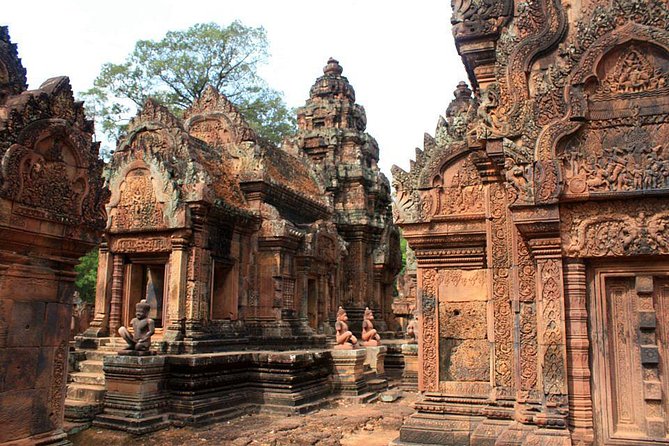
The day ends at Banteay Srey, often called the pink temple because of its warm-colored sandstone. Its carvings are especially fine, with small figures and detailed scenes cut into the stone. It is farther from the central temple circuit than some headline sites, which helps explain the longer eight-hour schedule.
Banteay Srey is not a place to skim. Look closely at the lintels and door frames. The detail is the point. The trade-off is time in the vehicle, but the reward is one of the most finely decorated temples in the area.
Day two: Angkor Wat before the heat
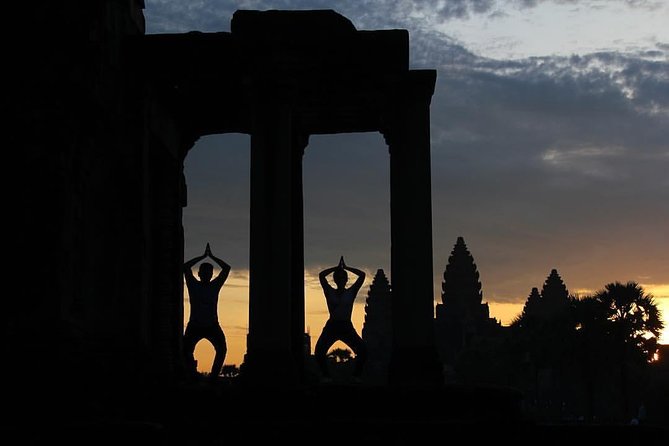
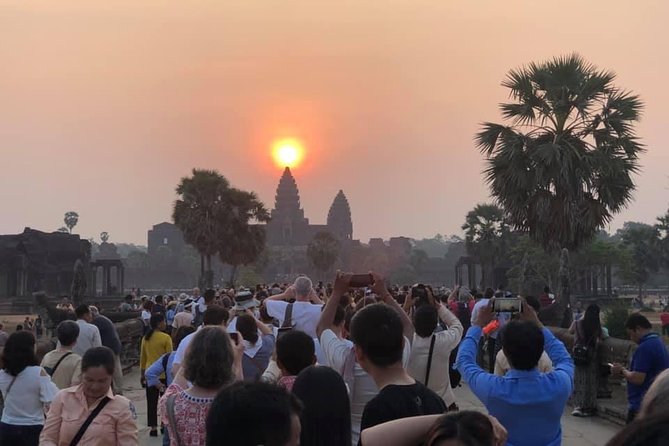
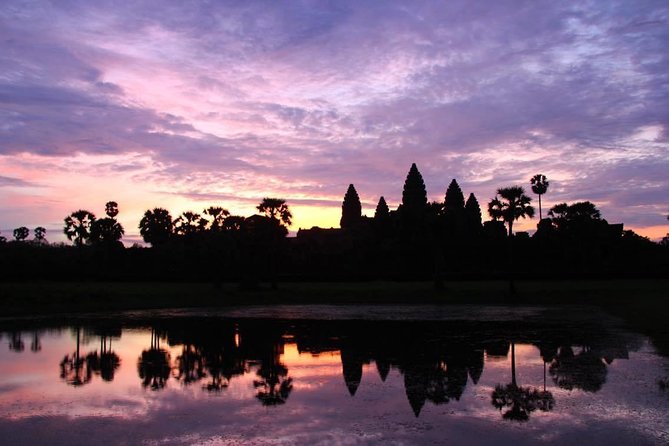
Day two begins at about 5 a.m. You’ll ride to Angkor Wat in darkness or early dawn, then wait for the sky to brighten over the temple. The morning view is one of the tour’s main selling points, but keep your expectations practical. The famous reflection depends on weather, water conditions, and your position around the ponds.
The early start has two clear benefits. First, the temperature is more comfortable than later in the day. Second, you get a better chance to see the temple before the heat and crowds build. It is still a popular moment, so you should not expect complete solitude.
After sunrise, plan to spend real time inside Angkor Wat. The outer galleries hold long carved scenes, while the central structure reveals the temple’s scale more fully as you move through it. Your guide can connect the carvings to Khmer religion, royal power, and the temple’s original purpose. This is where a good English-speaking guide adds value. The stones are impressive on their own, but the story gives them order.
The early start also creates a practical issue: you may be tired before the day is half over. The stated schedule runs for about eight hours, so this is not simply a sunrise photo stop. Expect more temple time after the morning view. If your group includes children or older adults, ask in advance how the day can be paced.
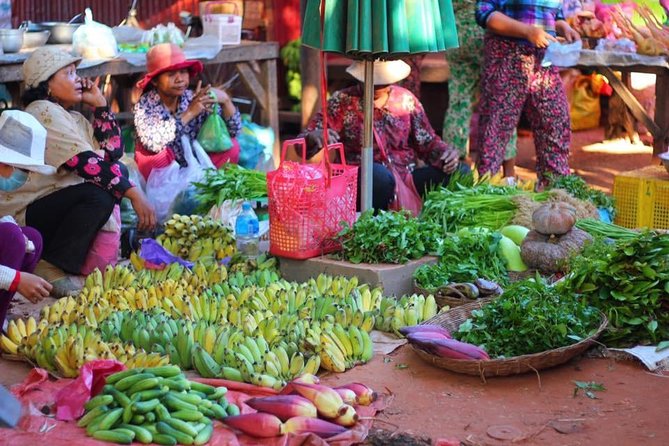
The tour description also places local market visits, the killing field museum, and an artisan visit within the wider three-day plan. These stops give the trip more range than a temple-only package. At the artisan workshop, you can see how craftspeople shape stone and learn about the idea of making stones smile. The killing field museum offers a sobering look at Cambodia’s recent past. It is a serious stop, not light sightseeing, and some people may prefer to know its tone before visiting.
The guide names associated with this experience include Bunleat, Sonoth, Borey, Jimmy, and Vanny Chhoem. The exact guide may vary, but the strongest pattern is personal attention. Bunleat has been praised for planning efficiently and adjusting the program to different needs. Borey has handled a family group that included both a child and elderly relatives without making the day feel hurried. Those details matter more than a polished sales description when you are choosing a private tour.
Day three: Kompong Kleang and the Roluos group
The third day starts around 8 a.m. and shifts attention from imperial temples to present-day life around Tonle Sap Lake. Kompong Kleang is known for stilted and floating homes. In the rainy season, water levels change the appearance of the village, and some houses may seem to rise dramatically above the water.
The boat trip costs an additional $30 per person. That extra charge is worth considering carefully because it is a separate part of the experience, not a small incidental fee. The boat gives you a way to see homes and movement around the lake from the water, while the guide can explain how people adapt their routines to seasonal changes.
This is the tour’s most human stop. You are not only looking at old stone. You are seeing a community shaped by water, transport, fishing, and changing weather. Keep your approach respectful. This is a lived-in place, not a stage set made for photographs.
The Roluos group brings you back to early Angkorian architecture. These temples are among the older sites connected with the development of the Khmer temple tradition. They are less overwhelming than Angkor Wat, which makes them useful for understanding how the design grew over time.
The combination works well. Kompong Kleang shows the present, while Roluos connects you to an earlier period of Cambodian history. The drawback is distance and another long day. If you want only the central temples, you may find this day less essential. If you want a wider view of Siem Reap and its surroundings, it is one of the tour’s most worthwhile additions.
More Temple Tours in Siem Reap:
- Angkor Wat Sunrise & 3 Main Temples with Breakfast – Small Group
★ 5.0 · 2,857 reviews - Siem Reap: Full Day Angkor Wat Temple Experience with Sunset
★ 4.9 · 1,490 reviews - 2 Days Exclusive Temple Highlights with Sunset and Sunrise Tour
★ 5.0 · 1,157 reviews - Full-Day Banteay Srei & 4 Temples – Grand Tours Join-in Tour
★ 5.0 · 1,155 reviews
What the $150 price really covers
The listed price is $150 per person. It includes an English-speaking guide, vehicle transport, and cold water. It does not include the three-day temple pass, priced at $62 per person, or the Tonle Sap boat ticket, priced at $30 per person.
That brings the known cost to $242 per person before meals, accommodation, travel insurance, and any optional transport upgrade. For a private three-day service, that can be fair value, especially if you want one person organizing the routes, temple visits, village trip, and explanations. It is not a low-cost sightseeing package once the required extras are added.
Transport needs careful confirmation. The information describes a tuk tuk in one place, while the included section says air-conditioned vehicle, and the daily plan refers to a car or minivan. It also says you can request an air-conditioned car for extra money. Ask exactly what vehicle your $150 includes and what the upgrade costs before paying.
For short transfers around the temple area, a tuk tuk can be pleasant and open to the air. For longer drives to Banteay Srey or Kompong Kleang, many people will prefer a car or minivan, especially in hot weather. A group discount is available, but the details are not specified, so ask for the total price for your party.
The guide makes the difference
Angkor is not a place where you need constant commentary. You do need help choosing what to notice. A good guide can explain why a carving matters, point out the difference between temple periods, and prevent three large ruins from blending into one.
Bunleat is associated with airport pickup as well as temple touring, and has planned tightly organized visits for solo visitors and small groups. Jimmy has been described as lively and able to keep a wide age range interested. Vanny Chhoem worked with a separate driver, Ang Bong, for one three-day visit. These examples show that the operator uses a pool of guides and drivers rather than one guaranteed person.
When you book, ask for the guide’s name if that matters to you. Also tell the operator about children, older adults, mobility limits, photography interests, or a wish for more time at fewer sites. The tour is private, so those details can shape the experience.
The stated fitness level is moderate. You should expect walking around large temple compounds, steps, uneven stone, sun, and long days. No special athletic ability is required, but comfortable footwear and a willingness to start early will make the trip better.
How to prepare for the three days
The 5 a.m. departure on day two is the biggest planning point. Keep the evening before quiet, and do not assume you can recover later if your itinerary is packed.
Wear shoes that handle uneven surfaces. Bring sun protection, light clothing suitable for temple visits, and extra water beyond the supplied cold bottles. Meals are not included, so plan for food during each eight-hour touring day. The supplied information does not specify restaurant stops, so ask how meal breaks are handled.
Your three-day temple ticket is separate. The boat ticket is separate too. Set aside money for both rather than treating the $150 price as the full trip cost.
Free cancellation is available if you cancel at least 24 hours before the start time. Changes made within 24 hours are not accepted, and poor weather may lead to a new date or a full refund. The experience requires suitable weather, particularly for the sunrise and boat portions.
Who should book this Angkor plan?
I would choose this tour if you want a private guide, a broad first look at Angkor, and a day that reaches beyond the central monuments. It suits couples, families, and small groups that value flexible pacing and one person coordinating the details.
It is also a good match for a short Siem Reap stay. Three days gives you the main temples, sunrise, Tonle Sap, Roluos, and several cultural stops without forcing you to arrange separate tours.
I would hesitate if your priority is the lowest possible price, a relaxed schedule, or a guaranteed particular guide. The days are long, the early start is real, and the extra tickets add a noticeable amount. Confirm the vehicle, guide, meal plan, and total cost before booking.
Should you book it?

Book it if you want more than a quick Angkor Wat visit and like having a private English-speaking guide shape the days around your group. The best parts are the sunrise timing, the range of temples, and the move from ancient ruins to Tonle Sap village life.
Skip it if you would rather explore slowly, avoid early mornings, or pay only for the temple circuit. For a first visit to Siem Reap, though, this plan gives you a strong mix of major sights, quieter ruins, Cambodian history, and daily life, as long as you budget for the $92 in extra entrance and boat costs.
FAQ
Is the Angkor temple ticket included?
No. The three-day temple ticket costs $62 per person and is not included in the tour price.
Is the Tonle Sap boat trip included?
No. The boat tour costs $30 per person and is listed separately from the tour price.
What time does the sunrise day begin?
Day two begins at about 5 a.m. so you can reach Angkor Wat before sunrise.
Is transportation included?
Transport is included, but the details should be confirmed. The experience refers to a tuk tuk, car, minivan, and air-conditioned vehicle. An air-conditioned car may cost extra.
Is this a private tour?
Yes. Only your own group participates in the activity.
Can I cancel for a full refund?
Yes, if you cancel at least 24 hours before the experience start time. Cancellations or changes made less than 24 hours before the start are not refunded or accepted. If poor weather cancels the experience, you will be offered another date or a full refund.
Just added around Siem Reap
- Twilight Tastes of Siem Reap Include Dinner★ 5.0 · 13 reviews
- Ultimate Sunrise to Angkor Wat, Angkor Thom and Bayon Temple★ 5.0 · 3 reviews
- Trekking Tour at Phnom Kulen National Park from Siem Reap★ 5.0 · 3 reviews
- Professional Photo Shoot in Angkor Archaeological Park, Siem Reap★ 5.0 · 42 reviews
- Full-Day Private Tour of Angkor Wat with Pick Up★ 5.0 · 12 reviews
- Unveiling 2 Days Private Angkor Wat/Beyond In Sunrise/Sunset Tour★ 5.0 · 48 reviews
- Siem Reap City Tour with War Museum and Killing Field★ 5.0 · 27 reviews
- Private Day Trip to Angkor Temples with Expert Guide★ 5.0 · 4 reviews
Temple Tours, compared.
Angkor Wat Sunrise & 3 Main Temples with Breakfast – Small Group
Read our review →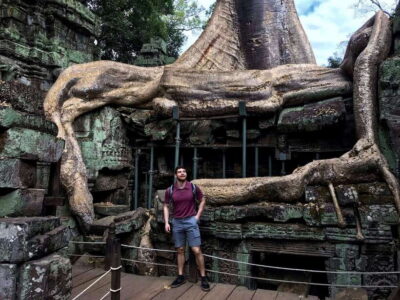
Full Day Angkor Wat Temple Experience with Sunset
Read our review →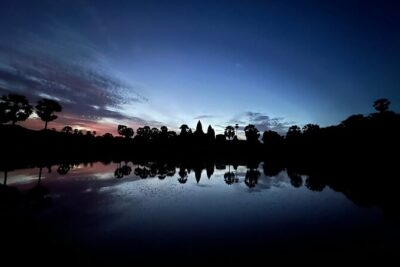
2 Days Exclusive Temple Highlights with Sunset and Sunrise Tour
Read our review →
Full-Day Banteay Srei & 4 Temples – Grand Tours Join-in Tour
Read our review →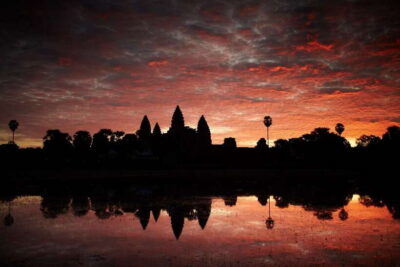
Angkor Sunrise 1- or 2-Day Guided Temples Tour
Read our review →
Angkor Wat Sunrise Explore The Most Iconic Temples
Read our review →
Koh Ker Temple Group & Beng Mealea Full-Day Join-in Tour
Read our review →Browse the lists this tour appears in