
Reviewed · CYCLING TOURS
Kampot: Cultural Bike Experience – Local Life & Countryside
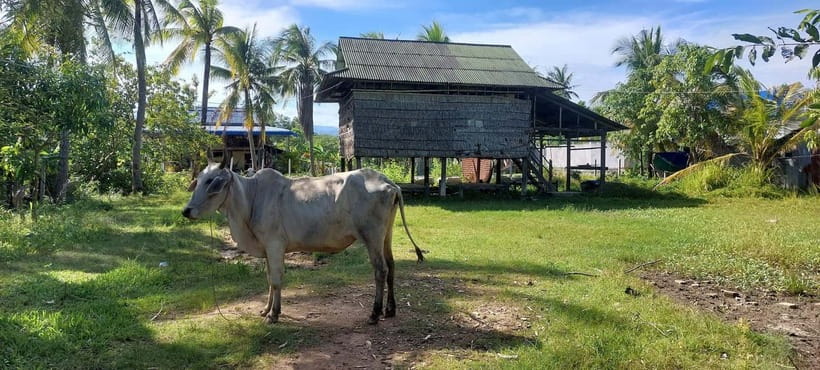
Kampot’s best cultural moments may happen far from its riverside cafés. This 15-kilometer bicycle route carries you along quiet country roads to Buddhist monasteries, rice fields, a palm sugar farm, and village homes. The pace is gentle, with frequent stops for walking tours and conversation.
I like the mix of daily life and cultural explanation, and I like that lunch takes place at a local family’s traditional wooden house rather than in a standard restaurant. The main consideration is that this is a long half-day outing, and you need to be comfortable riding a bicycle and walking around temple grounds.
Key points to know before you book
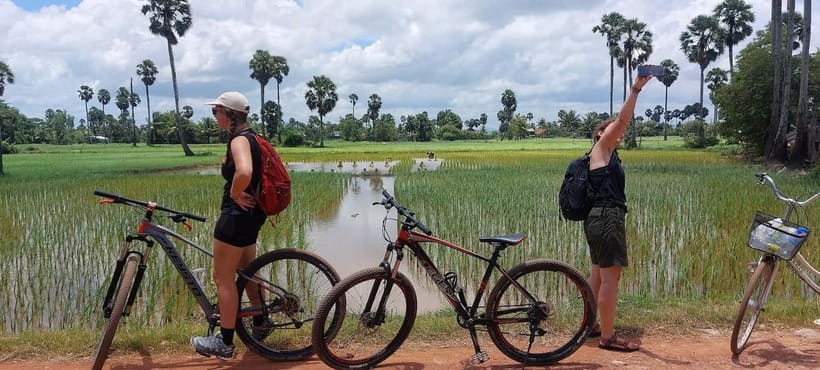
- Flat, easy cycling: The 15-kilometer route has no hills and uses country roads with little traffic.
- Three Buddhist monasteries: You’ll walk through village temple grounds and learn how Buddhism is practiced in Cambodia.
- A home-cooked Cambodian lunch: The meal at a local family’s wooden house is the emotional center of the day.
- More than temple sightseeing: Rice cultivation, palm sugar production, local legends, and Cambodian history are all part of the discussion.
- A full 6.5-hour outing: The ride is broken into short sections, with generous breaks for visits and meals.
- Best for confident cyclists aged 12 to 95: Children under 12, wheelchair users, and people who cannot ride a bike should choose another activity.
Leaving Kampot behind by bicycle
The tour begins at The Kampot Pepper Shop near the Old Market. That central meeting point makes the start simple if you are staying in Kampot town, and the bicycles are provided as part of the price.
The first riding sections are short. You spend about 15 minutes cycling, then continue with another 30-minute stretch of countryside views and a later 25-minute ride. This gradual start matters because you are not thrown straight into a long-distance ride. You get time to settle onto the bicycle and see how the route feels.
The cycling itself is not designed as a workout. The route covers about 15 kilometers in total, but the day is broken into rides of roughly 30 to 45 minutes followed by a stop. The roads are described as flat, with no hills and very little traffic. That makes this a good fit if you want to see rural Kampot without signing up for a strenuous cycling excursion.
You should still treat it as an active day. There is repeated mounting and dismounting, walking at temples, and time outdoors. People who rarely ride bicycles may find the length tiring, even if the route is technically easy.
More Countryside Tours in Kampot and Kep
- Kampot: Full-day Countryside Tour with Pepper Farm and Kep
★ 4.9 · 245 reviews - Kampot Countryside include Pepper farm, Salt field & Lake
★ 4.9 · 100 reviews - Kampot’s Countryside & Kayak Tour, Pepper Farm include Lunch
★ 4.8 · 74 reviews
Wat Chum Kriel and the first temple walk
One of the early major stops is Wat Chum Kriel, where you have about an hour for a break, guided visit, and sightseeing. The value here is not simply seeing another Buddhist temple. The guide uses the setting to explain Cambodian traditions, local beliefs, and the way Buddhism fits into ordinary community life.
A walking tour gives you more time to notice details than a quick roadside photo stop. You can ask questions, listen to local stories, and connect the temple to the villages around it. The tour also presents local legends and Cambodian history, so the monastery visit becomes part of a larger conversation rather than an isolated attraction.
Temple visits do require a bit of flexibility. The day does not appear to be built around polished museum displays or a fixed indoor schedule. You are visiting working village religious sites, so the experience is more about observation, explanation, and respectful walking than about checking off famous monuments.
After the temple, the route continues toward Tuek Chhou. This section includes a photo stop, scenic views, and another bicycle ride. The hour-long block gives the day breathing room, which is helpful in Cambodia’s heat, although the exact comfort of the ride will depend on the weather.
Rice fields, village roads, and the work behind a staple food
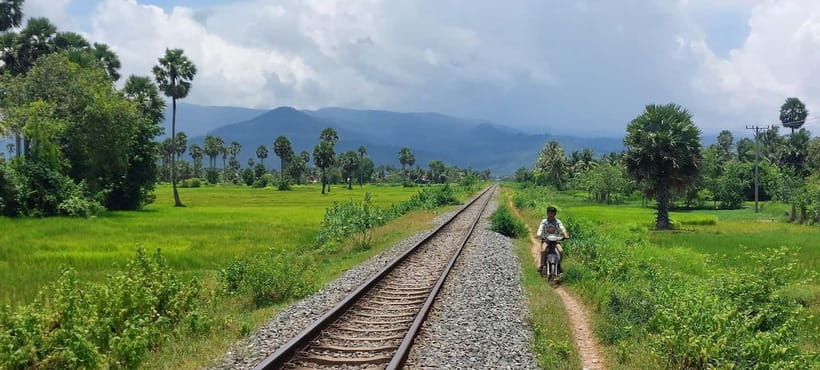
The countryside sections are where this experience earns its place on a Kampot itinerary. You move through rice-growing communities and learn how rice is cultivated. The subject sounds basic, but it offers a useful correction to the way rural Cambodia is often presented in photographs. Rice fields are not just pretty green spaces. They are places of work, timing, family routines, and local income.
The guide also discusses Cambodia’s economy and modern life. That wider context helps you understand the villages as living communities rather than scenery arranged for visitors. You may see farms, homes, roads, and fields, but the point is to connect those sights with the people who depend on them.
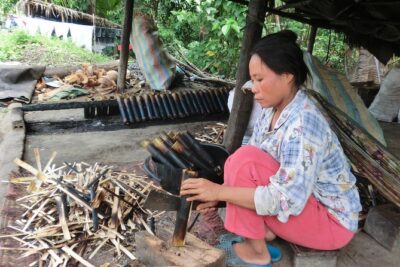
A separate visit to a local family-run palm sugar farm adds another practical layer. Palm sugar production is tied to Cambodia’s rural food traditions and small-scale family businesses. Here, the appeal is seeing an activity handled at a household level, with the guide explaining how it fits into local life.
Do not expect a large commercial attraction with a long presentation. The farm visit is valuable precisely because it is family-run and local. The tradeoff is that the experience may feel informal and changeable compared with a purpose-built visitor center.
Wat Ang Prey Serey Meanchey and the day’s main meal
The next major stop is Wat Ang Prey Serey Meanchey. The schedule allows about an hour for a break, photographs, a guided tour, and free time. That combination is well judged. You get structure from the guide, but you also have room to look around without being hurried from one explanation to the next.
The monastery is one of three Buddhist religious sites included in the day. Visiting several temples helps you compare village settings and see that Cambodian Buddhist practice is not limited to the major monuments found in larger cities. The emphasis is on how Buddhism is practiced and understood in local communities.
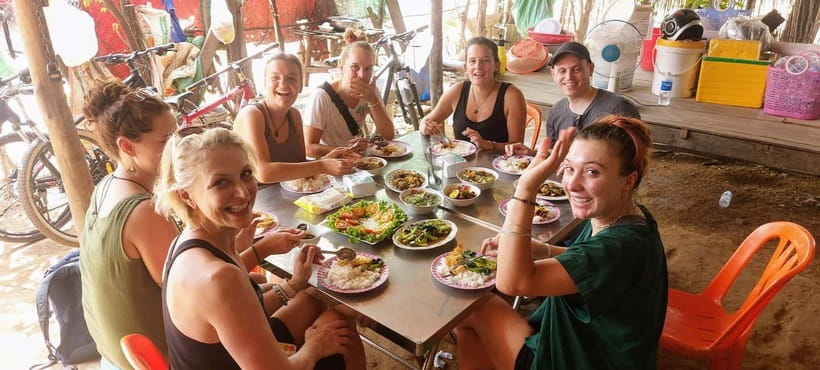
Lunch follows at the same location, with about an hour set aside. The highlight is a Cambodian home-cooked meal at a local family’s traditional wooden house. This is more personal than eating at a restaurant, and it gives you a direct connection with a family’s home and hospitality.
Lunch, drinks, and the bicycle rental are included in the $35 price. That is strong value for a 6.5-hour activity, especially because the cost also covers a guide and several community visits. You are not paying only for transportation between attractions. You are paying for access, interpretation, food, and a route that would be difficult to arrange independently in one day.
The meal is also where the tour’s cultural aim becomes easiest to feel. Temples and farms can be visited from a distance. Sharing food at a wooden family home creates a more direct meeting point between you and local life. Keep your expectations sensible, though. A home meal is not a restaurant tasting menu, and the charm comes from its setting and connection to the family.
More Cycling Tours in Kampot and Kep:
- Bike to the backroads of Kampot
★ 5.0 · 57 reviews - Siem Reap Countryside Bike Tour / E-Bike or Tuk Tuk
★ 5.0 · 935 reviews - Angkor Sunrise Bike Tour / E-Bike or Tuk Tuk
★ 5.0 · 615 reviews - Phnom Penh Silk Island Bike Tour/ E-Bike or Tuk Tuk
★ 5.0 · 495 reviews
The final monastery at Wat Prey Tom
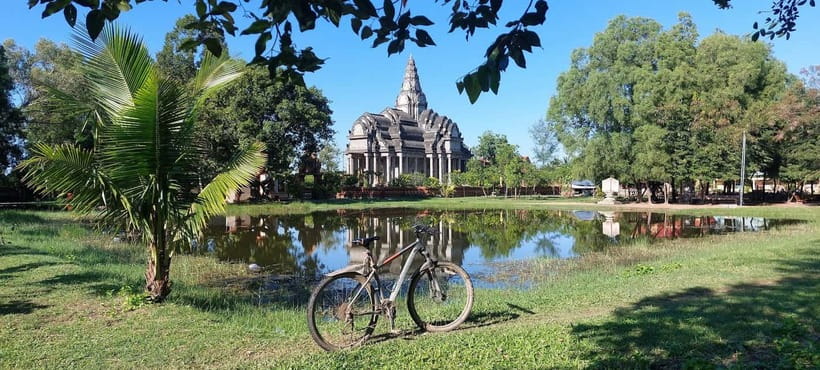
After lunch, you return to the bicycle for about 45 minutes of sightseeing and countryside views. The pace remains broken up, so the post-lunch ride should not feel like a race. Still, this is the part of the day when tired legs or heat may become more noticeable.
The final major stop is Wat Prey Tom, with about an hour for a guided visit, sightseeing, and another break. By this point, the three-monastery pattern gives the day a clear shape. You have seen religious sites at different points along a rural route, and the earlier explanations about Buddhism, history, and local traditions have had time to build.
The last 30-minute bike ride returns you to Kampot and The Kampot Pepper Shop. This final section is short enough to be manageable for most people who are comfortable on a bicycle. It also means the day ends at the same convenient central place where it began.
What Jason adds to the experience
The quality of this day depends heavily on the guide because the sights are spread across ordinary rural communities rather than concentrated in one famous attraction. Jason is the English-speaking guide associated with Jason’s Tour, and his explanations cover Cambodian history, the economy, culture, local legends, and Buddhist practice.
That range is important. A guide who only points out temples would leave much of the day unexplained. Here, the discussions connect temples with farms, homes, rice production, palm sugar, Muslim fishing villages, and modern Cambodia. One especially strong point is Jason’s breadth and depth of information, which suits you if you prefer asking questions instead of simply taking photographs.
Vin is also praised for kindness and talent in the experience. The information provided does not spell out his exact role, so I would think of him as part of the human side of the tour rather than assume a specific job title. Together, the named team gives the outing a more personal feel than a large coach excursion.
The tour is conducted in English. If you need detailed interpretation in another language, this may not be the right choice.
Is $35 a fair price?
At $35 per person, this is one of those activities where the included items matter. You receive a bicycle, drinks, lunch, an English-speaking guide, and a full route lasting about 6.5 hours. The cost also includes visits that would be awkward to organize alone, particularly the family meal and the introductions to rural businesses and communities.
The strongest value comes from the time. A short cycling trip with one temple stop might feel expensive at this price, but this day includes three monasteries, a rice-farming community, a palm sugar farm, countryside riding, and a home-cooked meal.
You are also paying for the slower pace. The tour does not rush from one headline attraction to another. Several stops last about an hour, which gives you time to listen, walk, take photographs, and rest. If you prefer a packed sightseeing schedule, you may find the pauses too long. If you want context and human contact, the pacing works well.
The small number of published ratings means you should not treat the perfect score as a guarantee of every detail. Still, the praise is unusually specific: easy cycling, strong explanations of history, economy, and culture, excellent food, and a memorable route. Those are exactly the areas that matter most on this kind of experience.
Who should book this bike tour?
I would recommend it to adults and older children who can ride comfortably for several short sections and who want to understand Kampot beyond the central tourist area. It suits people who enjoy temples but want more than temple photographs. It also works well for anyone interested in farming, food, religion, and everyday Cambodian life.
The tour is not suitable for children under 12, people who cannot ride a bike, wheelchair users, or people with mobility impairments. The stated upper age limit is 95, but age alone is not the real test. You need to be able to cycle, walk through village religious sites, and handle a full day outside.
Wear practical clothing for cycling and temple visits. Since the tour includes Buddhist monasteries, modest dress and respectful behavior are sensible. The information does not specify a dress code, so bring a flexible attitude and follow the guide’s instructions at each site.
You can cancel up to 24 hours before the activity for a full refund, and the reserve-now, pay-later option keeps your plans flexible. Starting times depend on availability, so check the schedule before booking.
My verdict: a strong choice for a slower day in Kampot
Book this tour if you want Kampot to mean more than pepper farms, river views, and town cafés. The easy, flat cycling is only the framework. The real content comes from the monastery walks, the farm visits, the rice-growing communities, Jason’s explanations, and the meal at a local family home.
Skip it if you dislike bicycles, long cultural conversations, or informal community visits. For everyone else, $35 buys a well-filled day with food, transport by bicycle, and access to parts of rural Cambodia that are hard to reach on your own. The combination of gentle riding and serious cultural explanation makes this a particularly good pick for your first full day in Kampot.
FAQ
Where does the Kampot cultural bike tour begin?
It begins at The Kampot Pepper Shop near the Old Market in Kampot.
How long does the activity last?
The tour lasts 6.5 hours, including cycling, temple visits, sightseeing, breaks, and lunch.
How far do you cycle?
The route covers about 15 kilometers in total.
Is the cycling difficult?
The route is entirely flat, with no hills, and follows country roads with very little traffic. The riding is divided into shorter sections with breaks and walking tours.
Which language is the tour offered in?
The live tour guide speaks English.
What is included in the price?
The price includes bicycle rental, all drinks, and lunch.
What kind of lunch is provided?
You eat a Cambodian home-cooked meal with a local family at a traditional wooden house.
How many Buddhist monasteries will you visit?
The experience includes walking tours of three different Buddhist monasteries, including Wat Chum Kriel, Wat Ang Prey Serey Meanchey, and Wat Prey Tom.
Is the tour suitable for children?
It is not suitable for children under 12 years old.
Can I cancel for a refund?
You can cancel up to 24 hours in advance for a full refund.
Just added around Kampot and Kep
- Trip with Local tuk tuk to Country side & Pepper farm…★ 5.0 · 13 reviews
- Cooking Class at La Plantation★ 5.0 · 16 reviews
- KAMPOT- Pepper farm ..salt fields.Kep/Crab market & more……..★ 4.5 · 12 reviews
- Kampot Tuktu tour: Pepper farm, Salt field & Secret lake★ 5.0 · 17 reviews
- Private Kampot Countryside Tour & Pepper farm, Kep/Crab Market★ 5.0 · 21 reviews
- Kampot/Cambodia pepper farm . Cave. lake. Kep Crab market & more.★ 5.0 · 27 reviews
- Exploring the Best of Kampot and Kep in a Full-Day Tour★ 5.0 · 13 reviews
- Kampot Classic Tour & Kayaking at the Green Cathedral with lunch★ 5.0 · 9 reviews
Cycling Tours, compared.
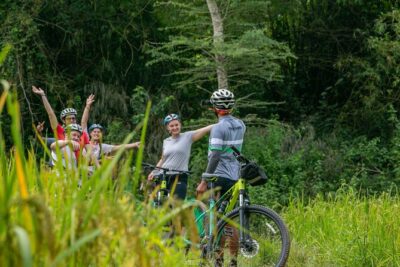
Siem Reap Countryside Bike Tour / E-Bike or Tuk Tuk
Read our review →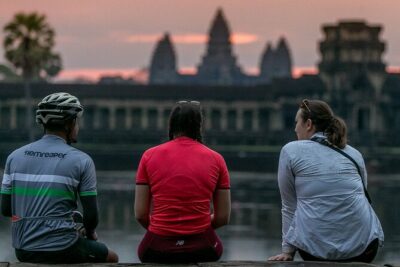
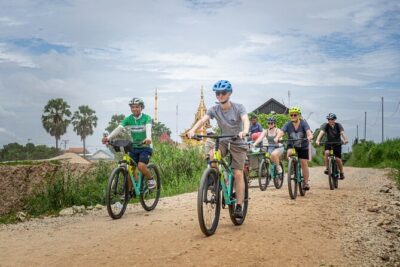
Phnom Penh Silk Island Bike Tour/ E-Bike or Tuk Tuk
Read our review →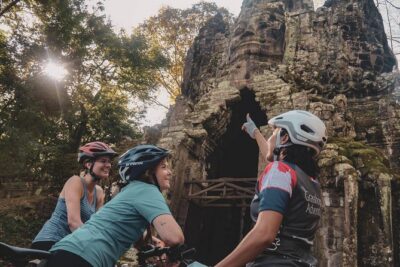
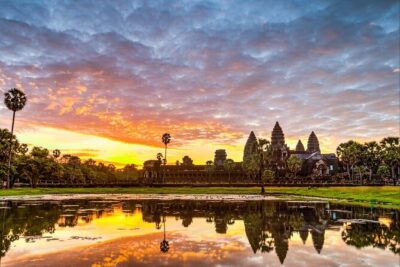
Angkor Wat Sunrise Bike Tour & Jungle Breakfast
Read our review →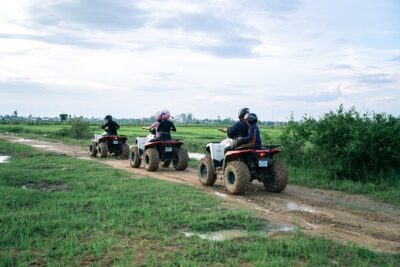
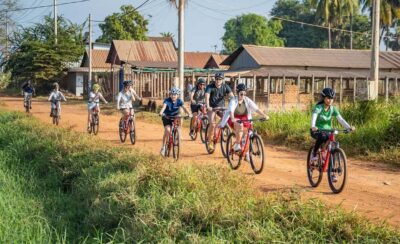
Local Livelihood Half Day Bike Tour in Battambang
Read our review →Browse the lists this tour appears in