
Reviewed · WALKING TOURS
Exploring Battambang History (Walking Tour)
Battambang’s past is written across its streets: French colonial buildings, a Chinese temple, a former Governor House, the Central Market, and reminders of Cambodia’s wars and changing borders. This small-group history tour gives you a guide to connect those places, rather than leaving you to guess what an old facade once meant.
I like the human scale of the experience. The four-hour route is long enough to cover several parts of town without turning into an all-day march, and I like that guides such as Sothea, Sothai, and Reaksa have been praised for clear English and warm local insight. The possible catch is that the description mixes a walking history tour with a cycling outing into the countryside, so you should confirm whether your booking is on foot or by bicycle.
Key points to know
- French colonial Battambang: See the Central Market and old French-era buildings while learning how the city grew as a trading center.
- A difficult 20th-century story: The route addresses the Khmer Rouge period, civil war, and the former Governor House.
- Several faiths in one town: Hinduism, Buddhism, Christianity, and Islam are included in the wider history discussion, with a Chinese temple among the stops.
- Guides make the difference: Sothea, Sothai, and Reaksa are named in past tour experiences, with English and local history as their strengths.
- About four hours: The start time is 7:30 a.m., with hotel pickup and drop-off offered from Battambang hotels.
- Check the exact route: The description also includes cycling, a temple, countryside, and a crocodile farm, details that do not fully match the city walking itinerary.
Why Battambang history works best on foot
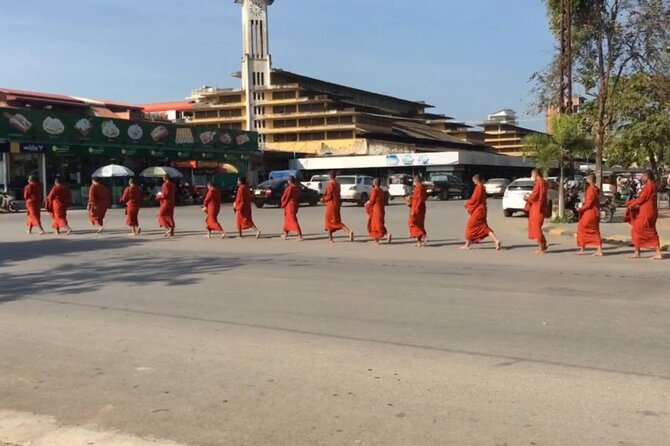
Battambang is easy to underestimate. It is often treated as a stop between Siem Reap and the next destination, yet its streets carry several layers of Cambodian history. French colonial planning, Thai influence, Chinese trade, Buddhist practice, and the violence of the 20th century all appear in a fairly compact area.
That makes a guided walk useful. You can look at a building and see only peeling paint or ornate shutters. A local guide can explain how the building fitted into the city’s trading life, who used it, and how war and political change affected the town.
The tour is listed at $25 per person and lasts about three to four hours. For that price, you are paying mainly for interpretation rather than entry tickets. That is good value if you want context, since admission fees are included and the guide, bottled water, taxes, and hotel transport are covered.
The route is also capped at 15 people. That is not a private tour, but it is more manageable than a large coach group. You should have a reasonable chance to hear the guide, though the quality of the experience will still depend on the final group size and the guide assigned that day.
More Historical Tours in Battambang:
- 2 Days Guided Historical Tour in Angkor
★ 5.0 · 855 reviews - Siem Reap: Banteay Srei and Grand Circuit Heritage Tour
★ 4.9 · 163 reviews - Banteay Srei and Grand Circuit Heritage Tour from Siem Reap
★ 5.0 · 142 reviews
Starting at the Central Market
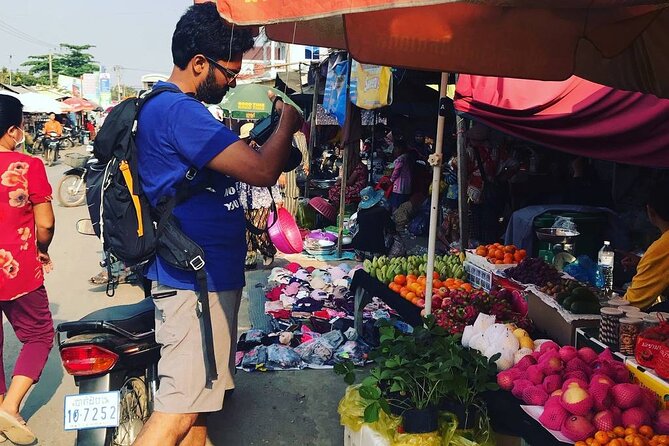
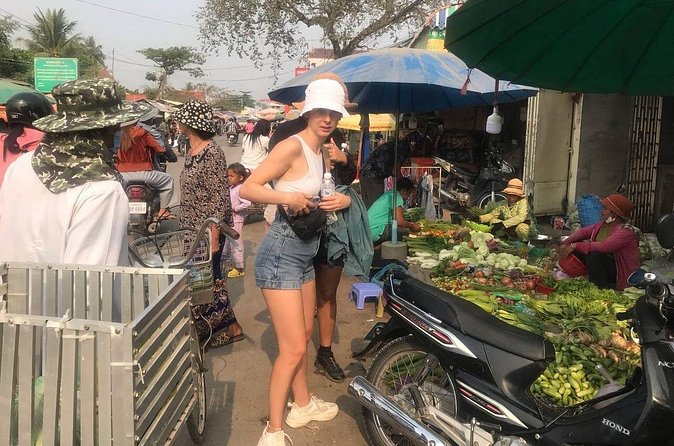
The Central Market is one of the clearest places to begin. Its French-style design points to Battambang’s period as an important commercial center, when rice, goods, and money moved through the city and the surrounding province.
I like markets as history lessons because they connect grand events to ordinary life. Here, the subject is not only architecture. Your guide can use the market to explain how trade shaped Battambang and why the city mattered beyond its current size.
Bring your camera, but do not treat the market as a quick photo stop only. Look at the structure, the entrances, and the way people use the space. The value of the stop comes from listening to the explanation of how a commercial building fits into the town’s past.
The early start helps here. At 7:30 a.m., you begin before the strongest heat of the day. Cambodia can be hot and bright, so light clothing, sunglasses, and sun lotion are sensible. Comfortable walking clothes are a better choice than anything stiff or formal.
French colonial buildings and the 300 old houses
The tour includes approximately 300 houses built during the French colonial period. That number gives you an idea of the scale of the architectural story. You are not simply seeing one preserved landmark. You are looking at a broader neighborhood pattern and the remains of an older urban era.
This part should appeal to anyone who enjoys buildings but does not want a lecture detached from real life. The guide can point out details you might walk past, such as the form of a facade or the way a building reflects its former use.
The condition of old buildings may vary. Do not expect a polished museum district at every turn. That is part of the appeal, but it also means the experience is about reading a living city rather than touring a perfectly restored set.
Past participants have described the walk as easy and not especially tiring, although the exact route and weather will affect that. If you have mobility concerns, ask about the walking distance before booking. The activity information says most people can take part, but it does not provide a detailed accessibility plan.
White Elephant and Naga Peace
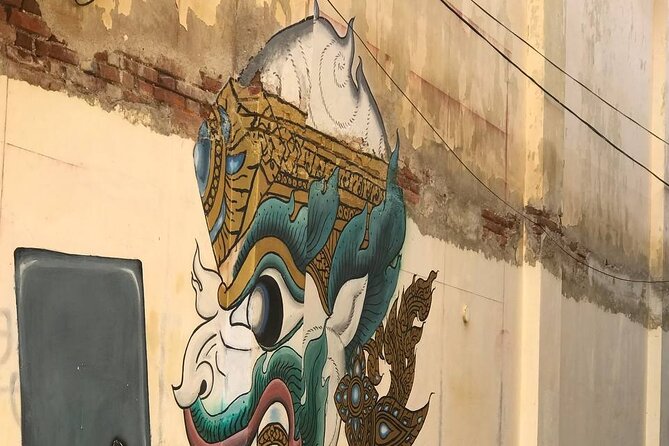
The itinerary includes the White Elephant, linked to the period when Thailand controlled Battambang, and Naga Peace, a symbol associated with the end of war in Cambodia. These are small details with a large role in the city’s story.
The White Elephant helps place Battambang within the shifting political history of the region. Borders and authority did not always look as they do now, and local identity was shaped by contact with neighboring powers.
Naga Peace brings the focus toward a more recent hope for stability. Cambodia’s past cannot be reduced to temples and colonial buildings. War, political control, and recovery are central to understanding the country today.
I would pay close attention during these stops. They may not be the most visually dramatic points on the route, but they help tie together the larger story. A good guide can explain why a symbol matters to local people rather than leaving you with a name and a photograph.
A few more Battambang half-days worth weighing up
- Customs and Culture Half Day Walk and Bike Tour in Battambang
★ 5.0 · 23 reviews - Siem Reap: City Walking Tour
★ 4.6 · 583 reviews - Siem Reap City Walking Tour
★ 4.5 · 114 reviews - Siem Reap Walking Tour: Landmarks & Hidden Gems
★ 5.0 · 15 reviews
The Governor House and Battambang’s hardest years
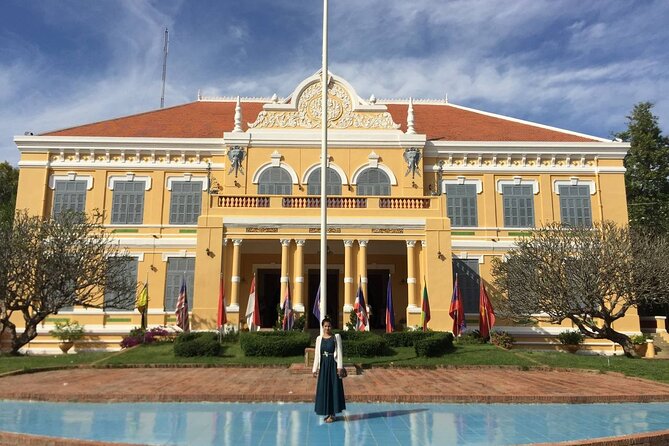
The former Governor House is one of the most serious stops. It is connected in the itinerary with a very difficult period in Battambang’s history, including the years of Khmer Rouge rule and civil war.
Expect the tone to change here. This is not just an architecture walk. The tour addresses violence, political upheaval, and the suffering caused by conflict. A guide who can explain these subjects with care adds real value, especially if you know little about Battambang’s specific experience.
The supplied tour details do not spell out exactly which stories are told at the Governor House, so you should not expect a fixed museum-style presentation. Instead, think of it as a place where the guide gives local context.
This is also one reason I would choose a morning tour early in your stay. It gives you a framework for later visits to museums, temples, or nearby sites. You will recognize that Battambang’s calm streets are not the whole story.
A Chinese temple and the city’s mix of faiths
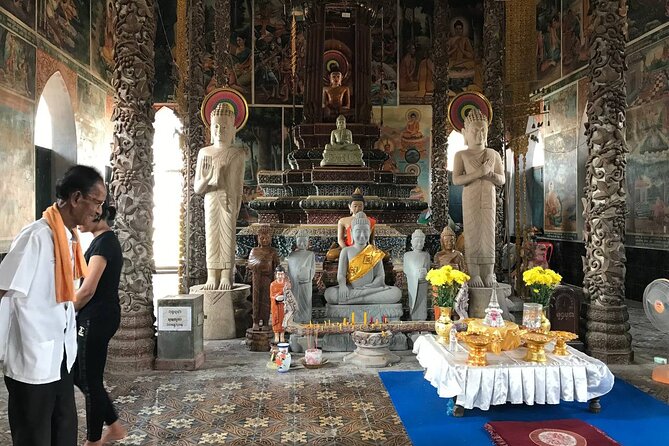
The Chinese temple shows another side of Battambang. Chinese communities and trade had an important influence on towns across Southeast Asia, and this stop lets the guide explain how religion and commerce shaped local life.
The wider discussion includes Hinduism, Buddhism, Christianity, and Islam. That is useful because Cambodia is often presented through Buddhism alone. You will get a broader picture of the beliefs and communities that have influenced the city.
Do not expect a long formal visit to every place connected with those faiths. The information specifically identifies a Chinese temple, while the other religions appear as part of the historical and cultural discussion. The precise length of each stop may vary.
I like this approach because it makes religion part of the city’s social history. You are not only looking at religious buildings. You are learning how belief, family, trade, and community overlap.
Indochina Bank and the story of money
The former Indochina Bank is included to explain how money moved through Battambang. That may sound less exciting than a temple or old house, but it is a smart stop.
Banks reveal how a city worked. They point to trade, administration, colonial control, and the people who had access to formal finance. In a city known as a trading center, this building helps explain the practical side of economic life.
This is another place where the guide matters more than the facade. Without commentary, you might take a photo and move on. With a clear explanation, the building becomes part of the story about rice, commerce, and the forces that made Battambang important.
The cycling and countryside details need clarification
The experience information creates a real point of confusion. The title and the detailed itinerary describe a walking history tour through Battambang. The overview, however, calls it a cycling tour and mentions countryside scenery, a temple, a crocodile farm, rice fields, farms, cows, and village encounters.
Those sound like related but different half-day outings. Some past tour descriptions clearly involved bicycles and rural roads, while others focused on walking among historic buildings. The same local team may offer both formats, which likely explains the overlap.
Do not assume that a booking labeled Exploring Battambang History will automatically include the countryside cycling route. Ask these questions before you pay:
- Is the booking a walking tour or a bicycle tour?
- Are bicycles supplied?
- Are the temple and crocodile farm included in this particular departure?
- Will the route visit the Central Market and colonial buildings?
- Is hotel pickup and drop-off included for your hotel?
If you want old buildings, local history, and short walks, the city format sounds like the better match. If you want rice fields, villages, and a more active outing, confirm that the cycling version is the one being reserved.
The cycling reports add useful detail about the guiding style. Sothea is named several times, and Reaksa is described as friendly, gentle, and able to speak good English. The countryside route includes encounters with villagers and children, along with views of rice fields, farms, and cows. Those details belong to the cycling side of the offering, not necessarily to the historical walking route.
The guides and what they add
The strongest part of this experience is likely to be the guide. Sothea appears repeatedly in the supplied tour material, and Sothai is also named as a friendly English-speaking guide with a strong grasp of Battambang’s past. Reaksa is associated with the cycling outings.
You should not assume you will receive a particular person unless the operator confirms it. Still, these names give you a useful idea of the team’s strengths. The best fit is a guide who can explain history in plain English, answer questions, and connect buildings with daily life.
The tour is especially good for solo visitors. A few hours with a local guide can help you get your bearings and decide what deserves a longer visit later. It also suits couples and small groups who want more substance than a quick photo circuit.
If you prefer to explore at your own pace, keep in mind that a guided route has a set structure. You will not have unlimited time at every building. The benefit is that you cover more meaningful ground without having to research each stop yourself.
What $25 covers, and where value drops
At $25 per person, the price is fair if you use the full package. You receive an English-speaking local guide, bottled drinking water, taxes and fees, and pickup and drop-off from Battambang hotels. The duration is close to half a day, leaving time for lunch or another activity.
The lack of major admission charges is not a problem here. The appeal lies in the streets, exterior architecture, cultural explanation, and local stories. You are paying for access to a person’s understanding of the city rather than a long list of ticketed sights.
The price is less attractive if you expect a private tour, extensive museum entry, or a guaranteed bicycle route. Personal expenses and insurance are not included. Group size can reach 15, and the exact guide is not guaranteed in the information provided.
The overall record supplied for the activity shows a 5 rating, 17 reviews, and 100 percent recommendation. Individual entries are marked N/A for the score, so I would treat those figures as a useful sign of satisfaction, not as a promise that every departure will be perfect.
Timing, clothing, and booking advice
The stated start time is 7:30 a.m. That is a sensible choice for Cambodia. You avoid the worst of the midday sun and have more comfortable conditions for walking or cycling.
Wear flexible clothes or sports clothes, and bring sunglasses, sun lotion, and a camera. Take water even though a bottle is included, especially if the route turns out to be the longer cycling version.
Hotel pickup is offered from Battambang hotels, and mobile tickets are supported. Confirmation is provided at booking. Service animals are allowed, and the activity is near public transportation.
Cancellation is free if you cancel at least 24 hours before the local start time. Inside that window, the payment is not refunded, and changes are not accepted. Keep this in mind before booking if your Cambodia schedule is still shifting.
Who should book this Battambang tour?
I would choose this experience if you want a compact introduction to Battambang’s buildings, political past, trade, and religious life. It is a good first activity in town because it gives you background for everything you see afterward.
It also suits solo visitors who want company without committing to a full-day program. The half-day length is reasonable, and the walking route is described as fairly easy.
You may prefer another option if you want a private architectural tour, long museum visits, or a tightly defined itinerary. The walking and cycling descriptions do not line up perfectly, so anyone with a specific goal should confirm the route first.
Should you book it?
Book it if a local guide, old city buildings, and difficult but important history sound more useful to you than a quick sightseeing loop. The price is sensible for four hours with transport, water, taxes, and a guide, and the strongest names attached to the experience are Sothea, Sothai, and Reaksa.
Before booking, settle the one important question: walking history tour or cycling countryside trip? Once that is clear, this looks like a worthwhile way to understand Battambang beyond its surface. It is especially good for a first morning in town, when a few hours of local explanation can turn the rest of your visit into a more informed one.
FAQ
How long does the Battambang history tour last?
The experience lasts about three to four hours. The itinerary also describes it as a four-hour activity.
What time does the tour start?
The stated start time is 7:30 a.m.
Is hotel pickup included?
Pickup and drop-off are offered from Battambang hotels. Confirm the arrangements for your specific hotel when booking.
What is included in the $25 price?
The price includes a local English-speaking guide, bottled drinking water, and all fees and taxes. Personal expenses and insurance are not included.
Is this a walking tour or a cycling tour?
The detailed history route describes walking among city sights, while the wider activity description also refers to cycling, countryside stops, a temple, and a crocodile farm. Confirm the exact format before booking.
What is the cancellation policy?
You can receive a full refund if you cancel at least 24 hours before the local start time. Cancellations or changes made within 24 hours are not accepted and are not refunded.
Just added around Battambang
- Bamboo Train, Banann Temple, Fruit Bat, Bat Cave, Sunset★ 4.2 · 3 reviews
- Private Battambang Full-Day Guided Tour★ 4.5 · 3 reviews
- Battambang Private Day Tour★ 5.0 · 5 reviews
- Private Taxi Transfer From Battambang – Siem Reap City★ 5.0 · 4 reviews
- Afternoon tour to Original Bamboo train. Bat cave. Killing cave★ 5.0 · 25 reviews
- Private Boat from Battambang to Siem Reap via Tonle Sap Lake★ 4.5 · 3 reviews
- Tuk Tuk Tour (Full-Day)★ 5.0 · 7 reviews
- Private Taxi Transfer Battambang from/to Phnom Penh★ 5.0 · 7 reviews
Walking Tours, compared.
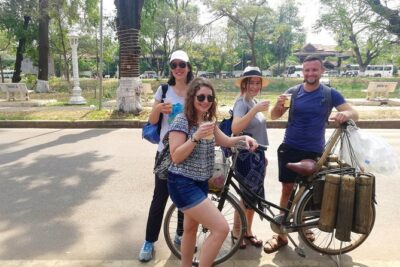
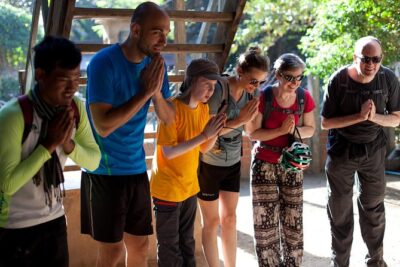
Customs and Culture Half Day Walk and Bike Tour in Battambang
Read our review →


Browse the lists this tour appears in