
Reviewed · TEMPLE TOURS
Angkor Temples Highlights: 2-Day Private Tour with Sunrise
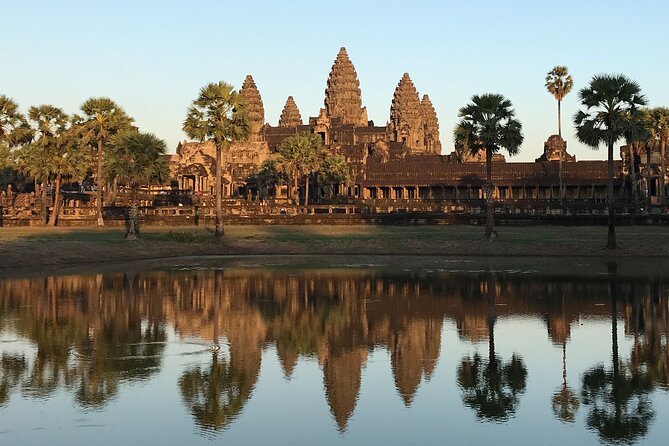
Angkor Wat before dawn is the main draw here. You leave Siem Reap at 4:30 am, reach the temple complex in the cool dark, and watch the first light gather behind one of Southeast Asia’s great monuments. The two-day plan also gives you time for the tree-wrapped stones of Ta Prohm and the fine pink carvings at Banteay Srei.
I like the private format, which lets your group set the pace instead of following strangers through every doorway. I also like the practical care: air-conditioned transport, cold water, and chilled tissues matter when the sun gets fierce. Guides named Mork and Moaung, along with driver Hak, have been singled out for warm, personal service and strong insight into Cambodian culture.
The main catch is cost beyond the advertised $39. The Angkor Pass is not included and costs $62 for two or three days, bringing the basic total to about $101 per person before meals and tips. The early start and long walking days also call for good shoes and a willingness to cover your knees and shoulders.
Key points to know before you book
- Sunrise begins at 4:30 am: You trade sleep for cooler air and Angkor Wat at its most atmospheric.
- Private touring keeps the pace flexible: Only your group takes part, with no large coach group to slow you down.
- Two days cover both famous and quieter temples: The route includes Angkor Wat, Bayon, Ta Prohm, Preah Khan, Ta Som, East Mebon, and Banteay Srei.
- The Angkor Pass is extra: Budget another $62 per person for the two or three-day temple pass.
- Comfort details are useful in Cambodia’s heat: Air-conditioning, mineral water, and cold tissues are included.
- Local life gets a brief nod: The experience includes a meeting with local sugar growers, adding more than temple walls to the trip.
Why the 4:30 am start is worth considering
Angkor Wat is famous at sunrise for good reason. You arrive before the day heats up, and the temple’s towers and reflecting pool take on a softer look as daylight grows. The sunrise portion lasts about four hours, so this is not a quick photo stop followed by a drive away. You have time for a guided look at the temple complex.
That said, 4:30 am is an honest early start. If you need a slow morning, this tour will test you on day one. The reward is cooler walking conditions and a more memorable first encounter with Angkor Wat, but you should protect your energy by resting well before the tour.
The guide is an important part of this opening visit. Angkor Wat can feel like a maze of courtyards, galleries, towers, and carved scenes if you walk through without context. An English-speaking guide helps connect the buildings to Khmer history, religion, and architecture instead of leaving you with a series of grand but disconnected views.
More Private Tours in Siem Reap
- Full-Day Angkor Wat Sunrise Private Tour with Guide from Siem Reap
★ 5.0 · 2,920 reviews - Siem Reap: Angkor Wat Private Tuk-Tuk Tour
★ 4.9 · 2,222 reviews - Angkor Wat Private Day Tour from Siem Reap
★ 5.0 · 834 reviews
Angkor Wat, the South Gate, and the faces of Bayon
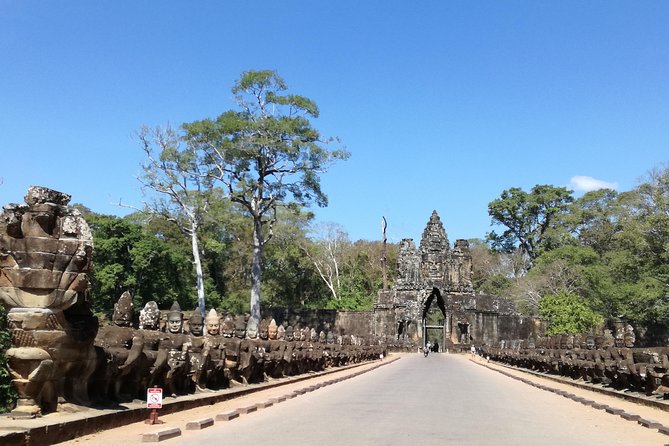
After Angkor Wat, the route moves to Angkor Thom South Gate. The entrance causeway is lined with stone figures linked to the Churning of the Ocean of Milk, a famous Hindu creation story. It is a strong arrival point because you pass from the outer road into the old royal city through a scene filled with symbolism.
Allow about 30 minutes here. That is enough for an explanation, photographs, and a close look at the monumental figures. The stonework can be striking, but the stop is more about the gateway and its story than a long temple visit.
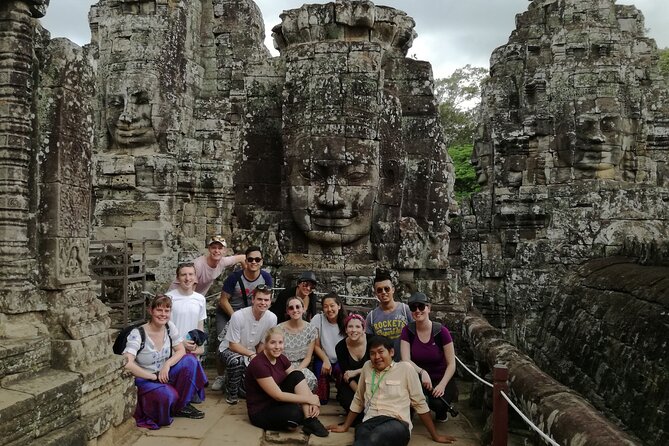
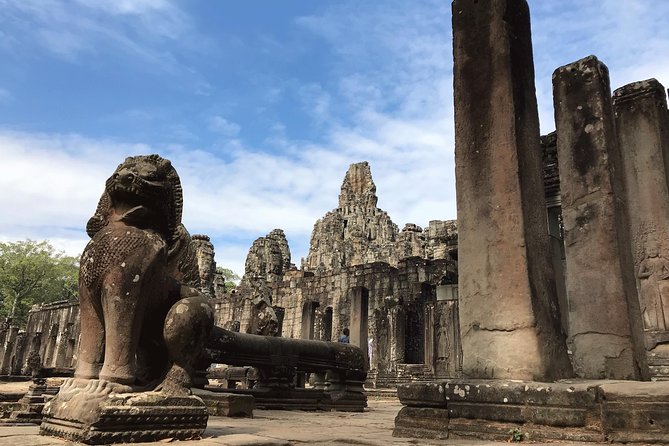
Inside Angkor Thom, Bayon is the emotional center of the morning. Its serene stone faces look out from the towers, while the bas-reliefs show daily life, battles, ceremonies, and mythological scenes. You get about an hour here, which gives you time to study both the famous faces and the less celebrated carvings.
Bayon rewards a guide who can point out small details. On your own, it is easy to focus only on the faces and miss the scenes running along the lower walls. Expect uneven stone surfaces and plenty of walking around the temple’s tight interior spaces.
Ta Prohm and the romance of ruins
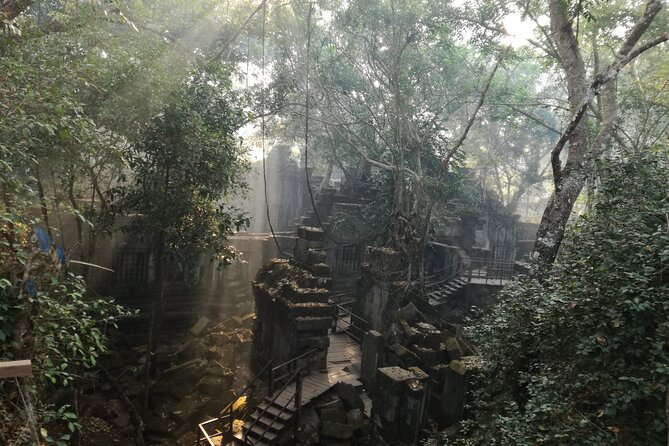
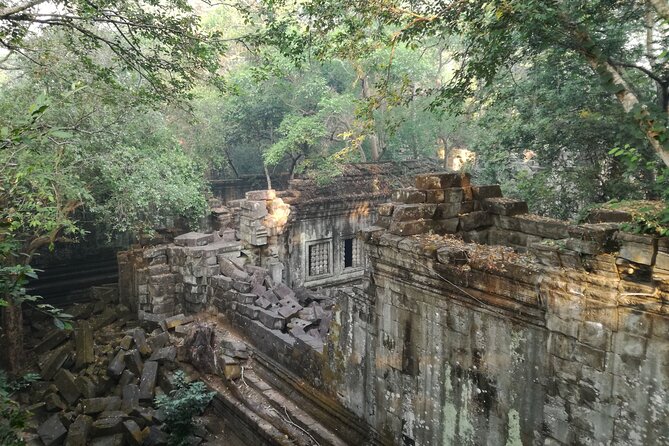
Ta Prohm receives about an hour and a half, making it one of the fuller visits on the first day. Huge tree roots twist over the stone structures, and parts of the temple remain in a deliberately ruined condition. This is the Angkor site many people associate with the film Tomb Raider, but its appeal is not limited to movie fame.
I like Ta Prohm because it shows the tension between preservation and nature. The roots are dramatic, but the temple is not simply a stage set. You can see how time, weather, and plant growth have altered the site, while restoration work keeps key passages and structures accessible.
The setting also makes Ta Prohm one of the best places for photographs. It can feel enclosed and atmospheric compared with the open scale of Angkor Wat. Your guide can help you understand what you are seeing, while the private format gives your group more room to pause when a doorway or carved wall catches your eye.
By the end of day one, you have visited the three temples most likely to define a first Angkor visit: Angkor Wat, Bayon, and Ta Prohm. It is a full morning and early afternoon, so the included air-conditioned transport becomes more than a luxury. It gives you a cool place to recover between stops.
The Grand Circuit brings a quieter second day
Day two shifts away from the best-known names and follows the Grand Circuit. The first stop is Preah Khan, a large temple complex that takes about an hour and a half. Its scale gives you a better sense of how much of Angkor remains beyond the headline sites.
Preah Khan has long corridors, courtyards, carved stone, and a mixture of collapsed and preserved areas. It is a good place to slow down and look at construction details. The trade-off is that the temple can feel demanding after the previous day, especially if you are not used to walking over uneven stone.
Neak Pean is a short 30-minute visit. This island temple was once connected with healing, purification, and balance. Its design is unusual because water and the surrounding pools are central to the meaning of the site. The stop is brief, but it breaks up the larger temple visits with a different kind of sacred setting.
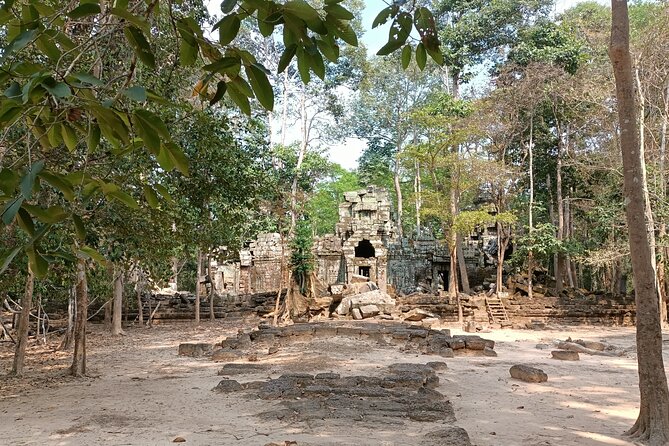
Ta Som takes another 30 minutes. It is quieter and more compact, with a gateway partly claimed by tree roots. You get the pleasure of a smaller site without needing to spend hours there. If you prefer atmosphere and details over grand scale, Ta Som may be one of your favorite stops.
East Mebon follows for about 30 minutes. It was built on what was once an island in the East Baray reservoir, and guardian elephant statues mark its corners. The temple’s towers and carvings give you another look at Khmer design, while its former island setting helps explain the importance of water management to the Angkorian capital.
More early starts around Siem Reap:
- Angkor Wat Sunrise or Sunset Tour with Guide from Siem Reap
★ 5.0 · 12,109 reviews - Siem Reap: Angkor Wat: Small-Group Sunrise or Sunset Tour
★ 5.0 · 9,444 reviews - Siem Reap: Angkor Wat 2-Day Tour with Sunrise and Sunset
★ 4.9 · 4,429 reviews - Angkor Wat Sunrise tour with Small – Group and Guide tours
★ 5.0 · 3,655 reviews
Banteay Srei rewards the long ride
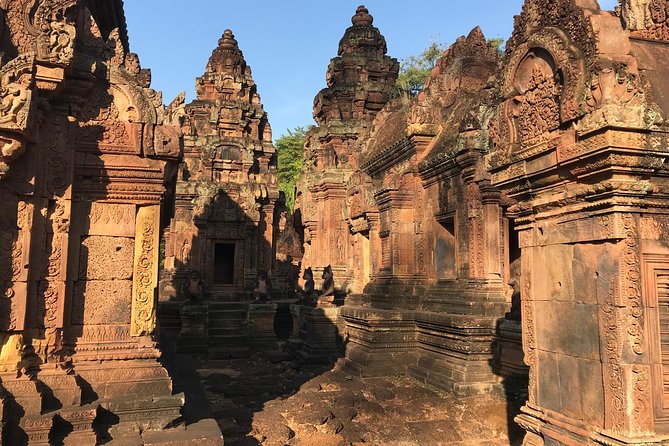
The final major stop is Banteay Srei, with about two hours planned here. The temple is known for pink sandstone and unusually fine carvings. Its smaller scale differs from Angkor Wat and Preah Khan, but the detail is often the reason people remember it most clearly.
Banteay Srei is sometimes called the Citadel of Women. The name is commonly linked to its delicate appearance, though the site’s real appeal is the precision of the carvings and the warm color of the stone. Look closely at the lintels, doorways, and decorative figures. This is a temple for studying craftsmanship rather than simply taking a wide photograph.
The drawback is its distance from the central Angkor group. You spend more time in the vehicle to reach it, but the two-hour visit makes the detour more worthwhile than a rushed stop. The route also includes contact with local sugar growers, giving you a small look at present-day rural life rather than keeping the entire experience inside archaeological sites.
That local connection is useful because Angkor can otherwise feel sealed off from modern Cambodia. You see the remains of an ancient capital, then meet people whose work is tied to the countryside around Siem Reap. It is not a long village tour, but it adds human context to the temple route.
What the private vehicle adds
The tour uses comfortable, air-conditioned transport and includes mineral water and cold tissues. These details sound modest on paper, but Cambodia’s heat can turn a temple day into hard work. A cool vehicle between stops helps you reset before the next walk.
Hotel pickup is included, so you do not need to arrange a dawn transfer to the meeting point. The start time is fixed at 4:30 am, and confirmation is provided when you book. The tour is also near public transportation, though the included pickup is the simpler choice for such an early departure.
Because this is a private activity, only your group participates. That matters most at Ta Prohm, Bayon, and Banteay Srei, where you may want to stop for a detail or ask a follow-up question. It does not mean every part of the day can be changed. The published route is full, and the major stops have set time blocks, but you avoid the usual problem of waiting for a large group.
Guides named Mork and Moaung have been praised for their history and cultural insight, while Hak is named as a driver who helped make the outing friendly and comfortable. The strongest praise centers on personal attention, useful explanations, drinks, towels, and even small treats. You should still confirm the assigned guide at booking if a particular person matters to you, since the listed names may not be guaranteed.
Is $39 a good deal?
The advertised price is $39 per person, with group discounts available. At first glance, that is an attractive rate for two days of private transport, an English-speaking guide, hotel pickup, water, and cold tissues.
The important extra is the Angkor Pass. It is optional in the booking details, but you need to account for the $62 two or three-day pass if you do not already have one. That places the basic combined cost at roughly $101 per person, before meals, drinks beyond the included water, personal spending, and tips.
At that total, the value depends on what you want. You are paying for convenience, a private vehicle, guiding, and a carefully arranged route rather than just admission. Compared with arranging separate transport and explanations for two days, the package can make sense, particularly for first-time visitors who want to use limited time well.
Meals are not included, so plan for food during the day. The supplied details do not specify restaurant stops or meal arrangements, so you should ask the provider if you need a precise lunch plan.
Clothing, walking, and practical preparation
You must cover your knees and shoulders at the temples. Pack light clothing that meets those rules, plus sun cream and mosquito repellent. Good walking shoes matter more than stylish footwear because the route includes uneven temple surfaces and long periods on foot.
Most people can take part, but the schedule is active. Day one begins before dawn and includes several major sites. Day two has fewer headline temples but still involves repeated walking, stairs or uneven ground may be present at temple sites, and a longer outing toward Banteay Srei.
Bring only what you need. Water is included, and the vehicle provides a place to leave extra items, but a small day bag is practical. A phone or camera is useful for the sunrise, stone faces, tree roots, and pink sandstone details, though you should give yourself time to look rather than turn every stop into a photo session.
Free cancellation is available if you cancel at least 24 hours before the start time. Changes or cancellations inside that period are not accepted for a refund, and the cut-off follows local time.
Who should choose this Angkor tour?
I would choose this experience if you are visiting Angkor for the first time, want the major temples plus less familiar sites, and prefer a private guide over a large group. It suits couples, families, and small groups that value a flexible pace and door-to-door pickup.
It is also a good match if you want to understand what you are seeing. The temples are impressive on their own, but Bayon’s bas-reliefs, Neak Pean’s water symbolism, and Banteay Srei’s carvings make more sense with clear explanation.
I would hesitate if you dislike pre-dawn starts, long walking days, or extra admission costs. You may also prefer a shorter visit if two full days of temples feels too ambitious. The route is full by design, and its value comes from seeing a broad range of Angkor rather than lingering at one place for an entire day.
Should you book it?
Book this tour if sunrise at Angkor Wat is a priority and you want a private, well-supported route through both famous and quieter temples. The combination of Mork or Moaung-style personal guiding, Hak-style attentive driving, cool transport, and a broad two-day program gives you a practical way to see a huge archaeological area.
Before paying, add the $62 Angkor Pass to your budget, confirm the guide and pickup details, and be honest about the 4:30 am start. If you can handle the early morning and walking, this is a strong-value choice for a first visit to Siem Reap.
FAQ
What time does the tour start?
The tour starts at 4:30 am, with hotel pickup included.
Is the tour private?
Yes. Only your group participates in the activity.
Is hotel pickup included?
Yes. Hotel pickup is included as part of the experience.
Is the Angkor Pass included?
No. The Angkor Pass is optional at booking and costs US$62 per person for two or three days.
What temples are visited on the first day?
Day one includes Angkor Wat, Angkor Thom South Gate, Bayon Temple, and Ta Prohm Temple.
What temples are visited on the second day?
Day two includes Preah Khan, Neak Pean, Ta Som, East Mebon, and Banteay Srei.
Is an English-speaking guide provided?
Yes. An English-speaking guide is included.
What should I wear?
Your knees and shoulders must be covered. Good walking shoes, sun cream, and mosquito repellent are also recommended.
Are drinks and meals included?
Mineral water and cold tissues are included. Meals and other beverages are not included.
More Temple Tours in Siem Reap
- Angkor Wat Sunrise & 3 Main Temples with Breakfast – Small Group
★ 5.0 · 2,857 reviews - Siem Reap: Full Day Angkor Wat Temple Experience with Sunset
★ 4.9 · 1,490 reviews - 2 Days Exclusive Temple Highlights with Sunset and Sunrise Tour
★ 5.0 · 1,157 reviews - Full-Day Banteay Srei & 4 Temples – Grand Tours Join-in Tour
★ 5.0 · 1,155 reviews
Just added around Siem Reap
- Ultimate Sunrise to Angkor Wat, Angkor Thom and Bayon Temple★ 5.0 · 3 reviews
- Twilight Tastes of Siem Reap Include Dinner★ 5.0 · 13 reviews
- Trekking Tour at Phnom Kulen National Park from Siem Reap★ 5.0 · 3 reviews
- Professional Photo Shoot in Angkor Archaeological Park, Siem Reap★ 5.0 · 42 reviews
- Full-Day Private Tour of Angkor Wat with Pick Up★ 5.0 · 12 reviews
- Unveiling 2 Days Private Angkor Wat/Beyond In Sunrise/Sunset Tour★ 5.0 · 48 reviews
- Siem Reap City Tour with War Museum and Killing Field★ 5.0 · 27 reviews
- Private Day Trip to Angkor Temples with Expert Guide★ 5.0 · 4 reviews
Temple Tours, compared.
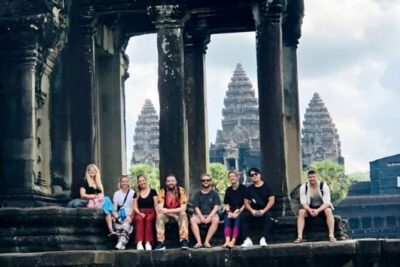
Angkor Wat Sunrise & 3 Main Temples with Breakfast – Small Group
Read our review →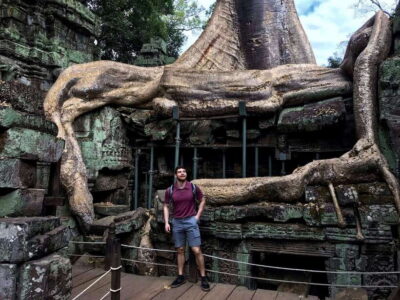
Full Day Angkor Wat Temple Experience with Sunset
Read our review →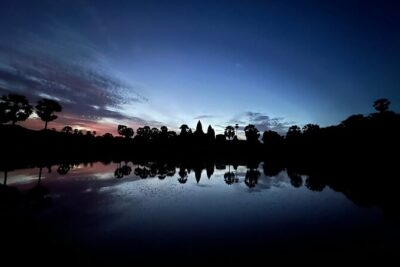
2 Days Exclusive Temple Highlights with Sunset and Sunrise Tour
Read our review →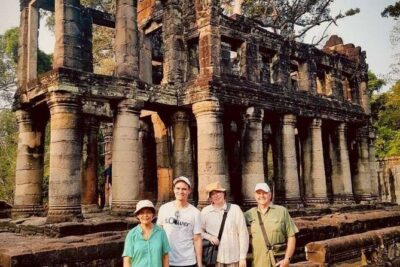
Full-Day Banteay Srei & 4 Temples – Grand Tours Join-in Tour
Read our review →
Angkor Sunrise 1- or 2-Day Guided Temples Tour
Read our review →
Angkor Wat Sunrise Explore The Most Iconic Temples
Read our review →
Koh Ker Temple Group & Beng Mealea Full-Day Join-in Tour
Read our review →Browse the lists this tour appears in