
Reviewed · WATER BLESSING CEREMONIES
Buddhist Water Blessing and Real Life Experience with Local
The most memorable part of this Siem Reap outing is the Buddhist water blessing, a simple ceremony that ends with you thoroughly soaked. Before that, you visit three religious sites, learn the story of Buddha, and see a side of town that feels more connected to daily Cambodian life than a standard temple stop.
I like the chance to talk with monks at Wat Preah Prom Rath, and I like the local-market visit, where meat, fish, vegetables, drinks, clothing, and prepared food are sold for nearby families. The main drawback is that the schedule can be a little loose, and one activity may be replaced by something else, such as an art-shop stop.
Key points to know
- The water blessing is genuinely wet: Bring a towel and a full change of clothes, not just a light cover-up.
- Wat Preah Prom Rath explains Buddha’s life: You’ll see paintings that follow his story from birth to Nirvana.
- Preah Ang Chek Preah Ang Chom is an active prayer site: It is especially important to Khmer people who come to pray to spirit and god statues.
- The market offers ordinary local life: Expect fresh food, clothing, drinks, and the sights and smells of a working market.
- The tour is private transportation with a tuk-tuk: Hotel pickup and drop-off are included, along with bottled water and an English-speaking guide.
- Serakyuth Yoeun is the listed provider: The experience costs $42.15 per person and accepts groups of up to 16.
A different kind of Siem Reap temple outing
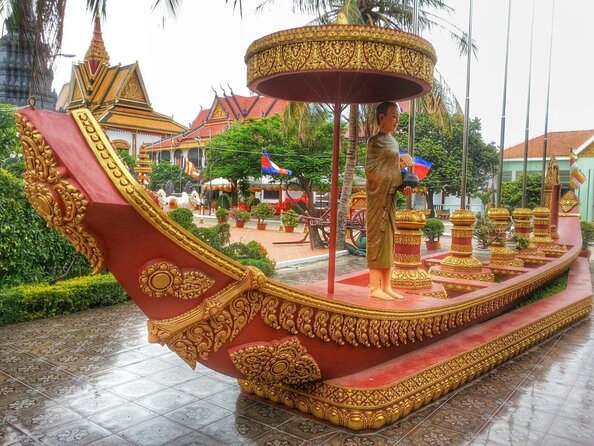
Many Siem Reap tours focus on grand stone monuments and ancient ruins. This one takes a more personal route. You visit active Buddhist places, see where local people pray, and finish with a ceremony rather than another pile of carved stones.
That difference matters. At a working temple, you are not only looking at architecture. You are seeing a place still used for prayer, teaching, ritual, and community life. The experience is less about checking off a famous sight and more about understanding how religion fits into an ordinary day in Siem Reap.
The outing lasts about two to three hours. That makes it easy to fit around a morning at Angkor Wat, an afternoon break, or an evening meal. Pickup and drop-off are included, so you do not need to arrange separate transport between the stops.
The tour uses private transportation and a tuk-tuk. This is a practical choice for short trips around town. You get open-air views and the familiar Siem Reap street experience, though you should expect the ride to be part of the local setting rather than a quiet, sealed vehicle transfer.
More water-blessing ceremonies near Siem Reap:
- Siem Reap: 1-Hour Cambodian Buddhist Water Blessing
★ 4.9 · 68 reviews - Monk Blessing Ceremony in Siem Reap
★ 5.0 · 24 reviews - Private Guided Angkor Wat Tour by Lady Tuk Tuk with Monk Blessing
★ 5.0 · 19 reviews
Wat Preah Prom Rath and the story of Buddha
The first main stop is Wat Preah Prom Rath, where you spend about 45 minutes learning about Buddha’s story. The monastery is decorated with paintings showing important stages of his life, from his birth to his attainment of Nirvana.
This is a useful first stop because it gives the rest of the outing some context. If Buddhist ideas are new to you, the paintings provide a visual way to follow the basic story. You do not need prior knowledge to appreciate the visit, and the guide can explain what you are seeing in plain terms.
You also have time to look around the pagoda. If you want a more direct exchange, you can talk with monks, as long as the moment is suitable. That option makes the stop feel less scripted. You can ask about the temple, Buddhist practice, or what you are seeing inside.
The visit is not presented as a long lecture. Forty-five minutes is enough to see the paintings and hear an explanation without turning the first stop into a formal class. Still, your experience will depend on how the guide manages the time and how much conversation is possible on the day.
Dress and conduct should be respectful at all temple stops. The supplied information does not list a detailed dress code, so bring clothing that is comfortable but suitable for a Buddhist monastery. Keep your voice low, follow local instructions, and ask before taking close photographs of people during prayer.
Preah Ang Chek Preah Ang Chom, a living prayer site
The next stop is Preah Ang Chek Preah Ang Chom Temple. You spend about 45 minutes here, near the King’s residence in Siem Reap City. This is described as one of the most important prayer monasteries for Khmer people, who come to pray to spirit and god statues.
This stop shows a different side of Cambodian religious life. Wat Preah Prom Rath helps explain Buddhist teachings through paintings, while Preah Ang Chek Preah Ang Chom gives you a closer look at local devotional practice. People come here with personal hopes, worries, and requests. The setting is not simply a monument for sightseeing.
I would pay attention to the guide’s explanation of how Buddhist ideas and older local beliefs appear together in Cambodian worship. The supplied details do not promise a formal religious lesson, but the stop gives you a chance to ask about the statues, prayers, and customs you see.
The temple is close to the city center, which keeps the tour efficient. You are not spending most of the afternoon in a vehicle. The short distance also makes this a sensible option if you want cultural stops without committing to a full-day program.
As with the first temple, remember that this is an active place of worship. Watch what people around you are doing before stepping into a prayer area. A respectful pause often tells you more than rushing from one photo point to the next.
The local market and everyday Siem Reap
The tour description includes a visit to a market that is not set up mainly for tourists. This is one of the most useful parts of the experience for anyone who wants to see daily life beyond the main sightseeing circuit.
You may see vendors selling fresh meat, fish, vegetables, drinks, prepared food, and clothing. A market like this is not polished for visitors, and that is the point. It gives you a direct look at how people shop, sell, eat, and move through the day.
Expect ordinary market conditions. Fresh food areas can be wet, crowded, noisy, or strongly scented. That is not a flaw, but you should know what you are signing up for. Keep your belongings close, watch your footing, and follow your guide through the busier sections.
The market stop is especially valuable if you have already seen the major temples and want a change of pace. It connects the sacred places to the practical life of the city. Religion, food, work, and family routines are not separate worlds here, and a local market helps make that clear.
The available schedule does not give a precise length for this stop. That means the market visit may be adjusted according to the day’s timing. If you care strongly about spending a certain amount of time there, ask the guide at the start.
A few more Siem Reap half-days worth weighing up
- Angkor Wat Sunrise or Sunset Tour with Guide from Siem Reap
★ 5.0 · 12,109 reviews - Siem Reap: Angkor Wat: Small-Group Sunrise or Sunset Tour
★ 5.0 · 9,444 reviews - From Siem Reap: Kampong Phluk Floating Village Tour by Boat
★ 4.9 · 6,979 reviews - Sunset tour of Kampong Phluk stilts home village on the Tonle Sap
★ 5.0 · 4,865 reviews
Wat Po Banteaychey and the water blessing
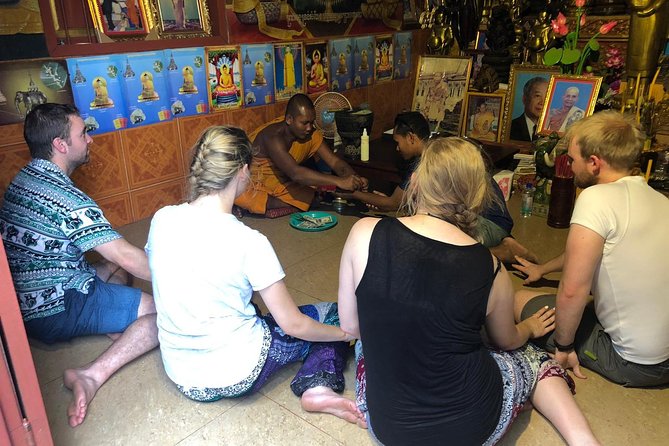
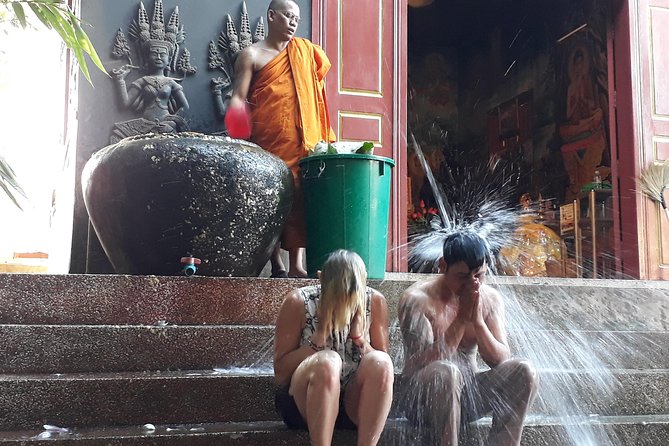
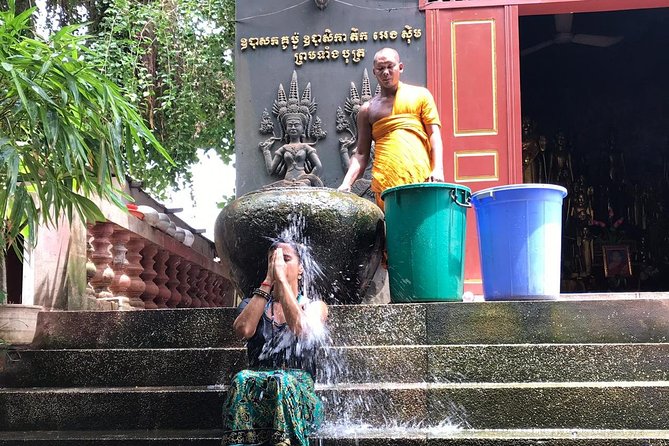
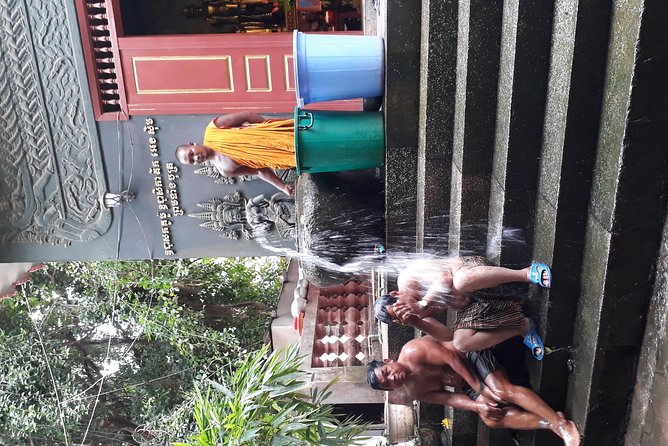
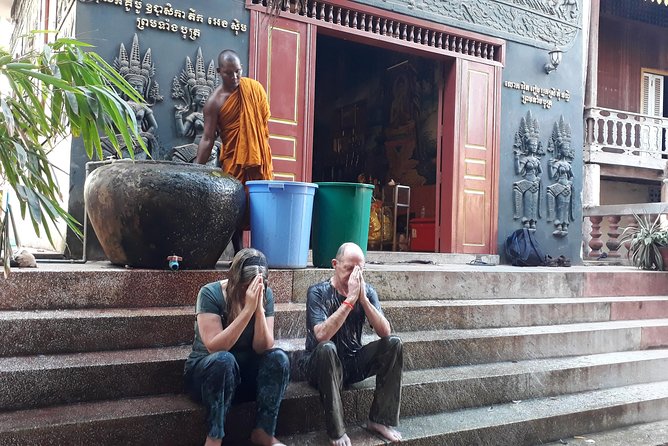
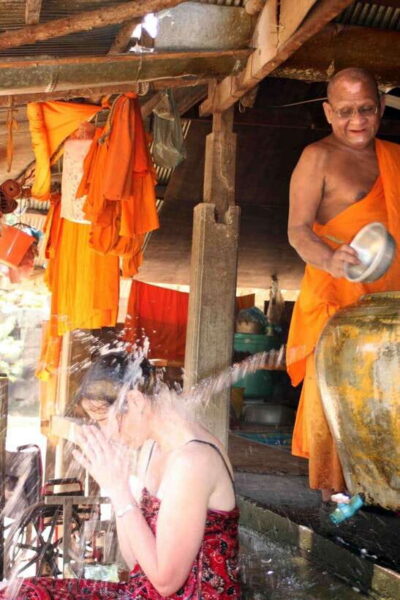
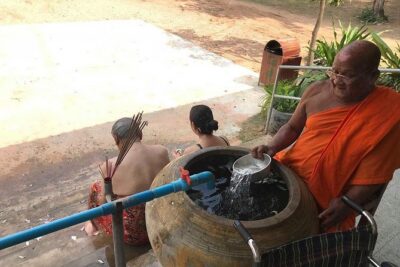
The final temple stop is Wat Po Banteaychey, where the Buddhist water blessing takes place. The scheduled time is about 35 minutes, and this is the part that gives the outing its distinctive character.
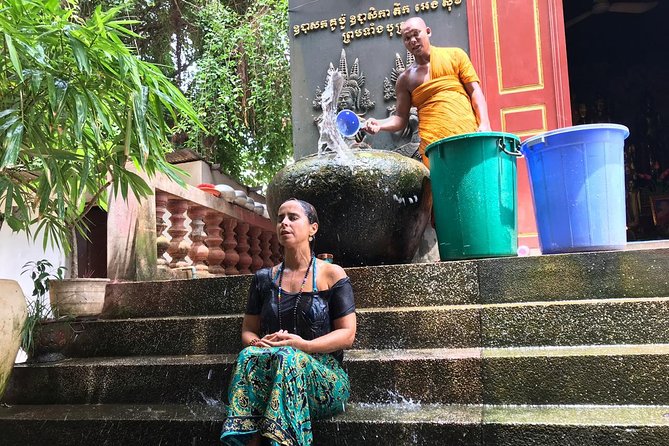
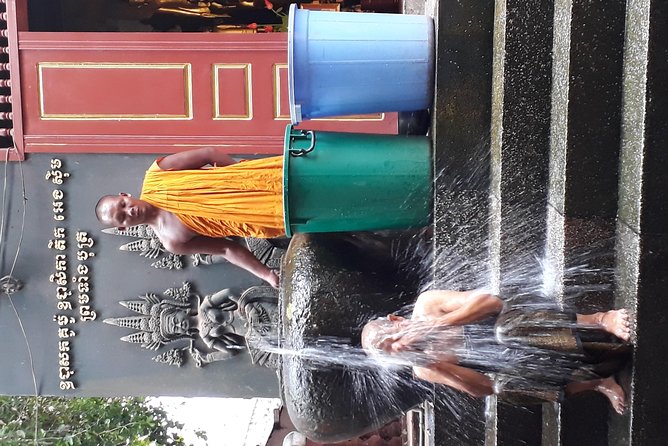
A Buddhist monk performs the blessing with holy water. You should expect to get wet, not merely receive a few drops on your hands. The practical warning is clear: bring another set of clothes and a towel. Spare trousers or a dry shirt will make the ride back to your hotel much more comfortable.
The ceremony can feel peaceful and personal, but you should approach it with respect. This is not a staged water ride or a casual splash game. Listen to the guide and monk, follow instructions, and let the ritual unfold without trying to turn every moment into a photograph.
The water blessing may appeal to you if you enjoy cultural experiences that involve participation rather than observation. You are not only looking at a temple wall or listening to an explanation. You take part in a local religious tradition.
At the same time, the tour gives you limited detail about the exact form of the blessing. The amount of water, the order of the ceremony, and the monk’s language are not specified. If you need a highly structured ritual with extensive explanation, this may feel brief. If you prefer a simple ceremony within a short city tour, the format should suit you well.
What the $42.15 price includes
At $42.15 per person, the cost is reasonable if you value private transport, a guide, and several cultural stops in one compact outing. You are paying for more than admission to temples. The price includes pickup and drop-off, a tuk-tuk, an English-speaking guide, bottled water, and all fees and taxes.
That package removes several small costs and planning tasks. You do not need to negotiate a tuk-tuk for each stop, arrange a return ride, or work out how the three sites connect. For a short tour, that convenience has real value.
The group limit is 16 people. That is not necessarily a tiny group, but it is capped rather than open-ended. Because the outing includes conversation and a blessing, ask about the group size when you book if personal attention matters to you.
Alcoholic drinks are not included, though that should not affect most people because this is a daytime cultural visit. You also need to pay for your own extra clothing, towel, meals, market purchases, or any other personal spending. Most importantly, the listing specifically tells you to bring spare clothes after the blessing.
Guide quality and the risk of a loose schedule
The listed provider is Yoeun Serakyuth, and the guide associated with the experience is Serakyuth Yoeun. The strongest praise centers on the guide’s helpful manner, cultural explanations, and attention to personal needs. That is important here because the value of the tour depends heavily on how well the guide explains customs and handles the temple visits.
One piece of feedback also points to a possible weakness: the day can feel disorganized, and not every advertised detail may happen exactly as expected. The guide reportedly adjusted well and included an art-shop visit as an alternative ending, but that change shows why you should keep your plans flexible.
I would not book this if you need every stop to run on a strict timetable. I would book it if you can accept small changes in exchange for a more personal outing. Tell the guide early if the water blessing, market, or monk conversation is the part you care about most.
The experience is described as easygoing, and most people can participate. Still, the water blessing is the one physical detail you must plan for. Wet clothes, temple floors, and market surfaces call for sensible footwear and a change of clothes.
Who will enjoy this experience most
This tour fits you best if you want to understand present-day Cambodian culture, not only see famous temples. It is also a good choice if you have a short amount of free time and want several different experiences close to Siem Reap City.
You may especially enjoy it if you:
- Want to speak with a guide about Buddhist customs
- Prefer active religious sites to ancient ruins alone
- Are curious about ordinary markets and local shopping
- Like taking part in a ceremony
- Do not mind a flexible schedule
- Can bring spare clothing for the blessing
Families and mixed-age groups may find the short duration helpful, though the wet blessing may not suit everyone. People who dislike open-air transport, market smells, or uncertain timing should think twice.
This is also a good add-on after seeing Angkor. The two experiences serve different purposes. Angkor gives you monumental Khmer architecture and archaeological scale. This outing gives you temples used today, local prayer, market life, and a personal ritual.
Booking, cancellation, and practical planning
Pickup and drop-off are included, but you should confirm the pickup details when making the reservation. The tour accepts mobile tickets, and confirmation is provided at booking.
Cancellation is free if you cancel at least 24 hours before the local start time. Cancellations made within 24 hours are not refunded, and changes during that period are not accepted. Poor weather can also affect the outing. If the experience is canceled for that reason, you are offered another date or a full refund.
Pack light, but include a towel and a full change of clothes. One bottle of water is included. Wear something that lets you move comfortably between temple, market, and tuk-tuk, and choose footwear that you do not mind wearing near wet areas.
Should you book the Buddhist water blessing tour?
Book it if you want a short, personal look at Siem Reap’s religious life and you like the idea of finishing with a real water blessing. The combination of Buddha paintings, an active prayer shrine, a local market, and monk-led ceremony gives you more cultural variety than a standard temple transfer.
Skip it if you want a tightly controlled schedule, a long visit at each site, or a dry and polished sightseeing experience. The itinerary may shift, and the market and temple settings are part of everyday life rather than carefully arranged attractions.
For most people, the best reason to book is the balance of time and variety. In two to three hours, you get transport, explanation, several stops, and a ceremony that asks you to participate. Just pack spare clothes, leave room for changes, and treat the temples as places of worship first.
FAQ
How long does the Buddhist water blessing experience last?
The experience lasts approximately two to three hours, including the temple visits, local market visit, transportation, and return to your hotel.
What places are included?
The scheduled temple stops are Wat Preah Prom Rath, Preah Ang Chek Preah Ang Chom Temple, and Wat Po Banteaychey. A local market visit is also included in the experience.
Will I get wet during the blessing?
Yes. The water blessing at Wat Po Banteaychey will make you wet, so bring a towel and another set of clothes.
Is hotel pickup included?
Yes. Pickup and drop-off at your hotel are included.
What type of transportation is provided?
Private transportation by tuk-tuk is included.
Is a guide included?
Yes. An English-speaking tour guide is included. The listed experience provider is Yoeun Serakyuth.
Is bottled water included?
Yes. One bottle of water is included.
How many people can join the tour?
The experience accepts a maximum of 16 people.
Can I cancel for a full refund?
Yes, if you cancel at least 24 hours before the experience start time. Cancellations made less than 24 hours in advance are not refunded._bad weather cancellations offer another date or a full refund.
Just added around Siem Reap
- Twilight Tastes of Siem Reap Include Dinner★ 5.0 · 13 reviews
- Ultimate Sunrise to Angkor Wat, Angkor Thom and Bayon Temple★ 5.0 · 3 reviews
- Trekking Tour at Phnom Kulen National Park from Siem Reap★ 5.0 · 3 reviews
- Professional Photo Shoot in Angkor Archaeological Park, Siem Reap★ 5.0 · 42 reviews
- Full-Day Private Tour of Angkor Wat with Pick Up★ 5.0 · 12 reviews
- Unveiling 2 Days Private Angkor Wat/Beyond In Sunrise/Sunset Tour★ 5.0 · 48 reviews
- Siem Reap City Tour with War Museum and Killing Field★ 5.0 · 27 reviews
- Private Day Trip to Angkor Temples with Expert Guide★ 5.0 · 4 reviews
Water Blessing Ceremonies, compared.
Private Guided Angkor Wat Tour by Lady Tuk Tuk with Monk Blessing
Read our review →
Khmer Water Blessing by Monk and Lotus Farm Visit
Read our review →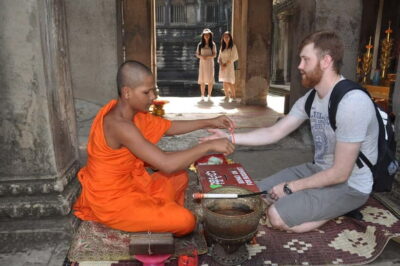
Siem Reap Cambodian Buddhist Water Blessing and Local Market
Read our review →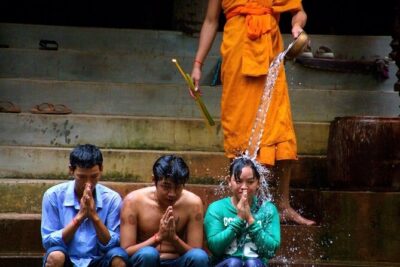
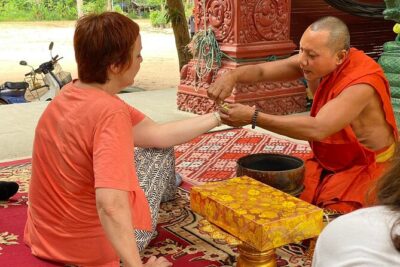
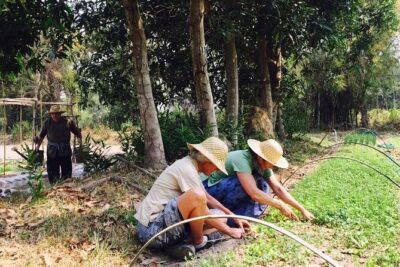
Full Day Siem Reap Farm Tour with Cooking Class and Monk Blessing
Read our review →Browse the lists this tour appears in