
Reviewed · 2-DAY EXPERIENCES
Highlight of Angkor Complex 2 Days Private Tour
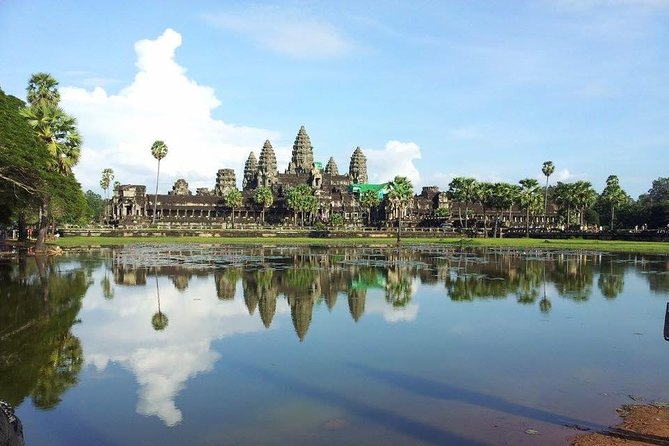
Angkor Wat is only the beginning. This two-day private tour takes you from the giant faces of Bayon and the tree-covered ruins of Ta Prohm to small, quiet temples such as Ta Nei and Banteay Prei. You get the big sights, but also a better sense of how wide the old Khmer capital once was.
I like the private vehicle and guide, since you can ask questions, adjust the pace, and spend more time at a temple that catches your eye. I also like the mix of famous monuments and less-visited stops, especially Ta Nei, where the jungle setting feels far removed from Angkor Wat.
The main drawback is the packed schedule. Day one includes roughly nine hours of listed sightseeing, and day two adds several distant temples. You should expect plenty of walking, stairs, heat, and temple fatigue, even with comfortable transportation between stops.
Key points to know before booking
- Angkor Wat is paired with smaller ruins: Ta Nei and Banteay Prei add quieter, more atmospheric stops to the usual temple circuit.
- The tour is fully private: Only your own group joins, so you can ask for explanations and request reasonable adjustments.
- Day one is the long temple day: Angkor Thom, Bayon, Ta Prohm, Angkor Wat, and Ta Nei make for a full outing.
- Day two reaches farther out: Banteay Srei and Banteay Samre require more driving, but reward you with different styles of Khmer architecture.
- The Angkor Pass costs extra: Your guide helps you purchase it at the entrance before visiting the temples.
- Meals are not included: Lunch is available at local restaurants, with dishes generally priced from $3 to $10.
A strong first look at Angkor Thom
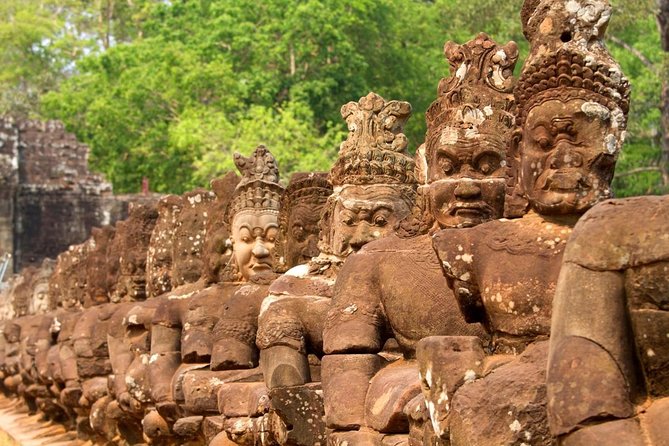
The tour begins at Angkor Thom’s South Gate, the grand entrance to the last great capital of the Khmer Empire. The restored gate still has many of its carved heads, making it an easy introduction to the symbolism and scale of the site. Allow about 25 minutes here for photographs and a first explanation from your guide.
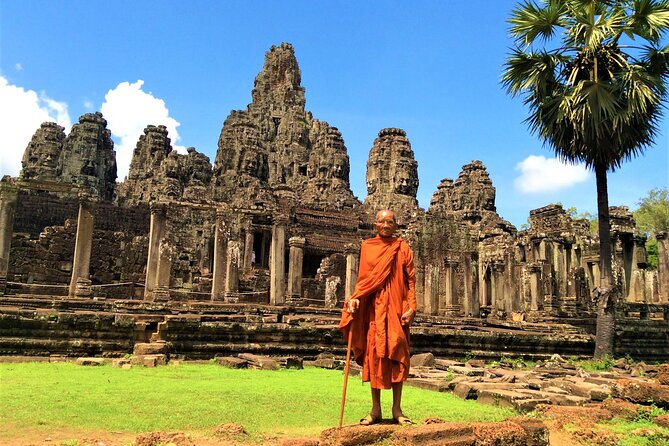
Next comes Bayon, the temple famous for its enormous, calm faces. You get about an hour to look around, which is useful because Bayon is not a simple monument to view from one angle. Its towers, galleries, carvings, and narrow passages reward slow walking.
I would pay close attention to the bas-reliefs here. They show scenes of warfare, court life, markets, and daily activity, giving you more than grand religious imagery. A guide can help you read those carvings instead of treating Bayon as a quick photo stop.
Angkor Thom itself receives another half hour. The site is much larger than the central temple, and this brief visit helps connect the South Gate, Bayon, and the former royal center. The schedule is brisk, so you may not get a full exploration of every corner.
More Private Tours in Siem Reap
- Full-Day Angkor Wat Sunrise Private Tour with Guide from Siem Reap
★ 5.0 · 2,920 reviews - Siem Reap: Angkor Wat Private Tuk-Tuk Tour
★ 4.9 · 2,222 reviews - Angkor Wat Private Day Tour from Siem Reap
★ 5.0 · 834 reviews
The royal center, Baphuon, and stone elephants
Baphuon follows with about 45 minutes. Its tall, stepped form differs from Bayon, and the long raised approach gives you a clear sense of its scale. Some sections involve uneven surfaces and stairs, so shoes with a firm grip are useful.
Phimeanakas takes another 30 minutes. Located near the center of the former Royal Palace area, it is less visually overwhelming than Angkor Wat, but it helps explain how religious buildings fit into the royal compound. I would treat this as a context stop rather than the day’s main event.
The Terrace of the Elephants and the Terrace of the Leper King add another hour and 15 minutes between them. The Elephant Terrace is known for its carved elephants and ceremonial scale. The Leper King Terrace is more enclosed and dramatic, with carvings on both its inner and outer walls.
These terraces are valuable because they show Angkor as a working royal city, not just a collection of isolated temples. You see the spaces where processions, public displays, and court ceremonies once took place.
Ta Prohm, where trees share the ruins
Ta Prohm gets about an hour and a half, and that extra time is welcome. The temple is famous for trees growing through and over the stonework, creating the feeling of a ruin slowly being reclaimed by the forest.
The site has not been cleared in the same way as the most restored monuments. Paths have been made safe and unstable areas strengthened, but the tangled roots and collapsed galleries remain part of the experience.
Ta Prohm is one of the busiest stops on the route, so a private guide cannot guarantee solitude. What your private setup can provide is a little more control. You can ask for a slower look at the carvings or move on when the crowds make a particular area less enjoyable.
Angkor Wat needs time, not a quick photograph
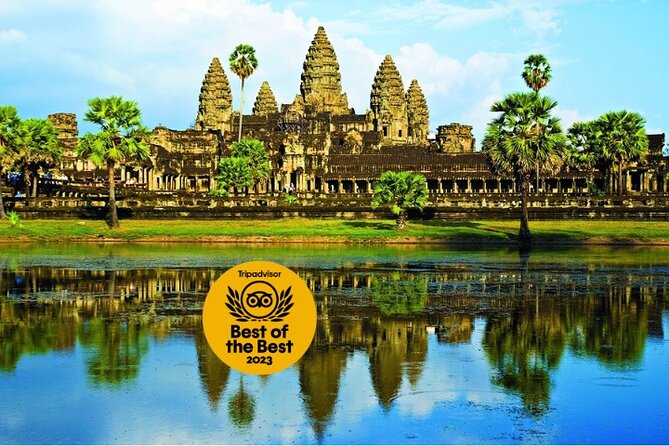
The itinerary gives Angkor Wat three hours, the longest single temple visit on day one. That is the right idea. This huge monument has broad galleries, long sight lines, towers, courtyards, and detailed reliefs. A hurried visit would reduce it to a backdrop.
Your guide can explain the temple’s design and the stories shown in its carvings. I would also use the time to notice the balance of the structure from different viewpoints. Angkor Wat is not only large. Its proportions and repeated architectural patterns are what make it so memorable.
Entrance fees are not included in the tour price. The guide assists with buying the Angkor Pass at the park entrance before the temple visits begin, so you should budget for that separate expense. The supplied details do not state the current pass price, so check it before booking.
Same base, a completely different kind of day:
- Angkor Wat Sunrise or Sunset Tour with Guide from Siem Reap
★ 5.0 · 12,109 reviews - Siem Reap: Angkor Wat: Small-Group Sunrise or Sunset Tour
★ 5.0 · 9,444 reviews - From Siem Reap: Kampong Phluk Floating Village Tour by Boat
★ 4.9 · 6,979 reviews - Sunset tour of Kampong Phluk stilts home village on the Tonle Sap
★ 5.0 · 4,865 reviews
Ta Nei adds a quieter jungle stop
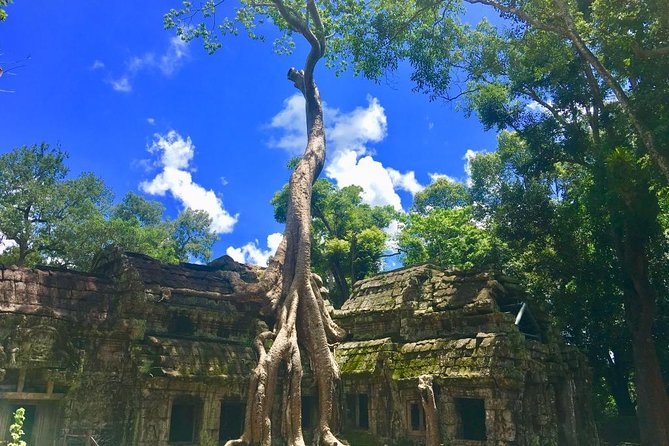
Ta Nei is one of the most appealing stops for anyone who wants more than the standard Angkor route. It is a small temple deep in the Cambodian forest, about 200 meters west of the East Baray, and it can be difficult to find without local help.
You get about 45 minutes here. The ruins are less polished and less visited than Angkor Wat or Ta Prohm, which changes the mood completely. I like this stop because it gives you room to think about the scale of Angkor without the same level of attention around every doorway.
The tradeoff is that Ta Nei has fewer grand features and may interest you most if you enjoy archaeology, ruins, and atmosphere. If you prefer only the largest and most decorated temples, this is where the schedule may feel less essential.
Banteay Srei and Banteay Samre on day two
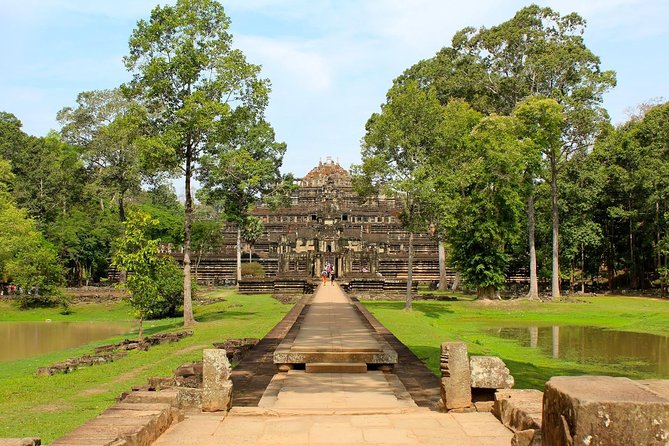
Day two begins with Banteay Srei, about an hour and 20 minutes from the scheduled start of the temple visit. This small temple is celebrated for its fine carvings and pinkish sandstone. Its scale is more intimate than Angkor Wat, but the decoration is remarkably detailed.
Banteay Srei is often one of the most satisfying stops for people who enjoy close-up sculpture. Give yourself time to examine the doorways, lintels, and figures rather than simply walking around the outer path.
Banteay Samre follows with about 45 minutes. It is a well-restored complex with a more enclosed, fortress-like feel. The temple gives you another look at Khmer planning and decoration without repeating the exact experience of the previous day.
The distance between these temples matters. Day two is not just a second loop around the central Angkor area. You spend part of the day in the vehicle, which makes the included private transfer especially useful.
Pre Rup and Eastern Mebon show a different Angkor
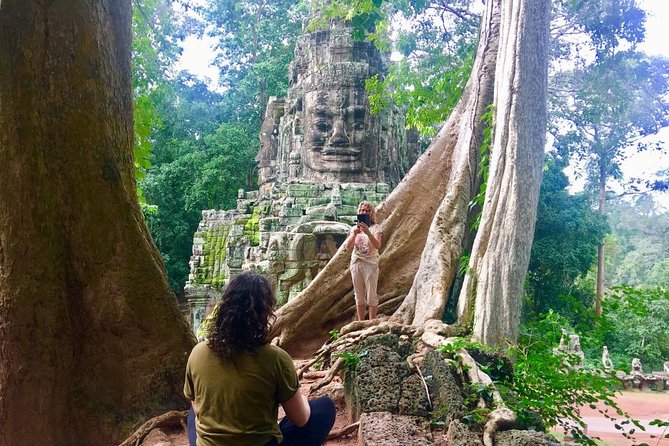
Pre Rup receives about 50 minutes. Its bold, tiered design gives you strong views across the surrounding area, and the climb helps you see how Khmer architects used height to create a powerful religious setting.
The stone can be hot and the steps steep. I would take this stop slowly, especially if your legs are already tired from day one.
Eastern Mebon adds about 30 minutes. Look for the free-standing stone elephants on the corners of its upper levels. These sculptures are easy to miss if you rush, but they are among the temple’s most distinctive features.
Together, Pre Rup and Eastern Mebon show how similar ideas can produce different results. Both use raised platforms and strong geometric forms, yet each has its own details and mood.
Neak Pean and Preah Khan on the Grand Circuit
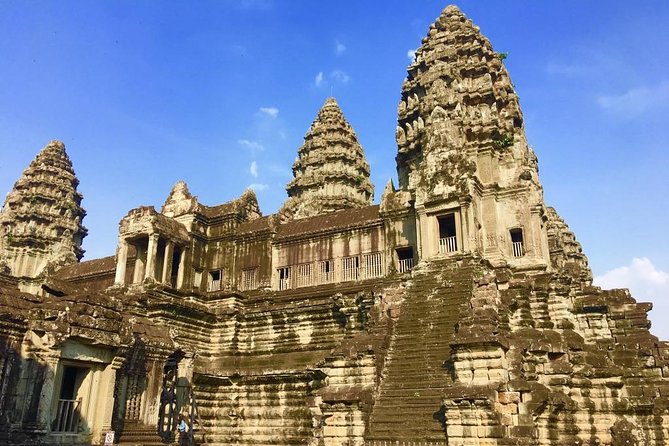
Neak Pean is a compact and unusual site built around a large square man-made pond. Four smaller ponds surround the central area, creating a design tied to water, healing, and religious symbolism.
The approach and the water setting make Neak Pean different from the hilltop and gallery temples. You get about 45 minutes here, which is enough to understand the layout and take in the setting without making the visit feel rushed.
Preah Khan follows with an hour. Built in the late 12th century by Jayavarman VII and dedicated to his father, it is a large complex with long corridors, carved details, and a strong sense of scale.
I would give Preah Khan your full attention. It is easy to get turned around, and its repeated doorways can blur together if you move too quickly. A guide is especially useful here because the building’s size and layered spaces are hard to interpret on your own.
Banteay Prei and a local food stop
Banteay Prei is a minor temple, visited for about 45 minutes. It is best suited to people who want to study Angkor beyond the headline monuments. If you are already tired, this is one of the stops you might appreciate less.
The route then includes time at Om Pich steamed toddy palm cake in Prashdak Village, near Preah Dak Market. The stop lasts about 30 minutes and adds a local food and market element to a day otherwise filled with stone temples.
You can find souvenirs and local arts at the market. Since food and shopping costs are not included, bring some Cambodian currency or another accepted payment method if you want to buy something. The details provided do not specify which payment types are accepted, so ask your guide before purchasing.
What the $149.46 price really covers
At $149.46 per person, the value depends on how many people are in your private group. The price includes hotel pickup and drop-off, a private vehicle, a licensed English-speaking guide, drinking water, and cool fresh tissues throughout the tour.
That package is useful in Siem Reap’s heat. You avoid arranging separate transport for major temples and distant sites, and you have one guide who can connect the monuments rather than leaving you to piece everything together.
The price does not include the Angkor Pass, meals, or tips for the guide and driver. Lunches are available at local restaurants, with menu prices listed at about $3 to $10 per dish. Add those costs before deciding if the tour fits your budget.
A private tour usually offers better value for a family, couple, or small group that wants flexibility. Solo visitors should compare the per-person price with a group tour, since the private format may cost more when only one person joins.
Timing, clothing, and practical comfort
Hotel pickup and drop-off are included, but you need to provide your hotel name when arranging pickup. The tour is offered in several languages, while the included guide is described as English-speaking. Confirm the language you need before booking.
Wear clothing that covers your shoulders and knees. These are active religious sites, not just photo locations, and respectful dress is required. Light clothing that meets those rules, comfortable walking shoes, sunscreen, and a hat will make the long days easier.
The tour is listed as suitable for most participants and near public transportation, but the schedule includes stairs, uneven ground, and extensive walking. If you have mobility concerns, ask the operator which stops can be shortened or skipped.
The itinerary is flexible enough to support reasonable requests. One recorded experience included a stop at the land mine museum when requested, so it is worth asking in advance if you have a particular place you want to add. Do not assume every request can fit, especially on the already full first day.
The tour can be canceled for a full refund up to 24 hours before the start time. Changes or cancellations made less than 24 hours ahead are not accepted for a refund.
Who should book this two-day tour
I would choose this experience if you want serious Angkor coverage without sharing a vehicle with strangers. It suits first-time visitors who want the essential temples, as well as returning visitors who want quieter places such as Ta Nei and Banteay Prei.
It is also a good fit if you value explanation. Angkor is easier to understand when someone points out the difference between a royal terrace, a temple mountain, a water complex, and a later Buddhist monument.
I would hesitate if you want slow mornings, long café breaks, or only the most famous sights. The route is ambitious, and some minor temples may feel like extra work by the second afternoon.
The tour has a 4.9 rating from 13 reviews, with 100 percent recommending it. A guide named Mr. Sara was specifically praised alongside the driver for punctuality, comfort, history explanations, and a well-planned route. If he is assigned to your booking, you can expect the kind of attentive guiding described in the supplied feedback, but guide assignment should be confirmed rather than assumed.
Should you book the Highlight of Angkor Complex tour?
Book it if you want two full days that combine Angkor’s major monuments with smaller ruins, private transport, and a guide who can adjust the experience. The inclusion of Ta Nei, Banteay Prei, Banteay Samre, and the village food stop gives the route more variety than a basic Angkor Wat package.
Before paying, confirm the pickup location, guide language, group size, and the extra cost of the Angkor Pass. Also decide how much walking you can handle in the heat.
For a small group that wants a thorough introduction to Angkor, this is a strong value at $149.46 per person. For a solo visitor or anyone who prefers a relaxed pace, a shorter private tour may be the wiser choice.
FAQ
Is the Angkor Pass included in the tour price?
No. The Angkor Pass is not included. Your guide will assist you in buying it at the entrance to Angkor Park before visiting the temples.
Are meals included?
No. Lunches are available at local restaurants, but meals are paid for separately. Listed menu prices range from $3 to $10 per dish, with vegetarian and non-vegetarian choices.
Is hotel pickup included?
Yes. Hotel pickup and drop-off are included. You need to provide your hotel name for pickup arrangements.
Is this a private tour?
Yes. Only your own group participates, and private transfers by comfortable vehicle are included.
What should I wear to the temples?
Wear a shirt that covers your shoulders and trousers, knee-length pants, or a knee-length skirt. Respectful clothing is required at the ancient religious sites.
Can I cancel for a full refund?
Yes, if you cancel at least 24 hours before the experience start time. Cancellations or changes made less than 24 hours in advance are not accepted for a refund.
Just added around Siem Reap
- Twilight Tastes of Siem Reap Include Dinner★ 5.0 · 13 reviews
- Ultimate Sunrise to Angkor Wat, Angkor Thom and Bayon Temple★ 5.0 · 3 reviews
- Trekking Tour at Phnom Kulen National Park from Siem Reap★ 5.0 · 3 reviews
- Professional Photo Shoot in Angkor Archaeological Park, Siem Reap★ 5.0 · 42 reviews
- Full-Day Private Tour of Angkor Wat with Pick Up★ 5.0 · 12 reviews
- Unveiling 2 Days Private Angkor Wat/Beyond In Sunrise/Sunset Tour★ 5.0 · 48 reviews
- Siem Reap City Tour with War Museum and Killing Field★ 5.0 · 27 reviews
- Private Day Trip to Angkor Temples with Expert Guide★ 5.0 · 4 reviews
2-Day Experiences, compared.
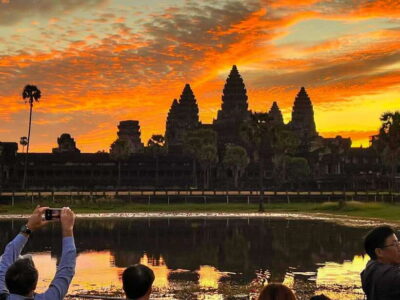
Angkor Wat 2-Day Tour with Sunrise and Sunset
Read our review →
2 Days Exclusive Temple Highlights with Sunset and Sunrise Tour
Read our review →
Angkor Sunrise 1- or 2-Day Guided Temples Tour
Read our review →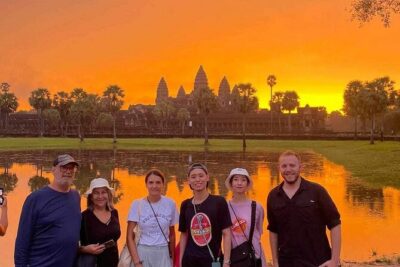
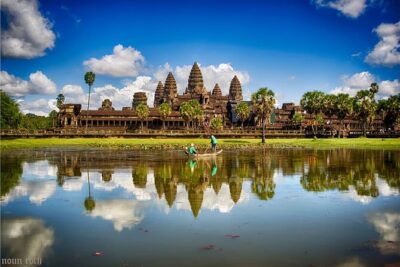
2-Day Angkor Wat With Small, Big Circuit and Banteay Srei Tour
Read our review →
2-Day Temple Highlights Sunrise and Sunset Option
Read our review →
Angkor Wat 2-Day complex Sun rise & Sun set with Guided Tour
Read our review →
2-Days Angkor Wat with Sunrise Small-Group Tour
Read our review →Browse the lists this tour appears in