Reviewed · TOURS
Journey Through Time: Grand Tours with professional photographers
The best reason to choose this tour is the chance to see Angkor beyond Angkor Wat. Preah Khan, Ta Som, and Eastern Mebon offer carved stone, old reservoirs, and tree-covered ruins without the same pressure as Cambodia’s most famous temple.
I like the private transport and the personal guide. You can move at your own pace, ask about Khmer kings and beliefs, and stop for photographs without waiting for a large group. Guides named John, Diamond, Pich, and Davann are praised for humor, history, helpful queue advice, and taking good pictures.
The main catch is timing. Six temple stops in roughly five to six hours is a brisk plan, especially because Banteay Srei sits about 25 kilometers from the main Angkor Archaeological Park. The $237 price also does not include the $37 one-day Angkor pass, food, drinks, tips, or a listed $15 charge for sunlight.
Key points to know before booking
- Six very different temples: You visit Preah Khan, Neak Pean, Ta Som, Pre Rup, Eastern Mebon, and Banteay Srei.
- A genuinely private outing: Only your group participates, with private car or van transport from Siem Reap and back.
- A guide and photographer together: The English-speaking guide explains the temples while the photographer helps capture portraits, videos, and details.
- Quiet ruins and nature: Ta Som is largely unrestored, with trees growing through the stone in the manner of Ta Prohm.
- Extra costs matter: The Angkor pass, meals, drinks, tips, and the stated $15 sunlight charge are separate.
- Dress carefully: Knees and shoulders must be covered for men and women at places of worship and selected museums.
Why this Grand Circuit makes a good second Angkor day
Many people first see Angkor Wat and the temples on the Small Circuit. This tour gives you a different day: long galleries at Preah Khan, a small island temple at Neak Pean, quiet ruins at Ta Som, and tall sandstone temples built for Hindu worship.
That variety is the real strength. You are not looking at the same style of ruin six times. Each stop presents a different idea about Khmer religion, kingship, water, death, or the slow return of nature.
The private format also matters. You are not tied to a large coach group. Your private car or van picks you up in Siem Reap and returns you to the meeting point after the tour. The booking information says hotel transfer is complimentary, making the start simple. You can download the mobile ticket to your phone for the driver.
The guide is central to the experience. The company uses professional English-speaking guides, and the names attached to past outings include John, Diamond, Pich, and Davann. The strongest praise centers on clear explanations of Cambodian history, friendly humor, and help with queues. One guide also pointed out small details around the temples that are easy to miss.
A professional photographer is included too. That is useful if you want more than quick phone snapshots. The guide and photographer can help with pictures and videos, while you pay attention to the carvings and buildings instead of trying to manage your camera at every stop.
A few more Siem Reap half-days worth weighing up
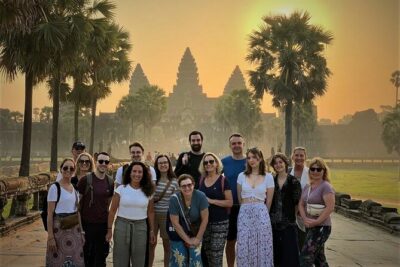
- Angkor Wat Sunrise or Sunset Tour with Guide from Siem Reap
★ 5.0 · 12,109 reviews - Siem Reap: Angkor Wat: Small-Group Sunrise or Sunset Tour
★ 5.0 · 9,444 reviews - From Siem Reap: Kampong Phluk Floating Village Tour by Boat
★ 4.9 · 6,979 reviews
Preah Khan, long corridors and a royal memorial
Your first stop is Preah Khan, known as the Royal Sword Temple. King Jayavarman VII built it in the early 12th century in honor of his father.
This is a large complex, and its scale gives you an immediate sense of how much work went into an Angkor temple. It was not only a place for prayer. It served as a major center with almost 100,000 officials and servants connected to it.
Allow about an hour here. Your guide can help you read the temple as more than a pile of carved stones. Look for the long passageways, doorways, religious images, and signs of different beliefs sharing one site.
Preah Khan can feel sprawling. That is part of its appeal, but it also means you may not see every corner during a fast half-day. If you like old corridors, layered carvings, and a sense of a former institution rather than a single monumental tower, this is one of the strongest stops.
Neak Pean, an island temple built around water
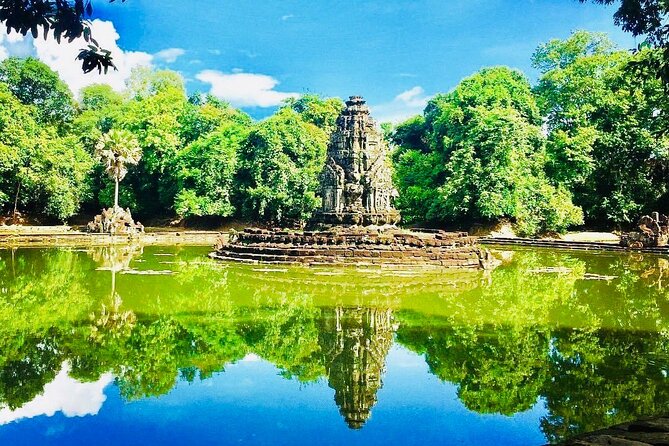
Neak Pean changes the mood. Instead of a broad temple complex, you walk toward an artificial island and a Buddhist temple built in the center of the Preah Khan Baray, also called Jayatataka.
The original setting depended on water, and that makes Neak Pean especially useful for understanding Khmer engineering and religious design. The temple was built by Jayavarman VII, the same king linked to Preah Khan and Ta Som.
The approach and island setting give you a different view from the enclosed galleries at Preah Khan. It is a place where the water system is part of the story, not just a backdrop.
The supplied timing allows about an hour, though the actual visit may feel shorter than Preah Khan. Because the tour includes six stops, you should keep an eye on the clock if you want enough time at Banteay Srei later.
Ta Som, where trees are reclaiming the stone
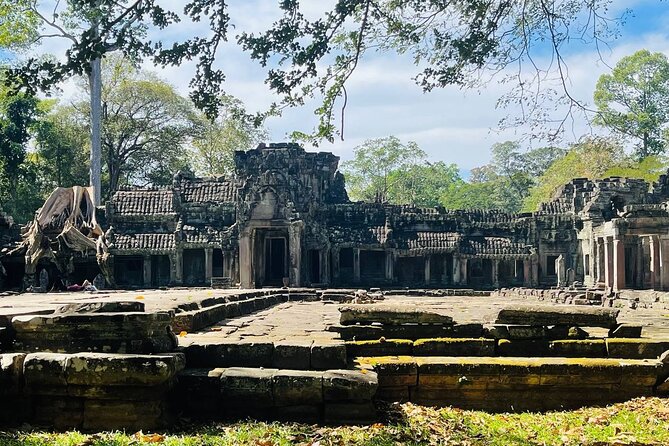
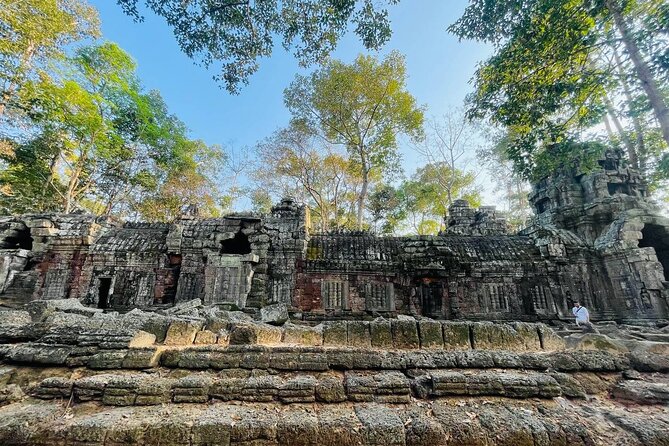
Ta Som was built by Jayavarman VII at the end of the 12th century and dedicated to his father. It is often compared with Ta Prohm because it remains largely unrestored and trees have grown into and around the temple.
This is one of the most atmospheric stops on the route. Nature is not merely beside the ruins here. It has become part of how you read them.
I like Ta Som for its smaller scale and quieter feel. You can focus on doorways, stone surfaces, and the way roots and branches press against old masonry. The condition of the site also gives you a clearer sense of how difficult it is to preserve Angkor.
There is a practical tradeoff. Unrestored ruins can be uneven and visually busy, so you may need your guide to point out the most important carvings. The photographer can also help frame the trees and stone without reducing the visit to a standard temple portrait.
Same base, a completely different kind of day:
- Sunset tour of Kampong Phluk stilts home village on the Tonle Sap
★ 5.0 · 4,865 reviews - Siem Reap: Angkor Wat 2-Day Tour with Sunrise and Sunset
★ 4.9 · 4,429 reviews - Siem Reap: Kampong Phluk Floating Village Tour with Boat
★ 4.9 · 3,843 reviews - Siem Reap: Full-Day Angkor Wat Guided Tour with Sunset
★ 4.9 · 3,803 reviews
Pre Rup, a tall Hindu temple with a funerary story
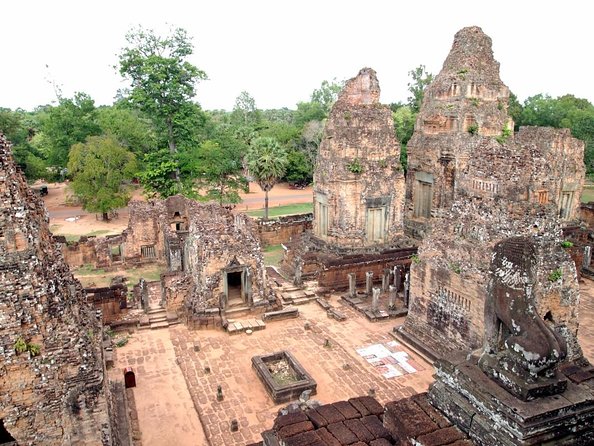
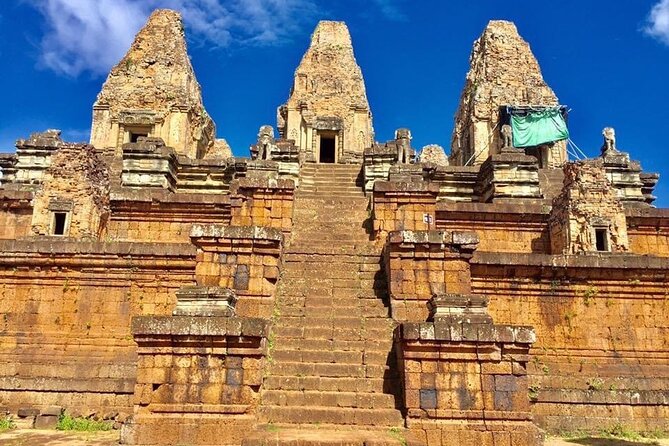
Pre Rup is a Hindu mountain temple built by King Rajendravarman in 961 or early 962. Its modern Khmer name means turn the body, and Cambodian belief connects the temple with funerals.
This stop brings a different period and religious setting into the day. After several Jayavarman VII sites, Pre Rup shows the work of another king and the older Hindu tradition that shaped much of Angkor.
The temple rises in tiers, giving you a strong view of its sandstone structure. The word mountain refers to the symbolic form, with the upper levels representing the sacred mountain at the center of the universe.
You should wear firm shoes and take care on the steps. The tour information does not promise a particular sunset visit, so do not book this outing expecting a sunset experience. The point is the temple’s design and meaning, not a guaranteed time-of-day view.
Eastern Mebon, a temple that once sat on an island
Eastern Mebon, also called Mebon in the tour details, dates from the 10th century. King Rajendravarman built it for the Hindu god Vishnu and to honor his parents.
The temple once stood on an artificial island in the center of the East Baray, a reservoir that is now dry. That fact makes the site a useful companion to Neak Pean. At Neak Pean, you see a temple designed around a water system associated with Jayavarman VII. At Eastern Mebon, you see what happens when the water that defined a site is gone.
This stop rewards attention to setting and purpose. Without the reservoir, it is easy to miss how unusual the original arrangement was. Ask your guide to explain the old waterworks and how the temple functioned within them.
Eastern Mebon is also a welcome change from the jungle-covered appearance of Ta Som. Its older Hindu architecture and open setting help break up the day.
Banteay Srei, fine carvings and a long final drive
Banteay Srei is about 25 kilometers northeast of the Angkor Archaeological Park. It is smaller than Angkor Wat, but it is known for detailed stone carving and is presented as the Jewel of Khmer Artistry.
The smaller scale can make the carvings easier to appreciate. Rather than trying to take in a huge complex, you can concentrate on the fine work across the pinkish sandstone and the careful decoration around doorways and walls.
This is also the most important timing issue. The tour schedule gives about an hour to each of six stops, yet the total duration is only five to six hours. The drive to Banteay Srei adds distance, so the actual time at each site may vary.
If Banteay Srei is your priority, say so at the start. A private tour gives you more room to discuss the day’s pace than a fixed group outing, but the published schedule still has limits. You may need to accept shorter visits elsewhere to give this temple the attention it deserves.
What the $237 price really covers
The listed price is $237, but check how that figure applies to your booking before you pay. The Angkor admission pass is not included and is listed at $37 per person for one day. Food and drinks are also separate, as are personal expenses and tips.
A further $15 per person sunlight charge is listed in the extra-cost information. The wording is not fully clear, so ask the operator what it covers before booking.
What you do receive is substantial: a luxury private car or van, a professional English-speaking guide, a professional photographer, mineral water, tissues, and natural fruit. Round-trip hotel transfer is included, and the tour ends back at the starting point.
The value is strongest for two or more people who want privacy and help with photographs. You are paying not only for transport, but also for a guide who can explain the kings, religious traditions, water systems, and small details that are easy to pass without context.
It is less attractive if your main goal is the lowest-cost way to reach the temples. In that case, the separate pass and extra charges raise the total. It also may not suit you if you prefer a slow day at only two or three temples.
Comfort, clothing, and the pace of the day
The private vehicle is a practical advantage in Siem Reap’s heat. You can return to the car between sites, and the tour provides water and fruit. Even so, the schedule is active, with walking at every temple and several hours outside.
Wear clothing that covers your shoulders and knees. This rule applies to both men and women, and failing to follow it can lead to refused entry at places of worship and selected museums.
The tour is listed as suitable for most people and available near public transportation, but the supplied details do not describe step-free access or specific support for mobility needs. If you need that, ask before booking.
Bring your phone with the mobile ticket downloaded. The driver can use it for pickup, and you avoid relying on a weak connection at the meeting point.
The tour is private, not an open group departure. That helps families, couples, and small groups who want to ask questions or adjust the pace. It also explains why guide quality matters so much: your experience depends closely on the person assigned to you.
Who should book this experience
I would choose this tour if you have already seen, or plan to see, Angkor Wat and want a wider look at the temple complex. It is especially suitable if you want a guide to explain the history rather than simply provide a ride.
It also fits people who care about photographs. The dedicated photographer is a real advantage for couples, families, and anyone who wants portraits in the temple setting without constantly asking another person to take a picture.
The tour can work well for older family members too. One guide was specifically praised for caring for an 82-year-old grandmother. Still, you should remember that the day includes walking, heat, uneven temple areas, and a tight schedule.
I would think twice if you want a leisurely archaeological visit. Six stops, including the distant Banteay Srei, can feel rushed. A private tour gives you control, but it does not remove the distance between temples or the need to fit within the five to six hour window.
Free cancellation is available if you cancel at least 24 hours before the local start time. Cancellations or changes made later are not accepted for a refund.
Should you book the Grand Circuit tour?
Book it if you want private transport, strong historical explanation, and professional photos across a varied set of Angkor temples. The combination of Preah Khan, Ta Som, Neak Pean, and Banteay Srei gives you more than a repeat visit to the most famous monuments.
Before paying, confirm the final cost, especially the $37 Angkor pass and the listed $15 sunlight charge. Also ask how the operator plans to fit six stops into five to six hours. If you are happy with a brisk day and value personal guiding, this is a useful, well-rounded choice. If you want long, unhurried time at each ruin, choose a slower private plan with fewer stops.
FAQ
Is this a private tour?
Yes. Only your group participates, with private car or van transport.
How long does the tour last?
The experience lasts approximately five to six hours.
Which temples are included?
The route includes Preah Khan, Neak Pean, Ta Som, Pre Rup, Eastern Mebon, and Banteay Srei.
Is hotel pickup included?
Yes. Complimentary round-trip hotel transfer is provided from Siem Reap.
Is the Angkor temple pass included?
No. The one-day Angkor Temple Pass is listed separately at $37 per person.
Is a tour guide included?
Yes. A professional English-speaking guide is included.
Is a photographer included?
Yes. A professional photographer is included, and the tour information also describes guide assistance with photographs and videos.
What should I wear?
You must cover your knees and shoulders. This applies to both men and women at places of worship and selected museums.
Can I cancel for a full refund?
Yes, if you cancel at least 24 hours before the experience start time. Cancellations or changes made less than 24 hours in advance are not accepted for a refund.
Just added around Siem Reap
- Twilight Tastes of Siem Reap Include Dinner★ 5.0 · 13 reviews
- Ultimate Sunrise to Angkor Wat, Angkor Thom and Bayon Temple★ 5.0 · 3 reviews
- Trekking Tour at Phnom Kulen National Park from Siem Reap★ 5.0 · 3 reviews
- Professional Photo Shoot in Angkor Archaeological Park, Siem Reap★ 5.0 · 42 reviews
- Full-Day Private Tour of Angkor Wat with Pick Up★ 5.0 · 12 reviews
- Unveiling 2 Days Private Angkor Wat/Beyond In Sunrise/Sunset Tour★ 5.0 · 48 reviews
- Siem Reap City Tour with War Museum and Killing Field★ 5.0 · 27 reviews
- Private Day Trip to Angkor Temples with Expert Guide★ 5.0 · 4 reviews
Tours, compared.
Angkor Wat Sunrise or Sunset Tour with Guide from Siem Reap
Read our review →
Angkor Wat: Small-Group Sunrise or Sunset Tour
Read our review →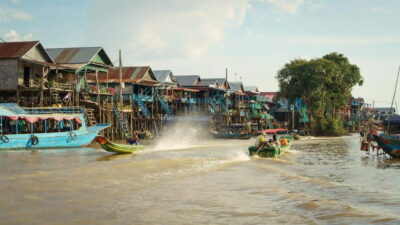
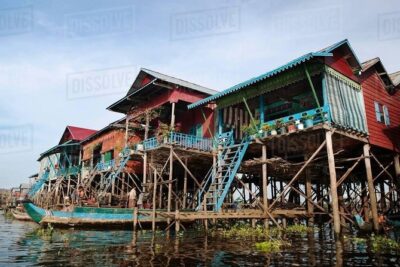
Sunset tour of Kampong Phluk stilts home village on the Tonle Sap
Read our review →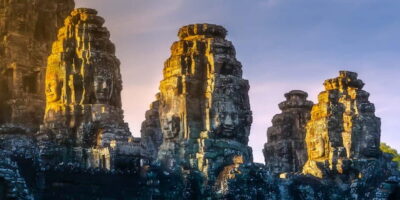
Angkor Wat Highlights and Sunrise Guided Tour from Siem Reap
Read our review →
Angkor Wat Sunrise and Full-Day Sightseeing Tour
Read our review →