
Reviewed · COOKING CLASSES
Kampot Cooking Class by Eco Lotus Kampot
The best part of this experience is the trip from Samaki Market to the garden. You do not simply arrive at a kitchen with ingredients already measured out. You help select fresh produce, then see where some of the herbs come from before cooking three Khmer dishes and a dessert at a traditional home stay.
I like the market visit because it gives the meal a local setting, not just a recipe sheet. I also like the garden work and the chance to ask questions while the chefs help you harvest and prepare ingredients. The main consideration is that this is a group class of up to 15 people, so anyone seeking a quiet, private cooking lesson may find the format less personal.
Key points at a glance
- Samaki Market visit: Spend about 40 minutes exploring a local market and choosing fresh ingredients.
- Organic garden harvest: Collect vegetables and herbs at Eco Lotus Kampot before cooking.
- Four dishes in one class: Prepare three Khmer dishes and one dessert from start to finish.
- Traditional home stay setting: Cook and eat at a local-style property rather than moving between several venues.
- About five hours: The 9:00 a.m. start includes pickup, the market, cooking, and a communal meal.
- Small but not private: The maximum group size is 15 people, with chefs available to help.
From Kampot to Samaki Market
This cooking class begins at 9:00 a.m. at J55G+CQ5, near Entanou Bridge in Kampot. Hotel pickup is offered, so confirm the pickup details when you book. The experience returns to the same meeting point at the end.
The opening transfer takes about 20 minutes. That is enough time to settle in and get a sense of the day without turning the activity into a long drive. The supplied information also identifies Sihanoukville as the general location, while the meeting point and the stops are in Kampot. I would double-check your exact pickup address before booking, especially if you are staying outside Kampot.
The first real stop is Samaki Market, where you spend about 40 minutes looking at local ingredients. This matters because the market is part of the cooking lesson, not a spare sightseeing stop. You get to see the produce before it reaches the kitchen and take part in choosing what will be used.
I like this kind of start. A recipe can tell you what to chop, but a market shows you how a meal begins in daily life. You will have a chance to look around, select fresh ingredients, and ask questions about what you are seeing. The available information does not name the individual dishes or specify every item bought at the market, so you should book this for the process rather than for a guaranteed menu.
The 40-minute visit is long enough to explore without making the morning drag. Still, a market visit can feel busy and sensory, and some people may prefer to go straight to the cooking. If your main goal is hands-on kitchen time, remember that this first stop uses part of the five-hour schedule.
More Cooking Classes in Kampot and Kep:
- Cooking class in Kampot
★ 5.0 · 21 reviews - Kampot Countryside: Authentic Khmer Cooking Class
★ 4.8 · 21 reviews - Cooking Class at La Plantation
★ 5.0 · 16 reviews
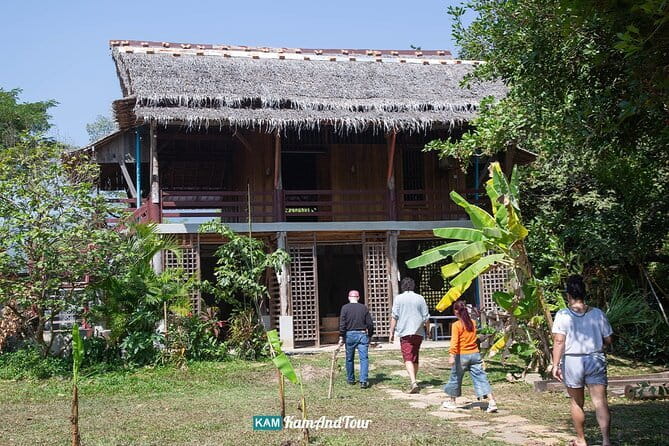
Arriving at the Eco Lotus Kampot home stay
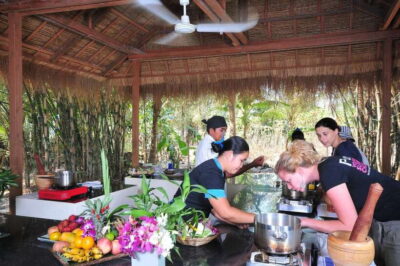
After the market, you continue to Eco Lotus Kampot, a traditional home stay where the cooking session takes place. Once you get out of the vehicle, the information provided says there is no further relocation. You stay in one place, and a team of chefs helps you gather and prepare the ingredients.
That fixed setting is useful. You do not have to keep packing your things, finding another meeting point, or walking between several activity areas. After the market, the day becomes focused: collect produce, cook, eat, and talk.
The property itself is described as lovely, with cooking taking place at a traditional home stay. That gives the class a more personal feel than a purpose-built cooking school can provide. You are not only learning dishes. You are also seeing the sort of setting connected with a Khmer home meal.
The one limitation is that the details of the kitchen and facilities are not provided. If you need a fully specified indoor kitchen, guaranteed seating style, or information about shade and weather arrangements, ask the provider before you go. The activity is designed to keep you in one place, but the exact setup is not described.
Picking herbs from the organic garden
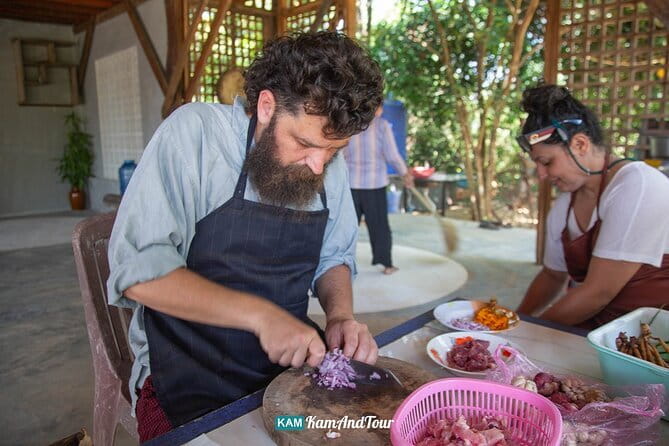
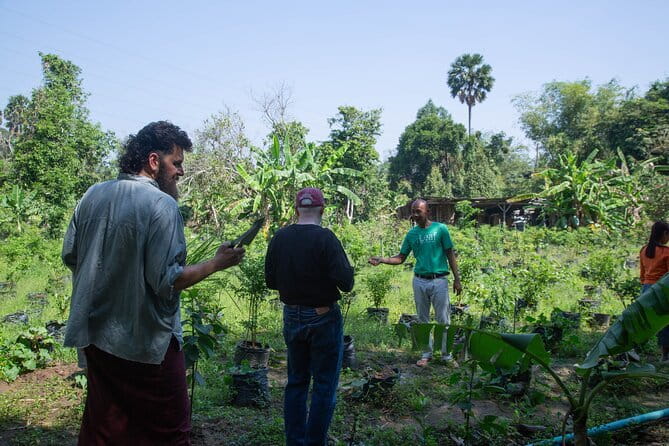
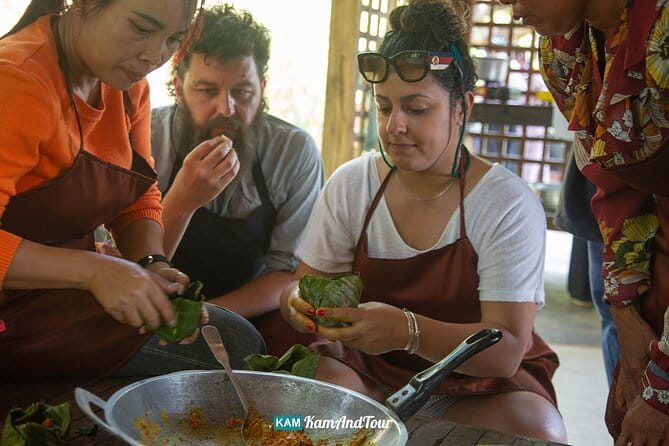
The garden is one of the most appealing parts of the class. You collect fresh vegetables and herbs from the organic garden before cooking. This simple step gives you a better sense of how flavor enters Khmer food.
You will not only handle ingredients from a market stall. You will also see herbs growing at the property and learn how to harvest them. The guide is happy to answer questions and show you how to collect herbs directly from the garden, so this part should suit anyone who likes food with a clear connection to place.
I especially like the contrast between the two ingredient stops. At Samaki Market, you explore a local buying environment and help choose produce. At Eco Lotus Kampot, you see ingredients growing at the home stay. Together, the two stops make the cooking feel less like a demonstration and more like a full food routine.
The garden visit should not be mistaken for a separate farm tour. It is part of the cooking class, and the supplied schedule does not give it a separate time length. Expect a practical ingredient-gathering session rather than a long agricultural presentation.
Preparing three Khmer dishes and one dessert
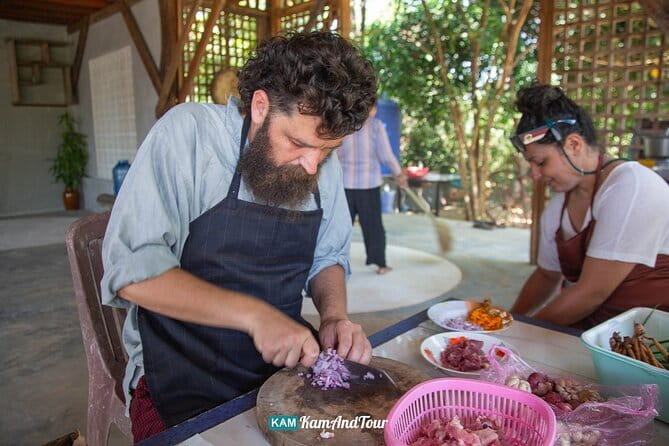
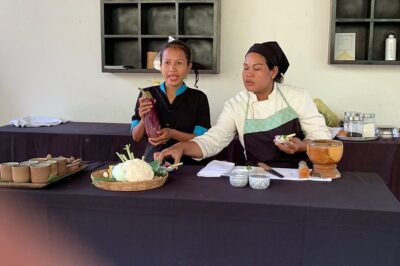
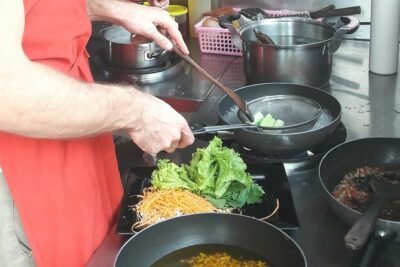
The main cooking session lasts about four hours, including the time at Eco Lotus Kampot and the shared meal. You learn to prepare and cook three authentic Khmer dishes, then make one dessert. The class takes you through the work from preparation to completion.
That full sequence is important. You are not simply watching a chef finish food and then sitting down to eat. The class is built around the steps that turn fresh ingredients into a meal. The available information does not list the dishes, so do not book this expecting a particular curry, soup, salad, or dessert unless the provider confirms the menu.
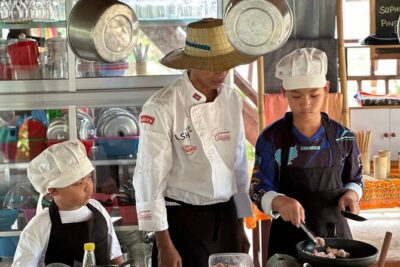
A four-dish lesson should give you enough variety to notice different preparation methods and flavors. It also offers better value than a short single-recipe demonstration. At the same time, a group of up to 15 people means your exact level of hands-on work may vary. The team of chefs is there to help with the ingredients, but the session is not advertised as one-on-one instruction.
For a first introduction to Khmer cooking, that balance is sensible. You get a broad taste of the cuisine without needing to spend a full day in class. If you already cook often or want advanced technique training, you may find the class more useful for cultural context and recipes than for specialist instruction.
A few more Kampot and Kep half-days worth weighing up
- Kampot: Pepper Farm Tours, Salt, Lake & Phnom Chhngok Temple
★ 4.8 · 432 reviews - Kampot: Full-day Countryside Tour with Pepper Farm and Kep
★ 4.9 · 245 reviews - Discovery Tour: Caving, Climbing, Via Ferrata and Abseiling in Kampot
★ 5.0 · 172 reviews - Kampot: Bokor Mountain Classic or Sunset Tour
★ 4.7 · 147 reviews
Sharing the meal at midday or late afternoon
The cooking session finishes around 12:00 p.m. or 5:00 p.m., followed by a communal meal. The published start time is 9:00 a.m., so the morning version appears to end around midday. The reference to 5:00 p.m. suggests that an afternoon schedule may also operate, but you should confirm your exact session time when booking.
The shared meal is a fitting finish. You have seen the ingredients at the market, collected herbs in the garden, and helped prepare the food. Sitting down together gives the class a clear ending and lets you enjoy the dishes while they are fresh.
I would allow room in your schedule for the full experience rather than planning a tight connection afterward. The stated duration is approximately five hours, and cooking times can shift when a group is working together. The schedule includes pickup, the market, the home stay, cooking, and the meal.
The communal format may be a plus or a drawback depending on your style. It creates a social meal and gives you a chance to compare results with others. If you prefer to eat privately or leave as soon as the cooking ends, this may feel less flexible.
What the $25 price really covers
At $25 per person, this is a strong-value half-day activity if you make use of all its parts. The price covers the market visit, the garden ingredient gathering, instruction for three Khmer dishes and a dessert, the communal meal, and admission at the activity stops. Pickup is offered, which may also reduce the need to arrange separate transport.
The value is not only in the food you eat. You are paying for a chain of experiences: seeing ingredients at Samaki Market, learning how herbs are gathered, receiving help from a team of chefs, and cooking in a traditional home stay. That makes the class more useful for a curious eater than a simple restaurant lunch.
Still, price comparisons should account for what you want. If you only want to taste Khmer food, a restaurant meal may be cheaper and faster. If you want recipes, preparation practice, and a look at how ingredients are selected, the class offers more for the time and money.
The group limit of 15 helps keep the price accessible, but it also explains why the experience is not presented as a private lesson. You should expect a shared class rather than a custom menu or personal chef service.
Who will enjoy this Kampot cooking class
I would recommend this class to you if you want a practical introduction to Khmer food and local daily life. It suits people who enjoy markets, gardens, cooking, and a relaxed meal at the end.
It is also a good match for couples, families, and small groups who want an activity with more substance than a short tasting. Most people can participate, and service animals are allowed. The activity is near public transportation, though pickup is offered and the exact transport arrangement should be confirmed.
The class may not suit you if you need a private format, a fixed list of dishes, or detailed accessibility information. The provider says most people can take part, but that is not the same as a full accessibility description. If you have mobility, dietary, or ingredient concerns, contact the provider before paying.
The maximum of 15 people is worth keeping in mind. It is small enough to avoid a huge class, yet large enough that you may need to wait for assistance at times. The chefs are available to help, which should make the session approachable for beginners.
Booking, timing, and cancellation advice
Confirmation is provided when you book. The experience offers a mobile ticket, and the activity ends back at the meeting point.
Free cancellation is available if you cancel at least 24 hours before the start time. A cancellation made less than 24 hours before the experience begins is not refunded, and changes inside that window are not accepted. The cut-off uses local time, so check the clock in Cambodia rather than relying on your home time zone.
Bring a flexible attitude about timing. The listed duration is approximate, and the cooking session can finish around noon or 5:00 p.m. depending on the schedule you receive. I would also confirm the meeting point and pickup details because the listed address is in Kampot and the general location information is not perfectly consistent.
Should you book Eco Lotus Kampot?
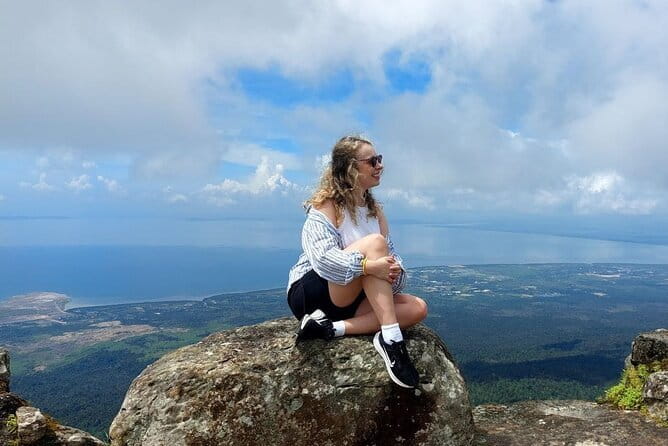
Book it if you want Khmer food connected to the places and people behind it. The market, organic garden, traditional home stay, four dishes, and shared meal give you a fuller experience than a cooking demonstration alone.
Skip it if you want a private chef, a guaranteed menu, or a fast activity with no group element. For $25, the class offers good value, particularly for first-time visitors who want to cook, ask questions, and understand how ingredients move from market and garden to table.
FAQ
Where does the cooking class begin?
The meeting point is J55G+CQ5 at Entanou Bridge in Kampot, Cambodia. Hotel pickup is offered, and the activity ends back at the meeting point.
What time does the experience start?
The stated start time is 9:00 a.m. The cooking session may finish around 12:00 p.m. or 5:00 p.m., so confirm the exact schedule when booking.
How long does the experience last?
The total duration is approximately five hours. This includes the transfer, the Samaki Market visit, the Eco Lotus Kampot cooking session, and the communal meal.
What will I cook?
You will learn to prepare and cook three authentic Khmer dishes and one dessert. The specific dish names are not provided, so confirm the menu with the provider if that matters to you.
How many people can join?
The activity accepts a maximum of 15 people. A team of chefs helps participants collect and prepare ingredients.
Can I cancel for a full refund?
Yes. You can cancel at least 24 hours before the local start time for a full refund. Cancellations or changes made less than 24 hours before the experience are not accepted for a refund.
Just added around Kampot and Kep
- Trip with Local tuk tuk to Country side & Pepper farm…★ 5.0 · 13 reviews
- Cooking Class at La Plantation★ 5.0 · 16 reviews
- KAMPOT- Pepper farm ..salt fields.Kep/Crab market & more……..★ 4.5 · 12 reviews
- Kampot Tuktu tour: Pepper farm, Salt field & Secret lake★ 5.0 · 17 reviews
- Private Kampot Countryside Tour & Pepper farm, Kep/Crab Market★ 5.0 · 21 reviews
- Kampot/Cambodia pepper farm . Cave. lake. Kep Crab market & more.★ 5.0 · 27 reviews
- Exploring the Best of Kampot and Kep in a Full-Day Tour★ 5.0 · 13 reviews
- Kampot Classic Tour & Kayaking at the Green Cathedral with lunch★ 5.0 · 9 reviews
Cooking Classes, compared.
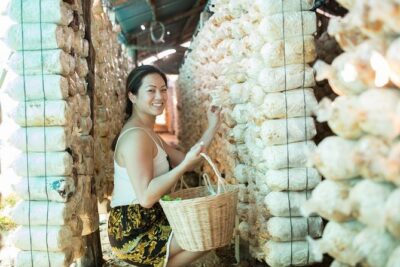
Khmer Cooking Class at a Local’s Home in Krong Siem Reap
Read our review →
Award-Winning Cooking Class Experience with Professional Teacher
Read our review →

Phnom Penh’s Hands-On Khmer Cooking Class in the Countryside
Read our review →Browse the lists this tour appears in