Reviewed · TOURS
Siem Reap: Grand circle tour Sun set on bakeang hill & Guide
The best part of this Angkor tour is the route. You visit six major temples beyond Angkor Wat, then finish at Phnom Bakheng for sunset, with guides such as Sam, Sayon, Vone, and Sary bringing the carvings and old ceremonies into focus. It is a full day, but the temples change character often enough to keep it moving.
I like the comfortable air-conditioned minibus and the steady supply of water and wet towels. I also like that the guides explain why Preah Khan was built, how Neak Pean’s pools were used, and why Phnom Bakheng has 33 towers. The main drawback is that lunch is not included, and six temples in eight hours can feel packed if you prefer slow, solitary exploring.
Key points to know before booking
- Sunset closes the day: Phnom Bakheng sits on a hill and provides the tour’s final viewpoint.
- Six temples, one route: You see Pre Rup, East Mebon, Ta Som, Neak Pean, Preah Khan, and Phnom Bakheng.
- Guiding is the main value: Sam, Sayon, Vone, Sary, Tom, Pip, Narith, and others are praised for clear explanations and friendly help.
- Transport is practical: Hotel pickup, an air-conditioned minibus, chilled bottled water, and wet towels are included.
- The temple pass costs extra: Buy your official Angkor pass separately through the Angkor Enterprise website.
- Dress matters: Shorts, short skirts, and sleeveless shirts are not allowed.
Angkor Wat gets the famous sunrise photographs, but the Grand Circuit gives you a broader idea of what the Angkor complex was. This $19 tour takes you from the brick towers of Pre Rup to the overgrown gateway of Ta Som, the water symbolism of Neak Pean, the long galleries of Preah Khan, and finally the hilltop temple of Phnom Bakheng.
You are not simply being driven from one monument to another. The English-speaking guide explains how each temple fitted into royal life, religion, water management, family memory, or burial customs. That context matters because many Angkor temples can look alike at first glance. A good explanation helps you notice the small differences.
The tour lasts about eight hours, including pickup and return to Krong Siem Reap. The day begins with a relaxed pickup rather than an early morning start, though your exact start time depends on availability. You should be ready around 30 minutes before the scheduled departure.
Why the $19 price works, and where costs continue
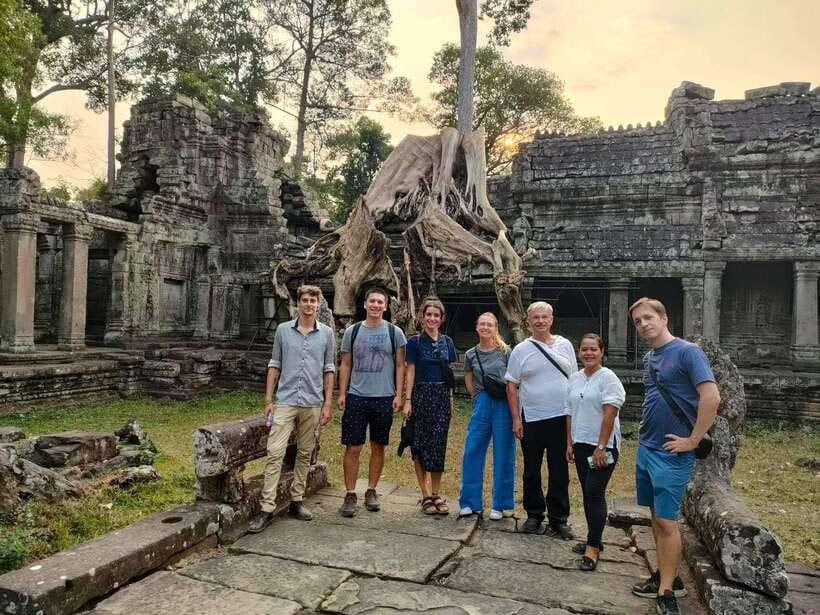
At $19 per person, this is a strong value if you want transport and interpretation in one package. Hotel pickup and drop-off, an air-conditioned minibus, an English-speaking guide, chilled bottled water, and a wet towel are included. Those practical touches matter in Cambodia’s heat, especially after several hours among exposed stone courtyards.
The temple pass is not included. You need to buy it separately through the official Angkor Enterprise website, and the cost of food and drinks is also outside the tour price. Since the pass is a separate expense, do not treat $19 as the entire cost of your Angkor day.
Lunch is not supplied, but the schedule includes a break of about an hour at Neak Pean. One person described being taken to a restaurant around 2 p.m. This makes the day easier, but you should still carry some spending money and perhaps a snack if you need food at a particular time.
Transport has received especially strong marks, with 93 percent of ratings giving it a perfect score. That fits the nature of the route. You spend time walking at each temple, then return to a cooled vehicle for the next leg. The minibus is not a luxury coach, but it gives you a practical escape from the sun.
A few more Siem Reap half-days worth weighing up
- Angkor Wat Sunrise or Sunset Tour with Guide from Siem Reap
★ 5.0 · 12,109 reviews - Siem Reap: Angkor Wat: Small-Group Sunrise or Sunset Tour
★ 5.0 · 9,444 reviews - From Siem Reap: Kampong Phluk Floating Village Tour by Boat
★ 4.9 · 6,979 reviews
Pre Rup: Brick towers and a temple built for Shiva
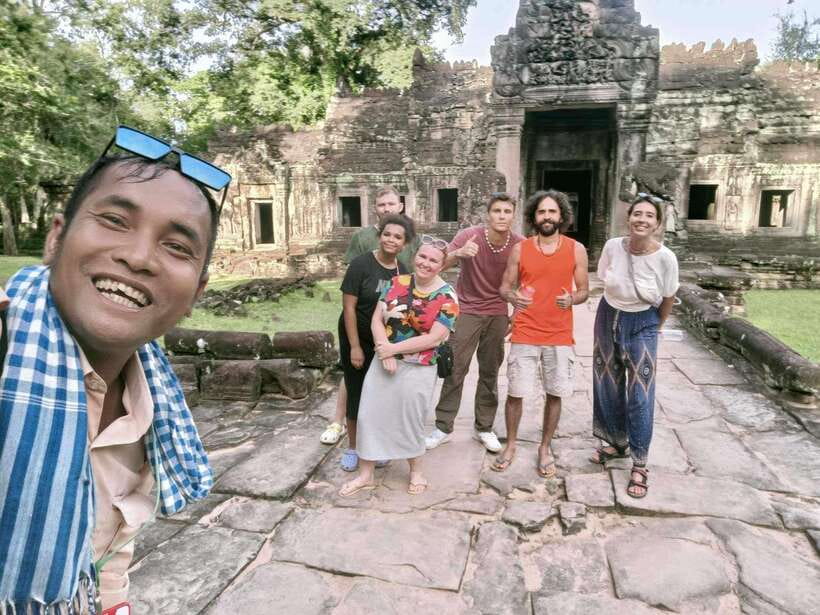
Pre Rup is the first main stop after about 30 minutes by bus or coach from Siem Reap. The temple is dedicated to Lord Shiva and was built by a king for himself. Its warm brick towers and raised structure make it a good opening stop because the shape is easy to read from a distance.
Your guide can help explain the temple’s role and the Hindu ideas behind its design. One unusual detail is a stone structure that resembles a coffin. It is often mistaken for a crematorium, but the explanation given on this tour is that Hindus used it for meditation during the full moon.
You should expect about an hour here. The steps and raised levels require comfortable shoes, and the stone can be hard on your feet. Pre Rup is a place to look closely at construction materials and religious symbols rather than rush through for a quick photograph.
East Mebon: An ancestor temple once surrounded by water
East Mebon follows Pre Rup, with about an hour set aside for a guided visit. It was built as an ancestor temple and once stood in the middle of a reservoir. That fact changes how you read the monument today. The surrounding water is gone, so the original setting is easy to miss unless the guide points it out.
The temple dates as early as the 10th century. It gives you a useful comparison with Pre Rup, since both use a raised, towered form but serve different purposes. Ask your guide how the reservoir affected the temple’s appearance and access during the Angkor period.
An hour allows time for an explanation and for your own photographs. The route is not just a procession of the most famous monuments. East Mebon gives you a clearer sense of how religion, kingship, and water were tied together.
Ta Som: A small temple with a memorable tree-covered gate
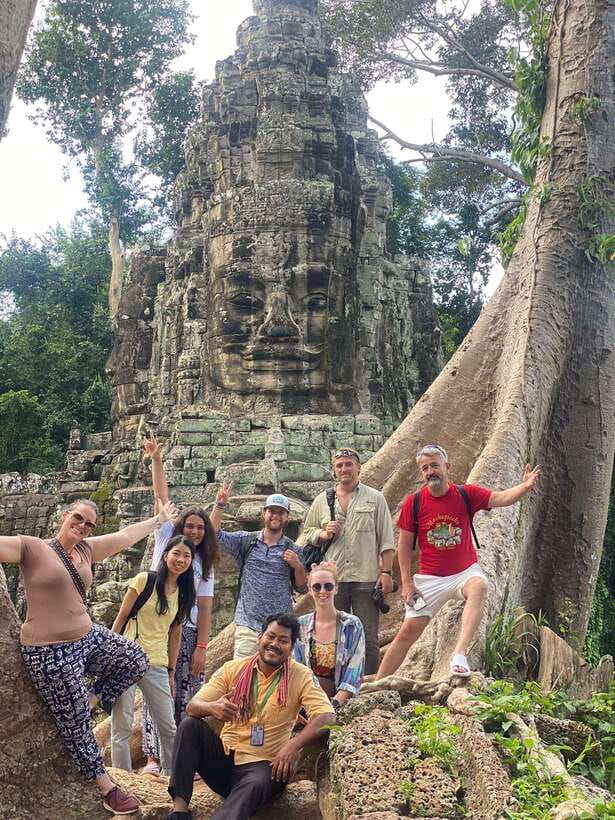
Ta Som is one of the most charming stops on the circuit. Its east gate is known for a large tree growing over the stonework, creating the kind of scene that stays in your memory after the larger monuments begin to blend together.
The temple was built for the king’s sister. Its sculptures include dancers with long hair, a detail worth seeking out rather than walking past the carvings as decoration. The site has been carefully restored, so you can look at the structure without losing the feeling of an old ruin.
You have about an hour here. Ta Som is also a good place to let the guide finish an explanation, then wander at your own pace. The day includes a lot of information, and this smaller temple provides a welcome change from the larger, more formal complexes.
Same base, a completely different kind of day:
- Sunset tour of Kampong Phluk stilts home village on the Tonle Sap
★ 5.0 · 4,865 reviews - Siem Reap: Angkor Wat 2-Day Tour with Sunrise and Sunset
★ 4.9 · 4,429 reviews - Siem Reap: Kampong Phluk Floating Village Tour with Boat
★ 4.9 · 3,843 reviews - Siem Reap: Full-Day Angkor Wat Guided Tour with Sunset
★ 4.9 · 3,803 reviews
Neak Pean: A healing island reached through water symbolism
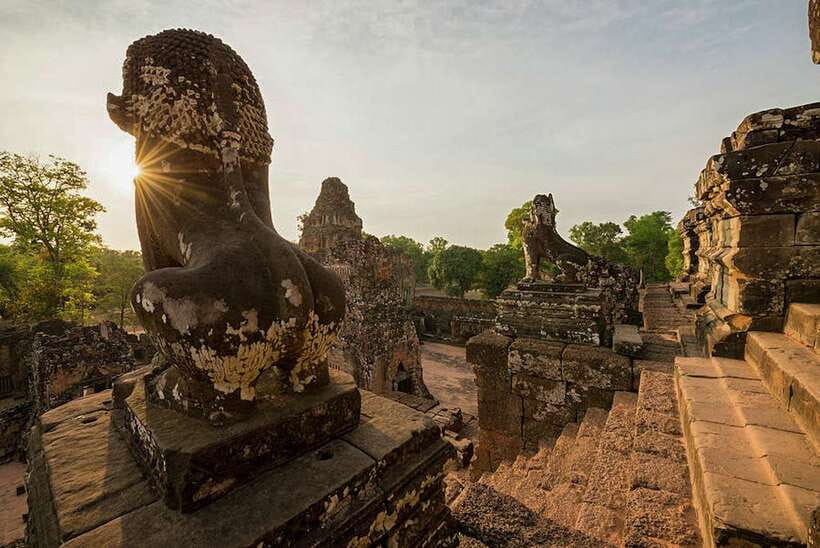
Neak Pean is different from the other stops because water is central to the experience. The temple sits on an island, and the pools around it were used for bathing and health during the Angkor period.
The four pools represent elemental forces, including water, earth, and fire. The supplied description lists water twice, so your guide may explain the symbolism in a slightly different way on the day. The larger point is clear: this was not only a decorative water setting. The pools had religious and practical meaning.
The schedule gives Neak Pean a guided hour followed by a separate hour-long break. That pause is useful. After several temples, you can slow down, take photographs, drink water, and prepare for the afternoon. Since lunch is not included, this is also the point in the schedule when you may be taken to a restaurant.
Do not expect Neak Pean to feel like a vast temple complex. Its appeal comes from the unusual water design and the way the approach frames the island shrine. You will appreciate it most if you listen for the connection between health, ritual, and engineering.
Preah Khan: The largest and most detailed stop
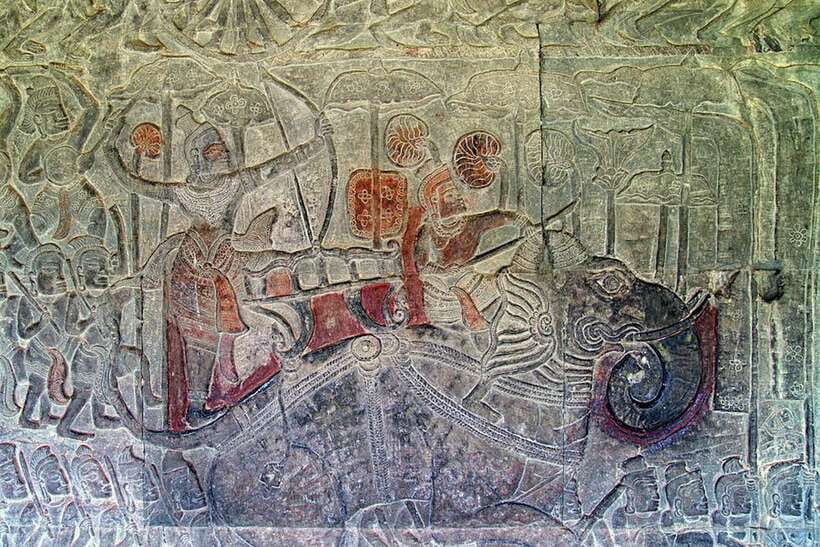
Preah Khan receives about 90 minutes, making it the longest temple visit before Phnom Bakheng. It is the biggest temple on this loop and was built by King Bayon for his father. The name translates as the Sacred Sword.
Here, the guide’s role becomes particularly useful. Preah Khan has long galleries, courtyards, sculptures, and changing views through doorways. Without an explanation, you can spend your time trying to decide which direction to take. With a guide, you get a clearer route and a better sense of why the temple was built.
The 90-minute visit is still not enough for every corner. You will need to accept that this is a guided overview rather than a slow archaeological study. I would pay attention to the stories first, then use any free time for photographs and details you want to inspect again.
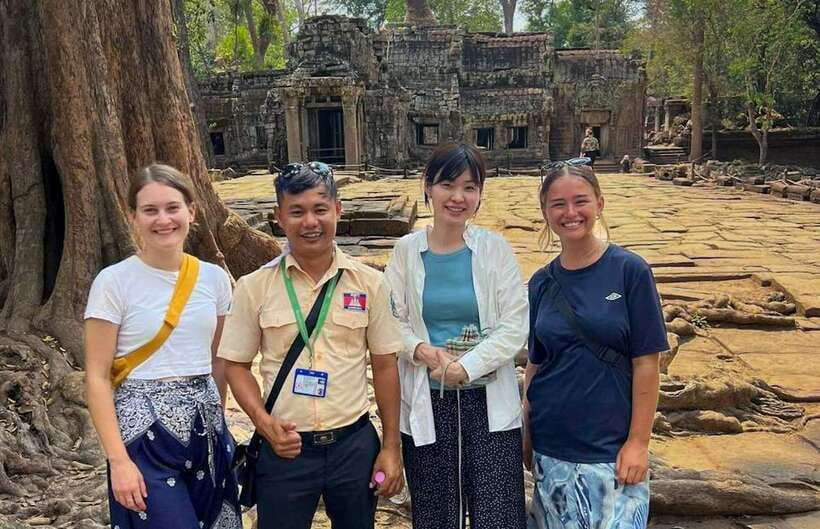
Several guides on this route have been praised for explaining culture as well as architecture. Sam is repeatedly singled out for clear information, patience, and help with the wider Cambodian context. Sayon, Vone, Sary, Tom, Pip, Narith, John, Sok, and Sina are also named as guides who made the route more engaging through humor, organization, or strong temple explanations.
Guide assignments can vary, so you should not assume you will receive a particular person. Still, the repeated praise for different guides suggests that the experience depends heavily on who leads your group, and this tour places real emphasis on that human element.
Phnom Bakheng: The hilltop finish and sunset question
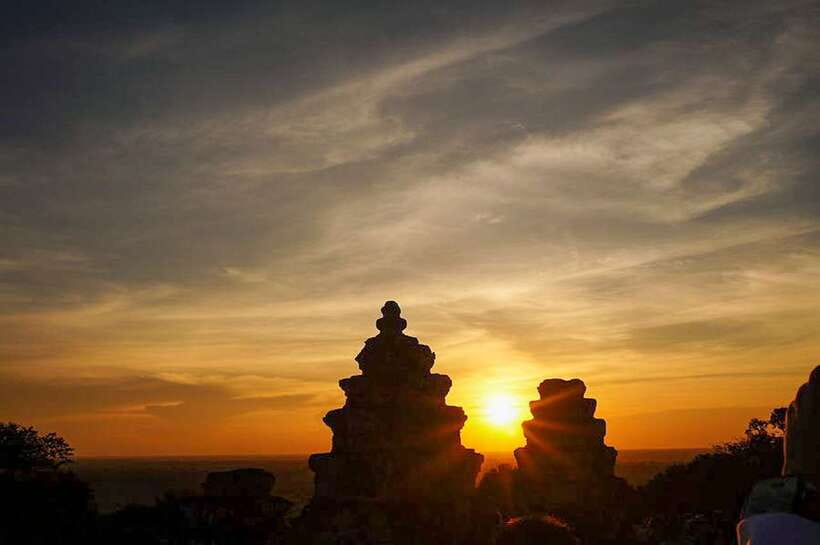
Phnom Bakheng is the final temple and the reason the tour is timed around late afternoon. It is both a Hindu and Buddhist temple on top of a hill, and its 33 towers represent the heavens.
You have about 90 minutes here, followed by a 45-minute return journey to Siem Reap. The climb is the most physically demanding part of the day, so wear shoes with a firm grip and bring sunscreen and water. The tour supplies bottled water, but you should still make use of it throughout the route rather than waiting until the final stop.
The sunset is a major draw, but conditions are never guaranteed. Clouds, haze, and crowd levels can affect the view. The real value of Phnom Bakheng is not only the sunset photograph. The hilltop setting helps you understand the temple as a model of the universe, with its towers linked to the heavens.
You should also be prepared for a busy finish to a long day. By this point, you have already visited five temples. If you want a completely quiet sunset with plenty of time to sit alone, this may not be the right plan. If you want a clear endpoint and the chance to photograph the changing light from a historic hilltop, it is a satisfying way to close the route.
How the day feels in practice
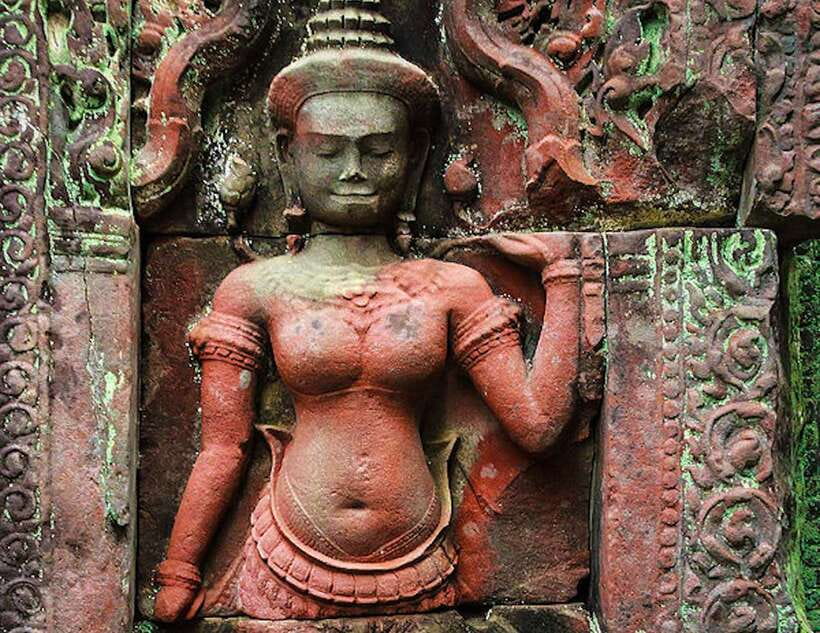
The route is well paced for someone who wants to see a lot in one day. Each temple receives roughly an hour, with 90 minutes at Preah Khan and Phnom Bakheng. The variety helps: brick towers, a former reservoir temple, a tree-covered gate, water pools, a long sanctuary, and a hilltop monument.
The drawback is physical and mental rather than logistical. Six guided temple visits can be tiring, especially in hot weather. You will be walking, climbing steps, standing for explanations, and getting back into the minibus several times.
The air conditioning, water, and wet towels help. So does the small-group or private-group option, if available for your booking. One smaller group was praised for making the explanations easier to follow and keeping the day organized. You should check the group type when booking if personal attention matters to you.
Wear comfortable shoes, sunglasses, and sunscreen. Cambodian temple rules require clothing that covers the shoulders and knees, so avoid shorts, short skirts, and sleeveless shirts. Bring a charged smartphone because guides may help with photographs, and there are plenty of visual details worth recording.
Alcohol and drugs are not allowed. The activity is not suitable for people over 95 years old, according to the supplied conditions. The information does not give a detailed accessibility assessment, so anyone with mobility concerns should ask the provider before booking.
The guide makes the difference
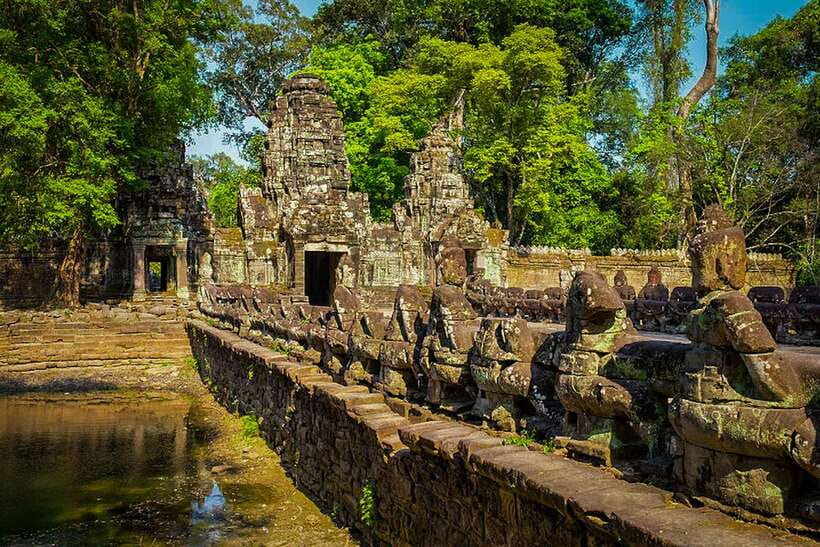
This route is worth more with a strong guide than without one. The stones are impressive, but the explanations give each stop a reason to matter. You learn that Preah Khan honored a king’s father, Ta Som honored a king’s sister, East Mebon remembered ancestors, and Pre Rup was built for the king himself.
The best comments about the guides focus on clear teaching, patience, humor, and help with photographs. Pip was praised for taking pictures throughout the day. Narith was remembered for making the route fun as well as informative. Tom was valued for explaining culture and history while allowing time to look around.
That mix suits people who want more than a driver dropping them at temple gates. You can ask questions, compare the sites, and connect the architecture to Cambodian beliefs and royal life. If you already have a strong background in Angkor archaeology and prefer to explore alone, the guided structure may feel more restrictive.
The tour is conducted in English. Private groups are available, which may be a better choice for families or friends who want the guide’s attention directed only toward them.
Should you book this Grand Circle tour?
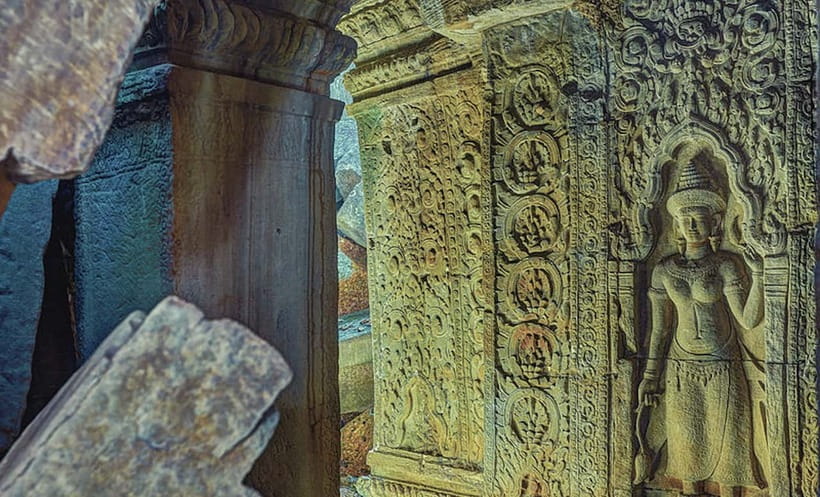
Book it if you want a full Angkor day that includes lesser-known temples, practical transport, and a sunset finish for a low advertised price. It is especially suitable for a first visit, for anyone short on time, and for people who want historical context without arranging separate transport and guides.
Think twice if you dislike fixed schedules, need a long lunch, or want to spend half a day at one temple. The temple pass and meals cost extra, and the eight-hour plan is active.
For most visitors, the strongest reason to choose this tour is the combination of variety and explanation. You see six very different sites, travel in air conditioning, and finish with Phnom Bakheng’s hilltop view. Just bring the right clothing, budget separately for the pass and food, and accept that the sunset is the final reward after a busy day.
FAQ
How long does the Grand Circle tour last?
The tour lasts eight hours. Pickup from your accommodation takes place about 30 minutes before the scheduled start, and the return journey to Krong Siem Reap takes about 45 minutes after Phnom Bakheng.
Which temples are included?
The route includes Pre Rup, East Mebon, Ta Som, Neak Pean, Preah Khan, and Phnom Bakheng.
Is the Angkor temple pass included?
No. The temple pass is not included. The official website provided for purchasing it is angkorenterprise.gov.kh.
Is food included?
No. Food and drinks are not included. The schedule includes a break at Neak Pean, and the tour may take you to a restaurant during that break.
What should I wear?
Wear comfortable shoes, sunscreen, and sunglasses. Shorts, short skirts, and sleeveless shirts are not allowed at the temples.
Is hotel pickup included?
Yes. Hotel pickup and drop-off in Krong Siem Reap are included, along with an air-conditioned minibus, an English-speaking guide, chilled bottled water, and a wet towel.
Just added around Siem Reap
- Twilight Tastes of Siem Reap Include Dinner★ 5.0 · 13 reviews
- Ultimate Sunrise to Angkor Wat, Angkor Thom and Bayon Temple★ 5.0 · 3 reviews
- Trekking Tour at Phnom Kulen National Park from Siem Reap★ 5.0 · 3 reviews
- Professional Photo Shoot in Angkor Archaeological Park, Siem Reap★ 5.0 · 42 reviews
- Full-Day Private Tour of Angkor Wat with Pick Up★ 5.0 · 12 reviews
- Unveiling 2 Days Private Angkor Wat/Beyond In Sunrise/Sunset Tour★ 5.0 · 48 reviews
- Siem Reap City Tour with War Museum and Killing Field★ 5.0 · 27 reviews
- Private Day Trip to Angkor Temples with Expert Guide★ 5.0 · 4 reviews
Tours, compared.
Angkor Wat Sunrise or Sunset Tour with Guide from Siem Reap
Read our review →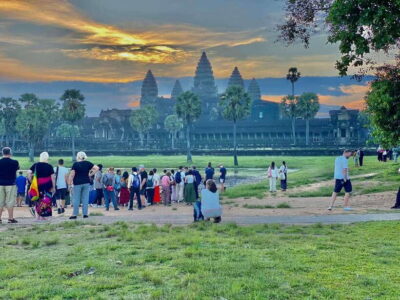
Angkor Wat: Small-Group Sunrise or Sunset Tour
Read our review →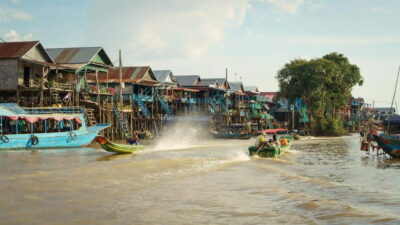
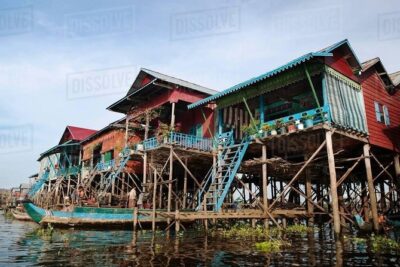
Sunset tour of Kampong Phluk stilts home village on the Tonle Sap
Read our review →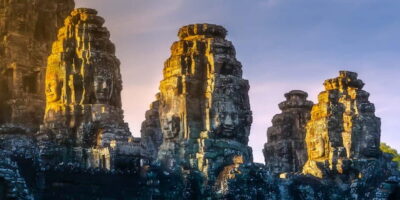
Angkor Wat Highlights and Sunrise Guided Tour from Siem Reap
Read our review →
Angkor Wat Sunrise and Full-Day Sightseeing Tour
Read our review →