
Reviewed · TEMPLE TOURS
Two Day Angkor Temples Tours
Angkor is too large for a quick stop, and this two-day private tour gives you a sensible sweep of its major temples without packing every visit into one long day. You move from delicate pink sandstone at Banteay Srei to the grand scale of Angkor Wat, with smaller ruins and old reservoirs filling out the story.
I like the private format, since your guide can adjust the pace and linger where your interest is strongest. I also like the guide team’s focus on clear English, temple history, Hindu and Buddhist beliefs, local culture, and practical photography help. The main drawback is the full schedule: fourteen stops across two days can feel demanding, especially in Cambodia’s heat, and admission tickets are not part of the $102.57 price.
Key points before you book
- Banteay Srei opens the tour with fine pink sandstone carvings, often regarded as the most delicate artistic work in the Angkor area.
- The route balances famous monuments with quieter stops, including Neak Pean, Ta Som, Eastern Mebon, and Pre Rup.
- You get a private vehicle and private guiding, rather than sharing the day with a large group.
- Borey, Kim, Bunleat, and Kimhoeun are named guides associated with the experience, with particular praise for English, flexibility, historical explanation, and photo advice.
- The $102.57 fee covers an air-conditioned vehicle, but temple admission and GST are extra.
- The itinerary is adjustable, yet you should expect a moderate level of walking and a fairly active two days.
Why two days works better than one
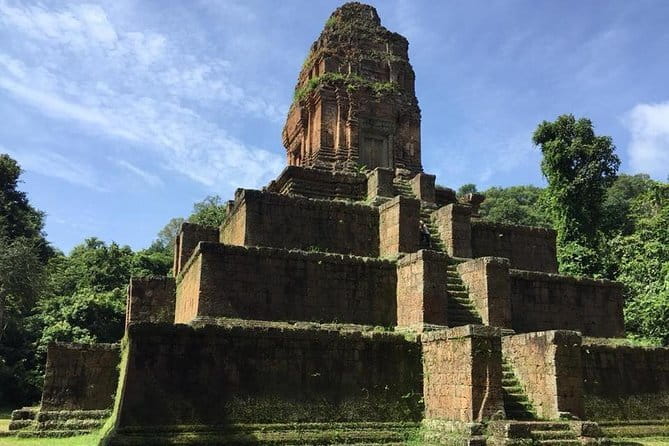
Angkor is not one temple. It is a vast collection of religious buildings, royal cities, reservoirs, terraces, towers, galleries, and later Buddhist monuments spread across the area around Siem Reap. A single day can cover the headline sites, but it leaves little room for the smaller places that explain how the whole center functioned.
This route divides the experience sensibly. The first day concentrates on Banteay Srei and the eastern and northern temple groups. The second day gives the largest blocks of time to Angkor Wat, Angkor Thom, and Ta Prohm.
I like that balance. You get the monuments everyone wants to see, but you also see how Angkor changes from a carefully planned Hindu temple mountain to a Buddhist complex of moats, terraces, towers, and waterways. The schedule is still active, though. The listed visits add up to several hours of temple touring before you count transfers, meals, walking, and photo stops.
This is a good choice if you want a guided overview in two days and do not want to organize the transport, route, and historical background yourself. If you prefer long quiet stretches at each monument, you should discuss that before setting out.
More Temple Tours in Siem Reap:
- Angkor Wat Sunrise & 3 Main Temples with Breakfast – Small Group
★ 5.0 · 2,857 reviews - Siem Reap: Full Day Angkor Wat Temple Experience with Sunset
★ 4.9 · 1,490 reviews - 2 Days Exclusive Temple Highlights with Sunset and Sunrise Tour
★ 5.0 · 1,157 reviews
Day one: delicate carvings and the eastern temples
Banteay Srei and the finest stonework
Banteay Srei is the artistic high point of the first day. Built in the 10th century for the Hindu god Shiva, the temple uses pinkish sandstone and carries unusually fine carvings. The scale is smaller than Angkor Wat, but the decoration is precise and close to eye level, making it easier to appreciate the detail.
You have about an hour here. That is enough for a focused introduction, though you may want more time if close study and photography are your main interests. A guide can help you read the scenes and symbols instead of seeing the walls as decoration alone.
The temple is also farther from the central Angkor group than several other stops. The route includes it because the art is special, but the drive contributes to the day’s length. That is a fair trade for many people, particularly if carved stone is more important to you than visiting every major monument.
Banteay Samre, a quieter 12th-century temple
Banteay Samre dates from the same broad period as Angkor Wat and was built under Suryavarman II for Vishnu. Its condition is relatively good, and the layout gives you another way to see the design language of the larger Angkor monuments without the same scale.
The scheduled visit lasts about an hour. This stop works well after Banteay Srei because the two temples offer a useful contrast: one is celebrated for small, delicate carving, while Banteay Samre gives you a more substantial temple complex with a strong architectural presence.
Do not expect the same visual impact as Angkor Wat. The value here is comparison. With a guide, you can better notice repeated Hindu themes, galleries, towers, and the planning behind the temple grounds.
A few more Siem Reap half-days worth weighing up
- Siem Reap: Angkor Wat 2-Day Tour with Sunrise and Sunset
★ 4.9 · 4,429 reviews - Angkor 2-Day Sunset & Sunrise Small-Group Tour
★ 5.0 · 2,567 reviews - Siem Reap: Angkor Sunrise 1- or 2-Day Guided Temples Tour
★ 4.9 · 1,132 reviews - 2 Days Guided Historical Tour in Angkor
★ 5.0 · 855 reviews
Preah Khan, a maze of corridors and carvings
Preah Khan means Sacred Sword and is one of the largest complexes on the route. Its vaulted corridors, carvings, and lichen-covered stone create a mood quite different from the clean, formal lines of Banteay Srei.
You have about an hour to explore. Preah Khan can feel confusing without a sense of direction, so this is one of the places where a private guide is especially useful. A guide can explain what you are seeing while keeping the visit moving through the maze.
The temple is often treated as a companion to Ta Prohm, though it generally has a calmer feel. That makes it a strong stop for anyone who wants atmospheric ruins without spending both days only at the most famous sites.
Neak Pean, a small temple on an artificial island
Neak Pean is a compact Buddhist temple built by Jayavarman VII on an artificial island in the man-made reservoir known as Jayatataka, or the North Baray. The setting matters as much as the central structure. It shows how water, religious ideas, and royal planning were tied together at Angkor.
The visit is scheduled for about 40 minutes. That is a good length for a small monument, although the experience is more about the approach and setting than wandering through a large ruin.
You will not get the grand scale of Preah Khan here. Instead, Neak Pean gives the day a change of pace and helps explain the practical and symbolic role of water in Angkorian planning.
Ta Som, a quick look at a small ruin
Ta Som was built by Jayavarman VII in the late 12th century and is described as a satellite temple of Preah Khan. It is small, but the eastern gate has a large carved head that gives the stop a clear visual focus.
The planned visit is only 30 minutes. That makes Ta Som a quick photographic and architectural stop rather than a long exploration. I like its inclusion because it prevents the first day from becoming a procession of only large monuments.
You should keep your expectations in proportion. Ta Som will not occupy you for hours, but its compact scale and carved gate add variety to the route.
Eastern Mebon and Pre Rup at day’s end
Eastern Mebon was built by Rajendravarman II in the 10th century and originally stood on an island in the Eastern Baray, a large reservoir. The water is gone, so the temple now sits on dry land. That change gives you a useful reminder that Angkor’s setting was engineered on a huge scale.
The visit lasts about 50 minutes. Look for the relationship between the temple’s raised structure and the reservoir that once surrounded it. This is a place where a guide’s explanation turns an isolated ruin into part of a larger system.
Pre Rup, about a kilometer south of Eastern Mebon, is another temple mountain from the same 10th-century reign. Its pyramid form and upper tiers make it a fitting final stop for the day, especially if you enjoy the strong geometric shape of Angkorian architecture.
You have about 40 minutes at Pre Rup. The two stops work well together, but they can also feel repetitive after a full day of temples. If you are tiring, tell your guide. The private format gives you a better chance of adjusting the time than a fixed group departure would.
Day two: Angkor Wat, the royal city, and Ta Prohm
Angkor Wat deserves the longest visit
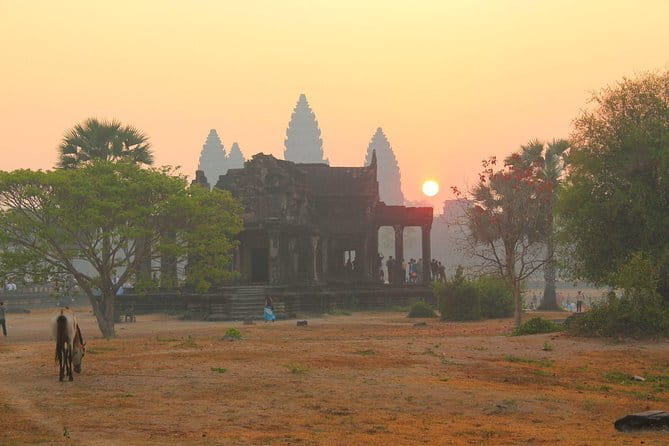
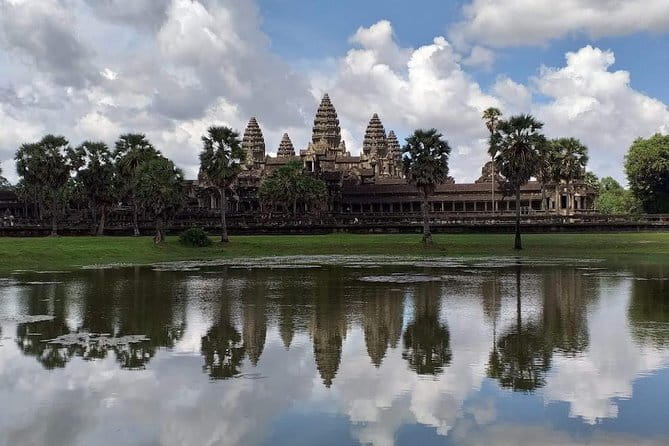
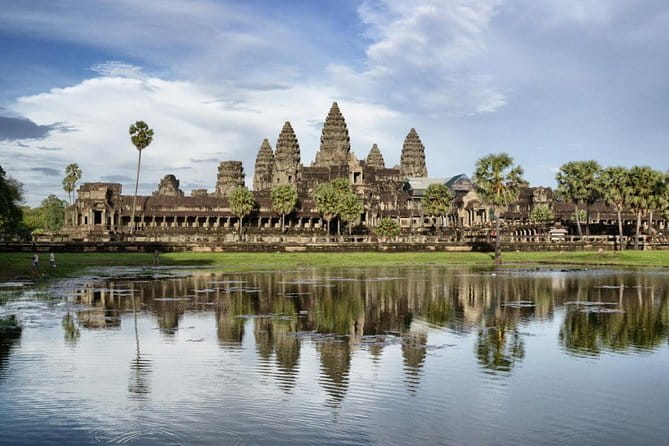
Angkor Wat was built by Suryavarman II in the 12th century for Vishnu. It is the largest and most famous monument in the complex, and the planned two-hour visit reflects that importance.
Do not treat this as a quick photo stop. The scale can be hard to grasp from one viewpoint. You need time to take in the towers, galleries, courtyards, carvings, and the way the monument is organized around a central religious focus.
A strong guide adds real value here. Borey is associated with clear English, detailed explanations of Hindu and Buddhist traditions, and photography advice, while Kim, Bunleat, and Kimhoeun are also named guides connected with the tour. The guide you receive may vary, so confirm the arrangement when booking if a particular person matters to you.
Two hours is a solid introduction, but Angkor Wat can easily absorb much longer. If this is your first visit, ask to protect this time rather than rushing through it to fit an extra minor stop.
Phnom Bakheng is listed as a brief stop
Phnom Bakheng was built by Yasovarman I in the early 10th century and is described as one of the first temple mountains near Angkor. Its five levels and seven tiers of towers reflect an early stage in the development of the temple-mountain form.
The itinerary lists only one minute here, so you should treat it as a brief orientation or passing stop, not a full visit. If Phnom Bakheng is important to you, ask the guide how much actual time is available and whether the plan can be adjusted.
This is one of the clearest examples of why you should talk about priorities before the tour. The route is flexible in principle, but the written timing does not allow a substantial exploration.
Angkor Thom and the Bayon center
Angkor Thom means Great City and was the last city of Angkor, built by Jayavarman VII. At its height, the city may have supported a population of one million in the surrounding region. The Bayon is its central monument, and the two-hour visit lets you consider the city as more than a single temple.
This is a major turning point in the tour. Angkor Wat presents a grand Hindu temple, while Angkor Thom shows the organization of a royal city under a Buddhist ruler. The scale of the gates, walls, terraces, and central temple helps you understand how power and religion were displayed together.
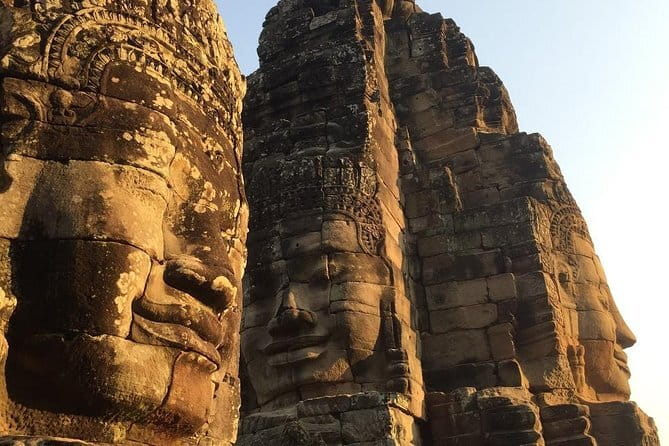
Two hours is useful here because the site has several layers. You can focus on the Bayon’s carved faces, then look outward at the city plan and nearby monuments. The exact amount you see will depend on your walking pace and the guide’s chosen route.
Ta Prohm, the atmospheric finale
Ta Prohm is among the most atmospheric ruins in Angkor. Built under Jayavarman VII, it is famous for the way trees and roots have grown through the stone, giving the monument a raw, partly reclaimed appearance.
The one-hour visit is enough to see its strongest sections without making the ruin the whole day. It also gives you a striking contrast with Angkor Wat. There, the architecture feels ordered and monumental. At Ta Prohm, nature and masonry appear locked together.
This is a popular stop, so expect it to be one of the busiest parts of the route, though no fixed crowd level is provided. Your guide’s route and timing may help you avoid wasting time in congested areas. Several accounts of the experience point to guides adjusting the plan when a family or group showed a strong interest in Ta Prohm, so mention your own priorities early.
The guides are the main reason to choose this tour
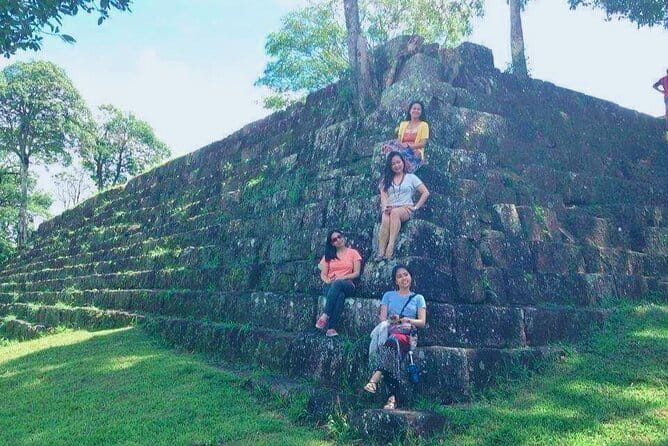
The strongest part of this experience is not simply the vehicle or the list of temples. It is the chance to have a private guide explain what the stones mean and change the pace when needed.
Borey is repeatedly associated with strong English, prompt communication, local knowledge of Siem Reap, history and photography advice. His family has lived in Siem Reap for generations, according to the supplied information. Bunleat is associated with particularly detailed explanations, which may mean longer visits at each temple. Kim is praised for explaining both Angkor and Cambodia’s more recent past, while Kimhoeun is described as caring and responsive.
Those differences matter. A guide who focuses only on dates can make Angkor feel like a string of old buildings. A guide who explains Hindu and Buddhist ideas, royal power, water systems, local culture, and recent Cambodian history gives you a fuller picture.
You should still tell the guide what you want. Ask for more photography time, slower explanations, or a tighter route if you are tired. The experience is private, so your preferences have more weight than they would on a large coach tour.
Price, vehicle, and practical value
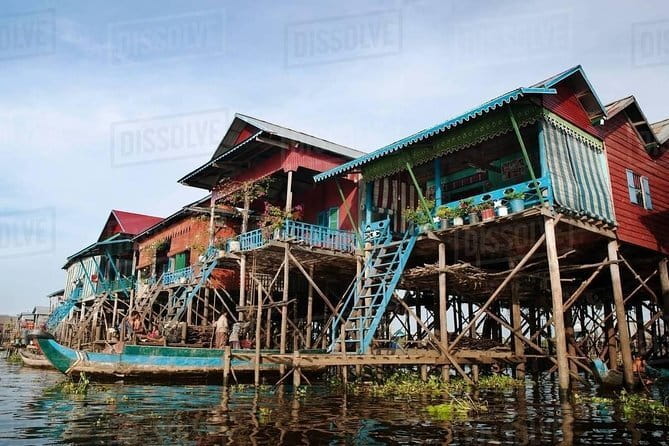
At $102.57 per person, this tour offers good value for a private two-day service if you want guided transport and a tailored pace. The fee includes an air-conditioned vehicle, a useful feature in Siem Reap’s heat, but it does not include temple admission or GST.
That missing admission cost is important when you set your total budget. The tour price is not the complete cost of entering the monuments, so confirm the current temple pass arrangements before you go.
Pickup is offered, while the stated ticket redemption point is Angkor Enterprise on Apsara Road in Siem Reap. Confirm the exact pickup plan and meeting details in advance, since the practical starting point can affect your morning.
The tour is private, with only your group participating. A moderate level of physical fitness is advised. You should expect walking around uneven temple grounds and moving between multiple sites, though the supplied information does not give a total walking distance.
Free cancellation is available up to 24 hours before the start time. Cancellations inside 24 hours are not refunded, and poor weather may lead to another date or a full refund.
Who should book these two days
I would choose this tour if you have two days in Siem Reap and want a broad introduction without arranging each temple and transfer yourself. It suits couples, families, and small private groups that value questions, photo help, and a guide who can adjust the route.
It also works well for anyone who wants more than postcard views. The itinerary gives you Hindu and Buddhist monuments, temple mountains, an old reservoir setting, a royal city, and tree-covered ruins.
I would hesitate if you dislike early starts, long sightseeing days, or repeated stone architecture. The route is full, and the temple admission cost is separate. I would also ask for a custom plan if your main goal is a slow photographic study of Angkor Wat, Ta Prohm, or Banteay Srei.
Should you book it?
Book it if you want the major Angkor monuments plus several smaller sites, all with private transport and a guide who can explain the religious and cultural setting. The strongest reasons are the flexible format, the air-conditioned vehicle, and the guide team’s emphasis on history, local context, and photography.
Before paying, confirm which guide will lead your days, how pickup works, the current admission cost, and whether the one-minute Phnom Bakheng stop can be changed. With those details settled, this is a practical two-day introduction for someone who wants Angkor explained rather than simply photographed.
FAQ
Where does the tour take place?
The tour is based in Siem Reap, Cambodia, and visits temples in the Angkor area.
How long does the experience last?
The experience lasts approximately two days.
What is included in the price?
An air-conditioned vehicle is included.
Are temple admission tickets included?
No. Admission tickets are not included for the listed temple stops.
Is GST included?
No. GST, or Goods and Services Tax, is not included.
Is this a private tour?
Yes. Only your group participates in the activity.
Is pickup offered?
Yes, pickup is offered. The stated ticket redemption point is Angkor Enterprise on Apsara Road in Siem Reap, so confirm the exact meeting arrangement when booking.
Which guides may lead the tour?
The named guides associated with the experience include Borey, Kim, Bunleat, and Kimhoeun.
What level of fitness is needed?
A moderate level of physical fitness is recommended.
Can I cancel for a full refund?
Yes, if you cancel at least 24 hours before the experience start time. Cancellations within 24 hours are not refunded.
Just added around Siem Reap
- Twilight Tastes of Siem Reap Include Dinner★ 5.0 · 13 reviews
- Ultimate Sunrise to Angkor Wat, Angkor Thom and Bayon Temple★ 5.0 · 3 reviews
- Trekking Tour at Phnom Kulen National Park from Siem Reap★ 5.0 · 3 reviews
- Professional Photo Shoot in Angkor Archaeological Park, Siem Reap★ 5.0 · 42 reviews
- Full-Day Private Tour of Angkor Wat with Pick Up★ 5.0 · 12 reviews
- Unveiling 2 Days Private Angkor Wat/Beyond In Sunrise/Sunset Tour★ 5.0 · 48 reviews
- Siem Reap City Tour with War Museum and Killing Field★ 5.0 · 27 reviews
- Private Day Trip to Angkor Temples with Expert Guide★ 5.0 · 4 reviews
Temple Tours, compared.
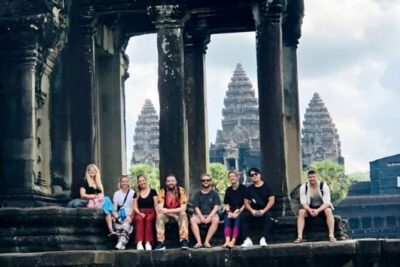
Angkor Wat Sunrise & 3 Main Temples with Breakfast – Small Group
Read our review →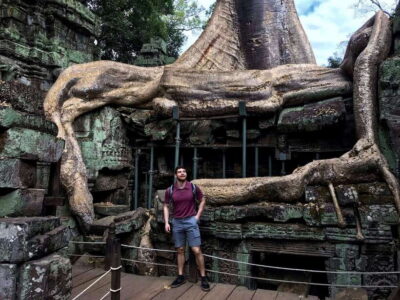
Full Day Angkor Wat Temple Experience with Sunset
Read our review →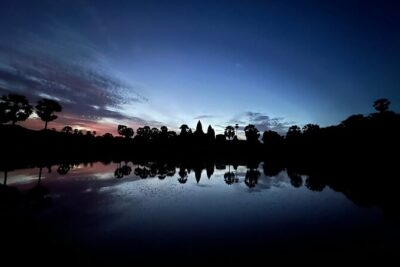
2 Days Exclusive Temple Highlights with Sunset and Sunrise Tour
Read our review →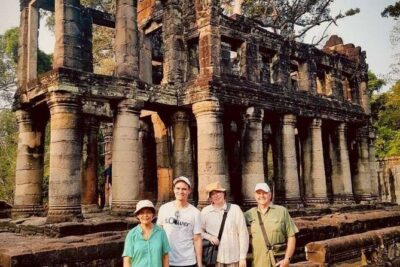
Full-Day Banteay Srei & 4 Temples – Grand Tours Join-in Tour
Read our review →
Angkor Sunrise 1- or 2-Day Guided Temples Tour
Read our review →
Angkor Wat Sunrise Explore The Most Iconic Temples
Read our review →
Koh Ker Temple Group & Beng Mealea Full-Day Join-in Tour
Read our review →Browse the lists this tour appears in