
Reviewed · ANGKOR WAT TOURS
2-Day Angkor Wat, Kulen Mountain, Beng Mealea and Tonle Sap
Angkor Wat at sunrise is the headline, but this two-day route gives you much more than the famous temple. You move from carved towers and giant tree roots to a waterfall, a reclining Buddha, a remote jungle temple and stilt houses above Tonle Sap. It is a full Cambodian sampler, with some very early starts and long drives.
I like the thoughtful practical touches: cold water and towels after hot temple walks, plus a simple picnic beside Kulen Mountain’s waterfall. I also like the local stops, especially Preah Dak village and its palm cake. The drawback is pace. Day 2 packs a lot into one outing, and you should expect heat, stairs, uneven ground and several hours on the road.
Key points at a glance
- Sunrise before the crowds: Arrive at Angkor Wat around dawn, then explore the temple while the morning light is still soft.
- Three very different temple moods: See the formal scale of Angkor Wat, the smiling faces of Bayon and the tree-covered ruins of Ta Prohm and Beng Mealea.
- Kulen Mountain beyond the temples: Visit Poeng Ta Kho, waterfalls, a reclining Buddha and the River of Thousand Lingas.
- A useful local-food stop: Breakfast comes at a family restaurant, while Day 2 includes grilled chicken, seasonal fruit and time to swim.
- Tonle Sap at day’s end: Ride by boat through Kampong Phluk, a stilt-house community surrounded by seasonal water and mangrove forest.
- Small-group transport: Groups are limited to 14, with hotel pickup, air conditioning and English-speaking guides.
Angkor Wat sunrise requires an early start
Your first pickup is scheduled between 4:30 and 5:00 in the morning. Wait in your hotel lobby about 10 minutes early, because the day begins before most of Siem Reap is awake.
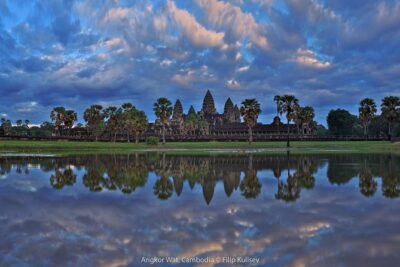
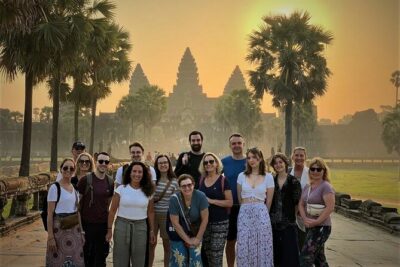
The payoff is Angkor Wat in the changing dawn light. You have about 90 minutes to walk through the complex and take pictures before the day becomes hotter and busier. That is enough for a useful first look, but not enough for every corner. If you want a slow, detailed study of every gallery and relief, you will need extra time on another visit.
Angkor Wat is not just a photo stop. Its towers, galleries and long approach give you a sense of the scale of the Khmer building program. Your guide can help explain the temple’s religious purpose and the stories carved into its stone, which makes the visit more meaningful than simply standing in front of the central towers.
Bring a camera, but do not forget the basics. Sunscreen, a hat, sunglasses and closed-toe shoes matter more than a bulky outfit. Sleeveless shirts are not allowed, so dress with temple etiquette in mind.
More ways to walk into Angkor Wat:
- Angkor Wat Sunrise or Sunset Tour with Guide from Siem Reap
★ 5.0 · 12,109 reviews - Siem Reap: Angkor Wat: Small-Group Sunrise or Sunset Tour
★ 5.0 · 9,444 reviews - Siem Reap: Angkor Wat 2-Day Tour with Sunrise and Sunset
★ 4.9 · 4,429 reviews
Breakfast, Preah Dak and a taste of palm cake
After Angkor Wat, you stop for breakfast at a local family restaurant in Siem Reap. Breakfast is included on Day 1, and the stop gives you a chance to sit down before the next temples.
The route then reaches Preah Dak village near the countryside around the Angkor temples. This is one of the better details in the plan because it adds ordinary rural life to a day otherwise centered on monuments. You can taste traditional palm cake and see a little of the village setting rather than moving from one famous ruin to the next.
The stop is short, so think of it as a local sample rather than a full village tour. Still, it helps connect the temples to the communities living around them.
Ta Prohm shows the jungle taking back the stone
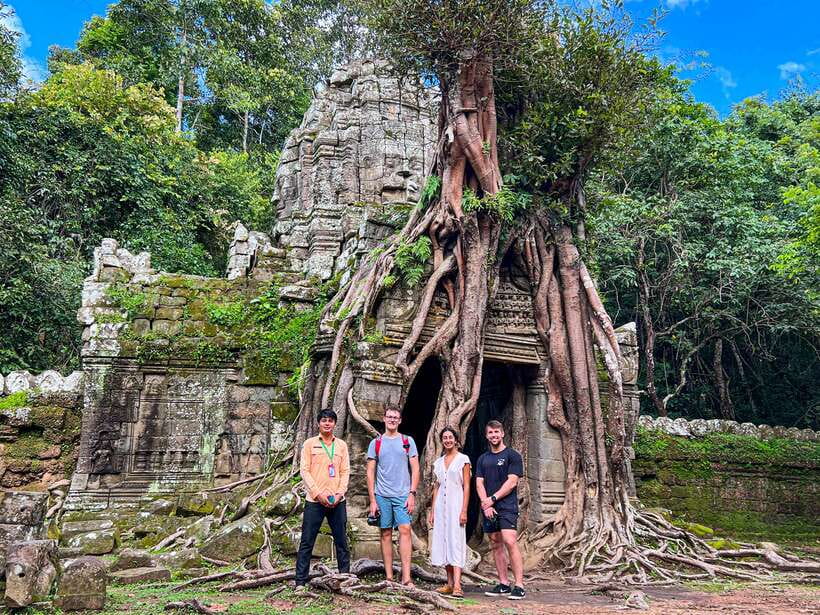
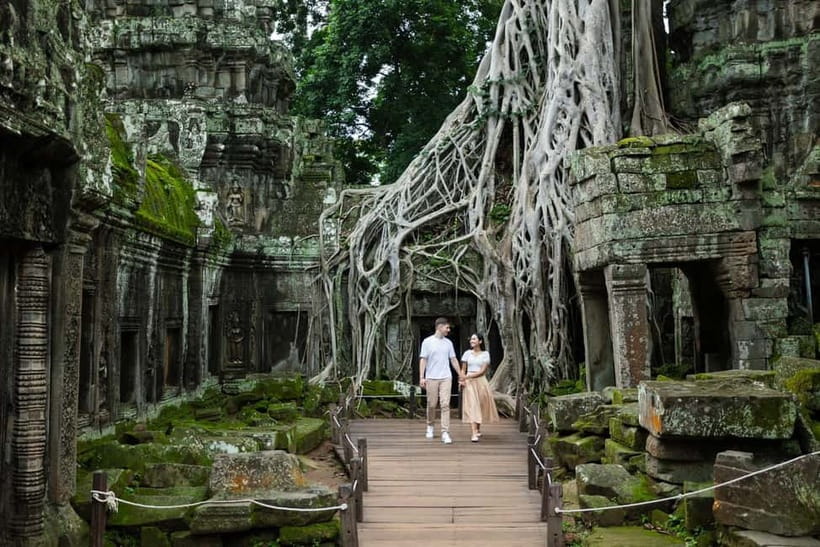
Ta Prohm is the temple most closely linked with tree roots, fallen stones and jungle growth. It has been left in a partly original condition, with huge roots spreading across walls and doorways.
I like Ta Prohm because it feels different from the ordered geometry of Angkor Wat. Here, you see how vegetation, weather and time have changed the site. The trees are not just decoration for photographs. They are part of the reason the temple feels so distinct.
The paths can be uneven, and the morning heat arrives quickly. Keep your walking shoes on and allow space for other people around the famous root-covered sections. A guide such as Sam, Seila or another assigned English-speaking guide can help explain what is original, what has been preserved and how the temple fits into the Khmer period.
Bayon, Baphuon and the royal terraces
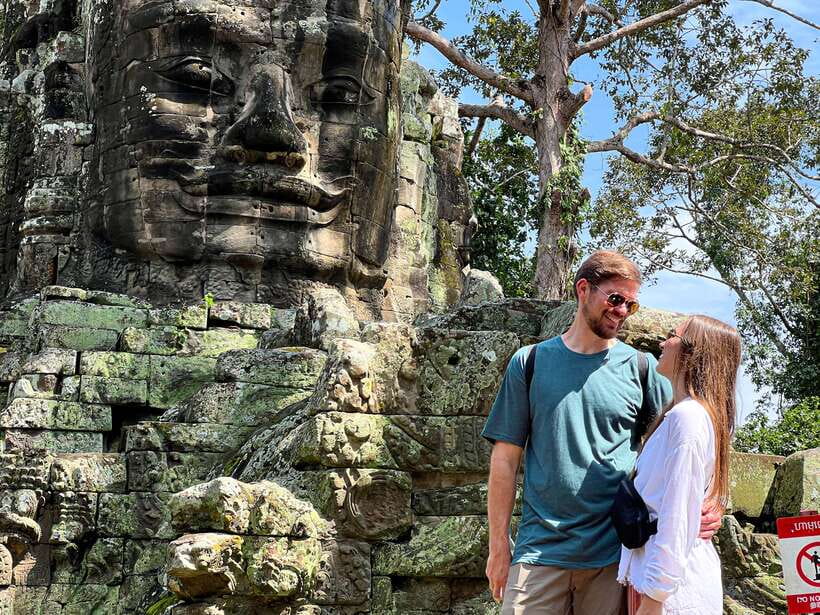
The route continues through the South Gate of Angkor Thom. This entrance is a strong transition from the outer temple zone into the former royal city.
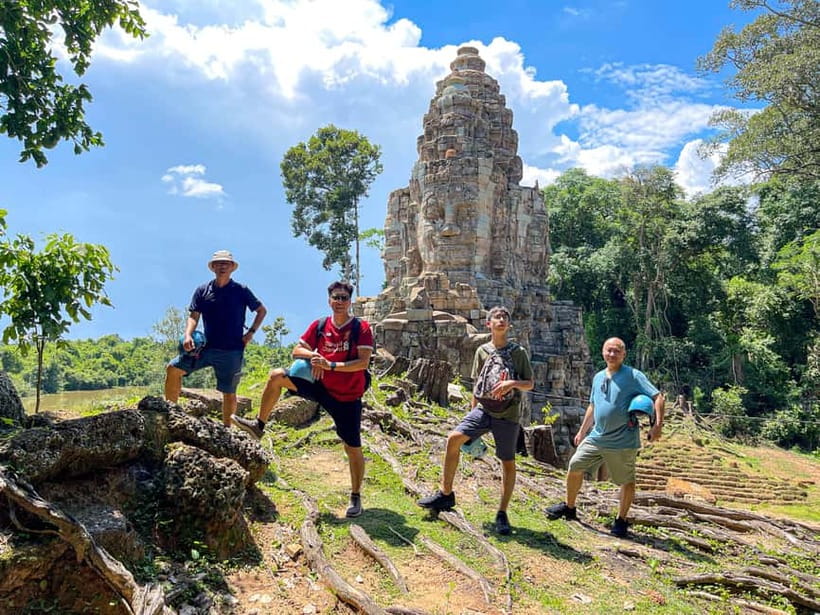
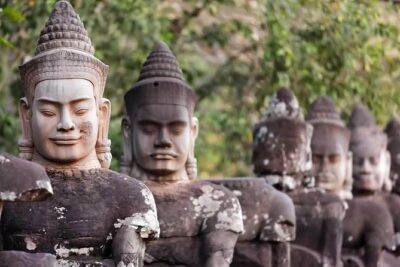
Inside, Bayon is the visual star. Its towers carry the famous smiling faces associated with Avalokitesvara, a Buddhist figure of compassion. The plan refers to 54 towers and 216 faces, though the condition and visibility of the faces can vary as you move through the site.
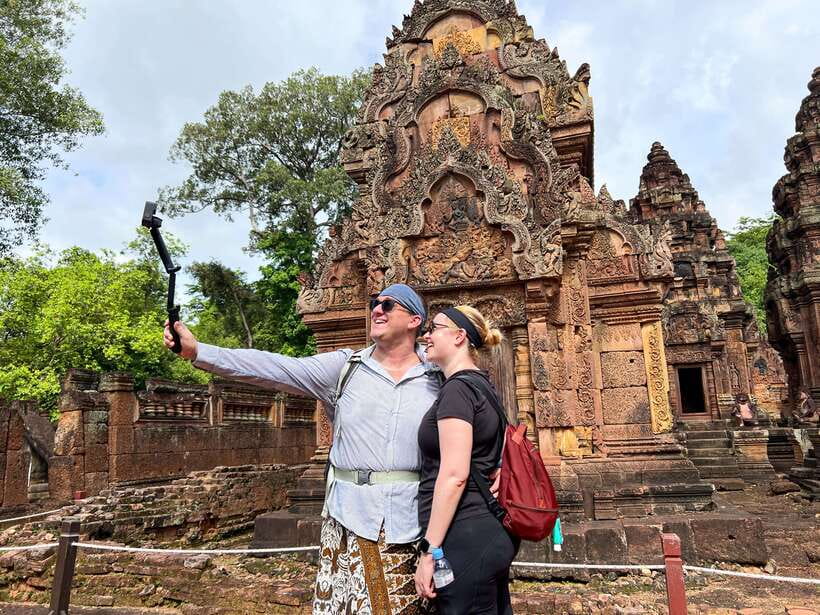
Baphuon adds another large architectural form, while the Terrace of the Elephants and Terrace of the Leper King show how public ceremony and royal display shaped Angkor Thom. These terraces are best understood with explanation. Without a guide, you may see carved stone and platforms. With context, you can picture them as a royal viewing area and a stage for formal events.
By the end of Day 1, you return to your hotel in Siem Reap. This is a busy temple day, but the early start helps you complete the main circuit before the worst afternoon heat.
More jungle-temple days at Beng Mealea:
- Siem Reap: Kulen Mountain, Beng Mealea and Tonle Sap Tour
★ 5.0 · 1,483 reviews - Kulen Mountain with Beng Mealea and Tonle Sap Small Group Tour
★ 5.0 · 780 reviews - Koh Ker Temple Group & Beng Mealea Full-Day Join-in Tour
★ 5.0 · 710 reviews - From Siem Reap: Koh Ker and Beng Mealea Temples Tour
★ 4.9 · 293 reviews
Kulen Mountain brings water and open views
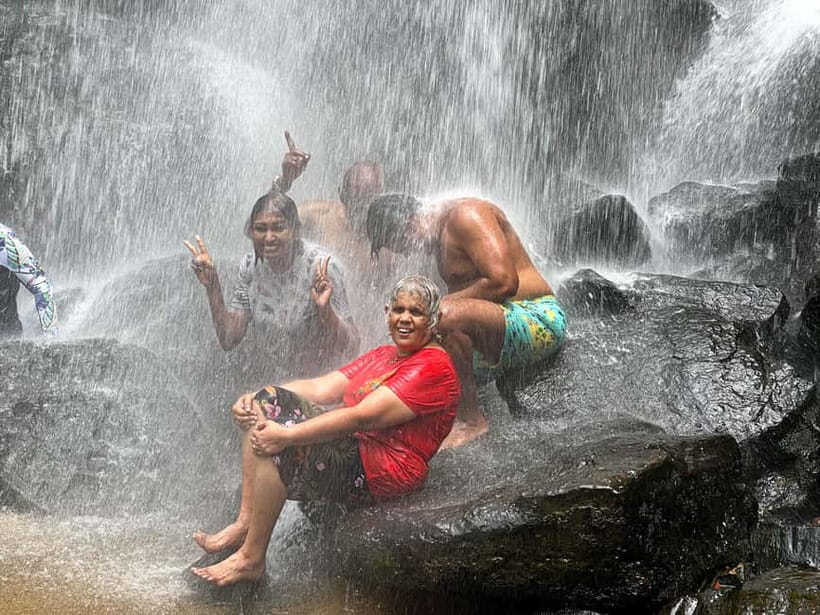
Day 2 starts with another hotel pickup, followed by about an hour of driving through rice paddies toward Phnom Kulen. The road time is part of the trade-off. You are going farther from Siem Reap, but the mountain gives you a change of setting that the central Angkor temples cannot.
After your Kulen Mountain ticket is arranged, a local guide leads you through the park. The stops include the Poeng Ta Kho cliff viewpoint, waterfalls, a reclining Buddha and the River of Thousand Lingas, dated to 802 AD.
The River of Thousand Lingas is especially different from the main temple circuit. Instead of a towered sanctuary, you see sacred carvings connected with the watercourse. The reclining Buddha adds another religious layer, while the waterfall provides the most welcome physical break of the day.
Swimming is offered at the waterfall, so pack clothes that work for both walking and water. A towel is supplied, but you should still bring practical clothing and a way to keep your electronics dry. Conditions can be slippery near water, which makes closed-toe shoes a sensible choice.
A simple picnic beside the waterfall
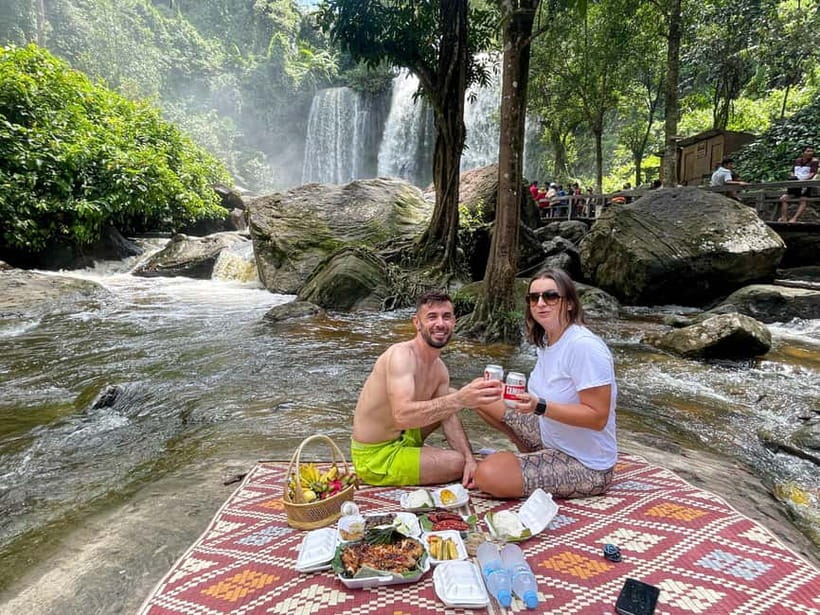
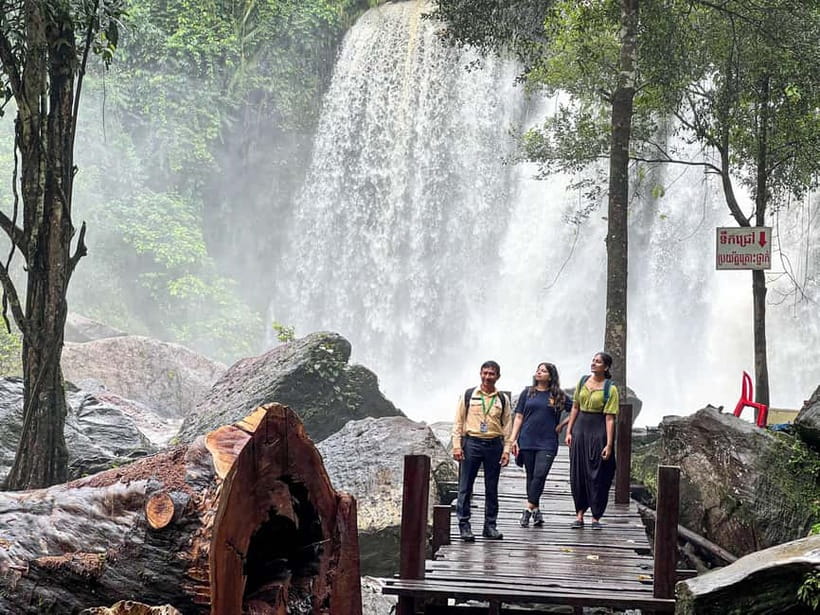
Lunch on Day 2 is a picnic near the waterfall, with grilled chicken and seasonal fruit. It is not presented as a fine-dining meal, and that is the right expectation. The value is the setting, the convenience and the chance to eat without leaving the park area.
You can swim in the plunge pool, eat, and cool down before the next long stretch. The picnic also gives the day a more relaxed pause after the morning’s walking.
Carry extra snacks if you tend to eat between meals. The tour includes a cool bottle of water, but soft drinks are not included. A power bank is also worth bringing because you will likely use your phone for photos throughout both days.
Beng Mealea is the rougher jungle temple
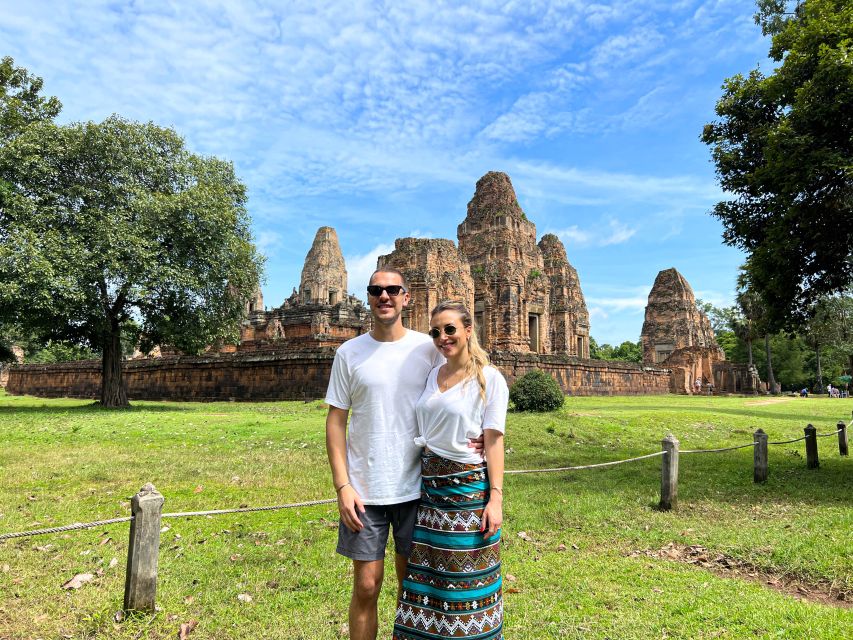
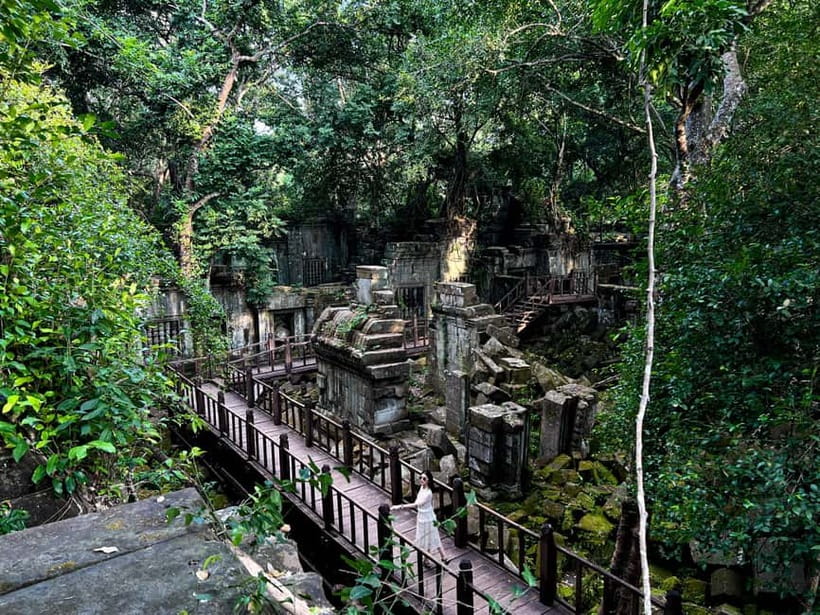
After Kulen Mountain, the route heads deeper into rainforest toward Beng Mealea. This 12th-century temple from the Angkor period has been heavily overtaken by vegetation, trees, vines and moss.
Beng Mealea is a good contrast with Ta Prohm. Ta Prohm is more polished as a sightseeing stop, with a stronger connection to the standard Angkor circuit. Beng Mealea feels more broken and remote, with collapsed stone and vegetation shaping the experience.
That also means the footing may be less predictable. You should be comfortable walking on uneven surfaces and stepping around ruins. The temple rewards patience, but it is not the best part of the trip for anyone who wants a smooth, easy stroll.
The entrance fee is $10, unless your Angkor pass is accepted for entry. Confirm how your pass applies when booking, because the ticket arrangement affects your final cost.
Kampong Phluk and the changing waters of Tonle Sap
The final major stop is Kampong Phluk, a floating village on Tonle Sap Lake. The boat ride shows homes raised on tall stilts and families whose daily lives depend heavily on fishing.
The village changes with the water level. The boat route also passes through flooded mangrove forest, where crab-eating macaques may be seen. This is a different kind of cultural stop from the temples. You are not looking at a monument from centuries ago. You are seeing a community adapted to seasonal water.
Timing can make a difference. The route may reach the village near sunset, giving the lake and stilt houses a softer light. Do not expect a private or isolated outing. Kampong Phluk is a working community and a popular excursion, so approach it with respect. Watch, listen and avoid treating people’s homes as stage scenery.
The Tonle Sap boat ride costs $15 per person and is not included in the tour price. It is an important extra because the boat is what lets you see the flooded forest and village properly.
What the $69 price really covers
The tour costs $69 per person before entrance fees. Included are hotel pickup and drop-off, air-conditioned van or minibus transport, an English-speaking professional guide, Day 1 breakfast, Day 2 picnic lunch, bottled water and towels.
The required or likely extra charges are:
- Angkor pass: $37 per person
- Kulen Mountain pass: $20 per person
- Beng Mealea: $10 per person, or covered by a valid Angkor pass
- Tonle Sap pass and boat: $15 per person
- Soft drinks: extra
If you need all four paid entries and Beng Mealea is not covered by your Angkor pass, the total comes to about $151 per person. If the Angkor pass covers Beng Mealea, the total is about $141. That changes how you should judge the $69 headline price.
Even with the added fees, the package can be good value if you want transport, guiding and meals arranged across two long days. Paying separately for a vehicle, driver, guide and distant stops would require more planning. The price is less attractive if you already have transport or want to spend a full day at just one temple area.
Guides, vehicles and the pace of the day
The experience depends heavily on the assigned guide. Guides named in past bookings include Sam, Seila, Kim, Mony, Ho, Sotin, Jan and Youk Makara. English ability and style can vary by person, but the strongest experiences have included clear temple explanations, good photo suggestions and careful attention to timing.
The vehicle is air-conditioned, which matters in Siem Reap. The route includes long drives, hot walks and stops where shade may be limited. Cold towels after a long outing are a small but useful comfort.
The group limit is 14 people. That is small enough for a more personal feel than a large coach, though it is not a private tour. Pickup times and some route details can change. One booking included a modified arrangement, so keep communication open with the operator before each day.
You should be ready for a full schedule. Day 1 starts before sunrise. Day 2 combines a mountain park, a waterfall, a remote temple and a lake boat. The plan is rewarding because it covers a lot, but it is not restful.
Who should book this two-day route?
I would choose this tour if you have only two days in Siem Reap and want a broad first look at the area. It suits you if you want temple history, rural stops, nature, swimming and Tonle Sap in one package.
It is also a good fit if you prefer a guide to explain the sites and a driver to handle the long transfers. The small group, air conditioning and included meals remove several practical hassles.
I would hesitate if you dislike pre-dawn starts, long drives or tightly scheduled days. Families with young children should consider the heat, uneven temple paths and early pickup. Anyone who wants quiet, slow photography should probably split these sights across more days.
Book at least 24 hours before departure if you want the stated free-cancellation window. You can also reserve and pay later, which helps if your Siem Reap plans are still changing.
Should you book it?
Yes, if your priority is variety. You get Angkor Wat at sunrise, Ta Prohm, Angkor Thom, Bayon, Kulen Mountain, Beng Mealea and Tonle Sap without arranging separate transport.
The strongest reasons to book are the well-equipped transport, helpful guides such as Sam and Seila, and the small touches that matter in Cambodian heat. The main warning is simple: this is a packed two-day tour, not a slow retreat. Budget for the entrance fees, wear proper shoes, and save your energy for Day 2.
FAQ
How long is the tour?
The experience lasts two days.
What time does Day 1 pickup begin?
Hotel pickup takes place between 4:30 am and 5:00 am for the Angkor Wat sunrise.
Is hotel pickup included?
Yes. Pickup and drop-off at your hotel in Siem Reap are included.
Is the tour conducted in English?
Yes. The live tour guide speaks English.
How large is the group?
The group is limited to 14 participants.
Is breakfast included?
Breakfast is included on Day 1 only.
Is lunch included?
A picnic lunch with grilled chicken and seasonal fruit is included on Day 2 only.
Are temple and attraction tickets included?
No. The Angkor pass, Kulen Mountain pass, Beng Mealea entry and Tonle Sap boat fee are extra.
How much is the Tonle Sap boat ride?
The Tonle Sap Lake pass with boat ride costs $15 per person.
What should you bring?
Bring a camera, comfortable clothing, sunscreen, a hat, closed-toe shoes, sunglasses, insect repellent and a power bank. Sleeveless shirts are not allowed.
More Time on the Tonle Sap
- Sunset tour of Kampong Phluk stilts home village on the Tonle Sap
★ 5.0 · 4,865 reviews - Tonle Sap Lake & Kampong Phluk Village Half-Day Tour
★ 5.0 · 1,045 reviews - Siem Reap: Tonle Sap, Kampong Phluk & Floating Village Tour
★ 4.4 · 397 reviews - Sunset Dinner Tour: Tonle Sap Lake Floating Village
★ 4.2 · 347 reviews
More Kulen Mountain Days
- Kulen Waterfall Join-in Tour (local Picnic lunch)
★ 5.0 · 2,434 reviews - Kulen Mountain: Small-Group Tour and Picnic lunch
★ 4.9 · 1,802 reviews - Phnom Kulen Waterfall & the Sacred 1000 Lingas (with Lunch)
★ 4.8 · 974 reviews - Guided Small-Group Tour in Kulen Mountain Park Waterfall
★ 5.0 · 480 reviews
Just added around Siem Reap
- Twilight Tastes of Siem Reap Include Dinner★ 5.0 · 13 reviews
- Ultimate Sunrise to Angkor Wat, Angkor Thom and Bayon Temple★ 5.0 · 3 reviews
- Trekking Tour at Phnom Kulen National Park from Siem Reap★ 5.0 · 3 reviews
- Professional Photo Shoot in Angkor Archaeological Park, Siem Reap★ 5.0 · 42 reviews
- Full-Day Private Tour of Angkor Wat with Pick Up★ 5.0 · 12 reviews
- Unveiling 2 Days Private Angkor Wat/Beyond In Sunrise/Sunset Tour★ 5.0 · 48 reviews
- Siem Reap City Tour with War Museum and Killing Field★ 5.0 · 27 reviews
- Private Day Trip to Angkor Temples with Expert Guide★ 5.0 · 4 reviews
Angkor Wat Tours, compared.
Angkor Wat Sunrise or Sunset Tour with Guide from Siem Reap
Read our review →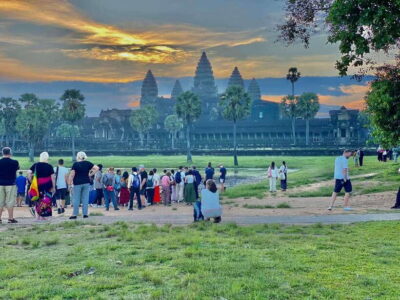
Angkor Wat: Small-Group Sunrise or Sunset Tour
Read our review →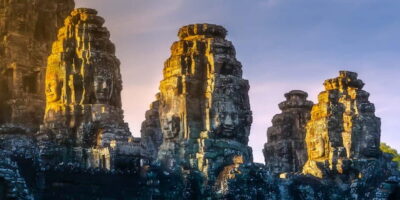
Angkor Wat Highlights and Sunrise Guided Tour from Siem Reap
Read our review →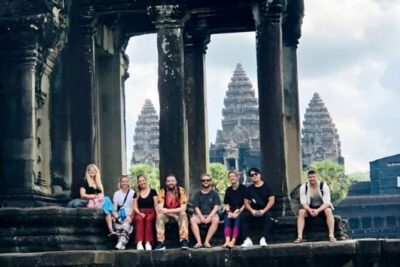
Angkor Wat Sunrise & 3 Main Temples with Breakfast – Small Group
Read our review →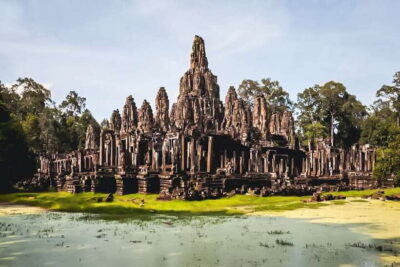
Angkor Wat Sunrise and Full-Day Sightseeing Tour
Read our review →
Angkor Wat Small-Group Exploration with Expert Guide
Read our review →Browse the lists this tour appears in