
Reviewed · ANGKOR WAT TOURS
2-Day Angkor Wat Sunrise tour, Banteay Srei & Tonle Sap lake
Angkor Wat is only part of the story here. This two-day private tour gives you the giant temple, the smiling stone faces of Bayon, tree-covered Ta Prohm, smaller outlying ruins, and a boat trip through Kampong Phluk on Tonle Sap Lake. The early start is serious, but it lets you see Angkor Wat at sunrise before the day gets too hot.
I like the air-conditioned vehicle and hotel pickup, which matter after hours on stone paths. I also like the range of sites: the grand monuments get most of the attention, but Preah Khan, Ta Som, and Neak Pean add welcome variety. The main caution is cost clarity. The $85 tour price does not include the $62 Angkor Pass, $20 boat ticket, meals, drinks, or tip.
Key points to know before booking
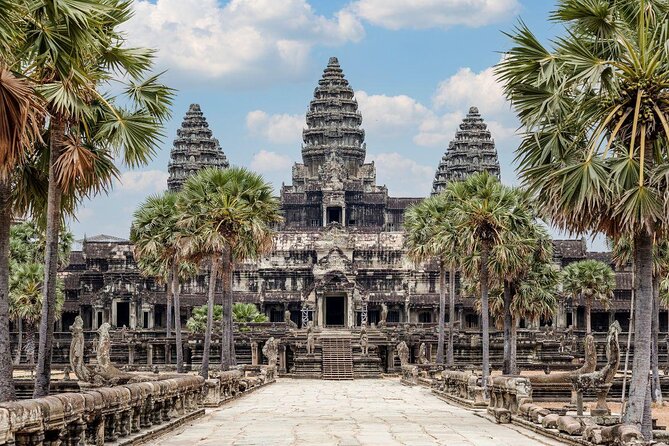
- Sunrise starts at 4:40 AM on day two, with Angkor Wat as the morning’s first stop.
- Kampong Phluk takes about three hours, including the local boat ride on Tonle Sap Lake.
- The tour is private, so only your own group participates.
- Guide Dy is specifically identified by name, and was praised for both guiding and tuk-tuk driving.
- Banteay Srei is promised in the general description, but it does not appear in the detailed stop-by-stop schedule. Confirm this before paying.
- Your likely total is much higher than $85, since the Angkor Pass and boat ticket add $82 per person before food.
Why this two-day Angkor plan works
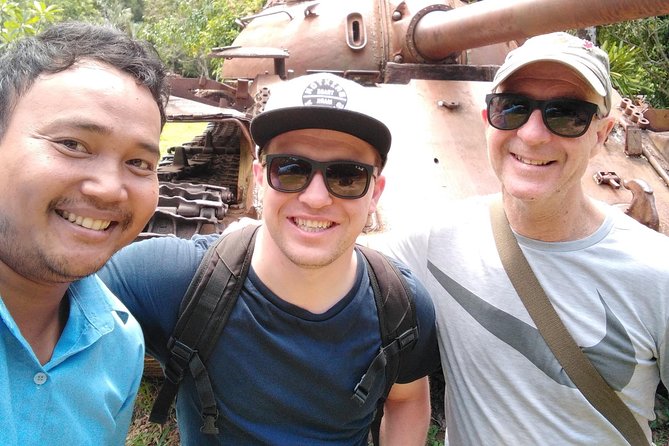
You get a broad look at the Angkor area rather than spending both days at only the famous temples. Day one focuses on Angkor Thom, Angkor Wat, and a possible sunset at Phnom Bakheng. Day two starts before dawn, returns to Angkor Wat, then follows a long circuit through Ta Prohm, Pre Rup, Eastern Mebon, Ta Som, Neak Pean, and Preah Khan before ending at Tonle Sap.
That is a lot of ground. I like the variety, but you should expect full days, plenty of walking, and repeated climbing over uneven temple surfaces. The private format helps because you are not tied to a large group’s pace. Still, the schedule is ambitious, especially with a 4:40 AM pickup on the second morning.
The tour includes hotel pickup and drop-off, an air-conditioned vehicle, mineral water, and an English-speaking guide for one day. The wording suggests that guiding may cover only one of the two days, so I would ask the provider which day includes the guide and what transport arrangement applies on the other day.
More ways to walk into Angkor Wat:
- Angkor Wat Sunrise or Sunset Tour with Guide from Siem Reap
★ 5.0 · 12,109 reviews - Siem Reap: Angkor Wat: Small-Group Sunrise or Sunset Tour
★ 5.0 · 9,444 reviews - Siem Reap: Angkor Wat 2-Day Tour with Sunrise and Sunset
★ 4.9 · 4,429 reviews
Angkor Thom begins with giant stone faces
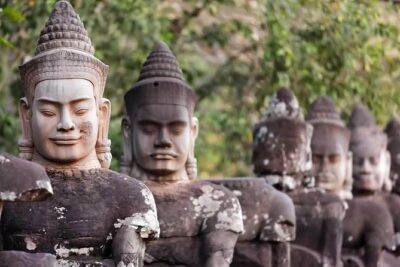
The first morning begins at Angkor Thom’s South Gate, the ceremonial entrance to the old royal city. You have about 20 minutes here, enough to see the bridge and the carved figures lining the approach, but not enough for a slow architectural study.
The gate leads into a city built under King Jayavarman VII, whose building program reshaped much of Angkor. The short stop works as an introduction, but your guide will need to keep the explanation focused because the Bayon comes next.
At the Bayon, the pace slows to about an hour. This is one of Angkor’s essential stops, known for its towers carved with enormous calm faces. The temple is more confusing than Angkor Wat, with galleries, passages, and towers packed closely together, so a guide can help you understand what you are seeing instead of treating it as a pile of stones.
I would use this hour for both orientation and close looking. The Bayon rewards attention to its carved scenes, not just a quick photograph of the faces. If you are sensitive to heat, this is also a good place to use the provided water and take a short rest in the shade when available.
Baphuon and the royal terraces
Baphuon sits northwest of the Bayon inside Angkor Thom. It is a three-tiered temple mountain from the mid-11th century, built before Jayavarman VII’s time. The planned visit lasts about 20 minutes, so you will get a useful look at its scale without spending a large part of the morning here.
The Terrace of the Elephants follows. This long platform was used by the king as a viewing area for royal events and victory displays. Its name comes from elephant carvings, and the stop helps you read Angkor Thom as a functioning royal capital rather than a collection of isolated temples.
The Terrace of the Leper King is another short stop, also about 20 minutes. Its enclosed carvings are especially useful because some of the most interesting details are not obvious from the open side. A guide can point out the layers of figures and explain why the modern name does not simply describe the monument’s original purpose.
These stops are brief, but that is not a weakness. After the Bayon, they provide a change of scale and setting before lunch. If you want long photography sessions at every monument, this tour may feel rushed.
Lunch and the first look at Angkor Wat
Lunch takes about 45 to 60 minutes at a local restaurant in Angkor Park. Food and drinks are on your own account. That gives you some freedom, but you should budget separately and remember that the $85 price is not an all-inclusive package.
Angkor Wat is scheduled for about an hour on day one. That is enough to enter the complex, see the famous outer view, and explore part of the temple, but it is short for a monument of this size. Angkor Wat covers a site of roughly 162.6 hectares and was first built as a Hindu temple dedicated to Vishnu.
The one-hour visit is best treated as an introduction, not a complete examination. You return on day two for sunrise, which gives you another chance to see the main approach and central temple. If you care about detailed carvings or want to climb every permitted level, ask how much free time you will have.
More runs out to Banteay Srei:
- Full-Day Banteay Srei & 4 Temples – Grand Tours Join-in Tour
★ 5.0 · 1,155 reviews - Siem Reap Tour: Angkor Wat Sunrise, Bayon, Ta Prohm, Banteay Srei
★ 5.0 · 931 reviews - 2-Day Angkor Wat With Small, Big Circuit and Banteay Srei Tour
★ 5.0 · 545 reviews - From Siem Reap: Banteay Srei Temple & Grand 5 Temple Tour
★ 4.8 · 262 reviews
Phnom Bakheng sunset is optional
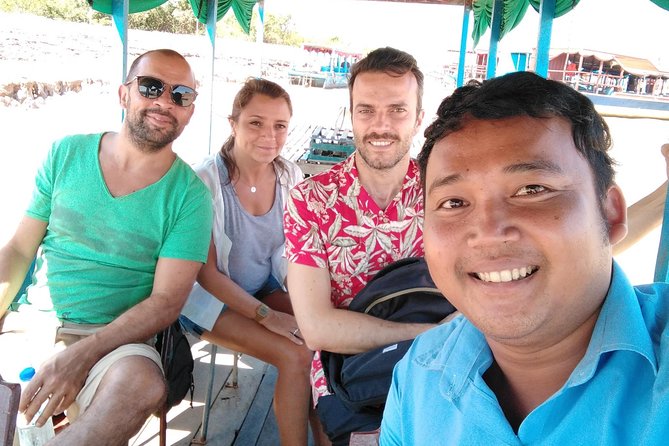
The first day may finish at Phnom Bakheng for sunset, weather and energy permitting. The stop is planned for about an hour, but it is not guaranteed. That flexibility is sensible after a long temple day.
Because the second day begins at 4:40 AM, do not force yourself to stay for sunset if you are already worn out. I like that the stop is optional rather than presented as a fixed promise. You can make the call based on the weather, your energy, and how much time you want at the hotel before the pre-dawn pickup.
Angkor Wat at 4:40 AM
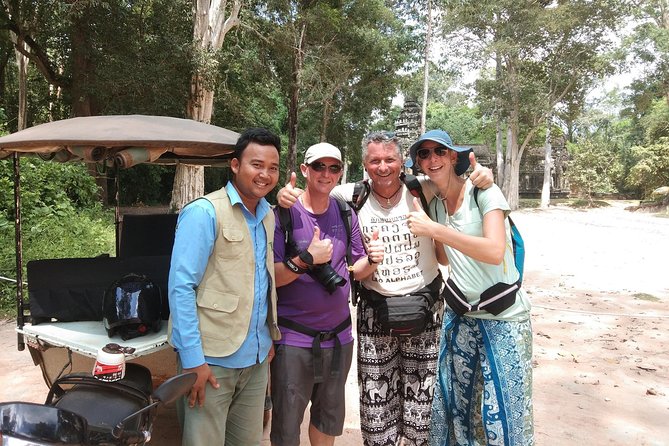
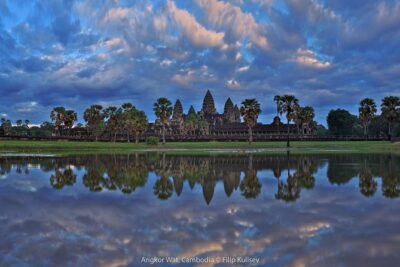
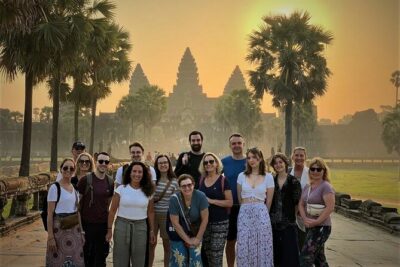
Day two begins before sunrise. You are picked up from your hotel lobby at 4:40 AM and taken to Angkor Wat to watch the morning light. This is the tour’s most demanding feature, but also one of its main reasons to book.
Sunrise visits can be crowded and weather-dependent, so you should keep expectations realistic. The tour provides access to the setting, transport, and a guide, but no one can guarantee a dramatic sky. Even with ordinary weather, seeing the temple in the changing early light gives the site a different mood from the previous afternoon.
The schedule allows about an hour at Angkor Wat before breakfast and the next temple. Bring only what you need, since the morning is long and you will be moving through several sites. Comfortable footwear matters more here than stylish clothing.
Ta Prohm and the smaller eastern temples
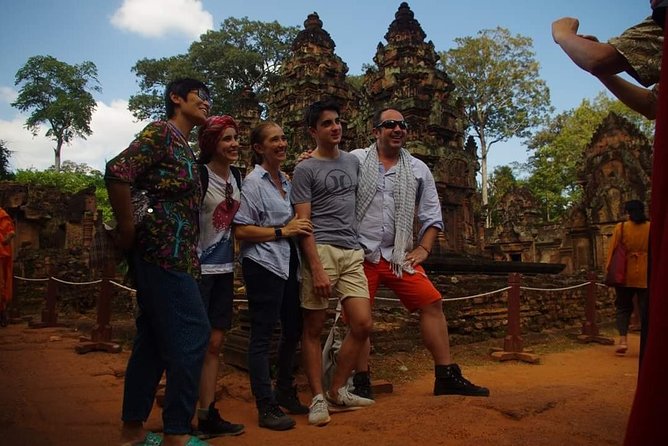
After breakfast, the group visits Ta Prohm for about an hour. This is the temple most closely associated with trees and giant roots growing over stone walls. It has been left partly in its original condition, which gives it a more raw appearance than the carefully ordered central monuments.
Ta Prohm can feel crowded, but the one-hour stop gives you time to see its main passages without making the entire day about one temple. Watch your footing. The site combines roots, uneven stone, narrow areas, and raised surfaces.
The schedule then moves to Pre Rup, a brick and laterite temple mountain built under King Rajendravarman and dedicated in 961 or early 962. The supplied timing contains an obvious problem: one entry describes Pre Rup as lasting two days and 12 hours, while another lists 90 minutes. Treat the realistic expectation as roughly an hour to an hour and a half, and confirm the exact plan before booking.
Eastern Mebon, visited for about 40 minutes, was built on an artificial island in the now-dry East Baray reservoir. Its setting explains why Angkor’s water systems matter. You are not simply looking at a temple in isolation. You are seeing part of a much larger system of reservoirs, roads, and royal construction.
Ta Som takes about 40 minutes. Built under Jayavarman VII, it is a smaller site with a quieter feel than Bayon or Ta Prohm. It makes a good contrast after the major monuments because you can focus on details without the same scale and pressure.
Neak Pean is also scheduled for 40 minutes. Built during Jayavarman VII’s reign, it sits within a former water setting and is associated with a healing temple complex. The approach and surrounding water features are as important as the central shrine, so your guide’s explanation can add real value here.
Preah Khan is a fitting final Angkor temple
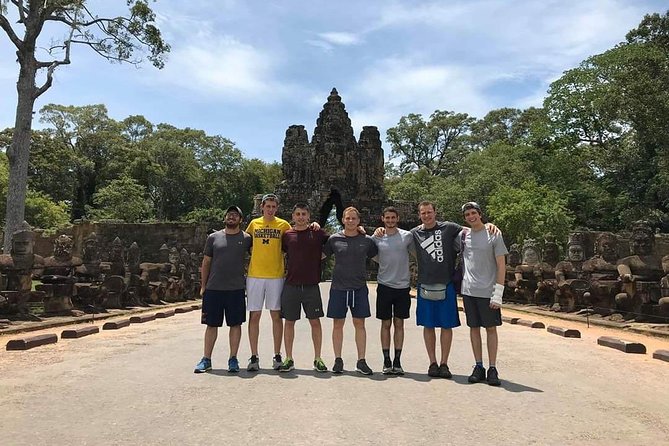
Before lunch, you visit Preah Khan for about an hour. King Jayavarman VII built it to honor his father, and it lies northeast of Angkor Thom. The complex offers long corridors, courtyards, and a sense of gradual discovery as you move through the structure.
Preah Khan is a strong choice for the final major temple because it brings together several themes from the two days: royal power, Buddhist construction, older Hindu elements, and the constant tension between stone buildings and plant growth. After the compact Bayon and dramatic Ta Prohm, it gives you another large site with a different rhythm.
Lunch near Srah Srang, then Tonle Sap
The next stop is listed as Srah Srang, with lunch at a local restaurant before continuing to the lake. The schedule gives about an hour for this part, and food and drinks remain extra.
Kampong Phluk is about 21 kilometers from Siem Reap town. After reaching the port, you take a local boat to visit the flooded fishing village on Tonle Sap Lake. The boat portion is planned for about three hours, making it a substantial part of the experience rather than a quick add-on.
This change from temples to lake life is one of the tour’s best ideas. After two days of stone monuments, you see a community shaped by seasonal water and fishing. The boat trip also gives your feet a break, though the full day remains long.
The $20 boat ticket is not included. That fee is important when comparing prices because it is not a small optional extra. You should also note that Tonle Sap conditions and the appearance of a flooded village can vary with the season, though the supplied details do not promise a particular water level or village scene.
The real cost and practical value
The base price is $85 per person. Add the $62 Angkor Pass and $20 boat ticket, and the known cost reaches $167 per person before lunch, drinks, and tip.
That price can still be reasonable if you value private transport, hotel pickup, a two-day schedule, and a guide who can explain the monuments. It is less attractive if you expected the advertised price to cover entries. The pass is a required separate cost for the Angkor sites, and the boat fee is also clearly separate.
The private format is useful for couples, families, or small groups that prefer not to wait for strangers. Group discounts are offered, though the amount is not stated. An air-conditioned vehicle matters in Siem Reap’s heat, particularly after long walks through Angkor Thom and Ta Prohm.
A guide named Dy is specifically associated with the experience. Dy was praised for guiding and for handling the tuk-tuk, which suggests a friendly, hands-on style, though you should confirm whether Dy will be your assigned guide.
Who should book this tour?
I would choose this tour if you want the major Angkor temples, several less visited sites, sunrise, sunset as an option, and Tonle Sap in one compact package. It suits first-time visitors who want structure and transport rather than arranging each temple and the lake separately.
It is also a good fit for anyone who prefers a private outing. You can ask questions, adjust the pace where possible, and avoid being part of a large group. The early second morning is the price you pay for sunrise, so you should be comfortable with a pre-dawn start.
I would be cautious if you want a relaxed schedule, long time at each temple, or a fully inclusive price. The plan covers a lot, and the added entrance and boat fees are substantial. I would also confirm three details before booking: the status of Banteay Srei, the duplicated Pre Rup timing, and which day includes the English-speaking guide.
FAQ
Is the Angkor Pass included?
No. The Angkor Pass costs $62 per person and is not included in the tour price.
Is the Tonle Sap boat ticket included?
No. The local boat ticket for Kampong Phluk costs $20 per person and is not included.
What time does the sunrise pickup begin?
Pickup from the hotel lobby begins at 4:40 AM on the second day.
Is this a private tour?
Yes. Only your own group participates in the activity.
Are meals and drinks included?
No. Lunch, food, and drinks are paid for separately. Mineral water is provided during the touring.
Can I cancel for a full refund?
Yes, if you cancel at least three full days before the experience start time. Cancellations made within three days are not refunded, and changes within that period are not accepted.
Should you book it?
Book this tour if you want an efficient private introduction to Angkor with the major temples, smaller ruins, sunrise, and Tonle Sap in one plan. The strongest parts are the range of sites, air-conditioned transport, and the chance to work with a guide such as Dy.
Before you commit, add the $82 in known entrance and boat fees to the advertised price. Then confirm Banteay Srei and the guide arrangements. If those details match what you want, this is a useful, full-bodied two-day introduction to Siem Reap.
More Early Starts in Siem Reap
- Angkor Wat Sunrise tour with Small – Group and Guide tours
★ 5.0 · 3,655 reviews - Angkor Wat Highlights and Sunrise Guided Tour from Siem Reap
★ 5.0 · 3,213 reviews - Full-Day Angkor Wat Sunrise Private Tour with Guide from Siem Reap
★ 5.0 · 2,920 reviews - Angkor Wat Sunrise & 3 Main Temples with Breakfast – Small Group
★ 5.0 · 2,857 reviews
More Time on the Tonle Sap
- Sunset tour of Kampong Phluk stilts home village on the Tonle Sap
★ 5.0 · 4,865 reviews - Siem Reap: Kulen Mountain, Beng Mealea and Tonle Sap Tour
★ 5.0 · 1,483 reviews - Tonle Sap Lake & Kampong Phluk Village Half-Day Tour
★ 5.0 · 1,045 reviews - Kulen Mountain with Beng Mealea and Tonle Sap Small Group Tour
★ 5.0 · 780 reviews
Just added around Siem Reap
- Twilight Tastes of Siem Reap Include Dinner★ 5.0 · 13 reviews
- Ultimate Sunrise to Angkor Wat, Angkor Thom and Bayon Temple★ 5.0 · 3 reviews
- Trekking Tour at Phnom Kulen National Park from Siem Reap★ 5.0 · 3 reviews
- Professional Photo Shoot in Angkor Archaeological Park, Siem Reap★ 5.0 · 42 reviews
- Full-Day Private Tour of Angkor Wat with Pick Up★ 5.0 · 12 reviews
- Unveiling 2 Days Private Angkor Wat/Beyond In Sunrise/Sunset Tour★ 5.0 · 48 reviews
- Siem Reap City Tour with War Museum and Killing Field★ 5.0 · 27 reviews
- Private Day Trip to Angkor Temples with Expert Guide★ 5.0 · 4 reviews
Angkor Wat Tours, compared.
Angkor Wat Sunrise or Sunset Tour with Guide from Siem Reap
Read our review →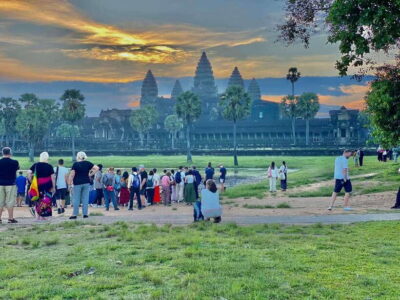
Angkor Wat: Small-Group Sunrise or Sunset Tour
Read our review →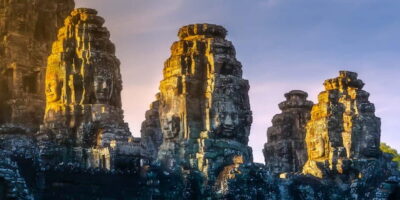
Angkor Wat Highlights and Sunrise Guided Tour from Siem Reap
Read our review →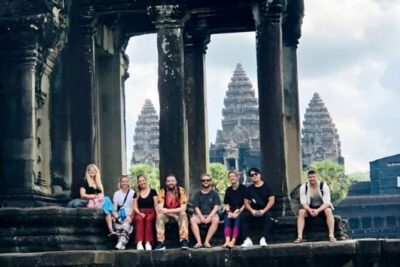
Angkor Wat Sunrise & 3 Main Temples with Breakfast – Small Group
Read our review →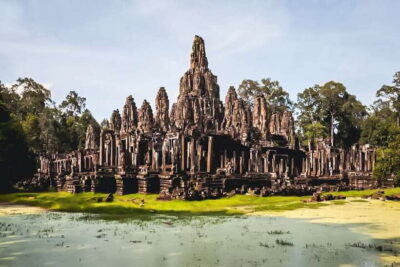
Angkor Wat Sunrise and Full-Day Sightseeing Tour
Read our review →
Angkor Wat Small-Group Exploration with Expert Guide
Read our review →Browse the lists this tour appears in