
Reviewed · ANGKOR WAT TOURS
3-Day Angkor Wat with All Interesting Major Temples, Banteay Srei & Beng Mealea
Angkor is not a one-temple stop, and this three-day private tour gives you time for the famous monuments, smaller ruins, sunrise, sunset, and outlying temples. You begin with Angkor Wat, Ta Prohm, Bayon, and the terraces of Angkor Thom, then reach Banteay Srei and Beng Mealea before the crowds and heat wear you down.
I like the hotel-to-hotel transport, which saves you from sorting out Siem Reap’s roads each morning. I also like the range of guides available, including Mony, Vanna, Mr. Thou, and Mr. Khmer, with past guests praising their storytelling, photography help, and knowledge of temple design. The drawback is the schedule: day one runs long, day two begins at 5:00 a.m., and the $261 price does not include the $62 temple pass or lunch.
Key points to know before booking
- Sunrise and sunset are both included: Start day two at Angkor Wat before dawn, then end day one at Phnom Bakheng if the viewing limit allows.
- Beng Mealea adds a wilder side of Cambodia: Expect a long third day and a temple where trees and fallen stones dominate the experience.
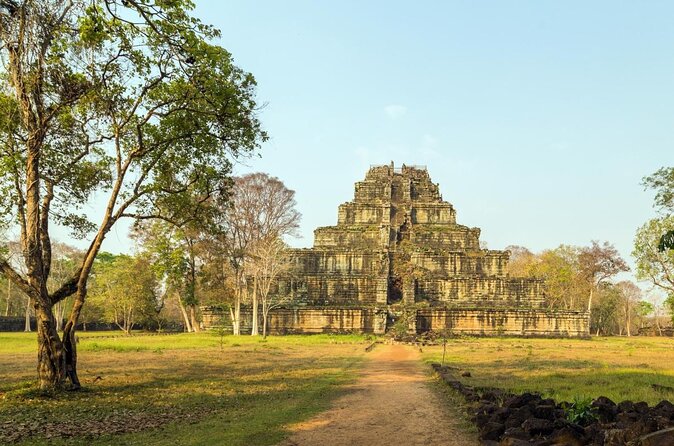
- You visit the major Angkor circuit sites: Angkor Wat, Ta Prohm, Bayon, Baphuon, Preah Khan, Pre Rup, and others are all included.
- Banteay Srei is a highlight for carvings: Its pink sandstone and fine decoration make it different from the larger temple mountains.
- The tour is private: Only your group takes part, with an English-speaking licensed guide and air-conditioned transport.
- Budget beyond the tour price: Add $62 per person for the Angkor temple pass, plus lunch costs of about $5 per person at the suggested restaurants.
Why three days works well at Angkor
The Angkor Archaeological Complex is too large for a sensible one-day visit. You could see Angkor Wat, Ta Prohm, and Bayon in a rush, but you would miss the quieter ruins and the different periods of Khmer building represented by the outlying sites.
This itinerary gives you two days inside the main Angkor area and a third day for Beng Mealea and the Roluos group. That division makes sense. The first two days cover the grand monuments around Angkor Thom and the main temple circuits. Day three takes you farther from Siem Reap, where the roads and ruins feel less tightly packed.
The private format matters here. You are not tied to a large group’s pace, and your guide can explain a carving, pause for photographs, or move on when your energy drops. Pickup and return at your hotel also remove the daily need to arrange transport.
The price is $261 per person, before the $62 temple pass and meals. That makes the real minimum roughly $323 per person, plus lunch. For a three-day private service with a guide, driver, fuel, road tolls, parking, water, and wet towels, the package can offer good value if you want a structured visit and do not want to arrange separate rides.
More ways to walk into Angkor Wat:
- Angkor Wat Sunrise or Sunset Tour with Guide from Siem Reap
★ 5.0 · 12,109 reviews - Siem Reap: Angkor Wat: Small-Group Sunrise or Sunset Tour
★ 5.0 · 9,444 reviews - Siem Reap: Angkor Wat 2-Day Tour with Sunrise and Sunset
★ 4.9 · 4,429 reviews
Day one: Angkor Wat, Ta Prohm, and the heart of Angkor Thom
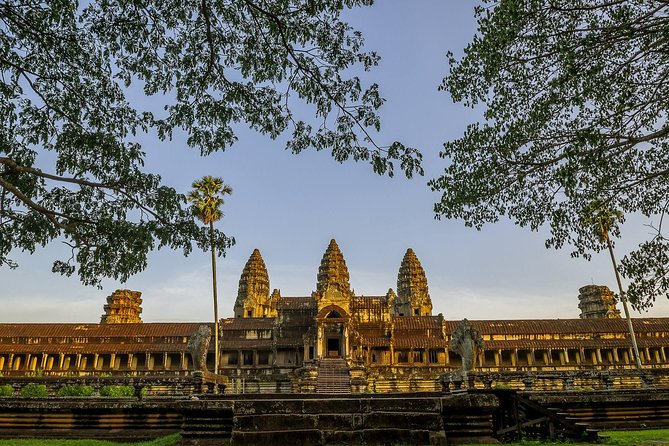
Your first pickup is scheduled for 8:00 a.m. After meeting your guide in your hotel lobby, you stop to buy the temple pass if you do not already have one. The morning begins at Angkor Wat, where the planned visit lasts about two and a half hours.
That length is useful. Angkor Wat is not just a photo stop at the pond. You can examine the long galleries, towers, courtyards, and carved scenes while your guide explains what you are seeing. The temple was built as a Hindu monument and later used as a Buddhist site, so its imagery and changing religious role give your guide plenty to discuss.
Wear shoes that handle uneven stone and bring water. The included cool water and wet towel are small comforts, but they matter in Cambodia’s heat. The temple pass is not included in the tour fee, so allow for that extra $62 per person.
Ta Prohm comes next, with about two hours planned. This is the temple most closely linked with the film Tomb Raider, but its real appeal is the way trees and roots have grown through the old stonework. The famous roots are only part of the site. Your guide can help you notice doorways, galleries, and collapsed sections that are easy to overlook while you wait for a clear photograph.
Ta Nei is a quieter contrast. The small temple has seen less restoration and is surrounded by large trees. You get about 45 minutes here, enough to appreciate the atmosphere without turning the visit into another long climb through ruins. If you dislike packed photo stops, this may be one of your favorite places on the route.
Angkor Thom in the afternoon
The Victory Gate provides a quick photographic pause before Bayon. The gate sits on the east side of Angkor Thom, and the stop lasts about 10 minutes. It is brief, but it helps you understand the defensive and ceremonial scale of the old city before entering its center.
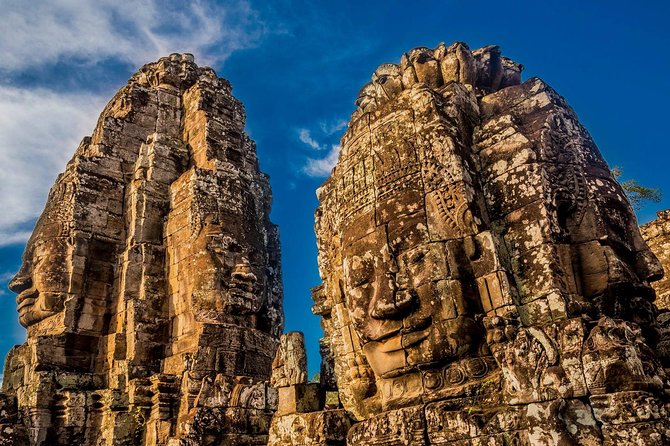
Bayon receives about 45 minutes. Its towers carry the famous faces associated with the bodhisattva Avalokiteshvara, with the itinerary describing 49 towers and 196 faces. The faces are best appreciated from several angles, since they appear and disappear among the narrow passageways and upper levels.
Baphuon follows, with about half an hour. This Hindu temple predates Angkor Wat and includes a large reclining Buddha added centuries later. The nearby Royal Enclosure Wall helps place the temple within the former royal center, rather than treating it as an isolated ruin.
You then see Phimeanakas, a 10th-century pyramid temple connected with the old royal palace. The stop is only about 15 minutes, so expect an overview rather than a long exploration.
The final Angkor Thom stops are the Terrace of the Elephants and the Terrace of the Leper King. Both are short visits, around 10 minutes each. The Elephant Terrace carries carved elephants and once served as a viewing platform for royal processions and returning armies. The Leper King terrace has layered carvings and sits just to the north.
Phnom Bakheng sunset: beautiful, but not guaranteed
Day one ends at Phnom Bakheng, where you climb the hill to wait for sunset. The planned time is about two hours, though the actual sunset experience depends on visitor limits and how long you want to wait.
The itinerary notes that only a limited number of people can enter the upper area. That makes this a conditional part of the day, not a promise that you will stand at the best viewpoint. If you prefer to avoid a long wait after a full day of temples, you can skip it.
I would decide based on your energy. The sunset gives day one a memorable finish, and the views are a clear change from close stone corridors. But after Angkor Wat, Ta Prohm, Angkor Thom, and multiple terraces, many people will be ready for dinner and a shower.
More runs out to Banteay Srei:
- Full-Day Banteay Srei & 4 Temples – Grand Tours Join-in Tour
★ 5.0 · 1,155 reviews - Siem Reap Tour: Angkor Wat Sunrise, Bayon, Ta Prohm, Banteay Srei
★ 5.0 · 931 reviews - 2-Day Angkor Wat With Small, Big Circuit and Banteay Srei Tour
★ 5.0 · 545 reviews - From Siem Reap: Banteay Srei Temple & Grand 5 Temple Tour
★ 4.8 · 262 reviews
Day two: sunrise, the grand circuit, and Banteay Srei
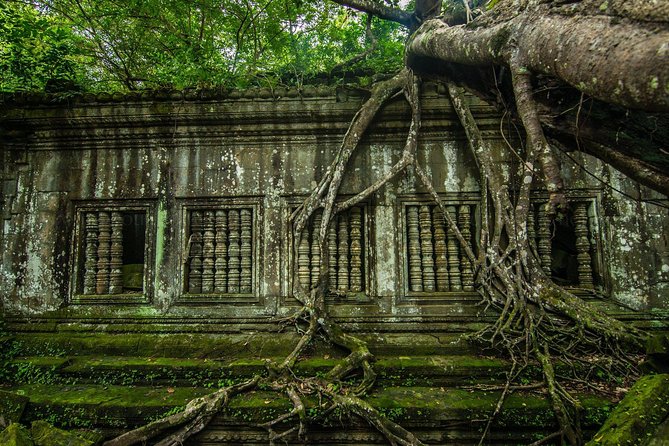
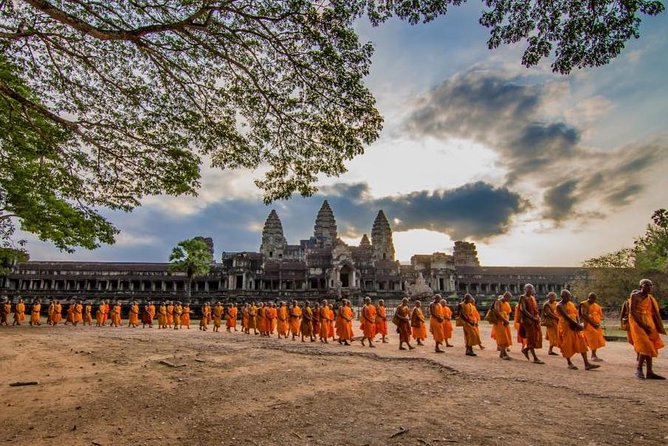
The second day begins at 5:00 a.m. for sunrise at Angkor Wat. The scheduled sunrise portion lasts about one hour and 45 minutes. You will need to accept an early start and the possibility of waiting in the dark for the sky to change.
Sunrise is one of the main reasons to choose this tour, but it should not be treated as a guaranteed perfect photograph. Weather, clouds, and the number of people at the viewing area all affect the scene. Still, seeing the towers gradually appear in morning light gives Angkor Wat a completely different mood from the previous day.
After sunrise, you return for breakfast, then continue to Preah Khan. This large Buddhist temple was built by King Jayavarman VII and dedicated to his father. Its long corridors and partially restored sections reward a slower visit, and the one-hour schedule gives your guide room to explain its purpose and decoration.
Neak Pean is a smaller island temple in the middle of the last Baray, an ancient reservoir. The stop lasts about 30 minutes. The approach and water setting are part of the appeal, though you should expect less monumental stonework than at Angkor Wat or Bayon.
Ta Som takes another 30 minutes. Like Ta Prohm, it has a strong connection between trees and old masonry, but it is smaller and more manageable. Eastern Mebon follows for about 20 minutes. This temple mountain rises in three levels and has elephant statues at its corners, giving you a chance to compare its design with other pyramid temples.
Pre Rup receives about an hour. Built in the late 10th century and dedicated to Hindu gods, it has a strong brick-and-stone profile and a steep, tiered form. Your guide can explain the beliefs connected with the temple’s name and its association with funeral practice.
Banteay Srei and Banteay Samre
After lunch, the route moves to Banteay Srei, about an hour from the schedule. This is one of the most distinctive stops on the tour because it uses pink sandstone and carries unusually fine carvings. The smaller scale makes the decoration easier to appreciate than at the huge central monuments.
Banteay Srei is often called the Ladies Temple, though the nickname should not distract from the craftsmanship. Look for the careful figures, floral patterns, and tightly worked doorways. This is a good place to ask your guide about carving methods and the Hindu gods shown on the temple.
Banteay Samre follows for about 45 minutes. Its form is often compared with Angkor Wat, and the visit lets you see how temple layouts and tower arrangements were adapted across different sites. The site is less famous, which can make it a calmer stop at the end of a long day.
The final visit is Banteay Kdei, a Buddhist temple with similarities to Ta Prohm and Bayon. The planned time is 45 minutes. You may notice a familiar mix of galleries, worn carvings, and trees, but its less celebrated status gives your guide space to explain the broader style of Jayavarman VII’s period.
Day two covers a lot. You get the sunrise, several major temples, two smaller sites, and Banteay Srei. If you want to study every inscription or take long breaks, the pace may feel tight. If your goal is to see a wide range of Angkor’s buildings with explanations along the way, the full schedule is useful.
Day three: Beng Mealea and the Roluos temples
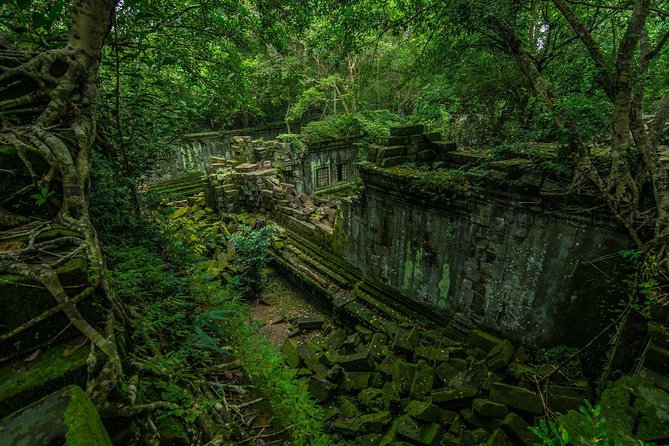
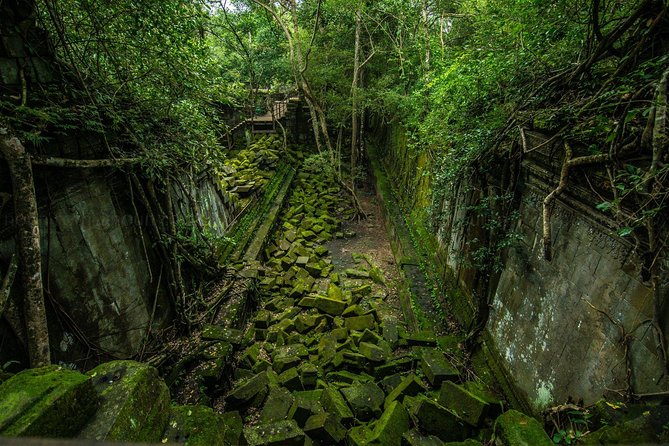
Beng Mealea is the major reason to keep the third day. It lies about 68 kilometers northeast of Siem Reap, and the planned visit lasts three and a half hours. The long drive is part of the tradeoff, but the reward is a very different type of temple experience.
Nature has overtaken much of Beng Mealea. Fallen stones, roots, and broken galleries create a rougher setting than the more managed central Angkor sites. You are not simply walking from one restored courtyard to another. You are trying to read a huge, damaged structure through its surviving walls and tangled growth.
The visit can be physically demanding because of uneven surfaces and extended walking. The information provided does not promise a specific accessibility arrangement, so anyone concerned about mobility should ask the provider before booking. For most visitors who want atmosphere and a less polished ruin, Beng Mealea is the strongest part of day three.
The route then reaches the Roluos group, an early cluster of temples connected with the ancient city of Hariharalaya. Lolei is the smallest of the three listed stops and lasts about 20 minutes. It was built in the ninth century as a Hindu temple.
Preah Ko takes another 20 minutes. It was the first temple built in Hariharalaya, giving the site importance beyond its size. Here, your guide can help you understand how early Khmer temple design developed before the later monuments became larger and more elaborate.
Bakong is the largest of the Roluos temples and receives about an hour. It is described as the first sandstone temple mountain built by Khmer rulers and offers a useful comparison with Pre Rup and other stepped temple forms. After the morning at Beng Mealea, Bakong gives the day a more formal, monumental finish.
Lunch is taken at a restaurant along the way and costs extra. The suggested price is about $5 per person, depending on the menu. The tour includes the vehicle, but not meals.
Optional shopping stops in Siem Reap
The final day can include Artisans Angkor and Psar Chaa, or Old Market. Artisans Angkor is associated with stone carving, wood carving, lacquering, gilding, and silk processing. It may suit you if you want to see traditional craft products after the temples.
Old Market is in central Siem Reap and provides a final local-market stop. Both visits are optional. If you would rather return to your hotel after three demanding days, you can ask to skip them.
Guides, vehicles, and the daily rhythm
This is a private activity, so only your group participates. An English-speaking licensed guide travels with you, and an air-conditioned vehicle handles the daily routes. Hotel pickup and return are included in Siem Reap, along with parking fees, road tolls, cool water, and a cool wet towel.
The guide makes a major difference on a temple tour. Past bookings have included guides named Mony, Vanna, Mr. Thou, Mr. Chen, and Mr. Khmer. Mony was praised for keeping the trip smooth and explaining the sites clearly. Mr. Khmer was described as an archaeologist and teacher who could discuss construction methods and religious meaning, while Mr. Thou was noted for adding practical suggestions about Siem Reap and Cambodian life.
You cannot select a particular guide from the information provided, so treat those names as examples rather than a guarantee. It is still sensible to tell the operator what matters to you, such as photography, architecture, religious symbolism, or a slower pace.
Who should book this Angkor tour?
I would choose this tour if you want to see the major temples without arranging a different driver each day. It suits first-time visitors, people who value historical explanation, and anyone who wants both the famous circuit and outlying sites such as Beng Mealea and Roluos.
It is less suitable if you dislike early mornings, long temple days, steep or uneven ground, or scheduled sightseeing. The 5:00 a.m. sunrise and the 68-kilometer trip to Beng Mealea require stamina.
Free cancellation is available up to 24 hours before the start time. Changes or cancellations made inside that window are not refunded.
Should you book it?
Book this three-day tour if you want broad Angkor coverage, private transport, and a guide who can connect the carvings, kings, religions, and building styles. The combination of sunrise, sunset, Banteay Srei, Beng Mealea, and Roluos is stronger than a basic two-day central circuit.
Before paying, budget the temple pass and lunches, and make sure you are comfortable with the early start and full days. If you are, the tour offers a practical way to see both Angkor’s grand icons and its rougher, quieter ruins without spending your trip negotiating transport.
FAQ
How long is the tour?
The experience lasts approximately three days.
Where does the tour start and finish?
Pickup and return are provided at your hotel or guest house in Siem Reap.
Is the tour private?
Yes. Only your group participates in the activity.
Is an English-speaking guide included?
Yes. The tour includes an English-speaking licensed guide.
Is transportation included?
Yes. An air-conditioned vehicle, hotel pickup and return, parking fees, and road tolls are included.
Is the Angkor temple pass included?
No. The Angkor Wat and all-temples admission pass costs $62 per person.
Are meals included?
No. Lunch is extra and is listed at about $5 per person, depending on the menu.
What time does the sunrise day begin?
Day two pickup is scheduled for 5:00 a.m. for sunrise at Angkor Wat.
Can I skip the sunset or optional shopping stops?
Yes. You can skip Phnom Bakheng sunset if you do not want to wait, and Artisans Angkor and Old Market are also optional.
More Temple Tours in Siem Reap
- Angkor Wat Sunrise & 3 Main Temples with Breakfast – Small Group
★ 5.0 · 2,857 reviews - Siem Reap: Full Day Angkor Wat Temple Experience with Sunset
★ 4.9 · 1,490 reviews - 2 Days Exclusive Temple Highlights with Sunset and Sunrise Tour
★ 5.0 · 1,157 reviews - Siem Reap: Angkor Sunrise 1- or 2-Day Guided Temples Tour
★ 4.9 · 1,132 reviews
More Beng Mealea Jungle-Temple Days
- Siem Reap: Kulen Mountain, Beng Mealea and Tonle Sap Tour
★ 5.0 · 1,483 reviews - Kulen Mountain with Beng Mealea and Tonle Sap Small Group Tour
★ 5.0 · 780 reviews - Koh Ker Temple Group & Beng Mealea Full-Day Join-in Tour
★ 5.0 · 710 reviews - From Siem Reap: Koh Ker and Beng Mealea Temples Tour
★ 4.9 · 293 reviews
Just added around Siem Reap
- Twilight Tastes of Siem Reap Include Dinner★ 5.0 · 13 reviews
- Ultimate Sunrise to Angkor Wat, Angkor Thom and Bayon Temple★ 5.0 · 3 reviews
- Trekking Tour at Phnom Kulen National Park from Siem Reap★ 5.0 · 3 reviews
- Professional Photo Shoot in Angkor Archaeological Park, Siem Reap★ 5.0 · 42 reviews
- Full-Day Private Tour of Angkor Wat with Pick Up★ 5.0 · 12 reviews
- Siem Reap City Tour with War Museum and Killing Field★ 5.0 · 27 reviews
- Unveiling 2 Days Private Angkor Wat/Beyond In Sunrise/Sunset Tour★ 5.0 · 48 reviews
- Private Day Trip to Angkor Temples with Expert Guide★ 5.0 · 4 reviews
Angkor Wat Tours, compared.
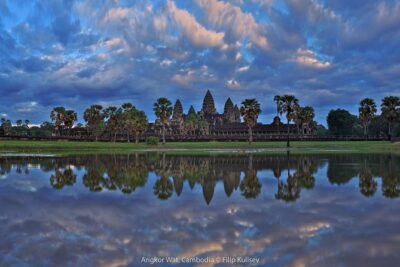
Angkor Wat Sunrise or Sunset Tour with Guide from Siem Reap
Read our review →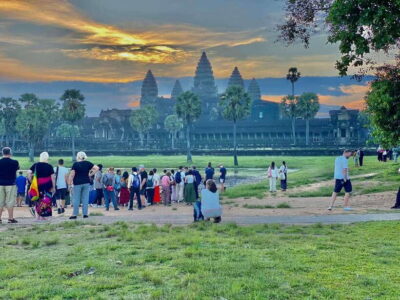
Angkor Wat: Small-Group Sunrise or Sunset Tour
Read our review →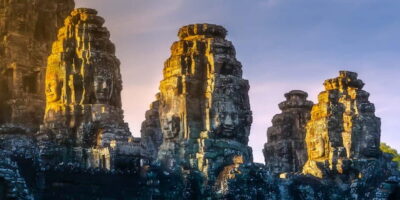
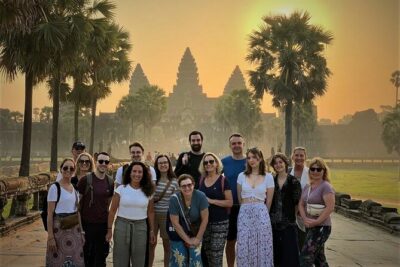
Angkor Wat Highlights and Sunrise Guided Tour from Siem Reap
Read our review →
Angkor Wat Sunrise & 3 Main Temples with Breakfast – Small Group
Read our review →
Angkor Wat Sunrise and Full-Day Sightseeing Tour
Read our review →
Angkor Wat Small-Group Exploration with Expert Guide
Read our review →Browse the lists this tour appears in