
Reviewed · 3-DAY EXPERIENCES
3-Day Private Tour Phnom Penh & Siem Reap include domestic flight
Angkor Wat gets the spotlight, but this tour’s strongest feature is the way it pairs Cambodia’s ancient temples with the country’s modern capital and difficult recent past. In three tightly packed days, you visit Tuol Sleng, the Royal Palace, the National Museum, Angkor Thom, Ta Prohm, Angkor Wat, Banteay Srei, and Kompong Phluk.
I like the private format, since your own group gets the guide’s attention and private air-conditioned transport. I also like the practical design: the domestic flight saves a long overland transfer, while hotels, temple tickets, museum admissions, breakfast, and the sunset boat ride are already covered.
The tradeoff is time. This is a fast tour with an early flight, long temple walks, and several major sights in a short span. If you prefer slow mornings or extended time at each temple, you may find it rushed.
Key points to know before booking
- Two cities in three days: Phnom Penh and Siem Reap are linked by a domestic economy flight rather than a long road journey.
- Private guiding throughout: Only your group participates, with licensed English-speaking guides. Channak handled Phnom Penh for one reported booking, while Rith guided Siem Reap.
- A serious Phnom Penh afternoon: Tuol Sleng gives essential context before the lighter palace, museum, and river portions of the day.
- A full Angkor day: Angkor Thom, Bayon, Ta Prohm, and Angkor Wat fill Day 2, with a three-hour visit to Angkor Wat late in the day.
- Beyond the famous temple: Banteay Srei, Preah Khan, and Kompong Phluk add smaller-scale architecture and countryside time.
- Strong package value: The $735 price includes hotels, transport, guides, admissions, the domestic flight, boat cruise, and two breakfasts.
Why this three-day plan works
Cambodia can be awkward to arrange on a short visit. Phnom Penh and Siem Reap offer very different experiences, yet reaching both normally means coordinating separate hotels, drivers, internal transport, tickets, and guides.
This tour bundles those moving parts. You arrive in Phnom Penh, see the capital’s major sights, fly to Siem Reap the next morning, and spend the rest of the trip around Angkor. A private vehicle handles the transfers and sightseeing, so you are not left sorting out transport between widely scattered temples.
The schedule is best for someone who wants a strong first look rather than a leisurely study of Cambodia. You will get the broad picture: royal Cambodia, Khmer sculpture, the crimes of the Khmer Rouge period, Angkor’s great temple complexes, and life around the Tonle Sap area.
The supplied price is $735 per person. That is not a shoestring Cambodia price, but the package includes items that can quickly add up: two nights in named hotels or similar properties, the Phnom Penh to Siem Reap flight, all listed admission fees, private transportation, a licensed English-speaking guide, the river cruise, breakfasts, and some lunch provision.
It also includes two bottles of mineral water per person while sightseeing and during transfers. Drinks during meals, unspecified meals, and personal travel or health insurance cost extra. The visa process is mentioned on arrival in Phnom Penh, but the visa itself is not listed among the included items, so budget for it separately.
More Private Tours in Phnom Penh
- Phnom Penh Full Day Private Tour Included All Admission Tickets
★ 5.0 · 585 reviews - Phnom Penh to Siem Reap by Private Car or Minivan
★ 5.0 · 211 reviews - Oudong Mountain – Phnom Penh Former Capital Private Day Tour
★ 4.8 · 146 reviews
Day 1: Phnom Penh from Tuol Sleng to the Mekong
Your first day begins at Phnom Penh airport. After collecting your luggage, you handle Cambodia’s visa process, immigration, and customs before meeting the local team. The stated arrival procedure allows about an hour, though airport formalities can take longer depending on conditions.
After some time to settle in and have lunch, the serious part of the tour begins at Tuol Sleng Genocide Museum. The site was formerly Tuol Svay Prey High School before the Khmer Rouge turned it into a prison in 1975. The museum is difficult, but it is an important stop. It gives you a clearer understanding of Cambodia’s recent past and helps put the country’s present-day life into context.
The visit is scheduled for about an hour. That is enough for an introduction, but not for a detailed study of every room and display. Some travelers may find the stop emotionally heavy, especially early in a short trip. Your guide’s role matters here, and a private format gives you a better chance to ask questions or pause when needed.
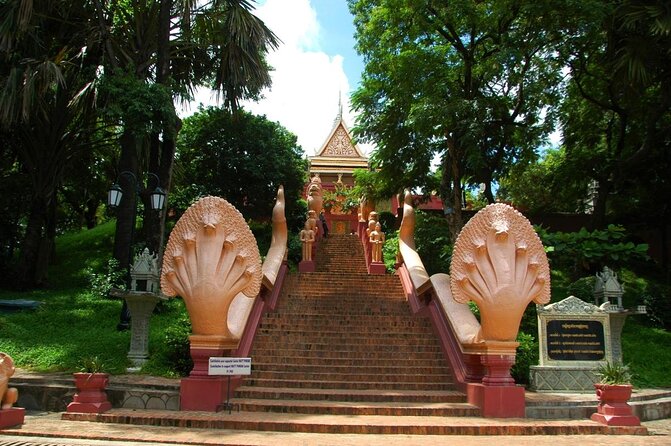
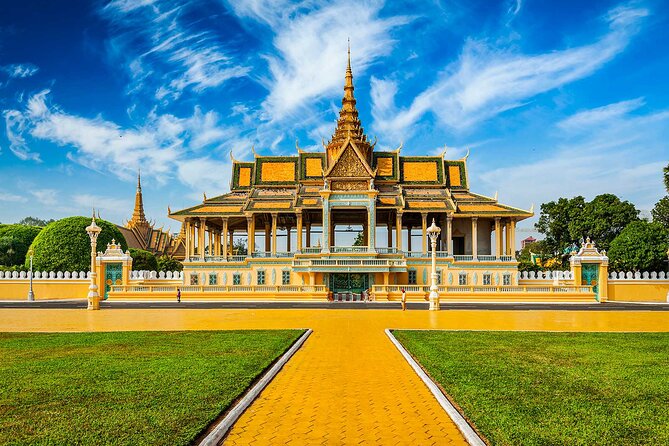
Next comes the Royal Palace, built in 1866 under King Norodom. The pagoda-style compound includes gardens and the Silver Pagoda, named for its silver floor. This is a very different Phnom Penh experience from Tuol Sleng: formal, bright, and connected to the Cambodian monarchy and Buddhist tradition.
The planned visit lasts about an hour. Dress respectfully for the palace and religious areas. The admission fee of $10 is included, as is the $10 fee for the National Museum.
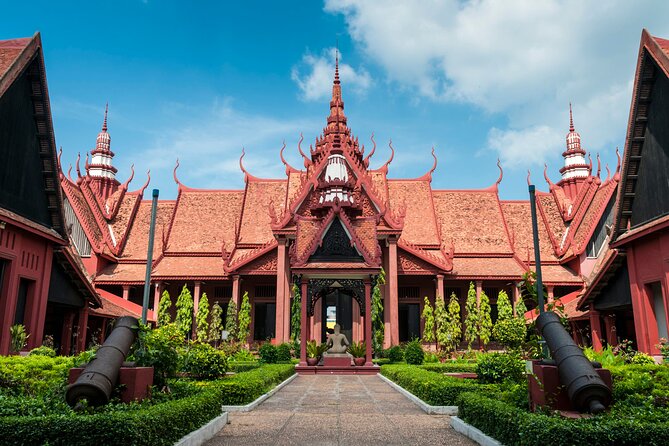
The National Museum occupies a traditional-style building dating from 1917. Its collection focuses on Khmer art and sculpture, with hundreds of pieces on display. I like the placement of this stop after the palace because it gives you a chance to see artistic forms and religious imagery that will appear again at Angkor.
You have about an hour there, which makes a guide useful. Without some explanation, a large collection of statues can blur together. Your guide can help connect the objects to the temples you see the next day.
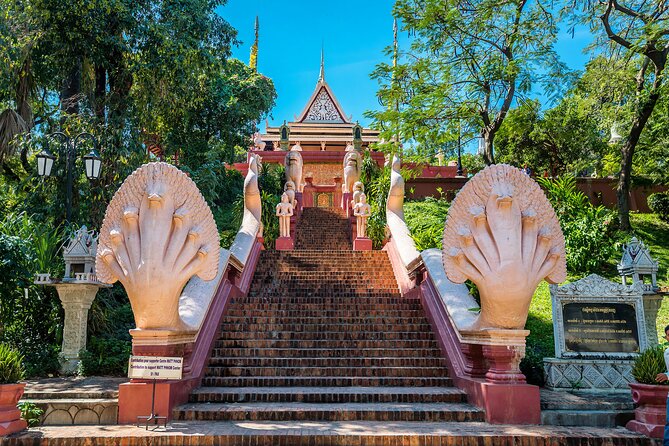
The final land-based stop is Wat Phnom, the small pagoda that gives Phnom Penh its name. The site was founded in 1373 and is associated with Buddhist relics said to have washed ashore from the river. The visit lasts about 30 minutes and offers a shorter, more intimate temple stop after the museum.
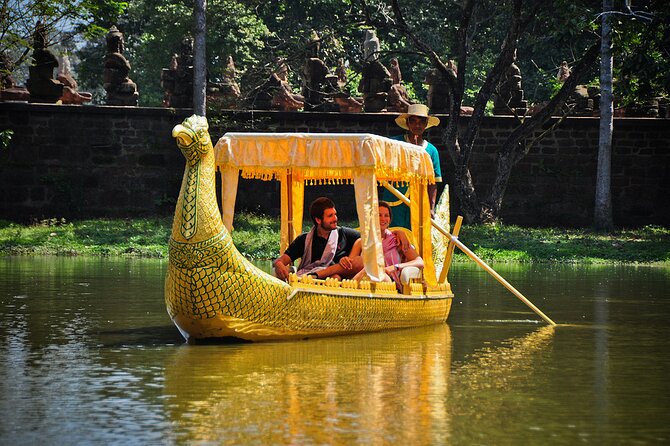
The day ends on the water with a one-hour sunset cruise on the Mekong and Tonle Sap Rivers. The boat passes floating villages and gives you views of Phnom Penh’s changing skyline. This is a welcome change of pace after museums and city traffic, though sunset conditions depend on weather and the timing of your arrival.
Your first night is at the iRoHa Garden Hotel in a comfort room with balcony, or a similar property. The package provides breakfast the following morning.
Day 2: Angkor Thom, Ta Prohm, and Angkor Wat
The schedule lists a morning transfer to the airport for a 7:35 flight from Phnom Penh, arriving in Siem Reap at 8:20. That means Day 2 begins early, despite the reference to a leisurely morning. Pack the night before and keep essentials in your hand luggage.
The flight is in economy class and saves you a long road transfer. After landing, you meet the Siem Reap guide and begin the temple program. This handoff between cities is one of the practical strengths of a private tour. The Phnom Penh guide and Siem Reap guide can focus on their own areas, rather than trying to cover two destinations from one base.
The first major stop is Angkor Thom’s South Gate. This was the entrance to the great walled capital built in the 12th century. The complex was the center of one of the largest cities in the world around 1200. Even before you reach the temples, the scale of the walls and entrance road gives you a sense of the ambition behind the Angkor kingdom.
Inside Angkor Thom, you visit Bayon Temple. Its famous stone faces look in several directions, creating one of the most memorable sights in the Angkor area. Allow an hour here. The faces are the obvious draw, but your guide can also help you notice the carvings and layout around them.
Baphuon follows, with about 30 minutes scheduled. Built in the mid-11th century, it is a three-level temple mountain dedicated to Shiva. It is close to Bayon, so the stops fit naturally together, but the stone stairways and open paths add to the physical demands of the morning.
The Terraces of the Elephants and the Leper King are shorter stops, about 30 minutes each. The Terrace of the Elephants served as a platform where King Jayavarman VII could view returning armies. The Terrace of the Leper King has detailed carvings and was built in the Bayon style under the same king.
Phimeanakas comes next. This Hindu temple was built in the Khleang style, beginning under Rajendravarman and completed under Suryavarman I. It is another 30-minute visit, and it helps show that Angkor Thom is not one single monument but a large royal city with layers of construction.
After the Angkor Thom group, you continue to Ta Prohm for about an hour. Ta Prohm was built by Jayavarman VII as a monastery and residence for his mother. It is known for its atmospheric ruins, with trees and roots woven through parts of the structure.
This is one of the tour’s most photogenic stops, but expect uneven ground and plenty of walking. The popularity of Ta Prohm can also mean a busy visit. Your private guide cannot control the crowd, but can help you understand the site and use the available time well.
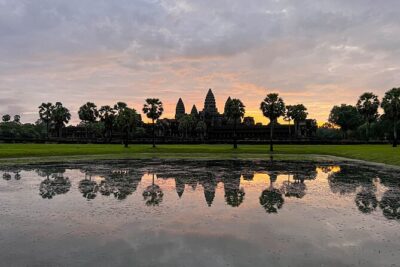
The grand finale is Angkor Wat, scheduled for three hours in the late afternoon and sunset period. Built under Suryavarman II between 1112 and 1152, it began as a funeral temple. Its galleries, towers, courtyards, and carvings need time, and three hours is much more useful than a quick photo stop.
The late timing can bring attractive light, but sunset conditions are never guaranteed. You should also expect this to be the most tiring day of the trip. The morning starts before sunrise for many visitors, the temples are spread across a large area, and Angkor Wat itself rewards steady walking rather than a quick circuit.
That night is at the Golden Temple Hotel in a premier pool-view room, or a similar hotel. Breakfast is included the next morning.
Day 3: Banteay Srei, Preah Khan, and Kompong Phluk
Day 3 begins with a trip north to Banteay Srei. The drive takes you away from the central Angkor group and toward a temple built in the 10th century by a Brahman and dedicated to Shiva.
Banteay Srei is known for its pink sandstone and finely carved details. The scheduled two hours give you more time than the shorter stops in Angkor Thom. I consider this an important addition because it has a different scale and visual character from Angkor Wat.
The smaller size does not mean a lighter day. After two days of museums, flights, city touring, and major temple walks, you may be ready for a slower pace. Use the longer stop to look closely at the carvings rather than treating it as another quick photo stop.
Preah Khan follows, with about an hour planned. It was built by Jayavarman VII in a style related to Ta Prohm, but it is described as being in better condition. Its name means Sacred Sword. The contrast with Ta Prohm is useful: you see related design ideas without visiting two identical ruins.
After lunch, the focus shifts from temples to the countryside around Kompong Phluk. The program includes a tour of the surrounding area, an ox-cart ride through villages and rice fields, and a fresh coconut drink with a local family.
This is a valuable change in subject. Angkor can make Cambodia feel like a country of monuments alone. The village and rice-field portion gives you a more ordinary setting, with time away from carved stone and formal royal sites.
The description calls this a Kompong Phluk visit, but it also mentions an ox-cart ride and a floating-village setting elsewhere in the program. The exact sequence may depend on local conditions and timing. Ask your guide how the countryside and village elements will be arranged on your day.
Same base, a completely different kind of day:
- The Killing Field and Toul Sleng Genocide Museum (S21) Tour
★ 5.0 · 1,977 reviews - Phnom Penh: Sunset Cruise with Unlimited Beers & BBQ Buffet
★ 4.5 · 727 reviews - Aroma Therapy Massage, Relaxation therapeutic aromatherapy oil massages.
★ 5.0 · 645 reviews - Killing field and Toul Sleng genocide museum Tour
★ 5.0 · 610 reviews
Hotels, vehicles, guides, and what is included
The package uses private modern air-conditioned transportation for transfers and sightseeing. In Cambodia’s heat, that matters. It also removes the need to arrange separate rides to the airport, museums, temples, and countryside stops.
The activity is private, meaning only your group participates. Group discounts are offered, though the specific discount is not stated. A private tour is especially useful here because the schedule changes from city museums to long temple walks and then to a rural outing. You can ask questions and discuss pacing with the guide instead of following a large group.
Two guides named in a reported booking were Channak in Phnom Penh and Rith in Siem Reap. They were specifically praised for helpful service and clear knowledge of the areas. The experience includes professional licensed English-speaking guides, although individual guide assignments can change.
Included costs are unusually broad:
- One night at iRoHa Garden Hotel and one night at Golden Temple Hotel, or similar properties
- Two breakfasts
- The domestic Phnom Penh to Siem Reap flight
- Private air-conditioned transport
- Licensed English-speaking guides
- Entrance fees for the Royal Palace, National Museum, Tuol Sleng, Wat Phnom, and Angkor Archaeological Park
- The one-hour Phnom Penh boat cruise
- Two bottles of mineral water per person during sightseeing and transfers
- Taxes and service charges
Lunch is listed as included, but the description does not spell out every included meal. Drinks during meals and meals not specified are extra.
Who should book this tour
I would choose this for a first visit with only three days available, especially if you want both Phnom Penh and Angkor without arranging the details yourself. It also suits people who value private guiding and want airport pickups, hotels, admission tickets, and internal transport handled in one booking.
It is a good fit for couples, families, or small groups who can share a private vehicle and want the flexibility of their own guide. The itinerary also suits anyone who wants Cambodia’s modern history included rather than spending every hour at temples.
I would hesitate if your priority is rest. Day 2 begins with an early flight and continues through a large number of temple sites. You should be comfortable with walking, stairs, heat, and a full sightseeing schedule.
The cancellation terms are fairly strict close to departure. You receive a full refund if you cancel at least six full days before the start time. Cancellation two to six days ahead brings a 50 percent refund, while cancellation less than two days ahead is nonrefundable. Poor weather can lead to a different date or a full refund.
Should you book it?
Book this tour if you want a well-organized first taste of Cambodia and accept that three days means moving quickly. The package saves you from arranging a domestic flight, two hotels, several admission tickets, private cars, and separate city guides.
Its best feature is the balance between Phnom Penh and Siem Reap. Tuol Sleng, the Royal Palace, the National Museum, and the Mekong cruise give Phnom Penh real weight, while the Angkor portion covers the major temples plus Banteay Srei and a countryside visit.
Skip it if you want long, unhurried temple mornings or several free evenings. For a short visit, though, the $735 price is reasonable because so many major costs are already covered, and the private format gives you direct support from guides such as Channak and Rith.
FAQ
Is this a private tour?
Yes. Only your group participates, with private transportation and a professional licensed English-speaking guide.
How do I travel from Phnom Penh to Siem Reap?
The tour includes a domestic economy-class flight from Phnom Penh to Siem Reap. The stated flight departs at 7:35 and arrives at 8:20.
Are hotels included?
Yes. The package includes one night at iRoHa Garden Hotel in a Comfort Room with Balcony and one night at Golden Temple Hotel in a Premier Pool View Room, or similar hotels.
Are Angkor Wat entrance fees included?
Yes. A single-day Angkor Archaeological Park ticket valued at $62 per person is included.
Are Phnom Penh museum and palace admissions included?
Yes. The package includes admission to the Royal Palace, National Museum, Tuol Sleng Genocide Museum, and Wat Phnom.
Are meals included?
Two breakfasts are included, and lunch is listed among the inclusions. Drinks during meals and meals that are not specified are not included.
What is the cancellation policy?
You receive a full refund when canceling at least six full days before the start time. Canceling two to six full days ahead provides a 50 percent refund. Cancellations less than two full days before the start time are nonrefundable.
Just added around Phnom Penh
- Exploring the Best of Phnom Penh: A Full Day Tour★ 4.5 · 9 reviews
- Private Transfer : Phnom Penh ↔ Sihanouk Ville★ 5.0 · 15 reviews
- War Museum, Killing Field, and APOPO Hero RATs Tour★ 5.0 · 7 reviews
- Phnom Penh Intercity★ 4.5 · 11 reviews
- Phnom Penh Nightlife Street Food Tours★ 4.5 · 14 reviews
- War Museum, Killing Field and Floating Village ( Kampong Phluk)★ 4.5 · 6 reviews
- War Museum, Killing Field and Floating village ( Chong Kneas) Tour★ 5.0 · 14 reviews
- Warm Stone Massage★ 5.0 · 23 reviews
3-Day Experiences, compared.
3-Day Angkor Wat with All Interesting Major Temples, Banteay Srei & Beng Mealea
Read our review →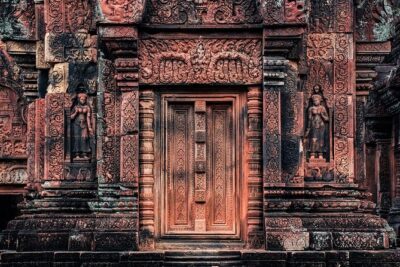
3-Day Angkor Wat & All Interesting Major Temples & Kulen Mount Waterfall
Read our review →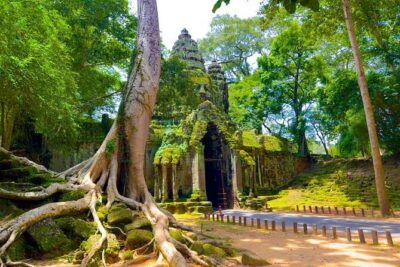
Best of Siem Reap 3-Day Private Tour to Angkor Wat & Tonle Sap
Read our review →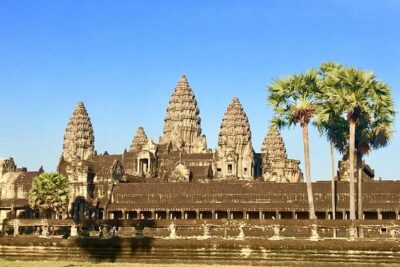
Private Siem Reap 3 Day Tour Discover All Highlight Angkor Temple
Read our review →
Private 3-Day Mekong Delta River Tour from Phnom Penh to Ho Chi Minh City
Read our review →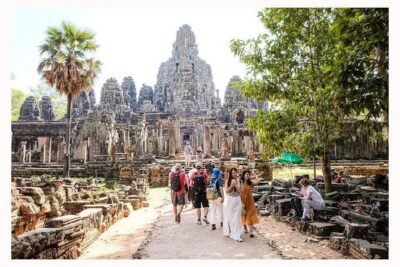
3-Day Tour(Unforgettable Angkor Temple Complex, Banteay Srei& Floating Village)
Read our review →Browse the lists this tour appears in