
Reviewed · ANGKOR WAT TOURS
From Siem Reap: Angkor Wat and Floating Village 3-Day Trip
Angkor Wat is only the headline here. This three-day private tour takes you from the stone faces of Angkor Thom to the tangled ruins of Beng Mealea and the stilted homes of Kampong Phluk. You get a broad look at Cambodia’s temples and lake life without having to plan each transfer yourself.
I like the private air-conditioned vehicle, especially when the heat builds after several hours on foot. I also like the range: Banteay Srei’s fine carvings, Ta Prohm’s tree-covered ruins, a sunrise at Angkor Wat, and a boat ride through a floating village all bring a different side of the region into view.
The main drawback is the extra cost. The advertised $199 price does not include the three-day Angkor pass, Tonle Sap pass and boat, temple admissions, most meals, drinks, or accommodation. Add those expenses before you compare this with other Siem Reap tours.
Key points to know before booking
- Three days cover the major temples and quieter outer sites, including Angkor Thom, Angkor Wat, Banteay Srei, Beng Mealea, Ta Prohm, and Preah Khan.
- Kampong Phluk adds a very different experience, with stilt houses, fishermen’s families, a Buddhist monastery, and a private boat ride on Tonle Sap Lake.
- The tour is private, so only your own group takes part. That gives you more control over pace and breaks than a large coach trip.
- Airport pickup and drop-off are included, along with hotel transfers, cool water, towels, and an English-speaking guide.
- The $199 price is only the starting point, with $62 for a three-day Angkor pass and $15 for the Tonle Sap pass and private boat listed separately.
- Days begin early and involve plenty of walking, so modest clothing, good shoes, sun protection, and mosquito spray matter.
Why three days works well at Angkor
Angkor is too large for a rushed one-day visit. This route gives you one day for the central sights, one day for outer temples and Tonle Sap, and a final day for sunrise and the Grand Circuit. That division keeps the famous sites from swallowing the entire experience.
The schedule is still full. You will spend much of each day getting in and out of the vehicle, walking over uneven ground, climbing temple steps, and waiting in the heat. The private car helps, but this is not a relaxed sightseeing loop with long pauses at each stop.
Your guide meets you at your hotel at 8:00 a.m. on the first day. Airport transfers are included, which is useful if this tour is part of a short visit to Siem Reap. Accommodation is not included, so you arrange your own hotel and return to it after each day.
More ways to walk into Angkor Wat:
- Angkor Wat Sunrise or Sunset Tour with Guide from Siem Reap
★ 5.0 · 12,109 reviews - Siem Reap: Angkor Wat: Small-Group Sunrise or Sunset Tour
★ 5.0 · 9,444 reviews - Siem Reap: Angkor Wat 2-Day Tour with Sunrise and Sunset
★ 4.9 · 4,429 reviews
Day one: Angkor Thom and the great temple
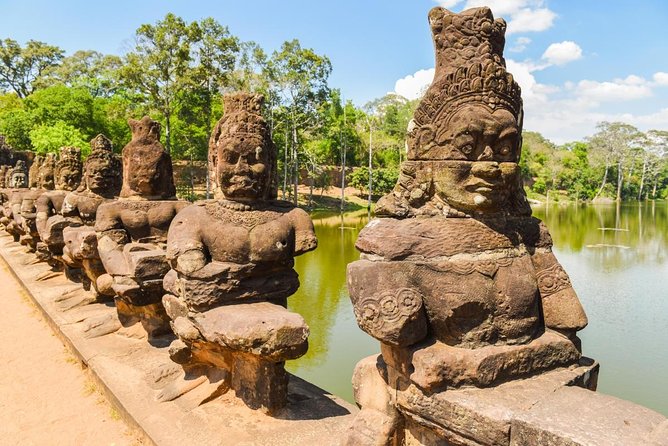
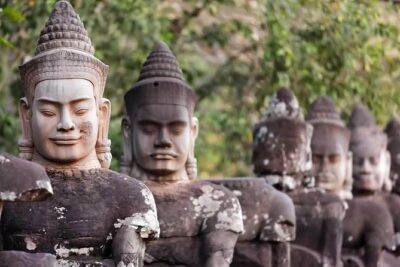
The first stop is Angkor Thom, the huge walled city that once formed the center of the Khmer capital. You begin at the South Gate, where large stone figures line the approach. Allow about two hours here, including the drive, gate area, and nearby monuments.
This is a good opening stop because it shows the scale of the Angkor complex before you focus on individual temples. The gates and faces give you a strong visual introduction, while your guide can explain how the city fitted into Khmer religious and royal life.
Afterward, you pause for lunch at a local restaurant inside Angkor Park. The break lasts about 45 to 60 minutes, but lunch is not included. Food and drinks are your responsibility, as are any driver costs connected with the meal.
Angkor Wat follows, with about 90 minutes scheduled at the temple. That is enough to see the main approach, galleries, towers, and central areas, but it is not an unhurried architectural study. Angkor Wat is enormous, so you should expect the first visit to feel like an introduction rather than a complete look at every corner.
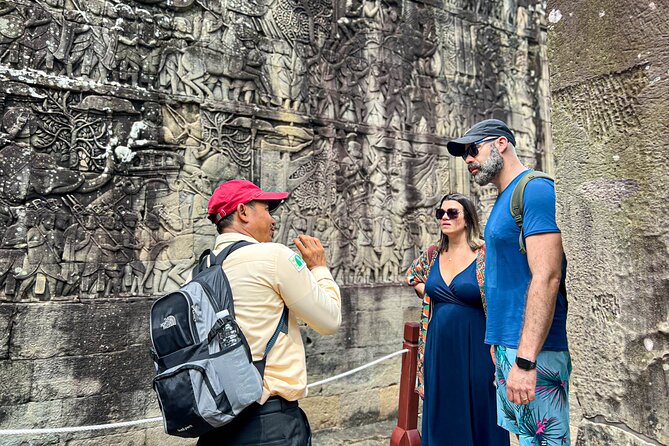
The temple was built as a Hindu monument dedicated to Vishnu and later became a Buddhist site. The design, scale, bas-reliefs, and long causeway make it the obvious centerpiece of the trip. Your guide adds value here by explaining what you are looking at instead of leaving you to decode a vast complex of stone corridors.
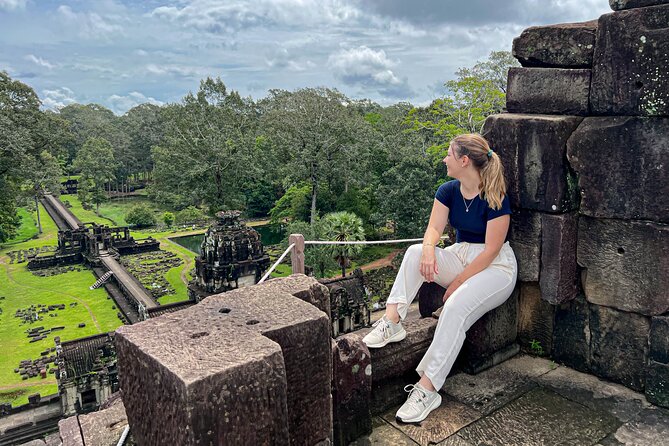
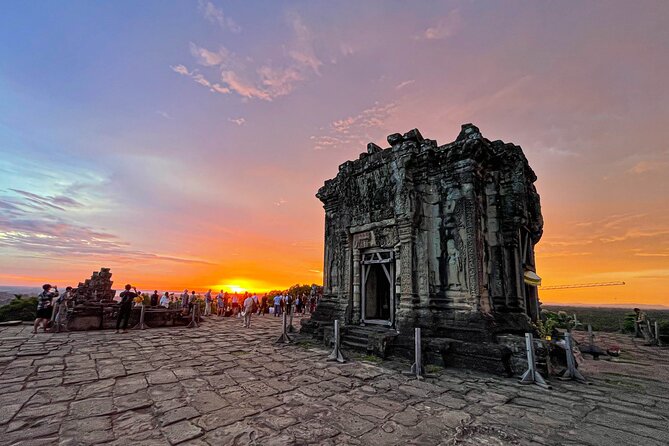
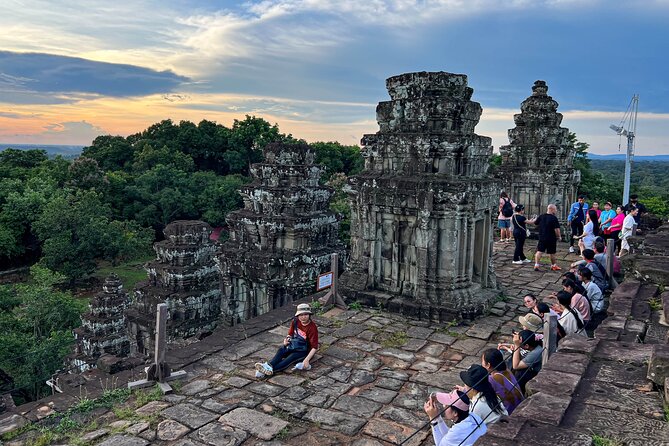
The day may finish at Phnom Bakheng for sunset. The plan depends on weather, energy, and current site conditions, and Pre Rup may be used instead. This flexibility is sensible because the heat can be tiring by late afternoon.
Phnom Bakheng involves a climb up a hill, while Pre Rup is another temple mountain with brick, laterite, and sandstone construction. Do not treat the sunset stop as guaranteed. It is an optional end to a demanding day, not the reason to book the tour.
Day two: detailed carving, jungle ruins, and the lake
Day two begins with Banteay Srei, a 10th-century temple dedicated to Shiva. It is smaller than Angkor Wat, but its fine carvings are the reason for the long drive. You have about 45 minutes, which allows a focused visit but leaves little room for a slow, detailed inspection.
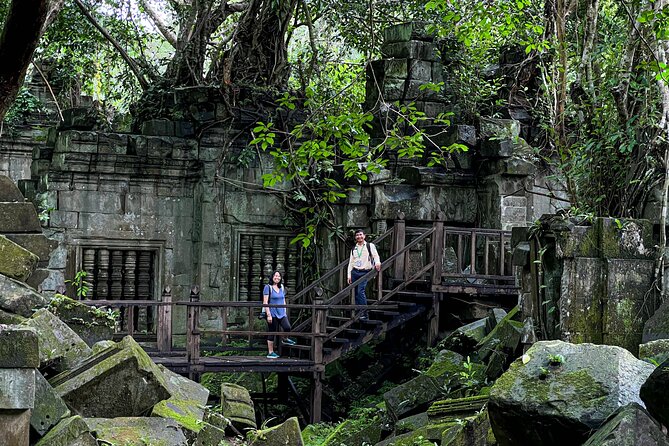
The next stop is Beng Mealea, about 40 kilometers east of the main Angkor group. Often called a jungle temple, it has a more broken and rough-edged character than the restored central monuments. You get about an hour here, enough to walk through the remains and see how vegetation, fallen blocks, and collapsed galleries shape the visit.
Beng Mealea is one of the strongest reasons to choose this itinerary over a basic Angkor circuit. It feels less formal and gives you a clearer sense of the site as an old ruin, rather than a perfectly framed monument. The tradeoff is the extra driving time.
Prasat Bakong comes next. This was the first sandstone temple mountain built by Khmer rulers at Angkor, and the 45-minute visit gives you another point of comparison. By this stage, the differences between temple plans, building materials, and religious purpose should begin to make more sense.
You then stop for lunch in Angkor Park. Again, allow roughly 45 to 60 minutes and pay for your own food and beverages. The schedule places several temple visits around the meal, so carry water even though the tour supplies it.
The afternoon changes tone at Kampong Phluk Floating Village on Tonle Sap Lake. You see traditional stilt houses belonging to fishermen’s families, a Buddhist monastery, and a community of more than 1,000 fishing families. The Tonle Sap visit is not simply another monument stop. It shows how homes, work, religion, and water are tied together in this part of Cambodia.
A Tonle Sap pass and private boat ride cost an additional $15 per person. That fee is important when you calculate the real price of the tour. The boat is the part that takes you through the village and lake setting, so skipping it would remove much of the point of this afternoon.
Water levels and weather can affect how the village looks and how the boat moves. The supplied schedule gives about an hour for the visit, which is enough for an overview but not a long stay in the community. Keep your expectations focused on seeing the village setting, not on a full cultural program.
Day three: sunrise, Ta Prohm, and the Grand Circuit
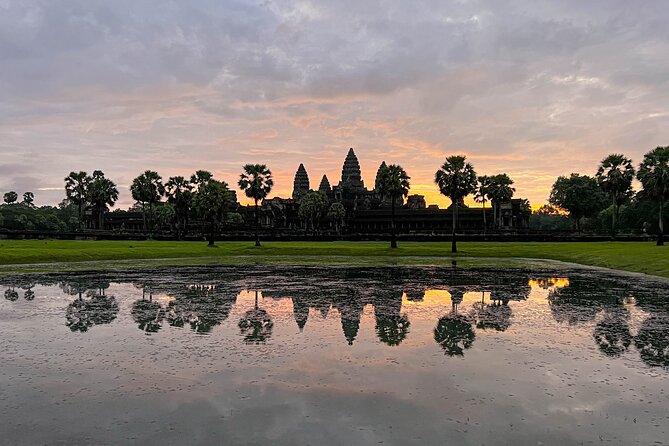
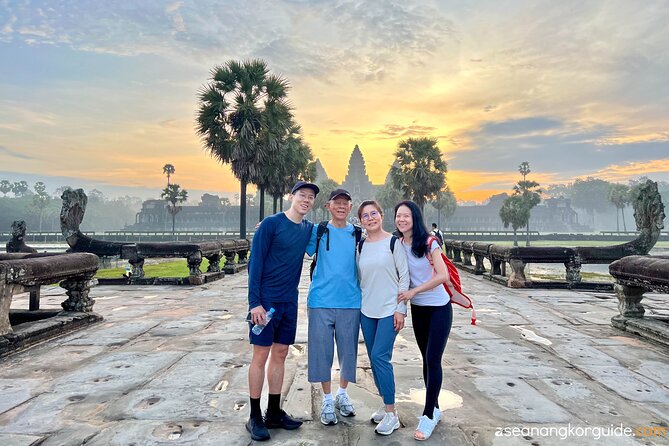
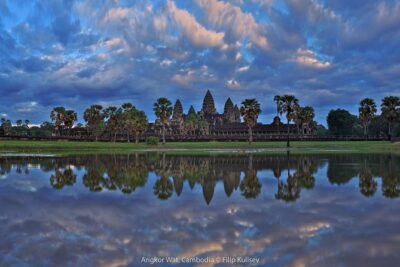
The final day starts early at Angkor Wat. The schedule allows about an hour to wait for sunrise, followed by a short break in a village for breakfast. Breakfast on day three is included, and the local option may feature Khmer rice noodles with green curry.
Sunrise requires patience. You may spend more time waiting than looking at the temple, and cloud cover can change the result. Still, the early start gives you a quiet, memorable way to see Angkor Wat before returning to the temple circuit.
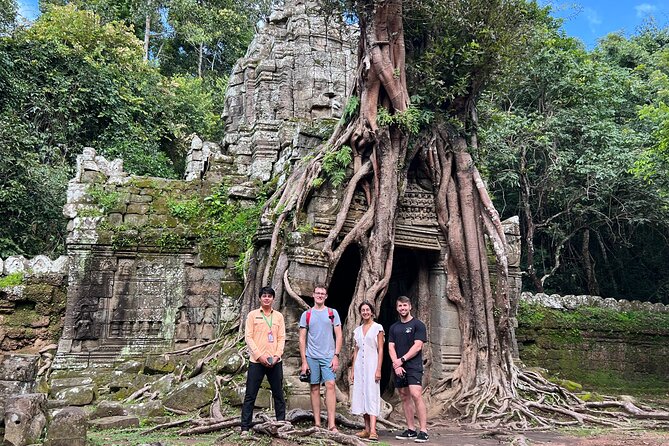
Ta Prohm follows, with about an hour at the famous jungle temple. It was built in the late 12th or early 13th century for King Jayavarman VII and was originally called Rajavihara. Its tree-covered galleries and partly collapsed walls made it a film location for Tomb Raider.
Ta Prohm can be one of the busiest stops, but the architectural setting remains special. Look beyond the best-known tree and pay attention to the long corridors, carved doorways, and the way roots press against the stone. Your guide can help you find meaning in what otherwise looks like a dramatic pile of ruins.
Pre Rup receives about 35 minutes. Built for King Rajendravarman and dedicated in 961 or 962, it is a brick, laterite, and sandstone temple mountain. The visit is brief, but the strong structure makes it a useful contrast with Ta Prohm’s broken appearance.
Ta Som is a smaller temple built for Jayavarman VII at the end of the 12th century. You have about 25 minutes here. That may sound short, but the compact stop works well after the larger monuments and gives you a quick look at a less imposing site.
Neak Pean also gets about 25 minutes. This Buddhist temple sits on a circular island in Jayatataka Baray, an artificial reservoir associated with Preah Khan. Reaching the temple involves a causeway over water, so the setting is as important as the structure itself.
The final major stop is Preah Khan, with about an hour. Built by Jayavarman VII to honor his father, it is a large temple with long galleries and a strong sense of scale. After three days, this final visit gives you one last chance to connect the smaller details with the larger pattern of Khmer building and belief.
More floating-village afternoons:
- From Siem Reap: Kampong Phluk Floating Village Tour by Boat
★ 4.9 · 6,979 reviews - Sunset tour of Kampong Phluk stilts home village on the Tonle Sap
★ 5.0 · 4,865 reviews - Siem Reap: Kampong Phluk Floating Village Tour with Boat
★ 4.9 · 3,843 reviews - Siem Reap Floating Village Kampong Phluk Sunset with Boat
★ 5.0 · 1,962 reviews
What the private format adds
This is a private activity, meaning only your group participates. That matters at Angkor because your energy can change quickly in the heat. You may be able to spend less time at a small temple and more time at Angkor Wat, although the supplied schedule should be treated as the basic plan rather than an open-ended arrangement.
The air-conditioned vehicle is a practical advantage. You have several driving stretches, especially on the day that includes Banteay Srei and Beng Mealea. Cool water and towels are provided, which sounds minor until you are walking between hot stone galleries.
Named guides from previous bookings include Sean and Mr Sam, with Mr Sophon listed as a driver in one account. You should not assume you will receive a particular person, but these names indicate the kind of personal guide-and-driver setup associated with the experience. An English-speaking guide is included.
The real cost of the $199 tour
The advertised price is $199 per person. That buys three days of private transport, a guide, hotel pickup and drop-off, airport transfers, water, towels, and day-three breakfast.
You should add:
- $62 per person for the three-day Angkor pass
- $15 per person for the Tonle Sap pass and private boat
- Lunches, dinner, and soft drinks
- Your accommodation
- Temple admissions where applicable
The supplied cost information describes temple admissions as extra, while the Angkor pass covers access to the Angkor sites. Confirm the current entry arrangements when booking so there is no confusion at the ticket office.
For the right group, the price can be fair because it covers a full private itinerary rather than a single temple transfer. It is less attractive if you already have a car and guide arranged, or if you want only Angkor Wat and Ta Prohm. The value comes from combining central temples, outer ruins, sunrise, and Tonle Sap in one organized plan.
Heat, clothing, and daily comfort
The temple complex can be very hot. Bring sunscreen, mosquito spray, and water, even though cool water is supplied. Light, loose clothing helps, but shoulders and knees should be covered at temples.
Comfortable shoes are essential. You will walk on uneven surfaces and may climb temple steps. Modest clothing also protects you from the sun and helps you meet the dress standards used at the sites.
The schedule suits people with average mobility who can manage several hours of walking and repeated vehicle stops. The information provided says most people can participate, but it does not promise that every area is step-free or easy to reach.
Who should book this three-day route
I would choose this tour if you want a strong first visit to Siem Reap and prefer one private plan over several separate bookings. It suits couples, families, and small groups who value their own vehicle and want both temples and Tonle Sap.
It is also a good fit if you want more than the standard Angkor Wat photograph. Banteay Srei, Beng Mealea, Bakong, Neak Pean, and Preah Khan give the trip variety, while Kampong Phluk adds a human and modern side to the ancient monuments.
I would hesitate if you dislike early mornings, hot walks, long temple days, or extra ticket costs. You may also prefer a slower plan if you want to spend half a day at each major temple rather than cover many sites.
The tour offers free cancellation up to 24 hours before the start time. Changes made inside that period are not accepted, and poor weather may lead to a different date or a full refund.
Should you book it?
Book this experience if you want a well-filled private introduction to Angkor, with airport transfers and a guide handling the route. The best parts are the range of sites, the cool vehicle between stops, and the Tonle Sap visit, which keeps the trip from becoming three straight days of temple walls.
Before paying, budget the extra $77 per person for the listed Angkor and Tonle Sap charges, then allow for meals and your hotel. If that total works for you, this is a practical choice for seeing the major monuments, quieter ruins, sunrise, and a floating village without arranging each piece yourself.
FAQ
Is accommodation included?
No. You need to arrange and pay for your own accommodation in Siem Reap.
Does the tour include airport pickup and drop-off?
Yes. Airport pickup and drop-off are included, along with hotel pickup and drop-off.
Is the Angkor pass included?
No. A three-day Angkor pass is listed at $62 per person and must be paid separately.
Is the Tonle Sap boat ride included?
No. The Tonle Sap pass and private boat ride are listed at $15 per person as an additional cost.
Are meals included?
Only breakfast on day three is included. Lunches, dinner, soft drinks, and other food are not included.
Is this a private tour?
Yes. Only your group participates in the activity.
What language does the guide speak?
An English-speaking tour guide is included.
What should I wear at the temples?
Wear modest clothing that covers your shoulders and knees. Loose, lightweight clothing and comfortable shoes are recommended.
What happens if the weather is poor?
The experience requires good weather. If it is canceled because of poor weather, you can receive a different date or a full refund.
Just added around Siem Reap
- Twilight Tastes of Siem Reap Include Dinner★ 5.0 · 13 reviews
- Ultimate Sunrise to Angkor Wat, Angkor Thom and Bayon Temple★ 5.0 · 3 reviews
- Trekking Tour at Phnom Kulen National Park from Siem Reap★ 5.0 · 3 reviews
- Professional Photo Shoot in Angkor Archaeological Park, Siem Reap★ 5.0 · 42 reviews
- Full-Day Private Tour of Angkor Wat with Pick Up★ 5.0 · 12 reviews
- Unveiling 2 Days Private Angkor Wat/Beyond In Sunrise/Sunset Tour★ 5.0 · 48 reviews
- Siem Reap City Tour with War Museum and Killing Field★ 5.0 · 27 reviews
- Private Day Trip to Angkor Temples with Expert Guide★ 5.0 · 4 reviews
Angkor Wat Tours, compared.
Angkor Wat Sunrise or Sunset Tour with Guide from Siem Reap
Read our review →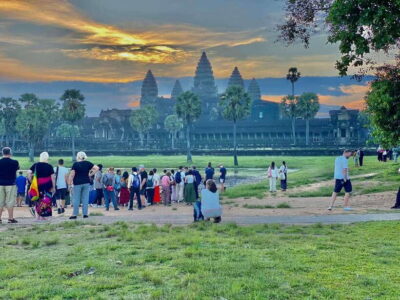
Angkor Wat: Small-Group Sunrise or Sunset Tour
Read our review →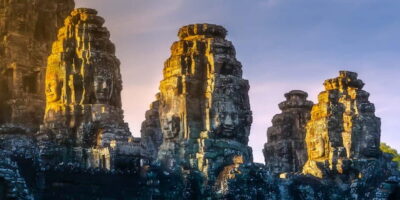
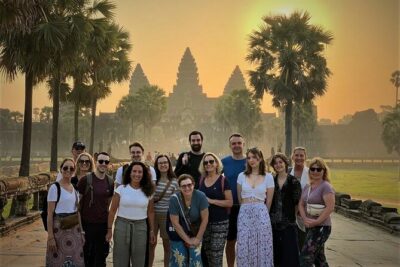
Angkor Wat Highlights and Sunrise Guided Tour from Siem Reap
Read our review →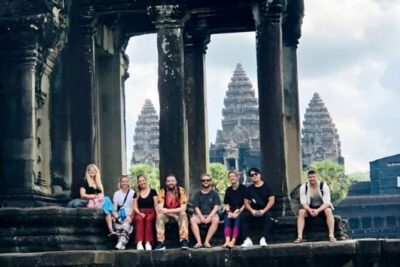
Angkor Wat Sunrise & 3 Main Temples with Breakfast – Small Group
Read our review →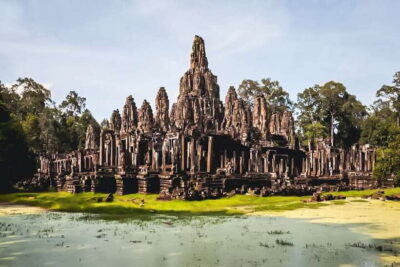
Angkor Wat Sunrise and Full-Day Sightseeing Tour
Read our review →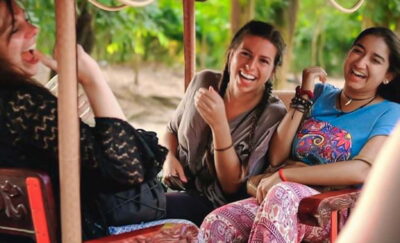
Angkor Wat Small-Group Exploration with Expert Guide
Read our review →Browse the lists this tour appears in