
Reviewed · ANGKOR WAT TOURS
3-Day Angkor Wat & All Interesting Major Temples & Kulen Mount Waterfall
Angkor Wat is only the opening act here. Over three full days, you move from the enormous temple complex to quiet Ta Nei, pink-sandstone Banteay Srei, Phnom Kulen’s waterfall, and the early Khmer temples around Roluos. The private format lets you set the pace, which matters when a stone staircase or a long, hot temple walk starts to wear you down.
I like the mix of famous sights and less-visited stops, especially Ta Nei and the Roluos group. I also like the practical care: an air-conditioned vehicle, cold water, wet towels, and guides such as Chhay, Pal Saruon, Chandri, Em Somuch, and Small Mony, all praised for clear temple explanations and flexible pacing. The main drawback is the price after extras, plus two early starts and a very long day at Phnom Kulen.
Key things to know before booking
- Three days cover the major temple zones: Angkor Wat, Angkor Thom, the grand circuit, Banteay Srei, Roluos, and more.
- Phnom Kulen adds a real change of pace: You can see the 1000 Lingas, the reclining Buddha, and swim at the waterfall.
- Your private vehicle is a major comfort: You travel with your own group, guide, and driver rather than joining a large coach.
- Entrance fees are extra: Budget $62 per person for Angkor Wat and the other temples, plus $20 for Phnom Kulen.
- Sunrise and sunset are optional but demanding: Day three begins at 5:00 a.m., and Phnom Bakheng can involve a wait because access is limited.
- The pace suits active sightseers: Expect long walks, stairs, heat, and many separate temple visits across three days.
What the $248.50 price really covers
The advertised price is $248.50 per person. That includes a private air-conditioned vehicle with driver, a licensed English-speaking guide, hotel pickup and return, parking fees, road tolls, drinking water, and wet towels.
You still pay $62 per person for the Angkor temple admission and $20 for Phnom Kulen. Lunch is also extra, with the suggested meal cost listed at about $5 per person. If you buy lunch on all three days, your practical cost is roughly $345.50 per person before any other spending.
That is not a budget temple shuttle. It can be good value if you want a private guide, a car at your disposal, and a carefully packed schedule without arranging several separate day trips. The value improves for a small group sharing the vehicle, though the listed price is per person and group discounts may be available.
I would not choose this tour solely to save money. I would choose it for the range. You get the iconic temples, a national park, a waterfall, the Roluos temples, a craft center, and the Old Market in one plan.
More ways to walk into Angkor Wat:
- Angkor Wat Sunrise or Sunset Tour with Guide from Siem Reap
★ 5.0 · 12,109 reviews - Siem Reap: Angkor Wat: Small-Group Sunrise or Sunset Tour
★ 5.0 · 9,444 reviews - Siem Reap: Angkor Wat 2-Day Tour with Sunrise and Sunset
★ 4.9 · 4,429 reviews
Day one: Angkor Wat to Phnom Bakheng
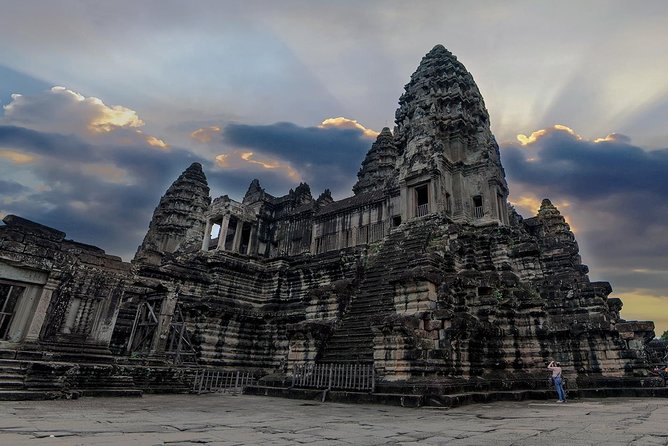
The first morning begins with an 8:00 a.m. pickup. You stop to buy the temple pass on the way, then spend about two and a half hours at Angkor Wat.
That is enough time to see the main areas at a useful pace, but Angkor Wat can easily absorb much longer. Your guide’s role matters here. The carved galleries, religious changes, kings, and engineering behind the site are difficult to appreciate if you simply walk from tower to tower with no explanation.
I like starting with Angkor Wat at 8:00 rather than trying to force it into the sunrise morning. You still see the central temple in good light, and you avoid making the entire first day an exhausting pre-dawn operation.
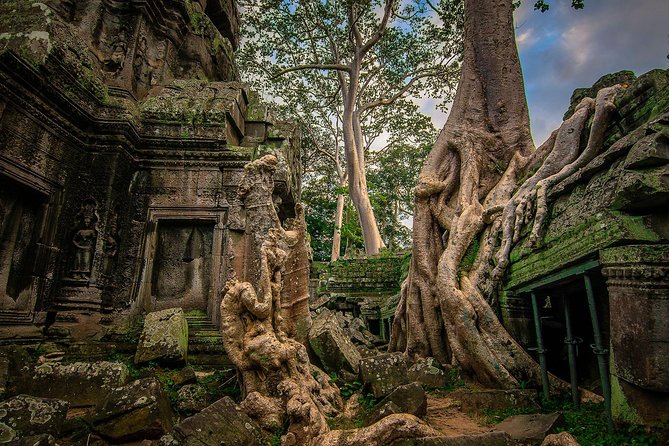
Ta Prohm follows for about two hours. This is the temple most closely linked with the Tomb Raider film, but the movie connection is only part of its appeal. The great tree roots pressing over walls and doorways give the site a rough, memorable character that differs from the more formal geometry of Angkor Wat.
You should expect other sightseers at Ta Prohm. The private vehicle helps with transfers, but it cannot make a famous temple quiet. Take your time with the carved corridors and root-covered sections rather than treating the stop as a quick photograph.
Ta Nei is a smart contrast. You spend about 45 minutes at this smaller temple, which has seen less restoration and is surrounded by large trees. It may suit you if you want a quieter stop after Ta Prohm, though its rougher condition means there is less polished architecture to admire.
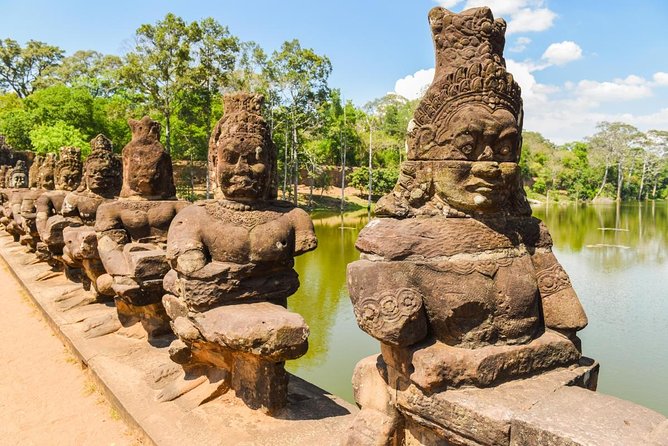
The route then reaches Angkor Thom through the Victory Gate on the eastern side. The stop is short, about 10 minutes, so think of it as a photo and orientation point before the larger group of temples inside the old city.
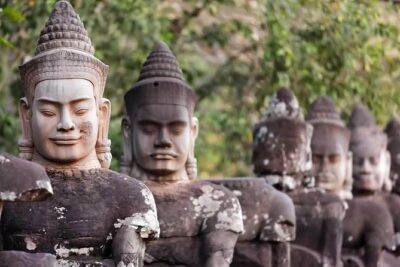
Bayon gets about 45 minutes. Its towers with four-sided faces are the main attraction, and the temple rewards close attention because the faces appear from different angles as you move through the structure. The guide can help connect the temple to the wider story of Angkor Thom and the Buddhist rule of Jayavarman VII.
Baphuon is next, with about 30 minutes. This Hindu temple predates Angkor Wat, and a later reclining Buddha can be seen behind it. The visit also continues toward the old royal enclosure, so you are not just ticking off another isolated ruin.
Phimeanakas receives a shorter 15-minute stop. This pyramid temple once occupied the center of the royal palace area and gives you a useful sense of how religious buildings fit into the wider royal city.
The Terraces of the Elephants and the Leper King are quick visits, about 10 minutes each. The Elephant Terrace is known for its carved elephants and its use as a viewing platform for royal processions and returning armies. The Leper King terrace is nearby and has its own carved details, but the limited time means you will mainly get an overview.
The day ends at Phnom Bakheng, with about two hours set aside for the climb and possible sunset wait. Access to the sunset area is limited, so you may spend part of that time waiting rather than walking. If sunset crowds and a hill climb do not appeal to you, the schedule allows you to skip it.
That flexibility is useful. After a full day of temples, Phnom Bakheng can feel like one stop too many, especially if you are more interested in temple carvings than a sunset view.
Day two: Phnom Kulen’s waterfall and pink sandstone
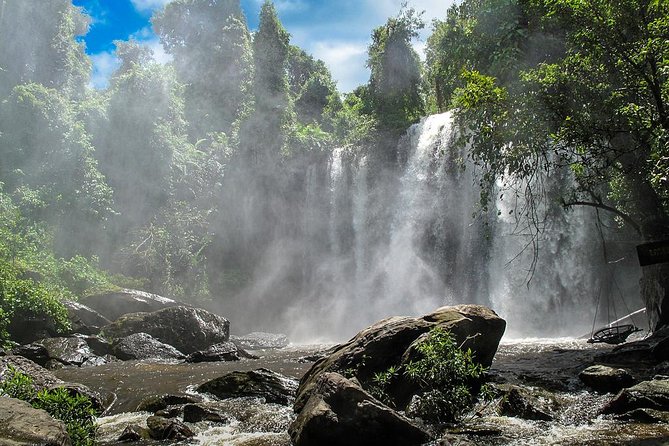
Day two is the biggest change of scene. Phnom Kulen National Park lies more than 60 kilometers from the Angkor Park area, and the stop lasts about five hours.
This is not another temple circuit. At the park, you see a riverbed carved with lingas, symbols linked with Shiva, and the rock reclining Buddha. The waterfall is the main physical break from the first day, and swimming is part of the appeal.
Bring what you need for a swim and expect this day to feel different from the temple days. The long transfer is the trade-off. If your priority is only Angkor architecture, the distance may seem excessive, but the waterfall and wooded setting give the three-day plan a needed change of rhythm.
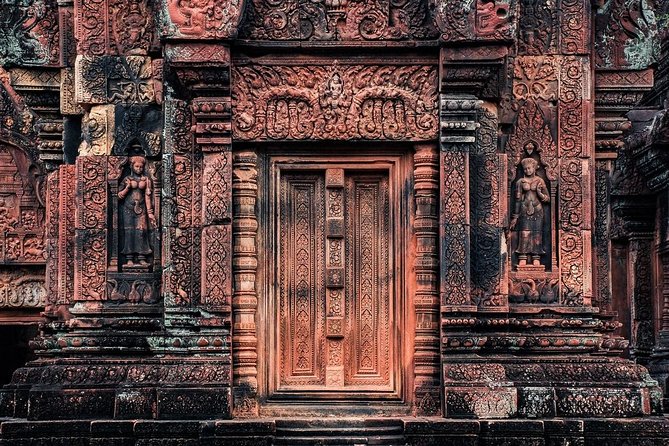
Banteay Srei follows for about an hour. Built from pink sandstone in the 10th century, it is smaller than Angkor Wat but famous for its fine carvings. The temple was dedicated mainly to Shiva under the rule of Rajendravarman II, and its detailed decoration rewards a slower look than its size might suggest.
Banteay Srei is far from the central Angkor group, so combining it with Phnom Kulen makes practical sense. You cover two outlying areas on the same day instead of arranging another long transfer.
Banteay Samre receives about 45 minutes. Its design is often compared with Angkor Wat, and the temple offers another Hindu site with a different setting and scale. It is a good middle stop after Banteay Srei, though you will probably find the smaller temple less ornate.
The last stop is Pre Rup, with about 30 minutes. This late 10th-century temple-mountain was dedicated to Hindu gods, and its name is associated with turning the body and funeral practice. The upper levels and brick construction make it a fitting final temple for the day, though stairs and heat can make the visit demanding.
The order means day two is not a light outing. You have the long road to Phnom Kulen, a possible swim, several temple visits, and the return to Siem Reap. I would keep the evening free rather than planning a late dinner or another activity.
Day three: sunrise, Buddhist monuments, and the Roluos group
Day three starts at 5:00 a.m. for sunrise at Angkor Wat. This is the earliest morning of the tour, and you should book it only if seeing the temple before breakfast is important to you.
The sunrise visit lasts about one hour and 45 minutes. The benefit is atmosphere and morning light, but the cost is sleep. You have already spent a full day at Angkor Wat, so this second visit works best if you want a different view of the temple rather than a first look.
After breakfast, you return to the temples for Preah Khan. This large Buddhist monastery was built by King Jayavarman VII and dedicated to his father. Allow about an hour to follow its long corridors and see how the building combines religious, royal, and institutional functions.
Neak Pean is a smaller island temple in the middle of a baray, or reservoir area. The visit lasts about 30 minutes. Its setting gives it a different feel from the enclosed temple compounds, but the walk and approach may be as important as the small central shrine.
Ta Som is another compact Buddhist temple, with about 30 minutes allotted. It lies east of Neak Pean and fits well into the morning sequence because you can see two smaller monuments without spending a full hour at each.
Eastern Mebon gets about an hour. This three-level temple-mountain has five towers and large elephant statues at its corners. It is a strong stop for architectural details, and the elephants help distinguish it from the other temple mountains you see during the three days.
The route then continues to the Roluos group, an earlier cluster outside the main Angkor circuit. Lolei is a small ninth-century Hindu temple and receives about 15 minutes. The short visit reflects its size, though you may wish you had more time if early Khmer architecture interests you.
Preah Ko receives about 30 minutes. It was the first temple built in the ancient city of Hariharalaya, making it an important stop for understanding the period before the great Angkor monuments.
Bakong is the largest and most imposing of the Roluos temples. It is also described as the first sandstone temple-mountain built by Khmer rulers. You get about 45 minutes here, enough to see the broad form and major features without turning the stop into another long climb.
Lunch can be taken at a restaurant along the way, with the meal cost based on the menu. Since this is a private tour, you can discuss timing with the guide and driver instead of being tied to a large group’s fixed break.
The final planned stops are Artisans Angkor and Psar Chaa, the Old Market. Artisans Angkor presents traditional skills such as stone carving, wood carving, lacquering, gilding, and silk processing. It can be worthwhile if you want a closer look at Cambodian craft production, but you can skip it if you prefer more temple time or a quieter finish.
The Old Market is in central Siem Reap. It is another optional stop, useful for browsing local goods and getting a feel for the town after three days among ruins. You are not required to include either stop, which is one of the better features of a private schedule.
More Kulen Mountain and waterfall days:
- Kulen Waterfall Join-in Tour (local Picnic lunch)
★ 5.0 · 2,434 reviews - Kulen Mountain: Small-Group Tour and Picnic lunch
★ 4.9 · 1,802 reviews - Siem Reap: Kulen Mountain, Beng Mealea and Tonle Sap Tour
★ 5.0 · 1,483 reviews - Phnom Kulen Waterfall & the Sacred 1000 Lingas (with Lunch)
★ 4.8 · 974 reviews
Why the guides matter so much
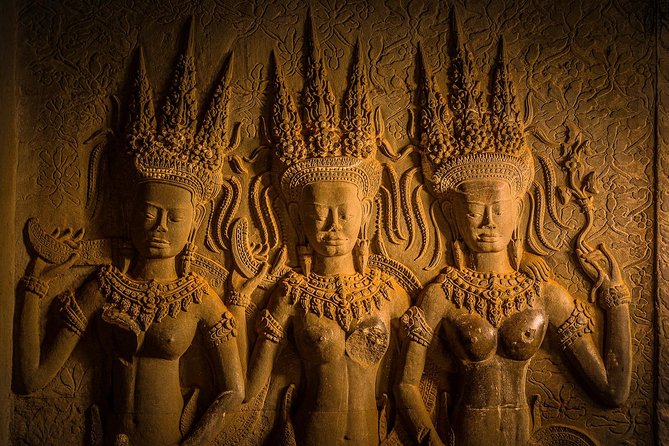
The strongest part of this experience is not simply the number of temples. It is the guide’s ability to make the sequence understandable.
Several guides connected with this tour have been singled out for careful historical explanations and flexible service, including Chhay, Pal Saruon, Chandri, Em Somuch, and Small Mony. Chhay is noted for showing good photo spots and explaining temple history in depth, while Em Somuch has taken guests along a shaded bush path between sites. Small Mony has been praised for bringing the stories behind the temples to life.
You cannot guarantee a particular guide from the information provided, so ask at booking if a named guide matters to you. The driver matters too. You spend many hours in the car, particularly on the Phnom Kulen day, and a patient driver makes the long transfers much easier.
Heat, walking, and the private format
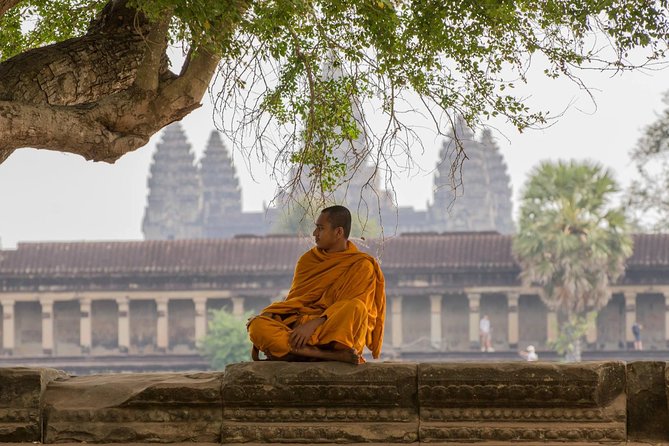
This is a private activity for your own group. That means you can ask for more time at a temple, shorten a stop, or skip Phnom Bakheng, Artisans Angkor, or the Old Market when the schedule allows.
Private does not mean easy. You still face long walks, uneven temple surfaces, stairs, hot weather, and a dense schedule. Wear practical footwear, carry the provided water, and treat the wet towels as welcome relief rather than a substitute for your own sun protection.
The vehicle is especially valuable between the main park and Phnom Kulen. It also gives you a cool place to reset between temples. If you dislike spending full days in a fixed group, this format is a major reason to choose the tour.
Who should book this three-day plan
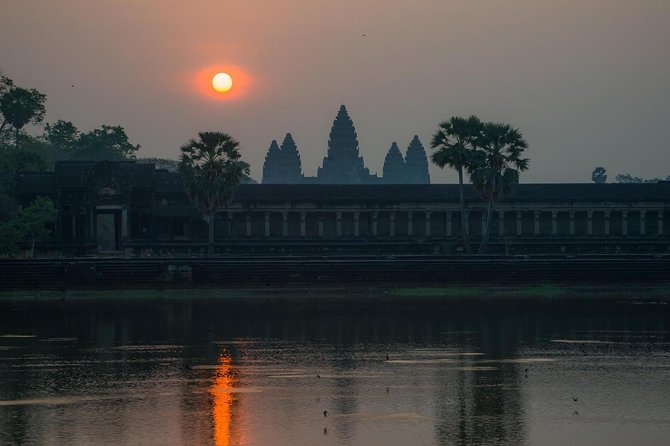
I would recommend it to you if this is your first visit to Siem Reap and you want to cover the major Angkor sites without arranging separate transport. It also suits people who want more than the standard Angkor Wat and Ta Prohm pairing.
History fans will appreciate the range from early Roluos temples to the Buddhist monuments of Jayavarman VII. Nature-minded visitors get the waterfall and national park, while photographers get sunrise, sunset, tree-covered ruins, carved faces, pink sandstone, and elephant statues.
I would be more cautious if you prefer slow travel. The schedule includes many stops, and some are brief. If you want to spend half a day studying one temple, this plan may feel too packed.
It is also a poor fit if you dislike early mornings or long road journeys. The 5:00 a.m. sunrise and more than 60-kilometer trip to Phnom Kulen are clear commitments, not minor details.
Free cancellation is available up to 24 hours before the start time. Changes or cancellations inside that window are not accepted for a refund, so keep that cutoff in mind before you finalize your plans.
Should you book it?
Book this tour if you want a wide, well-organized look at the Angkor region, with private transport and a guide who can add meaning to the stones. The combination of major temples, quieter ruins, waterfall swimming, and Roluos history gives you a fuller picture than a two-day central circuit.
Skip it if your main goal is the lowest possible price or a relaxed schedule. Once you add temple admission, Phnom Kulen, and meals, the cost rises, and the days are long.
For most first-time visitors with three days in Siem Reap, I think the range is worth it. Just go in prepared for heat, stairs, an early alarm, and a lot of history packed into three busy days.
FAQ
What is included in the tour price?
The price includes a private air-conditioned vehicle with driver, a licensed English-speaking guide, hotel pickup and return, parking fees, road tolls, drinking water, and wet towels.
Are the Angkor and Phnom Kulen entrance fees included?
No. Angkor Wat and the other temple admission costs $62 per person, while Phnom Kulen costs $20 per person.
Are meals included?
No. Lunch costs extra and depends on the menu. The stated guide price is about $5 per person.
Is this a private tour?
Yes. Only your group participates in the private activity, and group discounts may be available.
What time does the sunrise day begin?
The guide picks you up at about 5:00 a.m. on day three for the Angkor Wat sunrise visit.
Can I skip Phnom Bakheng, Artisans Angkor, or the Old Market?
Yes. Phnom Bakheng can be skipped if you do not want to wait for sunset. Artisans Angkor and Psar Chaa are also listed as optional stops.
More Temple Tours in Siem Reap
- Angkor Wat Sunrise & 3 Main Temples with Breakfast – Small Group
★ 5.0 · 2,857 reviews - Siem Reap: Full Day Angkor Wat Temple Experience with Sunset
★ 4.9 · 1,490 reviews - 2 Days Exclusive Temple Highlights with Sunset and Sunrise Tour
★ 5.0 · 1,157 reviews - Full-Day Banteay Srei & 4 Temples – Grand Tours Join-in Tour
★ 5.0 · 1,155 reviews
Just added around Siem Reap
- Twilight Tastes of Siem Reap Include Dinner★ 5.0 · 13 reviews
- Ultimate Sunrise to Angkor Wat, Angkor Thom and Bayon Temple★ 5.0 · 3 reviews
- Trekking Tour at Phnom Kulen National Park from Siem Reap★ 5.0 · 3 reviews
- Professional Photo Shoot in Angkor Archaeological Park, Siem Reap★ 5.0 · 42 reviews
- Full-Day Private Tour of Angkor Wat with Pick Up★ 5.0 · 12 reviews
- Unveiling 2 Days Private Angkor Wat/Beyond In Sunrise/Sunset Tour★ 5.0 · 48 reviews
- Siem Reap City Tour with War Museum and Killing Field★ 5.0 · 27 reviews
- Private Day Trip to Angkor Temples with Expert Guide★ 5.0 · 4 reviews
Angkor Wat Tours, compared.
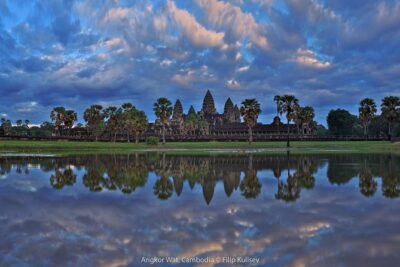
Angkor Wat Sunrise or Sunset Tour with Guide from Siem Reap
Read our review →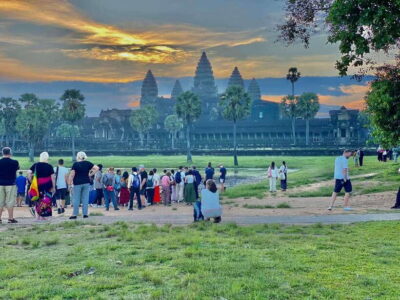
Angkor Wat: Small-Group Sunrise or Sunset Tour
Read our review →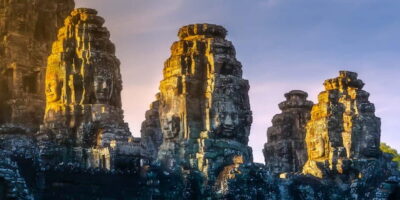
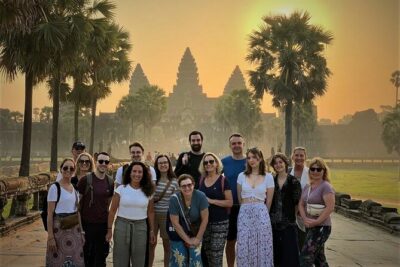
Angkor Wat Highlights and Sunrise Guided Tour from Siem Reap
Read our review →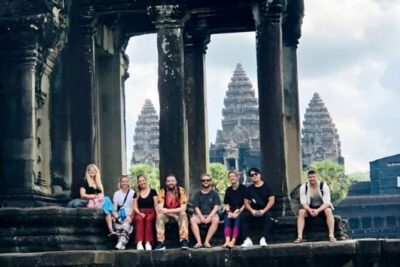
Angkor Wat Sunrise & 3 Main Temples with Breakfast – Small Group
Read our review →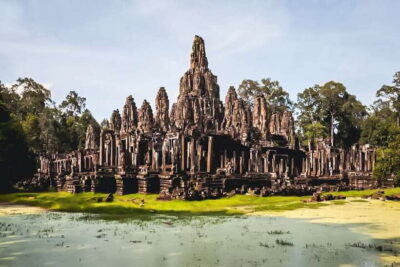
Angkor Wat Sunrise and Full-Day Sightseeing Tour
Read our review →
Angkor Wat Small-Group Exploration with Expert Guide
Read our review →Browse the lists this tour appears in