
Reviewed · ANGKOR WAT TOURS
Full-Day private Tour in Lost City & Angkor Wat from Siem Reap
Angkor Wat is only the opening act here. This private eight-hour tour takes you from the temple’s quieter eastern approach into its central chambers, then across Angkor Thom and on to the tree-wrapped ruins of Ta Prohm. I like the private vehicle and hotel pickup, which keep a long, hot day simple. I also like the guide-led look at bas-reliefs, royal ceremonies, and Khmer myths rather than a quick photo stop.
The main catch is heat and walking. One previous guest found the humidity taxing, and the day includes several hours on temple paths and stone steps. The $30 price is attractive, but Angkor’s admission ticket costs extra, so your final cost will be higher.
Key points to know before booking
- The eastern entrance to Angkor Wat offers a quieter way into the world’s largest religious monument.
- Your private guide controls the pace, with guides such as Sim and Rith praised for clear explanations and flexibility.
- Angkor Thom fills most of the middle of the day, including Bayon, Baphuon, Phimeanakas, and two long ceremonial terraces.
- Ta Prohm provides the day’s most atmospheric stop, with trees growing through the temple ruins.
- Lunch and cold drinks are planned near the temples, a useful break in Cambodia’s heat.
- The $30 price excludes the temple pass, and you must arrange the e-ticket before entering.
Why this private Angkor day works well
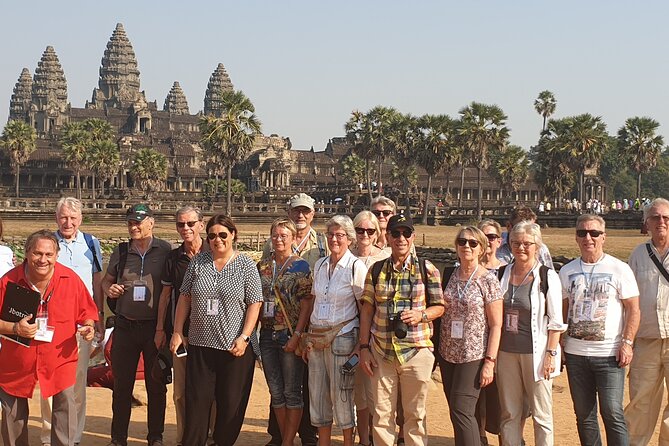
This is a packed circuit of the major Angkor sights, but it does not feel like a simple drive-by tour. You have roughly eight hours with an English-speaking guide, a private vehicle, hotel pickup, hotel drop-off, and bottled water. Since only your own group joins, you can ask questions and adjust the rhythm within the day.
I especially like the eastern-side entry at Angkor Wat. Most people picture the great western causeway and the famous front view. This route begins from the less-used eastern side, then follows a jungle path toward an ancient pool and the temple interior. It gives the first stop a sense of discovery, even though Angkor Wat itself is Cambodia’s best-known monument.
The tour also has a useful mix of famous sights and less obvious corners. You get the major temples, but the guide also takes you to places within Angkor Thom that many people pass by. The supplied description calls these secret stops, though you should treat that as a promise of quieter areas rather than a completely unknown ruin.
More Private Tours in Siem Reap
- Full-Day Angkor Wat Sunrise Private Tour with Guide from Siem Reap
★ 5.0 · 2,920 reviews - Siem Reap: Angkor Wat Private Tuk-Tuk Tour
★ 4.9 · 2,222 reviews - Angkor Wat Private Day Tour from Siem Reap
★ 5.0 · 834 reviews
Angkor Wat from the eastern side
Allow about two hours for Angkor Wat. Built in the early 12th century, it began as a Hindu temple and later continued as an important religious center. It is also the best-preserved major temple in the Angkor area.
Your guide leads you through the eastern approach and along a wooded path toward an old library pool. The route is useful for anyone who wants more than the standard approach, but it is still a walking tour. Wear flat shoes with a good grip, and do not expect to remain in the vehicle for long stretches.
Inside, the focus shifts to the bas-reliefs. These carved panels show mythological scenes, battles, royal stories, and daily life. The guide’s job matters here because the carvings can look like one long stone wall if you do not know what to look for. Sim, one of the guides associated with this experience, has been praised for explaining the ancient culture in a clear way.
You then reach the central chambers and upper terraces. This is where the scale of Angkor Wat becomes clear: layered galleries, towers, long corridors, and carefully planned spaces rising toward the central sanctuary. The upper areas require walking and may involve steps, so this portion is not ideal if you have difficulty with uneven surfaces.
There is no admission ticket included in the tour price. You will need the Angkor temple pass, and the guide sends a link so you can buy the entrance e-ticket in advance.
South Gate and Bayon’s stone faces
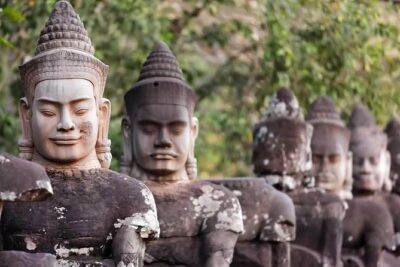
The South Gate of Angkor Thom is a short stop, about 20 minutes, but it gives you the clearest visual introduction to the ancient capital. A line of 54 stone figures on each side flanks the approach, creating a ceremonial entrance to the fortified city.
Angkor Thom was the capital of the Khmer Empire at its height. The gate is popular because it is easy to photograph, but it also helps you understand the city’s scale before you begin exploring its monuments.
Next comes Bayon, with about an hour set aside. Built in the 13th century as the state temple of King Jayavarman VII, it sits at the center of Angkor Thom. Its many towers carry enormous serene faces, often described as one of the defining sights of Angkor.
Do not rush through Bayon. The faces are the obvious attraction, but the lower galleries are just as useful for understanding Khmer society. One set of bas-reliefs shows historical events and ordinary scenes. Another presents mythological subjects. Your guide can point out the difference and connect the carvings to the temple’s purpose.
Bayon can feel confusing because the towers and galleries crowd together. That is another reason a guide helps. You can spend your hour looking at specific carvings instead of simply walking around the central towers taking photos.
Baphuon and the royal center
Baphuon gets about an hour, making it one of the longer stops on the route. This 11th-century temple mountain sits northwest of Bayon and was built as a state temple. Its base measures about 120 meters east to west and 100 meters north to south.
The structure rises in three tiers and originally reached roughly 50 meters with its tower. Even without the original upper tower, the climb and long elevated approach give you a strong sense of its size. The stonework and broad terraces also provide a different look from Bayon’s crowded towers.
This is one of the day’s more demanding sections. Baphuon involves walking across a large temple complex, and the heat can build by this point. I would use the stop to slow down, drink water, and listen rather than trying to see every corner.
The tour then moves through the Angkor Thom area to Phimeanakas, also called Vimeanakas. This late 10th-century temple was completed during the reign of Suryavarman I and takes the form of a three-tier pyramid. It lies within the walled Royal Palace enclosure.
Phimeanakas is less visually famous than Bayon or Ta Prohm, but it adds political context. You are seeing part of the royal center, not only isolated religious buildings. The one-hour allocation gives the guide room to explain how the temple related to the palace compound and the wider capital.
More ways to walk into Angkor Wat:
- Angkor Wat Sunrise or Sunset Tour with Guide from Siem Reap
★ 5.0 · 12,109 reviews - Siem Reap: Angkor Wat: Small-Group Sunrise or Sunset Tour
★ 5.0 · 9,444 reviews - Siem Reap: Angkor Wat 2-Day Tour with Sunrise and Sunset
★ 4.9 · 4,429 reviews - Siem Reap: Full-Day Angkor Wat Guided Tour with Sunset
★ 4.9 · 3,803 reviews
The terraces of royal ceremony
The Terrace of the Elephants runs for about 350 meters and receives roughly 40 minutes. King Jayavarman VII built it in the 13th century as a reviewing stand for public ceremonies and royal audiences.
The carved elephants along the terrace explain its name, but the important point is how the structure functioned. This was a public face of royal power, a place where the king could watch processions and formal events. Its length helps you picture the scale of ceremonies in Angkor Thom.
The Terrace of the Leper King follows, also with about 40 minutes. The U-shaped structure may have served as a royal cremation site, though its exact purpose is not certain. Its modern name comes from a sculpture found here, which depicts Yama, the Hindu god of death.
The terrace has carved walls and narrow passages that reward a slower look. Compared with Angkor Wat and Bayon, it may feel less immediately dramatic, but it adds a more complex side to the ancient capital. You are not just looking at towers. You are seeing spaces linked to ceremony, royal authority, and death.
Quieter corners inside Angkor Thom
Two short stops are described as secret or lesser-known places within Angkor Thom. Each receives about 10 minutes. The exact sites are not identified in the information provided, so you should not book this expecting a named monument or a guaranteed hidden ruin.
What you can expect is a brief change of pace from the major temple circuit. These stops may suit you if you enjoy quieter photo points and want your guide to show you more than the standard sequence. They also give the private tour some flexibility, since the guide can shape the day around your energy and interest.
That flexibility is one of the stronger reasons to choose a private tour. A previous guest described guide Sim as willing to change the order of the temples and stop for a break when the group grew tired. That matters here because temple fatigue is real. Angkor Thom alone includes several large sites, and the day has not yet reached Ta Prohm.
Lunch, cold drinks, and managing the heat
Lunch takes place at a restaurant near the temples, with cold drinks available. The meal itself is not described in detail, so you should confirm what is included if that matters to your budget. The important practical point is the location: you do not need to make a long detour back to Siem Reap during the temple circuit.
Cambodia’s heat can change the way you experience the ruins. One guest specifically noted the humidity, while still finding the day worthwhile. Drink the supplied bottled water, use the lunch stop to cool down, and tell your guide when you need a pause.
The private format helps here. You are not locked into the pace of a large group. If you have had enough after several hours of carvings and steps, you can ask for a shorter look at a site or a quiet break near Angkor Wat, as one group did with Sim.
Ta Prohm and the day’s strongest atmosphere
The final major stop is Ta Prohm, with about an hour. Built in the 13th century, it served as a religious temple in the center of the ancient Khmer University. UNESCO added it to the World Heritage List in 1992.
Ta Prohm is famous for its trees growing through the ruins. Roots press over walls, trunks rise beside galleries, and the jungle setting gives the site a mood that differs from the open terraces of Angkor Wat. The temple was left in much the condition in which it was found, though conservation work continues to keep the ruins safe.
You may know Ta Prohm as the Tomb Raider temple. That nickname brings many people here, but the site deserves more than a movie photo. Look at how the trees and stone interact, then notice the doorways, galleries, and carved details that remain beneath the roots.
An hour is enough for a good introduction, though not for every corridor. The paths can be uneven and crowded in popular sections. Your guide can help you focus on the most important areas and find suitable places for photos without turning the whole stop into a camera exercise.
What $30 actually gets you
At $30 per person, this is an appealing price for a private eight-hour outing. You receive an English-speaking guide, a private comfortable vehicle, hotel pickup and drop-off, and bottled water. The private setup gives the price more value if you are traveling with family or friends, especially since group discounts are offered.
The temple admission fee is not included. That is the key budget detail, and the final cost depends on the required Angkor ticket. You should also account for any personal food or drink purchases, since the included information only confirms lunch at a nearby restaurant and cold drinks, not the exact meal arrangement.
The tour is booked an average of 24 days ahead, which suggests you should not leave it until the last moment if your dates are fixed. Confirmation arrives at booking, and the guide sends the temple e-ticket link days before the tour.
Who should book this Angkor circuit
I would choose this tour if you want the major Angkor temples in one well-organized day and prefer not to share a vehicle with strangers. It suits first-time visitors who want explanations at the carvings, a set route, and the ability to adjust the pace.
It also works for couples, families, and small groups that value hotel pickup and a private schedule. Guide Sim’s flexible approach and guide Rith’s strong praise for history explanations suggest that the quality of the day depends in part on the guide assigned to you, but both names are associated with positive experiences here.
This is less suitable if you want a slow, single-temple visit. Ten stops, several large compounds, and eight hours can leave you tired. It is also not the best choice for anyone unable to manage substantial walking, uneven ground, or temple steps.
Wear clothing covering your knees and shoulders for sacred areas. Flat, comfortable shoes are a must. Casual clothing is fine otherwise, and most people can participate according to the provided information.
Should you book it?
Book this tour if you want a private introduction to Angkor’s essential sights, with enough guide time to make sense of the carvings and royal spaces. The eastern approach to Angkor Wat, the long Angkor Thom circuit, and the final hour at Ta Prohm create a strong one-day overview.
Skip it if you prefer your own unhurried schedule or want to focus on only one or two temples. For everyone else, the $30 starting price offers good value once you remember to add the temple admission fee. Go prepared for heat, bring patience for the walking, and use the private format to set a pace you can enjoy.
FAQ
How long does the private Angkor tour last?
The tour lasts approximately eight hours.
Is hotel pickup and drop-off included?
Yes. Hotel pickup and drop-off are included.
Is the Angkor temple admission ticket included?
No. The admission fee is not included. The guide sends a link so you can purchase the temple entrance e-ticket in advance.
Is this a private tour?
Yes. Only your group participates in the activity.
What language does the guide speak?
The tour includes an English-speaking guide.
What should I wear to the temples?
You need clothing that covers your knees and shoulders to enter some sacred areas. Flat shoes that are comfortable for walking are also recommended.
Can I cancel for a full refund?
Yes. You can cancel at least 24 hours before the experience start time for a full refund. Cancellations or changes made within 24 hours are not accepted and are not refunded.
Just added around Siem Reap
- Twilight Tastes of Siem Reap Include Dinner★ 5.0 · 13 reviews
- Ultimate Sunrise to Angkor Wat, Angkor Thom and Bayon Temple★ 5.0 · 3 reviews
- Trekking Tour at Phnom Kulen National Park from Siem Reap★ 5.0 · 3 reviews
- Professional Photo Shoot in Angkor Archaeological Park, Siem Reap★ 5.0 · 42 reviews
- Full-Day Private Tour of Angkor Wat with Pick Up★ 5.0 · 12 reviews
- Unveiling 2 Days Private Angkor Wat/Beyond In Sunrise/Sunset Tour★ 5.0 · 48 reviews
- Siem Reap City Tour with War Museum and Killing Field★ 5.0 · 27 reviews
- Private Day Trip to Angkor Temples with Expert Guide★ 5.0 · 4 reviews
Angkor Wat Tours, compared.
Angkor Wat Sunrise or Sunset Tour with Guide from Siem Reap
Read our review →
Angkor Wat: Small-Group Sunrise or Sunset Tour
Read our review →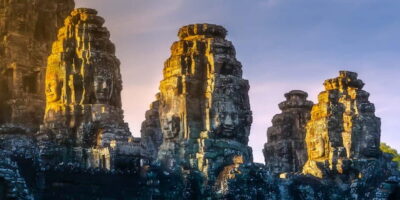
Angkor Wat Highlights and Sunrise Guided Tour from Siem Reap
Read our review →
Angkor Wat Sunrise & 3 Main Temples with Breakfast – Small Group
Read our review →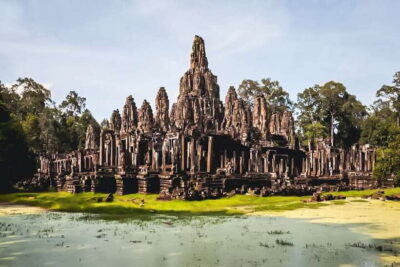
Angkor Wat Sunrise and Full-Day Sightseeing Tour
Read our review →
Angkor Wat Small-Group Exploration with Expert Guide
Read our review →Browse the lists this tour appears in