
Reviewed · ANGKOR WAT TOURS
Angkor Wat Private Day Tour from Siem Reap
Angkor Wat is more than a single temple. It is a vast religious monument, and this private tour gives you a practical way to see its main companions in one day. I like the personal pace and the chance to ask about Hindu and Buddhist symbols as you go. I also like the contrast between Angkor Wat’s orderly stone galleries and Ta Prohm’s tree-covered ruins.
The main drawback is the heat and the amount of walking. Six to seven hours can feel long, especially at Angkor Wat, where stairs, courtyards, and wide exposed paths add up quickly. The $49 tour price is reasonable, but you must add the $37 Angkor National Park ticket, plus food and gratuities.
Key points to know before booking
- Four major temple stops: Angkor Wat, Bayon, the Elephant Terrace, and Ta Prohm form the heart of the day.
- Private touring: Only your party takes part, so you can ask questions and move at a pace that suits you.
- Cold water is included: Drivers also provide chilled towels on some outings, a small but welcome touch in Cambodia’s heat.
- Tuk-tuk or minivan transport: One or two people travel by tuk-tuk, while groups of three or more use a minivan.
- A guide adds real value: Guides such as Nak, Dy, Roem, Sorphea, Samun, and Choud have been praised for clear explanations, good English, history, and photo help.
- Dress and stamina matter: Wear good walking shoes and clothing covering your knees. Expect steps, long walks, and sun.
Why a private day is a smart way to see Angkor
The Angkor Archaeological Park is too large to understand from a quick photo stop. Angkor Wat alone can take two hours, and the nearby monuments each have a different shape, purpose, and mood. A private guide helps connect the carvings, buildings, and religious ideas instead of leaving you to wander from one impressive pile of stone to the next.
This tour is designed around the park’s essential sights. You see the grand centerpiece at Angkor Wat, enter the old royal city of Angkor Thom, study the famous faces of Bayon, walk along the Elephant Terrace, and finish at Ta Prohm, where trees have grown into the ruins.
I especially like the private format for a first visit. Your guide can explain a carving when you are standing in front of it, not later in a crowded group. You can also ask for a slower pace, extra photo time, or a shorter visit if the heat catches up with you.
The guides named in the feedback include Nak, Dy, Roem, Sorphea, Samun, Choud, Phee, Pot, San, and Sammy. Their strengths vary, but the repeated themes are clear English, Cambodian history, Hinduism, Buddhism, temple symbolism, and help with photos. Dy, for example, was praised for finding good picture spots, while other guides helped explain how the temples changed over time.
More Private Tours in Siem Reap
- Full-Day Angkor Wat Sunrise Private Tour with Guide from Siem Reap
★ 5.0 · 2,920 reviews - Siem Reap: Angkor Wat Private Tuk-Tuk Tour
★ 4.9 · 2,222 reviews - Angkor Wat Private Tuk-Tuk Tour (sunrise Option) & more
★ 5.0 · 439 reviews
The 8 a.m. pickup and the ride into the park
The standard plan begins with hotel pickup in Siem Reap at about 8 a.m. The tour lasts roughly six to seven hours, though the exact end time depends on walking speed, stops, and how long you spend inside each temple.
For one or two people, transport is by tuk-tuk. This is a pleasant choice in hot weather because the open sides give you moving air between stops. For groups of three or more, a minivan is used instead. The tour includes hotel pickup and drop-off, so you do not need to arrange separate transport around the park.
Cold bottled water is included. Several guides and drivers have also provided cold towels after temple walks, which can make a real difference after climbing steps under the sun. Some outings included a comfortable, clean tuk-tuk and a reliable driver who waited at each stop.
One useful point: the published daytime itinerary starts at 8 a.m., but some bookings have been arranged as sunrise outings, including a 4:30 a.m. start. If sunrise is important to you, confirm that timing before booking rather than assuming it is part of every departure.
Angkor Wat: scale, symmetry, and a remarkable wall
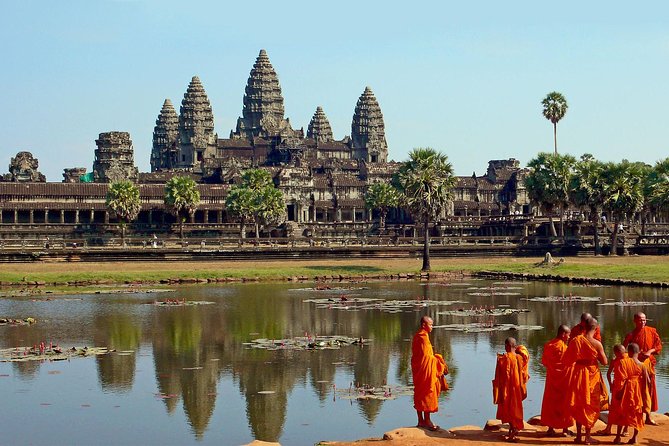
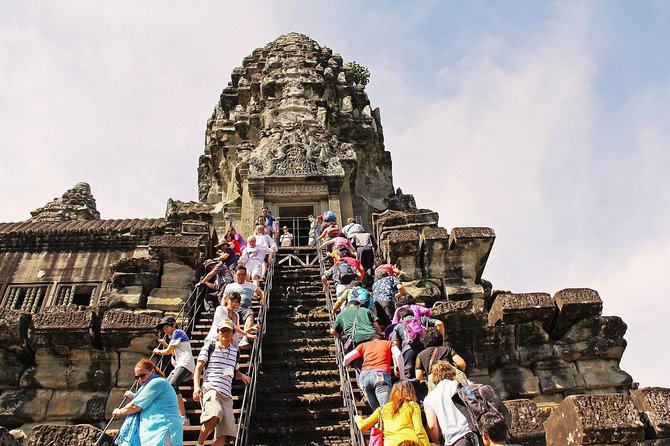
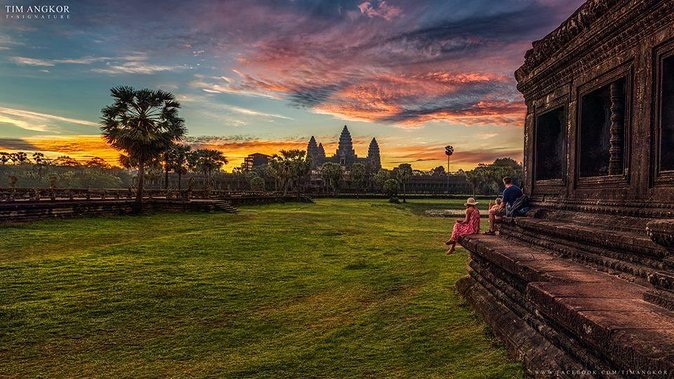
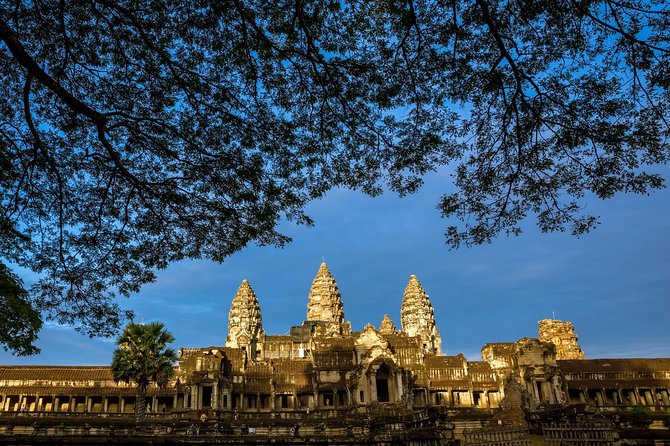
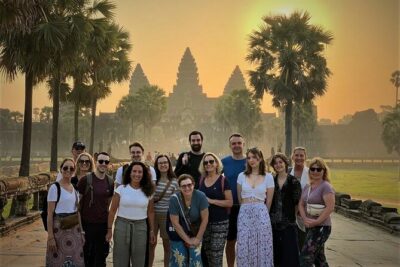
You spend about two hours at Angkor Wat, and that time is justified. Built between 1113 and 1150 and dedicated to Vishnu, the temple is the best-preserved of the major monuments in this tour. Its scale is hard to grasp from the entrance. Long galleries, towers, courtyards, and surrounding walls unfold in stages.
Your guide can help you read the temple rather than simply admire it. The carvings are not random decoration. They carry Hindu stories, royal messages, and religious symbols, and a good explanation makes the walls easier to understand.
The most unusual feature is the continuous bas relief that runs along much of the outer gallery. It is often described as the world’s longest continuous bas relief, showing scenes from Hindu epics and royal or military life. You will appreciate it more when your guide points out figures and explains what is happening.
Angkor Wat is also the point where the tour can feel most crowded. It is the park’s best-known sight, and the broad paths and galleries attract many people. A private guide cannot remove the crowds, but can help you use your time well and explain what deserves your attention.
There are steps and a lot of walking. Wear shoes with a firm sole, bring sun protection, and keep some water for the longer stretches. Visitors must wear pants or knee-length skirts or dresses, so dress for both the rules and the heat.
Angkor Thom’s South Gate and the old royal city
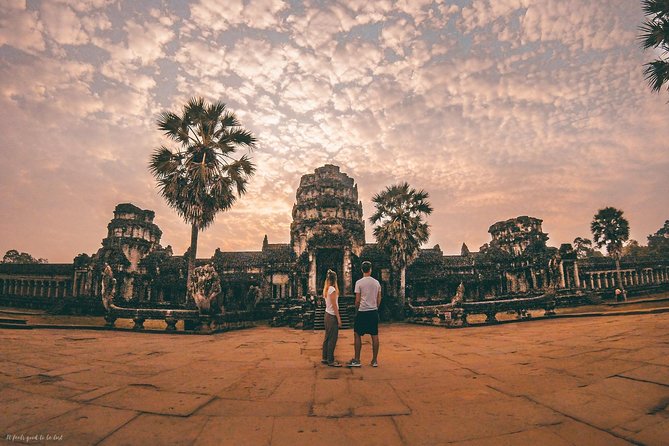
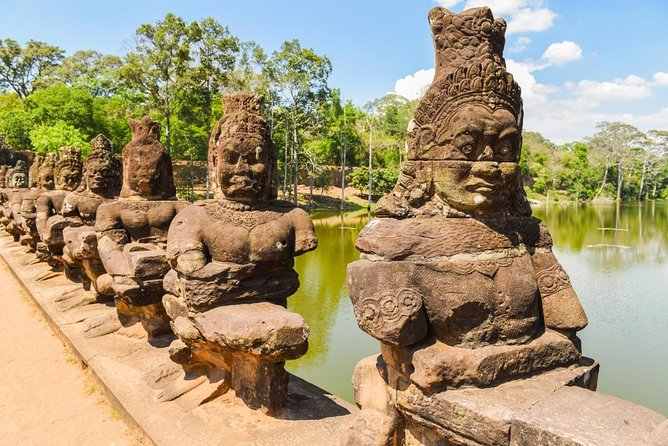
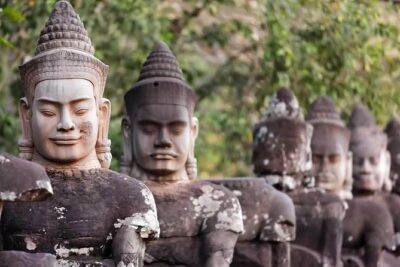
After Angkor Wat, the route continues to Angkor Thom, a huge walled complex that once contained residences, official buildings, religious monuments, and public spaces. The walls are described as about 6 meters wide, 8 meters high, and 13 kilometers long, giving you a sense of how ambitious the royal city was.
The South Gate is a quick but memorable stop, scheduled for about 50 minutes as part of the Angkor Thom visit. It provides a strong visual introduction to the city, with monumental stone figures and an imposing entrance route.
This is where a guide is particularly useful. Without context, it is easy to see Angkor Thom as a collection of disconnected ruins. With an explanation of the city’s role, the gates and walls begin to make sense as parts of a planned royal center.
The timing here is also sensible. You see the main entrance and then continue to the Bayon, rather than spending the whole day trying to inspect every corner of the complex. If you are fascinated by ancient city planning, ask your guide to explain how the major structures fit together.
More ways to walk into Angkor Wat:
- Angkor Wat Sunrise or Sunset Tour with Guide from Siem Reap
★ 5.0 · 12,109 reviews - Siem Reap: Angkor Wat: Small-Group Sunrise or Sunset Tour
★ 5.0 · 9,444 reviews - Siem Reap: Angkor Wat 2-Day Tour with Sunrise and Sunset
★ 4.9 · 4,429 reviews - Siem Reap: Full-Day Angkor Wat Guided Tour with Sunset
★ 4.9 · 3,803 reviews
Bayon Temple and its many calm faces
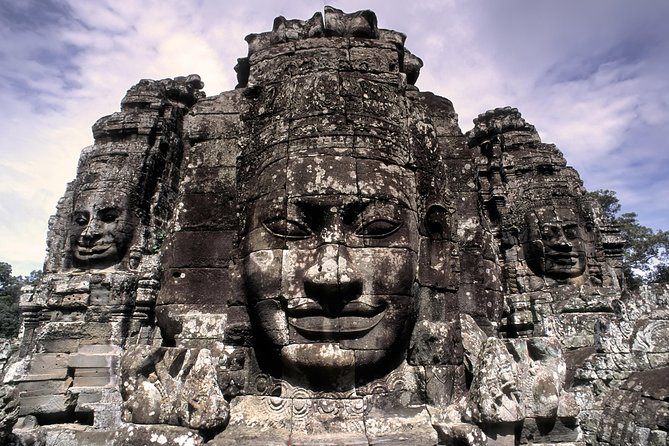
Bayon receives about 45 minutes, but it can easily become one of the most memorable stops. Located at the center of Angkor Thom, this temple mountain is known for its towers carved with large, serene faces. The tour description counts about 200 smiling faces, though what matters most is the feeling of being watched from several directions as you move through the narrow passages.
Bayon is less immediately orderly than Angkor Wat. Its towers seem to crowd one another, and the interior can feel close and maze-like. That contrast is part of its appeal. You move from the open scale of Angkor Wat into a denser monument where faces appear above and beside you.
This is a good place to ask about the shift between Hindu and Buddhist traditions. The tour covers both, along with Cambodian history and temple symbolism. Guides such as Nak and Sorphea have been praised for explaining these subjects clearly without burying the visitor in too many details.
Allow time for stairs and uneven ground. Bayon is not just a viewpoint from the entrance. The best sense of the temple comes from walking through its galleries and looking up at the carved towers.
The Elephant Terrace and Terrace of the Leper King
The Elephant Terrace and Terrace of the Leper King are scheduled for about 45 minutes together. These structures are more open than Bayon, so the heat can be noticeable, but the carvings reward a closer look.
The Elephant Terrace takes its name from its carved elephants and was part of the public face of Angkor Thom. The animal figures are not merely decorative. They help show how the Khmer court used sculpture to project power and ceremony.
Nearby, the Terrace of the Leper King features a sculpture popularly known by that name. Your guide can explain the nickname and point out details in the reliefs that you might otherwise pass without noticing.
This stop is shorter and less enclosed than the main temples, which makes it a useful change of pace. It is also a reminder that Angkor Thom was not only a religious site. It was a royal city with ceremonial spaces and public monuments.
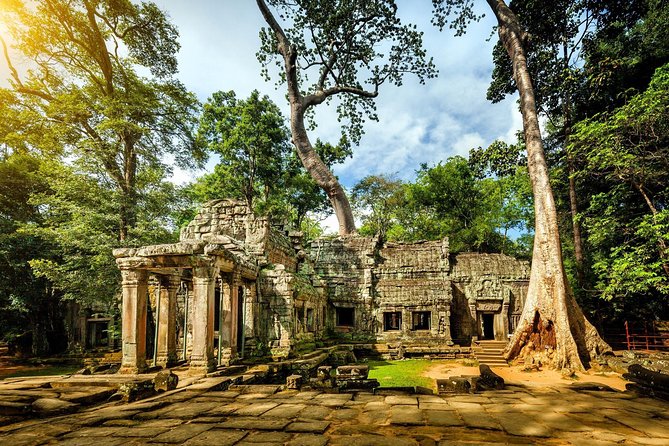
Ta Prohm, where trees claim the ruins
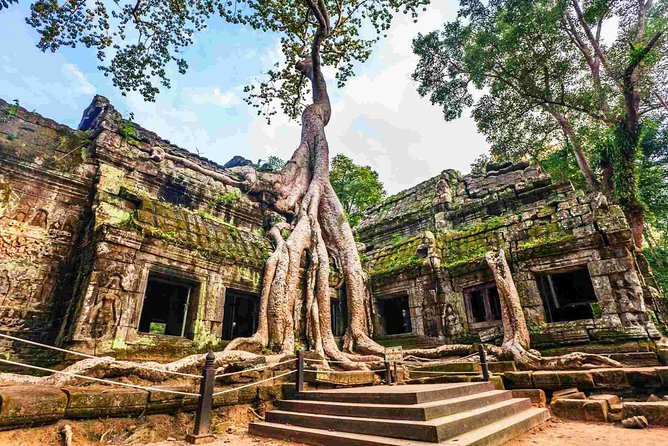
Ta Prohm is scheduled for about an hour and often becomes the favorite stop for people drawn to the park’s more atmospheric side. Here, large tree roots push across walls and between stones. The effect is dramatic, but the site is not simply an abandoned jungle ruin.
French archaeologists made the controversial decision to leave parts of Ta Prohm close to the condition in which they found it. That choice created the famous meeting of stone and tree that defines the temple today. It also raises a useful question about conservation: should a monument be returned to an earlier form, or should the forces that shaped its modern appearance remain visible?
Ta Prohm is widely associated with the Tomb Raider film, but the temple deserves more attention than its movie connection. The roots, galleries, towers, and collapsed sections show how nature can alter a major structure over time.
You will walk over uneven surfaces here, and the route may involve steps and narrow passages. This is another reason the private format helps. Your guide can point out the best details without forcing you to keep pace with a large group.
The cost: $49 plus the park ticket
The advertised tour price is $49 per person. That covers the guide, hotel transport, bottled water, and the private arrangement. The Angkor National Park admission ticket costs an additional $37 per person and is required.
That brings the basic combined cost to $86 per person before food, drinks, gratuities, and other personal expenses. For one person, that is not the cheapest way to see Angkor. For two people, the private guide and transport begin to make better sense, particularly when compared with arranging separate rides and explanations at each temple.
The value is strongest if you have only one day in Siem Reap. You cover the main highlights in a planned order and avoid spending precious time negotiating transport between sites. It is also a practical choice for couples, families, and small groups who want their own pace.
Food is not included. Some outings have included lunch with the guide, but you should treat that as an arrangement to confirm rather than a standard part of the price.
Heat, clothing, and the physical effort
You need moderate physical fitness for this tour. The day includes long walks, stairs, uneven surfaces, and time outdoors in warm conditions. One full day can feel tiring after only two temples, so do not judge your pace by the schedule alone.
Wear good walking shoes. Sandals may be fine for some visitors, but sturdy footwear will give you more confidence on worn stone and uneven paths. Pants or knee-length skirts and dresses are required, and lightweight clothing that meets those rules is the sensible choice.
Carry water, even though more is supplied. A hat and sun protection are practical additions. Use the pauses at the vehicle to cool down, and tell your guide if you need a slower pace. The private setup makes this easier than it would be in a large group.
Families can book the tour, but children must be accompanied by an adult. One family outing included an infant, with the guide and driver paying close attention to comfort. Still, parents should plan around heat, steps, and the length of the day.
Who should book this Angkor tour?
I would choose this experience if you have limited time in Siem Reap and want the main Angkor sights in one organized day. It suits first-time visitors who want the carvings and religious symbolism explained, rather than simply photographed.
It is also a good fit for couples and small groups. A private guide can adjust the pace, help with photos, and answer questions about Cambodian culture, Hinduism, Buddhism, and the Khmer era. The tuk-tuk ride adds a pleasant local touch for one or two people.
I would think twice if you dislike heat, long walks, or structured sightseeing. You may prefer to split the temples over two days. The price also looks less attractive for a solo visitor, since the required park ticket nearly matches the tour fee.
Free cancellation is available when you cancel at least 24 hours before the start time. Changes or cancellations made inside that period are not accepted for a refund. If you need a guide in another language, ask in advance, since multilingual guiding may carry an extra charge and depends on availability.
Should you book it?
Book this tour if you want a well-planned first day at Angkor, personal attention, and clear explanations without joining a large group. The strongest parts are the guide-led interpretation, the useful route through the major temples, and the simple comfort of hotel transport, cold water, and sometimes chilled towels.
The key caution is stamina. This is not a gentle sightseeing ride. You will walk, climb, sweat, and spend much of the day outside. For the right visitor, the $49 tour fee, plus the $37 park admission, buys a focused and memorable introduction to Angkor’s greatest monuments.
FAQ
What does the $49 tour price include?
The price includes hotel pickup and drop-off, transport, an experienced English-speaking guide, and cold bottled water. The Angkor National Park ticket, food, drinks, gratuities, and personal expenses are extra.
How long does the tour last?
The tour lasts approximately six to seven hours. The standard pickup time is about 8 a.m. from your hotel in Siem Reap.
Which temples and monuments are included?
The route includes Angkor Wat, Angkor Thom’s South Gate, Bayon Temple, the Elephant Terrace, the Terrace of the Leper King, and Ta Prohm.
Is this a private tour?
Yes. Only your group participates in the activity, allowing you to ask questions and request a pace that suits your party.
What type of transport is used?
One or two people travel by tuk-tuk. Groups of three or more use a minivan.
What clothing should I wear?
You must wear pants or a knee-length skirt or dress. Good walking shoes are recommended because the tour includes steps, uneven surfaces, and substantial walking.
Just added around Siem Reap
- Twilight Tastes of Siem Reap Include Dinner★ 5.0 · 13 reviews
- Ultimate Sunrise to Angkor Wat, Angkor Thom and Bayon Temple★ 5.0 · 3 reviews
- Trekking Tour at Phnom Kulen National Park from Siem Reap★ 5.0 · 3 reviews
- Professional Photo Shoot in Angkor Archaeological Park, Siem Reap★ 5.0 · 42 reviews
- Full-Day Private Tour of Angkor Wat with Pick Up★ 5.0 · 12 reviews
- Unveiling 2 Days Private Angkor Wat/Beyond In Sunrise/Sunset Tour★ 5.0 · 48 reviews
- Siem Reap City Tour with War Museum and Killing Field★ 5.0 · 27 reviews
- Private Day Trip to Angkor Temples with Expert Guide★ 5.0 · 4 reviews
Angkor Wat Tours, compared.
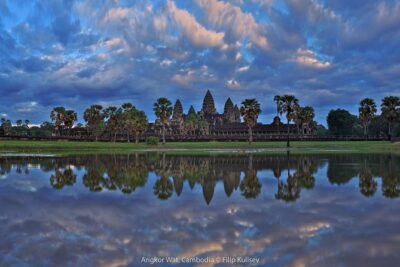
Angkor Wat Sunrise or Sunset Tour with Guide from Siem Reap
Read our review →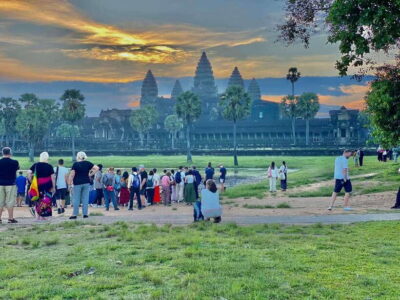
Angkor Wat: Small-Group Sunrise or Sunset Tour
Read our review →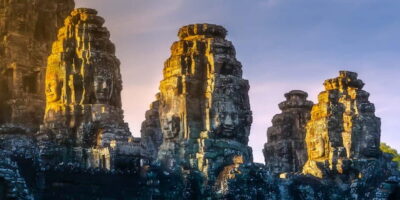
Angkor Wat Highlights and Sunrise Guided Tour from Siem Reap
Read our review →
Angkor Wat Sunrise & 3 Main Temples with Breakfast – Small Group
Read our review →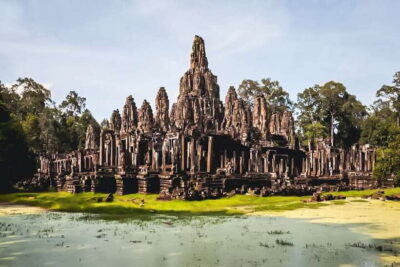
Angkor Wat Sunrise and Full-Day Sightseeing Tour
Read our review →
Angkor Wat Small-Group Exploration with Expert Guide
Read our review →Browse the lists this tour appears in