
Reviewed · ANGKOR WAT TOURS
Angkor Wat 2 Days and a Half Temples & Tonle Sap-Small Group Tour
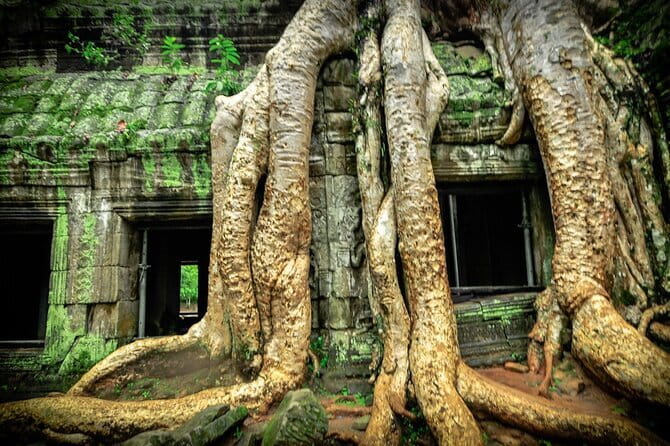
The best part of this tour is its range. In two and a half days, you move from Angkor Wat at sunrise to tiny Banteay Srei, tree-covered Ta Prohm, smiling stone faces at Bayon, and stilted villages on Tonle Sap. You get the famous sights, but also quieter corners that give Siem Reap a human scale.
I like the careful mix of temple styles and the small-group cap of 15. I also like that the tour includes both sunset and sunrise, plus bottled water, cool towels, hotel transport, and the Tonle Sap boat fare. The main catch is cost planning: the $79 tour price does not include the temple pass, which adds $62 per person, and meals are extra.
Key points to know before booking
- Sunrise at Angkor Wat: Enter before dawn and approach the temple from its less-used eastern side with a torch.
- Banteay Srei’s detailed stonework: Allow two hours for Cambodia’s small but finely carved sandstone temple.
- A useful temple mix: Pre Rup, Neak Pean, Preah Khan, Ta Prohm, Angkor Thom, Bayon, and Angkor Wat each offer a different setting.
- Tonle Sap by boat: Spend about four hours reaching Kampong Phluk and its three floating fishing villages.
- Small-group transport: Air-conditioned transport, hotel pickup and drop-off, an English-speaking guide, water, and cool towels are included.
- Extra costs matter: The $79 price excludes the $62 temple pass and food, while the Tonle Sap entrance and boat ride are included.
What this 2.5-day Siem Reap tour covers
This is a busy introduction to the Angkor area rather than a slow temple retreat. You spend two full days among major and outlying ruins, then use the third morning for Tonle Sap and Kampong Phluk.
The plan makes sense geographically. Day one focuses on temples outside the central Angkor Thom area. Day two begins with the biggest sight, Angkor Wat, then moves through the classic jungle and face-tower sites. Day three changes the pace with countryside and water.
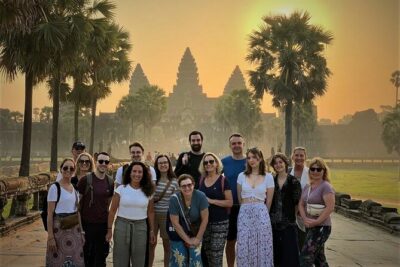
Your group can include up to 15 people. That is large enough to keep the price down, but small enough for a guide to explain details without addressing a crowd. The air-conditioned vehicle matters in Cambodia’s heat, especially after walking over exposed stone and temple steps.
Hotel pickup and drop-off are included. The listed start time is 8 a.m., but the Angkor Wat sunrise morning requires a pre-dawn departure from your hotel. Confirm the exact pickup time before the second day, since sunrise is the key timing point.
More ways to walk into Angkor Wat:
- Angkor Wat Sunrise or Sunset Tour with Guide from Siem Reap
★ 5.0 · 12,109 reviews - Siem Reap: Angkor Wat: Small-Group Sunrise or Sunset Tour
★ 5.0 · 9,444 reviews - Siem Reap: Angkor Wat 2-Day Tour with Sunrise and Sunset
★ 4.9 · 4,429 reviews
Day one: Pre Rup and the quieter outer temples
Pre Rup is a strong opening stop. This Hindu temple was built as a state temple and uses brick, laterite, and sandstone in a stepped mountain form. The materials give it a different look from Angkor Wat’s broad sandstone galleries.
You have about an hour here. That is enough to see the main structure and get a feel for Angkor’s temple-mountain idea without spending your first morning on one enormous complex. Some sections are exposed and the stone can be uneven, so shoes with a secure grip are useful.
Banteay Srei gets two hours, and that longer visit is well judged. The temple is smaller than Angkor Wat, but its sandstone reliefs are exceptionally fine. Close detail is the point here: gods, figures, and decorative carvings reward patient looking more than a quick wide-angle photograph.
Banteay Srei is also away from the central temple group, so reaching it adds driving time. That is the trade-off. You lose some time on the road, but gain one of the most finely worked monuments in Cambodia. If you care about carving and small details, this is one of the day’s most valuable stops.
Neak Pean changes the mood again. The temple sits on an artificial island with a Buddhist shrine on a circular island. Water and open space make it feel unlike the heavy stone temples earlier in the day.
You get about an hour, which gives you time to see the arrangement and absorb the setting. Neak Pean is not the place for grand scale. Its appeal comes from the unusual design and the contrast with the mountain temples.
Preah Khan closes the temple portion of the day. This ruined complex combines crumbling stone with tree roots and a strong sense of age. It has the atmospheric quality many people hope to find at Angkor, but it is still a real ruin, not a polished monument.
The schedule also includes a sunset over ancient ruins. The exact sunset location is not specified, so ask your guide where the group will watch it and how much walking is involved. Either way, sunset is a good use of the first evening because it gives you a slower moment after a full day of stops.
Day two: Angkor Wat before dawn
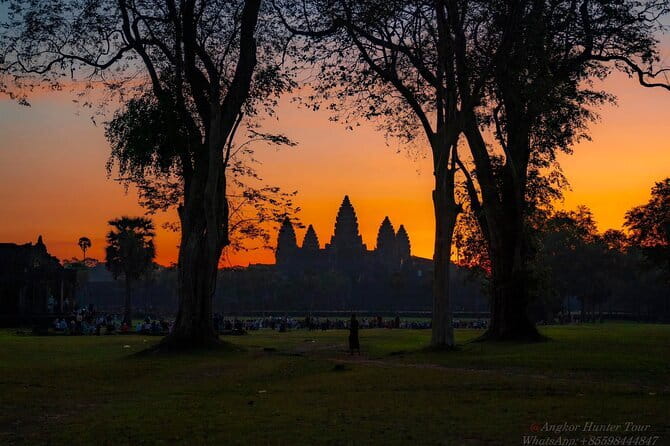
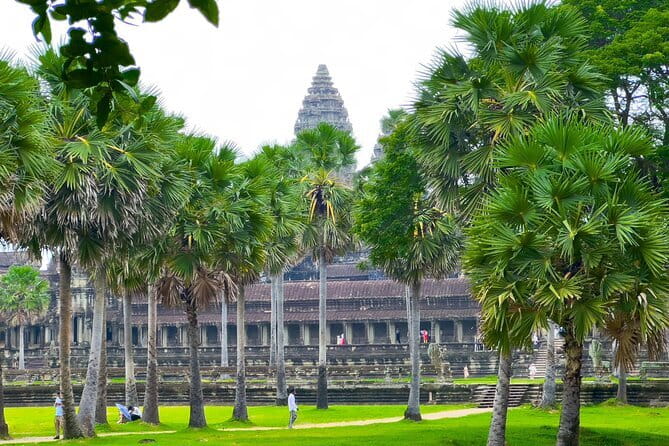
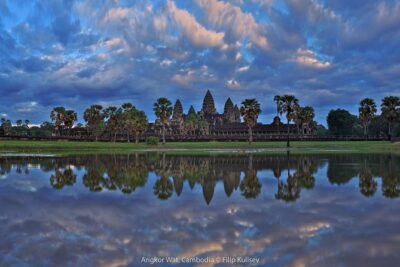
The sunrise morning is the tour’s headline event. You leave your hotel before dawn, reach Angkor Wat, and enter in darkness. With a torch, you walk through the eastern side, which sees fewer people than the most famous approach.
This early entry gives you two different experiences. First, you see the temple before daylight reveals its full scale. Then you watch the sky brighten outside one of Cambodia’s most recognizable monuments. The sunrise itself depends on cloud and weather, but the pre-dawn arrival still gives the visit a special rhythm.
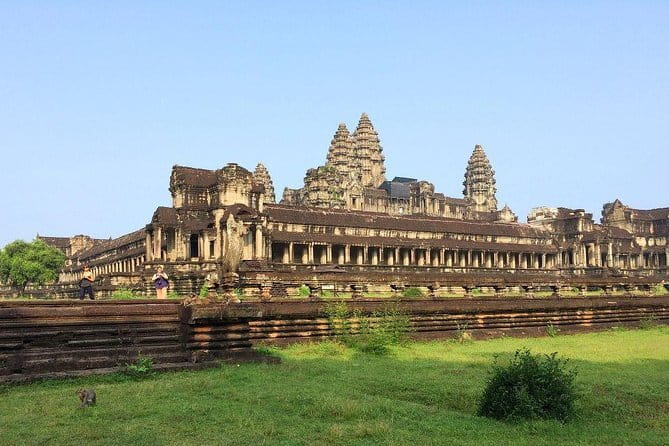
You have about three hours at Angkor Wat. That is enough time for more than a quick photograph, though it is not an exhaustive study of every gallery and carving. Wear practical shoes and carry only what you need. The early start also means your first meal of the day comes later, so a small breakfast may be sensible if you need food before the included stop.
After Angkor Wat, you stop near Srah Srang for breakfast at a Khmer local restaurant and a short rest. Meals are not included, so you choose and pay for your own food. This arrangement gives you flexibility, but budget for breakfast, lunch, and any drinks across the tour.
Srah Srang is known here as the place for the break rather than a major temple visit. That pause is useful. Angkor Wat requires early walking, and the next sites are more enjoyable when you are not rushing from one ruin to the next.
Ta Prohm, Angkor Thom, and Bayon
Ta Prohm is one of the most atmospheric stops in the Angkor area. It is enveloped by jungle, with tree roots and stone sharing the same space. The setting makes the temple memorable, but it also means you should expect uneven ground and narrow passages in places.
You have about an hour. That is enough to see the most important areas, though you may wish you had longer if you enjoy photographing roots, doorways, and carved stone. The short visit keeps the whole day moving, but it does not allow a slow exploration of every corner.
The eastern gate of Angkor Thom follows, with about 20 minutes scheduled. This is a brief stop, meant to introduce the fortified city and its entrance rather than provide a full tour of the entire enclosure.
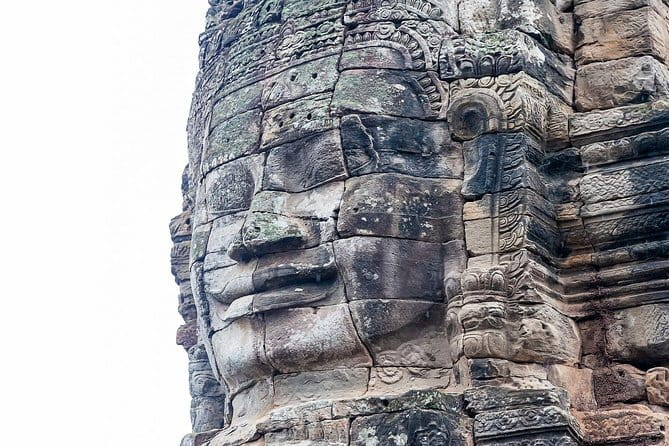
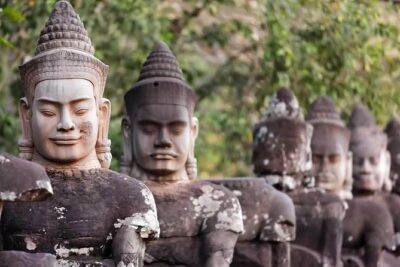
Bayon gets an hour, and it deserves your attention. Its central towers carry more than 200 enormous carved faces. The faces are the main visual idea, but the temple can be confusing without a guide, since towers, galleries, and passages overlap.
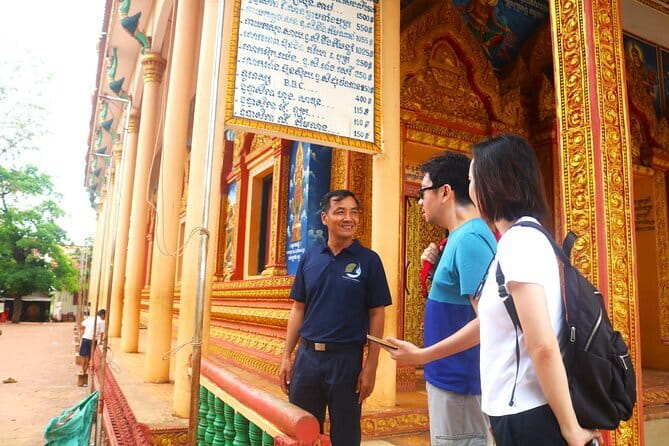
This is where an English-speaking guide adds real value. Sak is specifically praised for clear English and strong knowledge of the temples and Cambodian culture. If Sak leads your group, ask him to point out how the monument’s layout works rather than simply guiding you to the best photo angle.
The listed tour team also includes Mao as a driver. The strongest practical praise centers on Mao’s driving and Sak’s guiding, a useful combination on long temple days. Your assigned team may vary, so treat those names as a helpful reference rather than a guarantee.
More time out on the Tonle Sap:
- Sunset tour of Kampong Phluk stilts home village on the Tonle Sap
★ 5.0 · 4,865 reviews - Siem Reap: Kulen Mountain, Beng Mealea and Tonle Sap Tour
★ 5.0 · 1,483 reviews - Tonle Sap Lake & Kampong Phluk Village Half-Day Tour
★ 5.0 · 1,045 reviews - Kulen Mountain with Beng Mealea and Tonle Sap Small Group Tour
★ 5.0 · 780 reviews
Day three: Kampong Phluk and Tonle Sap
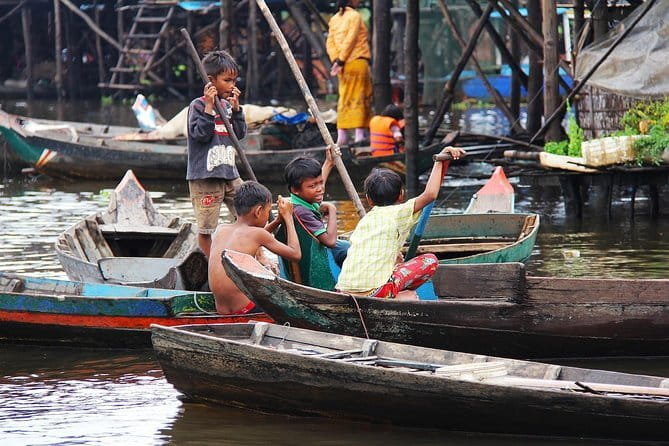
The final morning leaves the temple circuit for Tonle Sap Lake. You travel through the countryside to Kampong Phluk, a group of three small fishing villages in an area shaped by the lake’s seasonal water levels.
The boat trip takes about four hours in total. That makes this more than a quick add-on photograph. You get time to see how life around Tonle Sap differs from the stone monuments, and the change of pace is welcome after two days of ruins.
Kampong Phluk is described as a floating-village setting, but the precise appearance of the village can vary with water levels. Expect a boat-based look at fishing communities and lake life rather than another formal sightseeing site.
The Tonle Sap entrance fee and boat cruise are included. That is important when comparing this tour with cheaper temple-only options. You do not need to add another major activity charge for the lake portion.
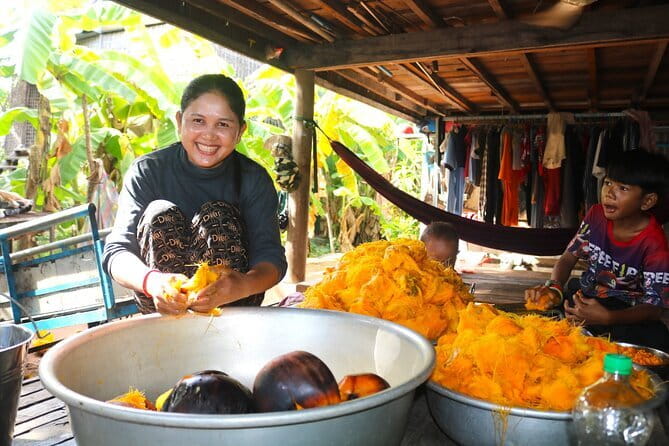
The countryside transfer also helps connect the ancient monuments to present-day Cambodia. You are not only moving between famous ruins. You are seeing two sides of Siem Reap: the royal and religious centers of Angkor, then communities whose daily life is tied to water.
What the $79 price really means
At first glance, $79 per person is a low price for three days of transport, guiding, temple visits, sunrise, sunset, and a Tonle Sap cruise. But the required temple pass adds $62 per person, bringing the known activity total to $141 before meals.
The pass is paid directly to the temple site, and meals are not included. That makes the final budget higher than the headline price. Still, the value is solid if you want a guide, an air-conditioned vehicle, hotel transfers, and a boat trip without arranging each piece yourself.
Several useful extras are included: bottled water, a cool towel, the Tonle Sap entrance fee, and the cruise. A Cambodia Phare circus ticket in Seat C is also included during the dry season. That seasonal benefit is worth checking before you book, since it is not presented as a year-round feature.
The group discount option may help if you are booking with friends or family. The maximum group size is 15, so the experience is not private, but it is more contained than a large coach excursion.
Pace, comfort, and practical limits
The schedule is full. Day one includes four temples, a long drive to Banteay Srei, and sunset. Day two begins before dawn and includes Angkor Wat, breakfast, Ta Prohm, Angkor Thom, and Bayon. You should be comfortable with early starts, walking, heat, and uneven temple surfaces.
The air-conditioned vehicle is a major comfort feature between stops. It gives you a cool place to recover, though it cannot remove the physical demands of climbing, walking, and standing at the monuments.
Water and a cool towel are small inclusions, but they matter in this climate. Bring your own additional drinks if you need more than the supplied bottle, and plan for meals since none are covered.
Most people can participate according to the tour information, but no detailed accessibility description is provided. If stairs, uneven ground, or long walks are a concern, ask the operator for current details before booking.
Free cancellation is available up to 24 hours before the start time. Changes or cancellations inside that window are not accepted for a refund. Since the second day begins before dawn, confirm the local pickup time and cancellation cut-off when arranging your plans.
Who should book it
I would choose this tour if you have limited time in Siem Reap and want the major Angkor sights plus one meaningful outing beyond the ruins. It suits first-time visitors who value explanations, included transport, and a planned route.
It is also a good match if you want variety. Banteay Srei gives you detailed carving, Preah Khan and Ta Prohm bring trees and ruins, Bayon supplies the famous faces, Angkor Wat delivers scale, and Tonle Sap offers a look at local life.
I would hesitate if you want long, unhurried temple sessions. The one-hour visits can feel short, especially at Ta Prohm, Bayon, Pre Rup, and Preah Khan. A private tour with a custom schedule would give you more control, though likely at a higher price.
The early sunrise departure is another clear dividing line. If you dislike pre-dawn starts, the most famous morning may feel like work. If you can manage it, the quiet approach and changing light make it one of the tour’s strongest features.
Should you book this Siem Reap tour?
Book it if you want a well-packed introduction to Angkor with a guide, hotel transport, sunrise, sunset, and Tonle Sap in one plan. The strongest value comes from the combination of major temples and smaller sites, not from any single stop.
Just budget for the $62 temple pass and your meals, and accept that the schedule favors coverage over lingering. With the right expectations, this is a practical way to see Siem Reap’s famous ruins and its living lake communities in a short stay.
FAQ
How long does the tour last?
The experience lasts approximately three days, with two full temple days and a final morning at Kampong Phluk on Tonle Sap.
What is included in the $79 price?
The price includes air-conditioned transport, an experienced English-speaking guide, hotel pickup and drop-off, sunset and sunrise visits, bottled water, a cool towel, the Tonle Sap entrance fee, and the boat cruise. A Cambodia Phare circus Seat C ticket is included during the dry season.
Is the Angkor temple pass included?
No. The temple pass is paid directly to the site and costs $62 per person.
Are meals included?
No. Meals are available at your own choice and expense. Breakfast is arranged at a Khmer local restaurant after the Angkor Wat sunrise visit.
How large is the group?
The tour has a maximum of 15 travelers.
What time does the tour start?
The listed start time is 8 a.m. However, the Angkor Wat sunrise visit requires a pre-dawn departure from your hotel. Confirm the exact pickup time with the operator.
Is the Tonle Sap boat ride included?
Yes. The Tonle Sap entrance fee and boat cruise to Kampong Phluk are included.
Which temples are visited?
The route includes Pre Rup, Banteay Srei, Neak Pean, Preah Khan, Angkor Wat, Ta Prohm, the eastern gate of Angkor Thom, and Bayon Temple.
Can I cancel for a full refund?
Yes, if you cancel at least 24 hours before the experience start time. Cancellations or changes made less than 24 hours before the start time are not accepted for a refund.
More Temple Tours in Siem Reap
- Angkor Wat Sunrise & 3 Main Temples with Breakfast – Small Group
★ 5.0 · 2,857 reviews - Siem Reap: Full Day Angkor Wat Temple Experience with Sunset
★ 4.9 · 1,490 reviews - 2 Days Exclusive Temple Highlights with Sunset and Sunrise Tour
★ 5.0 · 1,157 reviews - Full-Day Banteay Srei & 4 Temples – Grand Tours Join-in Tour
★ 5.0 · 1,155 reviews
Just added around Siem Reap
- Twilight Tastes of Siem Reap Include Dinner★ 5.0 · 13 reviews
- Ultimate Sunrise to Angkor Wat, Angkor Thom and Bayon Temple★ 5.0 · 3 reviews
- Trekking Tour at Phnom Kulen National Park from Siem Reap★ 5.0 · 3 reviews
- Professional Photo Shoot in Angkor Archaeological Park, Siem Reap★ 5.0 · 42 reviews
- Full-Day Private Tour of Angkor Wat with Pick Up★ 5.0 · 12 reviews
- Unveiling 2 Days Private Angkor Wat/Beyond In Sunrise/Sunset Tour★ 5.0 · 48 reviews
- Siem Reap City Tour with War Museum and Killing Field★ 5.0 · 27 reviews
- Private Day Trip to Angkor Temples with Expert Guide★ 5.0 · 4 reviews
Angkor Wat Tours, compared.
Angkor Wat Sunrise or Sunset Tour with Guide from Siem Reap
Read our review →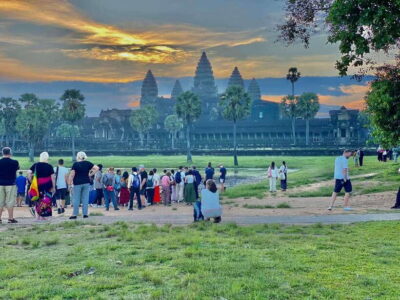
Angkor Wat: Small-Group Sunrise or Sunset Tour
Read our review →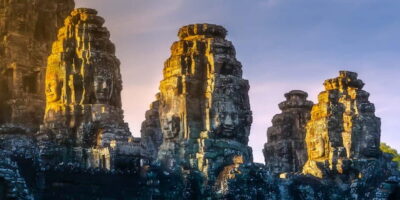
Angkor Wat Highlights and Sunrise Guided Tour from Siem Reap
Read our review →
Angkor Wat Sunrise & 3 Main Temples with Breakfast – Small Group
Read our review →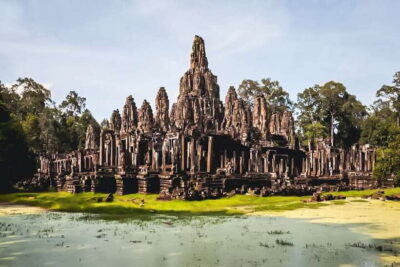
Angkor Wat Sunrise and Full-Day Sightseeing Tour
Read our review →
Angkor Wat Small-Group Exploration with Expert Guide
Read our review →Browse the lists this tour appears in