
Reviewed · ANGKOR WAT TOURS
Private Angkor Wat Tour from Siem Reap
Angkor Wat is only the opening act here. This private eight-hour tour links Cambodia’s grandest temple with Bayon’s giant stone faces, jungle-wrapped Ta Prohm, and a sunset stop at Phnom Bakheng. Your English-speaking guide and air-conditioned car or minivan keep the day comfortable as you move between widely spaced ruins.
I like the private format, since your group can set its own pace and the guide can explain the carvings without juggling a large crowd. I also like the practical touches: hotel pickup and drop-off, cold water, wet towels, and a route that can be timed to give you quiet moments at the temples.
The main catch is cost planning. The temple pass and lunch are not included, so the $59 price is not the final amount. The day also depends on good weather, and Phnom Bakheng at sunset can be a busy and time-sensitive finish.
Key points at a glance
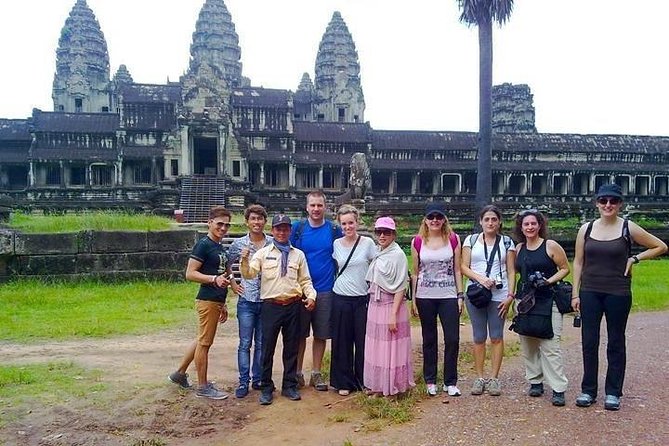
- Angkor Wat gets three hours: You have enough time to see the main temple complex without treating it as a quick photo stop.
- A private guide shapes the day: Only your group takes part, with an English-speaking guide included.
- Bayon brings the famous faces: Allow about 90 minutes for the temple’s carved towers and courtyards.
- Ta Prohm supplies the jungle drama: Giant roots push through the old stone walls at this memorable one-hour stop.
- Phnom Bakheng closes the route: The final 90 minutes are set aside for the mountain temple and sunset views.
- The $59 fare has extras: Transport, guide, water, wet towels, and hotel transfers are included, but you buy the temple pass and meal separately.
A private route through Angkor’s greatest hits
This is a classic Angkor day, but the private setup makes it more flexible than a large coach outing. You are collected from your Siem Reap hotel in an air-conditioned car or minivan, then spend the day moving between the major sites with the same guide.
The route covers the best-known temples in the Angkor area rather than trying to reach every ruin. That is a sensible choice for a first visit. Angkor Wat alone can absorb several hours, and Bayon, Ta Prohm, and Phnom Bakheng each have a very different mood.
The guide is not simply there to point out doors and towers. The tour includes an explanation of Angkor Wat’s Hindu-Buddhist design and its place in the Khmer Empire. A strong guide can make the carved stone easier to read, especially when you are looking at religious figures, royal imagery, and the repeated faces at Bayon.
The small practical details matter in Cambodia’s heat. Hotel pickup means you do not need to arrange a separate ride to a meeting point. Water and a wet towel are included, which is welcome after walking through open courtyards and sunlit stone.
More Private Tours in Siem Reap
- Full-Day Angkor Wat Sunrise Private Tour with Guide from Siem Reap
★ 5.0 · 2,920 reviews - Siem Reap: Angkor Wat Private Tuk-Tuk Tour
★ 4.9 · 2,222 reviews - Angkor Wat Private Day Tour from Siem Reap
★ 5.0 · 834 reviews
Three hours inside Angkor Wat
Angkor Wat is the anchor of the day. The complex covers 162.6 hectares and is described as the world’s largest religious monument. It began as a Hindu temple dedicated to Vishnu and also reflects the later Buddhist use of the site.
You have about three hours here, which gives you room to see more than the famous front view. The scale can be hard to grasp at first. Long galleries, towers, courtyards, and broad approaches make Angkor Wat feel more like a ceremonial city than a single temple.
I like that the tour gives this stop the largest time allowance. A shorter visit can leave you with only the standard photograph and little sense of the building’s size. With three hours, you can listen to the guide’s explanation, examine the carved details, and take breaks between sections.
The drawback is that Angkor Wat involves plenty of walking. You should expect stone surfaces, open areas, and repeated movement between courtyards. The comfortable vehicle helps between temples, but it cannot remove the physical demands of the site itself.
Your guide also has a useful role in managing the pace. A well-timed visit can create quieter stretches inside the complex, and the tour is designed around timing and route rather than simply arriving, taking pictures, and leaving. If rain appears, the guide provides practical help, including keeping you dry as you move through the site.
Angkor Thom and Bayon’s stone faces
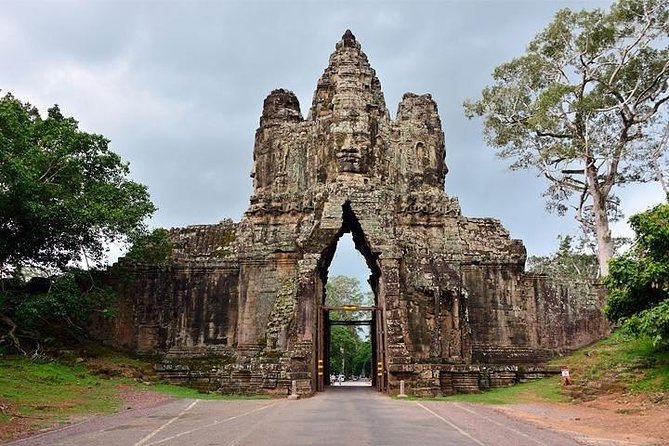
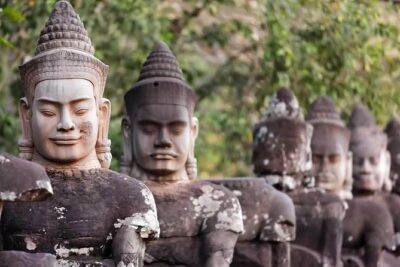
The route continues north toward Angkor Thom, the former capital of the Khmer Empire. The southern gate gives you a dramatic entrance to the walled city and a first sense of its former scale.
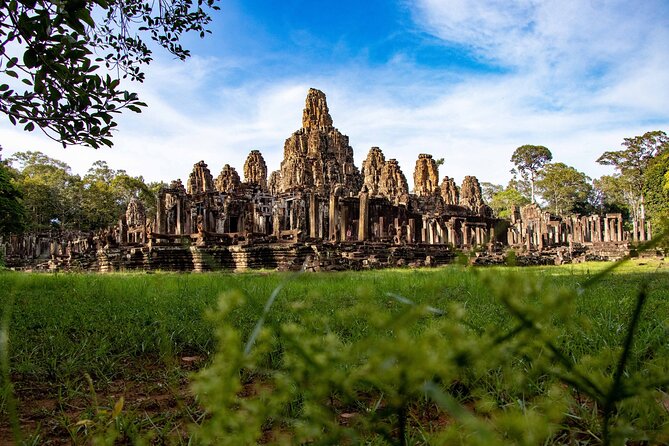
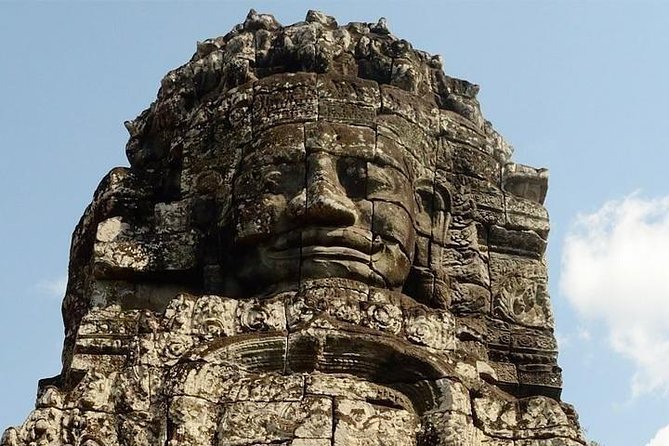
Bayon is the main stop inside Angkor Thom, with about 90 minutes set aside for exploration. The temple is famous for its central towers, which carry more than 200 enormous carved faces. The faces are the reason many people remember Bayon more clearly than any other temple after Angkor Wat.
Bayon is a very different visual experience. Angkor Wat feels ordered and expansive, while Bayon is more enclosed and intricate. Towers rise close together, and the carved faces appear from different angles as you move through the temple.
This is where a private guide adds real value. Without context, the faces can blur into a wall of stone. With an explanation of the temple’s role as a state temple and its place in the capital, the carvings become easier to understand.
You should not expect Bayon to be a quick walk around one central tower. The one-and-a-half-hour stop gives you time to look up, move through the courtyards, and pause for the details that are easy to miss when you rush.
The Terrace of the Elephants and the old royal city
The Terrace of the Elephants receives about an hour. It was used by King Jayavarman VII as a platform from which to view victorious armies, making it a place connected to ceremony and royal display rather than just temple worship.
The terrace forms part of Angkor Thom, so this stop helps fill out the picture of the old capital. You are not seeing isolated ruins scattered at random. You are moving through the remains of a planned royal center with gates, walls, temples, and formal spaces.
An hour is enough to take in the terrace and its carved decoration without letting the stop swallow the rest of the afternoon. It also gives you a change of pace after Bayon’s crowded towers and close stone corridors.
Because the tour has several major stops, you will need to rely on the guide’s timing. That is one of the benefits of a private itinerary, but it also means you should tell the guide if you want extra time at one site. The supplied details promise a private group, but they do not promise unlimited time at each temple.
More ways to walk into Angkor Wat:
- Angkor Wat Sunrise or Sunset Tour with Guide from Siem Reap
★ 5.0 · 12,109 reviews - Siem Reap: Angkor Wat: Small-Group Sunrise or Sunset Tour
★ 5.0 · 9,444 reviews - Siem Reap: Angkor Wat 2-Day Tour with Sunrise and Sunset
★ 4.9 · 4,429 reviews - Siem Reap: Full-Day Angkor Wat Guided Tour with Sunset
★ 4.9 · 3,803 reviews
Ta Prohm, where trees claim the walls
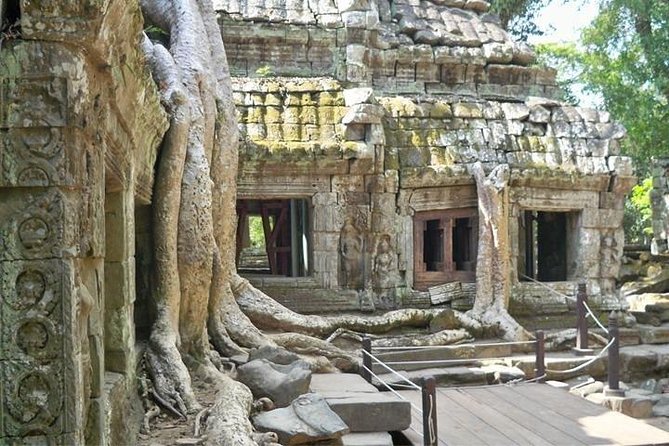
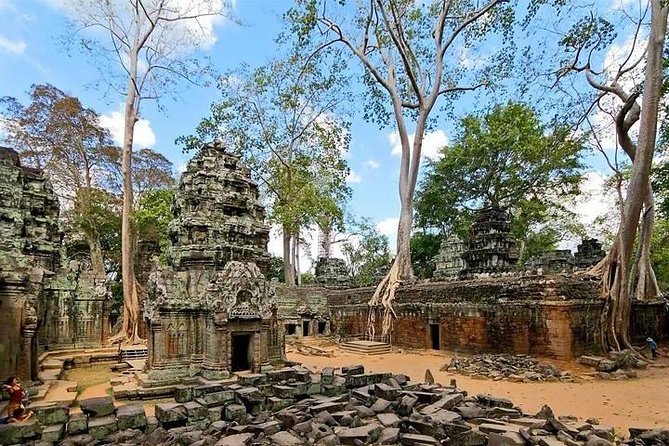
Ta Prohm is the most atmospheric stop on the route. The temple is known for huge trees and heavy roots growing through the old stone walls. It also appeared in the adventure film Tomb Raider, which has helped make the site famous well beyond Cambodia.
You have about an hour here. That is enough to see the temple’s most memorable sections and understand why Ta Prohm feels so different from Angkor Wat and Bayon.
The appeal comes from the tension between nature and architecture. Stone galleries were built with careful design, yet tree roots now press over walls and through openings. The result is visually dramatic, but it also means you should pay attention to where you walk and how the route is managed.
Ta Prohm is likely to be one of the most photographed stops, so timing matters. The tour’s private format gives your guide more control over the route, and the supplied tour details emphasize that timing can sometimes produce quieter moments. Still, you should expect this to be a popular temple.
One hour is a fair compromise. You get the jungle-temple effect without spending the whole day in one place. If Ta Prohm is your main reason for visiting Angkor, you may want to ask at the start of the day how much flexibility is possible here.
Phnom Bakheng and the sunset finish
The final stop is Phnom Bakheng, with about 90 minutes allocated for the mountain temple and sunset. The tour is designed to end with views as the light fades, giving the day a clear final moment rather than simply returning to Siem Reap after the last ruin.
Phnom Bakheng is a different kind of stop from Ta Prohm. Instead of focusing on tree-covered walls or carved faces, you are heading toward a higher position to absorb the sunset. That change helps prevent the itinerary from feeling like one long sequence of similar temples.
Sunset plans always depend on weather. This experience requires good weather, and if conditions force cancellation, you are offered another date or a full refund. Even on a suitable day, the light itself cannot be guaranteed, so treat the sunset as a worthwhile possibility rather than the only reason to book.
The 90-minute allowance is helpful because the finish is not just a quick roadside pause. You have time to reach the viewpoint, settle in, and wait for the light. At the same time, the timing can make this the least flexible part of the day. If an earlier temple visit runs long, the sunset stop may be affected.
What the $59 price really covers
At $59 per person, this tour offers a useful bundle for a private outing. Your fare includes an English-speaking guide, air-conditioned transport, hotel pickup and drop-off, water, and wet towels. For a full day across a large temple area, that removes several arrangements you would otherwise need to make yourself.
The private format is the biggest value point. You are not paying only for a ride to Angkor Wat. You are paying for a guide, transport between five major stops, and a schedule built for one group rather than a large mixed party.
But budget for the extras. The temple pass is paid directly at the ticket office and is not included. Lunch is also at your own expense. This is not a flaw, but it should be clear when comparing the price with other packages.
A meal break fits naturally into an eight-hour day, but the supplied details do not specify a restaurant or menu. If you have dietary needs, raise them with the guide before lunch. One account specifically found a vegetarian lunch good, but the meal itself remains outside the tour price.
The $59 fare makes the most sense for couples, families, or a small group that values a dedicated guide and private vehicle. If you are traveling alone, the per-person cost may feel higher than a shared excursion, although the comfort and personal attention can still justify it.
Comfort, weather, and the pace of the day
Eight hours is a long sightseeing day, but the sequence has variety. You begin with the broad scale of Angkor Wat, move through Angkor Thom and Bayon, pause at the Terrace of the Elephants, visit Ta Prohm, and finish with Phnom Bakheng.
The air-conditioned vehicle matters because you are repeatedly leaving the heat and returning to it. The temples are spread across a large area, so transport is not a minor convenience. It makes the route possible without arranging separate rides between each stop.
Water and wet towels are small inclusions with practical value. The day involves walking outdoors, and rain is possible. A previous tour account praised the way the guide helped keep the group dry during wet weather, which is the kind of service that can make a difficult day much easier.
You should still dress for a temple day and prepare for changing conditions. The tour information confirms water, wet towels, air conditioning, and weather-related cancellation, but it does not list a specific dress code or equipment list. Keep your planning simple and pay attention to the guide’s instructions at each site.
Most people can take part, and the tour is near public transportation. Since this is a private activity, only your group participates, which is useful if you want to avoid the stop-and-go rhythm of a large group.
Who should book this Angkor tour?
I would choose this tour if you are visiting Angkor for the first time and want the major sights in one organized day. It gives Angkor Wat the attention it deserves while still reaching Bayon, the Terrace of the Elephants, Ta Prohm, and Phnom Bakheng.
It also suits you if you value a personal guide. The faces at Bayon, the royal purpose of the terrace, and the religious changes at Angkor Wat are easier to appreciate with explanations rather than a quick walk and a phone camera.
Families and small groups should find the private format useful. You can travel together in an air-conditioned vehicle, return to your hotel at the end, and avoid sharing the day with strangers. The guide can also help with pacing, though the total route remains a full eight hours.
I would hesitate if you want a slow, specialist visit to only one or two temples. Five major stops create a satisfying first look, but they also require movement and time discipline. You should also compare the full cost after adding the temple pass and lunch.
Should you book it?
Book this tour if you want a practical first day at Angkor with private transport, a dedicated English-speaking guide, and the major temples in one route. The strongest features are the personal format, the three hours at Angkor Wat, the memorable Bayon and Ta Prohm stops, and the careful finish at Phnom Bakheng.
Skip it if your priority is an unusually slow temple study or a package with every expense included. You will need to pay for the temple pass and lunch, and the sunset depends on good weather.
For most visitors with one full day in Siem Reap, the $59 price is fair once you value the vehicle, guide, hotel transfers, and time saved arranging the route yourself.
FAQ
How long does the private Angkor Wat tour last?
The tour lasts approximately eight hours.
How much does the tour cost?
The listed price is $59 per person.
Is hotel pickup included?
Yes. Hotel pickup and drop-off are included.
What type of transport is provided?
Transport is provided in an air-conditioned car or minivan.
Is the tour private?
Yes. This is a private activity, so only your group participates.
Is an English-speaking guide included?
Yes. A private English-speaking tour guide is included.
Is the temple pass included?
No. You pay for the temple pass separately at the ticket office.
Is lunch included?
No. Lunch is at your own expense.
Which places are visited?
The route includes Angkor Wat, Bayon Temple, the Terrace of the Elephants, Ta Prohm, and Phnom Bakheng.
What happens if bad weather cancels the tour?
If poor weather causes cancellation, you are offered a different date or a full refund. The tour also requires a minimum number of participants, and a different date, another experience, or a full refund is offered if that minimum is not met.
Just added around Siem Reap
- Twilight Tastes of Siem Reap Include Dinner★ 5.0 · 13 reviews
- Ultimate Sunrise to Angkor Wat, Angkor Thom and Bayon Temple★ 5.0 · 3 reviews
- Trekking Tour at Phnom Kulen National Park from Siem Reap★ 5.0 · 3 reviews
- Professional Photo Shoot in Angkor Archaeological Park, Siem Reap★ 5.0 · 42 reviews
- Full-Day Private Tour of Angkor Wat with Pick Up★ 5.0 · 12 reviews
- Unveiling 2 Days Private Angkor Wat/Beyond In Sunrise/Sunset Tour★ 5.0 · 48 reviews
- Siem Reap City Tour with War Museum and Killing Field★ 5.0 · 27 reviews
- Private Day Trip to Angkor Temples with Expert Guide★ 5.0 · 4 reviews
Angkor Wat Tours, compared.
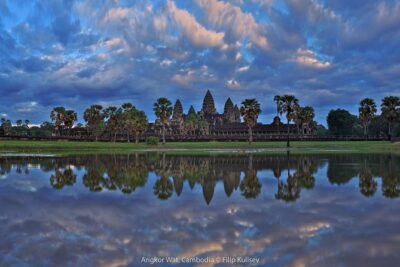
Angkor Wat Sunrise or Sunset Tour with Guide from Siem Reap
Read our review →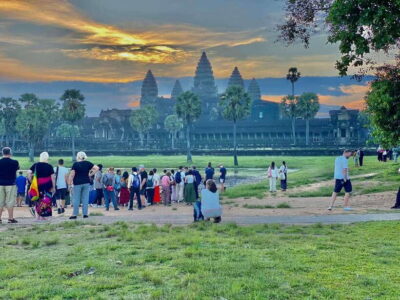
Angkor Wat: Small-Group Sunrise or Sunset Tour
Read our review →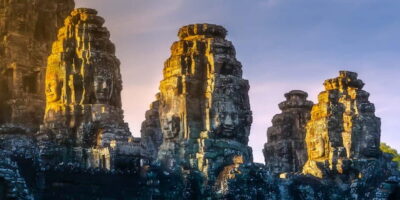
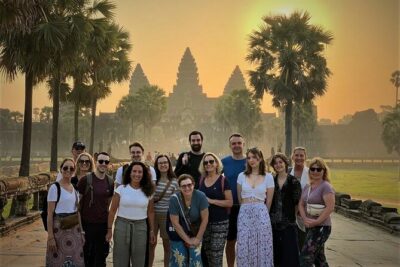
Angkor Wat Highlights and Sunrise Guided Tour from Siem Reap
Read our review →
Angkor Wat Sunrise & 3 Main Temples with Breakfast – Small Group
Read our review →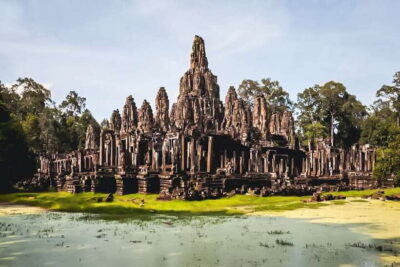
Angkor Wat Sunrise and Full-Day Sightseeing Tour
Read our review →
Angkor Wat Small-Group Exploration with Expert Guide
Read our review →Browse the lists this tour appears in