
Reviewed · WATER BLESSING CEREMONIES
Siem Reap: 1-Hour Cambodian Buddhist Water Blessing
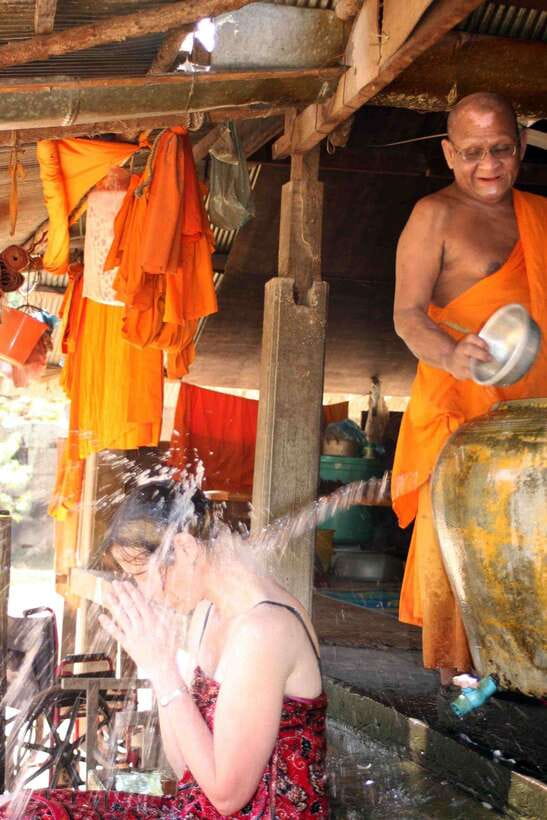
The most memorable part of this Siem Reap experience is not a carved doorway or jungle ruin. It is sitting before a monk at Wat Arang Pagoda, listening to chants, and receiving a blessing with water and red wrist ties. The pagoda lies in the countryside south of Siem Reap, about 15 minutes away by tuk-tuk.
I like two things here: the ceremony is explained before it begins, and the visit includes a local market rather than stopping at the pagoda alone. Guides such as Sokha and Lee have explained Buddhist practice, temple etiquette, and monastic life clearly, while also taking photos during the ritual.
The main thing to consider is that the longer blessing gets you thoroughly wet, and the experience may feel brief once the ceremony is finished. You receive a sarong, but bring extra underwear and, if you have long hair, a small towel of your own.
Key points to know before you go
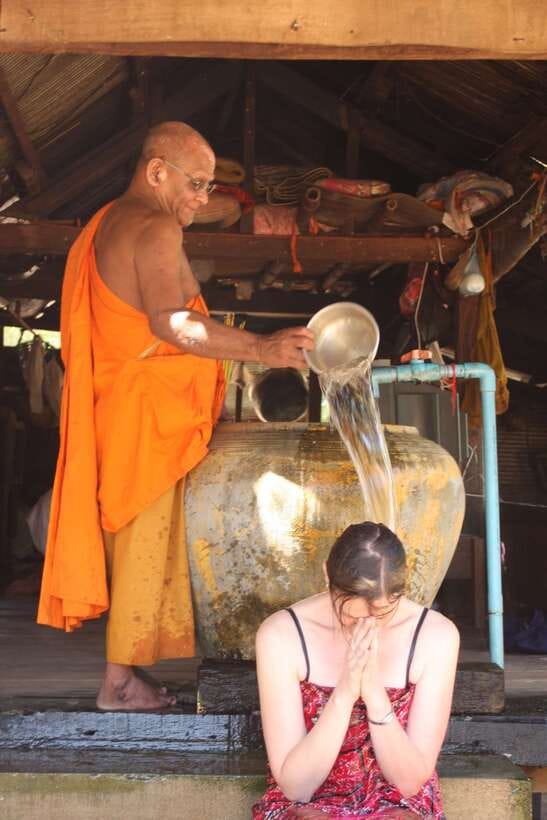
- Two forms of blessing: Choose a short chant with a light sprinkling of water, or a longer ceremony where blessed water is poured over your head.
- Wat Arang Pagoda: The ceremony takes place at a working countryside pagoda south of Siem Reap, not at an Angkor monument.
- A guide makes the difference: Your English-speaking guide explains what to do, answers questions, and can take photos during the blessing.
- A local market is included: You pass through a market used by local residents for food, household goods, and other purchases.
- Bring a change of clothes: A sarong is provided for the longer blessing, but you will still want dry underwear and perhaps another towel.
- Good value for a personal experience: At $37 per person, the price covers transport, guiding, the sarong, a pagoda donation, and the market visit.
Why this ceremony feels different from temple sightseeing
Siem Reap is rightly famous for Angkor Wat, Bayon, and the other great temple ruins. Yet after several days of stone galleries and carved faces, a functioning pagoda gives you a different view of Cambodia. Here, the focus is not on architecture alone. You see a religious space still used for ceremony, teaching, and community life.
Cambodian water blessings reach back to old local traditions and remain part of everyday spiritual culture. The ritual combines chanting, blessed water, and a wish for good luck, safe travel, and long life. Your guide puts the ceremony into context, so you are not simply sitting down and waiting to be soaked.
The experience is open to people of different faiths. The purpose is to take part respectfully in a Cambodian custom, not to pressure you into changing your beliefs. One guide with past experience as a monk has been especially well placed to explain Buddhism and answer questions about life in a monastery.
That makes this a good choice if you want cultural contact without a long lecture. The ceremony is hands-on, easy to understand, and personal. At the same time, you should treat it as a religious ritual rather than a staged performance. Dress and behave with the same care you would show at any active place of worship.
More water-blessing ceremonies near Siem Reap:
- Monk Blessing Ceremony in Siem Reap
★ 5.0 · 24 reviews - Private Guided Angkor Wat Tour by Lady Tuk Tuk with Monk Blessing
★ 5.0 · 19 reviews - Siem Reap: Khmer Water Blessing by Monk and Lotus Farm Visit
★ 5.0 · 15 reviews
The tuk-tuk ride south from Siem Reap
Pickup is included from your hotel at the time shown on your booking. The ride to the pagoda takes about 15 minutes according to the experience details, though the total outing lasts about two hours. You travel by tuk-tuk, which keeps the trip informal and gives you a closer view of the streets outside the central tourist area.
The countryside pagoda is part of the appeal. You are not being taken from one major sightseeing stop to another. Instead, you leave the main temple circuit and visit a place connected with local religious life.
Your English-speaking guide should meet you as part of the pickup arrangement. Past guides named Sokha and Lee have been praised for giving clear instructions and helping with photos, but the guide assigned to you may be different. Ask questions early, especially if you want a full explanation of the two blessing choices before the ceremony starts.
The ride itself is not the main event, and you should not expect a long village tour. It is simply a practical transfer to the pagoda, followed by the ritual and market visit.
Entering Wat Arang Pagoda
At the pagoda, your guide walks you around the grounds and explains the setting before the blessing begins. This introduction matters because a working monastery can feel confusing if you do not know where to sit, how to make the offering, or how to address the monk.
A donation to the pagoda is included in the $37 price. Food or other offerings may be supplied as part of the arrangement. The donation is one reason this outing feels more useful than a simple photo stop: your payment includes a contribution to the place hosting the ceremony.
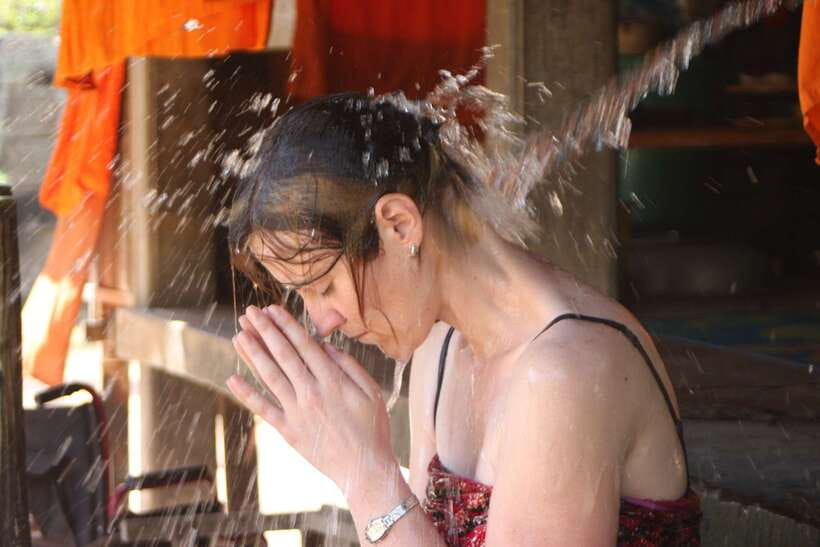
The guide also explains what will happen during the ritual. This is important because the longer blessing can be more physical than first-time visitors expect. The short version involves chanting and a light sprinkling. The longer version involves blessed water poured over your head, with you seated on steps in a sarong.
Take the chance to ask about Buddhism, Cambodian customs, and the work of the monks. Guides have explained not only the ceremony but also how monasteries assist older people, sick people, and others who rely on them for help. The amount of detail depends on your guide, so be curious and make room for conversation.
Choosing between the two water blessings
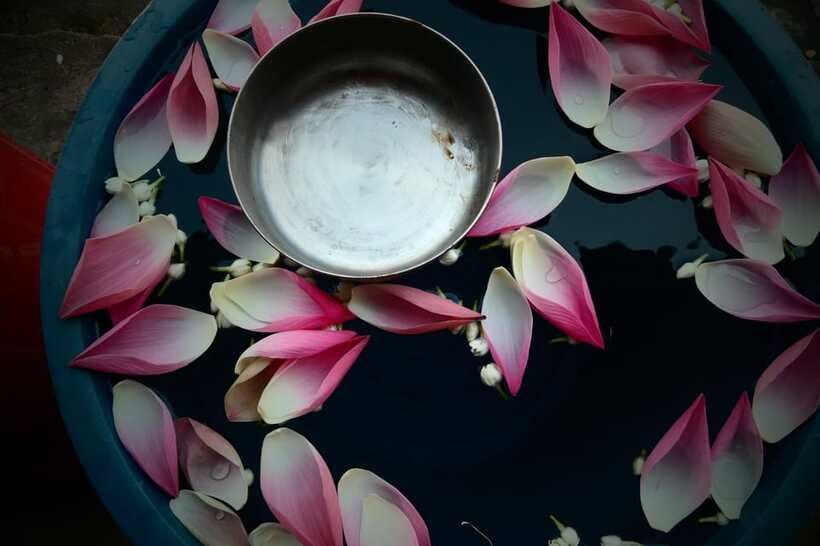
The first option is a shorter blessing. Monks chant together while wishing you good luck, safe travel, and a long life. A light sprinkling of water accompanies the chant, so this option suits you if you want the ritual without changing clothes or getting soaked.
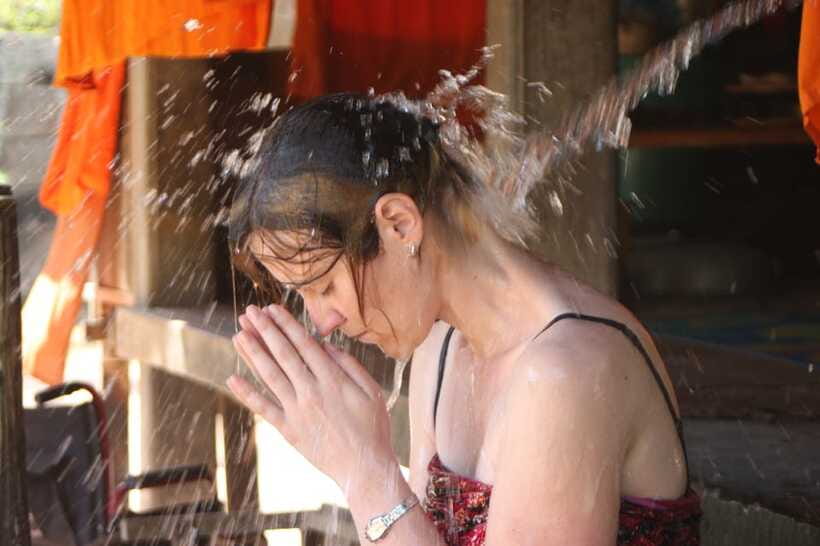
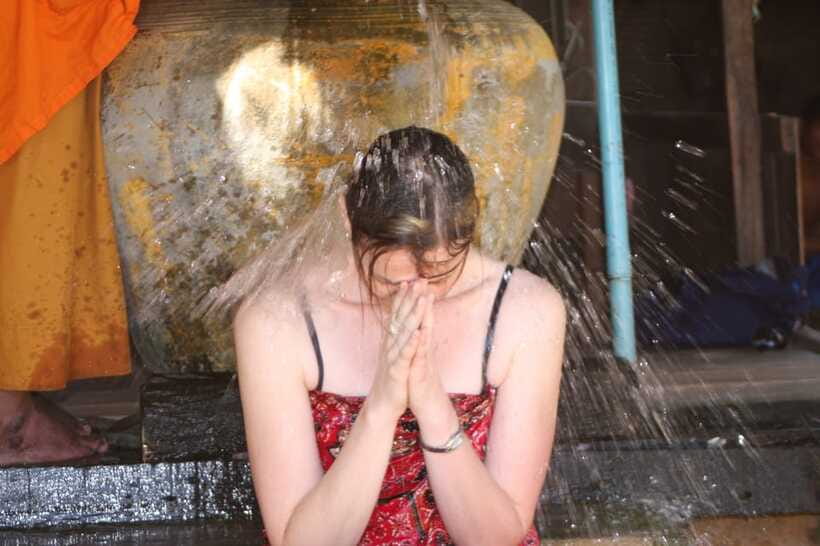
The second option is longer and more dramatic. You change into a sarong, sit on steps, and receive vessels of blessed water poured over your head while the monks chant. Your regular clothes stay dry, but everything else exposed to the water may not. One account describes the ceremony as a complete dousing, so take that description seriously.
The supplied information says you can choose between the two forms. Still, one person found that the preferred option was not clearly offered, so tell your guide what you want before the ritual begins. If you want the full water blessing, confirm the plan and ask where you should change.
You might find the sound of falling water makes the chanting harder to hear during the longer version. That is a small but real trade-off. The short blessing lets you hear more of the chant, while the full version gives you the memorable physical experience of being covered with blessed water.
A few more Siem Reap half-days worth weighing up
- Angkor Wat Sunrise or Sunset Tour with Guide from Siem Reap
★ 5.0 · 12,109 reviews - Siem Reap: Angkor Wat: Small-Group Sunrise or Sunset Tour
★ 5.0 · 9,444 reviews - From Siem Reap: Kampong Phluk Floating Village Tour by Boat
★ 4.9 · 6,979 reviews - Sunset tour of Kampong Phluk stilts home village on the Tonle Sap
★ 5.0 · 4,865 reviews
The red wrist ties and the meaning of the ritual
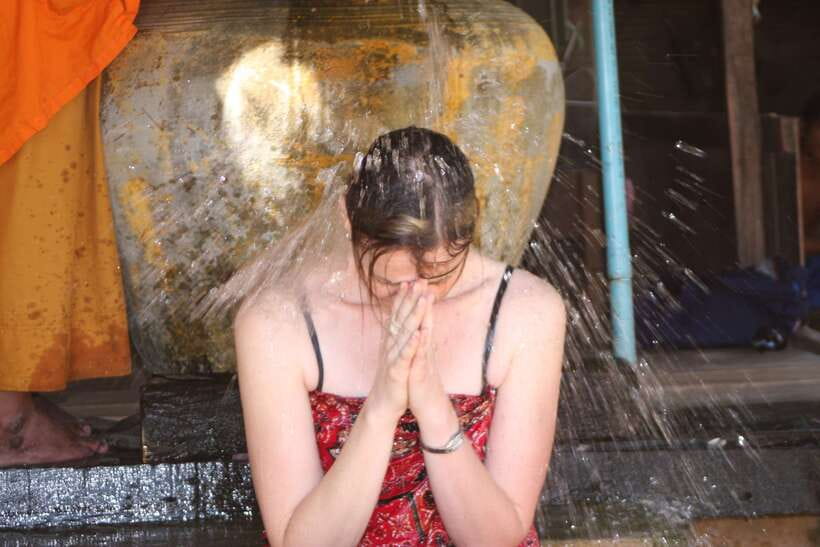
After the blessing, the monk ties special red strings around your wrist. These ties signify that the blessing has been performed and give you a small, lasting reminder of the visit.
The wrist ties are also a practical detail that helps the ceremony feel complete. The experience does not end with water and a quick photograph. You have the chant, the blessing, the strings, and a chance to speak with the monk through your guide.
In some cases, your guide can translate what the monk says after the ceremony. One guide translated the monk’s spiritual observations for a participant, which added a personal element to the visit. Do not assume this exact exchange is guaranteed, but ask if translation is possible.
Photography is another strong point. Guides have taken photos and videos during the ceremony, when you cannot easily use your own phone. Hand over your phone before the ritual if you want pictures, and give clear instructions about what you would like captured.
The market visit adds local context
The market visit is a useful extra rather than a separate major attraction. You pass through a local market where people buy meat, fish, vegetables, gold, and everyday supplies. It gives you a quick look at ordinary commerce beyond the restaurants and souvenir shops of central Siem Reap.
The market may be busy and sensory, especially around food stalls. It is not presented as a formal cooking tour or shopping excursion, so keep your expectations modest. Its value is in seeing where local people shop and in letting your guide explain what you are looking at.
I like this part because it balances the quiet pagoda visit. The ceremony introduces religious practice, while the market shows daily routines. Together, they make a fuller two-hour outing than the blessing alone.
If you prefer a tightly scheduled sightseeing tour, the market stop may feel secondary. If you enjoy short, ordinary glimpses of local life, it is a worthwhile bonus. You do not need to buy anything, and personal expenses are not included.
What to wear and pack for the water blessing
For the short blessing, normal respectful clothing may be enough, but you should dress suitably for a pagoda. The details provided do not set out a formal dress code, so follow your guide’s instructions on arrival and avoid treating the ceremony as a casual pool visit.
For the longer blessing, the tour supplies a sarong. You change into it so your main clothing remains dry. Even so, bring:
- Extra underwear
- A small towel, especially if you have long hair
- A plastic bag for damp items
- A phone or camera only if you are comfortable handing it to the guide for photos
One participant found an extra towel useful after the full dousing. A supplied towel may be available, but your own will help if you want to dry your hair properly.
You do not need to bring offerings or arrange the pagoda donation separately. Those elements are included. The most important preparation is knowing which blessing you want and accepting that the longer one is meant to get you wet.
Is $37 per person a fair price?
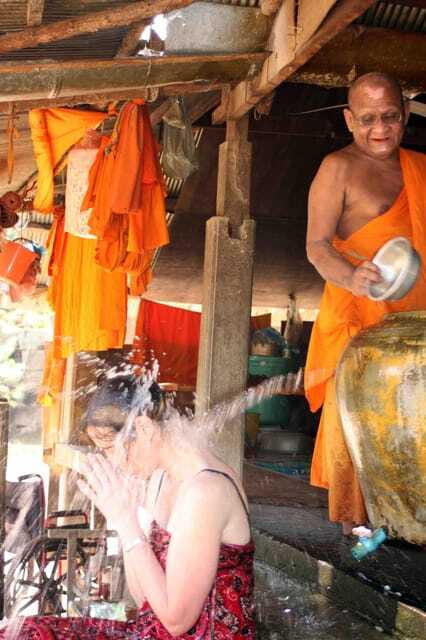
At $37 per person, this is not the cheapest way to spend two hours in Siem Reap. It is also more than the cost of simply hiring local transport to a pagoda. The price makes more sense when you count the English-speaking guide, hotel pickup and drop-off by tuk-tuk, the sarong, the pagoda donation, and the market visit.
The guide is the key value. Without an explanation, a water blessing could be beautiful but puzzling. With a guide, you learn what the chanting means, how to behave, what the red ties represent, and how the pagoda fits into Cambodian life.
The outing also has a personal quality that a large group attraction cannot easily provide. Several guides have been praised for being patient, informative, and helpful with photos. You may spend more time speaking with your guide than in the actual water ritual, which is useful if you want cultural context.
There are limits. The blessing itself may last only several minutes, particularly if you choose the shorter form. You are paying for the whole visit, not a long temple tour or a full-day excursion. If your budget is tight and you want only major Angkor sites, you may prefer to spend the money elsewhere.
The current rating is 4.9 from 68 bookings, with one lower rating noting that the activity felt expensive and that the water made the chanting hard to hear. That is a fair warning. The value comes from the setting, explanation, ceremony, and transport, not from the length of the ritual alone.
Who should book this experience?
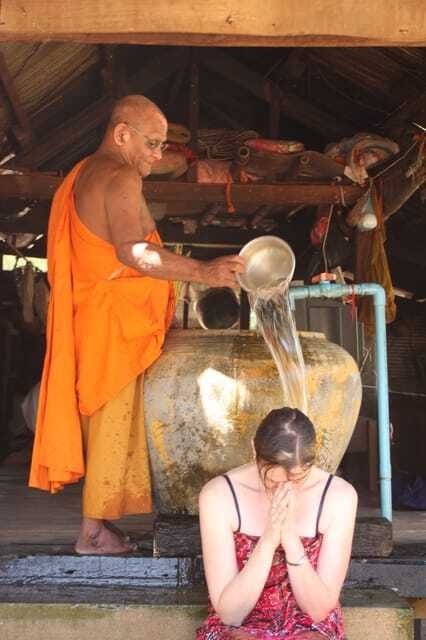
I would choose this for you if you want a quiet cultural activity between temple visits. It suits solo visitors, couples, and anyone curious about Cambodian Buddhism who does not want to commit to a full-day tour.
It is also a good option if you want a meaningful experience but are unsure how to visit a pagoda respectfully on your own. The guide handles the instructions, offering, translation, and timing.
You should think twice if you dislike getting wet, feel uncomfortable taking part in religious ceremonies, or want a packed sightseeing schedule. The full blessing is not a dry, passive observation. Even the shorter version asks you to participate.
Families and people using wheelchairs may also want to confirm the exact setup in advance. The activity is listed as wheelchair accessible, but the ceremony includes steps for the full water blessing, and the available information does not explain how every part is adapted.
Should you book the Wat Arang water blessing?
Book it if you want to see a living side of Siem Reap and are willing to give two hours to a ceremony rather than another ancient monument. The combination of a pagoda visit, guided explanation, water blessing, red wrist ties, tuk-tuk transport, and local market gives you a well-rounded short outing.
Choose the light sprinkling if you mainly want the cultural experience and clear chanting. Choose the longer blessing if you welcome a memorable, thoroughly wet ritual. Before leaving your hotel, wear comfortable clothing, pack spare underwear and a towel, and tell your guide which option you prefer.
At $37 per person, I see this as fair value for a personal introduction to Cambodian Buddhist practice, though not as a bargain attraction. If you have already seen many temple ruins and want something more human and participatory, this is one of the better short activities to add to a Siem Reap stay.
FAQ
Where does the water blessing take place?
The ceremony takes place at Wat Arang Pagoda in the countryside south of Siem Reap Province.
How long does the whole activity last?
The total activity lasts about two hours. The water blessing itself is described as a one-hour experience, although the ceremony can be shorter depending on the option chosen.
How much does the experience cost?
The listed price is $37 per person.
What is included in the price?
The price includes an English-speaking guide, tuk-tuk transfer, a sarong, a donation to the pagoda, and a market visit. Personal expenses are not included.
Can I choose the type of blessing?
Yes. You can choose a shorter blessing with chanting and a light sprinkling of water, or a longer ritual in which blessed water is poured over your head.
Will I get wet during the ceremony?
The longer blessing is designed to get you wet. A sarong is provided so your main clothing stays dry. The shorter blessing involves only a light sprinkling.
Is hotel pickup available?
Yes. Pickup is included, and the driver collects you from your hotel at the time shown on your booking. The activity is listed as wheelchair accessible, though you should confirm details if you need assistance with the ceremony setup.
Just added around Siem Reap
- Twilight Tastes of Siem Reap Include Dinner★ 5.0 · 13 reviews
- Ultimate Sunrise to Angkor Wat, Angkor Thom and Bayon Temple★ 5.0 · 3 reviews
- Trekking Tour at Phnom Kulen National Park from Siem Reap★ 5.0 · 3 reviews
- Professional Photo Shoot in Angkor Archaeological Park, Siem Reap★ 5.0 · 42 reviews
- Full-Day Private Tour of Angkor Wat with Pick Up★ 5.0 · 12 reviews
- Siem Reap City Tour with War Museum and Killing Field★ 5.0 · 27 reviews
- Unveiling 2 Days Private Angkor Wat/Beyond In Sunrise/Sunset Tour★ 5.0 · 48 reviews
- Private Day Trip to Angkor Temples with Expert Guide★ 5.0 · 4 reviews
Water Blessing Ceremonies, compared.
Private Guided Angkor Wat Tour by Lady Tuk Tuk with Monk Blessing
Read our review →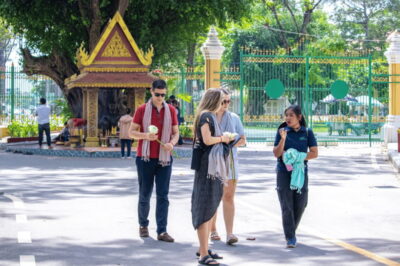
Khmer Water Blessing by Monk and Lotus Farm Visit
Read our review →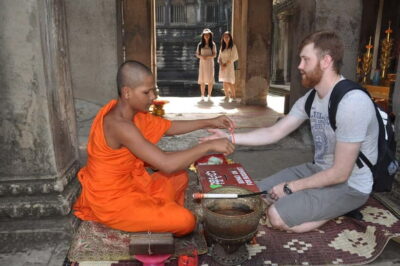
Siem Reap Cambodian Buddhist Water Blessing and Local Market
Read our review →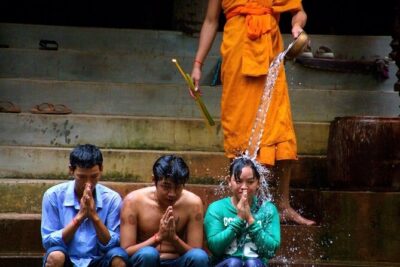
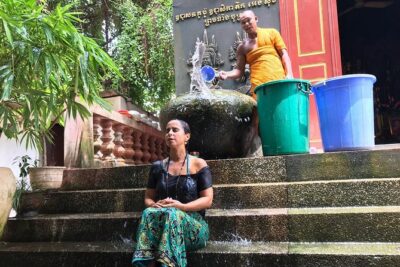
Buddhist Water Blessing and Real Life Experience with Local
Read our review →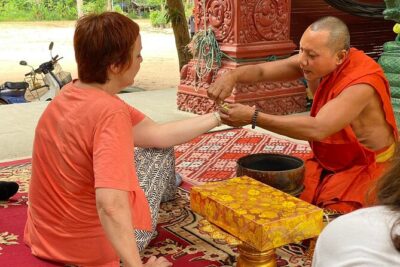
Full Day Siem Reap Farm Tour with Cooking Class and Monk Blessing
Read our review →Browse the lists this tour appears in