
Reviewed · ANGKOR WAT TOURS
Angkor Wat Sunrise Tour
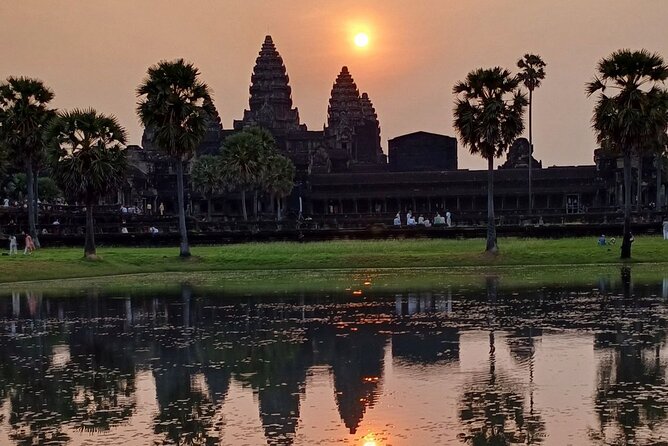
Angkor Wat before sunrise is the main event, but the clever part of this eight-hour private tour is what comes after it. You enter from the quieter eastern side while the corridors are still dark, then move on to Bayon’s giant stone faces and Ta Prohm’s tree-covered ruins.
I like the way the tour combines the park’s essential sights in one day, and I like having a guide who can explain more than dates and royal names. Guides such as Bun, Pi, Setha, and Nimol are praised for explaining Cambodian life, religion, politics, and temple design. The drawback is the early start: pickup is around 4:30 to 4:45am, and the $26 price does not include the $37 temple pass.
Key points
- Sunrise from Angkor Wat’s eastern entrance: You enter the temple in the pre-dawn darkness, away from the most familiar approach.
- Private touring: Only your own group takes part, giving you more room to ask questions and adjust the pace.
- Four major sights in one day: Angkor Wat, Angkor Thom, Bayon, the Terrace of the Elephants, and Ta Prohm are all included.
- Guides add Cambodian context: Guides including Bun, Pi, Setha, Sokpee, and Nimol explain history, religion, and everyday life.
- Cool transport breaks: An air-conditioned vehicle, bottled water, and cold towels help during a long, hot day.
- The real cost is about $63 per person: That combines the $26 tour with the separate $37 temple pass, before food.
Why the pre-dawn start is worth the lost sleep
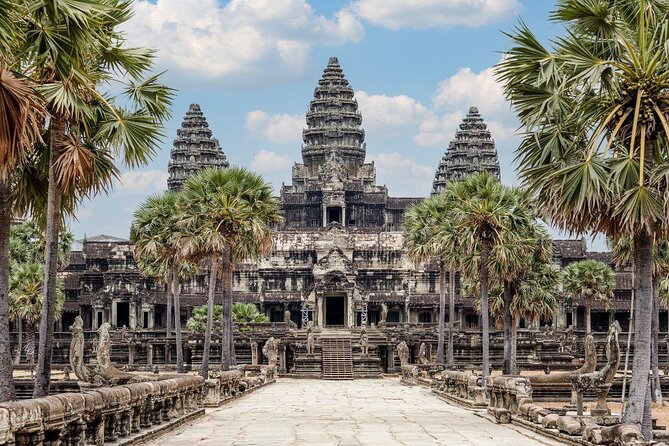
The day begins before most of Siem Reap is awake. Pickup is scheduled between 4:30 and 4:45am, depending on the season, so set out your clothes and shoes the night before. The drive to Angkor Wat is covered by an air-conditioned vehicle, and hotel pickup and drop-off are included.
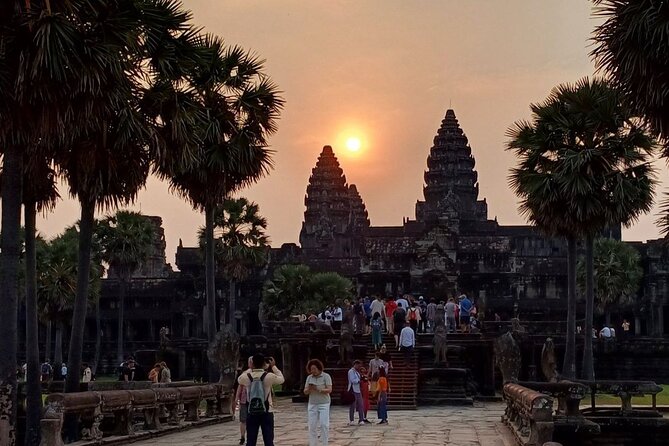
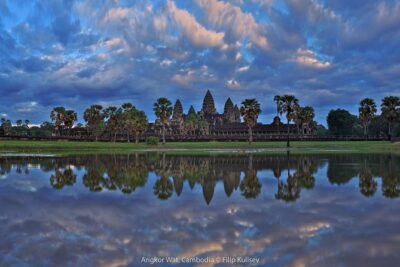
The first sight of Angkor Wat comes in darkness. That sounds dramatic because it is. You walk through long corridors and galleries before the sun has fully risen, when the temple feels less like a postcard and more like an enormous stone complex waiting to be understood.
The tour uses the eastern side for entry, described as a less-visited approach. This helps you avoid simply walking straight to the most famous front view. It also gives your guide a useful chance to explain how the temple is arranged before the morning light reveals its towers.
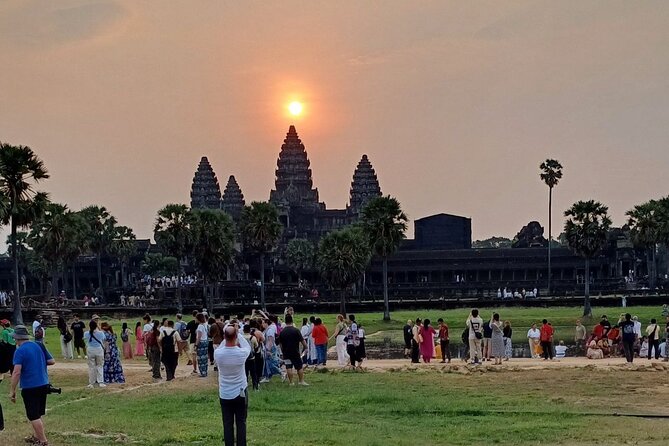
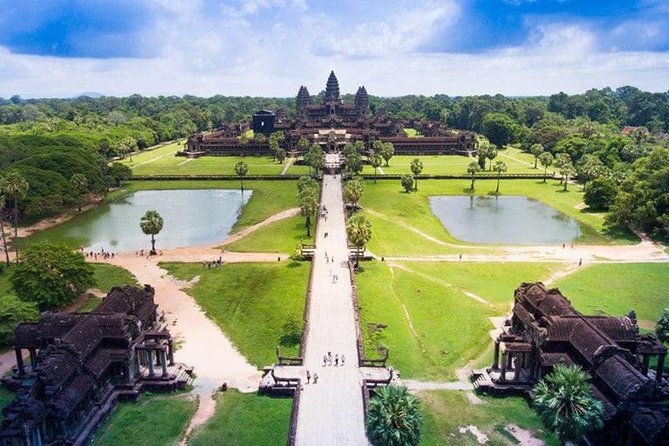
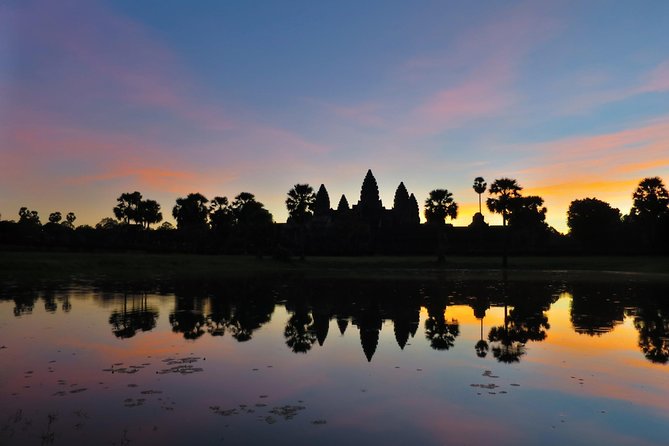
Sunrise itself is never guaranteed to produce a perfect sky. Clouds, haze, and the season all matter. Still, the setting is powerful even when the colors are modest. Give yourself time to look beyond the camera screen. Angkor Wat’s towers, reflecting pools, and long galleries reward patience.
The first stop lasts about three hours, which is a good amount of time for the temple’s scale. You will walk a lot, and some passages are uneven. Comfortable walking shoes are a practical must, not a decorative suggestion.
More ways to walk into Angkor Wat:
- Angkor Wat Sunrise or Sunset Tour with Guide from Siem Reap
★ 5.0 · 12,109 reviews - Siem Reap: Angkor Wat: Small-Group Sunrise or Sunset Tour
★ 5.0 · 9,444 reviews - Siem Reap: Angkor Wat 2-Day Tour with Sunrise and Sunset
★ 4.9 · 4,429 reviews
The $26 price needs one important correction
The advertised tour price is $26 per person, but Angkor’s temple pass costs an additional $37 per person. That brings the basic total to about $63 before food or drinks.
At that price, the tour can still be good value. You are paying for a licensed English-speaking guide, hotel transport, an air-conditioned vehicle, bottled water, cold towels, and a full day focused on the park’s main sights. The fee also buys you help with the timing and layout of a huge archaeological area that can be confusing on your own.
The temple pass is paid directly at the site, and Visa cards are accepted. You can buy it on the day of the tour before sunrise. Because the ticket is separate, plan your budget around the full cost rather than the headline tour price.
Food is not included. If your hotel provides breakfast, ask for a breakfast pack before leaving. The practical plan is to eat after sunrise at Angkor Wat, rather than trying to fit a full restaurant meal into the early morning schedule.
Angkor Wat: three hours with Cambodia’s great temple
Angkor Wat is not a quick photo stop. Its corridors, bas reliefs, galleries, and central towers need time. A good guide helps you connect the carvings and architecture with the Khmer Empire instead of leaving you to wander from one impressive wall to the next.
The guides associated with this experience take different approaches. Pi is praised for making the temple’s story lively, while Pak uses an iPad to show close images and comparisons between earlier and present-day details. Nimol is also praised for taking well-positioned photographs, a useful service when the temple is crowded and you want more than a quick selfie.
The strongest part of the guiding is the wider context. You can expect explanations about the social, economic, political, and spiritual life of the Khmer Empire, as well as the temples themselves. Guides such as Sokpee, who previously lived as a monk, can offer added insight into Cambodian religion.
That wider explanation matters. Angkor Wat is visually overwhelming, but without context it can become a parade of towers and stones. A good guide points out how the temple functioned, what its carvings represented, and how it fit into the ancient capital system.
Dress carefully. Your shoulders and knees must be covered, and a scarf used to cover the shoulders is not accepted. Wear light, respectful clothing that already meets the rule. Do not rely on a last-minute cover-up.
Angkor Thom and the South Gate
After Angkor Wat, the tour moves to Angkor Thom, the former capital of the Khmer Empire. The South Gate is described as the best-preserved entrance, reached by a causeway about 50 meters across the moat.
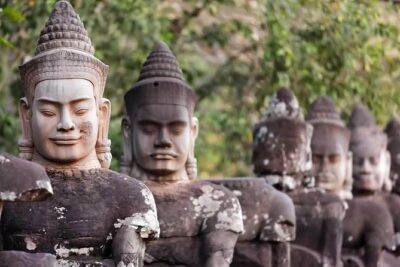
The approach is part of the attraction. Stone figures line the causeway, creating a formal entrance that feels very different from the long interior galleries of Angkor Wat. Take a moment here instead of rushing straight through the gate. The entry tells you that Angkor Thom was not simply a collection of temples. It was a royal city designed to impress.
The tour allows about two hours for Angkor Thom and Bayon. That is enough for a proper look, though the combined stop can feel full if you want to photograph every carving. Your guide’s role is especially useful here because the complex is large and the main monuments are spread out.
More early starts around Siem Reap:
- Angkor Wat Sunrise tour with Small – Group and Guide tours
★ 5.0 · 3,655 reviews - Angkor Wat Highlights and Sunrise Guided Tour from Siem Reap
★ 5.0 · 3,213 reviews - Full-Day Angkor Wat Sunrise Private Tour with Guide from Siem Reap
★ 5.0 · 2,920 reviews - Angkor Wat Sunrise & 3 Main Temples with Breakfast – Small Group
★ 5.0 · 2,857 reviews
Bayon and its famous stone faces
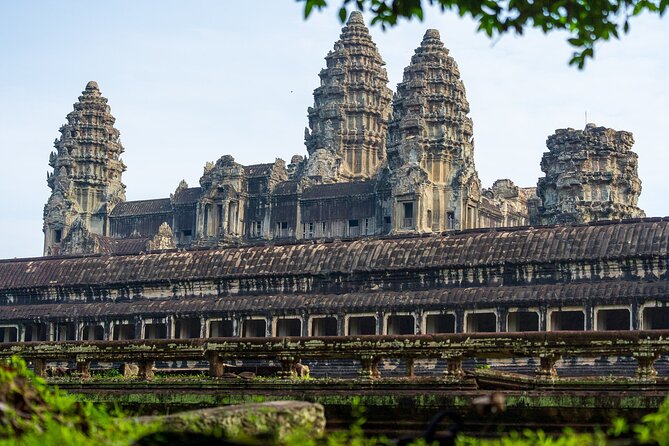
Bayon is the emotional center of Angkor Thom. Its towers carry immense carved faces that appear from different angles as you move among the narrow passages and upper levels.
The temple can feel disorienting in the best sense. You may see one face clearly, turn a corner, and find another looking back at you. The close spaces contrast with Angkor Wat’s long, ordered galleries, giving the day a welcome change of rhythm.
This is also a good place to ask questions. The guides praised throughout this experience explain temple history alongside Cambodian culture and religion. Mr. Setha, for example, is noted for linking the monuments with the country’s wider story rather than treating them as isolated ruins.
You should expect walking, steps, and uneven stone. If you want a slow photographic study of every face, a private tour gives you a better chance to request extra time. If you prefer to see the major sights efficiently, the planned schedule keeps the day moving.
The Terrace of the Elephants and the royal city
The Terrace of the Elephants stretches about 350 meters and served as a reviewing stand for public ceremonies. It also formed the base of the king’s audience hall.
This stop is less intimate than Bayon and less instantly famous than Ta Prohm, but it helps you understand Angkor Thom as a functioning royal capital. The terrace is about ceremony, public display, and power. It is easy to overlook when chasing the best-known temples, so having it built into the route adds useful depth.
The broad platform also provides a break from enclosed galleries. Your guide can point out the terrace’s five projecting sections and explain how it related to the central square. Bring water, even though more is supplied, because the day grows hotter as the morning advances.
Ta Prohm: roots, ruins, and atmosphere
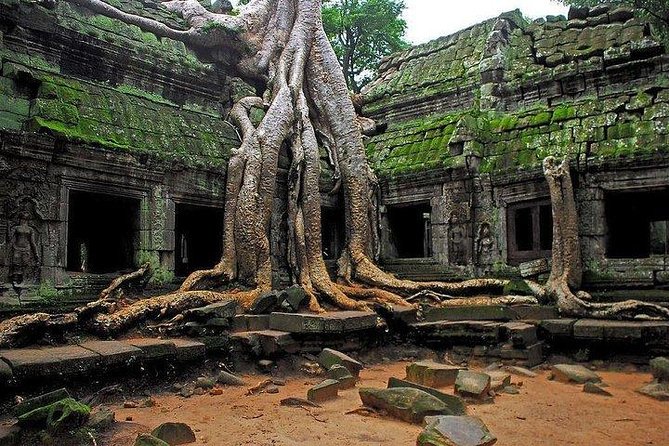
Ta Prohm is the final major temple stop and one of the most atmospheric places in the park. Tree roots twist around carved walls and bas reliefs, making it look much as it did when the site was encountered by French explorer Henri Mouhot in the mid-19th century.
The temple once housed 2,740 monks. That detail gives the ruins a human scale. Ta Prohm was not built as a dramatic ruin. It was a living religious center, and the fallen stones and encroaching trees show what happens when a large sacred complex is left to time and weather.
Ta Prohm can be crowded, so the private format helps, though it cannot remove other visitors from the site. Your guide can steer you toward details you might miss, such as the famous tree-covered sections and the carved walls. Sakrya is praised for demonstrating the unusual echo produced by tapping your chest while leaning against a wall, a small interactive moment that makes the temple memorable.
The two-hour allowance gives you time to enjoy the place without treating it as a ten-minute photo stop. Still, this is a long day. After a pre-dawn start and several hours of walking, fatigue is likely by Ta Prohm. Use the vehicle breaks well, drink water, and do not feel obliged to race through every corner.
Private transport and the value of a personal guide
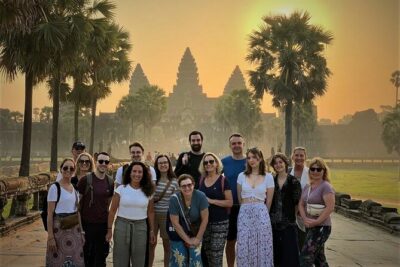
This is described as a private activity, meaning only your group takes part. That matters at Angkor because you can ask questions without holding up a large party, and you may have more freedom to pause for photographs or take a short rest.
The vehicle is air-conditioned, and bottled water and cool towels are provided. Those details may seem small when booking from home. In Siem Reap’s heat, they become part of the practical value of the tour. Returning to a cool vehicle after a temple visit gives your feet and attention a chance to recover.
The guide quality is central to the experience. Names repeatedly associated with strong tours include Bun, Pi, Minamol, Vantha, Horn, Setha, Samnang, Bunpheng, Sokpee, and Nimol. The praise is specific: clear English, strong temple knowledge, useful stories about Cambodian life, help with photographs, and a friendly manner.
You should not assume every guide will offer the exact same style. Some focus more on religious history, some on photographs, and some on Cambodian society. If you have a particular interest, tell your guide early. The private setup makes that request easier.
Who will enjoy this tour most
This tour suits a first-time visitor who wants the main Angkor sights in one carefully arranged day. You get Angkor Wat, Angkor Thom, Bayon, the Terrace of the Elephants, and Ta Prohm without having to plan the route or arrange early transport.
It is also a good choice if you want historical explanation rather than a driver who simply drops you at each site. The best use of the tour is to ask questions. Ask about religion, royal power, temple construction, Cambodian life, and how the monuments relate to one another.
It may be less suitable if you dislike early mornings, hot weather, or a full schedule. The start before dawn is non-negotiable, and the total day lasts about eight hours. You will walk over uneven ground and spend much of the day outdoors.
It also may not suit someone seeking a slow, solitary temple visit. Even a private tour follows several major stops in one day, and Angkor Wat alone can fill many hours. If you want extensive time at one temple, you may prefer a shorter or more customized plan.
Practical details before you book
Confirmation is provided when you book, and pickup is offered from your hotel. The start time is around 4:30am, with the exact departure changing by season.
Wear clothing that covers your shoulders and knees without depending on a scarf. Choose comfortable walking shoes and carry only what you need. Bottled water is provided, but you may still want extra water for the long morning.
The tour is open to most participants, and it is near public transportation, though the included hotel pickup makes that less important for most people. Free cancellation is available up to 24 hours before the start time. Cancellations or changes made later are not accepted for a refund.
Should you book the Angkor Wat Sunrise Tour?
Book it if you want the essential Angkor route, a pre-dawn start, private transport, and a guide who can explain both the temples and Cambodia. The strongest value comes from the combination of transport and personal guiding, not from the $26 headline price alone.
Before booking, budget the separate $37 temple pass and accept that breakfast is your responsibility. Ask your hotel for a packed meal, wear proper temple clothing, and prepare for a long day.
For a first visit to Siem Reap, this is a sensible and well-rounded choice. It gives you the sunrise, the most important monuments, and enough historical help to make the stones mean something. If you prefer late starts or slow exploration, choose a different format. Otherwise, the early alarm is a fair trade for seeing Angkor Wat wake up.
FAQ
What time does the Angkor Wat Sunrise Tour start?
Hotel pickup begins around 4:30 to 4:45am, depending on the time of year.
How long does the tour last?
The experience lasts approximately eight hours.
Which temples and monuments are included?
The route includes Angkor Wat, Angkor Thom, Bayon, the Terrace of the Elephants, and Ta Prohm.
Is the Angkor temple pass included?
No. The temple pass costs $37 per person and must be paid directly at the site.
Can I pay for the temple pass by card?
Yes. Visa cards are accepted, and the pass can be purchased on the day of the tour before sunrise.
Is this a group tour or a private tour?
It is a private activity, so only your own group participates.
What should I wear?
You must cover your shoulders and knees. A scarf used to cover the shoulders is not accepted, so wear clothing that meets the dress code.
Is breakfast included?
No. Food and drinks are not included. If your hotel provides breakfast, you can request a breakfast pack to eat after sunrise at Angkor Wat.
Just added around Siem Reap
- Twilight Tastes of Siem Reap Include Dinner★ 5.0 · 13 reviews
- Ultimate Sunrise to Angkor Wat, Angkor Thom and Bayon Temple★ 5.0 · 3 reviews
- Trekking Tour at Phnom Kulen National Park from Siem Reap★ 5.0 · 3 reviews
- Professional Photo Shoot in Angkor Archaeological Park, Siem Reap★ 5.0 · 42 reviews
- Full-Day Private Tour of Angkor Wat with Pick Up★ 5.0 · 12 reviews
- Unveiling 2 Days Private Angkor Wat/Beyond In Sunrise/Sunset Tour★ 5.0 · 48 reviews
- Siem Reap City Tour with War Museum and Killing Field★ 5.0 · 27 reviews
- Private Day Trip to Angkor Temples with Expert Guide★ 5.0 · 4 reviews
Angkor Wat Tours, compared.
Angkor Wat Sunrise or Sunset Tour with Guide from Siem Reap
Read our review →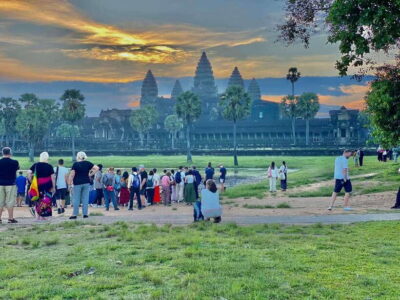
Angkor Wat: Small-Group Sunrise or Sunset Tour
Read our review →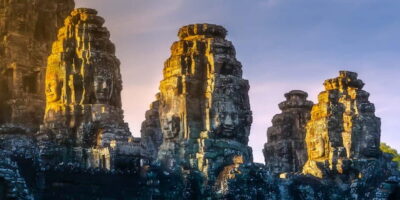
Angkor Wat Highlights and Sunrise Guided Tour from Siem Reap
Read our review →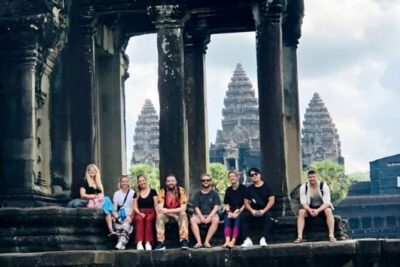
Angkor Wat Sunrise & 3 Main Temples with Breakfast – Small Group
Read our review →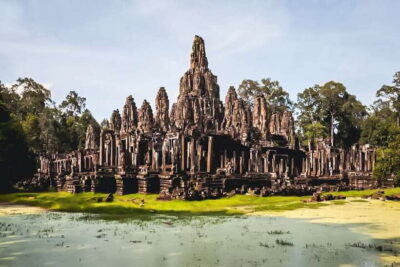
Angkor Wat Sunrise and Full-Day Sightseeing Tour
Read our review →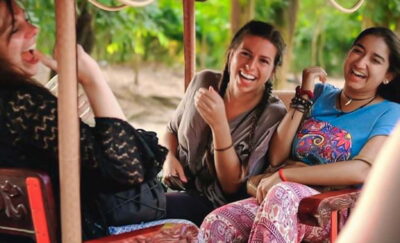
Angkor Wat Small-Group Exploration with Expert Guide
Read our review →Browse the lists this tour appears in