
Reviewed · ANGKOR WAT TOURS
2 Days Angkor Wat Tranquility Tour
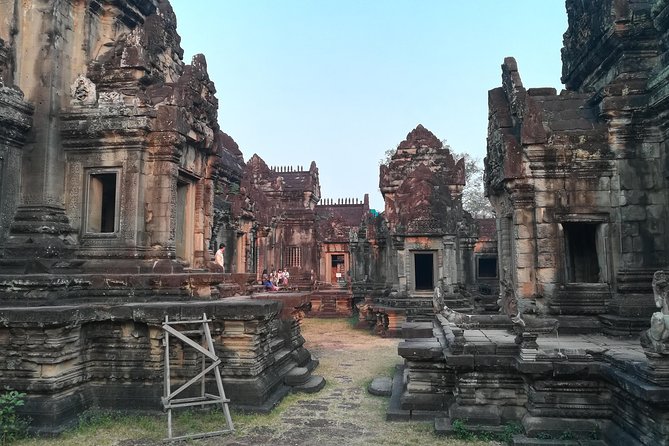
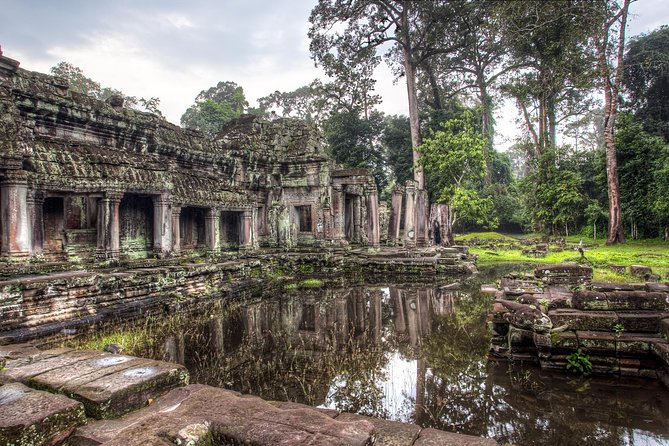
Angkor Wat is only part of the story. This two-day private tour pairs the famous sunrise temple with quiet stops such as Prasat Bat Chum and Banteay Prei, where you may have the stones and trees largely to yourself. I like that the route gives you both major sights and smaller temples, rather than treating Angkor as a one-stop photo call.
I also like the practical setup: private transportation from your hotel, an English-speaking guide, water, and a route that reaches Angkor Wat before dawn. The main drawback is the pace. Fourteen temple stops across two long days can feel full, and the $110 price does not include the required $62 three-day Angkor pass, food, drinks, or accommodation.
Key points to know before booking
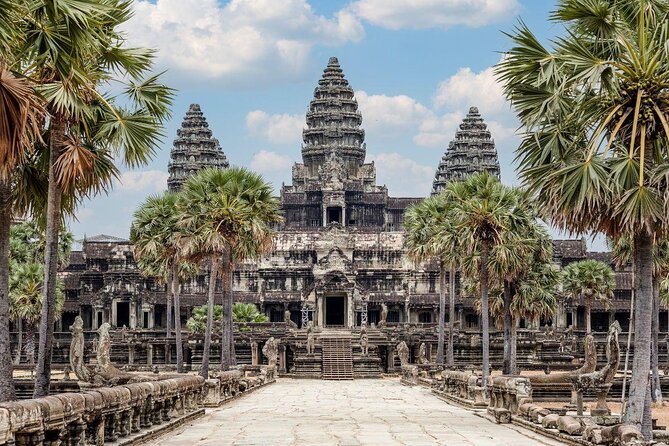
- Sunrise at Angkor Wat: Day two begins before dawn and allows about four hours at Cambodia’s best-known temple.
- Quiet temple stops: Prasat Bat Chum, Banteay Prei, Prasat Kravan, and Banteay Samre offer a calmer side of Angkor.
- Private group format: Only your group takes part, with an English-speaking guide and air-conditioned car, minivan, or minibus.
- A full two-day route: Day one covers seven temples, while day two includes Angkor Wat, Ta Prohm, Banteay Kdei, and Angkor Thom.
- Extra cost to plan for: Add the $62 three-day Angkor pass to the $110 tour price, plus your meals and drinks.
- Guide quality matters: Pal Chen received especially strong praise for detailed explanations and for helping keep the route away from crowds.
Why this route works for Angkor
Angkor can become a blur of towers, galleries, courtyards, and stone faces. This tour gives that famous complex some shape. You begin with smaller temples, move through grand brick monuments and quieter outer sites, then save Angkor Wat and Angkor Thom for the second day.
That order has a sensible purpose. Day one takes you beyond the most familiar stops, while day two focuses on the places many people most want to see. You get the iconic towers of Angkor Wat, the tree-covered ruins of Ta Prohm, and the large ancient city of Angkor Thom without giving up the less visited temples.
The private format is useful here. You are not tied to a large coach group or public transport. Your guide and driver take you between the sites, and the air-conditioned vehicle gives you a place to cool down between walks. The tour says private transportation may be by car, minivan, or minibus, so the exact vehicle depends on your group.
The route is also designed for people who want more than a short Angkor Wat visit. You will see Hindu and Buddhist monuments, brick temples, large stone compounds, elephant sculptures, jungle growth, and gateways. The result is a better sense of how varied the Angkor area is.
More ways to walk into Angkor Wat:
- Angkor Wat Sunrise or Sunset Tour with Guide from Siem Reap
★ 5.0 · 12,109 reviews - Siem Reap: Angkor Wat: Small-Group Sunrise or Sunset Tour
★ 5.0 · 9,444 reviews - Siem Reap: Angkor Wat 2-Day Tour with Sunrise and Sunset
★ 4.9 · 4,429 reviews
Day one: brick temples and peaceful outer sites
Prasat Kravan, a small start with carved brick
The first stop is Prasat Kravan, a 10th-century Hindu temple dedicated to Vishnu. Its brick construction gives it a different feel from the larger sandstone monuments that come later.
You have about 30 minutes here. That is enough for a look at the temple’s compact design and a short introduction from your guide, but not enough for a slow architectural study. Since this is an early stop, it works well as a gentle beginning rather than a grand opening.
Prasat Bat Chum, a quiet Buddhist-era stop
Prasat Bat Chum is a small temple built in the middle of the 10th century by Kavindrarimathana, a learned Buddhist minister under King Rajendravarman. The stop lasts about 30 minutes.
This is one of the tour’s strongest ideas. Prasat Bat Chum is not presented as a major crowd magnet, and the route is built around finding a quieter experience there. You can look closely at the remains without the same pressure you may feel at Angkor Wat or Ta Prohm.
Do not expect a huge monument. The value is its calm setting and the chance to hear about a less familiar part of Angkor’s religious and political world. A guide who explains the site well can make this short stop worthwhile.
A few more Siem Reap half-days worth weighing up
- Angkor 2-Day Sunset & Sunrise Small-Group Tour
★ 5.0 · 2,567 reviews - 2 Days Exclusive Temple Highlights with Sunset and Sunrise Tour
★ 5.0 · 1,157 reviews - Siem Reap: Angkor Sunrise 1- or 2-Day Guided Temples Tour
★ 4.9 · 1,132 reviews - 2 Days Guided Historical Tour in Angkor
★ 5.0 · 855 reviews
Pre Rup, high brick terraces and broad views
Pre Rup gives you a larger structure and a change in scale. The tour allows one hour to explore this brick temple and take in the view from its upper level.
The high terraces are the main appeal. From above, you can better understand how much of the Angkor civilization once sat among forests and open countryside. The climb and uneven stone surfaces may be tiring, so take your time rather than rushing for photographs.
This is also one of the stops where the midday heat can matter. The schedule gives you time, but the monument has limited shade. Bring the drinking water supplied by the tour and dress for both sun and temple rules.
Banteay Samre, a temple worth lingering over
Banteay Samre receives about an hour, and that timing suits it. Its architecture and quiet setting may make you want to stay longer than planned.
The temple provides a useful contrast with the more famous monuments. Instead of a quick stop surrounded by constant activity, you get time to look at the structure, walk through its spaces, and listen to your guide. The tour’s focus on peace and quiet is especially clear here.
That said, the route is demanding. If you spend extra time at Banteay Samre, you may need to keep moving later in the day. Tell your guide if you prefer longer visits at fewer sites, since a private tour offers more room for that kind of conversation than a fixed group outing.
Eastern Mebon and its stone elephants
Eastern Mebon is scheduled for one hour and is known for its elephant statues. The tour description points to eight elephants made from single large stones, which gives you a memorable detail to look for as you walk through the temple.
This stop is valuable for visitors who enjoy seeing how animals, religion, and royal power were represented in Angkorian architecture. The temple is not only about towers. Its sculptures help make the site easier to read.
The schedule packs several temples into day one, so this is another place where your guide’s explanations can save time. Rather than trying to decode every carving yourself, you can focus on the elements your guide identifies as important.
Preah Khan, stone, carvings, and trees
With about 90 minutes, Preah Khan receives the longest visit on day one. That is appropriate. The site combines carved stone corridors, large piles of masonry, and tree growth in a way that makes every turn feel different.
Preah Khan is also a good reminder that Angkor is not simply a collection of isolated monuments. Its courtyards, galleries, and passageways suggest a much larger religious and social complex. You will want sturdy footwear and patience here, since the site rewards slow walking more than a quick loop.
This may be the day’s most satisfying stop for people who like atmospheric ruins. It has the visual drama of nature and architecture together, but the uneven ground means you should watch your footing.
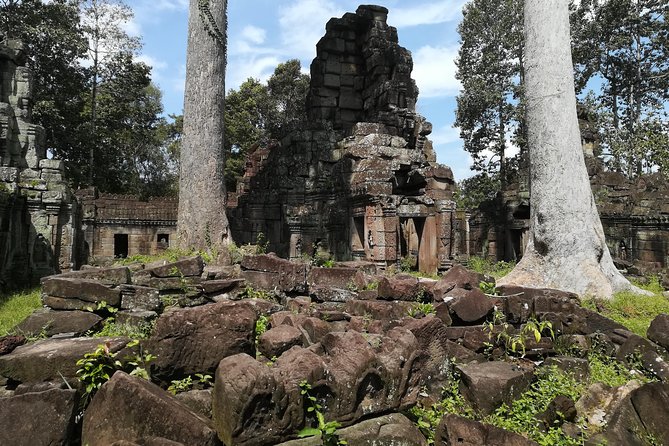
Banteay Prei, the quietest finish
The final stop on day one is Banteay Prei, with about 30 minutes to explore. It is included specifically for its quiet atmosphere, and it may be one of the least hurried moments of the trip.
Banteay Prei is not the place to come for a grand monument. Its appeal is the absence of noise and pressure. After a full day of temples, this short stop can feel like a useful pause before returning to your hotel.
Day one is ambitious. Seven stops require energy, and you should not expect every temple to receive the same depth of attention. The tradeoff is clear: you see a wide range of sites, including several places that many standard routes skip.
Day two: Angkor Wat before dawn and the best-known ruins
Angkor Wat, four hours around sunrise
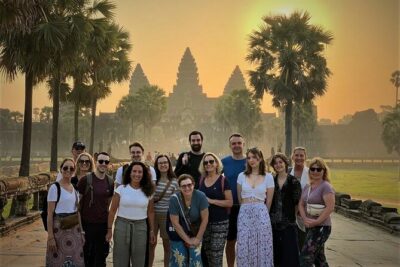
Day two starts early enough to reach Angkor Wat before dawn. The schedule allows four hours, making this the central event of the tour.
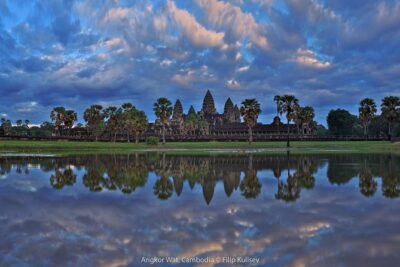
Arriving before sunrise means you can see the temple change from a dark outline into a detailed sandstone complex as the light improves. The famous reflection view may attract attention, but the temple deserves more than a single photograph. Your guide can help you understand the galleries, towers, religious purpose, and scale of the grounds.
Four hours sounds generous, but Angkor Wat is enormous. You can expect a substantial walk, uneven surfaces, and periods of standing or waiting around the sunrise sequence. Wear clothing that covers your shoulders and thighs, since the temple complex enforces a strict dress code. If your clothing does not meet the rules, entry can be refused.
The early start is the price of a better experience. You trade sleep for cooler air and softer light. Since the exact pickup time is not stated beyond the early departure, confirm the meeting details with the provider before the day begins.
Ta Prohm, the Tomb Raider temple
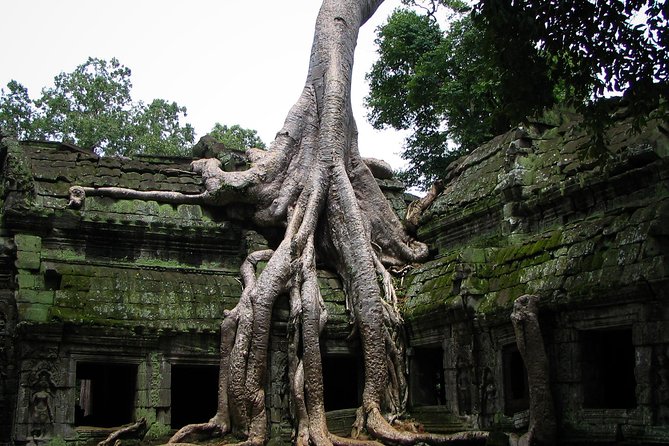
Ta Prohm receives about one hour and is the stop most closely tied to popular culture. It appeared in the film Tomb Raider, and its tree roots and stone corridors have become some of Angkor’s most recognizable images.
The movie connection may bring you here, but the site holds attention on its own. Trees grow through and around the temple, showing how long the ruins remained exposed to the forest. The mix of roots, carved stone, and narrow passages makes Ta Prohm different from the open terraces of Pre Rup or the formal scale of Angkor Wat.
One hour is enough for a good look, though it may feel short if you want to photograph every famous corner. Your guide can help you focus on the main architectural details rather than spending the entire stop waiting for the perfect picture.
Banteay Kdei and the Buddha discoveries
Banteay Kdei receives one hour. The temple is associated with the discovery of 274 Buddha statues by Japanese archaeology students during excavation.
That detail gives the site a clear point of interest, especially if you want to understand how much work remains behind the scenes at Angkor. Banteay Kdei also helps break up the more famous stops. You can continue exploring temple architecture without the same expectation that every wall must be instantly familiar.
As with many Angkor sites, the experience depends partly on how much context your guide gives you. The tour’s strongest form is not simply transport from one ruin to another. It is having someone explain why a less famous temple deserves your attention.
Angkor Thom and sunset at the South Gate
The final stop is Angkor Thom, with three hours set aside for the ancient city compound and sunset at the South Gate. This is the longest stop of day two and gives you time to explore a large area rather than a single temple.
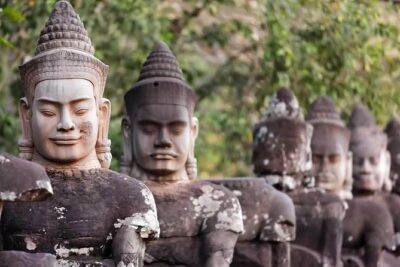
Angkor Thom should be treated as an ancient city, not just one monument. The South Gate provides a dramatic arrival point, while the wider compound gives you a sense of the scale of the royal center.
Ending with sunset is a strong choice, though sunset conditions are never guaranteed. The value is the slower pace after the early morning. You have time to look back over the two days and connect the small temples, grand avenues, carvings, towers, and forest-covered ruins.
The three-hour block may still feel full. If you are tired by this point, tell your guide how much walking you want to do. A private tour is most useful when you communicate your pace instead of trying to match an imaginary perfect schedule.
What the $110 price really covers
The tour costs $110 per person. That includes an English-speaking guide, transportation in an air-conditioned car, minivan, or minibus, bottled drinking water, and the sunrise and sunset visits.
You must add the three-day Angkor pass at $62 per person. That brings the basic sightseeing cost to $172 per person before meals, drinks, and accommodation. The entrance pass is not a minor extra, so include it when comparing this tour with other Angkor options.
The value is strongest for a private group that wants a planned route and direct hotel transfers. You avoid arranging separate transport between 11 temple stops, and you can ask your guide for explanations along the way. The price is less attractive if you only want Angkor Wat and one or two nearby temples.
The route also saves you from building your own two-day plan. You get quiet sites that are easy to overlook, along with the major monuments most people expect to see. The question is not simply if $110 is cheap. It is whether the private guide, vehicle, and broad route match the way you like to explore.
The guide can make or break the experience
The tour includes an English-speaking guide, but the guide’s style will shape your days. Pal Chen was specifically praised for giving detailed history and helping keep the experience away from crowds. If Pal Chen is available for your booking, requesting him may be worth asking about, though the supplied information does not guarantee that he will lead every departure.
A good guide matters most at the smaller temples. Prasat Bat Chum and Banteay Prei will not explain themselves as quickly as Angkor Wat. Clear background turns a quiet pile of stone into a place with purpose.
You should also tell the guide what matters to you. If you want more time for photographs, fewer explanations, or a slower walking pace, say so early. The tour is private, so your group has more flexibility than it would on a large shared outing.
Who should book this two-day Angkor tour?
I would choose this tour if you want the major sights but do not want every hour spent in the busiest temple areas. It suits first-time visitors who need transport and structure, as well as returning visitors who want lesser-known sites.
It is also a good fit if you prefer a guide to explain what you are seeing. The number of temples can feel overwhelming without context, and the route covers enough ground to give you a broad picture of Angkor.
I would hesitate if you dislike early mornings, long walking days, or a tightly packed schedule. Angkor Wat before dawn is a major feature, not a small optional extra. The two days are designed for people willing to trade comfort for more sites and quieter moments.
Remember the clothing rule. Your shoulders and thighs must be covered at the temples. Bring suitable clothing from the start, since incorrect dress can prevent entry.
Should you book it?
Book this tour if your ideal Angkor visit includes sunrise at Angkor Wat, Ta Prohm, Angkor Thom, and several quieter temples such as Prasat Bat Chum and Banteay Prei. The private vehicle and guide add real value when you want to cover a wide area without arranging transport yourself.
Skip it if you want a relaxed, slow study of only a few monuments. With seven stops on day one and four on day two, this is an ambitious route. For the right person, though, it offers a useful balance: famous temples for the essential photographs, small sites for peace and quiet, and a guide to connect the pieces.
FAQ
How long is the Angkor Wat Tranquility Tour?
The experience lasts approximately two days.
Where does the tour take place?
The tour is based in Siem Reap, Cambodia, and visits temples around the Angkor area.
Is hotel pickup included?
Yes. Round-trip transfers from your hotel are included, and pickup is offered.
What time does the tour start?
The stated start time is 8:00 am. Day two begins early in the morning so you can reach Angkor Wat before dawn. Confirm the exact pickup time for the sunrise visit.
Is this a private tour?
Yes. Only your group participates in the activity.
What type of transportation is provided?
Transportation is provided in an air-conditioned car, minivan, or minibus.
Is an English-speaking guide included?
Yes. An English-speaking guide is included.
Is the Angkor entrance pass included?
No. The three-day Angkor pass costs $62 per person and is not included in the tour price.
Are food and accommodation included?
No. Food, drinks, and accommodation are not included. Bottled drinking water is included.
What should I wear to the temples?
You must cover your thighs and shoulders when entering the temple complex. If your clothing does not meet the dress code, you may be refused entrance.
Can I cancel for a full refund?
Yes, if you cancel at least 24 hours before the experience start time. Cancellations or changes made less than 24 hours before the start time are not accepted for a refund.
Just added around Siem Reap
- Twilight Tastes of Siem Reap Include Dinner★ 5.0 · 13 reviews
- Ultimate Sunrise to Angkor Wat, Angkor Thom and Bayon Temple★ 5.0 · 3 reviews
- Trekking Tour at Phnom Kulen National Park from Siem Reap★ 5.0 · 3 reviews
- Professional Photo Shoot in Angkor Archaeological Park, Siem Reap★ 5.0 · 42 reviews
- Full-Day Private Tour of Angkor Wat with Pick Up★ 5.0 · 12 reviews
- Unveiling 2 Days Private Angkor Wat/Beyond In Sunrise/Sunset Tour★ 5.0 · 48 reviews
- Siem Reap City Tour with War Museum and Killing Field★ 5.0 · 27 reviews
- Private Day Trip to Angkor Temples with Expert Guide★ 5.0 · 4 reviews
Angkor Wat Tours, compared.
Angkor Wat Sunrise or Sunset Tour with Guide from Siem Reap
Read our review →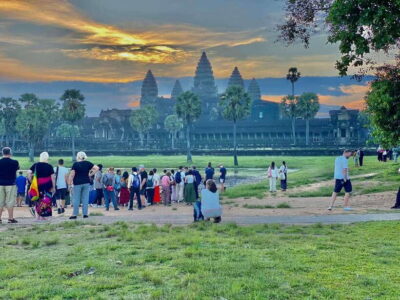
Angkor Wat: Small-Group Sunrise or Sunset Tour
Read our review →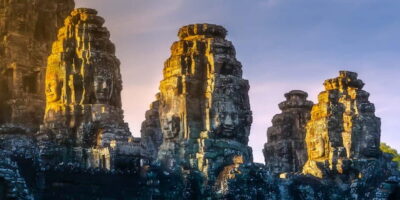
Angkor Wat Highlights and Sunrise Guided Tour from Siem Reap
Read our review →
Angkor Wat Sunrise & 3 Main Temples with Breakfast – Small Group
Read our review →
Angkor Wat Sunrise and Full-Day Sightseeing Tour
Read our review →
Angkor Wat Small-Group Exploration with Expert Guide
Read our review →Browse the lists this tour appears in