
Reviewed · ANGKOR WAT TOURS
Two-days tour discovering Angkor Wat and Floating Village
The best part of this tour is the contrast: towering Khmer temples on day one, followed by the stilt houses and fishing life of Kompong Phluk on day two. I like the private format, which keeps the pace in your hands, and I like having an air-conditioned vehicle, cold water, and cold towels between outdoor visits. Guide Sen is specifically praised for being upbeat and easy to contact.
The main catch is the price structure. At $92 per person, the transport and guiding are useful, but all entrance tickets and meals are extra. You should also confirm the exact total cost before booking, since the temple pass, museum admission, village boat arrangements, and other fees are not included in the advertised price.
Key points to know before booking
- Four major temple stops on day one: Bayon, Ta Prohm, Banteay Kdei, and Angkor Wat are covered in one long sightseeing day.
- Sunset at Angkor Wat: The schedule ends with time at the famous temple, giving you a memorable close to the first day.
- Private group experience: Only your own group takes part, so the day is not built around a large coach crowd.
- Kompong Phluk takes four hours: The floating village is not a rushed photo stop, but the cost of admission is not included.
- Cultural stops beyond the ruins: Angkor National Museum, the old market area, and Artisans Angkor add useful context to the temples.
- English-speaking guide and included transport: You get a guide, driver, air-conditioned vehicle, cold water, and cold towels on both days.
Two days that connect temples and daily life
This tour works because it does not treat Angkor Wat as an isolated monument. The first day focuses on the great temple complex around Siem Reap. The second shifts to Tonle Sap lake, then returns to the city for museum and craft visits.
That balance matters. A full day among stone towers can be tiring, especially in Cambodia’s heat. Kompong Phluk gives you a different view of local life, while the museum and carving workshop help explain the art you saw among the ruins.
The tour begins at 8:30 in the morning. Since this is a private activity, your group has more room to ask questions and spend time at places that interest you. The schedule is still full, though, so you should expect two active days rather than a slow holiday outing.
More ways to walk into Angkor Wat:
- Angkor Wat Sunrise or Sunset Tour with Guide from Siem Reap
★ 5.0 · 12,109 reviews - Siem Reap: Angkor Wat: Small-Group Sunrise or Sunset Tour
★ 5.0 · 9,444 reviews - Siem Reap: Angkor Wat 2-Day Tour with Sunrise and Sunset
★ 4.9 · 4,429 reviews
Bayon and Angkor Thom: faces in the stone
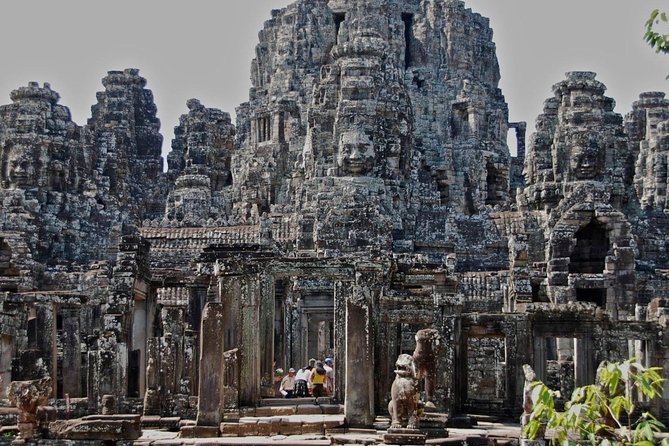
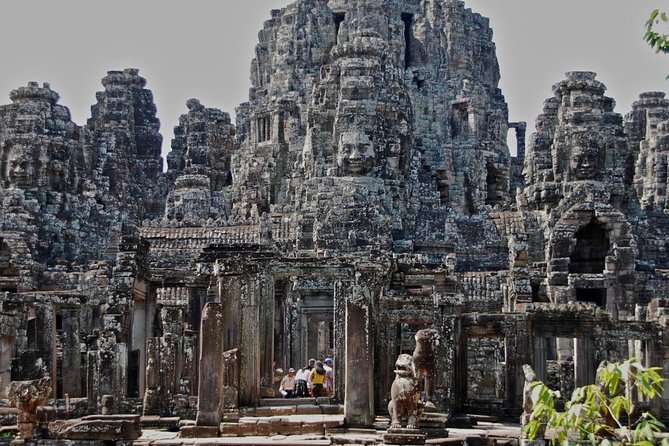
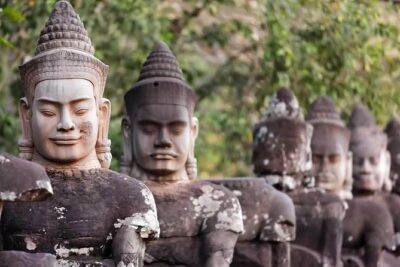
The first stop is the south gate of Angkor Thom, followed by Bayon and Baphuon. Bayon is the visual star here, with 54 towers and 216 carved faces associated with the Buddhist figure Avalokitesvara.
You will not simply be looking at one large building. Bayon is a maze of galleries, towers, and carved surfaces, and the faces appear from different angles as you move through the temple. This makes a guide especially useful. Without context, it is easy to spend your time taking pictures and miss how the temple was designed.
The stop is planned for about two hours. That gives you time to see the main areas without treating Bayon like a quick roadside visit. Baphuon adds another layer to the stop, but the stone paths and exposed areas can make this a demanding beginning to the day.
The south gate itself is also worth noticing. It sets up the scale of Angkor Thom before you reach the central temples. If you like architecture and carved detail, this opening stop is one of the strongest parts of the tour.
Ta Prohm: roots, ruins, and crowds
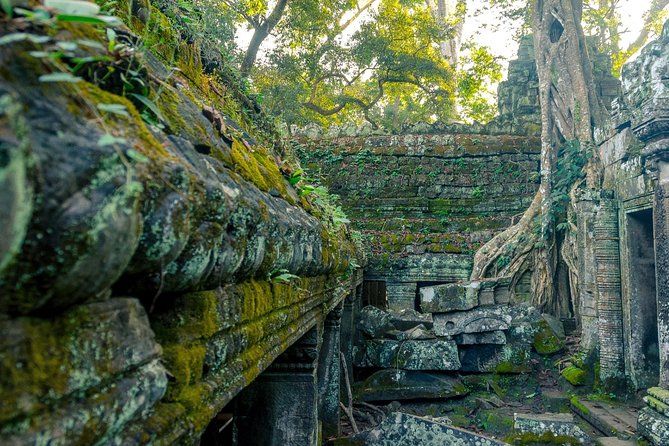
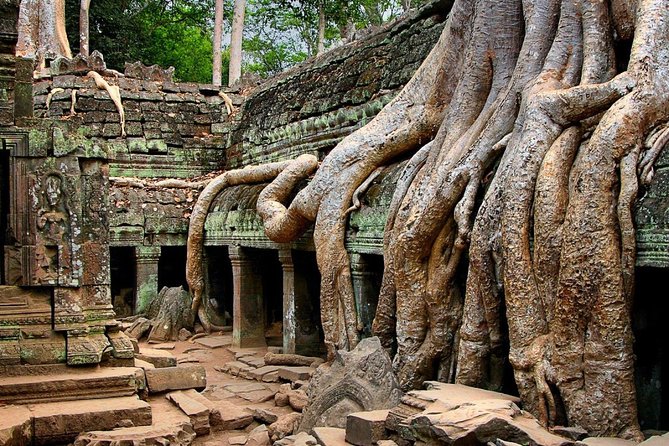
Ta Prohm is known for its trees and huge roots growing around the temple stones. This is the place most likely to match the popular image of Angkor as a jungle-covered ruin.
I like that the schedule gives Ta Prohm two hours. The temple deserves more than a quick stop, since the appeal comes from the relationship between the stonework and the trees. You can look at the galleries, courtyards, doorways, and root-covered walls rather than only stopping at the most photographed section.
The drawback is simple: Ta Prohm is one of the most famous temples in the area, so its best-known spots can be busy. A private guide cannot remove every crowd, but your own vehicle and flexible format can make the day less awkward than joining a large group.
Wear practical shoes and expect uneven ground. The attraction here is not a polished monument. It is the way nature and construction now occupy the same space.
Banteay Kdei: a quieter afternoon stop
After Ta Prohm, the tour continues to Banteay Kdei, built by King Jayavarman VII in the late 12th century. The planned visit lasts about an hour.
Banteay Kdei is a useful contrast to the larger and more famous temples. It gives you another example of the period’s design without asking you to spend another two or three hours at a vast complex. By this point, you will have seen grand towers and tree-covered ruins, so a shorter temple stop helps keep the afternoon manageable.
This is also where the private format can pay off. If you are tiring, you can focus on the main parts rather than forcing yourself to inspect every corner. If the carvings and layout still have your attention, you can use the guide’s explanations to connect Banteay Kdei with the earlier temples.
More floating-village afternoons:
- From Siem Reap: Kampong Phluk Floating Village Tour by Boat
★ 4.9 · 6,979 reviews - Sunset tour of Kampong Phluk stilts home village on the Tonle Sap
★ 5.0 · 4,865 reviews - Siem Reap: Kampong Phluk Floating Village Tour with Boat
★ 4.9 · 3,843 reviews - Siem Reap Floating Village Kampong Phluk Sunset with Boat
★ 5.0 · 1,962 reviews
Angkor Wat and the sunset finish
The first day ends at Angkor Wat, with about three hours planned for the visit. This is the longest stop of the day and the main reason many people choose the tour.
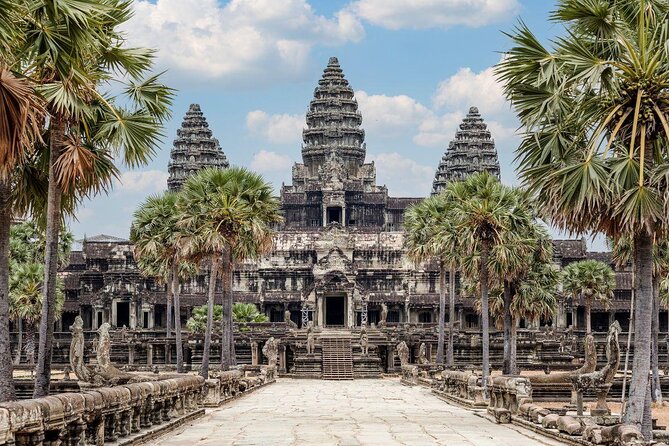
Angkor Wat is not just a single viewpoint. Its towers, galleries, courtyards, and carved walls require time, and three hours gives you a chance to see more than the familiar front view. The temple is also a UNESCO World Heritage Site and one of Southeast Asia’s most important archaeological places.
The timing includes sunset, which gives the day a strong finish. Keep your expectations sensible: sunset conditions vary, and the site may be busy. Still, ending here makes practical sense. You get the grandest temple after seeing several smaller or more specialized sites, so its scale has greater impact.
Day one is long. Bayon, Ta Prohm, Banteay Kdei, and Angkor Wat add up to about eight hours of scheduled temple time, before driving, breaks, and meals. The air-conditioned vehicle is not a minor perk. It gives you a place to cool down between sites.
Kompong Phluk and the Tonle Sap setting
Day two begins with a visit to Kompong Phluk, about 30 kilometers from Siem Reap. The visit is planned for four hours, making it the day’s main event.
Kompong Phluk is a traditional Khmer floating village connected to fishing on Tonle Sap, Southeast Asia’s largest freshwater lake. You can expect to see tall stilted houses, a floating hospital, fishing activity, and signs of everyday life built around changing water conditions.
This stop adds something the temples cannot: a view of how people live and work now. The houses and boats are not merely scenery. They are part of a working community tied to the lake’s fishery and natural cycle.
The four-hour schedule allows room for a proper visit, but it also means you should not think of this as a short add-on. The village admission is not included, and the supplied details also state that entrance tickets are paid separately. Ask what the village visit includes and what you will pay locally before the day begins.
Kompong Phluk may suit you best if you want more than monuments. If your only goal is temple photography, the second day may feel less essential. If you want to understand another part of Cambodia, it is a worthwhile change of pace.
Angkor National Museum: context after the lake
The Angkor National Museum takes about one hour. Its collection includes Buddha statues and relics, giving you a chance to see Khmer art away from the weathered temple walls.
I find this a smart addition to a temple-focused trip. At the ruins, you are often looking upward, walking through courtyards, or trying to make sense of a damaged carving. In a museum, sculpture and religious objects can be viewed more closely and with less distraction.
An hour is enough for an introduction, though not enough for every display if you read at length. Think of it as a useful overview rather than a full museum day. It works especially well after the temple visits, when you already have visual reference points for the statues and artistic styles.
Admission is not included, so add that to your budget. The benefit of visiting with a guide is that you can ask which rooms or objects deserve your limited time.
Artisans Angkor and a hands-on craft stop
The final listed stop is Artisans Angkor, a local nonprofit organization that aims to improve the lives of disadvantaged Cambodians from rural areas. You visit the workshop and have the chance to try your hand at stone carving.
This is a welcome practical ending. After seeing ancient carvings at Bayon, Ta Prohm, and Angkor Wat, you get to consider how difficult that work is by attempting a small piece yourself. Even a brief carving exercise can make the old temple details look different to you afterward.
The stop lasts about an hour. It is not presented as a full craft course, so keep your expectations focused on an introduction and hands-on activity. It is also a place to learn about present-day craft training and local employment, rather than only shopping for souvenirs.
What the $92 price really covers
The advertised cost is $92 per person. For a private two-day tour, that can be fair value if your group wants a dedicated guide and transport without arranging every transfer separately.
The included items are an air-conditioned vehicle, English-speaking guide, cold water, and cold towels. Those basics matter in Siem Reap, where you will spend long stretches outdoors and move between several sites.
The price does not include meals or any entrance tickets. That is the key budget issue. You will need to account for the Angkor temple pass, Kompong Phluk admission, Angkor National Museum, and any other required local fees. The details provided do not give the individual ticket prices, so ask for a current breakdown before booking.
For a solo visitor, $92 can feel less attractive once admissions and meals are added. For a private group, the value improves because the transport and guide serve only your party. Group discounts are offered, but the details are not specified, so confirm how the discount applies to your group size.
Guide service and private transport
The guide speaks English, and Sen is the guide specifically associated with the strongest personal praise for this experience. The driver is not named, but the transport is included on both days.
The private arrangement is useful for simple reasons. You are not waiting for a large group at every stop, and you can ask questions as the day unfolds. The supplied feedback also highlights easy communication and a friendly, accommodating attitude, which are practical advantages when you are coordinating an early start and two busy days.
Do not confuse private with leisurely. The itinerary remains packed, especially on day one. If you want long meals, unplanned wandering, or time at every temple in the area, you may need to request adjustments.
Children must be accompanied by an adult, and most people can take part. No special accessibility details are provided, so ask directly about walking conditions if anyone in your group has mobility concerns.
Who should book this two-day plan?
I would choose this tour if you want the main Angkor temples covered efficiently, prefer private transport, and like adding a local community visit instead of spending both days at ruins.
It suits first-time visitors who want a guide to explain Bayon’s faces, Ta Prohm’s trees, and Angkor Wat’s scale. It also suits couples, families with an adult companion, and small groups that value having their own vehicle.
I would think twice if you dislike early starts, long outdoor days, or schedules with several major stops. You should also be comfortable paying entrance fees separately. The tour is not an all-inclusive package, and the final cost will be higher than $92 once admissions and food are added.
The strongest features are the private format, the air-conditioned vehicle, the wide range of sights, and the friendly service associated with Sen. The main weakness is the amount of ground covered in two days, combined with extra costs that require planning.
Should you book it?
Book this tour if you want an organized introduction to Angkor with a clear mix of temples, lake life, museum objects, and craft work. It gives you the famous sights, but it does not stop there.
Before paying, confirm the total entrance fees, the exact Kompong Phluk arrangements, and how the group discount works. If those added costs fit your budget, this is a practical choice for seeing Siem Reap’s major sights without arranging transport and guiding yourself.
FAQ
What is included in the tour price?
The price includes an air-conditioned vehicle, an English-speaking guide, cold water, and cold towels on both days.
Are entrance tickets included?
No. All entrance ticket fees are excluded, including admission costs for the listed attractions.
Are meals included?
No. Breakfast, lunch, and dinner are not included.
Is this a private tour?
Yes. Only your own group participates in the activity.
What time does the tour start?
The stated start time is 8:30 am.
Can I cancel for a full refund?
Yes, if you cancel at least 24 hours before the experience start time. Cancellations made less than 24 hours in advance are not refunded, and changes within that period are not accepted.
Just added around Siem Reap
- Ultimate Sunrise to Angkor Wat, Angkor Thom and Bayon Temple★ 5.0 · 3 reviews
- Twilight Tastes of Siem Reap Include Dinner★ 5.0 · 13 reviews
- Trekking Tour at Phnom Kulen National Park from Siem Reap★ 5.0 · 3 reviews
- Professional Photo Shoot in Angkor Archaeological Park, Siem Reap★ 5.0 · 42 reviews
- Full-Day Private Tour of Angkor Wat with Pick Up★ 5.0 · 12 reviews
- Unveiling 2 Days Private Angkor Wat/Beyond In Sunrise/Sunset Tour★ 5.0 · 48 reviews
- Siem Reap City Tour with War Museum and Killing Field★ 5.0 · 27 reviews
- Private Day Trip to Angkor Temples with Expert Guide★ 5.0 · 4 reviews
Angkor Wat Tours, compared.
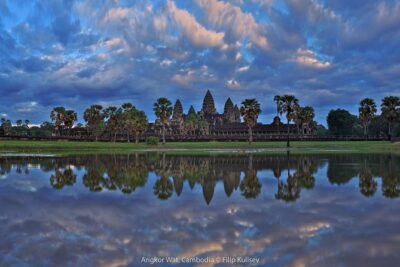
Angkor Wat Sunrise or Sunset Tour with Guide from Siem Reap
Read our review →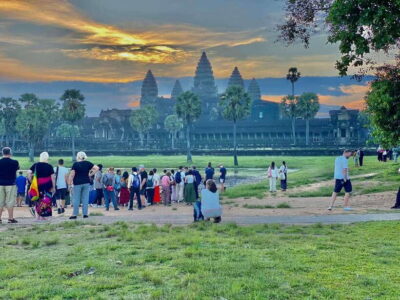
Angkor Wat: Small-Group Sunrise or Sunset Tour
Read our review →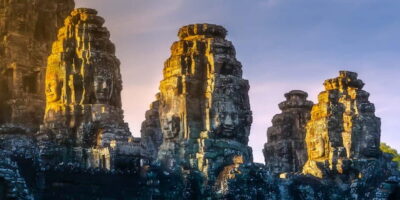
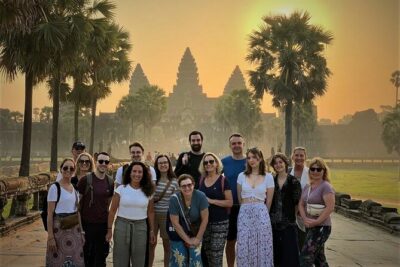
Angkor Wat Highlights and Sunrise Guided Tour from Siem Reap
Read our review →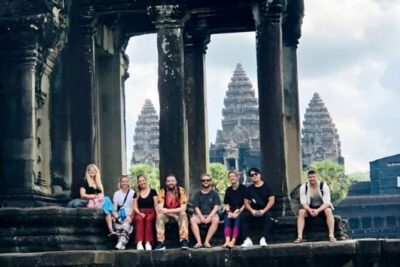
Angkor Wat Sunrise & 3 Main Temples with Breakfast – Small Group
Read our review →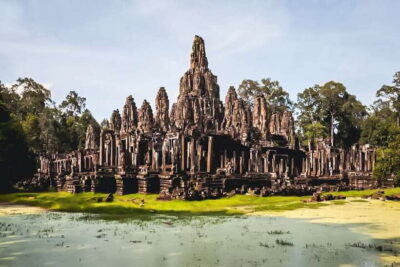
Angkor Wat Sunrise and Full-Day Sightseeing Tour
Read our review →
Angkor Wat Small-Group Exploration with Expert Guide
Read our review →Browse the lists this tour appears in