
Reviewed · ANGKOR WAT TOURS
Siem Reap: Angkor Wat Small-Group Day Tour and Sunset
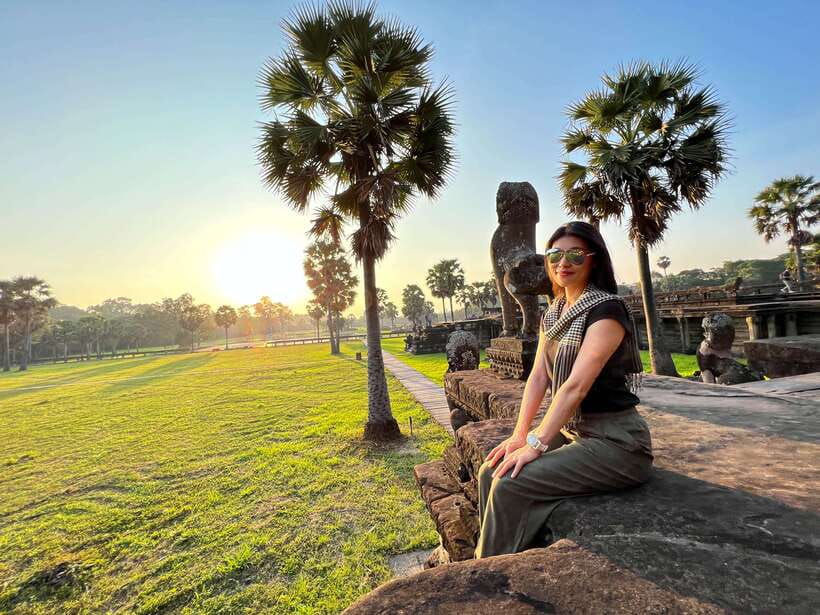
Angkor Wat is the headline, but this 10-hour small-group tour gives you a fuller look at the Angkor Archaeological Park. You move from the giant faces of Bayon to the tree roots of Ta Prohm, then finish with Angkor Wat and sunset from Phnom Bakheng.
I like the small groups of up to 14 and the practical care built into the day: air-conditioning, cold water, chilled towels, hotel pickup, and lunch. I also like the stop at Preah Dak village, where you see palm sugar and palm cake being made rather than spending every minute among ruins.
The drawback is simple: this is a long, hot day with a lot of walking and climbing. The temple route is packed with major sights, so you will see the best-known places, but you will not have the slow, quiet pace of a private multi-day visit.
Key points to know before booking
- Angkor Wat pass costs extra: The tour price is $28, but the required temple pass costs $37 per person.
- Four major temple areas in one day: You visit Angkor Thom, Ta Prohm, Angkor Wat, and Phnom Bakheng, with several monuments inside Angkor Thom.
- Cold towels are a real advantage: Drivers regularly provide cold water and towels after walks in the heat.
- Preah Dak adds local life: You see palm sugar and palm cake production in a village setting.
- Guides help with photos as well as facts: Mony, Sam, David, Makara, Saroun, and Veasna are among the guides praised for clear commentary and good picture-taking.
- Expect a demanding schedule: Comfortable shoes, sun protection, and covered knees and shoulders are essential.
What the $28 tour price really covers
At $28 per person, this is a strong value if you want a guided introduction to the main Angkor sights. Your fee covers an English-speaking guide, driver, air-conditioned minivan or minibus, hotel pickup and return, lunch, drinking water, and towels.
You must add the Angkor temple pass, listed at $37 per person, bringing the basic total to $65 before soft drinks or any other personal spending. That changes how you should compare the price. It is not a $28 all-in temple day, but it remains a reasonable amount for transport, guiding, food, and a full day in the park.
I see the guide as the most important part of the value. Angkor is not hard to look at, but the carvings, faces, Hindu and Buddhist symbols, royal stories, and building plans make much more sense when someone explains them. A tuk-tuk ride can get you from one temple to another, but a good guide helps you understand why the monuments were built and what you are seeing.
The tour has earned a 5 out of 5 rating from 59 reviews, with repeated praise for organization, guide service, safe driving, cold refreshments, and photography. Names that appear often in the feedback include Mony, Sam, David, Makara, Saroun, Veasna, Sean, and Raman. Your assigned guide may be different, but the pattern is clear: guide quality is a central part of this experience.
More ways to walk into Angkor Wat:
- Angkor Wat Sunrise or Sunset Tour with Guide from Siem Reap
★ 5.0 · 12,109 reviews - Siem Reap: Angkor Wat: Small-Group Sunrise or Sunset Tour
★ 5.0 · 9,444 reviews - Siem Reap: Angkor Wat 2-Day Tour with Sunrise and Sunset
★ 4.9 · 4,429 reviews
Starting at Angkor Thom’s South Gate
Pickup takes place at your hotel between 8:00 and 8:30 a.m. You should wait in the lobby about 10 minutes before the scheduled time. The first formal stop is the Angkor pass office or purchase point, unless you have already bought your pass online.
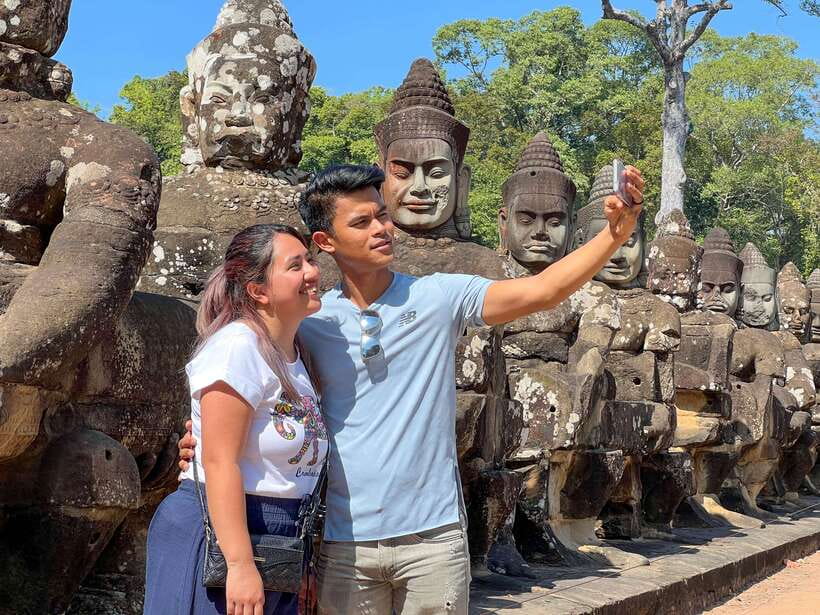
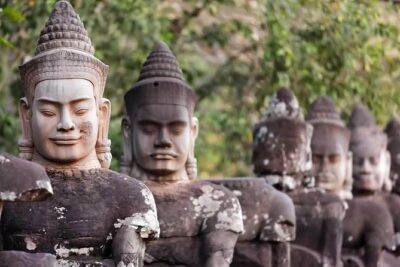
From there, the route heads to Angkor Thom, the fortified Great Royal City built in the 12th century under King Jayavarman VII. The South Gate is a strong opening because the approach itself is part of the sight. A bridge crosses the moat, lined with large stone figures connected with the Churning of the Ocean of Milk story.
The gate is topped by a serene face, and the entrance has also appeared in the film Tomb Raider. That movie connection is fun, but the real reason to pause here is the scale. You get an immediate sense that Angkor was not simply a collection of isolated shrines. It was a planned royal city with walls, gates, roads, reservoirs, temples, and ceremonial spaces.
This is one place where your guide can help you notice details you might otherwise pass quickly. Do not rush straight through the gate. Ask about the figures on the bridge and the meaning of the face above the entrance.
Bayon and the monuments inside the royal city
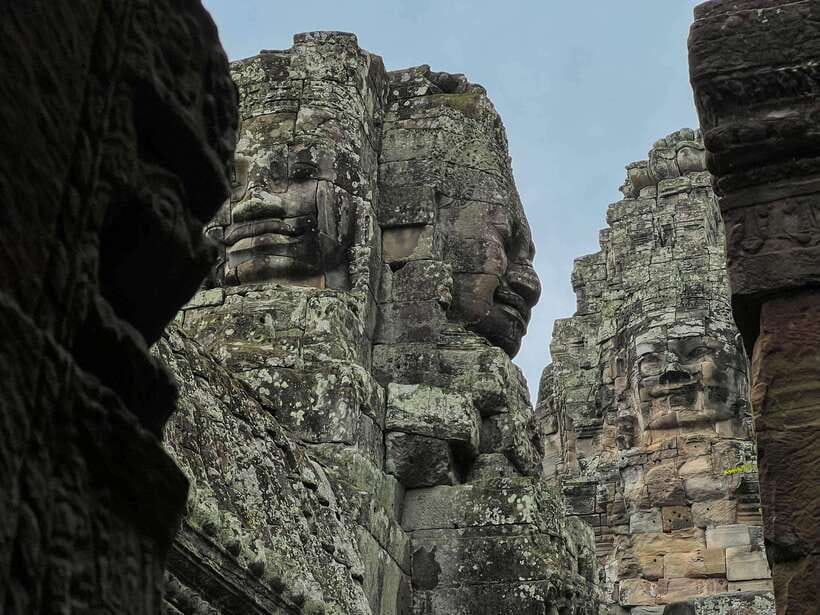
Bayon is the heart of Angkor Thom for many first-time visitors. Its stone towers carry large carved faces, often appearing to look in several directions at once. The faces give the temple a calm, slightly mysterious character, especially when you walk through the narrow passages between the towers.
Bayon was built in a Buddhist style, though the wider Angkor complex includes both Hindu and Buddhist monuments. The carvings are not only decorative. Your guide can point out scenes of daily life, battles, ceremonies, and religious figures in the bas-reliefs.
The route also includes the Terrace of the Elephants, once used for royal processions and public ceremonies. Its long carved wall is easy to appreciate from the outside, but a guide adds context about how it fit into the royal city.
You also see the former Royal Palace area, Phimeanakas, the Terrace of the Leper King, and Baphuon. Baphuon is especially notable because it is considered the largest Hindu temple in Angkor Thom. Its long raised approach gives you a clear view of the temple structure as you walk toward it.
This section is rewarding but busy. There are several monuments close together, and the heat builds as the morning continues. Wear shoes with a firm sole and expect uneven stone, steps, and exposed paths. The schedule gives you broad coverage rather than a long, unhurried study of each monument.
Ta Prohm, where trees claim the temple
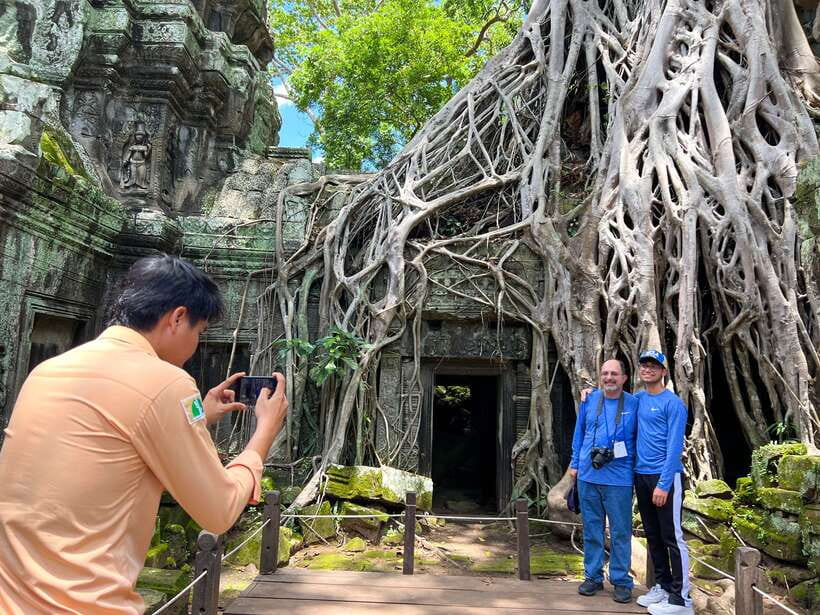
Ta Prohm is the most cinematic stop of the day. The temple has been left partly in its original condition, with trees and huge roots growing over walls and galleries. It was also used as a setting for Tomb Raider, which explains why many people recognize its corridors before they arrive.
The appeal is the tension between the carved stone and the living trees. Roots curl over doorways and press against walls, making the temple feel less ordered than Angkor Wat or Bayon. It is easy to focus only on the famous photo spots, but take time to look at the surrounding galleries and carvings too.
This can be one of the more crowded stops, and the narrow passages make movement slower. A guide who knows the site can help you find good angles for photographs and keep the visit moving. Several guides, including Mony, Makara, Veasna, and Sam, receive particular praise for taking photos as well as explaining the temples.
By this point, the cold water and towels become more than a nice extra. You may be walking on hot stone and climbing through open areas, so use the return to the vehicle to cool down before lunch.
More Sunset Tours in Siem Reap:
- Sunset tour of Kampong Phluk stilts home village on the Tonle Sap
★ 5.0 · 4,865 reviews - Siem Reap: Full-Day Angkor Wat Guided Tour with Sunset
★ 4.9 · 3,803 reviews - Angkor Wat Sunset Small Group Tour with Lunch Included
★ 5.0 · 3,059 reviews - Angkor 2-Day Sunset & Sunrise Small-Group Tour
★ 5.0 · 2,567 reviews
Local lunch and a visit to Preah Dak village
Lunch is included at a local restaurant, with vegetarian choices available if you tell the operator in advance. The meal is a useful pause in the middle of a demanding day. It is worth keeping expectations practical: this is a tour lunch chosen for convenience and local flavor, not a dedicated food excursion.
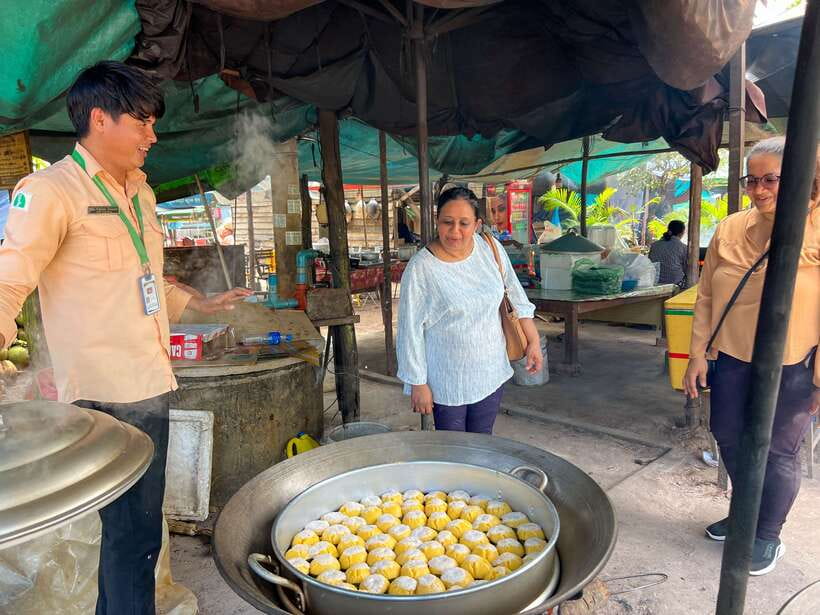
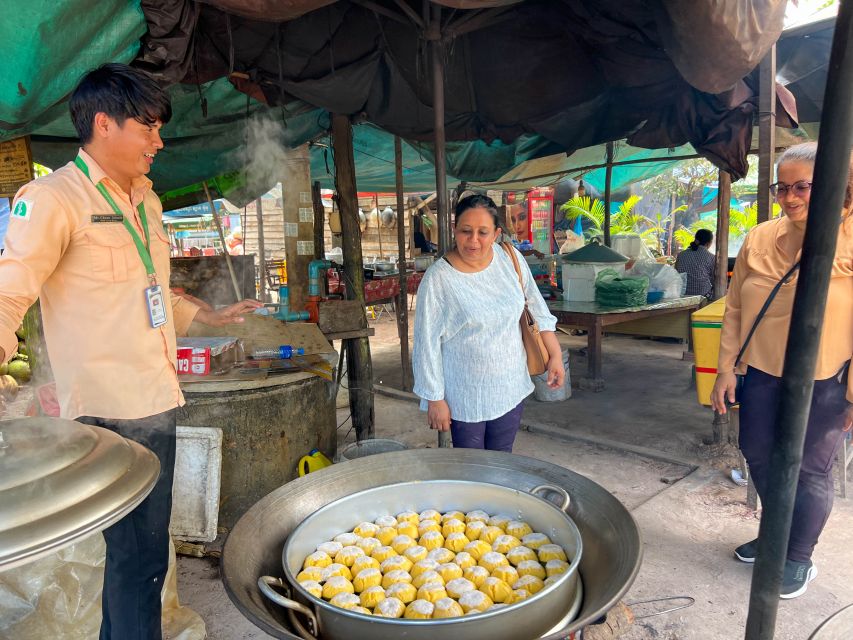
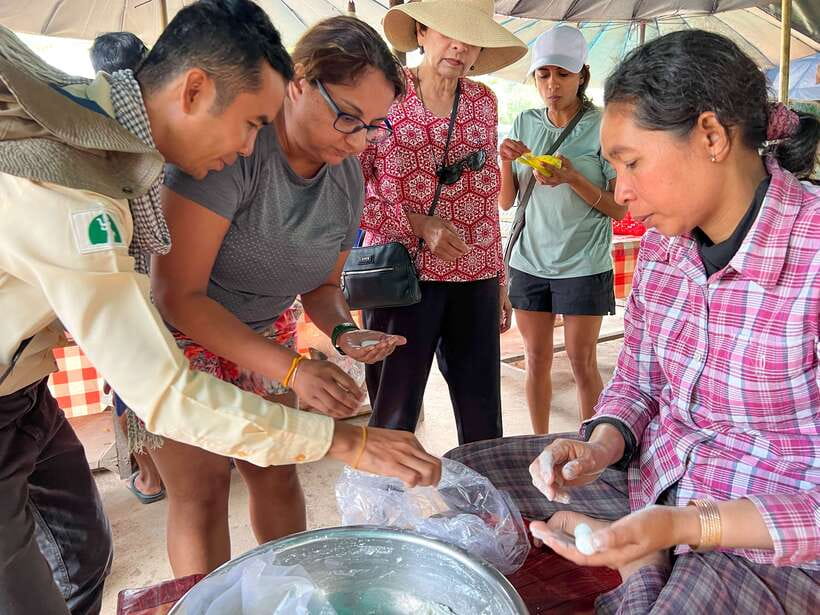
The village stop at Phum Preah Dak, also called Preah Dak, changes the rhythm. Instead of another grand temple, you see an everyday Cambodian setting and learn how local people make palm cake and palm sugar.
This is one of the tour’s best choices. Angkor can become a sequence of monumental buildings, and the village gives you a small connection to present-day life in the Siem Reap area. Palm products are closely tied to rural Cambodian food traditions, so this stop helps balance the royal and religious focus of the morning.
The village visit is not presented as a long cultural workshop. You should expect a short, practical look at the process rather than a full cooking class. Still, it gives you something different to remember and photograph, and it breaks up the temple routine.
Angkor Wat in the afternoon
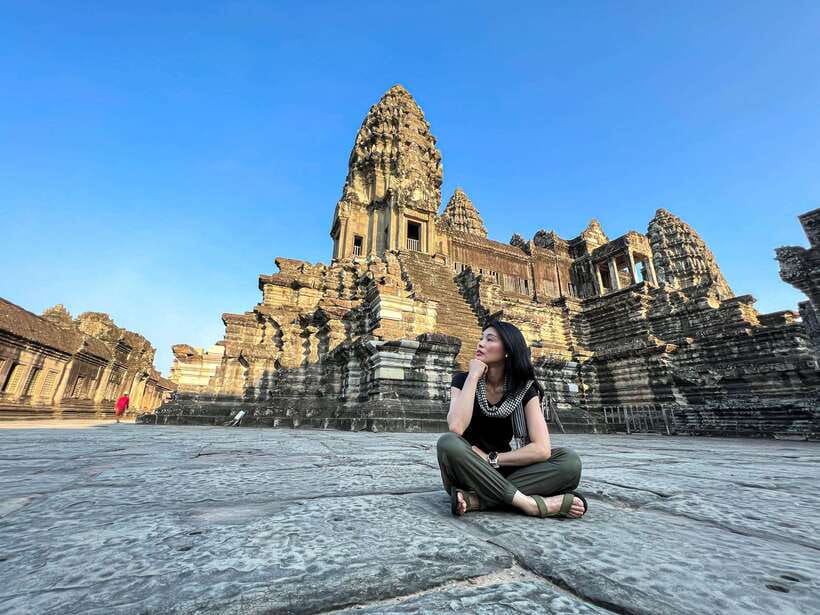
The schedule places Angkor Wat after lunch. The temple is the largest sacred building in the world and the best-known symbol of Khmer civilization. Its five towers appear on the Cambodian flag, and the giant moat gives the whole complex a sense of order and scale.
Angkor Wat was built by King Suryavarman II and dedicated to Vishnu. The temple began as a Hindu monument and later became associated with Buddhism. Your guide can help you read the long bas-reliefs, which cover the walls with religious stories, battles, processions, and scenes from Hindu epics.
The walls reward patience. At first, the carvings may look like a single long band of stone, but the figures and scenes become easier to follow when the guide explains what you are looking at. The tour also gives you time to see the galleries, courtyards, towers, and upper levels.
Dress matters here. Your shoulders and knees must be covered, and short skirts are not allowed. Choose light clothing that still meets the temple rules. Bring sunglasses, a hat, sunscreen, and insect repellent. An umbrella can help with sun as well as sudden rain.
Afternoon light can be attractive, but the heat may be intense. One person described the day at 37 degrees Celsius as exhausting, even while finding the temples impressive. That is a fair warning. Drink water before you feel thirsty, and use the vehicle breaks wisely.
Sunset from Phnom Bakheng
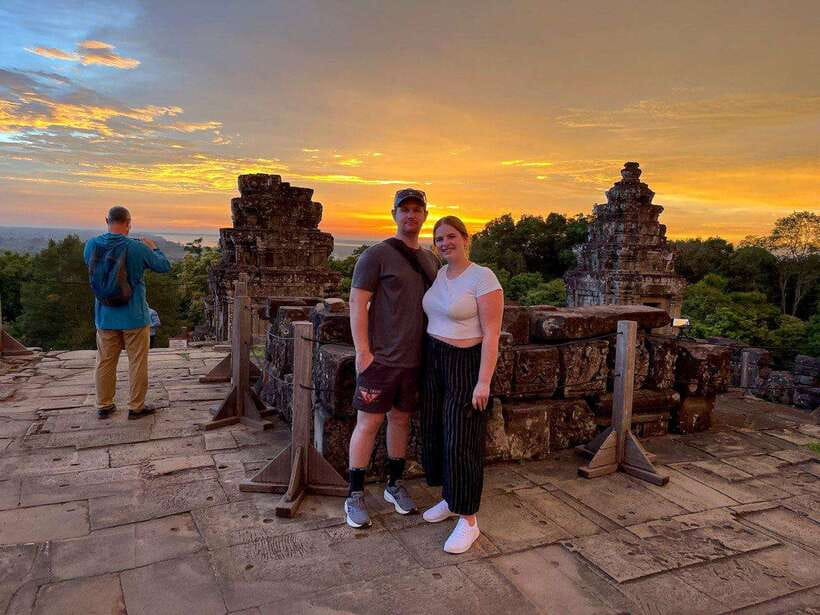
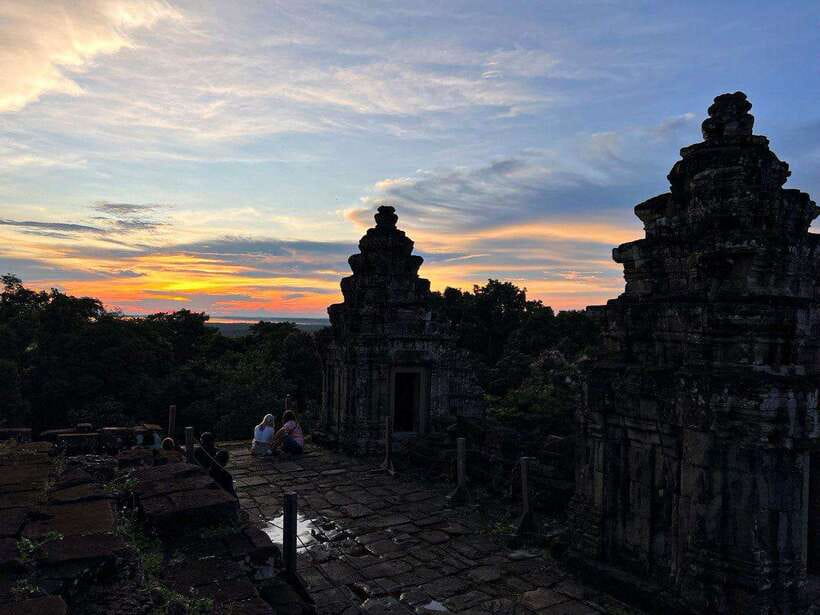
The final major stop is Phnom Bakheng, where you climb the mountain for sunset. The climb and the wait can be tiring after a full day of temple walking, but the higher position gives you a broad view over the surrounding trees and toward Angkor.
Sunset is popular, so do not expect complete solitude. The timing also depends on the day, weather, crowd levels, and access conditions. The appeal is less about guaranteed perfect color and more about ending among the ruins with a high view after seeing the main temples.
You should treat this as a real climb, not a quick roadside photo stop. Comfortable shoes are essential. If you have limited stamina, ask the guide about the pace and the walking involved before setting out. The tour information says it is not suitable for people over 70 or children under 10, which reflects the length, heat, stairs, and full-day schedule.
After sunset, you return to the vehicle and transfer back to your hotel. By then, most people will be ready for a shower and a quiet evening.
Transport, group size, and guide service
The air-conditioned minivan or minibus makes a major difference in Cambodia’s heat. The driver provides cold water and towels, often greeting you at the vehicle after each temple visit. Several accounts also praise careful driving, with drivers such as Mr. Kim, Mr. Theara, Mr. E, Chann, Tah, Tokla, and Sophat singled out for safe and attentive service.
A group of up to 14 is small enough for questions without the cost of a fully private tour. On some departures, the group may be much smaller. One group had only five people, while another booking became a private tour after other participants rescheduled. You should not count on that happening, but the group limit is still reasonable.
The guide is expected to speak English. The strongest guide experiences combine clear history with a friendly manner. Mony is praised for humor and engagement, Sam for detailed explanations and care, David for an informative and warm style, and Makara for temple knowledge and photography. These are useful names to know when reading your guide assignment, but they are not a promise that one particular person will lead your date.
Who should book this Angkor day tour?
I would choose this tour if you have one full day in Siem Reap and want the main temples explained rather than simply driven past. It suits first-time visitors who want a clear route, included lunch, hotel transport, and help with photographs.
It also works well for solo visitors and couples who want some company without joining a huge coach group. Vegetarian food is available, provided you notify the operator ahead of time.
I would choose a private tour instead if you want to linger at one temple, change the order, spend longer taking photographs, or set your own pace. I would also avoid this day if you dislike heat, long walks, uneven ground, or climbing.
Cancellation is flexible up to 24 hours before the tour for a full refund, and you can reserve now and pay later. Those policies are helpful, but the key decision is physical stamina. This is a full day outdoors, not a relaxed sightseeing loop.
Should you book it?
Book it if you want maximum coverage in one day, a guide who can explain the carvings, and practical comfort from an air-conditioned vehicle, cold water, towels, and lunch. The extra village visit gives the itinerary more range than a temple-only route.
Skip it if you want quiet ruins, long visits at each monument, or a late start. For most first-time visitors with limited time in Siem Reap, though, the price is fair once you account for what is included. Bring proper clothing, good shoes, and patience for the heat, and this tour gives you a well-organized first look at Angkor’s essential sights.
FAQ
How much does the tour cost?
The tour costs $28 per person. The required Angkor temple pass costs an additional $37 per person.
How long does the tour last?
The tour lasts about 10 hours, including hotel pickup, temple visits, the village stop, sunset at Phnom Bakheng, and the return transfer.
What time is hotel pickup?
Pickup takes place between 8:00 and 8:30 a.m. You should wait in the hotel lobby 10 minutes before the scheduled pickup time.
Is lunch included?
Yes. Lunch at a local restaurant is included, and vegetarian options are available if you notify the operator in advance.
Is the tour suitable for children?
Children under 10 are not considered suitable for the small-group option.
What should I wear to the temples?
Your knees and shoulders must be covered. Short skirts are not allowed. Comfortable walking shoes, a sun hat, sunglasses, and sunscreen are recommended.
Is sunset included?
Yes. The itinerary includes a climb up Phnom Bakheng for sunset, followed by transport back to your hotel.
Just added around Siem Reap
- Twilight Tastes of Siem Reap Include Dinner★ 5.0 · 13 reviews
- Ultimate Sunrise to Angkor Wat, Angkor Thom and Bayon Temple★ 5.0 · 3 reviews
- Trekking Tour at Phnom Kulen National Park from Siem Reap★ 5.0 · 3 reviews
- Professional Photo Shoot in Angkor Archaeological Park, Siem Reap★ 5.0 · 42 reviews
- Full-Day Private Tour of Angkor Wat with Pick Up★ 5.0 · 12 reviews
- Unveiling 2 Days Private Angkor Wat/Beyond In Sunrise/Sunset Tour★ 5.0 · 48 reviews
- Siem Reap City Tour with War Museum and Killing Field★ 5.0 · 27 reviews
- Private Day Trip to Angkor Temples with Expert Guide★ 5.0 · 4 reviews
Angkor Wat Tours, compared.
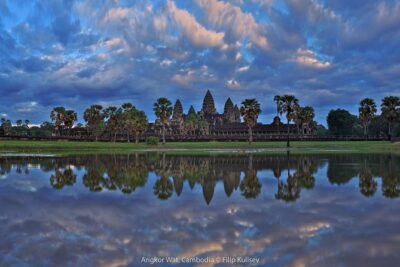
Angkor Wat Sunrise or Sunset Tour with Guide from Siem Reap
Read our review →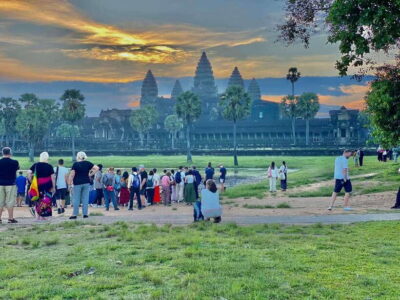
Angkor Wat: Small-Group Sunrise or Sunset Tour
Read our review →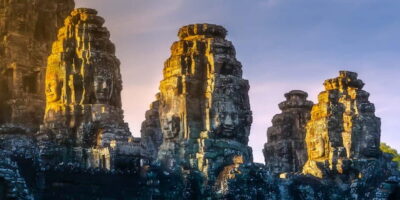
Angkor Wat Highlights and Sunrise Guided Tour from Siem Reap
Read our review →
Angkor Wat Sunrise & 3 Main Temples with Breakfast – Small Group
Read our review →
Angkor Wat Sunrise and Full-Day Sightseeing Tour
Read our review →
Angkor Wat Small-Group Exploration with Expert Guide
Read our review →Browse the lists this tour appears in